
How the road to conversion to Buddhism for 80 Dalit families in Surat was made difficult
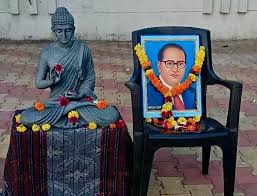
On May 14, Jahnvi Solanki, got ready for the most special day of her life. For 29-year-old Solanki, it was the day when her dream was coming true after a twoyear-long wait. Jahnvi along with her family of four converted to Buddhism along with 79 other families in Surat on the day. On the day, the 80 Dalit families from various areas of Surat gathered at Anand Buddha Vihar, a Buddhist temple in Amroli area of Surat to renounce Hinduism and embrace Buddhism. “It was an emotional ceremony for all of us. I was in tears as I chanted the Buddha Vandana and repeated the 22 vows of Baba Saheb (Baba Saheb Bhimrao Ambedkar). I felt liberated denouncing Hinduism, a religion that gave us nothing but humiliation. Now, I don’t belong to any caste or social hierarchy. We are all equals here,” says Jahnvi, who works as a teacher in a primary school in Surat. In the ceremony to convert from Hinduism to Buddhism, people are required to chant Bhudha Vandana and then denounce bais barbaadi (22 evils) and take vows devised by Baba Saheb Ambedkar when he converted to Buddhism – Possess the ability to engage in diverse social endeavours, Have the capacity to thwart all forms of antisocial inclinations, Be empowered to disseminate the compassionate and wise teachings of Buddha Be capable of affirming the principles of education, organisation and activism, Foster a cultured ethos within society Eliminate superstition from societal norms Steer society towards a humanistic ethos Safeguard any individuals self-respect Reject anti-Bahujan leadership Ensure the protection rights and interests of all Realise that where there is unity, there is power Promote a sense of brotherhood transcending caste distinctions Foster a sense of a unified and extended family, Understand that only truthful and humane communication will remove derogatory labels from Bahujans Strengthen morale through unity and foster a sense of societal resilience Achieve and implement genuine democracy Finance the construction of educational, medical and residential facilities Establish an orderly and disciplined societal framework Provide a platform for social thinkers to serve as guides Uproot injustice, inequality and oppression Eradicate Manuwad from indigenous communities Understand and practice that all humans are equal “My family and I have faced discrimination all our lives. My father moved to Surat in search of a job and has worked in the diamond industry for over 20 years. I was a child when I moved to Surat with my mother and my brother was born here. Back in our village, our home was at one end of the village in an area referred to as Valmikivaas (home for Valmiki). We were constantly subjected to discrimination and untouchability. When we moved to Surat, we thought things would change as it is a city and people are more educated. But we have faced discrimination in this city too,” she says. “I remember, when I was in class nine, the teacher gave me average grades in all subjects without checking my papers of half yearly examination. She said she can’t touch something that has been touched by a Dalit. I had to live with that as nothing much was done by school authorities despite complaints,” she adds. Fifty-seven-year-old Maheshbhai Maheriya’s family of four also embraced Buddhism on the day. “I had mentally turned a Buddhist and renounced Hinduism two years back but the formal conversion happened now,” says Maheriya who converted to Buddhism with his wife, son and daughter-in-law. “There is peace in Buddhism because everyone is alike. Buddhism teaches only peace and compassion. But most importantly it gave us a sense of joy. We are no longer looked down upon by those who think they are superior to us just because they were born to a certain caste considered higher in social hierarchy in Hinduism,” says Maheriya, who works in the Surat Municipal Corporation (SMC). Red tapism Noticeably, the journey to embrace a religion of their choice was not easy for the families. The journey began in the year 2023 when the families submitted applications to the district collector to formally adopt Buddhism as per the Gujarat Freedom of Religion Act, 2003. “Under Gujarat’s Freedom of Religion Act, conversion applications require an applicant to fill three forms – A, B and C. Form A, that has the details of the applicant with the his/her current religion and the religion he/she wants to adopt with reason. The Form A is required to be verified and approved by the district collector within one month. Then the applicant file Form B which is a testimony of certain witnesses who vouch that the conversion is not forced on the applicant. Form B is to be verified and approved within two months unless any irregularity is found. Then the applicant can finally file the Form C, the last form in the process that contains when and where he/she is going to convert and name of the person(s) or organisation who is going to oversee the ceremony. The last form is to be approved within a week to ten days,” said Dinesh Baudh, a member of Swayam Sainik Dal (SSD), a Ambedkerite organisation that helped the families with the process. “However, the process took more than two years with applications caught between red tapism and bureaucratic delays. For the first six months, we were running between offices to ensure that Form A is accepted by the office of the district collector. After almost a year, they approved the first form. Then we spent another six months running between offices to ensure that the testimony of the witnesses are not rejected. Then, after about three weeks of verifying Form B of each applicant, the issuance of approval letters was stalled as the district collector was transferred. It took another three months for the next official to resume the process,” said Baudh, who embraced Buddhism in 2019 in Nagpur. Noticeably, around 40,000 applications filed by the SSD and other Dalit rights organisations are pending in various districts. “The delay did not deter
When ‘Beta’ Becomes A Death Sentence: Unmasking The Caste Discrimination In India
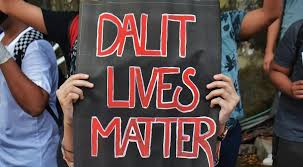
The death of Nilesh Rathod will always serve as a stern reminder of the still persistent legacy of caste-based discrimination in India. A 20-year-old Dalit man named Nilesh Rathod died from injuries he got after being brutally attacked in Gujarat’s Amreli district for calling a shopkeeper’s son “beta” (son). This conveys the persistence of caste-based discrimination in India. In addition to highlighting the widespread impact of caste hierarchies, this incident raises concerns about the continuation of these stereotypes in future generations. About the incident Nilesh Rathod went to buy snacks at a neighbourhood store in Jarakhiya village on May 16, 2025. He called the shopkeeper’s son “beta” in a gesture of familiarity or perhaps just courtesy. This seemingly harmless and everyday term was met with violent outrage. Source: TNM Rathod allegedly suffered a stick attack from the shopkeeper, Chotha Khoda Bharwad, and the attack intensified as more people joined in, using sickles and sticks and hurling casteist slurs. Before an old man stepped in, Rathod and his friends were constantly chased and beaten. Rathod died from his injuries six days later, on May 22, 2025, even after being treated by doctors. Youth and caste: A disturbing continuity This incident screams that the idea that discrimination based on caste was a thing of the past and was only passed down by older generations. The active participation of younger generations in such violent acts hints that caste prejudices are still being promoted across generations. It demonstrates the fragile nature of caste dynamics and the deeply rooted insecurity people have about social hierarchies that a harmless word like “beta,” which is used as a word of affection by people of all ages and backgrounds, could be the source of such a violent reaction. When words become weapons Language, in India, is strongly entangled with social and caste hierarchies. Some languages to be spoken are considered to be superior to what other castes are speaking, which commonly reflects and reinforces social hierarchies. Here, a Dalit man using “beta” to address a person of higher caste was seen as a violation, a desecration of the existing social order. This incident clearly sheds light on how language, if passed through the prism of caste, can be the source of violence even where it’s not required, showing us the universal nature of caste hierarchy in everyday conversations. The role of silence: Political and social apathy After the incident, there was a deafening silence from political leaders and the mainstream media. The case only gained close attention after constant protests by activists like Congress MLA Jignesh Mevani, who demanded justice and compensation for the victim’s family. Such a delayed response, which is definitely not the first time, reflects broader societal apathy and ignorance towards caste-based violence, especially when the victims come from marginalised communities. The spotlight towards caste-based violence is determined according to each caste’s convenience. Justice delayed is justice denied Police responded to the incident by arresting eight people and detaining a minor. Source: India Today The accused were charged under the SC and ST (Prevention of Atrocities) Act and several sections of the Bharatiya Nyaya Sanhita, including those relating to murder, rioting, unlawful assembly, and distressing hurt. While these legal measures are in the right direction, the efficacy of such actions is often downplayed by systemic delays and societal pressures that can strongly influence the process of justice. Not an isolated incident: Persistence of caste discrimination This tragic incident is not isolated in itself but a part of an even larger disturbing pattern of caste-based violence in India. From incidents like the Una flogging in 2016 to the lynching of Jagmael Singh in 2019, there have been numerous incidents where Dalits have faced brutal assaults for everyday harmless tasks due to the norms of caste. Such events present the stubborn and systemic nature of caste-based violence and discrimination in India. Caste-based discrimination remains deeply rooted in Indian society, surpassing age and generational boundaries. While the thought goes that younger generations today are protected from such evils and prejudices, recent incidents suggest something else. Several recent events highlight the involvement of young individuals in caste-based discrimination and violence. In Moradabad, Uttar Pradesh, in May 2025, five schoolboys allegedly gang-raped a 12-year-old Dalit girl inside a school’s principal office. The boys reportedly gave her a spiked drink, filmed the assault, and threatened her to keep silent. All five were arrested following the incident. In Mathura, Uttar Pradesh, a Dalit groom’s wedding procession was attacked by upper-caste people who were enraged just by the use of a DJ and a chariot. The groom was allegedly pulled and pushed out of the chariot and the guests were assaulted and threatened to stop the procession before any more harm. In Mahoba, Uttar Pradesh, a newlywed Dalit couple was reportedly attacked by upper-caste people who forced the groom and the family to pass them by removing their slippers. When they refused to do so, they were assaulted. This incident did draw criticism from political leaders, highlighting the ongoing caste tensions but did not make any difference. While extensive, up-to-date statistics specifically focusing on youth involvement in caste-based discrimination are limited, broader data indicates the persistence of such biases. It was found by a Pew Research Centre survey in 2021 that a significantly large portion of the Indian population still admits the existence of caste-based discrimination and violence. And to note, members of the SC and ST were more prone to such discrimination against themselves. Reports from many human rights organisations and NGOs also consistently highlight that caste-based violence and discrimination still prevail largely across India, affecting all ages. These reports also highlight the need for systemic changes and the need to take measures to remove the presence of such deep-rooted beliefs and prejudices. The way forward: Education and empathy Addressing such strong, deep-rooted beliefs of caste-based prejudice, we need effective and multifaceted approaches. Source: ABC Firstly, education systems should incorporate detailed modules on caste history and social justice to promote empathy
AIISCA’s warning on Amreli Dalit youth murder case: ‘Caste’ cannot be the norm in a democratic society, supporters held accountable
The organisation called it shameful that the country’s Prime Minister hails from Gujarat, yet he and his party have not taken any concrete steps to abolish the caste system in his home state. His silence on this atrocity is not neutrality, but complicity. New Delhi- The All India Independent Scheduled Castes Association (AIISCA) has strongly condemned the brutal murder of Dalit youth Nilesh Rathod in Jarakhia village of Amreli district of Gujarat. AIISCA said that Nilesh’s only “crime” was to call a minor boy, who belonged to a so-called “upper” caste, “son”. Caste mentality took a violent turn in response to this simple human affection. The incident reflects everyday caste violence against Dalits in Gujarat, which violently enforces caste supremacy despite claims of a development model. The organisation criticised the silence and normalising role of the ruling caste-class nexus, which includes business elites, upper caste landlords and the political class, in the violence. AIISCA President Dr Rahul Sompimpale issued a statement. The organisation termed the silence of Dalit MPs and MLAs of the ruling party as complicity in standing with upper caste bosses rather than their own community. The failure of Gujarat’s state machinery—police, administration and politicians—to protect Dalits was also questioned. The police’s lethargic response exposes institutional casteism. The organisation called it shameful that the country’s Prime Minister hails from Gujarat, yet he and his party have not taken any concrete steps to end the caste system in his home state. His silence on this atrocity is not neutrality but complicity. AIISCA expressed solidarity with the grieving family of Nilesh Rathod, who have announced that they will not accept his body until their demands are met. Their demand is not just compensation, but respect, recognition and an end to the violent caste system. Demands: Immediate and full compensation to all victim families, including: o Five acres of agricultural land or government jobs for all affected families. The investigation be handed over to an independent, high-ranking officer with a clean record, and a time-bound trial in a special fast-track court under the SC/ST Atrocities Act. FIR and arrest of all remaining accused, who incited and aided the mob. Statewide public inquiry into caste-based violence in Gujarat, with particular focus on rural areas. Public apology and assurance of reform from the Chief Minister of Gujarat, as well as a statement from the Prime Minister acknowledging structural caste violence in Gujarat. Initiation of a comprehensive anti-caste violence policy in Gujarat, including: o Dedicated SC/ST protection task force. o Educational and cultural programs to eradicate caste bias. o Accountability mechanism for caste-based negligence by police and civil servants. AIISCA warned that if the Rathore family did not get justice, the organisation would launch nationwide protests. The organisation said they would not allow this violence to be buried under bureaucratic silence and electoral games. Dalit lives matter, and the right to dignity is inviolable. Sompimple said the statement is not a petition but a warning: caste cannot be normalised in any democratic society. And those who support it directly or indirectly will be held accountable. Courtey; Geetha Sunil Pillai, Hindi News
Dalit Elderly Man Allegedly Burned Alive in Gujarat’s Patan Village; MLA Mevani Says—Gujarat Becoming Hell for Dalits!
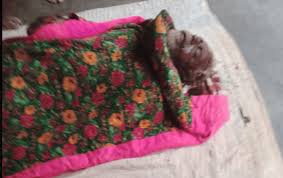
According to the Patan police, a preliminary investigation has been initiated. Patan- A heart-wrenching incident has come to light in Pipala village, Santalpur taluka of Patan district, Gujarat, where 70-year-old Dalit elderly man Harji Bhai Deva Bhai Solanki was allegedly burned alive in the neighboring Jakhota village. Dalit leader and Vadgam MLA Jignesh Mevani stated that he spoke with the Patan District Superintendent of Police, who confirmed the incident. However, the police have not yet disclosed the reasons behind the killing, and the investigation is ongoing. The victim’s body was found wearing women’s clothing and anklets, making the incident even more suspicious. This incident is being seen as another link in the chain of increasing violence against the Dalit community in Gujarat. MLA Jignesh Mevani expressed deep sorrow over the incident and tweeted, “Despite all its claims of development, Gujarat is becoming a hell for Dalits.” He has appealed to all activists and citizens to gather at the Civil Hospital in Dharpur, Patan, to demand justice for the victim’s family. Mevani has demanded that the government provide adequate compensation to the victim’s family and allocate 2 acres of agricultural land to them. He described the incident as yet another example of atrocities against the Dalit community and called for immediate action. According to the Patan police, a preliminary investigation has been initiated. The police stated that Harji Bhai’s murder took place in Jakhota village, and his body was sent to the Civil Hospital in Dharpur for a postmortem. The motive behind the killing is still unclear. The police have started questioning local residents and have increased security arrangements in the area due to the prevailing tension. This incident has sparked significant outrage within the local Dalit community. Several social organizations and activists have come forward in support of the victim’s family. Tension is prevailing in Jakhota and Pipala villages, and locals are demanding strict action against those responsible for this brutal incident. MLA Jignesh Mevani said, “I just spoke with the District Superintendent of Police, who confirmed the incident, but the reasons behind it are still unknown! It is with great sorrow that I must say, despite all its claims of development, Gujarat is becoming a hell for Dalits! The government must provide adequate compensation to the victim’s family and 2 acres of agricultural land!” Mevani appealed to the Dalit community, stating that they must strongly protest against the atrocities, assaults, murders, and horrific incidents like being burned alive that are happening to Dalits under the BJP regime. Courtesy : Geetha Sunil Pillai, The Mooknayak Note: This news is originally published on https://themooknayak.com/ and is for use by the non-military/non-commercial community, especially those in the human rights sector.
Made an elderly Dalit wear Ghaghra-Choli, then burnt him alive… Married woman did this to run away with her lover
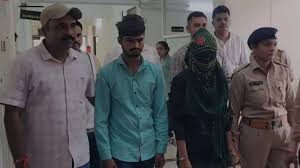
A shocking incident came to light in Jakhotra village of Patan district of Gujarat, where Suresh Ahir found the half-burnt body of his wife Geeta. Investigation revealed that Geeta and her lover Bharat had conspired to kill a Dalit man named Harji and burn him as Geeta. Patan: A heart-wrenching case came to light in Patan district of Gujarat, which surprised even the police. The case is of village Jakhotra. Where, a man named Suresh Genga Bhima Ahir woke up in the morning on hearing the crying of his three-year-old child, but he did not find his wife Geeta nearby. When he reached the back of the house while searching for his wife, he found a half-burnt body there, seeing which he was shocked. This body was wearing orange and purple Ghaghra-Choli, there was also a silver anklet on the feet. These were the same clothes that belonged to his 22-year-old wife Geeta. Refusing chicken in the temple proved costly for a Dalit monk, a bully bleeds him with a trident, case registered under SC-ST Act After three decades, the marks of ‘red terror’ are removed from Bastar and Kondagaon: What does this new beginning in Chhattisgarh mean? Suresh thought his wife had committed suicide and he informed the police. But within a few hours of investigation, the case took a complete turn. The post-mortem report revealed that the body was of a 56-year-old Dalit man Harji Debha Solanki, who was a resident of Vauwa village (7 km from Jakhotra). Initially, it was considered a case of caste violence and Congress MLA Jignesh Mevani also raised it on social media, because a week before this, a Dalit was also killed in Amreli. Conspiracy of lovers blinded by love The investigation revealed that Geeta had hatched a conspiracy with her lover Bharat Lubha Ahir. Both of them together planned to kill Harji and make him look like Geeta, so that both of them could start a new life by showing Geeta as dead. Bharat saw Harji, a weak man, walking alone in Vauwa village. He tried to kill him by dragging him into the bushes and strangulating him and then brought him to Jakhotra in an unconscious state on a bike. At night, along with Geeta, they dressed Harji in his clothes and burnt him alive by pouring petrol on him. Tried to escape, but got arrested Both of them fled via Santalpur, Radhanpur and reached Palanpur railway station in Banaskantha, from where they were trying to escape to Jodhpur. But with the help of mobile location and CCTV footage, the police caught them at 4 am on Wednesday. The post-mortem revealed that Harji had died of burning, that is, he was alive when he was set on fire. Petrol pump workers also stated that Geeta had taken petrol from there in a can. Patan SP VK Nai said that if Harji had not been identified, Geeta and Bharat had not been caught on time, then this case could have been closed as a suicide. About the author Rahul Mahajan After studying journalism from Himachal Pradesh University, he has been active in digital and electronic media for more than 9 years. He started his journey from ETV and Network 18 to Times Internet. He has keen interest in politics, crime and positive news. Courtesy : Hindi News
Gujarat Dalit Youth’s Murder Recalls 1936 Horror: When a Dalit Patwari’s Chair Ignited a Mob’s Fury in Borsad
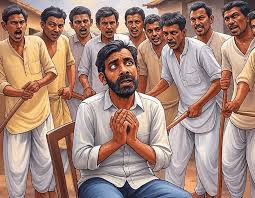
On March 6, 1938, at a meeting of the Bhangi community in Kasarwadi (behind Woollen Mills), Dadar, Bombay, chaired by Indulal Yadnik, Parmar Kalidas Shivram shared his harrowing experience. Gujarat – The brutal murder of 20-year-old Dalit youth Nilesh Rathore in Jarikhiya village, Lathi taluka, Amreli district, on May 22, 2025, has brought back memories of a horrifying incident from 1936 in Borsad, Kheda district, Gujarat. Documented by Dr. B.R. Ambedkar in Writings and Speeches, Chapter 5: Unfit for Association, the 1936 incident reveals the deep-rooted caste discrimination faced by Dalits, a reality that tragically persists today, as seen in Nilesh’s death. On March 6, 1938, at a meeting of the Bhangi community in Kasarwadi (behind Woollen Mills), Dadar, Bombay, chaired by Indulal Yadnik, Parmar Kalidas Shivram shared his harrowing experience. Kalidas, who had passed the Vernacular Final Examination in 1933 and studied English up to the 4th standard, initially applied for a teaching position with the Bombay Municipality but was rejected due to a lack of vacancies. He then applied for the role of a Talati (village patwari) through the Backward Classes Officer in Ahmedabad and succeeded. On February 19, 1936, he was appointed as a Talati in the Mamlatdar’s office in Borsad taluka, Kheda district. Though his family hailed from Gujarat, this was Kalidas’s first visit to the region. Unaware that untouchability extended even to government offices, he mentioned his Harijan (Dalit) identity in his application, expecting his colleagues to be aware of his background. However, upon arriving at the Mamlatdar’s office, the clerk scornfully asked, “Who are you?” When Kalidas replied, “Sir, I am a Harijan,” the clerk retorted, “Go away, stand at a distance. How dare you stand so near me? If this weren’t an office, I would have given you six kicks—what audacity to come here for service!” The clerk then ordered Kalidas to drop his appointment letter and certificates on the ground before picking them up himself, refusing to take them directly. Struggles with Basic Needs Kalidas faced immense challenges in Borsad. At the Mamlatdar’s office, drinking water was kept in cans in the verandah, managed by a waterman who served other clerks. However, Kalidas was barred from touching the cans, as his touch was deemed polluting. He was given a small, rusty pot for his use, which no one else would touch or clean. The waterman, reluctant to serve him, often slipped away when Kalidas approached, leaving him without water for days at a time. Finding a place to live was equally difficult. No caste Hindu in Borsad would rent him a house, and even the local Untouchables refused to offer lodging, fearing backlash from Hindus who disapproved of Kalidas’s attempt to work as a clerk—a position they believed was above his station. Food was another struggle; with no one willing to provide meals, Kalidas bought bhajias morning and evening, eating them in isolation outside the village. At night, he slept on the pavement of the Mamlatdar’s office verandah. After four unbearable days, he moved to his ancestral village, Jentral, six miles from Borsad, requiring him to walk eleven miles daily for a month and a half. The Mamlatdar later sent Kalidas to train under another Talati responsible for Jentral, Khapur, and Saijpur villages, with Jentral as the headquarters. For two months in Jentral, Kalidas learned nothing and was barred from entering the village office. The headman of Jentral was particularly hostile, once threatening him: “You fellow, your father, your brother are sweepers who sweep the village office, and you want to sit in the office as our equal? Take care, better give up this job.” The situation reached a breaking point when Kalidas was sent to Saijpur to prepare the village’s population table. Arriving at the village office, he found the headman and Talati working inside. Standing at the door, Kalidas greeted them with a “good morning,” but they ignored him. After standing outside for about 15 minutes, exhausted and humiliated, Kalidas sat on a chair nearby. Seeing this, the headman and Talati quietly left without a word. A Chair Sparks Mob Fury Within moments, a large crowd gathered around Kalidas, led by the village library’s librarian—an educated man whose involvement shocked Kalidas. It later emerged that the chair belonged to the librarian. Enraged, the librarian shouted at the Ravania (village servant), “Who allowed this dirty dog of a Bhangi to sit on the chair?” The Ravania forcibly removed Kalidas from the chair and took it away. Kalidas sat on the ground as the crowd stormed into the office, surrounding him. The mob, furious, hurled abuses and threatened to cut him to pieces with a dharya (a sharp, sword-like weapon). Kalidas pleaded for mercy, but the crowd remained unmoved. Desperate to save himself, Kalidas had a sudden idea: he asked the Ravania for a piece of paper and, using his fountain pen, wrote a note to the Mamlatdar in bold letters: “To The Mamlatdar, Taluk Borsad. Sir, Be pleased to accept the humble salutations of Parmar Kalidas Shivram. This is to humbly inform you that the hand of death is falling upon me today. It would not have been so if I had listened to the words of my parents. Be so good as to inform my parents of my death.” The librarian read the note and immediately ordered Kalidas to tear it up, which he did. The crowd continued to insult him, saying, “You want us to address you as our Talati? You are a Bhangi and want to sit on the chair?” Kalidas begged for forgiveness, promising not to repeat the act and to resign from his job. The mob held him there until 7 PM before dispersing, with neither the Talati nor the headman returning during that time. Deeply traumatized, Kalidas took 15 days’ leave and returned to his parents in Bombay. His story, shared at the 1938 Kasarwadi meeting, exposes the brutal reality of untouchability and caste violence in 1930s India. Kalidas’s quick thinking—writing the note to
Gujarat: How Dalit women are fighting hard to retain a 36-acre plot in Dholka
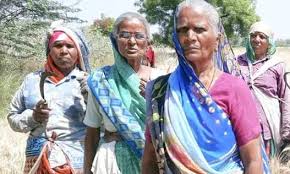
For over three decades, Baluben Makwana and others are battling gender disparity, caste hierarchy and an apathetic administration to retain land they transformed On May 16, a group of young men from the Darbar community, a backward caste, barged into the home of 76-year-old Dalit woman Baluben Makwana, in Vautha village of Ahmedabad’s Dholka taluka and threatened her. Makwana’s crime? Not only is she a Dalit and a woman but she also runs a farmers’ cooperative comprised entirely of Dalit women. For over three decades, they have been fighting against all odds to retain their ownership of a 36-acre plot of agricultural land in Dholka. The Darbars may be categorised as backward castes but in the ‘social order’ they rank several notches higher than Dalits. To the men who threatened Makwana that’s all that matters. Positioned higher in the social order, they see nothing inappropriate, let alone criminal, about demanding that the septuagenarian and her Jai Bheem Mahila Kheti Mandal (JBMKM) vacate the plot they transformed from a wasteland into a fertile agricultural land through 36 years of relentless hard work. Chasing a ‘mad dream’ This caste ‘privilege’ dates back ages. The Darbars have long been the dominant caste group in Vautha because of their large numbers in this village of 2,500-odd families. For generations, Vautha’s 70 Dalit families had lived at one end of the village and earned a livelihood by skinning dead animals and manual scavenging. It was this decades-old ‘system’ that Makwana shook up in 1989 when she mobilised 50 other Dalit women of Vautha to form the JBMKM. Priti Vaghela, a former member of Navsarjan Trust, Gujarat’s oldest Dalit rights organisation, which helped to form the JBMKM told The Federal, “Dalits of Vautha belong to the Valmiki sub-group, which is considered lowest in the social hierarchy even among the Dalits. In Vautha, Dalits are particularly vulnerable as the men are not earning much and are forcing the women into manual scavenging.” Vaghela recalled that prior to 1989, Dalit women of Vautha would be forced to clean open latrines used by upper caste women because the Dalit men didn’t earn enough to run a household. “At first, we thought we should form a collective of Dalit men to cultivate the land but most Dalit men backed off after being attacked by Darbar men. That’s when we encouraged their wives to get into farming. Over the years, sun or rain, they toiled for hours and stood tall against all atrocities by the Darbars,” explained Vaghela. Together, the 51 Dalit women that came together to form the JBMKM took a 36-acre plot, then a notified wasteland, from the local municipal body. Over the next decade, while locals, including their own family members, and the administration scoffed at their mad dream to become self-reliant farmers, Makwana and her comrades quietly toiled away nurturing the ‘wasteland’ they could call their own. By 2000, the JBMKM had achieved what many believed was impossible. The wasteland was now not only cultivable but was producing two crops a year. The yield was not just enough to meet their daily needs but there was also sufficient surplus to sell in the market and earn a modest income for the collective. In many ways, the JBMKM gave Vautha a new identity. The village known to Gujaratis largely for the Vautha Mela, an annual animal fair the village hosts along the Saptsangam, the confluence of the Vatrak and Sabarmati rivers, had become synonymous with this Dalit women’s farming collective. Troubles begin Then the troubles began – threats from castes higher in the social hierarchy, land grab attempts and even pressures from the administration to return the plot the women had ‘acquired’ without any official documentation to establish their ownership. Since then, fending off caste bullies and even government officials who storm in at their whim and fancy demanding that she and the other Dalit women farmers give up the land, has become part of Makwana’s daily chores. “This is not the first time the Darbars have threatened us to vacate the land we have cultivated for years with our blood and sweat. Thankfully, no one was hurt this time. They just swung around some furniture and punctured the tyre of the tractor we own. This happens every time during harvest season. They also try to destroy the crops but we have always managed to ward them off,” Makwana told The Federal. Last month, things had taken a nasty, although not unfamiliar, turn. The Darbars arrived with a posse of policemen from the local thana, shared Makwana. “The police tried to intimidate us and said we will be arrested under the Gujarat Land Grabbing (Prohibition) Act, 2020,” she said. The Act criminalizes land grabbing and involves 10 to 14 years of imprisonment along with a fine in case of a conviction. “We told them that we will give our lives but we won’t give up this land,” added the JBMKM founder. Fruits of hard labour Makwana claimed that it was purely the hard work and determination of the women in her collective that transformed the 36-acre wasteland plot into a sprawling agricultural field that today yields groundnut, castor and cotton crops. The sale of crops helps the JBMKM to register annual earnings of around Rs 8 lakh annually. “I still remember the first time I hit the wasteland with my spade. It was completely infested with gando baval (prosopis julifora, a thorny invasive wild shrub that is difficult to clear out as it regenerates if even a tiny root is left inside the earth; its pods are also toxic for livestock). For the initial few years, we did not have support of our families either. It took us 10 years to make this land cultivable. In the year 2000, we sold our first yield and by 2004 we bought a tractor as the land had started yielding two crops a year. That is when the Darbars began making trouble; now everyone wants a piece of it,” Makwana
Increasing atrocities on Dalits in Gujarat, why is the administration indifferent?
Dalit activists say that earlier, in cases of atrocities on Dalits, at least ministers would come to meet the victims. Now even the tehsildar does not come. The judiciary is also openly showing bias. Idar (Gujarat) – Shaileshbhai Chenva, a 32-year-old Dalit daily wage labourer from Vadol village near Idar town in North Gujarat, now always ties a white handkerchief on his face when he steps out of the house. He walks with a limp and has deep blue and black marks on his body – signs of the horrific attack he has suffered. On March 11, Chenva went to work in a cold storage in Idar as usual. While returning after working all day, some Thakurs kidnapped him. He was brutally beaten, then paraded naked in front of the entire village – Nani Vadol. Not only this, he was forced to write an apology letter, in which he had to promise that he would never talk to a Thakur woman. He said, “The whole village saw me naked, as if I was an animal. No one came to save me.” Attack on riding a mare at wedding In 2022, Kishanbhai Senma of Vansol village in Mehsana district has still not forgotten his wedding day — but remembering that day does not make him happy, but he shivers. When he was riding a mare to his bride’s house for the wedding rituals, people from the Thakur community pulled him down from the mare and showered caste-related abuses on the entire family. The reason was only that Senma was a Dalit and was riding a mare. Senma said, “These people believe in Manusmriti and treat us like insects. But now we will not sit quiet.” At first, he decided not to escalate the matter, but a month later he filed a case against the Thakurs. He said, “When we went to register an FIR, the police said that the matter could be resolved even without investigation. Then we realized that we will have to go to court for our rights.” Sukhbhai (60), an elder from the village, says, “Our lives are going from bad to worse. Neither are we educated, nor are we considered a vote bank. The government does not care whether we are alive or dead.” Vikas model vs ground reality Gujarat may be presented as a ‘Vikas model’, but the figures tell a different story. According to data presented in the Rajya Sabha, the conviction rate in cases of atrocities on Scheduled Castes in Gujarat between 2018 and 2021 was only 3.065% — which is much lower than the national average. In 2022, 189 such cases were registered in Ahmedabad city alone, which is the highest in the state. 1,425 cases were reported across the state. Of the total 5,369 cases registered between 2018 and 2021, only 32 cases resulted in conviction. Whereas in 1,012 cases, the accused were acquitted, be it murder or rape. Attack in village ‘adopted’ by Amit Shah In January 2024, a minor dispute took the form of violence in Bileshwar village of Gandhinagar district, which has been ‘adopted’ by Union Home Minister Amit Shah. Gitaben, a Dalit woman, was milking her cow when some teenagers from the Thakur community were playing nearby. Geetaben asked them to go away and play so that the cow does not get scared. Angered by this, the next day evening, about 200 Thakur men entered the Dalit settlement (Rohitvas Colony) in trucks and attacked the houses with stones, sticks and iron rods. Geetaben and her family suffered serious injuries. Gitaben said, “The police refused to register an FIR. It seemed as if they did not want to catch the accused.” Later, when Geetaben filed an FIR, the police allowed the Thakurs to file an FIR in retaliation. “This village has been adopted by Amit Shah, but has he forgotten us? The BJP MLA here is also from the Thakur community — Lachchanbhai Punjaji (Bakaji) Thakor — so he gets a free hand,” said Baldevbhai, a village elder. Atrocities on everyday pretexts Sombhai Chenva, a cotton farmer in Chitrodi village in Idar, is now scared of animals. People from the Rabari community deliberately let their cattle loose in his crop. When he objected to this six months ago, he was hurled caste-related abuses and his head was broken. In January 2019, Dahyaben Vankar (65) was attacked after her grandson defeated Thakur boys in a kite-flying competition. Her house was demolished. With the help of an NGO called Jan Vikas, she filed a case under the SC/ST Atrocities Prevention Act. But six years later, the case is still pending in the Idar district court. The hearing scheduled for December 17, 2024, also could not take place due to the absence of the accused. Victims said that in most cases, the attackers are from the Thakur, Rabari and Suthar communities — all OBC groups. Petty issues are deliberately turned into disputes to trap Dalits in false cases. Political silence and government apathy Jignesh Mevani, MLA from Vadgam and convener of the Rashtriya Dalit Adhikar Manch, says, “The BJP follows the principles of Manusmriti — which talks about humiliating Shudras and Dalits. That is why no action is taken against those who commit atrocities.” Mevani launched the ‘Swabhimaan Helpline’ (9724344061) in 2023, which has so far received 113 calls and led to the arrest of 150 accused. “This shows that people have lost faith in the justice system,” he says. According to the 2011 census, the Scheduled Caste population in Gujarat is 40.74 lakh, or 6.74% of the state’s total population. In the last two decades, the government has not launched any major campaign to stop atrocities. According to the 2020 report of the National Crime Records Bureau, the number of crimes against Dalits in Gujarat was 1,313. In 2019, state social justice minister Ishwar Parmar told the assembly that such crimes had increased by 32% between 2013 and 2018. The state’s declining sensitivity “Earlier, at least ministers would visit the
Gujarat: Dalit youth brutally beaten up for just calling him ‘son’, dies in hospital six days later; 9 arrested
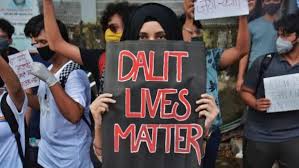
A tragic case of caste violence, Dalit youth dies after fighting for life for 6 days; family demands justice and compensation Gujarat – A Dalit youth was brutally beaten up in Amreli district for allegedly addressing a teenager from another caste as “son”. Six days after the incident, the youth died in Bhavnagar Civil Hospital on Thursday. The deceased has been identified as Nilesh Rathod (village – Jarkiya). The police have so far arrested eight accused in the case and detained a minor, while the search for two accused is on. On Friday, Congress MLA Jignesh Mevani staged a protest with the family of the deceased and demanded justice. In a statement released on Facebook, Mevani said: “Nilesh Rathore… passed away a few days ago after being brutally beaten up by casteist elements for merely calling him ‘son’. We demand that the family of the deceased and others affected in the attack be given 5 acres of agricultural land or a government job each, the case be investigated by a senior officer and the trial be held in a fast-track court to set an example.” Rathore’s family has announced that they will not accept the body until their demands are met. What happened? According to the FIR lodged by Lalji Mansukh Chauhan (28), one of the victims, on May 16, he, Rathore and their other companions were at a bhajiya (pakoda) stall on the Amreli-Sawarkundla road. Rathore had gone to buy snacks from a nearby shop. Chauhan said in the FIR that Rathore returned in a panic and said that the shop owner tried to hit him with an iron ladle because Rathore had asked his minor son, addressing him as “son”, if he needed help in reaching a packet of snacks hanging at a height. When Chauhan reached the shop to look into the matter, the shop owner Chhotha Khoda Bharwad attacked him with a stick. Later, a man named Vijay Anand Tota also attacked both Rathore and Chauhan. The FIR said that bhajiya stall owner Jaga Dudhat rescued the two. Later, Rathore’s uncle Suresh Wala reached the shop to talk, but by then Bharwad had called some more men who attacked them with sticks and sickles and hurled caste-related slurs. According to the complaint, the victims tried to flee from the spot, but the attackers followed and kept attacking them, taunting them for being from a “lower caste”. Finally, the attackers stopped after an elderly man intervened. Legal action The FIR lodged at Amreli rural police station first named four accused — Bharwad, Tota, Bhavesh Mundhwa and Jatin Mundhwa. They were booked under several sections of the Indian Penal Code (BNS), including Section 118(1) – causing grievous hurt, Section 115(2) – voluntarily causing hurt, Section 189 – unlawful assembly, Section 191 – rioting, Section 131 – assault or criminal force, Section 352 – intentional insult for breach of peace, Section 3(5) – responsibility for collective offence. A case was also registered under sections of the Scheduled Castes and Scheduled Tribes (Prevention of Atrocities) Act and the Gujarat Police Act. The police added attempt to murder (Section 109) when Rathore’s condition deteriorated, and murder (Section 103) after his death. Arrests so far The Indian Express quoted Amreli Superintendent of Police Sanjay Kharat as saying that a total of 11 people were involved in the incident, of which 9 have been arrested. Apart from the initial four, the other accused arrested are: Kathad Arjan Mundhwa, Deva Sanga Mundhwa, Duda Boga Mundhwa and Ravi Duda Mundhwa. Police teams are searching for two other absconding accused. Courtesy : Rajan Chaudhary, Hindi News
80 Dalit Families in Gujarat’s Surat Defy Two-Year Delays, Embrace Buddhism
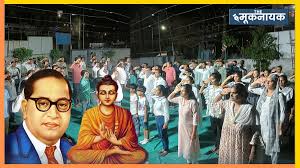
SSD members describe the administration’s approach as a deliberate “Delay and Destroy” tactic, designed to discourage applicants from conversion. Surat- After enduring two years of bureaucratic roadblocks, 80 Dalit families in Surat, Gujarat, have embraced Buddhism in a poignant ceremony held on May 14, at Anand Buddha Vihar, Bombay Colony, Amroli. The families, driven by the vision of equality espoused by Dr. B.R. Ambedkar and the serene teachings of Lord Buddha, overcame persistent administrative delays to secure their right to convert. The Swayam Sainik Dal (SSD), a grassroots organization championing Dalit rights, played a pivotal role in navigating the systemic hurdles, making this a landmark victory for social justice and self-determination. A Protracted Battle Against Bureaucracy The journey began in 2023 when these people submitted applications to formally adopt Buddhism, seeking liberation from the caste-based discrimination embedded in traditional Hindu practices. Under Gujarat’s regulations, conversion applications (Form A) must be verified and approved by the District Collector within one month. However, the process was mired in delays, stretching over two years. SSD members describe the administration’s approach as a deliberate “Delay and Destroy” tactic, designed to discourage applicants. “For six months, we were tangled in paperwork. Then, the issuance of approval letters was stalled,” said an SSD representative. Across Gujarat, an estimated 40-50 thousand similar applications, filed by SSD and other Bahujan organizations, remain pending. Common excuses include staff shortages, officer transfers, or incomplete documentation, forcing applicants to make repeated visits to government offices. Many, exhausted by the ordeal, fail to complete the final step (Form C), resulting in their applications being quietly archived. “The system is rigged to frustrate those seeking to embrace Buddhism,” the SSD member added. “It’s not just inefficiency—it’s a strategy to maintain the status quo.” Despite these challenges, the families remained steadfast, supported by SSD’s unwavering advocacy. The Surat unit of SSD emerged as the backbone of this struggle. Through persistent phone calls, visits, and meticulous follow-ups, they kept the pressure on. As the delays dragged on, SSD escalated their efforts. Last week, they issued a stern ultimatum to the authorities: “Approve the applications, or we protests on the streets.” This bold stance compelled the administration to act, granting approvals to the pending applications. On May 14, the families gathered at Anand Buddha Vihar for an emotional ceremony. As they chanted the Buddha Vandana and reiterated the 22 vows given by Baba Sahab, the air resonated with a sense of liberation and hope. The event was not just a religious milestone but a powerful rejection of caste oppression, echoing Dr. Ambedkar’s call for social equality. SSD says the government delays conversions formalities on purpose to stop people from leaving Hinduism. How Buddhism changed their life Among those celebrating was Mayurraj Nag, a machine operator in a Surat diamond factory and an SSD member. Mayurraj, who embraced Buddhism in 2019, shared that of the 2023 applications, 110 have now been cleared, including the latest 80. His own journey reflects the transformative power of this path. “Eight years ago, I was lost—smoking, chewing gutkha, ignoring my family,” he said. “Meeting SSD in 2017 and learning about Babasaheb changed me. I quit my habits, started caring for my parents, and found purpose.” Mayurraj’s wife, Ashmita, whom he married four years ago in a love marriage blessed by their families, also embraced Buddhism. “I explained Buddhist teachings to her during our courtship. She understood, and now our family lives simply and happily,” he said. Mayurraj feels a newfound respect in his community. “People call me ‘bhai’ now, but it’s with respect. They listen when I speak, and that’s because of Buddhism.” Chandrika Shakya, a 30-year-old schoolteacher and member of SSD’s Jhalkari Brigade, has followed Buddhism for a decade. Despite her newborn keeping her from active outreach, she remains committed to empowering women. “I used to visit Dalit colonies, telling women about Babasaheb’s fight for equality,” she said. “We don’t push Buddhism first—we share his story, and people see it’s the way out of discrimination.” Chandrika’s family has also benefited financially. “We stopped spending on festivals like Holi or Diwali—no sweets, no puja items. That money now goes to our family’s future.” The administrative delays reflect a broader resistance to religious conversion, particularly to Buddhism, which challenges the caste hierarchy of Hinduism. SSD members allege that the system deliberately obstructs conversions to preserve traditional structures. “Buddhism has no rituals or caste divisions, which threatens the old ways,” an SSD member explained. “The delays are meant to tire people out, but we won’t let that happen.” SSD’s Broader Mission Founded in 2006 in Rajkot by 50 Dalit activists, SSD is dedicated to eradicating social inequalities and fostering a humane society. Rejecting hierarchies, every member is a “swayam sainik” (self-soldier). SSD conducts “chintan shivirs” (reflection camps) in rural areas to educate marginalized communities about their rights. Their ambitious goal is to facilitate the return of 20 million indigenous people to Buddhism by 2028, with planned mass conversion events on Ambedkar Jayanti from 2024 to 2028 in cities like Delhi, Kolkata, Bangalore, Bhopal, and Mumbai. “SSD empowers communities by raising awareness about constitutional rights and exposing the divisive rituals of Hinduism,” a senior member said anonymously. “We encourage people to shape their own futures.” Buddhism, with its rejection of caste and rituals, is seen as a pathway to dismantle discriminatory practices, aligning with SSD’s vision of equality. Courtesy : Geetha Sunil Pillai, The Mooknayak Note: This news is originally published on https://themooknayak.com/ and is for use by the non-military/non-commercial community, especially those in the human rights sector.