
Used and forgotten: The untold stories of Dalits of 2002 Gujarat riots
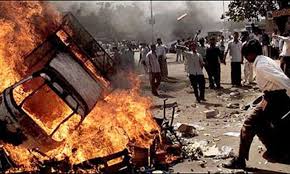
Sejal ben’s day starts at 5 am with usual household chores. She then leaves for work. For the last 20 years, Sejal ben has worked as a manual scavenger around the villages in Ahmedabad district to earn a livelihood and raise her daughter. Forty-one-year-old Sejal is the wife of Dulat Parmar, one of the accused in 2002 Gulberg Society riots case. Her world fell apart in June 2016 when the Metropolitan Court in Ahmedabad found Parmar and 23 others guilty of murdering 69 Muslims including former Congress MP Ehsan Jafri in Gulberg Society, an uppermiddle class gated society in Naroda area of the city. Amongst the accused were VHP leader Jaideep Patel, former BJP corporator Vallabhbhai Patel, Bajrang Dal leader Rajubhai Patel, along with 19 others out of whom 6 belong to Patel community and the other 16 were Dalit men. The plight of Dalit families “When he got jailed in 2016, I had hope that the leaders will help us. After all, my husband was told he is an important member of the Hindu movement. But years passed and he remained in jail. I had to raise my daughter alone with no financial support from anyone. Manual scavenging fetched me around Rs 100 a day as people usually pay less to women. The VHP leaders wouldn’t even meet me. The only person who was accessible was Hitesh bhai (former BJP corporator). He kept assuring me that leaders have not forgotten him (Dulat) and his ‘sacrifice’,” Sejal ben tells The Federal. In December 2019, the Gujarat High Court acquitted 10 accused of Gulberg Society massacre case on ground of lack of evidence while upholding life sentence of 16 Dalit men on grounds that they were ‘positively identified’ by the victims. In April 2025, the Supreme Court upheld the High Court’s verdict. Amongst those acquitted were Jaideep Patel, Valabh bhai Patel, Raju bhai Patel and six other Patel men who had been out on bail. “It was the darkest day of my life. I lost all hope. For years, I have battled financial crisis, social boycott and threats in the hope that one day it will all be fine when Dulat comes home to us. But I feel lost now. They (public prosecutor) told me thecase is closed and nothing can be done,” shares Sejal as she breaks down. “We used to live in Sardarpura area (in East Ahmedabad). We did not have much but we were happy. Shalu, our daughter, was around four years old. I was pregnant with my second child. Dulat used to work in a chemical factory in the city. Money was enough for us sustain. But then he began to attend meetings. Leaders would come and call him and tell him how he had a responsibility as a Hindu to stand up against Muslims,” she says. “At first I told him not to go. But he was promised house and land that Muslims would vacate. And then one day in February 2002, he left saying he is going to attend a meeting and did not come back for a week. When he came back home finally, he had changed… in fact everything had changed. He was arrested in August 2002 and we had to shift out of Sardarpura. We couldn’t live there anymore. Incidents of violence followed many months after the riots. Muslims and Dalits would kill each other for revenge. I left the day I was threatened with rape. The next week, I had a miscarriage,” she adds. Sejal now lives in Vejalpur area of western Ahmedabad where around 60 other Dalit families live in a slum flanked by affluent societies. But the 60 huts of the slum have no access to water, sanitation, electricity or any other civic facility. In fact, the homes have been destroyed by local authorities as illegal encroachment several times already and they face a constant threat of eviction. “In the years, I have lived in many slums across Ahmedabad but have never been accepted by the other residents. Everyone called us murderers and wished my husband was given death sentence. Finally, in 2023, I shifted here in this slum where there are two more families like us whose men are accused of rioting,” tells Sejal. There are many women who face the same fate as Sejal and bear the brunt of being the family of men accused or convicted of rioting and killing people. In 2011, a special fast-track court in Mehsana had sentenced 31 people found guilty of killing and burning 39 Muslims to death and raping and murder of three women. All 31 were awarded life sentence, a fine of Rs 20,000 each. Six months of rigorous imprisonment were added for the accused that couldn’t pay the fine. This was the first verdict in the 2002 Gujarat riots cases. All accused were charged with murder, attempt to murder, arson, rioting and criminal conspiracy. By 2021, all accused belonging to Patel community including a local BJP leader were acquitted except for three men who belonged to Valmiki, a sub community amongst the Dalits. The then additional sessions judge, LG Chudasma, while acquitting the 28 men held that the prosecution case was based on “mere suspicion without any evidence on record”. “There were two parts of the case – one was murder of 39 Muslims, including seven children and the other was rape and murder of three Muslims women. In total 112 witnesses gave their testimony against the accused and identified them. Each witness told their own story of what they endured on the day and singled out the accused who killed their family members. But not one testimony was granted in the first case stating that it was merely the suspicion of the victims who cannot be certain that they saw the same men (accused). Ironically, testimonies of the same victims were admitted in the second case where accused were three dalit men,” says advocate Sohail Tirmizi who represented the victims. “We are not happy with the