
Dalit youth dies by suicide after harassment over ‘upper-caste’ style dressing in Gujarat
A 19-year old Dalit youth named Mahendra Kalabhai Parmar committed suicide after facing assault from five men of upper caste for wearing clothes resembling to the upper caste men. The incident occurred in Banaskantha district in Gujarat. Mahindra had gone missing on July 10 and his body was discovered on July 12 in a village well. An FIR was registered by Mahendra’s relative, Bijalbhai Parmar who alleged that Parmar was brutally assaulted near the Panchayat office by five men. Police are leading an investigation and the accused have been charged under sections of Indian Penal Code and the SC/ST Act. The accused are named as Khetabhai Rabari, Sendhabhai Rabari, Rudabhai Rabari, Amrabbai Rabari, and Lakhabhai Rabari. Surprisingly, Rabaris are a pastoral community that belong to other Backward Castes. The accused showed objection when Mahindra wore clothes generally worn by upper caste men and humiliated him and attacked him. The family demanded strict action against the accused and called Mahindra’s death “a result of brutal caste based assault.” Courtesy : Muslim Mirror Note: This news is originally published on https:/muslimmirror.com/ and is for use by the non-military/non-commercial community, especially those in the human rights sector.
How Dalit lawyer Satyesha Leuva defied odds to become Gujarat sarpanch
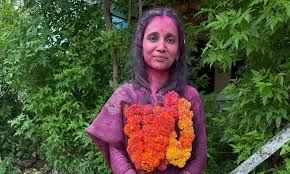
Leuva, an SFI activist, won sarpanch elections at Vadvasa despite CPI(M)’s limited presence, signaling grassroots support for Left ideology in BJP-ruled Gujarat At the age of 25, Satyesha Leuva, a lawyer by profession, was elected sarpanch of her native village, Vadvasa, in Gujarat’s Sabarkantha district at the end of June. The win has turned heads not because of her age, but because the Dalit woman belongs to the Students’ Federation of India (SFI), the student wing of the Communist Party of India (Marxist) – a party with almost no presence in Gujarat. No family history What makes her win even more remarkable is that Satyesha has no family history of Left politics. Her father is an advocate, her mother studied law but never practised, her brother works at the India Post, and her sister is a nurse. Traditionally, she comes from a family of Congress sympathisers, and yet, in a state politically dominated by the Bharatiya Janata Party (BJP), Satyesha chose to join the SFI and the CPI(M). In the recently concluded SFI All India Conference, Satyesha was elected the All India vice-president. She’s also a permanent invitee to the CPI(M) Gujarat State Committee. She did her schooling from a grant-in-aid school in Sabarkantha, before moving on to do her BSc, LLB and LLM from Gujarat University. Activism was not in her plans, but it happened. Beginning of activism Before 2019, SFI had not held a state conference in Gujarat since 1989, pointed out Satyesha in an interview with The Federal. It had all but disappeared from campuses and public memory. That was until Nitish Mohan, an engineering graduate from Kerala who had done his schooling in Gujarat, was sent to the state to revive the organisation. “He really built the organisation and established our presence. Initially, it was my elder brother Aagman who joined SFI when he was in college. At that time, my parents and even I used to tell him not to go to all these political events. But he was adamant. One day, there was a mass fund collection for Bhagat Singh’s anniversary. I also went along. We stood with boxes in the Darwaza market in Ahmedabad and asked for funds. I met so many like-minded and progressive people there. I knew this was the place for me,” she recounted. Her role in activism grew during the pandemic and after the Hathras incident where a Dalit girl was raped and murdered. “During the Covid pandemic, we went back to Vadvasa because there was no lockdown there as such. Some of my SFI comrades and I began organising small evening meetings in nearby villages on the Hathras issue and gender and caste violence. We mobilised people in 11-12 nearby villages on the issue,” she recalled. It led to a historic rally in Himmatnagar attended by people from 35 villages, which drew media attention. “I realised something then. If people were detained, other comrades would march on. It was not just for show,” she said. Overcoming hurdles Her family opposed her in journey with SFI. At the time she joined the SFI in Gujarat, she was the only active woman member, she says. “Everyone welcomed me, but my family was worried. They would ask me why I have to spend so much time with the boys. They were concerned because some of our campaigns required me to stay outdoors for 3-4 days at a stretch. I met with a lot of reluctance,” she says. But as she continued to work on people’s issues, she was met with more acceptance. “During the lockdown, many students couldn’t pay school fees. Transfer certificates were withheld. Schools refused to promote students unless full payment was made. We took up these cases, campaigned hard, and got fee waivers for many. There were also scholarship issues, especially for SC/ST and OBC students. Slowly, my family began to see the value in what I was doing,” she explained. In sync with Left ideology It wasn’t until much later, though, that she realised the SFI was affiliated with the CPI(M). “Initially, I didn’t even know SFI was an all-India organisation. When I found out it was linked to the CPI(M), I began studying more about the party’s history, ideology, and why it mattered. I like that the Left ideology speaks of equality. It is what the world needs,” she says. Satyesha brushes aside criticism that women and Dalits don’t find space in the CPI(M). “SFI gave me something no other organisation did: respect and equality. As a Dalit girl, I never felt seen in society. But here, I found a platform. I could speak. I could lead. And they let me. If I didn’t feel equal here, I wouldn’t have reached this far. In SFI, if you work, you rise,” she shared. Although, Satyesha contested from Vadvasa – her native village, it is not a place she has had ties to for several years. Eight years ago, her family shifted to Ahmedabad. So, when panchayat elections were announced, she wasn’t on anyone’s radar, not even her own “I wasn’t planning to contest. But the youth of the village, whom we had worked with during the pandemic, started encouraging me. They told me: we need someone who can speak, who can fight. Someone who will actually work on the issues we face, not just token candidates,” she says. Election campaign Once the decision was taken, Satyesha concentrated on both offline and online modes of campaign. “We went door-to-door, not just to ask for votes but to listen. I had pamphlets with specific issues written on them — bad roads, lack of drainage, no health centre, no playgrounds, no library,” she shared. Social media was also a powerful tool. Every day, she would circulate short videos on WhatsApp, talking about one issue at a time. “I didn’t use Instagram or Facebook. Just village WhatsApp groups. That’s where people are,” she said. But her journey wasn’t without pushback. On the last day for withdrawal of nominations, pressure mounted
What is this… Rahul Gandhi had gone out to treat the disease, but the disease worsened in Gujarat, Congress’s shameful performance in the by-elections
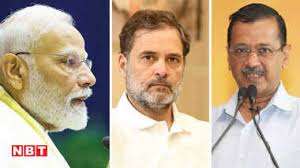
Gujarat By polls Results: Rahul Gandhi’s hopes of strengthening the Congress in Gujarat have been jolted in the by-elections. By saving its Visavadar seat in the BJP’s stronghold, AAP gave a message of being combative, but could neither save its five seats in the past nor has it emerged stronger now. While BJP managed to win by a big margin in Kadi, Congress’s deposit was forfeited in Visavadar. Ahmedabad: Congress has suffered a major setback in the Gujarat assembly by-elections. While Congress could not give a tough fight in Kadi, the position of Congress became even weaker on the Visavadar seat. This time too, the deposit was not saved. Congress has suffered a severe setback on both the seats when Rahul Gandhi is busy finding good horses. In the 2022 assembly elections, Congress won only 17 seats out of the total 182 seats in the state. Congress has lost five of its MLAs in the last 30 months, during this period by-elections were held on a total of seven seats in the state but Congress could not win a single seat. In such a situation, the question arises that how will the mission of Rahul Gandhi to defeat BJP in 2027 succeed? AAP got a new ‘Sanjeevani’ Congress has got 5501 votes in Visavadar seat. In the last elections, it had got 16,963 votes. Similarly, the party’s candidate Ramesh Bhai Chavda has got 60290 votes on Kadi seat. He had to face defeat by a margin of 39452 votes. In the last election, the party’s candidate Praveen Parmar had got 78,858 votes. Then BJP had won this seat by 28,194 votes. After registering victory on the Visavadar seat, AAP’s state president Isudan Gadhvi made a big announcement. He said that this victory is of the people of Gujarat. It is of the farmers of Gujarat. This is the victory of the workers and the middle class. Gadhvi said that this is the victory of the warriors of Aam Aadmi Party. Aam Aadmi Party government is going to be formed in Gujarat in 2027. It is clear that AAP has got a new lease of life after the crushing defeat in the Delhi elections. Current situation after 2022 assembly elections? Congress 17(-5), 12 MLAs AAP 5(+-1), 05 MLAs BJP 156(+5) 161 MLAs If AAP was successful, why did Congress miss out? In the 2022 elections, AAP won only five seats with 14 percent votes. Before the Ayodhya Ram Mandir Pran Pratishtha, when AAP MLA Bhupat Bhayani left the party and joined BJP, AAP had announced at that time. The party had said that those who betrayed the people of Visavadar will be avenged. To retain the Visavadar seat, AAP fielded the most popular and big leader in the state. Like AAP, five Congress MLAs also joined BJP, but Congress could not take revenge on even a single seat. All five MLAs won on the lotus symbol. Arjun Modhwadia is also included in these. By winning the Visavadar seat, AAP gave a message that the party is serious about Gujarat. There was a setback in the local body elections When elections were held for 68 municipalities in the state in February this year, Congress suffered a major setback in them. BJP had registered a big victory. Congress’s condition became weak in these elections. After this, Rahul Gandhi started the process of strengthening the organization in the state with ‘Nutan Gujarat-Nutan Congress’ (New Gujarat, New Congress) to defeat BJP in the 2027 elections. Under this, the organization creation campaign and convention was held in Ahmedabad. After a long exercise, the party has declared 40 district/city presidents of the state on June 21, two days ago, but the setback received in the by-elections has forced the party to think about how it will be able to fight BJP in 2027, because AAP has so far made a dent in its vote bank. Out of the five assembly seats in four states, Congress has definitely won the Nilambur seat in Kerala. In 2021, independents won there. Written by: Achalendra Katiyar Achalendra Katiyar has studied from Jamia Millia Islamia Delhi. After this, he worked in reputed national newspapers of Meerut, Kanpur and Delhi. Since June 2020, he has been active in understanding the politics and culture of Gujarat. Courtesy: Hindi News
Two decades on, hunger still haunts Gujarat: Survey exposes stark gap behind poverty claims
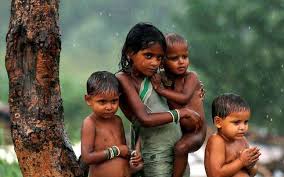
A Niti Aayog report, released about two years ago, estimated that in Gujarat — which our powers-that-be have long considered a model state — 11.66% of people are “multidimensionally poor,” a term referring to an index that seeks to estimate “multiple and simultaneous deprivations” at the household level across three macro categories: health, education, and living standards. The report suggests that multidimensional poverty in Gujarat declined by around 7% over a period of five years, pointing out that in tribal-dominated districts, where poverty levels were particularly high, there has been a clear improvement: in Dahod from 54.93% to 38.27%, in Dangs from 57.33% to 26.61%, in Narmada from 37.11% to 22.62%, and in Panchmahal from 41.52% to 18.11%. Basing its estimates on the National Family Health Surveys of 2015–16 and 2019–21, the report claims the “most rapid reduction” in multidimensional poverty occurred in districts located in four states: Gujarat, Madhya Pradesh, Uttar Pradesh, and Rajasthan. While not directly disputing what the Government of India report highlights regarding Gujarat, a new survey carried out by a civil rights group in two tribal districts — Dahod and Panchmahal — and two non-tribal districts — Bhavnagar and Morbi — suggests that things aren’t as rosy as they are made out to be. A follow-up to a similar survey carried out in 2004, the new survey — conducted in 2025 by Anandi (Area Networking and Development Initiatives or ASAA) — reveals that, even after two decades, total food security continues to elude nearly 80% of the population in the surveyed areas. To quote Sejal A. Dand, a senior activist directly involved in both the 2004 and 2025 surveys, two decades ago, 10% of people were found to be “food secure,” and this percentage has gone up by just 2% over the years — to 12%. Releasing details of the 2025 survey, which was conducted with the help of senior academic Prof. Dipa Sinha, currently with Azim Premji University, another Anandi activist, Neeta Hardikar, told the Ahmedabad media that there is certainly a change: unlike in 2004, there is “no full day hunger” as found then, “but our survey suggests that a large number of households often don’t have access to food, especially in the tribal areas.” The survey results confirm this: in 2004, it was found that in the sample households of the tribal area of Panchmahal, a staggering 73.66% were food insecure for more than six months in a year. In contrast, the 2025 survey shows that 7.06% “live in hunger,” while a whopping 86.38% have “incomplete meal,” and only 6.56% have a “full meal.” Conditions are worse in Dahod district: here, 24.61% live in hunger, 58.78% have “incomplete meal,” and only 16.61% have a “full meal.” The 2025 results indicate that the situation is not much better in the non-tribal areas of the Saurashtra region of Gujarat where the survey was also conducted. In Malia (Morbi district), 9.10% “lived in hunger,” 75.51% had “incomplete meal,” while only 15.38% had a “full meal.” Similarly, in Shihor and Umrala of Bhavnagar district, 15.98% “lived in hunger”, 54.84% had “incomplete meal,” and just 14.13% had a “full meal.” The 2025 survey was undertaken specifically to assess how effectively the National Food Security Act, 2013 — which aims to provide subsidized food grains to approximately two-thirds of the country’s 1.4 billion people — has been implemented since it became operational in Gujarat about a decade ago. A total of 1,261 households were included in the survey, mostly belonging to marginalised communities, with a deliberate effort to include those facing social vulnerabilities such as single women, the disabled, and the elderly. “The results are therefore not representative of the state on average, but they give an indication of what is happening among some of the vulnerable communities in the state — these were the communities and families that the NFSA was expected to help,” a survey note underlines. It adds, “Over a third (34%) belonged to Adivasi communities and more than half (54%) to OBC communities. Most of the Adivasi respondents are from Dahod and Panchmahal, and the OBCs from Bhavnagar and Morbi. The remaining were SCs and OBCs, with only 21 respondents belonging to the ‘general’ category.” While 86% of the respondents reported having a smartphone in the household — the lowest in Dahod (77.3%) and highest in Morbi (93.1%) — only 43.7% had cultivable land. Most of the households in Bhavnagar and Morbi owned no cultivable land (over 80%), while in the tribal districts of Dahod and Panchmahal, most households were engaged in their own cultivation, although the land size was less than 2 bighas. Respondents were asked about the frequency of consumption of different foods for each season (summer, monsoon, winter) — cereals, pulses, fruits and vegetables, milk and milk products, and flesh foods (chicken, meat, eggs) — to define what qualifies as a “full meal.” The “incomplete meal” category was used to identify households where not all members consume rice, dal, fruits, vegetables, milk, curd, meat, eggs, oil, etc., on a regular basis. These households rely mainly on carbohydrate-based food to satisfy hunger. The “living with hunger” category identified households whose meals are “donated, borrowed, and largely cereal-based, infrequent and inadequate.” The note observed: “In spite of the legislation, which covers 75% of rural households under the targeted public distribution system, the proportion of households which are not food secure is very high. Only around 12% of the households are able to entirely meet their food security needs in the sense of having a diverse diet regularly, including foods from different food groups.” By Rajiv Shah Courtesy : Counterview Note: This news is originally published on https:/counterview.com/ and is for use by the non-military/non-commercial community, especially those in the human rights sector.
After Rahul Gandhi’s big experiment in Gujarat, Congress announced city and district presidents, see full list
Gujarat Congress District President List: To defeat BJP in the 2027 Gujarat assembly elections, Congress started the organization creation campaign in March. Under this, Congress had decided to give strength to the district and city presidents. Congress has announced the names of new district and city presidents for the state. Ahmedabad: Congress has announced the new district and city heads of the state after the exercise of organization creation campaign in Gujarat. On the initiative of Congress leader Rahul Gandhi, the party had changed the process of appointment of district presidents from Gujarat. The party has made Sonal Patel the Ahmedabad city president, while the old heads have been retained in Vadodara city and district. Rahul Gandhi had visited Gujarat. After this, he appointed PCC observers along with the appointment of AICC observers. After this the party has appointed new city / district presidents. The presidents have been repeated in the list announced by the Congress, but according to an estimate, there are about 50 percent such names. Those who have got the responsibility of district / city president for the first time. Congress announced 40 city and district presidents for Gujarat. 2027 assembly election target A statement issued by the Congress said that the party’s national president Mallikarjun Kharge has approved the appointment of District and City Congress Committee (DCC) presidents in Gujarat with immediate effect. These appointments have been made after a long exercise done under a rigorous organizational under the Organization Creation Campaign. To give a tough fight to the BJP in the 2027 Gujarat Assembly elections, the Congress has started the process of change in the organization from Gujarat. Its goal has been set to revive the party structure from booth to district level. List of new district and city presidents of Gujarat Congress Sl. No. Name of District/City President 1 Ahmedabad City Sonal Patel 2 Ahmedabad Rural Rajesh Kumar Gohil 3 Amreli Pratap Dudhat 4 Anand Alpesh Padiyar 5 Aravalli Amubhai Patel 6 Banaskantha Gulab Singh Rajput 7 Bharuch Rajendra Singh Rana 8 Bhavnagar Rural Pravinbhai Rathore 9 Bhavnagar City Manohar Singh Lalbha 10 Botad Himmat Kataria 11 Chhota Udepur Shashikant Rathwa 12 Dahod Harshadbhai Ninama 13 Dang Snehil Thackeray 14 Devbhoomi Dwarka Palbhai Ambalia 15 Gandhi Nagar Arvind Singh Solanki 16 Gandhinagar City Shakti Patel 17 Shakti Patel Punjabhai Vansh 18 Jamnagar City Virendrasinh Jadeja alias Diggubhai 19 Jamnagar Rural Manoj Kathiria 20 Junagadh City Manoj Joshi 21 Kheda Kalusingh Dabhi 22 Kutch V.K. Hambal 23 Mahisagar Harshad Shantilal Patel 24 Mahesana Baldevji Thakor 25 Morbi Kishorbhai Chikhlia 26 Narmada Ranjitsinh Tadvi 27 Navsari Shaileshbhai Patel 28 Panchmahal Chetansinh Parmar 29 Patan Ghembarbhai Patel 30 Porbandar Rambhai Maru 31 Rajkot City Dr. Rajdeepsinh Jadeja 32 Rajkot Rural Hitesh M Vohra 33 Sabarkantha Rambhai Solanki 34 Surat Rural Anand Chaudhary 35 Surat City Vipul Babubhai Udhnawala 36 Surendranagar Naushad Solanki 37 Naushad Solanki Naushad Solanki 38 Naushad Solanki Jashpal Singh Padhiyar 39 Vadodara City Ritwik Joshi 40 Valsad Kishanbhai B Patel Observers were announced in April The party had announced Gujarat Assembly polls on April 12, 2025 43 AICC observers and 183 PCC observers were deployed in all the districts of the state. These included state in-charges, MPs, MLAs and former PCC presidents. After this, the AICC observers along with the PCC observers visited all 26 Lok Sabha constituencies, 182 assembly constituencies and almost all 235 block Congress committees. After this, the names of the district and city presidents were decided. Congress is in the worst position in Gujarat till now. Out of 26 Lok Sabha seats, Congress has only Banaskantha seat, while it has only 12 MLAs in the assembly. Congress state chief Shakti Singh Gohil is the only Rajya Sabha member. His term is till April next year. Written by: Achalendra Katiyar Achalendra Katiyar has studied from Jamia Millia Islamia Delhi. After this, he worked in reputed national newspapers of Meerut, Kanpur and Delhi. Since June 2020, he has been active in understanding the politics and culture of Gujarat. Courtesy: Hindi News
Skeletons thrown out of graves for soil! Dalit community hurt by barbarism of mining mafia in Gujarat, appeals to CM for justice

Lilaben Makwana of Parnaala village and other people of Dalit community submitted a memorandum in Surendranagar Collectorate stating that the mining mafia not only looted natural resources by illegally mining soil but also deliberately tried to spread communal hatred by targeting the cemetery of Scheduled Castes. Surendranagar – The mining mafia has committed an act that shames humanity in Parnaala village of Limbdi taluka of the district. In this village, illegal soil mining was done by targeting the cremation ground of Scheduled Caste community and human skeletons buried there were taken out and thrown. This disgusting act not only hurt the religious and emotional sentiments of the community but also created an atmosphere of fear and communal tension in the area. The villagers have expressed deep anger over the inaction of the local administration and police in this matter and have demanded immediate action by submitting a written complaint to the Chief Minister, Social Justice and Empowerment Department, Surendranagar Collector and Superintendent of Police. Lilaben Makwana of Parnaala village and other people from the Dalit community submitted a memorandum to the Surendranagar Collectorate, giving a detailed account of the incident. According to them, the mafia damaged the crematorium and ruthlessly threw out the skeletons buried there during illegal mining. This act has deeply hurt the sentiments of the relatives of the deceased. Not only this, these anti-social elements did not even respect the rights of the village sarpanch and closed the crematorium from all sides, making it impossible for the community to use it. The local community informed the local police and administrative officials verbally and in writing several times in this matter, but no attention was paid to their complaints. The villagers say that the arbitrariness of the mining mafia and the silence of the administration have forced them to convey their matter to the higher authorities. They have warned that if immediate action is not taken in this matter and any untoward incident happens, the district administration will be solely responsible for it. They say that the mining mafia not only looted natural resources by illegally mining soil but also deliberately tried to spread communal hatred by targeting the cemetery of the Scheduled Castes. For this, they have demanded to register a case under the Indian Penal Code (BNS) and Scheduled Castes and Tribes Atrocities Prevention Act (Atrocity Act) and immediate arrest of the accused. Apart from this, there is also a demand to seize all the vehicles used in illegal mining and impose heavy fines. The villagers have also demanded that police security be arranged in their localities, so that such incidents can be prevented in future. Along with this, the Gram Panchayat has been demanded to free the crematorium from the possession of domineering elements by taking action under the Land Grabbing Act. The community also requested that the criminal history of the mining mafia be checked and if they are found to be repeatedly involved in such crimes, they should be expelled from the district. Apart from this, the Dalit community has given many concrete suggestions for the development and security of the crematorium. They have demanded that a paved road be built for access to the crematorium, security walls and gates be built all around, benches be installed for sitting, trees be planted and a room be built to keep equipment. Grants have been demanded from the Gram Panchayat, Taluka Panchayat and District Panchayat for these works. Also, the District Development Officer has been requested to approve the development works of the crematorium through special grants. Given the seriousness of the matter, the community has demanded that a joint team of Deputy Collector, Mamlatdar and Deputy Superintendent of Police be formed to visit the spot and submit a factual report to the state government through the District Collector. Calling the incident a violation of human rights, the community has appealed to the administration for quick and transparent action. Social worker Kirit Rathod of Navsarjan Trust visited Parnaala village and submitted a written memorandum to the Chief Minister, Social Justice and Empowerment Department, Surendranagar Collector, Superintendent of Police and other responsible officials in this matter. He termed the incident as a well-planned conspiracy against the Scheduled Caste community and demanded a thorough investigation from the administration and strict action against the culprits. Courtesy: Geetha Sunil Pillai, Hindi News
Gujarat: Dalit youth was going to take Shrikhand, casteist people did not like his style, so they beat him up and cut his hair!
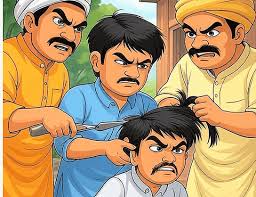
The Gondal police have registered a case under sections 140(2), 324(2), 352, 54 (assault, kidnapping, property damage) of the Indian Penal Code (BNSS) 2023 and sections 3(1)(e)(r)(s), 3(2)(5) (caste insult and violence) of the SC/ST Act. Rajkot- Casteism is deeply rooted in society. In recent years, there has been an alarming increase in cases of caste violence, where Dalits and members of backward classes not only have to face social discrimination, but also physical violence and humiliating behavior. Similarly, a shocking incident has come to light in Gondal taluka of Rajkot, Gujarat, where a Dalit youth was beaten up by using caste-specific abuses and his hair was forcibly cut. The victim Kunalbhai Meghjibhai, who lives in Sadakpipliya village, has lodged a complaint with the Gondal police. Talking to The Mooknayak, 24-year-old Kunalbhai said that he has been living on rent with his parents and sister in Nareshbhai Jamod’s house in Sadakpipliya for five years. Kunal works as a laborer in Kesari Nandan factory near Bharudi Pariya and has studied up to class 9. Kunal told about the incident, “On the night of June 11, around 8:30 pm, I had left home on my motorcycle to get Shrikhand. Then the accused Satishbhai Vekariya and Markand Vyas came in front of me on their motorcycle and said, “Jadiaara (caste slur), where are you going?” and abused me. I stopped my motorcycle and asked them not to abuse me. To this, they said, “This is not your father’s village,” and started beating me with sticks. I ran away from there and reached Bajrang Dairy lane, but both of them came there on their motorcycle and then beat me with a stick. They pushed me against the wall and hit me and then took me to Bapa Sitaram temple on their motorcycle.” Kunal further said, “In the temple, they again beat me with a stick. Prayagbhai Prafulbhai Chauhan was also present there. Satish and Markand asked Prayag to bring scissors. Prayag brought scissors, with which Satish and Markand cut my hair. While cutting my hair, they were saying, “This Jadiara has long hair, he likes to keep long hair!” This was my first meeting with these two. They also broke the headrest and indicator of my motorcycle. The matter did not end here, after this Kunal returned home and told his neighbors about the incident. About an hour later, Satish again came to his house with a motorcycle and started abusing Kunal and his mother Manisha Ben. The landlord Nareshbhai pacified him and sent him away. Kunal told that he had suffered physical injuries, so he called 108 ambulance. Both mother and son were taken to Rajkot Government Hospital, where doctors confirmed serious injuries. On Kunal’s complaint, Gondal police have registered an FIR against the three accused. Indian Penal Code has been registered in the case. Sections 140(2), 324(2), 352, 54 (assault, kidnapping, damage to property) of the BNSS Code, 2023 and sections 3(1)(e)(r)(s), 3(2)(5) (caste-based insult and violence) of the SC/ST Act have been imposed. Courtesy : Geetha Sunil Pillai, Hindi News
Ahmedabad air crash: Ex-Gujarat CM Vijay Rupani among victims, confirms BJP; calls his demise ‘a big loss’
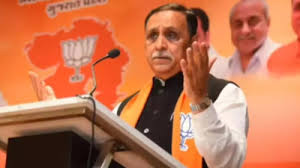
NEW DELHI: BJP leader and former Gujarat chief minister Vijay Rupani is among the victims of the Ahmedabad Air India crash, top leaders of the party confirmed on Thursday. “Our leader Vijay Rupani, was going (to London) to meet his family. He is also a victim in this incident. May his soul rest in peace. This is a big loss for the BJP,” Union minister and Gujarat BJP president CR Paatil told reporters. — PTI_News (@PTI_News) BJP MP Sambit Patra called Rupani’s demise an “irreparable loss.” “The news of the tragic demise of former chief minister of Gujarat and senior member of the BJP family, Vijay Rupani ji, in the unfortunate plane crash in Ahmedabad is extremely painful and heart-wrenching. This is an irreparable loss not only for Gujarat but for the Indian politics,” Patra posted on X. — sambitswaraj (@sambitswaraj) Rupani was among 242 people on board the London-bound flight which took off from Ahmedabad at 1:38 pm and crashed within minutes of take-off. There were 230 passengers (169 Indians, 53 British, seven Portuguese and one Canadian), two pilots and 10 cabin crew. The BJP leader was the 16th chief minister of Gujarat, in office from August 2016 to September 2021. Courtesy : TOI Note: This news is originally published on https:/timesofindia.com/ and is for use by the non-military/non-commercial community, especially those in the human rights sector.
Congress attacks BJP over rising atrocities on Dalits, weaker sections in Gujarat
New Delhi (PTI) The Congress on Saturday launched an offensive against the BJP governments at the Centre and Gujarat, claiming an increase in atrocities on Dalits and weaker sections in the state. Congress leader Jignesh Mevani alleged that the BJP-RSS do not believe in the Constitution of Babasaheb Ambedkar but believe in the values of ‘Manusmriti’. Mevani claimed this mindset has led to a rise in atrocities against the oppressed and weaker sections of society, citing instances such as Rohith Vemula’s suicide, the family of a rape victim in Hathras not allowed to see her after her death, and Dalit youths brutally beaten at Una in Gujarat. He also cited Home Minister Amit Shah saying in Parliament that “it has become a fashion nowadays to chant Ambedkar-Ambedkar…” The Congress leader told reporters that several incidents of Dalit atrocities have been reported from Gujarat, including a 19-year-old man who was killed in Amreli and an elderly Dalit man who was burnt alive in Patan. Mevani also alleged that Dalit boys going to lodge a complaint against atrocities in Surendranagar district were shot with AK-47. He further highlighted the horrific case of gang-rape of a Dalit girl for 11 days in Santrampur, alleging that three BJP leaders were involved in the case. Citing the low conviction rate in cases of atrocities on Dalits, Mevani said at the national level, this figure is 30-35 per cent, but in Gujarat it is only 3-5 per cent, which meant 95 per cent of the culprits go scot free. The Congress leader also criticised Gujarat Chief Minister Bhupendra Patel for attending a programme organised by the accused instead of meeting the victim after the kidnapping and torture of a Dalit youth in Gondal, Rajkot. He also claimed that Dalit, OBC and Adivasi students were being discriminated against by the Gujarat Public Service Commission as part of a conspiracy, alleging that they were deliberately given less marks in interviews. The Congress is preparing for a big demonstration in August-September against the atrocities on Dalits, Adivasis and weaker sections in Gujarat, he said. PTI SKC ARI This report is auto-generated from PTI news service. ThePrint holds no responsibility for its content. Courtesy : The Print Note: This news is originally published on https://theprint.com/ and is for use by the non-military/non-commercial community, especially those in the human rights sector.
Mevani attacks BJP over atrocities on Dalits, weaker sections in Gujarat
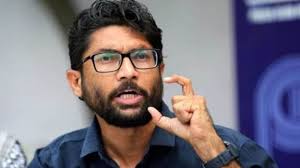
Add Your Heading Text HereCiting the low conviction rate in cases of atrocities on Dalits, Mevani said at the national level, this figure is 30-35%, but in Gujarat it is only 3-5% DalitsThe Congress leader told reporters that several incidents of Dalit atrocities have been reported from Gujarat such as the murder of a 19-year-old Dalit youth in Amreli (File) Congress’s Vadgam MLA Jignesh Mevani on Saturday questioned Prime Minister Narendra Modi and Home Minister Amit Shah’s silence on alleged incidents of atrocities against Dalits, adivasis and other weaker sections in Gujarat, and announced that the party will hit the streets to raise the issue. Addressing a press conference at the AICC headquarters in the Capital, Mevani accused the PM, the Home Minister and the RSS of “putting the values of Manusmriti above the Constitution”. Citing the low conviction rate in cases of atrocities on Dalits, Mevani said at the national level, this figure is 30-35%, but in Gujarat it is only 3-5%, which means 95% of the culprits in the state go scot-free. Story continues below this ad The Congress leader told reporters that several incidents of Dalit atrocities have been reported from Gujarat such as the murder of a 19-year-old Dalit youth in Amreli, the alleged setting ablaze of a Dalit senior citizen in Patan and the alleged gangrape of a Dalit girl in which BJP members are alleged to have been involved. “The Congress is preparing to launch a massive demonstration in August-September against atrocities being afflicted on Dalits, adivasis and those from the weakened sections in Gujarat,” he announced. Courtesy : TIE Note: This news is originally published on https://theindianexpress.com/ and is for use by the non-military/non-commercial community, especially those in the human rights sector.