
GTU study maps Dalit entrepreneurship in Gujarat
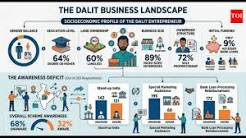
Ahmedabad: A doctoral study from Gujarat Technological University (GTU) offers one of the most comprehensive assessments to date of Dalit entrepreneurship in Gujarat, detailing how many within the community are turning to business ownership as a means of economic independence and self reliance, an idea articulated by Dr B R Ambedkar. The PhD thesis, titled ‘An In Depth Study of Dalit Entrepreneurship in Gujarat’, by research scholar Jay Raval, is based on a survey of 263 Dalit entrepreneurs across all 31 districts of the state. The study is supported by 35 in depth interviews, discussions with eight bankers and government officials, and case studies from Ahmedabad, Bhavnagar and Sanand. Raval says, “The absence of land makes formal finance almost inaccessible. That one structural gap shapes everything.” According to the study, the lack of land ownership affects access to institutional finance and influences business operations. One entrepreneur from the outskirts of Gandhinagar reported that his vehicle sales remained at 2-3 units a month until he changed his surname, after which sales rose to 8-10 units a month. Another entrepreneur, originally surnamed ‘Parmar’, adopted an upper caste name. Overall, 45% of respondents said they actively conceal their surnames to avoid bias. The research also notes the limited presence of Dalit entrepreneurs in food and hospitality. Raval writes that “caste notions of ‘purity’ govern consumer behaviour,” resulting in Dalit entrepreneurs being more concentrated in sectors such as construction and labour contracting. Bindiya Soni, Raval’s research guide and a professor at Anand Institute of Management and Information Science, described entrepreneurship as “the most powerful tool for social reform” while pointing out that access to government support remains uneven. The study found that 68% of respondents were unaware of any entrepreneurship scheme, including 195 out of the 263 who had no knowledge of the Special Marketing Assistance Scheme. At the same time, 55% of Dalit entrepreneurs reported employing workers from other communities. “As first generation entrepreneurs, our money mathematics is different,” said Devendra Khuman, an entrepreneur from Ahmedabad and former functionary of the Dalit Indian Chamber of Commerce & Industry (DICCI). “The barrier is not only caste: it’s capital, confidence, and an ecosystem that is still forming.” The study records relatively high educational attainment, with 64% of respondents holding a graduation degree or higher. However, 60% of those surveyed are landless. Among those who own land, 23% possess less than 0.5 acre, limiting their access to collateral-based institutional lending. As a result, 89% of Dalit-owned enterprises are micro-sized, and 72% operate as sole proprietorships. Half of the respondents reported a median annual turnover of less than Rs 6.5 lakh. The community’s entrepreneurial participation also remains skewed by gender, with 92% male and 8% female entrepreneurs. Raval describes the financing gap as a “chicken and egg” situation. Only 9% of respondents secured bank loans for startup capital. Instead, 44% relied on family savings, 28% on loans from friends, and about 100 respondents used their own funds entirely. The study finds that 88% of entrepreneurs own a single business, reflecting limited scope for expansion. Courtesy : TOI Note: This news is originally published on https:/timesofindia.com/bha and is used purely for non-profit/non-commercial purposes, especially human rights
Dalit History Month | Shocking RTI Revelation from IIM Ahmedabad: Out of 100 Filled Faculty Positions, 99 Belong to Upper Castes—Not a Single Dalit or Adivasi!

This situation stands in stark contrast to the reservation policy, which was designed to promote diversity and social equity. According to the policy, positions for the OBC, SC, and ST categories should ideally constitute 27%, 15%, and 7.5% of the total, respectively; however, in this instance, there is absolutely no representation from these categories. New Delhi—A recent Right to Information (RTI) response from the Indian Institute of Management Ahmedabad (IIM-A) has revealed the category-wise distribution of faculty positions within the institute. The findings are startling: the entire faculty belongs to the ‘General’ category, with not a single member hailing from the Bahujan community. Gaur Kiran Kumar, National President of the All India OBC Students Association (AIOBCSA), had filed the RTI application in January 2026. In its response, IIM Ahmedabad stated that the institute has a total of 120 sanctioned faculty positions across the ranks of Professor, Associate Professor, and Assistant Professor. Of these, 100 positions are currently filled, while 20 remain vacant. According to the data provided in the RTI response, out of the 100 filled positions, 99 belong to the General category, while only one position belongs to the OBC category—and that, too, at the Assistant Professor level. No filled positions were reported from the SC, ST, EWS, or PwD categories. This RTI revelation comes amidst the ongoing struggle regarding the implementation of reservation policies in higher education institutions. On January 29, 2026, the Supreme Court stayed the University Grants Commission (Promotion of Equity in Higher Education Institutions) Regulations, 2026, thereby allowing the 2012 regulations to remain in force. Multiple RTI applications filed by Kiran Kumar Gaur across various IITs and IIMs nationwide have consistently highlighted the overwhelming dominance of the General category in faculty positions. In these premier institutions, more than 80 percent of the faculty members belong to the General category, while in several institutions, this figure exceeds 90 percent. *The Mooknayak* has previously reported on similar facts, highlighting cases involving several IIMs where reserved posts for the SC, ST, and OBC categories have remained vacant for years. **The Situation in Other IIMs** A response received from IIM Indore in 2024 revealed that out of 150 faculty positions, numerous vacancies reserved for specific categories have not been filled. Of these, 106 positions have been filled by General category candidates, leaving 41 positions vacant. In the OBC category, there were only two Assistant Professors, while in the Scheduled Caste/Scheduled Tribe category, there were none. According to an RTI response received in October 2024, the total sanctioned strength of faculty members at IIM Calcutta stood at 126. However, the data reveals significant discrepancies in filling these positions in accordance with the reservation policy. 53 positions were allocated for Unreserved (UR) candidates. The RTI revealed that a total of 73 UR faculty members were recruited—exceeding the allocated limit by 20 positions—and, additionally, 20 UR positions remain vacant. Another RTI inquiry directed at IIM Tiruchirappalli brought to light startling figures: 83.33% of faculty positions for OBCs, 86.66% for SCs, and 100% for STs remained vacant, whereas all positions in the General category were filled. Multiple reports indicate that in many premier institutions, over 80 percent of the faculty members belong to the General category, with some institutions recording a representation of over 90 percent from this category. **Upper Castes Dominate in IITs as Well** Data obtained from IIT Delhi, Kharagpur, Kanpur, Roorkee, BHU, Guwahati, Hyderabad, Gandhinagar, Ropar, Palakkad, Mandi, Jodhpur, Bhubaneswar, Indore, Tirupati, Dharwad, Goa, and Patna reveals a consistent pattern: representation from the General category is disproportionately high, while there is a severe deficit in the representation of OBC, SC, and ST communities. IIT Palakkad: Out of 161 faculty members, 121 (75.15%) belong to the General category; OBC members number 24 (14.9%), SC members 15 (9.31%), and there is only 1 (0.62%) from the ST category. The institute does not have a single SC or ST professor. IIT BHU (Varanasi): Out of 344 faculty members, 79.36% belong to the General category, 11.63% to OBC, 7.85% to SC, and only 1.16% to ST. Out of 608 sanctioned posts at the institute, 260 remain vacant; however, the institute failed to provide a category-wise breakdown of these vacant positions. IIT Kharagpur: This large institution has 775 faculty members, with the General category holding the largest share at 91.22%. Representation for OBC stands at a mere 5.55%, for SC at 2.71%, and for ST at a negligible 0.26%. Out of 1,600 sanctioned posts, 825 are vacant, and no category-wise data has been provided. IIT Gandhinagar: Out of 135 faculty members, 85.93% belong to the General category, while OBC members constitute 5.93%, SC members 5.91%, and ST members 2.96%. At the professor level, representation for OBC, SC, and ST categories is zero. IIT Ropar: Out of 177 faculty members, 78.53% belong to the General category, 14.69% to OBC, 5.65% to SC, and 1.69% to ST. IIT Patna: One of the few institutes that has provided data on category-wise sanctioned posts. Out of 390 sanctioned posts, 228 have been filled. Among the filled posts, 38.16% belong to OBC, 21.49% to SC, and 12.72% to ST; these figures are significantly better compared to other IITs. IIT Roorkee: Here, there are 939 sanctioned posts, but only 533 have been filled. The institute has not provided any category-wise breakdown of sanctioned, filled, or vacant posts. IIT Tirupati: Out of 114 faculty members, 69.30% belong to the General category, 18.42% to OBC, 8.77% to SC, and 2.63% to ST. IIT Mandi: Out of 175 faculty members, 81.14% belong to the General category, 11.43% to OBC, 5.71% to SC, and 1.71% to ST. At the Professor level, the number of faculty members belonging to the OBC, SC, and ST categories is zero. IIT Bhubaneswar: Out of 213 faculty members, 80.28% belong to the General category, 13.15% to OBC, 5.63% to SC, and only 0.46% to ST. IIT Jodhpur: Out of 244 faculty members, 79.10% belong to the General category, 13.11% to OBC, 6.15% to SC, and 0.82% to ST. IIT
Woman who married herself in 2022 starts protest against transgender bill
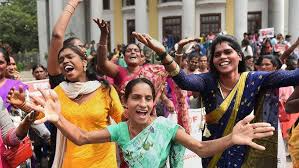
Vadodara: She shot to limelight four years ago when she redefined personal identity by becoming India’s first woman to embrace sologamy. Kshama Bindu has once again stepped into the public sphere and claimed that the proposed Transgender Persons (Protection of Rights) Amendment Bill 2026 will threaten her sologamy and discourage others from pursuing their freedom to choose their identity. Wearing her bridal saree, Kshama, who married herself in 2022, has taken to the streets in Delhi to protest against the bill, and she soon plans to organise a flash mob as well. “I chose to marry myself as I love my own identity. I am transmasculine, which means I identify myself more in a masculine way. I had even begun the process to remove my breasts and apply to change my gender from female to male on my Aadhaar card,” Kshama told TOI. “But this proposed bill has halted my plans. It forces transgender people to get govt approval for their identity. The bill erases centuries of India’s gender-diverse history. If the bill is passed, then I and many others like me won’t be able to assert their identity,” Kshama, 28, said. She recently wrote to the police department seeking permission for a hunger strike. “I have joined the protests against this bill. Why should we validate our gender identity before the govt? It is a violation of my right and dignity,” Kshama added. Kshama married herself in an elaborate ceremony in the presence of her friends in June 2022. Wearing a red bridal saree, she took pheras amid chanting of mantras and later danced to a few Bollywood numbers as well. “I am so much in love with myself and want to spend my whole life in my own company,” Kshama had said on her wedding day. Courtesy : TOI Note: This news is originally published on https:/timesofindia.com/bha and is used purely for non-profit/non-commercial purposes, especially human rights
A Decade After Una’s Shame, Justice Is Served But Its Taste Turns Bitter As Convicts Walk Free On Time Served
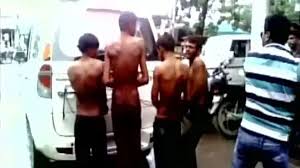
Ten years after the shocking 2016 Una flogging of Dalit youths in Mota Samadhiyala, Gujarat, the Veraval Sessions Court convicted five men. Each received five years under the Atrocities Act, with additional IPC sentences. However, concurrent sentencing and time served mean they are likely to be released soon, sparking debate over justice and accountability for caste-based violence. A decade after the shocking public flogging of Dalit youths in Gujarat’s Una sent shockwaves across the nation, a local court has finally delivered its verdict—closing a painful chapter, but opening fresh debate on justice and accountability. | Veraval: A decade after the shocking public flogging of Dalit youths in Gujarat’s Una sent shockwaves across the nation, a local court has finally delivered its verdict—closing a painful chapter, but opening fresh debate on justice and accountability. Five Convicted in Landmark Case The Veraval Sessions Court in Gir Somnath on Monday convicted five men for their role in the brutal 2016 assault that saw Dalit youths stripped and beaten in public in Mota Samadhiyala village. The incident, widely referred to as the Una flogging case, had become a flashpoint for Dalit rights movements across India. Pronouncing a detailed 340-page judgment, Sessions Judge Pandya held the accused—Ramesh Jadav, Rakesh Joshi, Pramod Goswami, Nagji Daya and Balwant Goswami—guilty of a premeditated attack and acts of torture. Five-Year Term Under Atrocities Act The court sentenced all five convicts to five years’ imprisonment under the Scheduled Castes and Scheduled Tribes (Prevention of Atrocities) Act. Additional sentences include three years under IPC Sections 523 and 524, and two years under Sections 342 and 504, along with a fine of ₹5,000 each. However, in a twist that has triggered mixed reactions, the court ordered that all sentences run concurrently. As the convicts have already spent over six years in jail during trial, they are deemed to have completed their sentence—effectively clearing the way for their release after due legal procedures. “This verdict is historic in terms of conviction, but the effective release of the accused raises serious questions,” said a social activist familiar with the case. “For the victims, justice feels incomplete.” The Incident That Shook the Nation The 2016 incident had drawn nationwide outrage after videos surfaced showing Dalit youths being tied to a vehicle, stripped and flogged for allegedly skinning a dead cow—an act they said was part of their traditional occupation. The case had become a symbol of caste-based violence and triggered widespread protests, including a massive Dalit uprising across Gujarat. Legal experts noted that while the conviction under the Atrocities Act is significant, the concurrent sentencing structure has diluted the punitive impact. “It underscores the gap between legal justice and societal expectations,” one lawyer commented. Security was tightened in and around the court premises and sensitive areas of the district to prevent any law and order issues following the verdict. Authorities remained on alert amid concerns over potential unrest. For the victims and their families, the judgment brings closure—but not necessarily solace. “We waited ten years for this day,” a relative of one victim said. “But seeing the accused walk free so soon is painful.” Courtesy : TFPJ Note: This news is originally published on https:/thefreepressjournal.com/bha and is used purely for non-profit/non-commercial purposes, especially human rights
Una Dalit flogging case: 5 sent to 5 years in jail; 35 acquitted

All five convicted individuals, who are currently out on bail, have already spent over five years in jail, meaning they may not have to serve the sentence. Ahmedabad: A special court on Tuesday sentenced five individuals to five years in prison and imposed a fine of Rs 5,000 each in the Una Dalit flogging case, a day after finding them guilty even as it acquitted 35 other suspects All five convicted individuals, who are currently out on bail, have already spent over five years in jail, meaning they may not have to serve the sentence. The court of additional sessions judge Jignesh Pandya pronounced the quantum of sentence after finding them guilty under the charges of voluntarily causing hurt using dangerous weapons (IPC 324), wrongful confinement (IPC 342) and intentional insult with intent to provoke a breach of the peace (IPC 504) and charges under section of the scheduled castes and scheduled tribes (prevention) act. Those who have been sentenced are Ramesh Jadav, Rakesh Joshi, Pramod Giri Goswami, Nagji Daya, and Balwant Goswami. The court didn’t find evidence to prosecute them under charges of attempt to murder, unlawful assembly and conspiracy, the stringent sections which have provision of life sentence. They were beaten up for skinning a dead cow. Vasram, Ramesh, Ashok and Becher were caught by the accused and were paraded in public while they were tied to an SUV. Investigation revealed that the family was skinning a dead cow, which had been killed by an Asiatic lioness. The court found that the prosecution failed to prove the charges with sufficient evidence. The order states that nothing came on record to show that the cow was actually killed by the lioness, as there was no detail of any compensation given to the owner of the cow. Meanwhile, Vasram Sarvaiya told DH that they were “sad” with the judgment. He said that “the fight would continue as he will challenge the judgment.” Similarly, Dalit leader and Congress MLA Jignesh Mevani also expressed “shock” over the judgment. Noting that the provision for awarding compensation lies with the district magistrate, the court has directed the District Legal Service Authority to provide free copies of Mahatma Gandhi’s book, My Experiment with Truth, to the victims to “support their mental well-being and help them endure the wrongs they have faced within the limits of the law.” The judge further stated that a similar directive could have been issued for the accused persons also, but there is no provision in the law to do so. The court directed the government to look into cow slaughter offences thoroughly. Courtesy : DH Note: This news is originally published on https:/deccanherald.com/bha and is used purely for non-profit/non-commercial purposes, especially human rights
Murder triggers protests by Dalit community in city
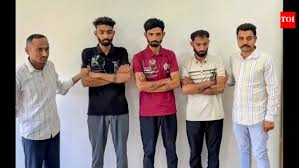
Rajkot: The murder of 32-year-old Bhavesh Vanvi led to a tense law and order situation in the city on Monday night, as members of the Dalit community protested outside Civil Hospital. Bhavesh Vanvi was allegedly kidnapped in a car near Dream City in the Raiyadhar area on Sunday night and was later dumped near Sheetal Park. He was rushed to Civil Hospital in a critical condition and died in the early hours of Monday. News of his death led to large protests, with members of the Dalit community gathering at the hospital and refusing to accept the body for last rites. Demonstrators blocked the hospital square, raised slogans and demanded the immediate arrest of those responsible. Police intervened to control the situation and detained 20 individuals, including some community leaders, for rioting and obstructing public servants. A case was registered at A Division police station. During the protest, assistant sub-inspector Sanjay Dafda of Rajkot city crime branch was allegedly pushed and assaulted while on duty, prompting another complaint. Meanwhile, police arrested three persons — Ravi Jogarana (33), Sagar Jogarana (26) and Gopal Jogarana (22) — for their alleged role in the murder. According to investigating officer Chintan Patel, the prime accused, Hamir Jogarana, remains absconding, along with others identified as Dev Karan, Vikram and Bhuro. The preliminary inquiry suggests the crime stemmed from a personal dispute. Police said Vanvi was in a relationship with a woman and tensions escalated after he allegedly discovered her communication with the prime accused, Hamir, on Instagram. The dispute had led to prior complaints from both sides. Police sources said Hamir had earlier filed an application alleging that Vanvi, the woman and others were trying to blackmail him with threats of filing false cases for molestation and rape. Both the deceased and prime accused have criminal records. Vanvi was earlier booked in cases related to prohibition, assault and rioting, while Hamir has a previous case under the Arms Act. Police said efforts are underway to apprehend the absconding accused and maintain law and order in the area. Courtesy : TOI Note: This news is originally published on https:/timesofindia.com/bha and is used purely for non-profit/non-commercial purposes, especially human rights
2016 Una flogging case: Five convicts sentenced to five years in prison

A special court on Tuesday (March 17, 2026) sentenced five convicts in the 2016 Una flogging case in which four Dalit men were thrashed when they were trying to skin the carcass of a cow to imprisonment of five years and imposed a fine of ₹ 5,000 on each of them. A day earlier, the special court in Veraval convicted five persons and acquitted 35 others in the flogging case, while the case against a policeman was abated due to his death. The trial against a juvenile is pending. Una Dalit victims to convert to Buddhism The incident, which occurred in Mota Samadhiyala village, had triggered massive protests across the country after videos of the attack went viral. On Tuesday, the court of special SC/ST atrocities cases judge JJ Pandya sentenced the five accused to a five-year jail term under the provisions of the SC/ST (Prevention of Atrocities) Act. Gujarat has history of atrocities and discrimination against Dalits Apart from a maximum jail term of five years, the court also sentenced them to three-year imprisonment under sections 323 and 324 of the Indian Penal Code, one-year imprisonment under section 342, and a jail term of two years under section 504. All the sentences will run concurrently. Defence lawyer Vijay Kumar said that four out of these five convicts have already served more than six years in jail, while another one has been in jail for the last four years and two months, and will be required to undergo the remaining jail term. The convicts are identified as Ramesh Jadhav, Rakesh Joshi, Nagji Vaniya, Pramodgiri Goswami, and Balwatgiri Goswami. while the trial against a juvenile is pending. The court had examined 260 witnesses during the course of the trial. The incident occurred at Mota Samadhiyala village near Una town of Gir-Somnath district on July 11, 2016, when four Dalit youths, as part of their traditional profession, were skinning the carcass of a cow that had died earlier in some other village. The accused, self-proclaimed cow vigilantes, flogged the youths, who were then illegally put in the lockup and thrashed by police personnel as well. It was alleged that the four Dalits were thrashed for almost 4-5 hours. Police allegedly connived with the perpetrators and forged some FIR-related documents to help them. Villagers from nearby areas had attempted to rescue the Dalit youths, but were threatened by the accused. The villagers then called the police control rooms in Gandhinagar and Ahmedabad. Courtesy : The Hindu Note: This news is originally published on https:/thehindu.com/bha and is used purely for non-profit/non-commercial purposes, especially human rights
Gujarat: Unit to monitor atrocities against Dalits faces 18 vacancies
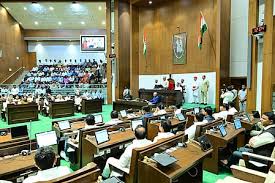
Crucially, while the unit carries a sanctioned strength of 76 posts, only 58 are filled, leaving 18 vacancies that directly dilute field oversight, data tracking, and policy responsiveness across districts. AHMEDABAD: In a candid admission on the floor of the Gujarat Legislative Assembly, the Social Justice and Empowerment Minister disclosed that the specialised civic unit set up under the Director, Scheduled Caste Welfare Department to monitor atrocities remains structurally understaffed thereby weakening the very surveillance mechanism meant to safeguard vulnerable communities. The sanctioned cadre strength of the unit includes: 3 posts of Joint Director (Vigilance), 1 post of Deputy Director (Citizen Cell), 5 posts of Social Welfare Officer (P.K.S), 42 posts of Assistant Social Welfare Officer (Project Officer), 6 posts of Social Welfare Inspector, 4 posts of Senior Clerk, 8 posts of Junior Clerk, 1 post of Research Officer, 3 posts of Research Assistant and 3 posts of Statistical Assistant, taking the total sanctioned strength to 76 posts. Crucially, while the unit carries a sanctioned strength of 76 posts, only 58 are filled, leaving 18 vacancies that directly dilute field oversight, data tracking, and policy responsiveness across districts. Out of 3 sanctioned posts of Joint Director (Vigilance), only 1 post is filled while 2 posts are vacant, both lying vacant for a period of one to three years. The post of Deputy Director (Citizen Cell) is filled. But the most alarming void surfaces in the Social Welfare Officer (P.K.S) cadre, all 5 sanctioned posts of Social Welfare Officer (P.K.S) are vacant. Of these, 2 posts have been vacant for less than one year and 3 posts have remained vacant for one to three years. Although operational cadres appear comparatively staffed 37 of 42 Assistant Social Welfare Officer posts filled the five vacancies here still mean fewer boots on the ground, weakening grassroots incident reporting and timely intervention. Even analytical backbones are missing: all three Statistical Assistant posts remain vacant for over three years, signalling a long-term data vacuum that can distort policy calibration and trend analysis. The absence of statistical and research personnel implies that incident pattern mapping, predictive risk alerts, and evaluation of preventive schemes may be operating on incomplete datasets. Without robust analytics, monitoring risks becoming reactive rather than preventive, undercutting the unit’s foundational mandate of evidence-driven vigilance under the Scheduled Caste Welfare framework. Overall, the data confirms: Total Posts 76; Filled Posts 58; Vacant Posts 18. Of these vacancies, 8 are within one year, 7 are pending for one to three years, and 3 have remained vacant for more than three years. Responding to the vacancy crisis, the minister informed the House that recruitment actions are underway through multiple channels. Requisitions have been sent to the Gujarat Public Service Commission for Social Welfare Officers, while Research Assistant and Statistical Assistant posts are to be filled via the General Administration Department. Vigilance-level posts remain “under consideration,” indicating procedural movement but no definitive timelines. Dilip Singh Kshatriya Courtesy : TNIE Note: This news is originally published on https:/thenewindianexpress.com/bha and is used purely for non-profit/non-commercial purposes, especially human rights
Ahmedabad: Dalit youth stabbed, casteist slurs uttered; case filed against 6 people

A minor dispute at a paan shop in the Ranip area led to a bloody clash; police registered an FIR against 6 accused under sections of the SC/ST Act and the BNS. Ahmedabad: A minor dispute turned violent late Saturday night in the Ranip area of the city. A 25-year-old Dalit youth was stabbed in the neck and seriously injured. Following the incident, the victim filed a complaint at the Ranip police station on Sunday. What is the entire matter? The victim has been identified as Sahil Vaghela, a resident of Purushottam Nagar opposite Pink City in Ranip, and works at a private company. In his statement to the police at the Civil Hospital, Sahil stated that the incident occurred around 10:30 pm on Saturday night. He had gone to a paan shop near Bakra Mandi when he encountered Shravan Thakor, Harshit Thakor, and four others. Casteist Slurs and Stabbing It is alleged that these men began questioning Sahil about a past incident in his society. The accused immediately began abusing him. Sahil alleges that he was insulted with casteist slurs and assaulted. During the scuffle, the main accused, Shravan, allegedly pulled out a knife and attacked Sahil. The knife wound struck the left side of his neck. Accused absconding, victim out of danger Seeing blood flowing from his neck, Sahil raised an alarm, which frightened all the attackers and they fled the scene. The injured Sahil immediately called his friends and a relative. He was then taken to the Civil Hospital by 108 ambulance. After being treated by doctors, he was discharged from the hospital and is currently reported to be out of danger. Police Action Given the seriousness of the case, the Ranip police have registered an FIR against six accused. Police have registered a case under sections of the Indian Penal Code (IPC) for rioting, unlawful assembly, voluntarily causing grievous hurt, and insult with intent to provoke breach of the peace. The accused have also been charged under relevant sections of the SC/ST (Prevention of Atrocities) Act. Rajan Chaudhary Courtesy: Hindi News
20,000 acres of land allotted to Dalits, OBCs, tribals in Gujarat not handed over yet: Vadgam MLA Jignesh Mevani
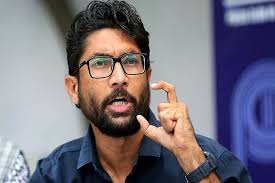
Gandhinagar: State Congress working president and Vadgam MLA Jignesh Mevani said in the assembly on Tuesday that 20,000 acres of land allotted to Dalits, OBCs and tribals was not yet handed over to them in the state. Speaking during a discussion on the Saurashtra Gharkhed, Tenancy Settlement and Agricultural Lands (Gujarat Amendment) Bill, Mevani said that in Surendranagar district, Dalit farm labourers wrote to authorities for 15 years about encroachments on their 7,500 acres of land, yet no action was taken. “I raised this issue multiple times over the past eight years in the assembly. The govt must commit to resolving this issue. If we can allocate land to large corporate entities, why is the state not handing over land for cultivation? The state revenue department must act to remove illegal encroachments and ensure justice for the marginalised,” he said. During past assembly sessions too, Mevani had asked the govt to register offences in cases where Dalits have been allotted land parcels under Gujarat Agriculture Land Ceiling Act, but the same remained illegally encroached upon by non-Dalits. He demanded that preventive measures should be taken by the police to ensure that the land allottees do not suffer loss of life or property in case they go on their own to take possession of the illegally encroached land. Courtesy : TOI Note: This news is originally published on https:/timesofindia.com/bha and is used purely for non-profit/non-commercial purposes, especially human rights