
NCW seeks report from Delhi Police within 7 days on Dalit woman’s ‘forced conversion’

New Delhi: The National Commission for Women (NCW) sought a report within seven days from the Delhi Police Commissioner over the alleged abduction, gang-rape, and forced religious conversion of a Dalit woman in Jamia Nagar, an official said on Saturday. NCW Chairperson Vijaya Rahatkar wrote to Delhi Police Commissioner Satish Golcha after taking suo motu cognizance of media reports regarding the alleged incident. The survivor had alleged that she was held captive for several days and subjected to repeated sexual assault by multiple individuals. Rahatkar wrote to the Delhi Police Commissioner, directing immediate, stringent, and time-bound action in the matter. The Commission also sought a detailed Action Taken Report (ATR) within seven days. The ATR has been sought on the FIR registered in the matter, provisions invoked under the Bharatiya Nyaya Sanhita (BNS) and SC/ST Act, arrest of all accused persons, medical and forensic examination conducted, recording of the survivor’s statement before the Magistrate, and measures taken to ensure her safety, confidentiality, protection, counselling, and rehabilitation, said a statement. The Commission stated that allegations involving gang-rape, caste-based violence, and forced religious coercion are extremely grave in nature and must be investigated with utmost sensitivity, objectivity, and urgency. The NCW condemned the incident and stated that crimes against women involving sexual violence, coercion, and intimidation are unacceptable and must invite the strictest action under law. In a separate matter, the NCW took suo motu cognizance of “deeply disturbing” media reports regarding an alleged acid attack and extreme domestic cruelty against a woman in Pune. The case involves a man who allegedly poured floor-cleaning acid on his wife’s private parts over suspicion of an extramarital affair, confined her inside the house for several days, and denied her medical treatment, according to the Commission. Rahatkar wrote to the Director General of Police, Maharashtra, “directing immediate, stringent, and time-bound action in the matter”. The Commission also sought a detailed Action Taken Report (ATR) within seven days. Courtesy : THI Note: This news is originally published on https:/thehansindia.com/bha and is used purely for non-profit/non-commercial purposes, especially human rights
‘Blood and animal flesh on the body…’ Delhi woman gang-raped and forced to convert; 4 accused arrested

A case has come to light in Delhi in which a Dalit woman was gang-raped. Blood and flesh were also thrown at her. Four people have been arrested in this case. New Delhi: A shocking incident has come to light in the national capital. A 23-year-old Dalit woman was abducted by some men in Delhi’s Batla House area. The woman alleges that she was gang-raped and brutally tortured. According to the woman, the men also tried to force her to convert. The woman complained that in 2021, she was in contact with a man named Sahil through social media. She later learned his name was Faheem. The accused told her that he was from a wealthy Hindu family and wanted to marry her. Gang rape and pornographic video made: The woman stated that in 2022, the accused called her to Batla House, where other people were present. She was gang raped there. Furthermore, he, along with his friends, made a video of her and blackmailed her. The woman was then taken to Meerut, where she alleged she was sexually assaulted again. The woman described her ordeal: The woman stated that Faheem and his relatives were involved in illegal arms dealing. To intimidate her, Faheem would pour blood on her. Furthermore, he would throw animal meat on her. She also alleged that a man named Tasleem Maulvi tortured her afterward. Four accused arrested: Southeast Delhi Police registered an FIR in the gang rape case and have arrested four accused. Police stated that the woman was first gang raped in the Batla House area. An FIR was registered in this regard at the Jamia Nagar police station. Four people have been arrested in connection with the gang rape of the woman. It should be noted that in 2025, Gurugram police arrested Faheem and confiscated his phone. Edited By: Shilpa Srivastava Courtesy: Hindi News
Brutality in Delhi: Dalit girl trapped by posing as Hindu, bathed in blood, threatened with pieces of meat, married at gunpoint

Delhi Crime News: A heartbreaking incident has come to light from Delhi’s Jamia Nagar area. A Dalit girl was lured by posing as Hindu on social media. She was then held hostage and gang-raped. The accused subjected the girl to horrific atrocities to force her to convert. Blood and pieces of flesh were thrown at her to frighten her. Police have registered an FIR in this case and arrested four accused. New Delhi: A horrific and chilling incident has come to light from the Jamia Nagar area of South East district. A 23-year-old Dalit girl was held hostage and gang-raped, but she was also forced to convert. The mastermind behind this entire conspiracy is an illegal arms supplier named Faheem. He lured the girl by posing as a Hindu on social media. To intimidate and demoralize the victim, the accused would throw animal blood and pieces of meat at her. Serious questions have also been raised about the police’s approach in this case. Initially, the police were reluctant to register a case. Now, Delhi Police has filed an FIR and arrested four people. How did Faheem, posing as “Sahil” on Instagram, weave a web of lies? This entire story began on social media in 2021. The accused, Faheem, concealed his identity and created a fake profile on Instagram under the name “Sahil.” He described himself as a boy from a very wealthy Hindu family. The victim fell for his deception, and they began communicating. The accused even promised to marry her. In 2022, the accused invited the girl to meet him in Delhi’s Batla House area. Upon arriving, the girl discovered that Sahil was actually Faheem. Faheem and his associates then held the girl hostage and gang-raped her. The victim’s descriptions in her complaint are chilling. According to the victim, Faheem and his relatives are involved in illegal arms trafficking. The accused subjected the girl to mental and physical abuse. Animal blood was smeared all over her body to frighten her. Furthermore, pieces of meat were thrown at her to completely terrify her. Following this, a cleric named Tasleem tortured the girl and forced her to convert to Islam. How were they being targeted by threatening to kill their innocent daughter? The brutality of the accused did not stop there. After gangraping her in Batla House, the accused also made an objectionable video of the victim. She was continuously blackmailed using this video. The accused also took her from Delhi to Meerut and gangraped her there as well. When the victim tried to resist, they threatened to kill her young daughter. For the safety of her daughter, the victim endured this hell for two years, from 2022 to 2024. How did a raid by the Gurugram police change the entire case? The turning point in this case came in 2025. The Gurugram police arrested the main accused, Faheem, in another case. The police confiscated his mobile phone, which contained incriminating videos and photos of the victim. When the victim was assured that the videos had been deleted from the accused’s possession and could not be leaked, she mustered the courage to approach the police. She then contacted the Delhi Police. Which five people are named in the FIR, and what action did the police take? According to South East Delhi DCP Hemant Tiwari, an FIR was registered in this case at the Jamia Nagar police station on May 14, 2026. The victim has named five main individuals in her complaint. The FIR names Faheem, Khurshid, Zaid, Azim, Taleem, and Nafees. Police have taken action and arrested four of the accused so far. Another accused is currently in Meerut jail in connection with a separate case. Police are preparing to bring him to Delhi on a production warrant from the court. Edited by: Deepak Verma About the Author Deepak Verma, Deputy News Editor, Works as Deputy News Editor in the digital newsroom of News18 Hindi. He has over a decade of experience in journalism. Courtesy: Hindi News
“We Are Pundits, You Are a Rat”: Dalit Youth Alleges Caste Abuse, Threats in Delhi’s Mehrauli

A serious case of alleged caste-based abuse and police negligence has emerged from the Mehrauli area of Delhi, where a Dalit youth, Vipin Kumar Duggal, has accused an unidentified man of publicly hurling casteist slurs and attempting to assault him. The victim claims that despite providing video evidence and details of the accused’s vehicle, the Delhi Police has not registered an FIR even several days after the incident. According to the complaint, the incident took place on May 10, 2026, around 5:35 pm, when Vipin Kumar was returning home on his motorcycle from Duggal Market. He said the altercation began near the residence of former mayor Satbir Singh after a dispute involving rash driving. “We are Pundits, You Are a Rat”: Casteist Slurs Alleged The victim alleges that the man riding a black Hero Splendor motorcycle (registration number DL3SFP1057) became aggressive after a minor road argument and began abusing him using caste-based remarks. Vipin Kumar claimed the accused pushed him and shouted derogatory slurs, saying, “I know you… we are Pundits, you are a rat… yes I am telling you,” as per the complaint. When the victim started recording the incident on his mobile phone, the accused allegedly threatened him, claiming to be an army personnel and saying that the police could not take action against him. Complaint Filed, But FIR Not Registered, Says Victim The victim immediately contacted the police helpline number 112 and later reached Mehrauli police station, where he submitted a written complaint (DD No. 145A). He alleged that instead of immediate action, the accused also arrived at the police station with associates and tried to pressure him, even misbehaving on the premises before leaving. Despite submitting vehicle details and the accused’s mobile number, the victim claims that no FIR has been registered so far. He further alleged that the investigating officer, Sub-Inspector Naveen Kumar, has not responded properly and avoided taking action even after repeated follow-ups. Repeated Police Visits and Escalation to Authorities Frustrated by what he described as police inaction, Vipin Kumar sent emails on May 12 to the DCP (South), ACP (Mehrauli), and SHO concerned, seeking immediate intervention. He also filed a complaint with the National Commission for Scheduled Castes (NCSC), alleging violation of the SC/ST (Prevention of Atrocities) Act. The victim further claimed that when he revisited the police station, the SHO denied knowledge of the case, even though several days had passed since the complaint was filed. Courtesy : TOP Note: This news is originally published on https:/theobserverpost.com/bha and is used purely for non-profit/non-commercial purposes, especially human rights
Unless caste-based insults are in “public view,” the SC/ST Act will not apply: Why is the Bahujan community agitated by this Supreme Court decision?

Is caste-based abuse in a private home no longer a crime? The CPI(M) raises serious questions New Delhi – In a judgment on May 11, the Supreme Court held that if caste-based abuse or insult occurs within a private residence and is not in “public view,” no offense is made out under Sections 3(1)(r) and 3(1)(s) of the Scheduled Castes and Scheduled Tribes (Prevention of Atrocities) Act, 1989. A division bench of Justice N.V. Anjaria and Justice Prashant Kumar Mishra overturned the Delhi High Court order in Gunjan @ Girija Kumari v. State of Delhi (NCT) and quashed the FIR and charge sheet filed against the accused. The dispute arose from a family property dispute in the Kirti Nagar police station area of Delhi. The complainant and the accused are relatives. On January 28, 2021, the complainant, who belongs to the Scheduled Caste, alleged that the accused, Girija Kumari, addressed him with derogatory casteist slurs such as “Chuda,” “Chamar,” and “Harijan,” and that the other accused issued threats. FIR number 42/2021 was registered at the Kirti Nagar police station. The trial court framed charges under sections of the SC/ST Act, and the Delhi High Court upheld that decision, leading to the Supreme Court. Supreme Court’s Argument: “Public View” Essential Condition The Supreme Court clarified that offenses under Sections 3(1)(r) and 3(1)(s) of the SC/ST Act are made out only when the insult or casteist slur is uttered “in any place within public view.” The Court noted that the incident took place in a residential house in Ramesh Nagar, New Delhi, and the FIR did not state that any independent member of the public was present at the time or that the incident occurred in public view. Both points 5(b) and 6(e) of the FIR mentioned the same residential address. The court, citing its earlier judgments—Swaran Singh v. State (2008), Hitesh Verma v. State of Uttarakhand (2020), and Karuppudayar v. State (2025), held that “public view” means that the incident occurred in a place where the public could see or hear it. An incident occurring within a boundary wall, where the public had no access, did not satisfy this condition. The court also dismissed charges under Sections 506 (criminal intimidation) and 34 (common intention) of the Indian Penal Code, stating that the contents of the complaint did not establish either “intent to alarm” or “common criminal intent.” According to legal experts, this judgment reaffirms two key principles: first, the necessity of the “public view” condition under sections of the SC/ST Act; And second, the requirement that all legal elements must be clearly stated in the FIR and accompanying charge sheet before prosecution can begin. However, actual incidents of caste-based humiliation committed in public places are still fully punishable. This Supreme Court decision has caused deep unease among Dalit and Bahujan organizations. They argue that caste-based oppression often occurs within the confines of homes, where there are no outside witnesses. Therefore, making the “public view” requirement mandatory practically closes the doors to justice for victims. Social justice advocates argue that caste-based humiliation occurring within the confines of a home is no less painful. Ambedkarite activist Ravi Parmar says, “If tomorrow some Manuwadi forcibly kidnaps a Dalit person, takes him to his private home, and insults him with caste-based slurs, it will not be considered a crime under the SC/ST Act. It’s amazing. As long as the collegium system exists, attacks on the rights of Dalits and tribals are certain to continue.” Bahujan thinker Ravi Ratna says, “The atrocities in Khairlanji happened in public. The victim and her daughter were raped, paraded naked, brutally abused, and killed. The victim’s son and another youth were killed in broad daylight. But the court ruled that the murders were committed out of revenge and were not caste-related, so no SC/ST Act was applied.” Anti-caste activist Dr. Rehna Ravindran says, “Read it this way: If the murder happened in a private home, there’s no fault. If the rape happened in a private home, there’s no fault. If the husband beats his wife in a private home, there’s no fault. So, do you understand the absurdity behind these statements? Prejudiced casteists will go to any lengths to weaken the legal protections afforded to Scheduled Castes and Scheduled Tribes.” This isn’t the first time a Supreme Court decision on the SC/ST Act has sparked political and social opposition. In 2018, the court’s weakening of arrest provisions under the same Act sparked nationwide protests, a Bharat Bandh, and the deaths of several protesters, after which Parliament intervened to restore the original provisions through amendments. The CPI(M) had also called the decision “retrograde” and demanded an immediate review petition from the central government. The 2026 judgment is now being viewed by critics as part of a continuing judicial trend of diluting the Act’s safeguards. CPI(M) Politburo Expresses Deep Concern Over Judgment The Politburo of the Communist Party of India (Marxist) has expressed deep concern over the judgment delivered by the two-judge bench of the Supreme Court. The party said that in the case of Girija Kumari and others v. State of Delhi, the Supreme Court adopted a narrow approach based solely on legal technicalities and ordered the quashing of the FIR and chargesheet, which is extremely unfortunate. The Politburo said that this judgment is worrying for several reasons: firstly, it comes at a time when incidents of atrocities against SC and ST communities are rapidly increasing in most parts of the country, and secondly, this judgment is the latest in a long series of Supreme Court judgments that adversely impact the rights of these communities. The party feared that if this decision was not reversed, incidents of abusive treatment of SC/ST persons in homes, offices, schools, colleges, and other places would increase, as perpetrators would assume that the law could do nothing against them. The CPI(M) demanded the immediate intervention of the central government and an appeal to the Supreme Court to reconsider this decision. Communist Party of India General
Delhi: “We are Pandits, you are a Chuhra… Nothing will happen to me,” Dalit youth publicly abused; despite video, police remain empty-handed.

A Dalit youth in Delhi’s Mehrauli was publicly subjected to casteist abuse. Despite having the video and the vehicle number, the police are reluctant to register an FIR. New Delhi: A case of caste-based harassment and gross police negligence has come to light in the Mehrauli area of the capital Delhi. An unknown person publicly abused a Dalit youth, Vipin Kumar Duggal, with vulgar casteist slurs and attempted to assault him. Despite the victim having a video of the incident and the accused’s vehicle number, the police have been reluctant to register an FIR for the past several days. The entire incident occurred on May 10, 2026, at around 5:35 p.m. Vipin Kumar Duggal was returning home from the market on his motorcycle. When Vipin, riding a black Hero Splendor (DL3SFP1057), stopped him from cutting him off (driving dangerously) near the residence of former Mayor Satbir Singh, he began abusing him. During a minor altercation, the accused suddenly became aggressive and began pushing and insulting Vipin. According to the victim, the accused publicly shouted, “I know you… We are Pandits, you are a Chuhra… You are a Chuhra… Yes, I am telling you.” When Vipin began filming the incident on his mobile phone, the accused, claiming to be an army soldier, threatened him, saying that the police could not do anything to him. The victim immediately called PCR on 112 and went to Mehrauli police station to file a written complaint (DD No. 145A). The victim alleges that the accused, along with some of his friends, went to the police station to exert pressure and misbehaved there as well. However, as soon as the victim began filing a written complaint, the accused took advantage of the situation and fled. The investigation of this case has been entrusted to SI Naveen Kumar, but the police’s attitude has been extremely evasive. The complainant provided the accused’s mobile number (76XXXXXX94) and True Caller details to the police. Despite this, the investigating officer consistently avoided taking calls and offered only assurances instead of taking any concrete action. Frustrated by this police indifference, the victim sent an email to the DCP (South), ACP (Mehrauli), and SHO on May 12th, pleading for justice. He has also filed a complaint with the National Commission for Scheduled Castes. According to the victim, when he again visited the police station to meet with the SHO, he denied any knowledge of the incident even four days after the incident, which raises serious questions about police performance. Investigating this entire matter, we attempted to obtain the police’s version of events. We called the SI investigating the case twice to clarify the situation, but were unable to reach him. The Delhi Police’s failure to register an FIR despite the existence of clear evidence and the occurrence of a cognizable offense under the SC/ST Act is a matter of grave concern. Rajan Chaudhary Courtesy: Hindi News
Supreme Court Lets Transwoman Apply for Delhi Government Teacher Recruitment, Seeks Response On Wider Plea

The Supreme Court of India has granted interim relief to a transgender applicant while agreeing to examine systemic gaps in public recruitment. In a significant step toward inclusive employment, the Supreme Court of India on April 10, 2026, permitted a transwoman, Jane Kaushik, to apply for teacher recruitment in Delhi government schools under the “transgender” category. A bench of Justices J.B. Pardiwala and K.V. Viswanathan issued notices to the Delhi government and the DSSSB after Kaushik revealed that the recruitment portal restricted applicants to “male” or “female” binaries. The Court has now agreed to examine her larger plea for a comprehensive recruitment policy and separate vacancies for transgender persons in public employment, ensuring their constitutional rights aren’t reduced to a “dead letter.” Breaking the Binary: A Fight for Representation The petitioner, Jane Kaushik a highly qualified educator with degrees in Political Science and Education approached the apex court highlighting the “grossly apathetic attitude” of state institutions. Despite the landmark 2014 NALSA judgment, the Delhi Subordinate Services Selection Board (DSSSB) portal continued to exclude non-binary identities. During the hearing, Justice Pardiwala noted that while Kaushik was registered as a transgender person, she was physically unable to submit applications for specific teaching posts. “You are absolutely right,” the bench remarked to Kaushik’s counsel, reviving a previous interim relief that allows her to apply for any vacancy of her choice, regardless of the gender mentioned in the advertisement. This legal battle follows years of systemic hurdles; Kaushik was previously forced to resign from a school in Uttar Pradesh and denied a role in Gujarat due to her gender identity. While the Supreme Court had established an advisory committee in October 2025 to draft an “Equal Opportunity Policy,” Kaushik argued that an advisory body lacks the adjudicatory power to protect individual fundamental rights. Her plea seeks more than just a job; it demands a dedicated recruitment framework, including age relaxations and specific vacancies, to prevent transgender candidates from “aging out” of the system while waiting for bureaucratic wheels to turn. The Logical Indian’s Perspective At The Logical Indian, we believe that true progress is measured not by the laws we write, but by the dignity we afford to our most marginalised citizens. It is disheartening that over a decade after the NALSA verdict, a qualified educator must still knock on the doors of the highest court just to fill out a job application. Employment is more than a livelihood; it is a tool for social integration and self-respect. We urge the Delhi government and the Union to move beyond “committees” and implement a recruitment policy that reflects the diverse reality of our society. A classroom led by a transgender teacher is not just a win for employment it is a lesson in empathy and coexistence for the next generation. Sandipta Ghosh Courtesy : TLI Note: This news is originally published on https:/thelogicalindian.com/bha and is used purely for non-profit/non-commercial purposes, especially human rights
Delhi HC seeks Centre’s stand on petitions challenging amended transgender law

The Delhi High Court on Wednesday sought the Centre’s stand on two petitions challenging provisions of the Transgender Persons (Protection of Rights) Amendment Act, 2026, for taking away one’s right to a self-perceived gender identity. A bench of Chief Justice DK Upadhyaya and Justice Tejas Karia issued notice on petitions by Chandresh Jain and Lakshay Jain and asked the central government to file its reply within six weeks. The Transgender Persons (Protection of Rights) Amendment Bill, 2026, was passed by Parliament on March 25 and received President Droupadi Murmu’s assent on March 30. Petitioner Chandresh Jain said the Act “removes and dilutes” self-perceived gender identity and instead introduces a regime of State-controlled verification, certification and screening of gender identity, which violates rights to dignity, privacy and decisional autonomy under Article 21 of the Constitution. His petition further said that the amendment Act is manifestly arbitrary and disproportionate, and it infringes Article 19(1)(a) by restricting the expression of gender identity. Lakshya Jain’s petition said that the amendment altered the existing statutory framework by replacing self-perceived gender identity with a regime of medical and administrative verification, including scrutiny by a district magistrate (DM). His plea said that such a requirement was ex facie violative of the law laid down by the Supreme Court in National Legal Services Authority versus Union of India, which held that gender identity is a matter of self-identification and psychological identity must take precedence over biological attributes. Chandresh Jain’s plea emphasised that the apex court has already held that gender identity is an integral part of dignity, autonomy and personal liberty under Articles 14, 19(1)(a) and 21, and every individual has the right to a self-identified gender. The case would be next heard on July 22. Courtesy : The Pioneer Note: This news is originally published on https:/thepioneer.com/bha and is used purely for non-profit/non-commercial purposes, especially human rights
‘Where Will I Go?’: Inside Delhi’s Trans Shelter Home As Care Networks Face Uncertainty

Denial of self-identification and narrowing definitions have left residents worried about identity recognition, access to schemes and the future of care systems. Summary of this article Shelter homes often face chronic underfunding and limited reach, with staff warning that existing facilities are far from sufficient. New provisions raise concerns that offering shelter or support could be legally challenged, while stricter identity requirements may restrict access to care networks. Despite fear and instability, community members continue to rely on each other for emotional and practical support, even as their futures grow uncertain. ‘Panchhi banoo udti phiroon mast gagan mein, Aaj main azad hoon duniya ke chaman mein.’ (Like a bird, I wish to soar merrily in the boundless sky; Today I am free in this garden of the world.) Sanam, who identifies as a trans woman, quoted this song to describe how she felt after India overturned a 19th-century ban on homosexuality. However, she feels differently now. On the day the Trans Amendment Bill was tabled in the Rajya Sabha, Sanam, 22, was in Delhi’s Kalkaji, overwhelmed by anxiety. Unable to collect her thoughts, she broke down and cried all the way to the Garima Greh where she lives. “Men were catcalling me even as I struggled to catch my breath. They misbehave with us all the time, now they’ll feel emboldened to do so,” Sanam said gazing blankly from the balcony, her expression settling into a faint smile. It has just been four days since she began hormone therapy. Now, with the President’s assent, she feels her existence hangs by a thread. It has been over a year since Sanam left her home, where she said she was constantly monitored, and began living in the shelter home. She says she feels familiarity there—accepted for who she is. After the new Act, she questioned, quietly: “Where will I go? I don’t know what to do.” Sanam lives with at least 25 other transpeople in Delhi’s Garima Greh, the only one enlisted on the government’s website in the national Capital. As per the 2011 Census, Delhi has 4,213 transgender persons, while India’s total stands at 4,87,803; a number the community members say is grossly underreported. As per an August 2025 Press Release, at present, the Department of Social Justice and Empowerment runs 18 such shelters across India, and approval has been granted to set up three more in 2025-26. A total of 429 people are currently residing in these shelters. “These facilities are simply not enough,” said Ankit*, a trans man who works as a project manager at the shelter home. He explained that the shelter accepts anyone who comes seeking help, and while they try their best to manage, finances are often strained. With lack of access to shelter, the homeless transpeople may never come out, or take extreme steps like suicide, he said. Kanta, the programme manager at the Garima Greh, which has been running since 2021, said they struggle with funding and sometimes go up to six months without support. The point of this scheme was to provide transpeople with a home, she said. “This is a government-run shelter home. We have not received a single penny from the government in this financial year,” she claimed. The new act has removed the right to gender self-identification recognised by the Supreme Court in the landmark National Legal Services Authority v. Union of India in 2014 and introducing medical certification for identity recognition. It has also changed the definition of a transgender person, only including intersex people and socio-cultural identities as kinner, hijra, aravani and jogta, or eunuch. With the changes, the community is faced with a range of unanswered questions about the funding of government run shelter homes, welfare schemes, the validity of the transgender identity cards which have already been issued, and access to the care community. “If the process of recognising identity becomes more restrictive, then access to these schemes will also become more uncertain,” Don Hasar, a Queer-Trans rights activist explained. It will affect how beneficiaries are identified, she said. She continued to note that ideally, shelter homes should not require a trans ID card for entry. People often arrive through informal networks, referred by someone they trust, even if they do not yet have a trans ID. Shelters do not turn them away; instead, they provide support and help them obtain the necessary documents. “Many of these shelters are run by community members,” she said. However, certain clauses in the new act raise concerns about how such support could be interpreted. “Even if somebody wants to help somebody who needs shelter home access, a case could be filed against them, saying that this is allurement. So how will organisations function now?” she questioned. In the new act, the government has introduced four new offences in addition to the existing ones, one of which carries a punishment of 10 to 14 years’ imprisonment, said Kanmani Ray, a trans woman and advocate based in Chennai. One provision addresses cases where a child is, by “force, threat, coercion, allurement, deception, inducement, undue influence or otherwise”, made to present as a transgender person and is then exploited for begging, solicitation, servitude, or any form of forced or bonded labour. Ray stated that there are already kidnapping and abduction provisions under the Bharatiya Nyaya Sanhita, which are regularly being invoked. Introducing a new set of offences was not needed. “Of course, as long as it is a criminal offence and it is not explicitly stated, the State has the burden to prove that they have a case. But let me make this clear, it is not about whether you did the offence or not. It is about the fact that the process is the punishment,” Ray said. At Delhi’s shelter home, hope has dimmed. Community members, some employed, some undergoing hormone therapy, some recovering from traumatic experiences at home, and others still finding their footing, are struggling to understand why the new law has redefined their identities. “I had so
As TG bill becomes law, community uncertain about status of 32000 TG certificates issued on basis of ‘self-perceived identity’
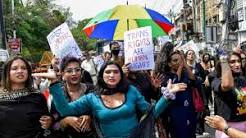
NEW DELHI: With the Transgender Person (Protection of Rights) Amendment Bill, 2026 becoming law with President of India Droupadi Murmu’s assent on Monday, all eyes are now on the way forward as the amendments do away with the provisions in the 2019 law that allowed “self-perceived gender identity” to be the basis for self-determination and identification for approval for transgender certificate by the district magistrate. The amended definition of “transgender persons” makes it clear that it will not include persons with “different sexual orientations and self-perceived sexual identities”. A medical board headed by the chief medical officer has been introduced. Going forward the district magistrate will issue a certificate of transgender identity, after examining the recommendation of the medical board cited as “authority” to be constituted by the central or state governments. Moreover, the DM will also have the option to seek assistance from medical experts. While the TG community members are exploring the legal route to challenge the enacted amendments in Court, they wonder what will be the fate of the over 32,000 TG certificates issued so far based on self-perceived identity and those pending approval. Member of the National Council for Transgender Persons Abhina Aher told TOI that the community was planning to take legal recourse as the Bill violates the landmark NALSA judgement of 2014 that affirmed the right to self-determination of transgender persons. A visit to the National Portal for Transgender Persons linked to the website of the ministry of social justice and empowerment shows that the total number of applications received stands at 37362. The portal puts the number of TG certificates issued so far at 32660, and of these, TG identity cards have been issued to 32630 persons. As many as 5833 applicants have not been found eligible, and 4794 applications were pending approval as of Tuesday. In this backdrop, youth like Akash (name changed) are a worried lot. A transman from Haryana’s Charkhi Dadri who is currently in Delhi for coaching as he aspires to sit for the civil services examination, Akash says he is fearful of what lies ahead. “ I got my TG certificate on March 18 but will this certificate stay valid? The amendments don’t even mention transman or transwoman in the definition and take away the right to self-perceived identification. So, what happens to me and others in the same situation? Who will stand up to secure our rights and protect us from exploitation?” Akash asked. The amended definition of “transgender person” lays down that it includes a person having such socio-cultural identities as kinner, hijra, aravani and jogta, or eunuch, or a person with intersex variations specified below or a person who, at birth, has a congenital variation in one or more of the following sex characteristics as compared to male or female development. –primary sexual characteristics –external genitalia –chromosomal patterns –gonadal development –endogenous hormone production or response, or such other medical conditions. The definition also includes “any person or child who has been, by force, allurement, inducement, deceit or undue influence, either with or without consent, compelled to assume, adopt, or outwardly present a transgender identity, by mutilation, emasculation, castration, amputation, or any surgical, chemical, or hormonal procedure or otherwise.” Courtesy : TOI Note: This news is originally published on https:/timesofindia.com/bha and is used purely for non-profit/non-commercial purposes, especially human rights