
Physics Wallah Teacher’s Shameful Casteist Remark: “It would be difficult if I looked like a ‘thief-Ch***r’…”

Community Outraged After Clip Goes Viral New Delhi—A video is rapidly going viral on social media, alleging that a teacher at Physics Wallah (PW) made derogatory casteist remarks against the Dalit community. In the video, the teacher is heard telling students, “It is a big deal that I bear some resemblance to Ravi Kishan; if I looked like a ‘thief-Ch***r,’ it would be difficult—at least now you will look at me…” During this exchange, he used offensive language, which is being perceived as an insult to the Dalit community. Physics Wallah (PW) is a popular Indian educational platform founded by Alakh Pandey, offering affordable online classes, live sessions, video lectures, study notes, and mock tests for students in grades 6–12, as well as for JEE, NEET, and other competitive examinations. Available on the Google Play Store, the platform assists students in their learning journey through interactive tools and doubt-clearing sessions. The incident reportedly involves a colleague of Alakh Pandey. Sharing the video, the ‘Dalit Voice’ account posted: “A teacher insulted the hardworking community in the classroom, going so far as to use the casteist slur ‘thief-Ch***r.’ This exposes the deep-seated prejudice present among such individuals.” Following the viral video, social media users have expressed massive outrage. Many users have demanded immediate and strict action from Physics Wallah and Alakh Pandey. One user wrote, “If a teacher is making casteist remarks, what can we expect from others? @PhysicswallahAP, please take strict action, Sir.” Other users described the incident as “regressive” and “shameful,” accusing the teacher of harboring prejudice against the community. Some users have identified the teacher as “Rishi Jain, Economics teacher (Hindi medium) at PW”; however, no official statement has been issued by Physics Wallah regarding the matter yet. As of now, there has been no news regarding the suspension or termination of the teacher. Physics Wallah has not issued any response or update regarding this matter. This incident comes at a time when protests are underway across the country concerning the UGC (Promotion of Equity in Higher Education Institutions) Regulations, 2026. In January 2026, the Supreme Court stayed these regulations, terming them “too sweeping” and “vague.” The Court had scheduled a hearing for March 19, but the hearing could not take place. The next hearing is expected to be held next week. Meanwhile, Dalit organizations and student groups are demanding the implementation of these regulations, while students from the General Category have opposed them. Linking this controversy involving Physics Wallah to the dispute over the UGC equity regulations, many users have asserted that casteism still persists in educational institutions and that strict laws are needed. Geetha Sunil Pillai Courtesy: Hindi News
Delhi CM holds pre-budget meeting with transgender community

NEW DELHI: Delhi Chief Minister Rekha Gupta on Friday interacted with members of the transgender community and sought their suggestions for the upcoming annual budget to be tabled in the assembly next week. In an X post, Gupta said she held a meaningful dialogue with members of the third gender community at the Delhi Secretariat. They welcomed the Delhi government’s decision to issue them Pink smart cards for free bus rides, she said. “They also shared suggestions and expectations. These suggestions will be incorporated into the upcoming budget, moving towards building an inclusive and developed Delhi,” she said. The chief minister has been holding a series of meetings with various sections of the society, including working women, gig workers, labourers, farmers, teachers, students, medical professionals and others ahead of the budget presentation on March 24. PTI Courtesy : TOI Note: This news is originally published on https:/timesofindia.com/bha and is used purely for non-profit/non-commercial purposes, especially human rights
Uttam Nagar: Rahul targets BJP, Sachdeva strikes back

New Delhi: Congress functioanry Rahul Gandhi on Thursday said Uttam Nagar does not want “bloodshed” and urged people not to fall into the trap of violence bei-ng stoked there, referring to a murder on Holi at the we-st Delhi locality. He alleged that BJP and its ecosystem seize upon every opportunity to “fan hatred”. “The people of Uttam Nagar have paid a heavy price for the violence — on one side, a young man, Tarun, lost his life, and on the other, an entire family is facing persecution. They don’t want any more bloodshed,” Rahul said on X. Targetting BJP, he said, “They want the country to remain entangled in Hindu-Muslim tension so that people cannot ask why the PM is being forced to hand over the country’s defence, energy security, food security and strategic sovereignty to America — and that’s why, in broad daylight, riot-like conditions are once again being created in the nation’s capital.” “An appeal to residents of Delhi: Do not fall for any provocation — the strength of the country lies in our unity, brotherhood and love. Jodo, jodo, Bharat Jodo…” he said. Hitting back, Delhi BJP president Virendra Sachdeva said that it would have been better “if instead of issuing an irrelevant appeal to Delhiites, Rahul Gandhi had first condemned the killers of Tarun in Uttam Nagar during Holi days violence”. “It is sad that Gandhi kept silent for almost two weeks and has today put the blame on BJP, instead of condemning the killers of Tarun,” he added. Courtesy : TOI Note: This news is originally published on https:/timesofindia.com/bha and is used purely for non-profit/non-commercial purposes, especially human rights
DU dismisses Rahul’s allegation that it uses interviews to eliminate students

NEW DELHI: The Delhi University (DU) has dismissed Congress leader Rahul Gandhi’s allegation that it uses interviews to eliminate students. In a post on X late on Friday, it said: “The University of Delhi admits students primarily based on the CUET scores, and the standard admission process does not mandate interviews for most undergraduate and postgraduate programmes.” “If the Leader of Opposition was referring to recruitments (such as faculty positions), the University in the recent past has recruited thousands of teachers across all categories. We strongly object to such comments, as they create a non-conducive environment in the University. The Leader of Opposition should have verified the facts before making such a statement. @EduMinOfIndia,” it added. This was in response to the remarks of Gandhi, the leader of opposition in the Lok Sabha, alleging that the DU eliminates students on the basis of caste. “I had gone to the Delhi University. Interview is just a way to eliminate students. They ask what your caste is and then you fail in the interview,” Gandhi said on Friday while addressing an event in Lucknow to mark the birth anniversary of Bahujan Samaj Party (BSP) founder Kanshi Ram. Targeting the Rashtriya Swayamsevak Sangh (RSS), the Congress leader further said, “Take out the list of the RSS. Those who are their pracharaks and seniors in the organisation, you will not find one OBC, one Dalit, one Adivasi among them. This is completely against the Constitution.” This has triggered a further controversy, with the Indian National Teachers’ Congress (INTEC), along with some DU professors, including academic and executive council members, pointing out that public record shows that in several departments of the university, despite a large number of teaching posts being advertised under the Scheduled Caste (SC), Scheduled Tribe (ST) and Other Backward Classes (OBC) categories, qualified candidates were declared “not found suitable (NFS)” after the interview stage. PTI Courtesy : TOI Note: This news is originally published on https:/timesofindia.com/bha and is used purely for non-profit/non-commercial purposes, especially human rights
Nod to changes to widen transgender definition

NEW DELHI: Cabinet Tuesday approved a proposal to amend the Transgender Persons (Protection of Rights) Act, 2019, seeking to expand the definition of transgender persons in what is being cited as an attempt to make the law more “inclusive” so that all bona fide persons receive benefits and protection. There has been debate over the implementation of the law, with community leaders raising concerns from time to time. Even Supreme Court has expressed concern over the tardy implementation of the law. While no official details of proposed changes were shared Tuesday, TOI has learnt that the bill proposes to bring clarity to the definition of transgender persons compared to the current provision. Officials said the bill proposes that the criteria for identifying transgenders would be spelt out more elaborately and ensure there is no misuse of provisions. The Transgender Persons (Protection of Rights) Act, 2019, which came into effect on Jan 10, 2020, lays down provisions to provide legal recognition, prohibit discrimination, and mandate welfare measures for transgender individuals. The rules to implement the law were notified on Sept 25, 2020. Sec 2 of the law deals with definitions and states that a “transgender person” includes trans-men/women, intersex persons, gender queer individuals, hijra and others, irrespective of surgery. “A ‘transgender person’ means a person whose gender does not match with the gender assigned at birth and includes trans-man or trans-woman (whether or not such person has undergone sex reassignment surgery or hormone therapy), person with intersex variations, genderqueer and persons having such socio-cultural identities as kinner, hijra, aravani and jogta,” the law states. Courtesy : TOI Note: This news is originally published on https:/timesofindia.com/bha and is used purely for non-profit/non-commercial purposes, especially human rights
Dalit woman, UPSC AIR 1 at 22: How Tina Dabi topped India’s toughest exam in her first attempt

In May 2016, when the results of the Union Public Service Commission (UPSC) Civil Services Examination were announced, one name quickly travelled across the country: Tina Dabi. At just 22 years old, the Delhi-based student had secured All India Rank 1 in the 2015 UPSC exam and she had done it in her very first attempt. But the achievement carried a deeper significance. Dabi became the first Dalit woman to top the civil services examination, a moment many saw as both a personal triumph and a symbol of changing social realities in India. Her story is not just about a difficult exam cleared at a young age. It is about ambition, discipline, and the quiet power of persistence. Scroll down to read more. A childhood shaped by education Tina Dabi was born on 9 November 1993 in Bhopal, Madhya Pradesh. Her family later moved to Delhi in 2005, where she spent most of her formative years. Education was always central to her upbringing. Both her parents were engineers; her father, Jaswant Dabi, served in the Indian Telecom Service, while her mother, Himani Dabi, was an officer in the Indian Engineering Services. Growing up in a household that valued learning meant expectations were high, but it also meant support. Teachers and classmates often noticed her academic focus early on. She studied at the Convent of Jesus and Mary in Delhi, where she consistently performed well in school. Later, she joined Lady Shri Ram College for Women (LSR), Delhi University, one of India’s most prestigious colleges, graduating with a degree in political science. At LSR, she wasn’t just another student preparing for exams. She topped her college and was recognised as “Student of the Year,” reflecting both academic excellence and leadership potential. The decision to attempt UPSC For many students in India, the civil services exam is a distant dream, an exam known for its vast syllabus and extremely low success rate. Dabi decided to pursue it while still in college. Political science, her graduation subject, also became her optional subject for the UPSC examination, helping her build on what she had already studied deeply. Unlike many aspirants who spend years attempting the exam, she appeared for it only once and cleared it at the very first attempt. The scale of the achievement is difficult to overstate. Every year, hundreds of thousands of candidates apply for the UPSC exam, yet only a few hundred finally enter the prestigious Indian Administrative Service (IAS). At just 22 years old, Dabi finished ahead of everyone else in the country. A moment that sparked national conversation Her result triggered enormous media attention. News channels, newspapers and social media celebrated the young topper who had emerged from Delhi’s academic circles. But alongside admiration came another conversation, about caste and opportunity. As a Dalit woman topping India’s most competitive exam, Dabi’s success challenged deeply entrenched stereotypes about merit and social mobility. In fact, she later recalled that while congratulatory messages poured in immediately after the results, some media outlets quickly began asking about her caste rather than her preparation strategy. For many observers, the episode highlighted how achievements by individuals from historically marginalised communities often carry a larger social meaning. From topper to administrator After clearing the exam, Dabi joined the 2016 batch of the Indian Administrative Service (IAS) and was allotted the Rajasthan cadre. During her training at the Lal Bahadur Shastri National Academy of Administration in Mussoorie, she was awarded the Director’s Gold Medal, given to the best trainee officer. Her first posting came in 2017 as an assistant collector in Ajmer, Rajasthan. Over the years, she held several administrative roles in the state, working in areas ranging from governance to development initiatives. She later served as district collector in Jaisalmer and is currently posted as collector and district magistrate of Barmer in Rajasthan, one of the state’s largest districts. More than an exam result UPSC toppers often fade from public conversation after their results. Tina Dabi did not. Part of that is because of the larger story attached to her success, a young woman from a scheduled caste community rising to the very top of India’s most prestigious examination. But another reason is simpler: her journey represents the quiet possibility that education can reshape lives. At 22, when most graduates are still uncertain about their next step, Tina Dabi had already crossed one of the toughest academic barriers in the country. For thousands of UPSC aspirants studying late into the night across India, her story remains a reminder that the exam may be daunting, but sometimes, the first attempt is all it takes. Courtesy : TOI Note: This news is originally published on https:/timesofindia.com/bha and is used purely for non-profit/non-commercial purposes, especially human rights
The suffering of the SC/ST/OBC community in India is unique in the world: Why did senior IRS officer Netra Pal call it more serious than America’s ‘Black Victimhood’?

“Approximately 50 million SC, ST, and OBC students will be affected by the UGC Regulations 2026; demanding rights cannot be called victimhood.” New Delhi – In a recent Science Journey podcast, senior IRS officer Netra Pal sharply criticized the controversial statement made by Jawaharlal Nehru University Vice Chancellor Shantishree Dhulipudi Pandit. He stated that Madam is saying that Dalits have become addicted to victimhood, playing the victim by claiming they haven’t had water for centuries. Netra Pal called this clear bias and prejudice and pointed out that the person making this statement is the head of an institution with a very high number of SC, ST, and OBC students. He emphasized that approximately 90 million SC, ST, and OBC students are studying in universities across India, which is a very large number, yet displaying such a mindset exposes prejudice. Presenting comparative data, Netrapal explained that Harvard University, which is among the top 10 universities in the world, states in its 2023 Diversity Report that faculty of color, i.e., non-White faculty, represent 22 percent, of which 232 include Black, Hispanic, and other faculty. Meanwhile, SC, ST, and OBC faculty representation at IITs is only 1.92 percent, while at IIMs it is less than 0.8 percent. This is data from five or six years ago, and while there may have been some slight improvement, the difference is not significant. He said that while the Black community has been oppressed in the United States for centuries, their representation is still good due to affirmative action. In India, the problems of Dalit, OBC, and tribal communities are unique in the world and even more serious than Black victimhood. This community, which constitutes over 85 percent of the population, lacks even 2 percent representation in institutions like IITs and IIMs. He emphasized that this comparison is incorrect, as there is no affirmative action even in the private sector in India. Right now, the UGC will form an equity committee, but who will head it? The Vice-Chancellor. What will happen if SC/ST/OBC victims approach the Vice-Chancellor? They will say they are victims, so how will they rule in their favor and deliver justice? In the podcast, Netrapal also deeply analyzed the controversy surrounding the UGC 2026 Regulation. He explained that those opposing the regulation are claiming that it will divide Hindu society and that OBCs were included for political reasons. However, the truth is that the 2012 UGC Regulation was only for SCs and STs, and OBCs were added later on the recommendation of a parliamentary committee. A 31-member parliamentary committee, majority upper-caste, reviewed the data, acknowledged the atrocities against OBCs, and recommended their inclusion. Following the Rohith Vemula and Payal Tadvi suicide cases, the Supreme Court also mandated proper implementation of the 2012 regulations. Netrapal clarified that while OBC reservations were implemented in 2006, they were implemented in universities only in 2013, and in medical education only in 2021. He also cited historical evidence that during the British era, Shudras were not admitted to institutions like Hindu College; only some Kayasthas were exempted because their social status was comparable to that of the upper castes. From the 1901 caste census to current data, 50-70 percent of OBCs are extremely backward, denied access to higher education and government jobs. Netrapal said that SCs and STs received reservations after 1947, but OBCs had to fight until 1990 and wait until 2012 for university admissions, ruining generations. Education data revealed that the general category’s representation at the primary level is only 11.85 percent, which rises to 50 percent in higher education. While SC, ST, and OBC students are higher in primary education, their enrollment declines due to increased dropout rates. SCs’ primary enrollment falls from 21 percent in primary education to 14.82 percent in secondary education and 4.72 percent in engineering. The situation is similar among OBCs. Dropout and suicide rates at IITs are higher among SCs, STs, and OBCs, while at institutions like Anna University, this is not the case, proving institutional discrimination. OBC professors in central universities are only 1.1 percent, compared to 33 percent in state universities. Muslims are represented as high as 45 percent because they have separate institutions. “SCs, STs, and OBCs are automatically a minority in universities because there are no members of this class in all the top faculty positions. At IITs, there are 1-2%, a maximum of 10%, and even in the administration, there are very few non-faculty cadres. Here, SCs, STs, and OBCs are a significant minority. There are many more outside. That’s why they are backward, right? We’re not getting higher education so easily. So what’s the situation here? We’re the ones facing discrimination.” The most shocking statistic is the vacancies for faculty positions. In central universities, 95.5 percent of OBC professor positions are vacant, 91.95 percent of associate professor positions are vacant, while 78 percent of SC positions are vacant. There are no SC/ST principal positions at Delhi University. Netrapal stated that this is institutional discrimination, where low interview marks, NFS, and vacancies are deliberately created. The conviction rate for SC/ST atrocity cases in Uttar Pradesh is 70-80 percent, far higher than murder and rape, yet the case is often called a fake one. At the end of the podcast, Netrapal concluded that approximately 50 million SC, ST, and OBC students will be affected by this regulation. Education is their only weapon, so discrimination cannot be tolerated. Demanding rights cannot be labeled victimhood. He also suggested opening a Buddhist minority university. The podcast stated that data never lies and the Bahujan community should spread this information to ensure equality and justice. Geetha Sunil Pillai Courtesy: Hindi News
JNU VC’s remarks on Dalits sparks criticism from legal fraternity

Senior advocate Jayaraju says such statements undermine JNU’s cherished legacy as a bastion of academic freedom, inclusivity, pluralism, and social justice Kurnool: Senior Advocate Y Jaya raju has sharply condemned recent remarks by Jawaharlal Nehru University Vice-Chancellor Santishree Dhulipudi Pandit, who stated that ‘Dalits and Blacks cannot progress by being permanently a victim or playing the victim card.’ In an interview with The Hans India on Saturday, Raju called the comments deeply disturbing, casteist, and antithetical to constitutional principles. He argued that labeling Dalit assertion as mere ‘victimhood’ trivialises the enduring realities of structural oppression faced by historically marginalized communities. Such statements, he said, undermine JNU’s cherished legacy as a bastion of academic freedom, inclusivity, pluralism, and social justice. The advocate emphasised that social justice is a core constitutional imperative, not sentiment. He invoked key provisions of Indian Constitution—guaranteeing equality (Article 14), abolishing untouchability (Article 17), and providing for affirmative action for Scheduled Castes and Scheduled Tribes (Articles 15, 16, 46)—as evidence of the State’s recognition of systemic injustice and its duty to implement corrective measures. He also highlighted a troubling pattern during Pandit’s tenure, including her reported opposition to UGC equity regulations aimed at curbing caste discrimination, perceived alignment with RSS-affiliated student groups, and statements perceived to downplay caste-based bias. These, he noted, have fuelled concerns among faculty and students about eroding democratic spaces, ideological bias, and inconsistent application of disciplinary norms—contrary to JNU’s tradition of robust, open debate. Drawing on BR Ambedkar’s vision, Raju stressed that constitutional morality must supersede entrenched social hierarchies. He urged the Vice-Chancellor to issue a public apology, recommit to equity policies, bolster anti-discrimination mechanisms, and ensure institutional neutrality. Raju framed the issue as transcending party politics: safeguarding Dalit dignity is integral to upholding Indian democracy itself. Failure to address such remarks, he warned, risks further eroding public trust in premier institutions. By V Narendra Kumar Courtesy : THI Note: This news is originally published on https:/thehansindia.com/bha and is used purely for non-profit/non-commercial purposes, especially human rights
JNU VC’s ‘Dalit Victim Card’ Statement Sparks Row On Campus, JNUSU Demands Resignation

JNU VC Shantishree Dhulipudi Pandit remarked that Dalits “cannot always progress by portraying themselves as victims or playing the victim card,” leading to student protests. JNU VC Dalit Statement Controversy: Jawaharlal Nehru University (JNU) Vice Chancellor Shantishree Dhulipudi Pandit has sparked significant controversy on campus with a statement made in a podcast. She remarked that Dalit and Black communities “cannot always progress by portraying themselves as victims or playing the victim card,” leading to student protests and calls for her resignation. The Vice Chancellor clarified that her statement had been misunderstood, noting that she herself is from the Bahujan Samaj. What is the whole matter? The statement was made in a podcast released on February 16. The Vice Chancellor was discussing the University Grants Commission’s (UGC) Equity (Anti-Discrimination) Rules of 2026, aimed at preventing caste-based discrimination in higher educational institutions. However, following protests from some upper caste groups, the Supreme Court has currently stayed these rules. In the podcast, the Vice Chancellor described the UGC regulations as “unnecessary and irrational.” She mentioned that “it’s not easy to move forward by demonising someone or constantly portraying yourself as a victim. It’s like a temporary addiction.” This statement quickly went viral on social media, sparking controversy. What explanation did the Vice Chancellor give? As the controversy grew, the Vice Chancellor clarified that her statement had been misrepresented. She asserted that she did not intend to imply that the Dalit community always plays the victim card. She said that some people use such language as part of a “woke” ideology. She also expressed that unnecessary controversy had been created in this matter and that due care had not been taken in formulating the rules. She reiterated, “I myself am a Bahujan.” Protest on campus, demand for resignation The Jawaharlal Nehru University Students’ Union (JNUSU) labelled the Vice Chancellor’s statement as “blatantly casteist.” The student union demanded her resignation and called for nationwide protests on Saturday. They argued that such statements promote caste discrimination and inequality in universities. The student union also criticised the Vice Chancellor’s affiliation with the Rashtriya Swayamsevak Sangh (RSS). In the podcast, she had expressed pride in her RSS affiliation, saying it provided her with insight into diverse views and diversity. Following this statement, the atmosphere on the JNU campus has become tense. Student organisations have stated that protests will continue until the Vice Chancellor apologises or resigns. Meanwhile, the Vice Chancellor maintained that her words were taken out of context. The matter remains a topic of discussion within academic and political circles. Courtesy : News18 Note: This news is originally published on https:/news18.com/bha and is used purely for non-profit/non-commercial purposes, especially human rights
Jamia students back Dalit Professor suspended over exam question on atrocities against Muslims
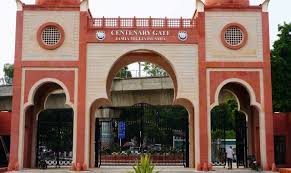
Students of the Department of Social Work at Jamia Millia Islamia have issued a strong statement expressing solidarity with Prof. Virendra Balaji Shahare, who was suspended by the university administration over an end-of-semester examination question asking students to “discuss the atrocities against Muslim minorities in India,” calling the action an “erosion of academic freedom and intellectual autonomy, and an impermissible narrowing of scholarly discourse.” In their statement, the students asserted that the professor had committed “no wrongdoing” and maintained that the question cited as the basis for complaints was fully aligned with the prescribed syllabus. They said the syllabus explicitly mandates critical engagement with issues such as marginalisation, discrimination, violence, and structural injustice, and added that a copy of the syllabus was attached to their statement to substantiate the claim. “Penalising an academic for facilitating critical engagement undermines the very foundation of social science education,” the students said. The students argued that Jamia formally offers courses in Dalit and Minority Studies, Social Inclusion, Human Rights, and Social Justice, disciplines that are premised on critical inquiry and structural analysis. In this context, they said, the action against Prof. Shahare represents an erosion of academic freedom and intellectual autonomy, and an impermissible narrowing of scholarly discourse. The statement strongly criticised the university’s invocation of Statute 37(1) to suspend the professor, calling it “arbitrary, excessive, and legally untenable.” According to the students, the statute allows suspension only in exceptional circumstances involving prima facie evidence of grave misconduct, and solely as a temporary measure pending inquiry. They maintained that setting an examination question approved through institutional mechanisms does not amount to misconduct, negligence, or “unbecoming conduct” under the statute. Highlighting that examination papers undergo multiple levels of moderation and approval, the students questioned why only Prof. Shahare had been singled out. “No questions have been raised against moderation committees, departmental vetting processes, or the Controller of Examinations, who bears statutory responsibility for the conduct of examinations,” the statement said. The students also raised concerns about caste-based discrimination, noting that Prof. Shahare is a Dalit academic, stating, “The suspension reflects a disturbing pattern where individuals from marginalised communities bear the brunt of punitive action, while systemic accountability is evaded,” they alleged. The students described the reported mention of filing a police FIR against the professor as a “dangerous and unjust escalation,” warning that it could set a precedent for criminalising pedagogy. “Academic disagreements or public discomfort cannot and must not be converted into criminal liability,” the statement said. The students demanded immediate and permanent revocation of Prof. Shahare’s suspension, withdrawal of any legal action, a public apology from the university, assurances against scapegoating faculty from marginalised communities, and a reaffirmation of Jamia’s commitment to academic freedom and constitutional values. “We stand with our professor. We reject this injustice. And we will continue to speak until it is corrected,” they asserted. Similarly, students of the Department of Political Science at Jamia Millia Islamia condemned the suspension and demanded its immediate revocation, stating that “institutions of higher learning must address internal disagreements through transparent, proportionate, and procedurally fair mechanisms.” The students warned that such action affects not only the faculty member concerned but also the academic environment and students’ right to a free and critical learning space, adding that dialogue, not punitive measures, must remain the guiding principle of university governance. Virendra Balaji Shahare, was the paper setter for the BA (Hons) Social Work Semester-I examination titled Social Problems in India for the academic session 2025–26. The suspension comes after Prof. Shahare included a question asking students to “discuss the atrocities against Muslim minorities in India” in the examination paper he set, sparking outrage among students, fellow teachers, and rights groups/ The university stated that it had received several complaints from various sources regarding the content of the question paper. In its order dated December 23, 2025, the university stated that the competent authority had taken a “serious view” of what it described as the professor’s negligence and carelessness. Acting on the instructions of the competent authority, Jamia said Prof. Shahare had been placed under suspension pending further orders. The Jamia Millia Islamia unit of the Fraternity Movement has demanded the revocation of the teacher’s suspension, calling it a move to defend academic freedom. The order further stated that a police FIR would be filed “as per rules” in connection with the matter. Invoking Statute 37(1) of the Statutes of the University, the Vice-Chancellor ordered disciplinary action, stating that the alleged negligence amounted to an act “unbecoming” of a faculty member. Earlier, several student organisations, including AIDSO, AIMSU, AIRSO, AISA, DISSC, MSF, the Fraternity Movement, SFI, and SIO, in a joint statement condemned the suspension, stating that the examination question asking students to “discuss the atrocities against Muslim minorities in India” was clearly syllabus-based and academically legitimate. They called the university’s decision to suspend him and file a police FIR an unprecedented, disproportionate, and dangerous attack on academic autonomy, democratic functioning, and Jamia’s historical legacy of critical inquiry. They also demanded the immediate revocation of the suspension and withdrawal of all punitive proceedings. Courtesy : Maktoob Media Note: This news is originally published on https:/maktoobmedia.com/bha and is used purely for non-profit/non-commercial purposes, especially human rights