
A tale of three yatras: Why Rahul Gandhi, Tejashwi Yadav and Prashant Kishor failed – and BJP didn’t
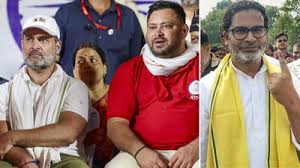
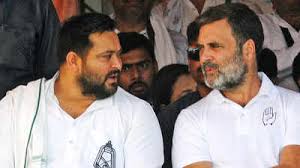
In the lead-up to Bihar’s assembly polls, three major marches: Rahul Gandhi’s Voter Adhikar Yatra, Tejashwi Yadav’s Bihar Adhikar Yatra and Prashant Kishor’s Jan Suraaj Padyatra were expected to energise the opposition and reshape the election narrative. All three drew large crowds and garnered a lot of attention. Yet, when the votes were counted, none of these grand yatras translated into electoral gains. The BJP-led NDA romped home with over 202 seats out of 243, consigning Congress and its allies to a crushing defeat. The INDIA bloc’s ambitious marches proved ineffective: Rahul Gandhi’s Voter Adhikar Yatra did not prove to be a trump card, and its message of “vote theft” remained largely irrelevant in Bihar politics. Likewise, Tejashwi Yadav’s tour failed to expand his party’s base, and Kishor’s two-year-long trek ended without a single Jan Suraaj victory. In short, symbolism could not substitute for organisation in Bihar’s rugged electoral terrain. Yatras: A time-honoured tool of Indian politics Pan-India “padayatra” has long been a favourite strategy for politicians seeking to connect with voters. And they are suddenly all the rage in politics, with leaders across parties taking to the road in dramatic, high-octane treks. Rahul Gandhi helped revive the trend with his Bharat Jodo Yatra in 2022–23, walking nearly 4,000km from Kanyakumari to Srinagar, followed by the far longer Bharat Jodo Nyay Yatra earlier this year. Hot on his heels came Tamil Nadu BJP chief K Annamalai, whose En Mann, En Makkal journey criss-crossed 10,000km and ended with a grand finale attended by the Prime Minister. TDP’s Nara Lokesh completed his own youth-focused Yuva Galam, insisting it was more about listening than winning. Such yatras can energise party cadres and highlight campaign themes. The yatras can be termed as “sanjivani” (life-giving) for parties, refreshing the organisation and giving campaigns a solid foundation. In Bihar, where rural networks and caste ties are crucial, parties often deploy yatras to visit far-flung villages and rural clusters. A well-timed yatra can build momentum by showing unity and giving voters a sense of participation. Yet this year, spectacle without substance was no match for the NDA’s disciplined strategy. Despite the grand fanfare of these three yatras, Bihar’s electorate delivered a very different verdict. Rahul Gandhi’s Voter Adhikar Yatra Rahul Gandhi’s Voter Adhikar Yatra (August–September) was hyped as a campaign to protect voter rights. Covering over 1,300 km across 25 districts and more than 100 constituencies, Rahul donned Bihar’s cultural symbols, the gamcha scarf, a cap and attacked alleged “vote chori” (vote stealing) and the state’s Special Intensive Revision of rolls. The march began with impressive crowds, especially in Sasaram, and projected Congress’s return to rural areas. However, from the very start, it was clear that public enthusiasm would not last. In the ensuing weeks, energy fell sharply. The yatra began with strong crowds, but as the campaign moved forward, the initial spark faded. Congress leaned heavily on the yatra’s symbolism but failed to build an effective ground organisation. Outside of a few big rallies, senior Congress leaders were largely absent, and booth-level mobilisation was weak. Rahul’s strategy focused obsessively on national issues like electoral rolls, which did not strike a chord with most Biharis. Ordinary voters were more concerned with jobs, inflation and local governance than allegations of “voter chori.” Rahul Gandhi and Tejashwi Yadav during Voter Adhikar Yatra Rahul’s campaign squandered precious time attacking the Election Commission, and the shift backfired. After rallying around national narratives, Congress’s messaging was drowned out by local realities it failed to read. By election day, Congress only won 6 seats out of 61 contested: a miserable 10% success rate. Rural crowds did not turn into rural votes. Internal alliance tensions didn’t help either: Rahul kept a distance after the Yatra and reappeared only weeks later, and the absence of sustained leadership further undermined Congress. Meanwhile, Bihar’s ruling BJP and JD(U) gleefully declared Rahul’s march a flop show. Their taunts echoed the ground reality: for all its high production values, the Voter Adhikar Yatra failed to translate into votes for Congress, leaving the party facing one of its worst-ever Bihar results. In short, Rahul’s narrative of “vote chori” and his focus on fighting SIR proved largely irrelevant to the Bihar electorate. His Yatra simply did not prove to be a trump card. Tejashwi Yadav’s Bihar Adhikar Yatra Tejashwi Yadav’s Bihar Adhikar Yatra was launched on September 16, almost immediately after Rahul’s tour. Setting out from Jehanabad, Tejashwi promised to challenge the Nitish Kumar government on unemployment, crime and local grievances. The yatra was partly pitched as filling gaps left by Rahul’s march; RJD officials openly said they covered districts left out of the Voter Adhikar Yatra. By highlighting issues in RJD strongholds: Jehanabad, Nalanda, Supaul, Saharsa and others. Tejashwi aimed to consolidate his party’s core vote and signal that the RJD was the main force in the INDIA bloc. He also used the trip to assert himself: earlier, he had declared he would contest all 243 seats, underlining his claim to be the alliance’s undisputed leader. In theory, Tejashwi’s focused effort should have solidified his social coalition and countered anti-incumbency. In practice, it barely made a dent outside his base. By election day, the RJD had outperformed Congress, but only marginally: the party was on course for about 25 seats, far below its 75 in 2020. Tejashwi failed to convert the momentum and anti-incumbency wave against Nitish Kumar into actual votes, leaving the RJD with its second-worst tally ever. The much-heralded yatra vision of reaching every village did little to overcome the RJD’s narrow caste profile. Most communities beyond the Muslim–Yadav base remained unconvinced, and even within the RJD, ticket distribution caused resentment. Seat-sharing disputes led to friendly fights where opposition partners split the anti-NDA vote. In the end, Tejashwi’s personal crusade could not overcome these structural flaws. The RJD held on to pockets of support but did not expand beyond its traditional base. The youth-versus-experience narrative he touted collapsed under the weight of Nitish Kumar’s intact governance credentials
Dalits and Muslims in Bihar
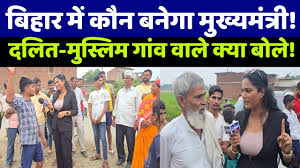
In the 2025 Bihar Assembly elections, the mandate has defied all established traditions and electoral conventions, creating new equations that have created a new chemistry within Bihar’s social structure. This indicates that when the public decides on its own alliances and coalitions, it pushes aside traditional beliefs. This Bihar mandate is shocking in many ways because it has shattered the very assumptions of Bihar’s electoral mathematics, based on which political parties calculate their victory and defeat. For example, in Muslim-dominated areas, this time’s mandate has shattered the Muslim-Yadav alliance, while also completely altering the election results in seats reserved for Scheduled Castes and Scheduled Tribes. Although in Bihar’s past history, the ruling NDA won 206 seats in the 2010 elections, far exceeding the current 202 seats, the social equations were not resolved the way they have been in this election. This time, the public has sent a clear message that it will not accept any other equations in place of good governance and public welfare. In the 2010 elections, Nitish Kumar’s party, the Janata Dal (United), contested 141 seats and won 115. The BJP contested a total of 102 seats and won 91. This time, the BJP and the JDU contested an equal number of seats, winning 101 each, with the BJP winning 89 and the JDU winning 85. However, these seats represented participation from all sections of society. JDU fielded four candidates from the Muslim community, all of whom won, while NDA ally Chirag Paswan’s LJP fielded one Muslim candidate. The Seemanchal region of Bihar is considered a stronghold of Muslim votes, comprising the four districts of Kishanganj, Katihar, Araria, and Purnia. These four districts have 24 seats. It was believed that the Muslim vote bank in Seemanchal would remain unspoiled, but a split occurred, and five candidates from Asiduddin Owaisi’s Ittehad-e-Muslimeen party won from this region. The same number of candidates from this party were victorious in the 2020 elections. The Muslim vote was divided between the opposition Grand Alliance and Ittehad-e-Muslimeen, resulting in the NDA’s greatest victory, with the largest number of its candidates winning from Seemanchal. In Seemanchal, where there was a buzz about consolidation of Muslim votes, Hindu votes consolidated in favor of the NDA without any caste discrimination, resulting in the highest number of victories for this alliance’s candidates. Of the 24 seats in Seemanchal, the NDA secured 14, with the BJP winning seven, the JDU five, and Chirag Paswan’s LJP two. In the opposition Grand Alliance, the Congress secured four, the RJD only one, and Asiduddin Owaisi’s party won five. While it was believed that the Seemanchal region would be more favorable for Lalu Yadav’s RJD party because of the Muslim majority here and the Muslim-Yadav equation being active, the opposite happened. Due to the division of Muslim votes, all four JD(U) Muslim candidates won. Kishanganj district has the highest Muslim voter turnout at over 67 percent, while Katihar has 45 percent, Araria 43 percent, and Purnia 39 percent. The Congress Party’s performance in Seemanchal is considered very poor, although it won four seats. This is despite the region’s Muslims’ goodwill toward Rahul Gandhi. Thus, the NDA’s improved performance in Seemanchal this time compared to 2020, demonstrating that the Grand Alliance’s perceived Muslim bias has not affected it. Similarly, the state’s reserved seats for Dalits have been in a similar state. Of the 40 reserved seats in Bihar, only two are reserved for Scheduled Tribes or Adivasis, while the remaining 38 are for Scheduled Castes. By capturing 34 of these 40 seats, the NDA demonstrated that the opposition Grand Alliance’s caste census strategy failed to work, and that the proponents of social justice, Lalu Prasad Yadav’s party, have only marginalized the Scheduled Castes. Although Lalu Prasad Yadav’s party, the RJD, received the highest number of votes in these 40 seats, with over 22 percent, it failed to win any seats. The Grand Alliance won only four out of 38 seats and one tribal seat. In the previous elections in 2020, the NDA won 21 reserved seats and one tribal seat, while the Grand Alliance won 17 reserved seats and one tribal seat. Given the Grand Alliance’s poor performance in the reserved seats, it can be said that Rahul Gandhi’s Save the Constitution campaign was very weak in these areas. Thus, the NDA defeated the Grand Alliance on all fronts and created new electoral equations while strengthening its concept of public welfare. Aditya Chopra Courtesy: Hindi News
Rahul Gandhi’s Bihar setback: Congress slips badly, INDIA bloc routed — what could have gone wrong
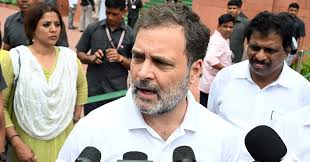
NEW DELHI: Haryana, Maharashtra, Delhi — and now Bihar. What should have been a comeback moment for the Congress-led INDIA bloc instead turned into a rout. Bihar has delivered the harshest blow yet. With the Nitish Kumar–led NDA storming past the 200-seat mark and the Congress slipping to one of its most disappointing performances in the state, the INDIA bloc’s brief post-Lok Sabha momentum has abruptly evaporated, pulling the coalition back to political reality. Follow Bihar election results 2025 live updates NDA won 202 seats out of the 243-member assembly, reducing the Rashtriya Janata Dal to a historical low and Congress to single digits. This comes down to Congress’ tactical, not strategic, electoral marriages with regional parties, which often lead to chaos and confusion in the run-up to the elections. What happened in Bihar? Alliance without alignment In the run-up to the Bihar elections, the Mahagathbandhan allies hit their first roadblock over the seat-sharing deal. While the NDA, despite all the infighting, reached a deal, the RJD, Congress, VIP and Left parties failed to decide on seat allotment even till the eve of the first phase of the elections. In at least 11 constituencies, allies within the Mahagathbandhan — the RJD, Congress, CPI and VIP — found themselves pitted against each other, leading to what were described as “friendly fights” but which in reality ended up splitting the opposition vote. These contests, spread across Vaishali, Kahalgaon, Narkatiaganj and several other seats, reveal how coordination failures and local ambitions undermined the alliance’s broader effort to challenge the BJP-led NDA’s dominance in the state. Interestingly, Jharkhand Mukti Morcha – key partner of INDIA bloc from Jharkhand” withdrew from the Bihar contest after a stalemate over its seat-sharing deal with the INDIA bloc. “Unfortunately, JMM won’t be part of the Bihar polls despite my intentions and plans. This is only because of RJD’s ‘political’ immaturity,” JMM leader Sudivya Kumar had said after the impasse. Rahul’s Bihar miss Leader of opposition in Lok Sabha Rahul Gandhi once again proved to be a flop show in the Bihar assembly election. The Congress leader’s Voter Adhikar Yatra, which he rolled out just days ahead of the election, did not prove to be a trump card. Additionally, his repeated attacks on the Election Commission and charges of “vote theft” proved to be irrelevant in Bihar politics. Following his yatra, Rahul Gandhi remained largely absent and returned to the campaign trail only on 29 October. Gandhi’s absence has become a significant issue amid a crisis within the party’s ranks, with many leaders alleging discrepancies in the distribution of tickets. Meanwhile, overwhelming women voters’ participation tilted the mandate toward the NDA, boosted by welfare schemes for women. One of the most talked-about schemes before the election was Mukhya Mantri Mahila Rozgar Yojana — Rs 10,000 assistance for women wanting to start small enterprises. Women voters took the lead in what the Election Commission of India described as Bihar’s highest-ever voter turnout, with 71.6 per cent of female electors casting their ballots compared to 62.8 per cent of men. In the first phase of voting, 69.04 per cent of women turned out to vote, well above the 61.56 per cent male turnout. The trend strengthened in the second phase, when 74.03 per cent of women voters exercised their franchise, again surpassing the 64.1 per cent turnout among men. Overall, Bihar recorded a 66.91 per cent voter turnout — the highest since the state’s first elections in 1951 — with women driving the surge in participation. The Seemanchal split The Mahagathbandhan’s dilemma over partnering with Asaduddin Owaisi’s AIMIM in Seemanchal also proved to be costly for the opposition alliance, as the fight between AIMIM and the Mahagathbandhan benefitted the NDA in the region. While AIMIM managed five seats in the region, the Mahagathbandhan was reduced to only nine seats. AIMIM leader Waris Pathan claimed that “RJD and the Congress are themselves responsible for the division of minority votes.” He further said that the opposition alliance was given an opportunity to come together “by seeking only six seats from the Mahagathbandhan, but they refused”. No cadre for Congress In the run-up to the elections, cracks within the Congress Bihar unit also resurfaced. Rebel Congress leaders, including several MLAs, staged protests for being denied tickets. These leaders demanded the immediate replacement of the party’s Bihar in-charge Krishna Allavaru with a ‘political’ person. After the Bihar polls, the next challenges for INDIA alliance awaits in the form of West Bengal, Assam and Tamil Nadu assembly election. Now, it will be interesting to see how the opposition bloc. Courtesy : TOI Note: This news is originally published on https:/timesofindia.com/bha and is used purely for non-profit/non-commercial purposes, especially human rights
Bihar election results: Rahul Gandhi walked 1,300 km but Congress still went downhill
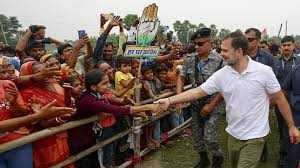
1,300 kilometres, 25 districts, 110 seats. Rahul Gandhi marched through Bihar echoing “vote chor, gaddi chhod,” but voters clearly took a different route – straight to the polling booth, but away from him. The gamcha, the Bhojpuri, the makhana, the fishing and the bike rides – the Nehru-Gandhi scion threw in every flavour of Bihari charm he could muster. But the performance fell flat. Once again, his attempt to slip into the state’s cultural skin didn’t quite land, and the Congress now finds itself staring at one of its bleakest showings, with the party struggling to even hit double digits. Back in 2020, Congress bagged 19 seats. This time, the slide has only steepened. Despite hammering national narratives, the party’s messaging was drowned out by local realities that it failed to read, let alone ride. Why Voter Adhikar Yatra failed to garner votes for Congress? The Voter Adhikar Yatra began with strong crowds and genuine enthusiasm, briefly hinting at a revival for the Congress. But as the campaign moved forward, that initial spark faded. The party leaned too heavily on the yatra’s symbolism while offering little sustained presence on the ground. With only scattered appearances from senior leaders, Congress couldn’t maintain momentum or build a deeper connection with voters. This slowdown was worsened by the MGB’s internal rifts and muddled coordination. Resentment within the RJD, confused candidate choices, and weak organisational synergy blunted whatever gains the yatra had created. At the same time, shifting local dynamics, such as the BSP’s rise and the NDA’s strategic recalibration, cut further into Congress’s appeal. In the end, local realities overpowered the early hype, leaving the yatra unable to pull voters towards the party. The road well walked: Three yatras, one message Rahul Gandhi’s three nationwide yatras — Bharat Jodo (2022–23), Bharat Jodo Nyay (2024), and Vote Adhikar (2025) — were crafted to reposition him as a people’s politician. Each march carried a distinct political thesis: the first called for unity against divisive politics, the second championed justice through caste census and welfare, and the third sought to reform electoral practices and mobilize allies under the Mahagathbandhan banner. While the yatras succeeded in transforming Rahul’s image from a detached leader to an engaged campaigner, they also revealed the limits of symbolic politics. They revived enthusiasm among cadres and built narrative energy, but translating that emotional momentum into votes has remained elusive. The high points: South and the hills If the yatras gave Rahul a platform, victories in Himachal Pradesh, Karnataka, and Telangana gave him proof of concept. In Himachal, the Congress’s return to power followed a textbook anti-incumbency swing backed by the Old Pension Scheme. In Karnataka, anti-corruption sentiment and strong local leadership under Siddaramaiah and DK Shivakumar delivered a resounding 136-seat win. And in Telangana, Revanth Reddy’s aggressive campaign unseated KCR after a decade in power. These wins established Congress as a southern powerhouse and briefly revived its national narrative. The results helped restore morale, re-energize its workers, and suggested that Rahul’s “connect with the people” strategy could still pay dividends — at least in states with strong regional leaders and disciplined organization. The flat roads: Hindi heartland woes Beyond those isolated victories, Congress’s struggles in the Hindi belt continue. Despite a promising 2024 Lok Sabha performance, the 2025 assembly results in Haryana, Maharashtra, Madhya Pradesh, Rajasthan, and Delhi exposed deep organizational decay. In Haryana, the Congress came agonizingly close but fell short due to factionalism and lack of a decisive local face. In Maharashtra, alliance fatigue within the MVA cost it dearly. In Madhya Pradesh and Rajasthan, BJP’s disciplined machinery and Modi’s enduring appeal crushed Congress’s hopes. And in Delhi, the party failed yet again to open its account. The only exception was Jharkhand, where the Congress-JMM alliance retained power by focusing on welfare delivery and regional identity politics — proof that Congress still performs best when piggybacking on strong local allies. Walking, talking, but still searching Rahul Gandhi’s press conferences over the past year, from alleging “vote chori” in Haryana to calling out “hydrogen bomb” voter fraud, have ensured constant media attention. But critics argue that they’ve done little to change electoral outcomes. His messaging resonates with idealists, yet Congress’s electoral machinery remains sluggish, fragmented, and overly dependent on his charisma. Five years, three yatras, and multiple campaigns later, Rahul has successfully crafted a new moral vocabulary for Indian politics — but not yet a winning formula. His journey across India has earned him empathy and visibility, but politics demands more than footprints and soundbites. Unless Congress learns to turn Rahul’s moral momentum into organizational muscle, his yatras may remain grand spectacles of purpose without political payoff. Courtesy : TOI Note: This news is originally published on https:/timesofindia.com/bha and is used purely for non-profit/non-commercial purposes, especially human rights
‘Election not fair from beginning’: Rahul Gandhi’s first reaction to Cong’s dismal show in Bihar polls
NEW DELHI: Congress leader Rahul Gandhi delivered his first response to the Congress Party’s poor performance in the Bihar assembly election, describing the contest as “unfair from the very outset” and insisting that the party, along with the wider INDIA alliance, will undertake a detailed review of what went wrong. In a post on X, he wrote: “I express my heartfelt gratitude to those millions of voters in Bihar who placed their trust in the Mahagathbandhan. This result in Bihar is truly astonishing. We could not secure victory in an election that was unfair from the very outset. This battle is for the protection of the Constitution and democracy. The Congress Party and the INDIA alliance will thoroughly review this outcome and make their efforts to save democracy even more effective.” His remarks came as the NDA surged to a historic victory, securing over 200 seats, while the Mahagathbandhan registered just 33. The Congress won only six of the 61 seats it contested, prompting sharp internal and public reactions from party leaders. Rahul Gandhi repeated his accusation that the electoral process was compromised, saying the party “could not achieve victory in an election that was not fair from the very beginning.” Congress President Mallikarjun Kharge also expressed deep disappointment but urged party workers not to lose heart. In his post on X, he wrote: “We respect the decision of the people of Bihar and shall continue our fight against those forces that are engaged in weakening democracy by misusing constitutional institutions. We shall study the election results in depth and shall present a detailed account after understanding the reasons for the outcomes. To those voters in Bihar who have supported the Mahagathbandhan, we are deeply grateful from the bottom of our hearts. I wish to tell every Congress worker that there is no need for you to feel disheartened. You are our pride, honour, and glory. Your hard work is our strength.” He added that the party would “continue the struggle to protect the Constitution and democracy by staying among the people,” describing it as a long fight to be waged with “complete dedication, courage, and truth.” The NDA’s emphatic win has strengthened Prime Minister Narendra Modi and chief minister Nitish Kumar, with the BJP emerging as the single largest party, followed closely by JD(U). For the Mahagathbandhan, the result marks a significant setback, particularly for the RJD, which won just 24 seats. As the political dust settles, the Congress leadership appears unified on one point: the Bihar result will be contested politically and organisationally, and the party intends to return to the electorate with renewed resolve. Courtesy : TOI Note: This news is originally published on https:/timesofindia.com/bha and is used purely for non-profit/non-commercial purposes, especially human rights
Bihar shattered the nation’s biggest myth, turning it upside down.
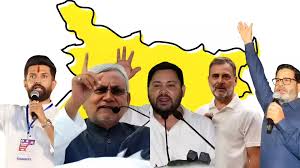
The mandate delivered by Bihar voters shattered the prevailing belief of the past decade and a half that record voter turnout signaled anti-incumbency. However, this time’s results clearly demonstrate that there was no widespread dissatisfaction with the government at the state level. The Bihar election results have surprised everyone this time. Bihar voters delivered a unanimous mandate. The notion that record voter turnout signified anti-incumbency has been shattered over the past decade and a half. The unprecedented 66.91% voter turnout in Bihar has proven this once again. This election result will only have shocked those who lived in a fantasy world or were unaware of the reality despite knowing it. The Congress, under Rahul Gandhi’s leadership, is now unwilling to accept the defeat. It saw vote theft in Maharashtra, Haryana, and even Karnataka, and the same will happen in Bihar. No Mass Discontent: In fact, speaking to people during the election, it was clear that there was no mass discontent at the state level with the Nitish Kumar government. Jan Suraj, which was trying to emerge as a third force, was well-known even in villages, but it lacked direct voter turnout as a party. Women’s turnout, outnumbering men, was a significant indicator of the election results. Lack of Coordination: In coalitional electoral contests, performance depends on how well they speak with one voice and demonstrate consistency on issues, statements, and strategies. The NDA appeared united from day one. Despite minor differences, the NDA publicly announced the seat-sharing arrangement. No public meeting of the Grand Alliance was seen. Everyone fielded their own candidates. There was also a considerable delay in announcing Tejashwi Yadav as the leader. The message that emerged was that they were united only to defeat the BJP, but there was no unity among them. LJP+RLM: The opposition alliance benefited from Chirag Paswan’s rebellion against the LJP (R) in the last election. This time, it is in the NDA. Upendra Kushwaha’s RLM was also in a different alliance last time. Consequently, the NDA brought together leaders with two social bases. On the other hand, there was only Mukesh Sahni’s VIP. Vote theft not an issue: The Congress’s entire strategy was limited to campaigns against vote theft and the Election Commission. No one in Bihar accused anyone of deliberately deleting names from the voter list. Therefore, this was not an issue on the ground, but rather a reaction to it. What will be the result if you campaign by making something that doesn’t exist a major issue? Women’s participation: For whom did women turn out to vote in greater numbers? Women’s participation was 71.6%. A total of 25.1 million women cast their votes, compared to 24.7 million male voters. Women’s turnout was 43.4 million more than men. In 2020, 20.8 million women voted. Compared to this, women’s turnout was 4.3 million more. This didn’t happen without reason. The government under Nitish Kumar’s leadership has done unprecedented work since its inception to bring women into the mainstream of society. Solid Hindutva Support Base: When assessing any election result in India, we must keep in mind that the BJP has a strong support base across the country, based on Hindutva and nationalism. Such BJP voters emerged from all castes in Bihar. There was a time when Bihar was divided between backward and forward castes. This time, too, it seemed as if Bihar was so divided along caste lines that it was now impossible to break free. The election results are a promising sign in this regard. Caste Stiffness Broken: Leaders of all parties should understand that no matter what caste we belong to, we don’t always have a caste-based mindset. From Panchayat to Lok Sabha elections, we work for each other and vote for each other. Inter-caste interactions have also increased significantly. The election results have proven that if gender equality is central to political principles and government policies, and a national spirit is integrated with social justice, development, law and order, and Hindutva, then the majority community can gradually break the caste barrier and move forward. Author: Awadhesh Kumar, Edited by: NBT Desk (The author is a senior journalist and thinker) About the author Whether it’s national, international, sports news, or the inside story of politics, NBT News Desk brings you every news.
Bihar poll results: Rahul Gandhi calls verdict ‘shocking’ as Congress sinks to historic low; wins just 6 of 61 seats
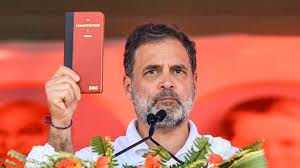
PATNA: Congress leader Rahul Gandhi on Friday said he was shocked at the outcome of Bihar poll as the Grand Old Party witnessed its worst ever performance in an assembly election in the state. The party, which is a part of the Grand Alliance, contested in 61 seats but won only six (strike rate of 9.83%). In 2020, the party contested 70 seats and won 19 (with a strike rate of 27.14%). All its prominent leaders, including state president Rajesh Kumar, Congress legislative party (CLP) leader Shakeel Ahmad Khan and former CLP leader Ajit Sharma, lost the election. In a post on social media, Gandhi alleged the election was not fair from the start. He wrote, “I express my heartfelt gratitude to the millions of voters in Bihar who placed their faith in the Grand Alliance. This result in Bihar is truly shocking. We failed to win an election that was not fair from the start. This fight is to protect the Constitution and democracy.” Party national president Mallikarjun Kharge said the Congress would study the election results in depth and, after understanding the reasons, would present a detailed account. Of the six seats it won, two were by very narrow margins. In Chanpatia, party candidate Abhishek Ranjan prevailed by 602 votes, securing 87 538 votes against BJP’s Umakant Singh who got 86,936. In Forbesganj, party candidate Manoj Biswas defeated BJP’s Vidya Sagar Keshri by 221 votes. Besides Chanpatia and Forbesganj, Congress registered victories in Valmiki Nagar (Surendra Prasad), Araria (Abidur Rahman), Kishanganj (Md Qamrul Hoda) and Manihari (Manohar Prasad Singh) Khan, who lost his sitting Kadwa seat to JD(U)’s Dulal Chandra Goswami by 18 368 votes, said the party would gracefully accept the mandate. He however alleged that the result reflected the effect of Rs 10,000 credited to the accounts of women before the election rather than the people’s mandate. Courtesy : TOI Note: This news is originally published on https:/timesofindia.com/bha and is used purely for non-profit/non-commercial purposes, especially human rights
Bihar election results: NDA stuns Mahagathbandhan in Muslim dominated seats; JD(U) surges
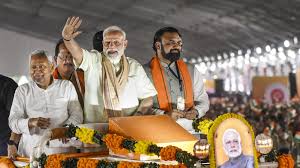
NEW DELHI: Early trends of the Bihar assembly election results on Friday indicated significant gains for the National Democratic Alliance (NDA) in several Muslim-dominated seats. According to the initial trends, the NDA appears on track to secure at least 16 such seats. Chief minister Nitish Kumar’s Janata Dal (United) seems to have benefited the most within the alliance, gaining around eight more seats compared to the 2020 assembly polls. Additionally, Chirag Paswan’s LJP (RV) is leading in six seats with sizeable Muslim voter populations. On the other hand, the Mahagathbandhan has struggled to convert votes despite campaigning heavily on employment and a new chief ministerial face. As per the latest trends, the RJD is losing at least seven Muslim-dominated seats it had won in the 2020 assembly elections, while Congress is trailing in four such seats it previously held. In 2020, the RJD had won 18 of these seats, and Congress had secured six. Historically, Muslims have supported secular alliances. They ensure community members vote for parties claiming to be inclusive. The 2022 Bihar survey showed Muslims make up 17.7% of population and nearly 80% Muslim votes went to MGB in 2015 and 77% in 2020. Meanwhile, the NDA alliance has taken decisive leads across the state, with the Mahagathbandhan trailing. According to the latest numbers, the NDA crossed the majority mark early in the day, with both the BJP and JD(U) delivering strong performances. The Mahagathbandhan (MGB) remains behind, with the RJD performing better than its ally Congress, though still unable to match the NDA’s spread. The RJD, despite the MGB’s overall deficit, continues to rank among the top individual parties in several seats. Jan Suraaj, however, is not appearing prominently in the early seat trends, and its vote share—where visible—remains marginal, having little impact on close contests. The counting operations are being supervised by 243 Returning Officers and an equal number of Counting Observers appointed by the Election Commission. More than 18,000 counting agents representing various candidates are present at the centres to monitor the process closely. Entry into counting centres is strictly limited to individuals with valid passes, and the use of mobile phones inside counting halls is fully prohibited. The election saw participation from over 7 crore voters who cast their ballots to decide the fate of both the ruling NDA and the Mahagathbandhan. Polling was held in two phases, on November 6 and 11. Courtesy : TOI Note: This news is originally published on https:/timesofindia.com/bha and is used purely for non-profit/non-commercial purposes, especially human rights
Crime Without Punishment
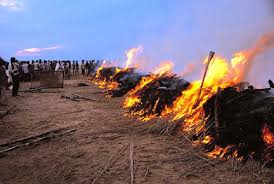
The system protects those who commit caste violence while blaming victims for asserting dignity Two back-to-back incidents, a shoe attack on Dalit CJI B.R. Gavai and the suicide of Dalit ADGP Y. Puran Kumar, expose how caste violence and humiliation persist even at the highest levels of India’s institutions. Both cases highlight growing impunity under the Hindutva regime, where perpetrators invoking “Sanatan Dharma” face little accountability, while Dalits remain vulnerable despite rank, merit, or office. The events illustrate how token representation fails to protect Dalits, revealing a systemic, Brahmanical power structure that normalizes caste supremacy and shields upper-caste offenders. Within the span of days, two incidents have laid bare the entrenched caste realities of contemporary India and the impunity that the Hindutva regime has institutionalised. On October 6, 2025 a 71-year-old lawyer hurled a shoe at Chief Justice of India B.R. Gavai, a Dalit, inside the Supreme Court, defiantly shouting “Sanatan ka apmaan nahi sahega Hindustan” (India will not tolerate insult to Sanatan Dharma). He was released without charges, his shoe returned, facing no consequences for attacking the country’s highest judicial authority. The very next day, October 7, Additional Director General of Police Y. Puran Kumar, also a Dalit, died by suicide at his Chandigarh residence, leaving an eight-page note describing years of caste humiliation and harassment by senior officers. Despite huge public outrage, nothing has been done to the perpetrators. These two events, occurring within 24 hours, are not aberrations but revelations of a deeper malaise—the normalisation of caste violence and Brahminical supremacy under a majoritarian Hindutva order that has erased accountability for crimes committed in the name of Sanatan Dharma or Hindu honour. One incident reflects physical assault on a Dalit constitutional authority without reprisal; the other, psychological persecution that drove a senior officer to death. Together, they expose an ecosystem where Dalits—irrespective of office, achievement, or rank—remain vulnerable to humiliation and violence sanctioned by ideological impunity. These are not isolated tragedies but logical outcomes of the Hindutva project that the ruling regime has consolidated over the past decade—an order that weaponises religion to defend caste and punishes dignity itself. The Shoe That Revealed Everything The attack on Chief Justice B.R. Gavai was unprecedented in audacity and deeply revealing in consequence. In a packed Supreme Court room, a lawyer hurled his shoe at the bench headed by CJI Gavai, defiantly shouting a slogan sourced from the Hindutva playbook. He later claimed he was enraged by the CJI’s quip—“ask the deity itself to do something”—while dismissing a frivolous plea to restore a Vishnu idol at Khajuraho. Such verbal retorts by judges, right or wrong, are not uncommon. However, the Hindutva networks seized on the remark as an “insult to Sanatan Dharma”, manufacturing the outrage that fuelled the assault. What followed laid bare the regime’s moral collapse. The assailant was released within hours. He boasted to the press, “I have no regrets…I was hurt.” The Prime Minister’s bland condemnation avoided any commitment to legal action. The Bar remained silent; the media soon moved on. By contrast, when a Mumbai lawyer threw a shoe at CJI A.S. Anand in 1999, aggrieved by the verdict in his property matter, he was convicted of contempt and sentenced to four months imprisonment and a fine. Kishore’s act was graver because it was ideological. His slogan invoked Sanatan Dharma—a euphemism for Brahminism that sanctifies caste hierarchy—asserting that religious sentiment trumps constitutional authority. It claimed the right to assault a Dalit Chief Justice in defence of “Hindu honour,” confident that society would understand, perhaps even celebrate, the act. This confidence of impunity is no accident. It is the product of a decade-long Hindutva campaign that has normalised upper-caste violence under the banner of faith. When cow vigilantes lynch Muslims, interfaith couples are attacked, or homes are bulldozed without due process, the same message resounds: violence in the name of Sanatan Dharma enjoys state protection. The online abuse of CJI Gavai was overtly casteist, mocking his intelligence and legitimacy. The hate spewed against him as a Dalit on social media is criminal, but the entire state machinery has been silent. The outrage over “insult to Sanatan” was merely a polite mask for fury at a Dalit occupying the highest judicial office and dismissing an upper-caste petitioner. In the Brahminical logic encoded in Sanatan Dharma, a Dalit exercising authority represents an inversion of the natural order that must be violently corrected. Kishore’s attack—and the regime’s indulgence—thus revealed everything about Hindutva’s compact with caste: that in the new India, religious offence is punishable, but caste violence is not. The Suicide Note That Indicts a System On October 7, 2025, Additional Director General of Police Y. Puran Kumar, a 2001-batch Dalit IPS officer from Andhra Pradesh serving in Haryana, shot himself at his Chandigarh residence. In his suicide note, he named several IPS and IAS officers, accusing them of sustained mental harassment, humiliation, and caste-based discrimination. Kumar detailed how he was sidelined despite seniority, denied postings he deserved, and targeted through fabricated charges. His note spoke of a systematic campaign of humiliation, including attempts to implicate him in a fake bribery case. His wife, Amneet Kumar, an IAS officer, filed a complaint holding the named officials responsible for his death and demanding their suspension and arrest. What has emerged from Kumar’s note reveals the pervasive caste bias that Dalit officers continue to face in “meritocratic” institutions. Kumar wrote of years of “mental harassment and humiliation”, of being denied recognition and opportunities his upper-caste peers enjoyed. His decision to end his life after naming his tormentors was both an act of despair and an indictment—a demand that the system confront its casteist rot. Kumar’s death demolishes the myth that rank or merit protects Dalits from caste oppression. Here was an officer one step below the state’s top cop, yet, even his uniform and authority could not shield him from institutionalised caste prejudice. If an ADGP could be hounded to suicide, what hope remains for Dalit constables or sub-inspectors, not to
Bihar exit polls: Looking back at past predictions across states; how close were they to actual results?
NEW DELHI: With the final phase of the Bihar assembly elections wrapping up on Tuesday evening, all eyes now turn to the exit polls — the political prelude to the much-anticipated counting day. The high-stakes battle, primarily between the ruling NDA alliance and the opposition Mahagathbandhan, also marks the debut of Prashant Kishor’s Jan Suraaj, which has campaigned vigorously on promises of change. As Bihar waits for the first projections to roll in, here’s a look at how exit polls fared in five major elections held in the recent past — Maharashtra, Delhi, Haryana, Jharkhand, and the Lok Sabha — and whether the predictions matched the final results. Maharashtra: Predictions underplayed a landslide Exit polls: Pollsters had predicted an edge for the BJP-led Mahayuti alliance (BJP, Ajit Pawar’s NCP, and Eknath Shinde’s Shiv Sena), projecting between 150 and 170 seats in the 288-member assembly. The opposition Maha Vikas Aghadi (MVA) was expected to secure 110 to 130 seats, while smaller parties were forecast to win 8 to 10. Results: The Mahayuti performed far beyond expectations, sweeping 235 of the 288 seats, handing a decisive victory to the BJP-led alliance. The scale of the win exceeded most projections, showing a clear miss for the exit polls. Delhi: Exit polls broadly accurate, with minor deviations Exit polls: Surveys predicted a strong lead for the BJP, while some overestimated AAP’s performance. Results: The final tally stood at BJP 48, AAP 22, and Congress 0. Pollster P-Marq proved most accurate, predicting AAP at 26 and BJP at 44, a deviation of just four seats per party. Poll Diary also closely matched the outcome, forecasting AAP’s 22 seats precisely and coming within two seats for BJP. Haryana: Exit polls misread the tide completely Exit polls: Predictions gave Congress a clear upper hand with 44 to 64 seats, while the BJP was expected to manage 15 to 32 seats. Results: The BJP stunned pollsters and opponents alike, winning 48 seats, an all-time best for the party in Haryana. The Congress managed 37, nine short of the majority mark. The outcome sharply contrasted with exit poll estimates, making Haryana one of the biggest misses for psephologists in recent elections. Jharkhand: Exit polls drowned in a political downpour Exit polls: Most surveys predicted a neck-and-neck contest between the NDA and the INDIA bloc, giving around 38 seats to the JMM-led coalition and 40 to the BJP-led alliance. Results: When the results were declared on November 23, the INDIA bloc led by Hemant Soren’s JMM swept 50 of 81 seats, a resounding mandate. The exit polls, almost unanimously, failed to anticipate the scale of the INDIA bloc’s win. Lok Sabha 2024: ‘400 paar’ predictions fall flat Exit polls: Predictions for the 2024 general elections had painted a landslide for the BJP-led NDA, with some pollsters going as far as forecasting “400-paar”. Results: The NDA won 293 seats, well below the forecast, while the BJP managed 240 seats, 63 fewer than in 2019 — losing its solo majority for the first time since 2014. The INDIA bloc, led by Congress, surprised observers with 235 seats, underlining the extent of the exit poll miscalculations. What to expect in Bihar As Bihar’s 2025 verdict inches closer, the spotlight is now on the exit polls — whether they will capture the pulse of the voter or once again misfire, as in several recent elections. With Nitish Kumar seeking to defend his legacy and Tejashwi Yadav attempting to unseat him, the political stage is set for another fascinating test. Courtesy : TOI Note: This news is originally published on https:/timesofindia.com/bha and is used purely for non-profit/non-commercial purposes, especially human rights