
‘Not the one to blackmail Congress’: DK Shivakumar slams leadership change speculation in Karnataka
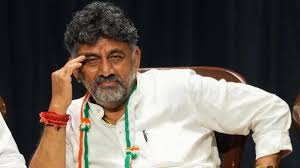
BENGALURU: Karnataka deputy chief minister D K Shivakumar has dimissed speculation that he was preparing to step down as the state Congress president, stressing that he remains a “disciplined soldier” of the party. His remarks came amid renewed chatter about a possible reshuffle in the Siddaramaiah cabinet following the chief minister’s meeting with Rahul Gandhi a day earlier, according to news agency PTI. Shivakumar said that any decision on cabinet changes is entirely up to Siddaramaiah and will be made only after consulting the party’s central leadership. He added that his visit to Delhi was mainly to invite Rahul Gandhi and Congress president Mallikarjun Kharge to the foundation stone ceremony for 100 new Congress office buildings in Karnataka. “There is a foundation-laying ceremony and several other events. Who will handle all of that? I have to do it. Why would I say I will resign (as state Congress president)? That situation hasn’t arisen yet,” he told reporters, rejecting the speculation circulating in political circles. Reaffirming his commitment to the party, he said, “I am dedicated to serving the party as a disciplined soldier, doing whatever tasks are assigned to me.” He also criticised the media for fuelling rumours, saying, “I am not the one to blackmail the Congress. I have built this party and worked tirelessly day and night for it. I will continue to do so in the future. Our party will return to power (in Karnataka) in 2028.” In addition to the office inauguration plans, Shivakumar is set to release his book Gandhi-Bharat, which revisits the historic Belagavi Congress session led by Mahatma Gandhi and the party’s centenary commemoration. Meanwhile, home minister G Parameshwara said the party was considering only a cabinet reshuffle and ruled out any change in leadership. Siddaramaiah, speaking in Delhi, maintained that there had been no discussion on a reshuffle and said his talks with national leaders were focused on the Bihar election results. Courtesy : TOI Note: This news is originally published on https:/timesofindia.com/bha and is used purely for non-profit/non-commercial purposes, especially human rights
TMC accuses BJP of being ‘anti-tribal anti-dalit’ alleges rise in crimes against STs
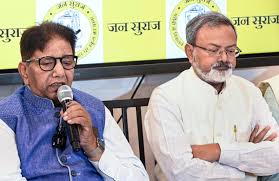
Kolkata, (PTI) Stepping up its attack on the BJP governments at the Centre and in states, the Trinamool Congress (TMC) on Saturday accused the party of being “anti-tribal” and “anti-Dalit”, alleging that crimes against Scheduled Tribes (STs) had risen sharply in saffron party-ruled states. In a post on its official X handle, the party claimed crimes against adivasis had shot up by a staggering 90 per cent from 6,827 cases in 2014 to 12,960 cases in 2023. “In just one year, between 2022 and 2023, crimes against STs skyrocketed by 28.8 per cent, with the crime rate surging from 9.6 to 12.4,” the party said. The party asked, “Where are Tribals the most unsafe? Not Bengal. But Manipur and Madhya Pradesh, both proudly governed by BJP,” alleging that BJP-ruled states accounted for the “worst atrocities” against tribal communities. “In Madhya Pradesh’s Sidhi, a BJP leader was caught on camera commiting atrocities on a tribal youth. In Bengal, BJP’s own LoP @SuvenduWB has proudly declared that respected Tribal leaders like Debnath Hansda and Birbaha Hansda are ‘infants’ who belong under his boots,” the TMC said in the post. “After this mountain of hate, humiliation and violence, how does the BJP dare to lecture Bengal?” the party asked, alleging that the double-engine government used adivasi lives as “political props”. In another post, the TMC accused BJP leaders like Amit Malviya of launching “an anti-Bengali campaign”, branding him as an outsider. “So now @BJP4India wants to decide who is ‘Bengali’ and who is not? Your UP-born @amitmalviya is the same man who insulted and questioned the Bengali language, claiming “there is, in fact, no language called Bengali”. Accusing Malviya of repeatedly painting Bengalis as infiltrators and Bangladeshis, the TMC described BJP as a party parachuting outsiders into Bengal politics and appointing outsiders like Bhupendra Yadav and Biplab Deb as “election in-charge”. “When it suits BJP, outsiders are leaders. When it doesn’t, even Bengalis are ousiders,” the post said. The TMC said Bengal does not need BJP’s certificate to decide who belongs here as “your hate-driven narrative won’t work here.” (This story has not been edited by THE WEEK and is auto-generated from PTI) Courtesy : The Week Note: This news is originally published on https:/theweek.com/bha and is used purely for non-profit/non-commercial purposes, especially human rights
Dalits and Muslims in Bihar
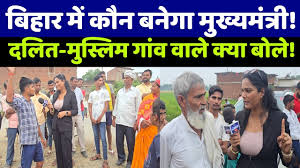
In the 2025 Bihar Assembly elections, the mandate has defied all established traditions and electoral conventions, creating new equations that have created a new chemistry within Bihar’s social structure. This indicates that when the public decides on its own alliances and coalitions, it pushes aside traditional beliefs. This Bihar mandate is shocking in many ways because it has shattered the very assumptions of Bihar’s electoral mathematics, based on which political parties calculate their victory and defeat. For example, in Muslim-dominated areas, this time’s mandate has shattered the Muslim-Yadav alliance, while also completely altering the election results in seats reserved for Scheduled Castes and Scheduled Tribes. Although in Bihar’s past history, the ruling NDA won 206 seats in the 2010 elections, far exceeding the current 202 seats, the social equations were not resolved the way they have been in this election. This time, the public has sent a clear message that it will not accept any other equations in place of good governance and public welfare. In the 2010 elections, Nitish Kumar’s party, the Janata Dal (United), contested 141 seats and won 115. The BJP contested a total of 102 seats and won 91. This time, the BJP and the JDU contested an equal number of seats, winning 101 each, with the BJP winning 89 and the JDU winning 85. However, these seats represented participation from all sections of society. JDU fielded four candidates from the Muslim community, all of whom won, while NDA ally Chirag Paswan’s LJP fielded one Muslim candidate. The Seemanchal region of Bihar is considered a stronghold of Muslim votes, comprising the four districts of Kishanganj, Katihar, Araria, and Purnia. These four districts have 24 seats. It was believed that the Muslim vote bank in Seemanchal would remain unspoiled, but a split occurred, and five candidates from Asiduddin Owaisi’s Ittehad-e-Muslimeen party won from this region. The same number of candidates from this party were victorious in the 2020 elections. The Muslim vote was divided between the opposition Grand Alliance and Ittehad-e-Muslimeen, resulting in the NDA’s greatest victory, with the largest number of its candidates winning from Seemanchal. In Seemanchal, where there was a buzz about consolidation of Muslim votes, Hindu votes consolidated in favor of the NDA without any caste discrimination, resulting in the highest number of victories for this alliance’s candidates. Of the 24 seats in Seemanchal, the NDA secured 14, with the BJP winning seven, the JDU five, and Chirag Paswan’s LJP two. In the opposition Grand Alliance, the Congress secured four, the RJD only one, and Asiduddin Owaisi’s party won five. While it was believed that the Seemanchal region would be more favorable for Lalu Yadav’s RJD party because of the Muslim majority here and the Muslim-Yadav equation being active, the opposite happened. Due to the division of Muslim votes, all four JD(U) Muslim candidates won. Kishanganj district has the highest Muslim voter turnout at over 67 percent, while Katihar has 45 percent, Araria 43 percent, and Purnia 39 percent. The Congress Party’s performance in Seemanchal is considered very poor, although it won four seats. This is despite the region’s Muslims’ goodwill toward Rahul Gandhi. Thus, the NDA’s improved performance in Seemanchal this time compared to 2020, demonstrating that the Grand Alliance’s perceived Muslim bias has not affected it. Similarly, the state’s reserved seats for Dalits have been in a similar state. Of the 40 reserved seats in Bihar, only two are reserved for Scheduled Tribes or Adivasis, while the remaining 38 are for Scheduled Castes. By capturing 34 of these 40 seats, the NDA demonstrated that the opposition Grand Alliance’s caste census strategy failed to work, and that the proponents of social justice, Lalu Prasad Yadav’s party, have only marginalized the Scheduled Castes. Although Lalu Prasad Yadav’s party, the RJD, received the highest number of votes in these 40 seats, with over 22 percent, it failed to win any seats. The Grand Alliance won only four out of 38 seats and one tribal seat. In the previous elections in 2020, the NDA won 21 reserved seats and one tribal seat, while the Grand Alliance won 17 reserved seats and one tribal seat. Given the Grand Alliance’s poor performance in the reserved seats, it can be said that Rahul Gandhi’s Save the Constitution campaign was very weak in these areas. Thus, the NDA defeated the Grand Alliance on all fronts and created new electoral equations while strengthening its concept of public welfare. Aditya Chopra Courtesy: Hindi News
Revanth–Rahul show unity after bypoll win; cabinet expansion talks gain buzz
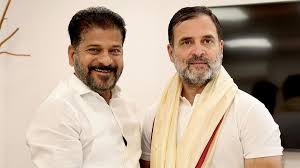
Hyderabad: In a clear display of unity after the decisive Jubilee Hills bypoll victory, AICC leader Rahul Gandhi on Saturday praised the ‘teamwork and coordination’ that powered the Congress win — setting the tone for a strategy reset ahead of local body and GHMC elections.Rahul is set to hold a detailed review meeting with chief minister A Revanth Reddy and his council of ministers to assess the bypoll performance, the political climate in Telangana, and the road map for upcoming electoral battles. At the heart of this upcoming huddle is also a key political question: When will Revanth fill the two vacant cabinet berths? Rahul is learnt to have directly asked the chief minister about his expansion plans, a move that has re-energised conversations within the party. Revanth, along with deputy CM Bhatti Vikramarka, AICC Telangana in-charge Meenakshi Natarajan, TPCC president B Mahesh Kumar Goud, and newly-elected MLA V Naveen Yadav, called on Rahul Gandhi, AICC president Mallikarjun Kharge, and AICC general secretary KC Venugopal in Delhi. All three national leaders congratulated Naveen Yadav and the Telangana team for the bypoll win. The meeting came just a day after the result — significant because opposition parties had been alleging a widening rift between Rahul and Revanth. The coordinated outreach by the CM, accompanied by Naveen Yadav and top state leaders, worked as a public reaffirmation of smooth communication between Hyderabad and the high command. Though it was widely speculated that Revanth’s team discussed the evolving political situation, local body elections, GHMC polls and cabinet expansion — and that the CM invited Rahul and Kharge to the Congress govt’s two-year celebrations and the Global Summit in Dec — senior leaders maintained that there was no formal confirmation on these points. “It was a brief meeting where Naveen was introduced and all three AICC leaders complimented the new MLA and the TPCC team. There wasn’t much discussion on other issues,” Mahesh Goud clarified, attempting to cool the buzz. Yet, the very composition of the delegation — the CM, deputy CM, Meenakshi, Mahesh Goud — triggered intense speculation in Telangana Congress circles. Their collective presence in Delhi fuelled talk of imminent cabinet expansion or even a reshuffle, despite the CM’s official reason for travel being participation in Kapil Sibal’s book release. Names doing the rounds for the two vacant berths include Komatireddy Raj Gopal Reddy, Malreddy Ranga Reddy, Actor-MLC Vijayashanti, Mahesh Goud himself, and Naveen Yadav. And after Mohammed Azharuddin’s recent entry into the cabinet, many senior leaders believe a reshuffle cannot be ruled out. Courtesy : TOI Note: This news is originally published on https:/timesofindia.com/bha and is used purely for non-profit/non-commercial purposes, especially human rights
Nationalists in Congress upset with ‘namdar’: PM Modi rips into Rahul; slams anti-EC campaign
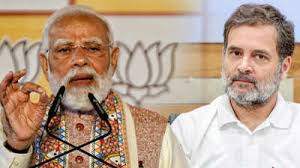
NEW DELHI: Prime Minister Narendra Modi, a day after the NDA’s historic win in Bihar, launched a sharp attack on the Congress, saying dissatisfaction was spreading among senior nationalist leaders who had once worked closely with Indira Gandhi and Rajiv Gandhi. Taking a veiled dig at Rahul Gandhi, Prime Minister said that their frustration stemmed from the conduct of what he called the party’s “namdar” leadership. He further accused the opposition of now turning its anger towards institutions instead of accepting the verdict. Addressing a gathering of Bihari residents in Surat, PM Modi said the Congress and its allies had turned to blaming institutions instead of introspecting. “Opposition can’t explain poll rout even to their workers and blaming EVMs, EC and electoral rolls’ revision,” he said, calling it part of a “habitual” attempt to discredit constitutional bodies. He also pointed to what he described as growing frustration among younger opposition MPs, saying, “When we meet young Congress members or INDIA alliance members in the Parliament, they say, ‘Sir, what can we do? Our careers are coming to an end. We don’t even get a chance to speak in Parliament because these people keep saying, ‘Lock Parliament,’ every time.’ They’re unable to answer their own constituencies…” — ANI (@ANI) Turning to Bihar, PM Modi praised the state’s voters for delivering a decisive mandate and setting what he described as a global example. He said Bihar’s political clarity had strengthened the NDA while exposing weaknesses in the opposition’s message. “Bihar is famous worldwide today… Bihar’s women and youth formed a combination that strengthened the foundation of politics for decades to come,” he said. He highlighted the 10 per cent vote gap between the NDA and the Mahagathbandhan as evidence of a clear preference for development. He sharply criticised opposition leaders, accusing them of attempting to divide voters. “For the past two years, these ‘jamanati’ politicians, who are out on bail, were going around in Bihar giving speeches about casteism… This election in Bihar has completely rejected that poison of casteism. This is a very bright sign for the country.” He also referred to controversies over Waqf properties, saying Bihar’s voters had dismissed what he called “communal poison”. The NDA secured a massive mandate in the Bihar assembly elections winning 202 seats while the Mahagathbandhan secured 35. Rahul meets Kharge to discuss Cong’s Bihar poll drubbing Meanwhile, the Congress on Saturday questioned the role of the Election Commission in the Bihar poll process as its top leaders, including Rahul Gandhi and party president Mallikarjun Kharge, met in Delhi to assess the party’s poor performance. Gandhi and Kharge were joined by K C Venugopal, Ajay Maken and Bihar in-charge Krishna Allavaru. Sources said the meeting focused on the Congress winning only six of the 61 seats it contested, its second-worst tally in the state since 2010. After the discussions, Venugopal blamed the Election Commission for the outcome, alleging that “the entire poll process is questionable and there is no transparency”. Calling the result “unbelievable for all of us”, he said alliance partners were also “not believing it”. He argued that a “90 per cent plus strike rate for a political party” had never happened in Indian history and said the Congress was collecting data from across Bihar and would present “concrete proof” within one or two weeks. Venugopal said the conduct of electioneering was “completely questionable” and alleged that “the Election Commission is totally one-sided”. Courtesy : TOI Note: This news is originally published on https:/timesofindia.com/bha and is used purely for non-profit/non-commercial purposes, especially human rights
Siddaramaiah met Rahul Gandhi in Delhi, now DK Shivakumar is going to meet him. Is something going to happen in Karnataka?
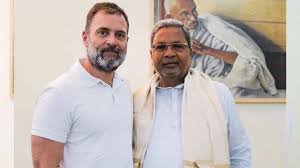
Amidst speculation about a cabinet reshuffle in Karnataka, Chief Minister Siddaramaiah met with Rahul Gandhi, the Leader of the Opposition in the Lok Sabha, in New Delhi. Sources said that Siddaramaiah, along with Energy Minister KJ George, held a 30-minute discussion with Gandhi at former Congress President Sonia Gandhi’s residence. Bengaluru: Karnataka Chief Minister Siddaramaiah met Rahul Gandhi in Delhi. The two held a half-hour discussion at Sonia Gandhi’s residence. Siddaramaiah’s Energy Minister KJ George was also present during the meeting. It is believed that this meeting was about the reshuffle in Karnataka. Siddaramaiah’s two-and-a-half-year term is coming to an end. There is speculation that DK Shivakumar could be replaced as Chief Minister, and that a cabinet reshuffle would give new faces a chance. However, Siddaramaiah dismissed these speculations, stating that the only discussion during their meeting was the Bihar election results. Meanwhile, DK Shivakumar’s statement on this meeting sparked speculation. Siddaramaiah kept this meeting a secret, although the news spread in the media. He did not want his meeting with Rahul Gandhi to become public. Siddaramaiah, who usually shares photos of every meeting, big or small, on social media, did not post a single photo of his meeting with Rahul Gandhi. This sparked all sorts of speculation. Siddaramaiah’s Claim The Karnataka Chief Minister said, “Yes, I met Rahul Gandhi. We only discussed the Bihar elections. He is our leader, so we encouraged him after the Bihar election defeat. He said he was not worried about it. We told him not to lose heart. There was no discussion on a cabinet reshuffle. If I get time, I will meet the Prime Minister on Monday.” What DK Shivakumar Said Reacting to Karnataka Chief Minister Siddaramaiah’s meeting with Congress leader Rahul Gandhi on Saturday, Deputy Chief Minister DK Shivakumar said he was unaware of the meeting. He said, “I am not aware of the Chief Minister’s meeting with Rahul Gandhi. I am not aware of any discussion on a cabinet reshuffle… I don’t know if I will meet (with Rahul Gandhi) on Sunday.” Amid growing curiosity about potential changes in the Karnataka leadership, Shivakumar said, “If you have any questions about leadership changes, talk to the Chief Minister. We have to listen to the party.” Shivakumar further said that the Chief Minister has every right to meet Mallikarjun Kharge, the Home Minister, or the Prime Minister. What is wrong with that? Siddaramaiah’s Claim In addition to statements from various ministers and Congress leaders, Siddaramaiah himself hinted on Tuesday that a cabinet reshuffle was likely, as two positions had become vacant due to the resignations of ministers KN Rajanna and B Nagendra. A source familiar with the meeting said that Rahul Gandhi has given his approval for a reshuffle in the state cabinet. The source added that it is now up to the Chief Minister to decide. Meanwhile, amid discussions of a leadership change, KPCC President DK Shivakumar also arrived in New Delhi on Saturday and is expected to meet with Gandhi and other senior leaders. It is reported that he now wants to include MLAs from his faction in the cabinet expansion. Curated by: Shashi Mishra About the Author Shashi Pandey Mishra is a senior journalist at Navbharat Times Online. She writes stories on politics, crime, health, and the human angle. She also enjoys writing on issues related to women and children. She also writes ground reporting and interesting stories. She has 18 years of experience in journalism. Courtesy: Hindi News
Rahul Gandhi’s Bihar setback: Congress slips badly, INDIA bloc routed — what could have gone wrong
NEW DELHI: Haryana, Maharashtra, Delhi — and now Bihar. What should have been a comeback moment for the Congress-led INDIA bloc instead turned into a rout. Bihar has delivered the harshest blow yet. With the Nitish Kumar–led NDA storming past the 200-seat mark and the Congress slipping to one of its most disappointing performances in the state, the INDIA bloc’s brief post-Lok Sabha momentum has abruptly evaporated, pulling the coalition back to political reality. Follow Bihar election results 2025 live updates NDA won 202 seats out of the 243-member assembly, reducing the Rashtriya Janata Dal to a historical low and Congress to single digits. This comes down to Congress’ tactical, not strategic, electoral marriages with regional parties, which often lead to chaos and confusion in the run-up to the elections. What happened in Bihar? Alliance without alignment In the run-up to the Bihar elections, the Mahagathbandhan allies hit their first roadblock over the seat-sharing deal. While the NDA, despite all the infighting, reached a deal, the RJD, Congress, VIP and Left parties failed to decide on seat allotment even till the eve of the first phase of the elections. In at least 11 constituencies, allies within the Mahagathbandhan — the RJD, Congress, CPI and VIP — found themselves pitted against each other, leading to what were described as “friendly fights” but which in reality ended up splitting the opposition vote. These contests, spread across Vaishali, Kahalgaon, Narkatiaganj and several other seats, reveal how coordination failures and local ambitions undermined the alliance’s broader effort to challenge the BJP-led NDA’s dominance in the state. Interestingly, Jharkhand Mukti Morcha – key partner of INDIA bloc from Jharkhand” withdrew from the Bihar contest after a stalemate over its seat-sharing deal with the INDIA bloc. “Unfortunately, JMM won’t be part of the Bihar polls despite my intentions and plans. This is only because of RJD’s ‘political’ immaturity,” JMM leader Sudivya Kumar had said after the impasse. Rahul’s Bihar miss Leader of opposition in Lok Sabha Rahul Gandhi once again proved to be a flop show in the Bihar assembly election. The Congress leader’s Voter Adhikar Yatra, which he rolled out just days ahead of the election, did not prove to be a trump card. Additionally, his repeated attacks on the Election Commission and charges of “vote theft” proved to be irrelevant in Bihar politics. Following his yatra, Rahul Gandhi remained largely absent and returned to the campaign trail only on 29 October. Gandhi’s absence has become a significant issue amid a crisis within the party’s ranks, with many leaders alleging discrepancies in the distribution of tickets. Meanwhile, overwhelming women voters’ participation tilted the mandate toward the NDA, boosted by welfare schemes for women. One of the most talked-about schemes before the election was Mukhya Mantri Mahila Rozgar Yojana — Rs 10,000 assistance for women wanting to start small enterprises. Women voters took the lead in what the Election Commission of India described as Bihar’s highest-ever voter turnout, with 71.6 per cent of female electors casting their ballots compared to 62.8 per cent of men. In the first phase of voting, 69.04 per cent of women turned out to vote, well above the 61.56 per cent male turnout. The trend strengthened in the second phase, when 74.03 per cent of women voters exercised their franchise, again surpassing the 64.1 per cent turnout among men. Overall, Bihar recorded a 66.91 per cent voter turnout — the highest since the state’s first elections in 1951 — with women driving the surge in participation. The Seemanchal split The Mahagathbandhan’s dilemma over partnering with Asaduddin Owaisi’s AIMIM in Seemanchal also proved to be costly for the opposition alliance, as the fight between AIMIM and the Mahagathbandhan benefitted the NDA in the region. While AIMIM managed five seats in the region, the Mahagathbandhan was reduced to only nine seats. AIMIM leader Waris Pathan claimed that “RJD and the Congress are themselves responsible for the division of minority votes.” He further said that the opposition alliance was given an opportunity to come together “by seeking only six seats from the Mahagathbandhan, but they refused”. No cadre for Congress In the run-up to the elections, cracks within the Congress Bihar unit also resurfaced. Rebel Congress leaders, including several MLAs, staged protests for being denied tickets. These leaders demanded the immediate replacement of the party’s Bihar in-charge Krishna Allavaru with a ‘political’ person. After the Bihar polls, the next challenges for INDIA alliance awaits in the form of West Bengal, Assam and Tamil Nadu assembly election. Now, it will be interesting to see how the opposition bloc. Courtesy : TOI Note: This news is originally published on https:/timesofindia.com/bha and is used purely for non-profit/non-commercial purposes, especially human rights
Bihar election results: Rahul Gandhi walked 1,300 km but Congress still went downhill
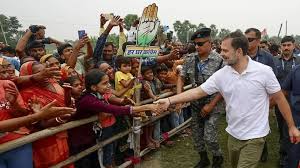
1,300 kilometres, 25 districts, 110 seats. Rahul Gandhi marched through Bihar echoing “vote chor, gaddi chhod,” but voters clearly took a different route – straight to the polling booth, but away from him. The gamcha, the Bhojpuri, the makhana, the fishing and the bike rides – the Nehru-Gandhi scion threw in every flavour of Bihari charm he could muster. But the performance fell flat. Once again, his attempt to slip into the state’s cultural skin didn’t quite land, and the Congress now finds itself staring at one of its bleakest showings, with the party struggling to even hit double digits. Back in 2020, Congress bagged 19 seats. This time, the slide has only steepened. Despite hammering national narratives, the party’s messaging was drowned out by local realities that it failed to read, let alone ride. Why Voter Adhikar Yatra failed to garner votes for Congress? The Voter Adhikar Yatra began with strong crowds and genuine enthusiasm, briefly hinting at a revival for the Congress. But as the campaign moved forward, that initial spark faded. The party leaned too heavily on the yatra’s symbolism while offering little sustained presence on the ground. With only scattered appearances from senior leaders, Congress couldn’t maintain momentum or build a deeper connection with voters. This slowdown was worsened by the MGB’s internal rifts and muddled coordination. Resentment within the RJD, confused candidate choices, and weak organisational synergy blunted whatever gains the yatra had created. At the same time, shifting local dynamics, such as the BSP’s rise and the NDA’s strategic recalibration, cut further into Congress’s appeal. In the end, local realities overpowered the early hype, leaving the yatra unable to pull voters towards the party. The road well walked: Three yatras, one message Rahul Gandhi’s three nationwide yatras — Bharat Jodo (2022–23), Bharat Jodo Nyay (2024), and Vote Adhikar (2025) — were crafted to reposition him as a people’s politician. Each march carried a distinct political thesis: the first called for unity against divisive politics, the second championed justice through caste census and welfare, and the third sought to reform electoral practices and mobilize allies under the Mahagathbandhan banner. While the yatras succeeded in transforming Rahul’s image from a detached leader to an engaged campaigner, they also revealed the limits of symbolic politics. They revived enthusiasm among cadres and built narrative energy, but translating that emotional momentum into votes has remained elusive. The high points: South and the hills If the yatras gave Rahul a platform, victories in Himachal Pradesh, Karnataka, and Telangana gave him proof of concept. In Himachal, the Congress’s return to power followed a textbook anti-incumbency swing backed by the Old Pension Scheme. In Karnataka, anti-corruption sentiment and strong local leadership under Siddaramaiah and DK Shivakumar delivered a resounding 136-seat win. And in Telangana, Revanth Reddy’s aggressive campaign unseated KCR after a decade in power. These wins established Congress as a southern powerhouse and briefly revived its national narrative. The results helped restore morale, re-energize its workers, and suggested that Rahul’s “connect with the people” strategy could still pay dividends — at least in states with strong regional leaders and disciplined organization. The flat roads: Hindi heartland woes Beyond those isolated victories, Congress’s struggles in the Hindi belt continue. Despite a promising 2024 Lok Sabha performance, the 2025 assembly results in Haryana, Maharashtra, Madhya Pradesh, Rajasthan, and Delhi exposed deep organizational decay. In Haryana, the Congress came agonizingly close but fell short due to factionalism and lack of a decisive local face. In Maharashtra, alliance fatigue within the MVA cost it dearly. In Madhya Pradesh and Rajasthan, BJP’s disciplined machinery and Modi’s enduring appeal crushed Congress’s hopes. And in Delhi, the party failed yet again to open its account. The only exception was Jharkhand, where the Congress-JMM alliance retained power by focusing on welfare delivery and regional identity politics — proof that Congress still performs best when piggybacking on strong local allies. Walking, talking, but still searching Rahul Gandhi’s press conferences over the past year, from alleging “vote chori” in Haryana to calling out “hydrogen bomb” voter fraud, have ensured constant media attention. But critics argue that they’ve done little to change electoral outcomes. His messaging resonates with idealists, yet Congress’s electoral machinery remains sluggish, fragmented, and overly dependent on his charisma. Five years, three yatras, and multiple campaigns later, Rahul has successfully crafted a new moral vocabulary for Indian politics — but not yet a winning formula. His journey across India has earned him empathy and visibility, but politics demands more than footprints and soundbites. Unless Congress learns to turn Rahul’s moral momentum into organizational muscle, his yatras may remain grand spectacles of purpose without political payoff. Courtesy : TOI Note: This news is originally published on https:/timesofindia.com/bha and is used purely for non-profit/non-commercial purposes, especially human rights
‘Election not fair from beginning’: Rahul Gandhi’s first reaction to Cong’s dismal show in Bihar polls
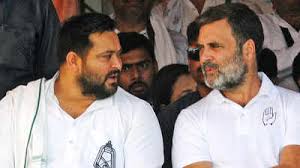
NEW DELHI: Congress leader Rahul Gandhi delivered his first response to the Congress Party’s poor performance in the Bihar assembly election, describing the contest as “unfair from the very outset” and insisting that the party, along with the wider INDIA alliance, will undertake a detailed review of what went wrong. In a post on X, he wrote: “I express my heartfelt gratitude to those millions of voters in Bihar who placed their trust in the Mahagathbandhan. This result in Bihar is truly astonishing. We could not secure victory in an election that was unfair from the very outset. This battle is for the protection of the Constitution and democracy. The Congress Party and the INDIA alliance will thoroughly review this outcome and make their efforts to save democracy even more effective.” His remarks came as the NDA surged to a historic victory, securing over 200 seats, while the Mahagathbandhan registered just 33. The Congress won only six of the 61 seats it contested, prompting sharp internal and public reactions from party leaders. Rahul Gandhi repeated his accusation that the electoral process was compromised, saying the party “could not achieve victory in an election that was not fair from the very beginning.” Congress President Mallikarjun Kharge also expressed deep disappointment but urged party workers not to lose heart. In his post on X, he wrote: “We respect the decision of the people of Bihar and shall continue our fight against those forces that are engaged in weakening democracy by misusing constitutional institutions. We shall study the election results in depth and shall present a detailed account after understanding the reasons for the outcomes. To those voters in Bihar who have supported the Mahagathbandhan, we are deeply grateful from the bottom of our hearts. I wish to tell every Congress worker that there is no need for you to feel disheartened. You are our pride, honour, and glory. Your hard work is our strength.” He added that the party would “continue the struggle to protect the Constitution and democracy by staying among the people,” describing it as a long fight to be waged with “complete dedication, courage, and truth.” The NDA’s emphatic win has strengthened Prime Minister Narendra Modi and chief minister Nitish Kumar, with the BJP emerging as the single largest party, followed closely by JD(U). For the Mahagathbandhan, the result marks a significant setback, particularly for the RJD, which won just 24 seats. As the political dust settles, the Congress leadership appears unified on one point: the Bihar result will be contested politically and organisationally, and the party intends to return to the electorate with renewed resolve. Courtesy : TOI Note: This news is originally published on https:/timesofindia.com/bha and is used purely for non-profit/non-commercial purposes, especially human rights
Bihar shattered the nation’s biggest myth, turning it upside down.
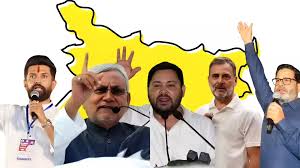
The mandate delivered by Bihar voters shattered the prevailing belief of the past decade and a half that record voter turnout signaled anti-incumbency. However, this time’s results clearly demonstrate that there was no widespread dissatisfaction with the government at the state level. The Bihar election results have surprised everyone this time. Bihar voters delivered a unanimous mandate. The notion that record voter turnout signified anti-incumbency has been shattered over the past decade and a half. The unprecedented 66.91% voter turnout in Bihar has proven this once again. This election result will only have shocked those who lived in a fantasy world or were unaware of the reality despite knowing it. The Congress, under Rahul Gandhi’s leadership, is now unwilling to accept the defeat. It saw vote theft in Maharashtra, Haryana, and even Karnataka, and the same will happen in Bihar. No Mass Discontent: In fact, speaking to people during the election, it was clear that there was no mass discontent at the state level with the Nitish Kumar government. Jan Suraj, which was trying to emerge as a third force, was well-known even in villages, but it lacked direct voter turnout as a party. Women’s turnout, outnumbering men, was a significant indicator of the election results. Lack of Coordination: In coalitional electoral contests, performance depends on how well they speak with one voice and demonstrate consistency on issues, statements, and strategies. The NDA appeared united from day one. Despite minor differences, the NDA publicly announced the seat-sharing arrangement. No public meeting of the Grand Alliance was seen. Everyone fielded their own candidates. There was also a considerable delay in announcing Tejashwi Yadav as the leader. The message that emerged was that they were united only to defeat the BJP, but there was no unity among them. LJP+RLM: The opposition alliance benefited from Chirag Paswan’s rebellion against the LJP (R) in the last election. This time, it is in the NDA. Upendra Kushwaha’s RLM was also in a different alliance last time. Consequently, the NDA brought together leaders with two social bases. On the other hand, there was only Mukesh Sahni’s VIP. Vote theft not an issue: The Congress’s entire strategy was limited to campaigns against vote theft and the Election Commission. No one in Bihar accused anyone of deliberately deleting names from the voter list. Therefore, this was not an issue on the ground, but rather a reaction to it. What will be the result if you campaign by making something that doesn’t exist a major issue? Women’s participation: For whom did women turn out to vote in greater numbers? Women’s participation was 71.6%. A total of 25.1 million women cast their votes, compared to 24.7 million male voters. Women’s turnout was 43.4 million more than men. In 2020, 20.8 million women voted. Compared to this, women’s turnout was 4.3 million more. This didn’t happen without reason. The government under Nitish Kumar’s leadership has done unprecedented work since its inception to bring women into the mainstream of society. Solid Hindutva Support Base: When assessing any election result in India, we must keep in mind that the BJP has a strong support base across the country, based on Hindutva and nationalism. Such BJP voters emerged from all castes in Bihar. There was a time when Bihar was divided between backward and forward castes. This time, too, it seemed as if Bihar was so divided along caste lines that it was now impossible to break free. The election results are a promising sign in this regard. Caste Stiffness Broken: Leaders of all parties should understand that no matter what caste we belong to, we don’t always have a caste-based mindset. From Panchayat to Lok Sabha elections, we work for each other and vote for each other. Inter-caste interactions have also increased significantly. The election results have proven that if gender equality is central to political principles and government policies, and a national spirit is integrated with social justice, development, law and order, and Hindutva, then the majority community can gradually break the caste barrier and move forward. Author: Awadhesh Kumar, Edited by: NBT Desk (The author is a senior journalist and thinker) About the author Whether it’s national, international, sports news, or the inside story of politics, NBT News Desk brings you every news.