
88 locations in 23 districts of Madhya Pradesh declared sensitive for SC-ST crimes

Experts believe that policing alone will not solve the problem. Caste tensions and old rivalries remain a major challenge in these areas. Bhopal. The increasing incidents of crimes against Scheduled Castes (SC) and Scheduled Tribes (ST) in Madhya Pradesh have worried the government. The Home Department, after reviewing the situation in the state, found that cases of such crimes are increasing rapidly in more than half of the districts. Consequently, 88 locations in 63 police station areas across 23 districts have been declared sensitive areas. Police will now develop a special strategy to control crime in these areas. According to the Home Department report, incidents of atrocities against Dalits and tribals have steadily increased in the past few years. Caste disputes, old rivalries, and land disputes, especially in rural areas and small towns, give rise to such incidents. The government has taken this seriously and identified sensitive areas across the state. By issuing a notification, the Superintendents of Police of all the districts have been instructed to maintain special vigilance in these areas and resolve even small disputes immediately. Which areas are sensitive? The police stations and areas declared sensitive include Kotwali in Mandla district, Kosmi and Bharveli in Balaghat, Kotwali and Ganjbasoda in Vidisha, Shujalpur City and Shujalpur Mandi in Shajapur, Vaydinagar in Mandsaur, rural areas, Itarsi and Kotwali in Narmadapuram, Kotwali in Dhar, Padma Nagar, Mandhata and Pandhana in Khandwa, Simrol in Indore, Kotwali, Station Road, Civil Lines and Bamnor in Morena, rural areas in Bhind, Industrial Area and Piplawa in Dewas, Gorabazar in Jabalpur, Kotwali, Cantt, Vijaypur, Aron and Madhusudangarh in Guna, Sirsod, Dinara, Amola, Indaur, Bhaunti, Pipariya and Shivpur in Shivpuri, Sarani and Amla in Betul, Obaidullaganj in Raisen, Bahodapur, Janakganj, Jhansi Road, University and Thathipur in Gwalior, Cantt, Baheria, Banda and Rahatgarh in Sagar. These include Damoh Kotwali, Chhatarpur Civil Lines, Lavkushnagar and Jujharpur, Tikamgarh Kotwali, Ashoknagar Kotwali, Dehar, and Bahadurpur. These steps will be taken According to the Home Department’s notification, steps such as establishing police outposts, community awareness campaigns, and resolving old disputes will now be taken in areas declared sensitive. Police forces have been instructed to take immediate action upon receiving complaints of any incident and assure victims of safety. Furthermore, efforts will be made to build mutual trust by increasing communication with organizations associated with Dalit and tribal communities. Action under the SC/ST Act The state government has also clarified that sensitive areas have been identified under the Scheduled Castes and Scheduled Tribes (Prevention of Atrocities) Act. This Act provides for the protection of victims’ rights, prompt investigation, and strict punishment for the perpetrators. The Home Department states that this step will not only reduce crime but will also reassure Dalit and tribal communities that the administration is committed to their safety. The Challenge of Social Harmony Experts believe that policing alone will not solve the problem. Caste tensions and old rivalries remain a major challenge in these areas. Therefore, community-based initiatives and the promotion of social harmony are also essential. The government has indicated that in the future, peace committees will also be activated in these sensitive areas to prevent minor disputes from escalating into major crimes. What is the SC-ST Atrocities Prevention Act, 1989 Under the Scheduled Castes and Scheduled Tribes (Prevention of Atrocities) Act, 1989, physical assault on Dalits and Adivasis, caste-based insults, land grabbing, forced labor, or social boycott are considered crimes. These cases are investigated by DSP-rank officers, and special courts have been established for speedy trials. This law provides for imprisonment ranging from 6 months to 5 years and a fine for convictions, while serious crimes such as murder, rape, or mass violence can result in up to life imprisonment. Most offenses under the Act are non-bailable, and victims are provided compensation, legal aid, and protection. Ankit Pachauri Courtesy: Hindi News
A Dalit family in Chhatarpur, Madhya Pradesh, is burdened with debt! Father and 2-year-old son dead, wife and son hospitalized; mass suicide suspected!
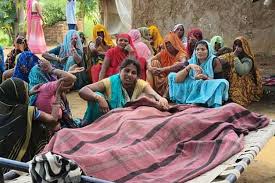
A Dalit family in Chhatarpur, Madhya Pradesh, is burdened with debt! Father and 2-year-old son dead, wife and son hospitalized; mass suicide suspected! The family ate dinner together on Friday night. According to family members, Prakash began experiencing severe stomach pain and vomiting shortly after eating. Bhopal. A tragic incident occurred on Friday night in the Orchha Road police station area of Chhatarpur district, Madhya Pradesh. Four members of the same Dalit family suddenly fell ill after eating. Farmer Prakash Ahirwar (35) and his two-year-old son, Nihal, died. His wife, Nandini (29), and elder son, Tanishq, are currently undergoing treatment at the district hospital. While the cause of the incident remains unclear, it appears to be a case of mass suicide. How did the incident occur? The family ate dinner together on Friday night. According to family members, Prakash began experiencing severe stomach pain and vomiting shortly after eating. Initially, they thought it was normal and thought he would get better by morning. However, as the night progressed, his condition worsened. They were rushed to the hospital, where doctors declared Prakash and his younger son, Nihal, dead. Dr. Ashish Shukla stated that the family had eaten potato curry, after which they began vomiting and feeling uneasy. Nandini’s condition is now stable, but the condition of his elder son, Tanishq, remains critical. A Story of Financial Pressure and Debt Prakash Ahirwar was a farmer and had borrowed a tractor for farming. Due to repeated crop failures, he was unable to pay the installments. Two days ago, employees of a finance company came to his house and pressured him to pay an installment of 30,000-40,000 rupees. They threatened to seize the tractor if he did not pay. The family alleged that the company employees forced them to sign and thumbprint an application. The application also stated that Prakash had taken a loan of 4 lakh rupees and would repay the entire amount by September 25th. If he did not do so, the company could seize his tractor, house, and land. The entire case appears to be a coerced mass suicide. Family members say the finance company was constantly threatening them to pay the installments and forcibly took their thumb impressions. Under these circumstances, farmer Prakash Ahirwar suffered a mental breakdown. The simultaneous deterioration of health among all family members suggests that they may have taken this extreme step due to debt and socio-economic pressure. However, this can only be confirmed after the postmortem report and police investigation. Family members say Prakash was under immense mental stress. The inability to pay the installments and the constant threats had broken him. He returned home after getting his TV repaired and had dinner with his family. But within a few hours, everything was destroyed. CSP Arun Kumar Soni said the case is being investigated. The cause of death will be clear only after the postmortem report is received, and further action will be taken based on that. This incident is not just a tragedy of one family, but reveals the reality of thousands of farmers and Dalit families who are burdened with debt and installments. Ankit Pachauri Courtesy: Hindi News
MP: Attempt of self-immolation in Bhopal Commissioner’s office, Dalit elder from Vidisha took this step after getting fed up with land dispute
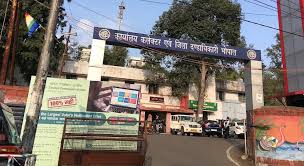
After the incident, anger is being seen among the villagers and people of the society of Ganjbasoda area. They say that if the administration had resolved the land dispute on time, Ram Singh would not have had to take such a step. Bhopal. There was chaos in the Divisional Commissioner’s office located in Kohefiza of the capital on Thursday, when 65-year-old Dalit elder Ram Singh Ahirwar, a resident of Behalot village of Ganjbasoda tehsil of Vidisha district, tried to set himself on fire by pouring petrol on himself in the waiting room. Amidst the suddenly rising flames and smoke, the employees and common citizens present in the office ran away to save their lives. The Nagar Sainiks deployed on the spot showed immediate presence of mind and took him out of the waiting room and controlled the situation. What is the matter? Ram Singh Ahirwar told the officials that 0.897 hectares of land was allotted on lease in Siyari village in the name of his mother Shakkaria. In the year 1999, the administration canceled this lease and in 2001 the same land was registered in the government road category. Since then, Ram Singh has been constantly visiting the offices of the officials. The elderly man says that he applied several times in Ganjbasoda SDM office, but there was no hearing. In the hope of justice, he has lodged a complaint on CM Helpline 12 times so far, but every time the case was closed by calling it “dismissed”. After the uproar, Commissioner Sanjeev Singh immediately handed over Ram Singh to the police. However, no crime was registered against him till late night. After this, the Commissioner called him to the office again in the evening and heard his entire problem and said that the matter will be investigated and an attempt will be made to resolve it. Questions are being raised on the functioning of the administration! This incident not only shows the suffering of an old man, but also raises serious questions on the functioning of the administration. After years of wandering from door to door for justice and making complaints, when there was no solution, he finally had to take the extreme step of self-immolation. Anger among villagers After the incident, anger is being seen among the villagers and people of the society of Ganjbasoda area. They say that if the administration had resolved the land dispute on time, Ram Singh would not have had to take such a step. People have demanded that the victim’s land be returned and action be taken against the guilty officials. Cases that have come to light earlier also Earlier also a sensational case had come to light in Bhopal Collectorate, when a young man from the capital, hurt by the non-hearing of his problem, drank poison in the Collectorate premises. This sudden incident created panic and the employees present on the spot immediately took him to the hospital. This incident also indicates that people get so frustrated with their pain and complaints that they are forced to take extreme steps like consuming poison to draw the attention of the administration. Earlier also, a case of a youth reaching Bhopal Collectorate by bowing down and wrapping a paper in a memorandum had come to light. Even before this, many times people in the state have adopted unique and symbolic methods to convey their problems to the administration. Sometimes citizens have submitted memorandums by walking on their knees, sometimes barefoot or bowing down. The purpose behind these methods is that the administration listens to their problems seriously and resolves them soon. Earlier also in different districts of Madhya Pradesh, farmers, unemployed youth and people from marginalized sections have similarly sent letters or applications to the officials by wrapping them in paper. This tradition has become a non-violent means of expressing protest and anguish. When there is no hearing through normal methods, people raise their voice by adopting extreme symbolic methods like bowing down, so that the echo of their problems reaches the government and administration. Ankit Pachauri Courtesy : Hindi News
“Find Ambedkar in books, not in statues”: Prof. Ratan Lal asked- Why don’t we have a share in universities?
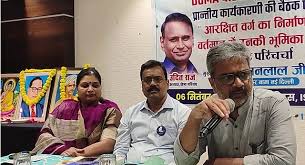
The professor questioned the priorities of the Dalit middle class. He said, “Billions of rupees were spent on our movements, but was any money spent on a serious research, book, article or educating a child abroad? Why are our children not becoming researchers? Why are they not going for PhD, Harvard, Oxford?” Bhopal- In a seminar organized in Bhopal, the capital of Madhya Pradesh, Professor Ratan Lal of Delhi University expressed deep concern over the current political and social situation of the Dalit community. He said that getting reservation was the result of a long struggle, but now the society needs to focus on education, research and intellectual discourse, and not just dream of electoral power. Professor Ratan Lal was speaking on the topic ‘Creation of reserved class, their role in the present’ in the provincial executive meeting of Doma Sangh and a discussion. He discussed in detail the historical journey of the Dalit community, the legacy of Dr. Bhimrao Ambedkar, the foundation of reservation, and the challenges of the Dalit middle class in the present times. Professor Lal warned the society that rights like education and jobs are being snatched away in rich India, and the Dalit society now has to focus on education, research and intellectual discourse instead of only power and electoral politics. He appealed to adopt Ambedkar’s practical philosophy and avoid unrealistic dreams. Professor Rattan Lal drew attention to an important historical fact in his address. He said, “Babasaheb Ambedkar used to constantly say that we are a minority in national life. Just like Muslims and Sikhs are minorities, we are also minorities. That is why constitutional safeguards are needed. Have you got reservation on the basis of the demand for minority status or on the claim of being a majority? This is a matter of thinking.” He further said that now claiming that ‘we will become rulers’ is an unrealistic dream. There are only 131 seats in Parliament and limited seats in Vidhan Sabhas, so why is everything being snatched away, this question is not in the discussion. Creation of Reserved Caste: A Difficult Historical Journey Professor Rattan Lal made it clear at the beginning of his speech that the creation of reserved class was not an easy process. He mentioned Dr. Ambedkar’s first memorandum given to the South Borough Committee in 1919, in which education and employment were described as a matter of life and death for the Dalit society. At that time, there was not a single Scheduled Caste graduate in the entire Bombay Province. Ambedkar repeatedly raised the question of education even during the formation of Simon Commission, Round Table Conference and Independent Labour Party. He presented the data in ‘Grievances of Scheduled Caste’ that out of 1056 ICS officers, only one was from Scheduled Caste, and only one among CPWD contractors. In that era, even getting a job for three constables was a reason for celebration. Professor Lal emphasised that Dalits presented themselves as minorities in national life, as did the Muslim and Sikh communities. There was a demand for minority status till 1942-44, and on this basis constitutional protection and reservation were demanded. He raised the question, “Have you got reservation in the name of minority or in the name of majority? Just think.” Ambedkar’s philosophy is practical; pressure has to be built Professor Lal described Ambedkar’s philosophy as pragmatism, which was influenced by his mentor John Dewey (Columbia University). In 1916, at the age of 24, Ambedkar wrote the first article in the Bombay Chronicle, in which he advocated building a public library instead of the bust of Firozshah Mehta. He took inspiration from Buddha, Kabir and Phule, but did not dream unrealistic dreams. Ambedkar was a supplicant, who kept demanding from the Viceroy, Congress and the government. In his 1948 Lucknow speech, he demanded separate electorate, reservation in the legislature and reservation in government jobs, but got only partial success. The professor said, “Ambedkar repeatedly said that pressure has to be built, rights have to be kept demanding.” He gave the example that there was no debate on reservation in the Constituent Assembly, because everyone including Rajendra Prasad and Jawaharlal Nehru had a consensus of historical injustice. But today the society has turned upside down, where instead of asking, claims are being made to be ‘givers’. He said sarcastically, “What will they give? We don’t have a share in universities, bureaucracy, share market, foreign policy.” Facilities were provided in poor India, rights are being snatched away in rich India Professor Lal called the rise of the Dalit middle class a by-product of modernism, industrialization and colonialism. In the 19th century, the middle class was formed from urban centers and factories, which also included Dalits. He said, “In Marxist terms, one who is not bourgeois, middle class, cannot become anything. Think tanks, bureaucrats, writers, journalists, academicians all come from the middle class.” In poor India, the fees in government schools and colleges were one or two annas, stipends and fellowships were given. In 1973, Indira Gandhi wrote a letter to all CMs to form a cell to stop atrocities on Harijans and make full appointments in the public sector. Dalits became officers through bank nationalization, and got leases through land reform. Rajiv Gandhi started a special recruitment drive, opened Navodaya Vidyalayas where education was free. Crores of rupees were earned from reservation in petrol pumps and gas agencies. Employees in public sector like ONGC increased from 3000 to 21000, out of which 7500 are SC-ST-OBC, and with an average salary of 1 lakh, 100 crore rupees are going to their homes every year. Two generations ago there were huts, now by becoming teachers, families are able to run. But now all this is being snatched away in rich India. Government schools and colleges are closing, quality is deteriorating, and private education is so expensive that it is out of reach. Sale of gas and petrol through private pipelines is ending, and jobs are decreasing due to privatization. Weaknesses
Rajgarh: Case of rape of Dalit woman comes to light
Rajgarh: A 26-year-old Dalit woman living in village Mana of Kurawar police station area has accused a youth from Barodia Talab of raping her several times in a period of one and a half months on the pretext of marriage and threatening to kill her by beating her when she protested. On Monday, the police registered a case against the accused who fled from the spot under various sections including SCST Act and started the search. According to the police, the 26-year-old Dalit woman resident of village Mana told that Arjun son of Govind Khati, resident of village Barodia Talab, raped her several times between 11 June and 27 July on the pretext of marriage. Now he is refusing to marry, he beat her when she protested and threatened to kill her. The police registered a case against the accused who fled from the spot under sections 69, 115(2), 351(3) BNS, SCST Act and started the search. Courtesy : Hindi News
“Find my dog or else lose your job…”: Tribal constable on duty at Reserve Inspector’s bungalow in Madhya Pradesh, brutally beaten up when dog goes missing!
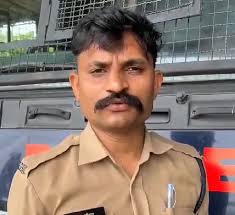
Casteism in police force in MP: The victim, appointed on compassionate grounds, alleges that he was forced to do personal work including babysitting and looking after the dog at the Reserve Inspector’s bungalow despite his repeated refusals. Khargone – A shocking case has come to light in Khargone district of Madhya Pradesh, in which a tribal constable has accused the Reserve Inspector i.e. Senior Reserve Inspector (RI) of brutally beating him after his pet dog went missing. The complaint, given in writing on August 26, has made serious allegations of abuse of power and caste discrimination within the police force that point to mistreatment of lower level employees, especially those from marginalized communities. Rahul Chauhan, a resident of Khargone, is working as a constable in the District Reserve Police (DRP) line. Chauhan, who belongs to the Scheduled Tribe (ST) community and is appointed on compassionate grounds, claims that he was forced to do personal work at the Reserve Inspector’s bungalow, which included looking after a child and a dog, despite his repeated refusals. Sharing a video of Chauhan in the case, former MP and former Union Minister Arun Subhashchandra Yadav said, “Will police constables in MP now look after children and dogs at their bungalows? If the dog goes missing, the constable will be brutally beaten up? The case is from Khargone where Rahul Chauhan of the tribal community, who was posted at RI Saurabh’s bungalow, was beaten with a belt and abused with casteist slurs just because his dog went missing. DGP sir should take cognizance of this matter and immediately suspend the accused and register an FIR. This is not just an attack on Rahul Chauhan, but an insult to the entire tribal community.” According to the complaint, this harassment started on August 8. Chauhan alleges that Reserve Inspector Saurabh Kushwaha assigned him “bungalow duty,” which included tasks such as looking after the officer’s child and pet dog, which were completely unrelated to his official police responsibilities. Matters came to a head on the night of August 23. Chauhan said he was on duty at the bungalow that day and left for home after informing the Reserve Inspector and locking the main gate around 10:00 pm. But around 1:20 am, he saw the Reserve Inspector’s car approaching his house, accompanied by Kushwaha, a subedar, driver Kishan, ‘stick man’ Rakesh and constable Lucky Barde. Chauhan says the Reserve Inspector snatched his mobile phone, forcibly made him sit in the car and drove to the bungalow. There, other staff were sent outside the main gate, and Chauhan was taken to a back room, where Kushwaha allegedly beat him brutally with a belt. “He kept asking me repeatedly where the dog was and kept hitting me without listening to me,” Chauhan elaborated in his complaint. After the beating, Chauhan was taken to Khargone district hospital by assistant sub-inspector (ASI) Lakhan Mehar, Subedar Dipendra Survankar, constable Badal, head constable Chhagan Kushwah and driver Kishan. But he claims the medical examination was limited to alcohol consumption, and the injuries on his body were not examined. “I was not allowed to talk to the doctor properly.” After the hospital, Chauhan was again taken to the bungalow. There, the reserved inspector’s wife allegedly insulted him, called him a “low caste adivasi” and threatened to hit him with a slipper. She allegedly said, “Find my dog or else I will end your job. Keep your policemanship aside, your aukaat is worth nothing.” Around 4:00 am, Chauhan was dropped home by quarter guard in-charge ASI Lakhan Mehar and sentry Chetan Jat in Mehar’s car. The next morning on August 24, Chauhan reached DRP line around 10:40 am. Soon after, the Reserve Inspector came there and took him to his chamber, where he allegedly misbehaved with Chauhan and levelled false allegations against him. Later, Chauhan was again called to the bungalow, where he was beaten and abused even in front of his wife. The helpless couple promised that they would somehow find the dog and give it to him. Only after this, Chauhan’s mobile phone was returned. Chauhan stressed in his complaint that he had refused bungalow duty earlier too, but he was pressurised and forced to do household chores, looking after the dog and looking after the child. Now the Reserve Inspector and his wife are allegedly threatening to dismiss him if he complains, saying “go to whoever you want, you can’t do anything to me”. A Subedar too reiterated the same thing saying that nothing will happen if he complains. On August 26, Chauhan personally went to the Superintendent of Police’s office. He says the SP dismissed his complaint and said, “You were drunk; write an apology letter and apologise. If you apologise, I will not take any action against you.” Seeking justice, Chauhan said “Being an ST person and a recipient of compassionate appointment, I have been exploited and insulted”. The Reserve Inspector has sought registration of a case under the Scheduled Castes and Scheduled Tribes (Prevention of Atrocities) Act, 1989 against Saurabh Kushwaha and his wife alleging caste-based insult and physical assault. Copies of the complaint addressed to the Superintendent of Police (SP) Khargone have been sent to the Deputy Inspector General of Police (DIG) of Nimar Range, Inspector General of Police (IG) of Indore Rural Zone, Director General of Police (DGP) in Bhopal, Chief Minister of Madhya Pradesh and National Commission for Scheduled Tribes in New Delhi. Geetha Sunil Pillai Courtesy : Hindi News
Horrible result of Inter-Caste Marriage in MP: Dalit youth dies after being brutally beaten by wife’s family
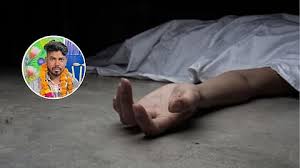
A Dalit youth died six days after being brutally beaten by his wife’s family in Bhitarwar area of Madhya Pradesh. The village panchayat had imposed a fine of Rs 51,000 and socially boycotted him. Gwalior. The death of a 25-year-old Dalit youth in Harsi village of Bhitarwar area of Madhya Pradesh has once again raised questions on caste violence. The youth was attacked by his wife’s family. After battling between life and death for six days, he breathed his last on Sunday evening. How did the incident happen Omprakash Batham was married to Shivani Jha in January this year. Shivani comes from an upper caste family and her family strongly opposed this relationship. Omprakash came to the village to meet his parents on August 19 to celebrate Rakshabandhan. During this time, Shivani’s family came to his house and attacked him brutally. According to the police, Shivani’s father Dwarka Prasad Jha along with relatives Rajesh alias Raju Jha, Uma Ojha and Sandeep Sharma attacked. It is alleged that all of them dragged Om Prakash out of the house and beat him with sticks and rods. Meanwhile, when wife Shivani tried to intervene, she also got injured. Son returned on Rakshabandhan The pain of the family hurt by the attack cannot be expressed in words. Sitting on her kutcha courtyard in Harsi village, Om Prakash’s mother says crying, “He had come just to see me. Every son wants to celebrate Rakshabandhan with his mother. They had a court marriage and the girl also wanted to live with him, yet she was killed so brutally.” Used to get threats Actually, this conflict had started from 2023 itself. When Om Prakash and Shivani tried to run away from home and get married for the first time, the police found them. But Shivani clearly said that she is an adult and wants to live with her husband. After this, both of them lived in different places—sometimes in Madhya Pradesh, sometimes in Uttar Pradesh—and in January this year, they registered their marriage in court. But they had to pay a heavy price for this relationship. The village panchayat imposed a fine of Rs 51,000 on Omprakash and socially boycotted the family. Not only this, Shivani’s father had openly threatened that Omprakash should never step inside the village boundary. Legal action He was treated in a private hospital in Gwalior for six days, but Omprakash died on Sunday evening. In this case, Belgada police station in-charge Ajay Singh Sikarwar said that initially a case of assault was registered against the attackers. Now after the death of the youth, a case of murder has been registered against 12 people. The main accused Dwarka Prasad Jha is absconding and the police is searching for him. Rajan Chaudhary Courtesy : Hindi News
Clean City, Dirty Truth: The Invisible Suffering of Bhopal’s Sanitation Workers Behind the 7-Star Swachh Bharat Glory
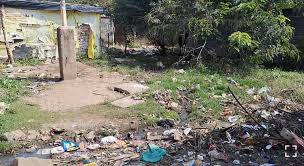
Sanitation workers employed under the Bhopal Municipal Corporation, who risk their lives and health in one of the most physically demanding public roles, are being paid on minimum wages and on temporary basis. Bhopal- On 17th July 2025, Bhopal , the capital of Madhya Pradesh was declared the second cleanest city in India in the Swachh Survekshan 2024-25 rankings, in the category of municipalities with populations above 10 lakhs. The city also achieved the status of a 7-Star Garbage Free City and was certified as a Water Plus City under the Swachh Bharat Mission. But while the city celebrates these achievements, the lives of those who made this success possible remain trapped in neglect, poverty, and exploitation. Behind every clean street and every garbage-free locality are thousands of sanitation workers, most of whom belong to historically oppressed castes, working in dangerous, dehumanising conditions. Despite being essential to the city’s public health and image, their rights are being exploited by the very Municipal corporation and are treated as disposable. The wife of the sanitation worker doing kitchen chores. The wife of the sanitation worker doing kitchen chores. Pragya Sharma/The Mooknayak “We are human too, but nobody seems to care about our condition.” This was the quiet pain in the voice of a sanitation worker I met in Sargam Basti, a slum in Bhopal that many safai workers, call home. He did not want to be named, but his words carried the weight of generations of injustice. “The Bhopal Municipal Corporation pays me ₹8,200 per month. I have three small children who go to school. My wife manages the household. We need milk, sometimes medicine, school fees . How are we supposed to manage everything with this amount?” There was no anger in his voice. Just exhaustion. The exhaustion of someone who rises at 4 a.m. every day to clean the city yet cannot afford to fix the leaking roof of his jhuggi. He added, “Sometimes I wonder , even if my children study hard and get educated, will their life be any different from mine? But then I think, maybe their fate can change. That hope is what gets me out of bed every morning.” Sanitation workers, many of whom are hired on contract, are denied basic facilities , no health insurance, no safety gear, no permanent employment status, and no social security. In another home nearby, a woman shared her family’s daily struggles: “My husband works in the municipal corporation as a sanitation worker. He earns approx. ₹10,000 a month, but that’s not enough to run the house. I have to go to two or three houses every day to wash dishes and clean floors. We both work from morning to evening, yet we still can’t make ends meet.” “We’re always in debt. Sometimes it’s school fees, sometimes medicine, sometimes basic groceries. There’s always something.” These are not isolated stories. There are hundreds of families like theirs, living in slum areas (jhuggi-bastis)around Bhopal. Ironically, they clean the city every day but live in places with no proper sanitation, surrounded by garbage, open drains, and the very unhygienic conditions they are hired to remove from public view. Their suffering is undocumented and unacknowledged. The house of a sanitation worker from inside. The house of a sanitation worker from inside.Pragya Sharma/The Mooknayak Workers Who Clean the City but Are Denied a Life of Dignity The Swachh Bharat Mission, despite its visible outcomes in city like Bhopal, has failed to protect the rights and welfare of the very people implementing it on the ground. Sanitation workers, many of whom are hired on contract, are denied basic facilities , no health insurance, no safety gear, no permanent employment status, and no social security. The BMC continues to employ them at minimum wages, sometimes through third-party contractors. These are not just labour issues , they are structural caste injustices. The fact that the majority of these workers come from Dalit communities is not a coincidence. It reflects a deeply rooted caste division of labour, where certain communities are still forced into degrading work with no safety net, no voice, and no visibility. The roof of the workers house they called home. The roof of the workers house they called home. Pragya Sharma/The Mooknayak Wages Below Legal Minimums The injustice becomes even more stark when we compare their earnings to the Collector Rate, the minimum wage set by the District Collector for daily wage laborers in Madhya Pradesh. These rates, revised in April 2025, are meant to act as a benchmark for fair wages. According to the revised rates: Skilled workers: ₹570.93 per day or ₹12,294/month Highly skilled workers: ₹633.43 per day or ₹13,919/month Despite this, sanitation workers employed under the Bhopal Municipal Corporation, who risk their lives and health in one of the most physically demanding public roles, are being paid on minimum wages and on temporary basis. According to the Urban Administration and Development Department and the provisions under the Municipal Corporation and Municipal Council Acts, there is a clear mention of providing special financial allowances to sanitation workers. However, in practice, no such special allowance is given by the municipal corporations. This is despite the fact that sanitation workers carry out the most hazardous and lowest-paid work, putting their health and future at risk to fulfill the responsibility of keeping cities clean. This isn’t just a legal failure. It’s a moral one. Many of these workers are kept on temporary contracts without any form of health insurance, paid leave, or job security. Several suffer from occupational illnesses like skin diseases, respiratory issues, tuberculosis, and injuries from unsafe waste-handling practices. But because they remain undocumented or informal workers, no health surveys or welfare policies reach them. Ironically, while the Swachh Bharat Mission mandates regular audits and rankings of cleanliness infrastructure, there is no nationwide mechanism to track the conditions or health of sanitation workers. Their labour remains essential, but invisible. The fact that the majority of these workers come from Dalit communities is
Communal Tensions Erupt After 40-Year-Old Dalit Woman Brutally Murdered In Madhya Pradesh’s Burhanpur
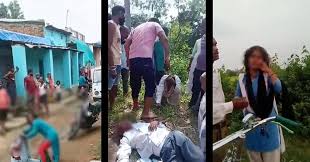
The city observes Burhanpur Bandh and markets remained closed; accused in police custody Burhanpur (Madhya Pradesh): Madhya Pradesh’s Burhanpur district observed a ‘Bandh’ on Thursday morning as communal tensions flared up after the brutal murder of a 40-year-old woman by a man belonging to a minority community on Wednesday evening. SP Ashutosh Bagri said that the accused has been arrested and FSL team is collecting evidence from the spot for further investigation. After the post-mortem, enraged members of Vishwa Hindu Parishad (VHP), Bajrang Dal, Hindu Mahasabha, Bhim Army, and BSP took out a funeral procession in the town on Thursday morning. Police made tight security arrangements to maintain law and order in the town. Traversing the main streets of the town, they submitted a memorandum to SDM Ajmer Singh Gaur, demanding capital punishment for the accused. During the rally, participants raised slogans and urged people to close their businesses. They expressed concerns over rising violence and urged authorities to take strict action against the perpetrators. They had also gheraoed Shikarpura police station, demanding capital punishment against the accused on Wednesday evening. MLA Archana Chitnis met the victim’s family and assured them of strict action against the accused and financial assistance. She said she had talked to CM Mohan Yadav. As per reports, the incident occurred at victim Sharda Sirture’s home, when accused Sheikh Salim, of Maharashtra, barged into the house and attacked her with a hammer. Sharda’s brother-in-law Mithun Sirture tried to intervene and got into a scuffle with Salim. However, Salim pushed him away and struck Sharda on the head three to four times. She sustained a skull fracture and bled profusely. She was rushed to the hospital but succumbed to her injuries at the district hospital. Sharda’s husband, Manoj Sirture, said that she had left home for work on Wednesday and he was not at home during the incident, as their son was in hospital. SP Bagri said that prima facie, the incident occurred due to personal relations between the victim and accused, which had gone sour for some reason. To maintain peace, additional police forces have been deployed in the area as community members seek justice for Sharda. Courtesy : TFPJ Note: This news is originally published on https:/thefreepressjournal.com/bha and is used purely for non-profit/non-commercial purposes, especially human rights.
Nails pulled out, third degree given… After being released from jail, three Dalit youths accuse Dewas police, were arrested for breaking the idol
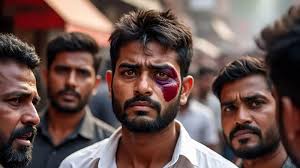
Dewas News: Three Dalit youths were arrested in Dewas for breaking the idol. They have been released on bail. After this, the family has alleged that the police has given third degree. Former minister Arun Yadav has demanded the suspension of the policemen from the DGP. Dewas: Investigation has started into the allegations of assault on three Dalit youths in police custody in Dewas district of Madhya Pradesh. Ravi Ajmeri, Ritesh Ajmeri and Ritesh Sinam have been arrested on August 6. They were accused of breaking religious idols in the industrial area of Dewas. The idols of Lord Ganesha and Goddess were vandalized. The police registered a case and scanned more than 50 CCTV footage. After this, the accused were identified and arrested. Sent to jail after being produced in court At the same time, the accused were produced in court after the arrest and sent to jail. After getting bail, the family members of the accused are making serious allegations against the police. Former Union Minister Arun Yadav is sharing the video and alleging that three innocent Dalit children Ritesh, Ravi and Ritesh were brutally beaten up in Bavadia police station of Dewas. Third degree torture was done. Even the nails were pulled out. Arun Yadav has said that when there is no evidence then why such inhuman torture? Demand to suspend policemen Along with this, Arun Yadav has demanded that DGP Sir, immediately suspend the guilty policemen, set up a high-level inquiry and give justice to the Dalit children. At the same time, the family has alleged that three youths were severely beaten and tortured in police custody, which also includes the allegation of pulling out nails. Dewas SP Puneet Gehlot, while talking to an English newspaper, said that an independent investigation has been ordered. Gehlot said that the allegation is that the police have tortured them. While they were produced in the court after the medical test. After bail, they are claiming assault. The SP said that the arrest was made on the basis of solid evidence. At the same time, the police department has started investigating these allegations. The SP said that an impartial investigation will be conducted. Edited by: Muneshwar Kumar About the author Muneshwar Kumar is the Principal Correspondent at Navbharat Times Online. Has 14 years of experience in journalism. Has special interest in politics, crime, current affairs and off-beat news of Madhya Pradesh. Also has experience of ground reporting in many elections. I have been associated with Navbharat Times Online since 2020. Courtesy: Hindi News