
Mayawati expresses concern over ‘anti-India and anti-Hindu incidents’ in Bangladesh
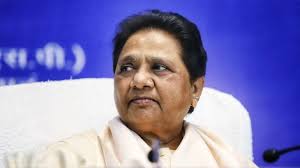
Referring to the recent killing of a Dalit youth in Bangladesh, the BSP chief said, “The public anger that has erupted on the streets across India over the brutal killing of a Dalit youth there is natural.” BSP president and former Uttar Pradesh chief minister Mayawati on Thursday expressed concern over “anti-India and anti-Hindu incidents” in Bangladesh and urged the Centre to take more effective steps. In a series of posts on her official X handle, Mayawati said, “In recent days, the manner in which anti-India and anti-Hindu incidents are taking place in Bangladesh makes it necessary for the central government to act with greater alertness and take more effective steps in line with people’s expectations.” She said it is well known that Hindu minorities in neighbouring Bangladesh are being subjected to communal violence and persecution. “The way Hindu minorities in Bangladesh are being harassed by targeting their life, property and religion has created a wave of concern not only in our country but also elsewhere,” she said. Referring to the recent killing of a Dalit youth in Bangladesh, the BSP chief said, “The public anger that has erupted on the streets across India over the brutal killing of a Dalit youth there is natural. The Government of India is expected to immediately take proper cognisance of this and play a more active role at every level, which appears to be the need of the hour.” Mayawati alleged that while atrocities, oppression and discrimination against Dalits and tribals had continued in India for centuries, the situation in Bangladesh is no less serious. “Although caste-based hatred, oppression and exploitation against Dalits and tribals continue in our country, the atrocities being committed in neighbouring Bangladesh are extremely painful and a matter of grave concern,” she said. She added that concerns in India over the condition of minorities in neighbouring countries remained constant. She expressed confidence that public support would be with the government on the issue and urged it to pay due attention. Courtesy : Money Control Note: This news is originally published on https:/moneycontrol.com/bha and is used purely for non-profit/non-commercial purposes, especially human rights
‘Transgenderism killed Charlie Kirk’: MAGA commentator makes shocking claim at Turning Point USA event

A MAGA commentator stirred a row after claiming that transgenderism was responsible for the assassination of Charlie Kirk, the Turning Point USA co-founder, during a speech at the same organization’s AmericaFest event. Right-wing commentator Benny Johnson posted on X and called Transgenderism an ‘epidemic’: “I called out – by name – the true evil, demonic force that took Charlie Kirk from us live on stage at AmericaFest. Transgenderism. The epidemic of transgender violence is running rampant in our country. Transgenderism is a lie. God made male and female. God did not make you in the wrong body. God does not make mistakes. Charlie’s final words warned of this threat. The very ideology that claimed his life. His death exposed the danger. His legacy demands we confront it. Openly, unapologetically, without fear. Thank God the Trump administration is doing just that.” Charlie Kirk was shot and killed in September while speaking at a campus event by a sniper. Turning Point USA held a major conference in Phoenix to honour Kirk’s legacy. I called out – by name – the true evil, demonic force that took Charlie Kirk from live on stage at America Fest. Transgenderism. The epidemic of transgender violence is running rampant in our country. Transgenderism is a lie. God made male and female. God did not make you in… pic.twitter.com/YAUXtcsHZb — Benny Johnson (@bennyjohnson) December 21, 2025 The man accused of killing Kirk was in a romantic relationship with a transgender partner, Utah officials confirmed at the time, but authorities say there is no evidence yet that this was the motive for the attack. 22-year-old Tyler Robinson was charged with aggravated murder. Robinson has also been charged with obstruction of justice and other offences. He has not publicly explained why he carried out the attack and is not cooperating with investigators. Utah governor Spencer Cox said that Robinson’s partner was male and transitioning to female, and that the individual has been “very cooperative” with authorities and had no advance knowledge of the shooting. Regarding Kirk, he was an outspoken activist who promoted traditional views on family and gender roles. He was an evangelical Christian who did not support transgender policies and often criticised LGBTQ+ communities at various events. He had a hardline stance that third-gender roles undermine the “natural” male and female roles. Under GOP administration, Pete Hegseth, US secretary of defence, has moved to implement policies removing openly transgender troops from the military and ending gender‑affirming care, following a Supreme Court decision allowing a trans service ban. He has also criticised diversity initiatives and “gender delusion” within the armed forces. Courtesy : TOI Note: This news is originally published on https:/timesofindia.com/bha and is used purely for non-profit/non-commercial purposes, especially human rights
From Jennifer Lopez to Elon Musk: Celebrities who have transgender or nonbinary children

Public conversations about gender identity have once again moved to centre stage after a recent online clash between Elon Musk and California Governor Gavin Newsom’s office. The dispute erupted when Newsom’s press team referred to Musk’s transgender child as a daughter, prompting Musk to respond publicly that he has a son named Xavier and accusing political leaders of exploiting deeply personal family matters. The exchange highlighted how intensely politicised such issues have become. But Musk is far from alone. From Hollywood to professional sports, many celebrities have spoken in very different ways about having transgender, nonbinary or gender-diverse children. Some have embraced advocacy, others have prioritised privacy, and some have faced criticism or controversy, underscoring how varied parental responses can be even at the highest levels of fame. Celebrities who have transgender or nonbinary children Elon Musk Elon Musk has one of the most publicly contentious cases. His child, Vivian Jenna Wilson, legally changed her name and gender in 2022 and distanced herself from him. Musk has since described her transition as being influenced by what he calls a “woke mind virus”, a phrase that has drawn widespread criticism. Vivian has publicly rejected his characterisation. Unlike most other celebrities on this list, Musk has framed the situation in political and ideological terms, making it part of a broader cultural debate rather than a private family matter. Vivian Jenna Wilson Jennifer Lopez Jennifer Lopez has spoken publicly about her child Emme, who has described themselves as nonbinary. Lopez has used inclusive language in interviews and public appearances, emphasising love, pride and respect rather than labels. She has also been careful not to overexpose her child, keeping discussions focused on acceptance rather than advocacy or controversy. Jennifer Lopez Dwyane Wade and Gabrielle Union Former NBA star Dwyane Wade, along with his wife Gabrielle Union, has been one of the most vocal supporters of a transgender child in public life. Their daughter Zaya Wade came out as transgender several years ago. Wade has spoken openly about educating himself, listening to his child and prioritising her safety and wellbeing, particularly amid political debates around transgender youth in the US. Dwyane Wade and Gabrielle Union Cher Music icon Cher has long been associated with LGBTQ+ visibility through her son Chaz Bono, one of the earliest and most widely known transgender public figures. Chaz transitioned publicly in the late 2000s, and Cher has spoken candidly about her own learning process, describing how parental understanding can evolve over time. Cher Angelina Jolie Angelina Jolie’s child Shiloh has often been discussed in media for gender-nonconforming expression. Jolie has consistently avoided attaching labels, instead emphasising her children’s right to self-expression and privacy. She has criticised intrusive media coverage and has framed parenting as supporting individuality rather than defining identity publicly. Angelina Jolie with kids Jamie Lee Curtis Actor Jamie Lee Curtis has publicly supported her daughter Ruby, who is transgender. Curtis has spoken about learning alongside her child and has become an advocate for acceptance, often discussing how language and empathy matter when families navigate gender identity. Jamie Lee Curtis Megan Fox Megan Fox has spoken about raising her children in an environment free from rigid gender expectations. One of her children, Noah, has expressed gender-nonconforming behaviour. Fox has been clear that she does not want speculation or labelling imposed on her child, repeatedly calling for respect and restraint from media and the public. Charlize Theron Charlize Theron has shared that her daughter Jackson is transgender. She has said she realised this after listening to her child and has stressed the importance of believing children when they express who they are. Theron has also spoken about the broader need to protect transgender children from stigma. Cynthia Nixon Actor and activist Cynthia Nixon has a son, Seph, who is transgender. Nixon has spoken publicly in support of her child while also engaging in wider political advocacy around transgender rights, particularly in healthcare and education. Cynthia Nixon Robert De Niro Veteran actor Robert De Niro has spoken about his daughter Airyn, who is transgender. De Niro’s public comments have focused on unconditional parental love, avoiding political framing and emphasising acceptance over commentary. What unites these celebrities is not a single narrative, but contrast. Some parents have embraced public advocacy, others have prioritised privacy, and one has openly clashed with his child in the public sphere. Gender identity, as experts consistently note, is personal and complex, and these high-profile families illustrate how differently parents respond when those conversations unfold under public scrutiny. Courtesy : TOI Note: This news is originally published on https:/timesofindia.com/bha and is used purely for non-profit/non-commercial purposes, especially human rights
Who is Admiral Rachel Levine? First openly transgender US health leader has name changed on official portrait
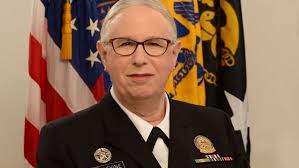
Admiral Rachel Levine is the first openly transgender person to win Senate confirmation in a four-star federal position. And now she has been in the spotlight again after the Department of Health and Human Services (DHHS) reportedly changed her official portrait in Washington, DC. It is part of the GOP government cracking down on “woke” culture and LGBTQ+ communities. Levine served as former President Biden’s assistant secretary for health for four years, overseeing the Commissioned Corps of the US Public Health Service. Her official portrait was displayed in a hallway on the seventh floor of the Humphrey Building alongside former Public Health Corps leaders. It has now been altered to show her previous name below the image, a spokesperson for HHS told NPR. HHS updated Rachel Levine’s official portrait to his real biological name: Richard Levine. HHS just updated Rachel Levine’s official portrait to his real biological name: Richard An HHS spokesperson said: “We remain committed to reversing harmful policies enacted by Levine and ensuring that biological reality guides our approach to public health.” pic.twitter.com/WqAINg1nX9 — Nicolas Hulscher, MPH (@NicHulscher) December 6, 2025 “During the federal shutdown, the current leadership of the Office of the Assistant Secretary for Health changed Admiral Levine’s photo to remove her current legal name and use a prior name,” said Adrian Shanker, former deputy assistant secretary for health policy and Levine’s spokesperson. He called the move an act “of bigotry against her.” Levine told NPR, “It was an honor to serve the American people as the assistant secretary for health and I’m not going to comment on this type of petty action.” HHS spokesperson Andrew Nixon defended the change, saying, “Our priority is ensuring that the information presented internally and externally by HHS reflects gold standard science. We remain committed to reversing harmful policies enacted by Levine and ensuring that biological reality guides our approach to public health.” The current assistant secretary for health, Adm. Brian Christine, was confirmed by the Senate in October. Levine’s tenure included major public health work on Covid-19, syphilis, HIV/AIDS, and the opioid crisis. The row comes amid ongoing anti-transgender actions under the Trump administration. Transgender servicemembers were forced out of the military without benefits, and passport policies were reversed. Courtesy : TOI Note: This news is originally published on https:/limesofindia.com/bha and is used purely for non-profit/non-commercial purposes, especially human rights
Caste Discrimination in US: Dalit Activist Thenmozhi Soundararajan’s Groundbreaking Survey and Advocacy

In 2015, Thenmozhi Soundararajan, a young activist, scholar, and co-founder of Equality Labs — a dalit civil rights organisation — spearheaded the first nationwide survey on caste discrimination in the US. The survey found that one in four dalits had faced physical or verbal assault, one in three reported discrimination in education, two in three encountered workplace bias, and more than half lived in fear of being ‘outed’. It emerged from repeated testimonies from dalit Americans even as dominant-caste South Asians insisted caste “was not an issue”. “These numbers showed what many denied: caste isn’t confined to South Asia. It exists in 21st-century America,” says Thenmozhi, who was conferred the Vaikom Award last month, which recognises contributions to caste justice and dalit civil rights. “Dalits faced slurs, physical threats and even organisational crises from those who didn’t want us to ask these questions,” says Thenmozhi, who wrote about it in ‘The trauma of caste’, published in 2022. Born to parents from Coimbatore, who later migrated to the US, Thenmozhi says she was driven by the suffering she witnessed in her family and among caste-oppressed communities. “It wasn’t one moment. It was the weight of intergenerational trauma in our diaspora and the silence that allowed caste harassment to be recreated in our homes, schools and workplaces,” says the US-based activist, who also co-founded ‘Dalit History Month’, celebrated globally. The ‘Lakireddy Bali Reddy’ case in the early 2000s in Berkeley shook her, she says. Reddy, a wealthy landlord, brought dalit women and girls from India on fake visas, exploited them for labour, and sexually abused minors. The crimes surfaced after a 13-year-old victim died in one of his buildings, leading to federal charges, a prison sentence and reforms in California’s anti-trafficking laws. “I recall letters from dominant-caste supporters asking for leniency. The impunity was devastating. We deserve a diaspora that heals together, stands with survivors, and refuses to repeat the injustices we inherited.” ‘We must de-brahminise technology and prevent a digital apartheid: Thenmozhi’ What were some of the other findings of your caste in the US report? We found 60% experienced caste-based slurs and derogatory comments; 40% felt unwelcome at their place of worship; 20% reported discrimination at a place of business. More than 40% said they had been rejected in a romantic partnership because of caste. In 2015, many US academics did not support this work. When working on the report, we were met with caste slurs. One organisation convened a board meeting to debate whether sharing our survey would “divide the community”. The truth is, the community was divided by caste; the survey revealed what had long been hidden. Your advocacy triggered support for anti-caste legislation across US cities. Our caste report, initially dismissed by many academics, mainly from dominant castes, became a foundational text for congressional briefings, institutional reforms and the legislative fight for SB 403, a bill in California to ban caste discrimination. In 2023, Senator Aisha Wahab championed SB 403, a bill that sought to add caste to California’s existing anti-discrimination laws, making it illegal to deny someone housing, employment or educational opportunities because of their caste. While SB 403 passed both houses, the governor, under pressure from dominant-caste Hindus, vetoed the bill. However, while vetoing the bill, the governor confirmed that caste discrimination is already against the law. In that sense, we still won: Californians who are denied housing, harassed at work, or subjected to physical or verbal abuse because of caste have clear pathways to redress, and our communities have stronger tools to live together with respect. Your work focuses on the tech industry. Tech companies are not neutral meritocracies; they are powerful corporate institutions that often protect dominant-caste networks. They benefit from public subsidies while funding anti-democratic political agendas. We must regulate tech, not worship it. Companies should explicitly include caste in anti-discrimination, vendor and harassment policies; provide caste-awareness training for HR, managers and staff; and audit datasets and algorithms to identify caste-coded biases. Just as earlier generations fought to de-brahminise access to public space, we must now de-brahminise technology and prevent a digital apartheid. Why must caste be considered in conversations about AI? If datasets, training corpora and annotation labour are marked by caste bias, and they often are, then AI will reproduce caste discrimination at scale. Caste must be included in algorithmic auditing, dataset review and ethical governance. The future must be built with caste-oppressed engineers, researchers, linguists and ethicists at the table. Where is the anti-caste movement today? Dalit art, literature, music, film, and political thought are shaping global culture. Our voices are visible. But visibility is not enough. This moment calls us to look to our ancestors such as Periyar, Iyothee Thass, Savitribai and Jyotiba Phule and Ambedkar. The next phase of our movement is about institution-building, not just reacting to harm, but designing the world that comes next. Courtesy : TOI Note: This news is originally published on https:/timesofindia.com/bha and is used purely for non-profit/non-commercial purposes, especially human rights
Trans National Guard member sues Trump administration over bathroom restrictions

A transgender Illinois National Guard member filed a class action lawsuit challenging a Trump-Vance restroom policy for transgender and intersex federal workers. A civilian employee of the Illinois National Guard has filed a federal class action lawsuit challenging a Trump-Vance administration policy that bars transgender and intersex federal employees from using restrooms consistent with their gender. The complaint, filed on behalf of LeAnne Withrow, is backed by the American Civil Liberties Union, the ACLU of D.C., the ACLU of Illinois, and Democracy Forward. Withrow, of Springfield, Illinois, is a lead military and family readiness specialist and longtime National Guard employee. A former staff sergeant, she has earned multiple commendations, including the Illinois National Guard Abraham Lincoln Medal of Freedom. After President Trump issued a January 20 executive order directing federal agencies to require restroom use strictly according to “biological sex,” the Office of Personnel Management, the Department of Defense, and the National Guard Bureau issued compliance notices to employees nationwide. Shortly afterward, Withrow’s supervisors informed her she was no longer permitted to use women’s restrooms at work. Withrow first filed complaints with the Army National Guard Bureau Equal Opportunity Office and later with the US Equal Employment Opportunity Commission, but neither process resolved the issue, prompting her to seek relief in federal court. The lawsuit argues the policy violates Title VII of the Civil Rights Act of 1964, citing the Supreme Court’s 2020 ruling that protections against sex discrimination include transgender employees. It also alleges violations of the Administrative Procedure Act. Withrow said she hopes the court will restore dignity for transgender federal workers. Attorneys for the ACLU and Democracy Forward condemned the policy as discriminatory, harmful, and part of a broader effort by the Trump administration to target transgender people in federal service. Courtesy : India Today Note: This news is originally published on https:/indiatoday.com/bha and is used purely for non-profit/non-commercial purposes, especially human rights
Simone Biles feud returns as MyKayla Skinner pushes IOC for transgender ban while Donald Trump joins the global discussion
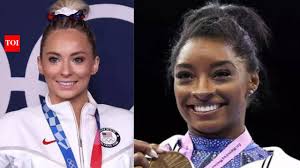
MyKayla Skinner, the Olympic silver medal gymnast, is asking the International Olympic Committee to move forward with a full ban on transgender athletes in women’s sports. She reacted after reports said the IOC was getting close to blocking male-born athletes from taking part in the women’s category at future Olympic Games. These reports came out earlier this week and quickly sparked debate. MyKayla Skinner shared her views in an op-ed she wrote for Fox News on Monday. She said she wants to protect young girls who train and dream about competing one day. Her comments came soon after an IOC spokesperson said on Tuesday that the “working group is continuing its discussions” and that more information will be given later. Right now, no final decision has been made by the IOC. MyKayla Skinner says IOC must act now as Donald Trump and US stars enter the debate MyKayla Skinner won her silver medal in the vault at the Tokyo Olympics in 2021. In her piece, she said she feels a strong responsibility to speak because many female athletes feel scared to say anything. She wrote, “I want to be a voice for elite female athletes. I want to speak up for their futures.” She added that the early signs from the IOC gave her “hope” that things might finally change. — foxnews (@foxnews) MyKayla Skinner also asked the United States Olympic and Paralympic Committee to make sure every rule protects women’s sports. She wrote, “When men compete in women’s categories, it is unfair and unsafe.” She ended her message with a strong line: “Athletes get hurt every day, but we should not accept insanity.” Donald Trump has also supported a transgender ban for the Olympic Games. He shared his views in late 2024, giving hope to groups that want the 2028 Los Angeles Olympics to avoid gender-rule disputes. MyKayla Skinner is now an ambassador for XX-XY Athletics, a group pushing to block transgender women from entering women’s competitions. But MyKayla Skinner has also faced backlash before. During the Paris 2024 Olympics, she spoke on her YouTube channel and questioned the strength of the Team USA gymnastics lineup. She said, “Besides Simone Biles, the depth is not what it used to be.” These words upset many, including Simone Biles. Simone Biles fired back on Instagram after winning gold in Paris. She posted a team photo and added, “lack of talent, lazy, Olympic champions.” Simone Biles later wrote on Threads, “Not everyone needs a mic and a platform.” MyKayla Skinner blocked Simone Biles on Instagram, and Simone Biles posted about it on X. Jordan Chiles also shared a picture showing the block. Even McKayla Maroney joined in and criticized MyKayla Skinner’s comments. Courtesy : TOI Note: This news is originally published on https:/timesofindia.com/bha and is used purely for non-profit/non-commercial purposes, especially human rights
World News | NY Consul General Meets Dalit Chamber of Commerce to Strengthen Business Ties
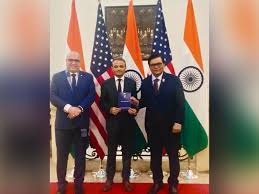
Get latest articles and stories on World at LatestLY. India’s Consul General in New York, Binaya Pradhan met a delegation from the Dalit Indian Chamber of Commerce and Industry and discussed strengthening of business opportunities for entrepreneurs of DICCI. New York [US], November 16 (ANI): India’s Consul General in New York, Binaya Pradhan met a delegation from the Dalit Indian Chamber of Commerce and Industry and discussed strengthening of business opportunities for entrepreneurs of DICCI. In a post on X, the Consulate stated, “Consul General Binaya Pradhan met a Dalit Indian Chamber of Commerce and Industry delegation led by Milind Kamble and Mr. Sanjiv Dangi. The discussion focused on strengthening business opportunities for entrepreneurs of DICCI in the US-India economic cooperation.” Earlier on Saturday, External Affairs Minister S Jaishankar chaired the Consul Generals Conference and appreciated the Embassy and Consulates for strengthening India-US ties. He reviewed bilateral ties with the US. In a post on X, he said, “Chaired a Consul Generals Conference in New York today, attended by Embassy of India in Washington DC, Consulate General of India in New York, Consulate General of India in Los Angeles, Consulate General of India in Seattle, Consulate General of India in San Francisco, Consulate General of India in Atlanta, Consulate General of India in Houston, Consulate General of India in Chicago and Consulate General of India in Boston. Reviewed our bilateral ties and support for diaspora activities. Appreciate the commitment and efforts of our Embassy and Consulates to strengthening the India-US partnership.” The Consulate General of India in New York said in a post on X, “Team CGI New York was honoured to welcome External Affairs Minister S Jaishankar. His vision, guidance and leadership strengthen our commitment to work for the India-USA partnership.” Earlier on Friday, Jaishankar met United Nations Secretary-General Antonio Guterres in New York on Thursday and discussed the current global order, regional flashpoints and the role of multilateralism. In a post on X, Jaishankar said he valued Guterres’ assessment of global developments and thanked him for his “clear and consistent support” for India’s growth. “Good to meet with UNSG @antonioguterres in New York today. Valued his assessment of the current global order and its implications for multilateralism. Also appreciated his perspectives on various regional hotspots. Thank him for clear and consistent support for India’s growth and development. Look forward to welcoming him in India,” he wrote. (ANI) (The above story is verified and authored by ANI staff, ANI is South Asia’s leading multimedia news agency with over 100 bureaus in India, South Asia and across the globe. ANI brings the latest news on Politics and Current Affairs in India & around the World, Sports, Health, Fitness, Entertainment, & News. The views appearing in the above post do not reflect the opinions of LatestLY) Courtesy : LatestLY Note: This news is originally published on https:/latestly.com/bha and is used purely for non-profit/non-commercial purposes, especially human rights
US Supreme Court allows Trump to enforce two-gender passport policy
The US Supreme Court allowed Trump’s administration to enforce a policy restricting passport gender markers to only “male” or “female,” sparking debate over transgender rights. The US Supreme Court on Thursday allowed President Donald Trump’s administration to enforce a policy restricting passport gender markers to only “male” or “female,” reversing lower-court orders and igniting sharp debate over transgender rights and safety. The ruling permits the administration to proceed with the policy while a lawsuit challenging it continues. It halts a lower-court order that had required the State Department to let applicants choose “M,” “F,” or “X” on passports to align with their gender identity. The court’s three liberal justices dissented, according to The Associated Press. The decision marks another victory for Trump on the court’s emergency docket. Since the beginning of his second term, the Supreme Court has issued nearly two dozen short-term orders favouring his administration in various policy disputes, including one that barred transgender people from serving in the military. In an unsigned order, the conservative majority said the policy does not violate equal protection principles. “Displaying passport holders’ sex at birth no more offends equal protection principles than displaying their country of birth,” the court wrote. “In both cases, the Government is merely attesting to a historical fact without subjecting anyone to differential treatment.” Justice Ketanji Brown Jackson, joined by the court’s two other liberal justices, issued a strong dissent. She warned that the ruling puts transgender and nonbinary Americans at risk. “This Court has once again paved the way for the immediate infliction of injury without adequate (or, really, any) justification,” Jackson wrote, arguing that the policy stems from Trump’s executive order describing transgender identity as “false” and “corrosive.” Jackson noted that several plaintiffs reported being strip-searched, sexually assaulted, or accused of using fake documents at airports because their passports did not match their gender presentation. The majority argued that blocking the policy would harm the government’s ability to manage passports under the president’s foreign affairs authority. The dissenters countered that the link between personal identification documents and foreign policy was unclear. The passport policy originates from Trump’s January executive order declaring that the United States would “recognize two sexes, male and female,” based strictly on birth certificates and “biological classification.” Sex markers first appeared on US passports in the mid-1970s. By the early 1990s, applicants could change them with a doctor’s note. Under President Joe Biden, the State Department in 2021 removed documentation requirements and introduced an “X” option for nonbinary applicants after years of legal challenges. Attorney General Pam Bondi welcomed the ruling, saying it affirms “the simple truth that there are only two sexes,” and pledged to continue defending the administration’s position. Courtesy : India Today Note: This news is originally published on https:/indiatoday.com/bha and is used purely for non-profit/non-commercial purposes, especially human rights
International CircuitTrump admin to restrict medical care for transgender youth
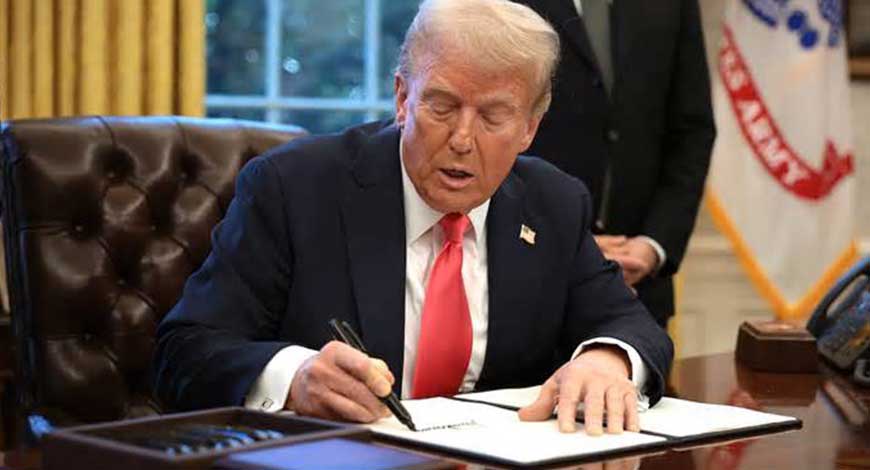
Access to gender-affirming care for transgender youth will be dramatically restricted by the Trump administration under new proposals by the Department of Health and Human Services. NPR has obtained the draft text of a proposed rule that would prohibit federal Medicaid reimbursement for medical care provided to transgender patients younger than age 18. It also prohibits reimbursement through the Children’s Health Insurance Program or CHIP for patients under age 19. An additional proposed rule would go even further, blocking all Medicaid and Medicare funding for any services at hospitals that provide pediatric gender-affirming care. The rules are being prepared for public release in early November, according to an employee at the Centers for Medicare and Medicaid Services. The employee asked that NPR not use their name because they fear professional retribution for speaking to the media without authorization. An HHS spokesperson did not respond to a request for comment about the planned timing of the proposed rules’ release. A near ban in all states Both supporters and opponents of transgender rights agree that, taken together, the forthcoming rules could make access to pediatric gender-affirming care across the country extremely difficult, if not impossible. The care is already banned in 27 states. “These rules would be a significant escalation in the Trump administration’s attack on access to transgender health care,” says Katie Keith, director of the Center for Health Policy and the Law at Georgetown University. “I think it’s really, really important to note that nothing is changing immediately,” she explains. “These would be proposals that would go out for public comment, it would take months for the Trump administration to issue a final rule, and then, if past is prologue, we would see litigation over whatever the final rules are.” Administration goals In his first days in office, President Trump signed an executive order declaring that the United States “will not fund, sponsor, promote, assist, or support the so-called ‘transition’ of a child from one sex to another.” In the months since, HHS released a report critical of the research that supports access to this care. A federal suicide prevention lifeline specifically for transgender youth was cancelled, as were hundreds of millions of dollars in scientific research funding related to LGBTQ people. Federal health officials warned state Medicaid directors to tread carefully, and the Department of Justice announced subpoenas of some children’s hospitals and threatened providers with prosecution. “I think these restrictions are very good,” says Terry Schilling of the forthcoming rules. Schilling is president of the American Principles Project, a conservative advocacy group. “It’s going to change the entire transgender industry, and it’s going to take away a lot of their funding streams.” He points to an opinion poll from the spring, which found 66% of the public opposes Medicaid coverage for this type of care for young people. “They believe that if you want to get some type of sex-trait modification procedure, you should have to pay for it,” Schilling says. “The American people are fully behind this effort.” Dramatic new expansion of power The proposal to condition a hospital’s participation in Medicaid and Medicare on halting gender-affirming care for youth represents an “unprecedented” use of the executive branch’s power to control what medical care is available in hospitals, says Keith. “Because Medicare is such a significant portion of many hospitals’ revenue,” she explains, the rule would essentially force hospitals to end their gender care programs for transgender youth. That would mean all of those programs’ patients — whether they have Medicaid or private insurance — would lose access. This is not how the federal government normally uses this type of rule, Keith says. She served in the Biden administration on the Gender Policy Council, and worked on some “conditions of participation” regulations for Medicare and Medicaid, she says. “They’re so basic — it’s like, you have to have a crash cart [with] enough medicine to help a pregnant woman in crisis.” Instead of health and safety standards, this proposal would instruct hospitals “to stop offering a certain type of care completely to a certain patient population,” she says. Law professor Katie Eyer of Rutgers University questions whether such a rule would survive a court challenge. “But if it were successful, I shudder to think what this administration would do with such a tool in their hands,” she says. It could open the door for any White House to withhold all federal funding from hospitals over the provision of medical care that it disfavors. “The writing has been on the wall that this has been coming,” says Lindsey Dawson, director of LGBTQ Health Policy at KFF, a nonpartisan health research organization. Yet the timing of the release has been a mystery for months. Notice of both proposed rules — though not the rules themselves — appeared on a government register over the summer, and it’s been unclear why they have yet to be released, Dawson says. NPR Courtesy : Medical Buyer Note: This news is originally published on https:/medicalbuyer.com/bha and is used purely for non-profit/non-commercial purposes, especially human rights