
President Murmu appoints six Governors, emphasising OBC and Dalit representation
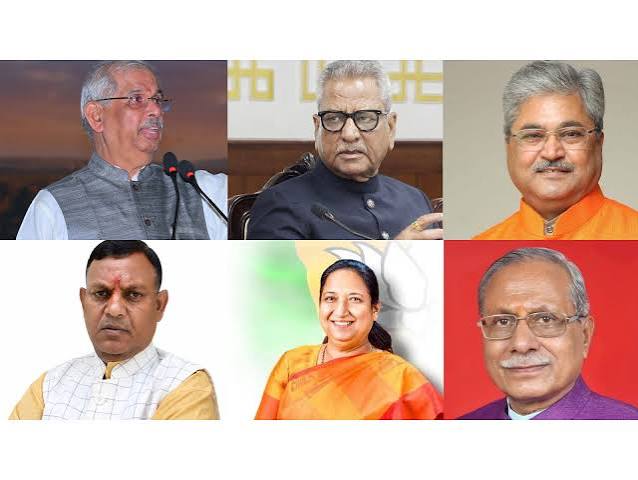
President Droupadi Murmu has appointed six Governors across various Indian states in a significant reshuffle, highlighting representation from Other Backward Classes (OBC) and Dalit communities. Sudha Yadav was appointed Governor of Karnataka. A former Lok Sabha MP from Mahendragarh, Haryana, and a BJP Parliamentary Board member, Yadav holds an MSc and PhD in Chemistry from IIT Roorkee. She served on the National Commission for Backwards Classes from 2019 to 2022. Yadav is a Yadav OBC leader from Haryana who entered politics following the death of her husband, Sukhbir Singh Yadav, a BSF Deputy Commandant martyred in the Kargil War. Dhal Singh Bisen, named Governor of Uttarakhand, is a former Lok Sabha MP from Balaghat, Madhya Pradesh. He has served as an MLA and Cabinet Minister in Madhya Pradesh, managing portfolios such as School Education, Forest, Transport, and Mines, and chaired the Madhya Pradesh Fourth State Finance Commission. An Ayurveda practitioner by profession, Bisen has shown interest in Indian systems of medicine and modern medical practices. He is an OBC (Bhoyar Pawar) leader. Braj Mohan Ram, appointed Governor of Odisha, is a Dalit leader from the Dhobi community and former parliamentarian from Jharkhand. He represented Palamu in the Lok Sabha for three consecutive terms beginning in 1996 and served as an MLA in undivided Bihar. Ram has been involved with the Scheduled Caste Morcha, Dhobi Mahasangh, and educational initiatives in Chandwa. Dushyant Gautam, named Governor of Sikkim, is a Dalit leader with experience as BJP National General Secretary and president of the party’s Scheduled Caste Morcha. He has served as a councillor in the Municipal Corporation of Delhi and as a Rajya Sabha member, holding various organisational roles concerning Scheduled Caste communities within the BJP. Om Prakash Mathur, previously Governor of Sikkim, has been appointed Governor of Kerala, while Rajendra Vishwanath Arlekar, the incumbent Governor of Kerala, has been assigned as Governor of Tamil Nadu. The appointments will take effect upon the respective individuals assuming office. Courtesy : The News Mill Note: This news is originally published on https:/thenewsmill.com/bha and is used purely for non-profit/non-commercial purposes, especially human rights
Dalit student attacked, no FIR even after four days: Family appeals to SSP for justice, accuses police of neglecting their pleas
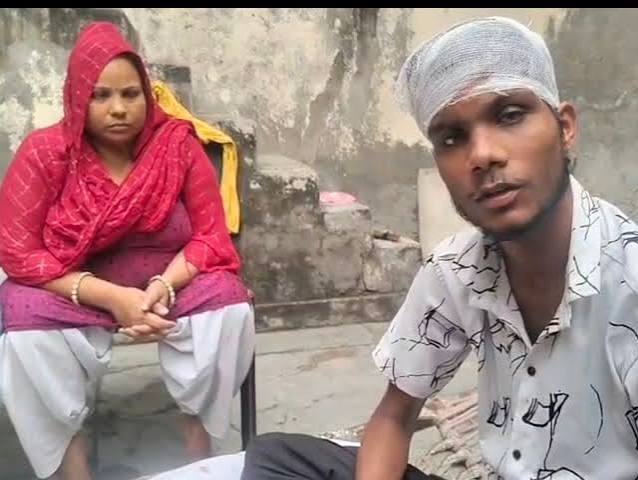
A Dalit student was attacked in Fugana, Muzaffarnagar. It is alleged that Rudraksh, a Class 11 student, was assaulted outside the school. The incident occurred on October 7th, but even four days later, no FIR has been filed in the case. Rudraksh studies at Kisan Inter College, Kharar. He stated that four students at the school frequently harassed him and used casteist slurs. When he complained to a teacher, the accused students became enraged. On October 7th, after school was over, four students with their faces covered attacked him with sticks and rods outside the gate. Rudraksh suffered a head injury and fell unconscious. He was first referred to CHC Budhana and then to the district hospital. The victim’s family alleges that they were not heard at the Fugana police station. Now, the family has appealed to the new SSP, Suraj Rai, for justice. Kharar Police Post in-charge Abhishek Chaudhary stated that all the children involved in the fight are minors; their parents are being called and action will be taken. Arjun Kumar | Budhana (Muzaffarnagar), Muzaffarnagar Courtesy: Hindu News
SP’s Dalit Mahasammelan in Agra, Akhilesh Yadav to attend: Event to be held on November 15th, target to gather 100,000 people; clarion call for 2027 elections
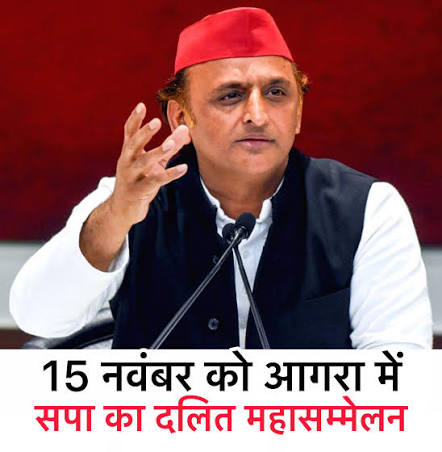
The Samajwadi Party is holding a Dalit Mahasammelan in Agra on November 15th. Party National President Akhilesh Yadav will attend. A meeting was held at the district office to prepare for the event, in which leaders and workers participated and responsibilities were assigned. Rajya Sabha MP Ramji Lal Suman stated that the convention will be held in western Uttar Pradesh. The party has set a target of gathering 100,000 people. Metropolitan President Shabbir Abbas stated that Akhilesh Yadav will be the chief guest. SP leaders stated that there is discontent among the Dalit community against the BJP government. They believe that only the Samajwadi Party can defeat the BJP. This Mahasammelan is being considered a clarion call for the 2027 assembly elections. Merjuddin | (Partial) of Tajnagri Phase-1, Agra Courtesy: Hindi News
Dalit girl suicide: NCSC seeks Madurai Collector’s report
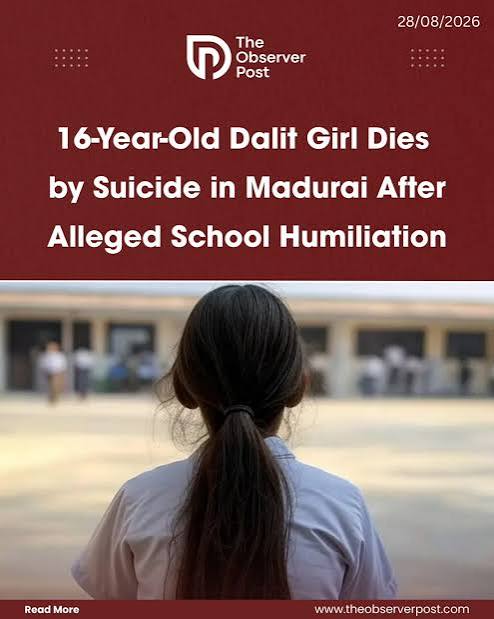
In a communication received by the district administration on October 5, the panel has asked Madurai District Collector Nishant Krishna to submit a report on the incident. MADURAI: The National Commission for Scheduled Castes (NCSC) has taken suo motu cognisance of the suicide of a Dalit girl at Usilampatti on 25th August, whose mother alleges that she took the extreme step after the two were humiliated by a government school headmistress when they sought admission to Class 11. In a communication received by the district administration on October 5, the panel has asked Madurai District Collector Nishant Krishna to submit a report on the incident. The Usilampatti police have registered an FIR under section 108 (abetment of suicide) of BNS and the SC/ST (Prevention of Atrocities) Act against Vimala Devi, headmistress of the Government Model Higher Secondary School in Usilampatti, who is now under suspension. The FIR was registered based on a complaint filed on August 28 by the girl’s mother, P Thavamani. However, police sources said they have been unable to proceed with the investigation because Vimala Devi has obtained an interim stay, and she is now on bail. In her complaint, Thavamani said that when she and her daughter approached the headmistress for admission on August 24, the headmistress got angry when the girl asked her mother not to fold her hands before her. The headmistress then asked the girl to leave the school. Thavamani alleged that the headmistress questioned the girl’s conduct for trying to join the school despite having already been admitted to the Government Kallar Higher Secondary School. The headmistress then allegedly phoned her counterpart there and enquired about the girl’s conduct on speaker mode. According to Thavamani, this upset the girl. The girl left the school crying and remained distressed after returning home. The following day, they went to the school where she had completed Class 10 and collected her Transfer Certificate. However, she died by suicide that evening when she was alone in the house, said the police source. The district education department suspended Vimala Devi for administrative inefficiency after a preliminary inquiry. The inquiry found that she did not handle the situation with the required administrative sensitivity and efficiency. A police source said the girl had scored 415 marks in Class X and joined the Biology-Mathematics stream hoping to become a nurse. But she found it difficult and asked her teachers to allow her to shift to the Commerce stream, but they did not accept the request. Since then, she has not shown interest in going to school, the source added. Gokul Vannan Courtesy : DT Next Note: This news is originally published on https:/dtnext.com/bha and is used purely for non-profit/non-commercial purposes, especially human rights
Dalit man falls at upper-caste men’s feet for burial permission in Tamil Nadu
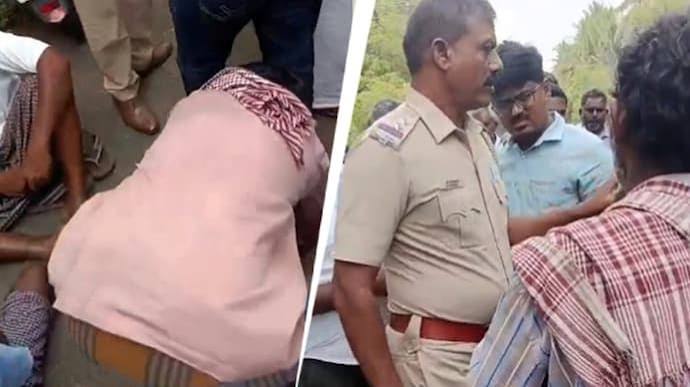
Two Dalit men in Erode were allegedly forced to fall at dominant caste men’s feet to bury an elderly relative at a common ground. The state SC/ST commission has called it a human rights violation and sought action against those involved and officials present. In a shocking instance of caste-based humiliation in Tamil Nadu’s Erode district, a Dalit man reportedly fell at the feet of dominant caste men to seek permission to bury an 80-year-old relative at a common burial ground, as police and revenue officials watched without intervening. The incident took place on October 5, when Chenni, an 80-year-old man who died of old age, was to be buried at the common burial ground in Perumpalli village in Erode district. Members of a dominant caste community allegedly opposed the burial, claiming that people belonging to the Dalit community could not be buried at the common burial ground. Chenni’s family maintained that the burial ground was meant for everyone and that members of all communities had the right to use it. During the ensuing dispute, members of the dominant caste community reportedly demanded that the Dalit family members fall at their feet if they wanted to bury the deceased there. Two members of the Dalit community subsequently fell at the feet of men from the other community and worshipped them, according to the Tamil Nadu State Commission for Adi Dravidar and Scheduled Tribes. The incident took place in the presence of police and revenue officials, who were accused of remaining passive spectators instead of intervening to prevent the humiliation and ensure that the family could carry out the burial. SC/ST COMMISSION SEEKS ACTION AGAINST OFFICIALS Taking cognisance of the incident following media reports, video footage and complaints, the Tamil Nadu State Commission for Adi Dravidar and Scheduled Tribes issued a notice to the Erode District Collector and the SP, seeking action against those involved and a detailed report on the incident. In its notice issued under Section 9 of the Tamil Nadu State Commission for Adi Dravidar and Scheduled Tribes Act, 2021, the commission described the incident as a human rights violation. It said the police and revenue officials present at the spot should have intervened when members of the Dalit community were made to fall at the feet of people from the other community. The commission also flagged the alleged failure of the police to provide the necessary protection for the burial at the common ground. It noted that preventing the burial of Chenni’s body was illegal and referred to Article 21 of the Constitution and the Scheduled Castes and Scheduled Tribes (Prevention of Atrocities) Act. The notice directed the Erode District Collector and the SP to take action under the SC/ST (Prevention of Atrocities) Act against the members of the other community involved in the incident and submit a detailed report by October 30, 2026. The authorities were also asked to report on the disciplinary action taken against the police and revenue officials who allegedly failed to take precautionary measures or intervene during the incident. The commission’s notice followed video footage published by newspapers and circulated on television and social media on October 9, as well as complaints submitted by political and social organisation representatives. ERODE COLLECTOR SAYS INQUIRY UNDERWAY Speaking to India Today, Erode District Collector S Kandasamy said an inquiry was underway to establish the full details of the incident. By:Anagha Courtesy : India Today Note: This news is originally published on https:/indiatoday.com/bha and is used purely for non-profit/non-commercial purposes, especially human rights
BJP’s rural push ahead of 2027 polls to focus on Dalits, marginalised sections
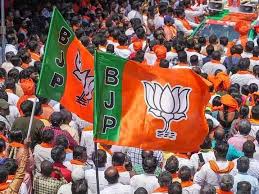
Lucknow: BJP has decided to ramp up its organisational and electoral groundwork across rural constituencies of the state, signalling an aggressive strategy to take the poll battle to the village level in the run-up to the assembly elections. The party has given a call for “Gramodaya se UP Vijay” (winning UP by winning villages) to sharpen its focus on rural areas by scaling up campaigns to boost public outreach besides taking schemes of Narendra Modi govt at the Centre and Yogi Adityanath govt in UP to the grassroots. The strategy — learnt to be drafted jointly by BJP central leadership and RSS — figured prominently during the recent review meeting of the party’s national general secretary and UP in charge Vinod Tawde, who has been camping in different regions of the state to intensify the groundwork. A senior UP BJP functionary said that special focus would be laid on reaching out to the marginalised sections of the society, essentially Dalits and other socially oppressed classes. Sources said that BJP is focusing on rural areas to make deeper inroads into regions where the opposition holds sway. The move also assumes significance for BJP, which has historically drawn much of its support from urban voters but has steadily broadened its appeal across rural Uttar Pradesh since 2017, eroding the traditional strongholds of regional parties such as SP and BSP. According to past surveys by various agencies, including Lokniti-Centre for the Study of Developing Societies (CSDS), of the 403 assembly seats in UP, as many as 308 are predominantly rural. Of the rest, 60 are semi-urban while 35 seats are urban. Sources said that as part of the strategy, senior party functionaries would be tasked to reach the rural areas and establish a dialogue with the socially and economically poor sections and those who have benefitted from any of the schemes rolled out by BJP govts. RSS cadre will assist BJP in the ambitious drive that aims to take feedback from the beneficiaries and the deprived section before taking corrective measures. The campaign, a senior UP BJP functionary said, would be executed through a coordinated effort of the organisational leadership, MPs, MLAs and the local leadership. Former state functionaries will also be asked to give their feedback to boost the campaign and address any possible disenchantment within the larger organisational apparatus. Sources said that BJP aims to build a bridge between govt, the organisation and the public so that the grievances and feedback of the people could reach the organisation. Courtesy : TOI Note: This news is originally published on https:/timesofindia.com/bha and is used purely for non-profit/non-commercial purposes, especially human rights
Tamil Nadu: Dalits forced to prostrate at the feet of a 90-year-old man who went to bury him at a crematorium; a case has been filed.
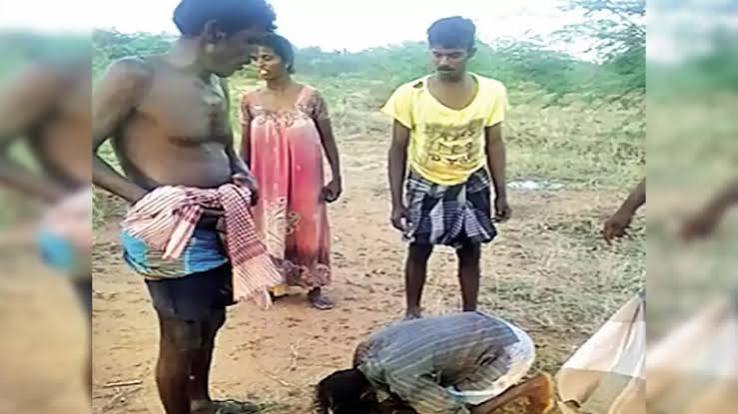
Caste dispute erupts in Erode, Tamil Nadu, over a public crematorium. Dalits prostrated themselves at the feet of powerful men after being threatened with a job ban. Tamil Nadu: A highly inhumane and shameful case of caste discrimination has emerged from Erode district. A massive controversy erupted over the cremation of a 90-year-old man in Perumbali village, located in the Madathupalayam Panchayat near Perundurai. Amidst the protests over the use of the public crematorium, two Scheduled Caste (SC) members were allegedly forced to prostrate themselves at the feet of members of the Backward Class (BC). Over 100 Scheduled Caste residents reside in Perumbali village. These villagers have long faced difficulties burying the bodies of their loved ones at the local crematorium. Due to strong opposition from the dominant castes, they were often forced to carry the bodies to Thingalur, about five kilometers away. However, after a recent survey, the Tehsildar of Perundurai declared this cremation ground public for all communities. On October 5th, Chenni, a 90-year-old Scheduled Caste man, died due to age-related ailments. When members of his community took his body to the public cremation ground for burial, they faced strong opposition from members of the backward castes, which soon escalated into a heated argument. According to the district police, the funeral was conducted under tight security from the Revenue Department and the police. During the altercation between the two communities, the Scheduled Caste members were allegedly threatened and warned not to approach the dominant caste members for any work in the future. Immediately after this threat of not giving them work, two members of the Scheduled Caste community were forced to grab the feet of the members of the BC community. The police have now taken strict legal action regarding this incident. A case has been registered at the Thingalur police station on the night of October 8, 2026 (Thursday) based on a complaint filed by the Perundurai Revenue Inspector. Two individuals have been charged under stringent sections of the Scheduled Castes and Scheduled Tribes (Prevention of Atrocities) Act in connection with this inhumane act, and the police are conducting a thorough investigation. A video of the incident is rapidly going viral on social media, clearly showing the public humiliation of members of the Dalit community. The video has sparked widespread public outrage and demands for immediate, strict action against the culprits. Iswaran, State Coordinator for the Western Region of the Bahujan Samaj Party (BSP), has strongly condemned the incident. He alleged that preventing people from using public crematoriums is a direct violation of the rights of SC community members. He described the threat of denial of work as the most brutal form of caste-based oppression. Iswaran said that taking advantage of the economic helplessness and helplessness of Dalits and forcing them to bow down at the feet of other communities is a highly condemnable act. The BSP leader also raised serious questions about the role of the police and revenue department officials present at the scene. He demanded strict action against those who opposed the funeral, as well as those officials who completely failed to prevent this insult. Rajan Chaudhary Courtesy: Hindi News
Rashtriya Janshakti Samaj Party threatens hunger strike: One-day sit-in in Ayodhya, demands action in cases of Dalit victims
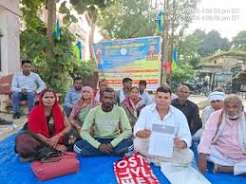
The Rashtriya Janshakti Samaj Party (Uttar Pradesh) held a day-long sit-in at Tikonia Park in Ayodhya on October 9, 2026. Led by State Vice President Anil Kumar Rawat, a memorandum addressed to the Governor was submitted to the District Magistrate, Ayodhya. The memorandum demanded legal action in pending cases of Dalit victims. The party warned that if the demands are not met by October 14, 2026, its workers will begin an indefinite sit-in, fast-unto-death, and hunger strike from October 15. The party’s main demands: A case be registered for the Dalit victim, Meenawati (Anil Rawat’s wife), in the September 27, 2026 incident. A charge sheet be filed and the accused arrested in Kotwali Nagar FIR No. 702/2025. A high-ranking officer should investigate FIR No. 391/2026 against the Bikapur SDM Peshkar, and the victim’s family should be provided with protection. The accused named in FIR No. 424/2025, dated December 2025, including Ashish, Shivakant, Vindu, and Shrikant, should be arrested. The false FIR No. 425/2025 filed against Anil Kumar Rawat and others should be withdrawn. Prabhakar Nath Chaurasia | Civil Lines (Atal Nagar), Ayodhya Courtesy: Hindi News
TM Investigation | Hopes dashed: No consultation with NCSC, so how was the path to becoming pilots blocked for Dalit students?
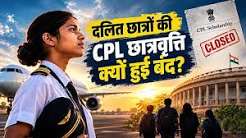
After a detailed BANAE report, Rahul Gandhi demanded the restoration of scholarships from the Social Justice Minister. New Delhi. Major decisions are often recorded in very short lines in government files. The story of the end of the Commercial Pilot License (CPL) scholarship for Scheduled Caste (SC) students is also contained in one such line in documents obtained by TM. The minutes of a meeting of the Steering Committee of the Top Class Scholarship Scheme, held on July 7, 2023, state that there was a “broad consensus” that the CPL course should be removed from the scheme due to the very high fees and lack of employment certainty for the beneficiary students. This policy decision concerning the Scheduled Caste community was made without consulting the National Commission for Scheduled Castes, which not only violates constitutional provisions but has also deprived 200 deserving Dalit students, who perhaps dreamed of becoming pilots, of their dream careers over the past four years. More than three years after that Steering Committee meeting, this decision is now at the center of political debate. On September 26th, Rahul Gandhi, Leader of the Opposition in the Lok Sabha, wrote a letter to Dr. Virendra Kumar, Union Minister of Social Justice and Empowerment. He demanded that the CPL scholarship be immediately reinstated and all pending cases from 2023 be approved. This letter was not written suddenly; it was represented by a Mumbai-based organization. On September 11th, the Dr. Babasaheb Ambedkar National Association of Engineers (BANAE), based in Andheri (Mumbai), sent a detailed letter to Rahul Gandhi. The organization’s national president, Nagsen Sonare, requested Rahul Gandhi to personally raise the issue with the Minister of Social Justice, citing it as “most urgent/on top priority.” BANAE clearly stated that this was not merely a scholarship complaint, but rather a question of adherence to constitutional safeguards in major policy decisions affecting Scheduled Castes. Fifteen days later, Rahul Gandhi wrote his letter to the Minister, enclosing BANAE’s full representation. In his letter, Gandhi wrote, “Young Dalits across the country dream of looking up to the sky and flying. For years, government scholarships made these dreams come true. These dreams have been shattered since 2023-24. In 2023-24, the CPL course was removed from the “Top Class Scholarship Scheme” for SC students. The Ministry states that eligible students can apply under the Post-Matric Scholarship for SC Students.” Rahul Gandhi says that the scheme’s guidelines do not include any provision for CPL training, and therefore “the path to the cockpit has been closed for most Dalit youth.” The issue arose after a complaint by a Bahujan activist from Uttar Pradesh. Dwarika Prasad, a retired general manager of the Oil and Natural Gas Corporation Limited (ONGC), is the complainant in this entire episode, whose letter brought the matter to the National Commission for Scheduled Castes (NCSC). Through three years of tireless efforts, Dwarika Prasad collected documents through the Right to Information Act and uncovered the reasons behind the closure of this ambitious scheme. Dwarika Prasad, a resident of Mathura district, wrote a letter to the NCSC Chairman, stating that the free scholarship and fee for CPL courses for SC students had been in place for over four decades, but the Ministry of Social Justice had arbitrarily discontinued it. Dwarika Prasad explains that hundreds of poor Scheduled Caste students had benefited from this scheme. They alleged that this decision was taken in violation of Article 338(9) because it appeared that the Ministry had not consulted the Commission before making this major policy decision. They requested the Commission to take up the matter with the Ministry. On January 19, 2026, the Commission’s Under Secretary, K.J. Bhatt, sent a letter to the Secretary, Department of Social Justice, under file number ESDW/IP/UP/2024/259953, based on this complaint. Dwarika Prasad’s representation was attached to it for “appropriate action,” and a copy of the letter was also provided to him. This same Commission letter was later referenced in both BANAE’s representation and Rahul Gandhi’s letter. More than seven months after the Commission’s letter, no effective solution has been found. When CPL was part of the Post-Matric Scholarship To understand what changed, we need to look back. The Centrally Sponsored Post Matric Scholarship Scheme (PMS-2010), which came into effect on July 1, 2010, clearly states CPL as a Group I course, the same category as medical, engineering, and management courses. The CPL course also included training for a commercial helicopter pilot license and multi-engine rating on aircraft like the A-320. Fifty CPL awards were set aside for the entire country each year. State governments and union territories would scrutinize applications and submit the names of eligible candidates to the ministry, which would approve up to 50 awards nationwide on a first-come, first-served basis. Selected students received a maintenance allowance at Group I rates: ₹1,200 per month for hostel residents and ₹550 per month for day scholars. Flight charges were also covered, in addition to all mandatory fees. The same document also stipulated that scholarships would not be awarded for private pilot license and aircraft maintenance engineer courses. Thus, CPL was not an exception, but rather included in the scholarship-eligible courses. Speaking to The Mooknayak, BANAE President Nagsen Sonare says that the CPL scholarship was not a new concession. It was an established facility, recognized by the government as a specialized professional education. Sonare also cited the 2005-06 Union Budget, in which the then Finance Minister announced in Parliament that all three existing scholarship schemes for SC/ST students – pre-matric, post-matric, and merit-based – would continue. In the same speech, he proposed a new window of larger scholarships for SC/ST students enrolled in select institutions of excellence. This later became the “Top Class Education for SC Students” scheme, which came into effect in June 2007. Sonare says that in 2018, CPL was removed from the original Post Matric Scholarship framework, but the government did not discontinue it at that time. The benefit was transferred to the Top Class Education Scheme. The scheme’s guidelines, effective
Karnataka High Court: Acquittal of 26 accused in 17-year-old case of desecration of Baba Saheb’s portrait and SC/ST atrocities upheld
On behalf of the state, public prosecutor K. Nageshwarappa argued that the acquittal was “illegal, invalid, and contrary to the law, evidence, and material on record.” According to him, the lower court failed to properly evaluate the witnesses’ testimony, leading to a miscarriage of justice. Bengaluru: The Karnataka High Court on October 1 dismissed the state government’s appeal against the acquittal verdict delivered by the Chamarajanagar Special Court. The case relates to a 2009 incident in Bommanahalli village in Gundlupet taluk, in which a portrait of Dr. B.R. Ambedkar and a community hall signboard were vandalized, and members of the Scheduled Castes were assaulted and subjected to casteist abuse. A single bench of Justice G. Basavaraj delivered the verdict while hearing the case. The appeal was filed by the state government through the Terakanambi police. According to the prosecution, on June 6, 2009, at around 7 p.m., 29 accused persons formed an unlawful assembly in Bommanahalli village. They were armed with deadly weapons and had gathered with the common intention of rioting. They were alleged to have toppled the signboard of a “community hall” and a portrait of Dr. Ambedkar. According to the prosecution, this act was committed in public with the intention of outraging the sentiments and insulting the Scheduled Caste community. The accused were charged under sections 143, 147, 148, 341, 323, 324, 506, 427, and 295(A) of the Indian Penal Code and sections 3(1)(x) and (xi) of the Scheduled Castes and Scheduled Tribes (Prevention of Atrocities) Act, 1989. After the charge sheet was filed, the court took cognizance and issued summons. All the accused appeared and were granted bail. However: Accused No. 2 failed to appear in court despite a non-bailable warrant, and a separate Special Case No. 51/2010 was filed against him. Accused No. 25 died and the case against him was abated. The trial court framed charges and read them out to the accused in their own language. The accused pleaded not guilty and expressed their willingness to face trial. The prosecution presented a total of 13 witnesses, 21 documents (Ex. P1 to P21), and 25 material objects. In their statements recorded under Section 313 of the Code of Criminal Procedure, the accused completely denied all evidence against them but offered no defense. After a hearing, the trial court acquitted Accused Nos. 1, 3 to 12, 14 to 24, and 26 to 29. The State’s arguments in the appeal The State’s Public Prosecutor, K. Nageshwarappa argued that the acquittal was “illegal, invalid, and contrary to the law, evidence, and material on record.” According to him, the trial court failed to properly evaluate the witnesses’ testimony, leading to a miscarriage of justice. He stated that there were seven injured witnesses, and there was no reason to disbelieve them. These witnesses clearly stated that the accused attacked with hands, sticks, and sickles, causing injuries all over their bodies. He also stated that caste-based abuses were hurled and stones were thrown to break the community hall signboard bearing the image and name of Dr. B.R. Ambedkar. The public prosecutor also argued that atrocities against Dalits are punishable under a special law that serves a social purpose, and therefore, the trial court should not have insisted on a harsh interpretation of the law. Advocate Manjunath N.D., representing the accused, stated that the trial court correctly evaluated the evidence in accordance with the law and facts, and there was no basis for interfering with the verdict. He sought dismissal of the appeal. In its order, the High Court cited paragraph 30 of the lower court’s judgment. It states that the complainant is injured, the other witnesses are his son, wife, and his elder brother’s wife, while four separate witnesses belong to the same community. All eyewitnesses admitted that the scene was dark and there was no electricity in the village since 6:45 p.m. that day. The lower court remarked, “None of the eyewitnesses explained how they saw the incident and in what light.” The court also noted that there were several significant contradictions in the evidence, which cast doubt on the occurrence of the incident. In conclusion, the lower court held that “the benefit of the doubt should accrue to the accused” and the prosecution failed to prove the accused’s guilt beyond a reasonable doubt, therefore, all 10 issues were answered in the negative. The High Court, after re-examining the entire material on record, refused to interfere with the lower court’s findings. Justice G. Basavaraj said in his order, “After re-evaluating, reconsidering, and re-examining the evidence, I do not find any legal or factual error committed by the lower court.” The court thereby dismissed the appeal. Geetha Sunil Pillai Courtesy: Hindi News