
Protesters detained outside IIT Bombay demanding justice for Dalit student Sahil Wakode
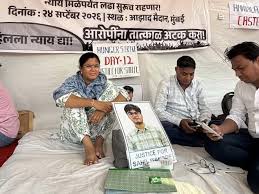
Mumbai Police detained Ambedkarite leaders and civil society members outside IIT Bombay as they demanded a fair investigation into Dalit student Sahil Wakode’s death and allegations of caste discrimination. Mumbai Police on Wednesday detained Ambedkarite leaders and civil society members who gathered outside IIT Bombay in response to the ‘Chalo IIT Bombay’ call, demanding accountability over the death of second-year BTech student Sahil Wakode. The civil society members also demanded an impartial investigation into allegations of caste discrimination. Among those detained were members of the All India Independent Scheduled Castes Association (AIISCA)—Rahul Sonpimple, Deepali Salve and Sambhaji Bhagat. The protest was organised in solidarity with Wakode’s parents, who have been on a hunger strike for nearly two weeks, demanding a fair investigation into their son’s death. According to reports, police detained protesters demonstrating outside IIT Bombay following a call by Sahil’s father, Ravindra Wakode. Reports suggest that Ravindra Wakode was also detained; however, Mumbai Police have denied the allegation. The police, meanwhile, responded with heavy deployment across the campus, restrictions on entry and the detention of people seeking to present their demands to the administration. The protest was also not allowed to proceed. Meanwhile, the Mumbai Crime Branch, which is investigating Wakode’s death, has recorded statements from more than 40 people. The 22-year-old second-year BTech student was found dead in his hostel room on the evening of September 18. According to the police official, Wakode submitted a written statement to the institute after allegedly being caught cheating in an examination. In the statement, he said he had not prepared well for the paper, acknowledged his mistake and sought a second chance. A first information report (FIR) was registered by Powai police against Professor Doolla following a complaint lodged by Wakode’s father. The professor, who has been named as an accused in the abetment-to-suicide case, has, in his statement to the police, denied the allegations of harassment levelled against him by the student’s parents. Wakode’s parents, Ravindra and Sonali Wakode, began their hunger strike at Azad Maidan in south Mumbai on September 24, alleging caste discrimination at the institute and seeking justice for their son. Courtesy : Maktoob Media Note: This news is originally published on https:/maktoobmedia.com/bha and is used purely for non-profit/non-commercial purposes, especially human rights
Road to Dalit cremation ground in Rahmatpur blocked: Robbers accused of encroaching on government road, halting construction work; complaint to SDM
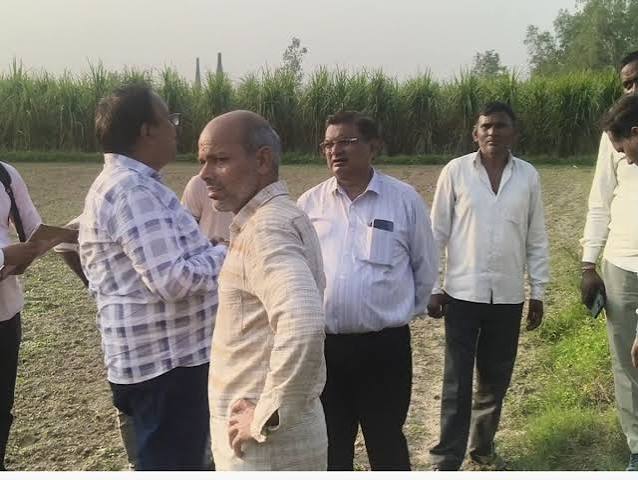
In Rahmatpur village, Muzaffarnagar, rowdy people have blocked the road to the Dalit cremation ground. They are accused of encroaching on the government road, hindering funerals and the construction of the cremation ground. Victims Moolchand, Chandrakiran, Vijaypal, Mohit, Indu, and village head representative Alok Kumar stated that this road has existed since ancestral times. Shubham, son of Karnail, Neeraj, son of Brajbir, and Karnail, son of Chatar Singh, are accused of blocking the road and digging pits, blocking traffic. Alok Kumar stated that the road blockage prevents construction materials from reaching the cremation ground, halting construction. There are also difficulties transporting bodies. Villagers have complained to the Sub-District Magistrate, Jansath, and the Bhopa police. A team from the Revenue Department inspected the site. Kanungo Sunil Sharma stated that the road appears to be old. After examining the documents, the measurement will be done and action will be taken as per the rules. Sandeep | Bhopa (Morna), Muzaffarnagar Courtesy: Hindi News
Dalit, Adivasi women recount ordeals in 35 atrocity cases at Hyderabad legal clinic
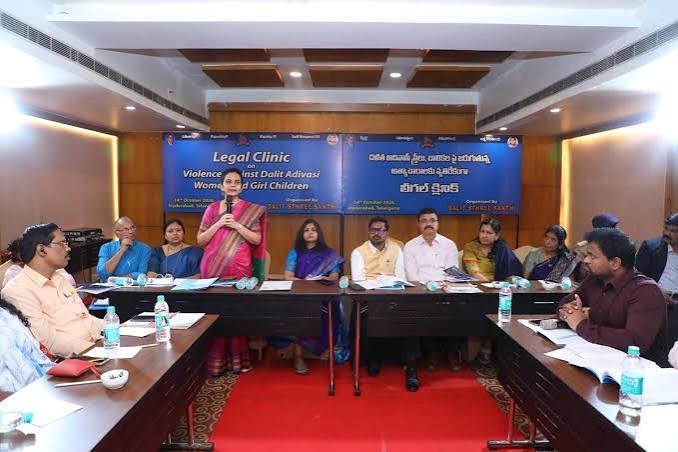
Victims as well as witnesses in 35 cases of atrocities against Dalit and Adivasi women and girls on Wednesday shared their experiences of seeking justice, at a legal clinic organised by Dalit Sthree Sakthi (DSS) in Hyderabad. The victims narrated their ordeals in cases involving murder, rape and cheating on the pretext of love. Senior government officials and representatives of civil society organisations attended the clinic as jury members, heard the grievances and assured the victims of support in pursuing their cases. DSS national convener Jhansi Geddam presided over the clinic and coordinated the proceedings. Director of Public Prosecutions Sambasiva Reddy commended the victims for their faith in the justice system and the Constitution. He assured them of assistance in prosecuting the cases and said special courts would be established in every district. CEO of Society for Elimination of Rural Poverty and Panchayat Raj Commissioner Divya Devarajan stressed the need for financial assistance to victims and said support would be extended through Sneha Cooperative Societies. She said SERP, in coordination with the Scheduled Castes Development Department (SCDD), would help victims secure bank loans. SCDD Commissioner Vijayendra Boyi expressed anguish over the crimes and said such incidents reflect the prevailing regressive social conditions. The government had sanctioned ₹40 crore towards compensation for victims of atrocities, with another ₹31 crore in the process of being sanctioned, she said. Assuring the victims of compensation and rehabilitation, she stressed that financial assistance alone was not enough and that justice must be secured in every case. The Hindu Bureau Courtesy : The Hindu Note: This news is originally published on https:/thehindu.com/bha and is used purely for non-profit/non-commercial purposes, especially human rights
A Dalit was defrauded in Ayodhya over land deed: Three accused also accused of casteist slurs and death threats.
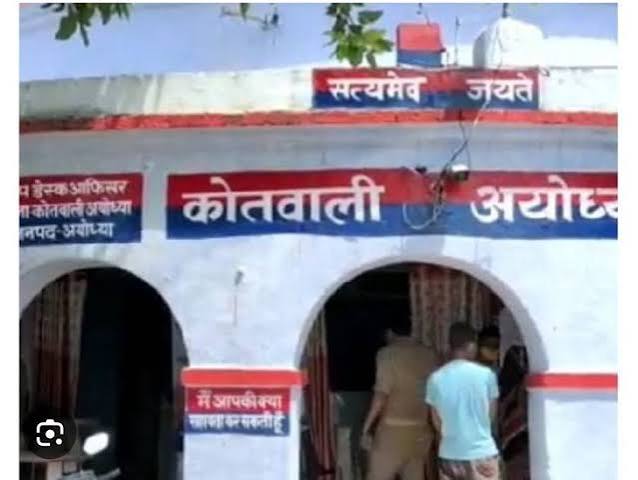
A case of fraud involving a land deed has come to light in Ayodhya. Hazari Lal, a Dalit man, has filed a lawsuit against three individuals, accusing them of fraud, casteist slurs, and death threats. Hazari Lal purchased an old 14.61 square meter house in Kushmaha village from Ashok Kumar on January 6, 2026, for ₹2 lakh. It is alleged that the accused fraudulently sold the same land back to Hazari Lal. According to Hazari Lal, on the night of July 21, 2026, Ashok Kumar, Satyam, and Shivam came to his house. They used casteist slurs and threatened to kill him. The accused later refused to return the money. On Hazari Lal’s complaint, the police have registered a case against Ashok Kumar Verma, Satyam Verma, Shivam Verma, and Satyam’s maternal uncle and have begun an investigation. Brijesh Chandra Pandey | Pura Bazaar (Ayodhya), Ayodhya Courtesy: Hindi News
In Mainpuri, miscreants harvested a Dalit woman’s crop: When she protested, they were subjected to caste-related abuses and death threats. A case has been filed.
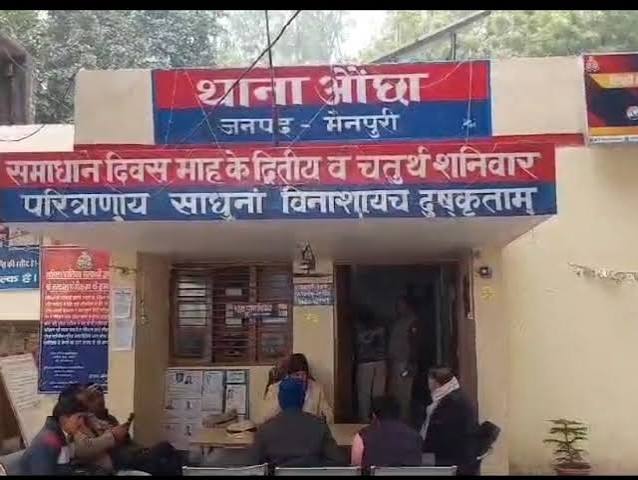
In Vikrampur village, Mainpuri, miscreants forcibly harvested a Dalit woman’s standing paddy crop. When she protested, the woman was subjected to caste-related abuses and death threats. The victim, Preeti (Scheduled Caste), filed a complaint at the Auncha police station. According to her, on October 11, 2026, at 12 noon, Shailendra, Chandrapal, and Amol Singh (residents of Nagla Vanshi, Auncha), along with their men, harvested the paddy crop from her field (plot number 104/5) using a harvester. When Preeti objected, the accused hurled caste-related abuses and threatened to kill her. According to the victim, the accused are influential and this crop was her only source of income, causing significant losses. The victim has filed a case with the Auncha police station and demanded strict action. The police have registered a case and begun an investigation. Station in-charge Chandrapal Singh stated that the investigation has been initiated. Arjun Singh | Madhan (Ghiror), Mainpuri Courtesy: Hindi News
Jharkhand: 5 accused of assaulting and using casteist slurs against a Dalit woman for drawing water from a well
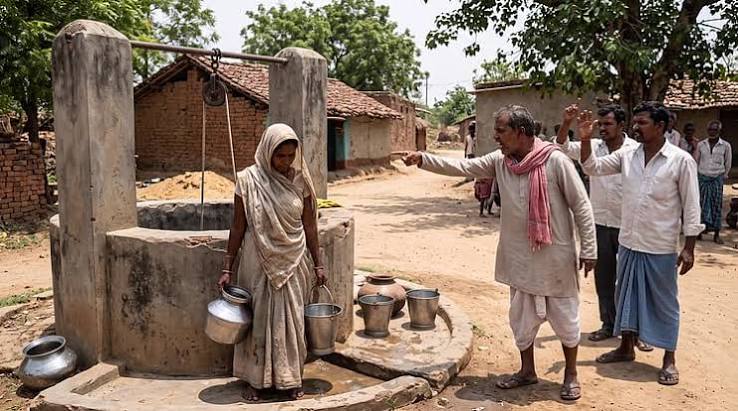
In Jagannathpur, Ranchi, a case of assault and casteist slurs against a Dalit woman for preventing her from drawing water from a well has come to light. Police have registered an FIR against five accused under the SC/ST Act and have begun an investigation. Jharkhand: A serious incident has come to light in Ranchi, the capital, where a Dalit woman was prevented from drawing water from a well and assaulted. According to police information released on Tuesday, October 13th, a case has been filed against five people, including four members of the same family, in connection with the incident. The miscreants are also accused of harassing and abusing the victim with casteist slurs. The entire incident occurred on October 10th in Sector 2 of HEC Smart City, which falls under the Jagannathpur police station jurisdiction. A senior police officer confirmed that the victim, identified as Manju Chaudhary, had filed a police complaint on the same day of the incident. The case took a new turn on Monday when the accused family filed a cross-complaint with the police. In their complaint, they accused the victim, a Dalit woman, of assaulting them. Jagannathpur police station in-charge Nitin Kumar Singh, providing details of the case, stated that the police have taken concrete action based on the written complaint filed by Manju Chaudhary. Police have registered an FIR against Amrendra Kumar, his wife Remi Devi, their two sons, and another person under relevant sections of the Scheduled Castes/Scheduled Tribes (Prevention of Atrocities) Act, 1989, and the BNS Act. According to the station in-charge, the victim alleged in her complaint that these five people, who lived near her house, had been preventing her from drawing water from their well since July 23rd. Subsequently, on October 10th, they suddenly assaulted her brutally and used derogatory casteist slurs against her. Given the sensitivity of the matter, the police have launched an investigation. The investigating officer stated that preliminary police investigations have revealed that the well at the center of the dispute is located within the premises of the main accused, Amarendra’s house. The police are currently thoroughly investigating all the serious allegations of harassment and assault leveled by the woman. The officer clarified that once this investigation is complete, strict and appropriate legal action will be taken against the accused based on all the facts that have emerged. Rajan Chaudhary Courtesy: Hindi News
Tension in UP Congress: Dalit leader Mamta Chaudhary at the center of the “Speak within your limits” controversy; learn the full story

A dispute over “status” between Dalit leader Mamta Chaudhary and Ajay Rai at the UP Congress headquarters has intensified factionalism within the party ahead of the 2027 elections. An alleged altercation at the Uttar Pradesh Congress headquarters on October 11th has heated up the state’s political landscape. A heated exchange occurred between Mahila Congress leader Mamta Chaudhary and former state president Ajay Rai at the party office in Lucknow. Following this incident, Mamta Chaudhary alleged that Ajay Rai’s supporters misbehaved with her and other women workers. According to party leaders, the commotion occurred when new state president Aradhana Mishra and newly appointed acting president Imran Masood were about to arrive at the office to formally assume office. It is alleged that the women workers were targeted as soon as Ajay Rai arrived with his supporters. On Monday, videos related to the incident surfaced, further fueling the controversy. In these videos, Mamta Chaudhary, the Central Zone President of the State Mahila Congress, is allegedly heard saying that she does not want to see Ajay Rai’s face. Immediately afterward, Ajay Rai can be heard telling her to “speak within your limits.” Speaking to the media on Monday, 47-year-old Mamta Chaudhary clarified her position on the matter. She claimed that she was only strongly protesting the harassment of women workers and that she had not directly spoken to Ajay Rai. She expressed surprise and said that she did not understand how things escalated to the point of throwing shoes and slippers at her. Mamta further said that if she had said something wrong, Ajay Rai, as a senior leader, could have simply reprimanded her. Calling the entire incident an attack on Dalits and women, she expressed hope that the party’s top leadership would take strict action against the culprits. She also added that she has full faith in the Congress, as the entire party cannot be defamed because of a few wrongdoers. This controversy has emerged at a time when the Congress party is preparing for the 2027 Uttar Pradesh Assembly elections. This incident has suddenly brought Dalit leader Mamta Chaudhary, who has been active in the party organization for nearly two decades, into the spotlight. Mamta Chaudhary’s political journey began in 2006 when she contested the Lucknow Municipal Corporation elections from Malviya Nagar. Since then, she has been elected as a councilor four times in a row. She also served as the Congress leader in the Municipal Corporation House in 2017 and 2023. During the 2022 Assembly elections, Mamta was among the prominent candidates selected under Priyanka Gandhi Vadra’s “I am a girl, I can fight” campaign. She contested from the reserved seat of Mohanlalganj, where she received 2,990 votes. Just a year after the Assembly elections, she was appointed the President of the Central Region of the Mahila Congress in Uttar Pradesh. Mamta Chaudhary originally hails from a long-standing Congress family in Unnao, and Lucknow is her in-laws’ home. She received her early education at the Indian School in Bahrain and earned a degree in English from DAV PG College. Congress leaders who have worked with her say she has always been known for her outspoken opinions. Her current tenure in the Mahila Congress is being marked by organizational uncertainty. The committee was dissolved last year, and no new president has been appointed. Party insiders believe this organizational vacuum has contributed to factionalism and tensions between Mamta Chaudhary and Ajay Rai. Given the seriousness of Sunday’s incident, the All India Congress Committee (AICC) has formed a fact-finding committee. This investigation committee is headed by Brijlal Khabri, former Uttar Pradesh Congress president and prominent Dalit leader. Khabri, a former BSP leader, has stated that the committee is conducting a thorough investigation into the matter and will submit its detailed report to the top leadership within a week. Rajan Chaudhary Courtesy: Hindi News
Congress MLA’s uncle among 3 booked for caste discrimination at Wanaparthy temple

BRS general secretary RS Praveen Kumar questioned how entering a temple on gram panchayat land without permission could be considered a crime. Synopsis: In Mangampally, a village in Peddamandadi Mandal of Wanaparthy district, a Dalit man and his family were asked to leave the temple premises during a renovation ritual. The video of the exchange has since gone viral on social media and triggered a political storm, as one of the accused is related to a ruling Congress MLA. Police in Telangana’s Wanaparthy district have registered a case against three men for allegedly abusing a Dalit man and asking him to leave the premises of a temple at Mangampally village of Peddamandadi mandal. The police registered the FIR after a video of the incident went viral on social media, drew sharp political criticism, and after a complaint by Masani Sudheer, a 33-year-old milk trader belonging to the Scheduled Caste Madiga community. The incident gained public attention after it was revealed that one of the accused, Kuppireddy Venkatram Reddy, is the maternal uncle of Congress MLA Tudi Megha Reddy. The complaint Sudheer said he visited the Lord Hanuman temple in his village with his family around 9:30 am on Monday, 12 October. Rituals related to the temple’s renovation were underway at the time. He alleged that upper-caste men from the village, including Venkatram Reddy (60), Yeddula Srinivas Reddy (48), Yeddula Rajavardhan Reddy (45), and others, confronted him. In his complaint, he claimed all three men were related to MLA Megha Reddy, who also belongs to the same village. According to the FIR, they told him no Scheduled Caste person had entered the temple in 50 years. They allegedly said he was not welcome because of his caste, and asked why he had gone in on the last day of the rituals and “desecrated” the shrine. Sudheer further alleged that the accused threatened to demolish the temple because he had entered it. He also said that his parents suffered cruelty at their hands, and asked the police to hold the accused responsible if he or his family are subject to any harm. The FIR invoked Section 352 read with 3(5) of the Bharatiya Nyaya Sanhita, and Sections 3(1) (r), 3(1) (s) & 3(1) za(C) of the SC/ST (Prevention of Atrocities) Act. Sections 3(1)(r) and 3(1)(s) deal with intentionally insulting or intimidating a Scheduled Caste member and abusing them by caste name in public view. In contrast, 3(1) (za) (C) deals with social and economic obstruction. Viral video and criticism The exchange between the accused and the complainant has been widely shared on social media platforms. In the clip, the men tell Sudheer he must leave the premises because they built the shrine with their own money. They say that the temple does not come under the Endowments Department, so they are free to deny him entry. BRS general secretary and former IPS officer RS Praveen Kumar condemned the incident and questioned how entering a temple on gram panchayat land, not private land, without permission could be considered a crime. “Dear MLA sir, if you are someone who respects the values of justice, you should approach the police, file a case against your uncle and get him arrested,” he wrote in an X post. The FIR was registered on the evening of 13 October after Sudheer submitted a complaint to the Superintendent of Police. DSP Giribabu has been assigned as the investigating officer. So far, no arrests have been made. Sreshta Ladegaam (Edited by Majnu Babu). Courtesy : TSF Note: This news is originally published on https:/thesouthfirst.com/bha and is used purely for non-profit/non-commercial purposes, especially human rights
Why Chirag Paswan is Blowing Hot and Cold on the Modi Government Since the Gen Z Protests

Understanding the politics of Chirag Paswan, Abhijeet Dipke and Chandrashekhar Azad in the context of the deep sense of disenchantment with the ruling regime among Dalit communities. Union minister of food processing industries Chirag Paswan’s vocal opposition to how the Narendra Modi government handled the October 10 protests against the revision of voter lists and election chief Gyanesh Kumar reflects the unease within his own social base regarding the current government. The Lok Janshakti Party (LJP) leader, with five Members of Parliament and 19 legislators in Bihar and one in Jharkhand, knows that the leading light of the Cockroach Janata Party (CJP), Abhijeet Dipke, belongs to a Scheduled Caste and is from Maharashtra – the home turf of Babasaheb Bhim Rao Ambedkar. This can explain why Paswan has been blowing hot and cold ever since the CJP-led agitation began, and why his comments on the Modi government, though occasional, merit a closer look. After all the Bharatiya Janata Party (BJP) allies in the National Democratic Alliance (NDA) hardly ever speak up. There is a growing restlessness among the Dalits in large parts of India, especially Maharashtra, Uttar Pradesh, Bihar and Punjab, where the socially and economically weakest sections have waged long and arduous struggles for their uplift. There is growing concern over rising unemployment among these sections, who are also struggling to keep pace with the rapid changes to workplaces brought by new technologies. The Generation-Z amongst the Dalits are finding it difficult to adjust to the frequent occupational shifts they are being forced to make. On the political front, Mayawati’s Bahujan Samaj Party (BSP), with its primary base in Uttar Pradesh, appears to have lost all hope of returning to power, at least in the near future. In Punjab, the Dalits, though constituting about one-third of population, find themselves leaderless ever since the demise of Kanshi Ram, who revived the Scheduled Castes movement in the 1980s after the death of Dr Ambedkar. In Maharashtra, too, Dalit groups have splintered, disintegrated or have migrated away to support the BJP. After 2014, in Bihar too, Chirag Paswan’s father, the late Ram Vilas Paswan, and his uncle, Pashupati Kumar Paras, deemed it fit to toe the line of the saffron party for their own political survival. In Uttar Pradesh, Chandrashekar Azad is trying to fill the vacuum created by the weakening of the BSP. He floated the Azad Samaj Party and won the 2024 Lok Sabha election from Nagina. CJP’s arrival, Dipke’s rise But the sudden emergence of Abhijeet Dipke on the forefront of the nationwide youth agitation, which started on the issue of exam paper leaks, has taken Dalit leaders by complete surprise. Though Dipke never projected himself as the leader of the Dalit community, the way he has shot into the limelight had alarmed those who claim to champion the cause of the Scheduled Castes. Congress president Mallikarjun Kharge, also a Dalit, does not fall in this category as the Grand Old Party is essentially an umbrella group, not one that espouses the cause of any one social group. Chirag leads a faction of the LJP, founded on November 28, 2000, by his father after breaking away from the Janata Dal (United). The father-son duo never trusted Nitish Kumar, the JD(U) leader, who later became the longest-serving chief minister of Bihar. Nitish Kumar’s antipathy for the Paswans can be recalled, in particular, from how the Mahadalit Commission, formed by his government, excluded just the Dusadhs – one of the 22 Scheduled Castes in Bihar – from those who could access special schemes and packages announced for the entire state’s Dalits. Dusadh is the caste community to which the Paswans belong, and it is numerically the strongest amongst Bihar’s Schedule Castes, with the population share of 5.31%. They follow only the Yadavs, who account for 14.26% of the population, in terms of numerical strength. According to the 2023 Caste Survey conducted by the Bihar government, the Scheduled Castes in Bihar account for around 19.65% of its population. Chaotic times for Dalit politics There is a growing sense of unease and fear, among Chirag Paswan and other Scheduled Caste leaders that Dipke can marginalise them. Paswan, in particular, knows that the NDA in Bihar is in a state of chaos – almost all its major constituents, even the BJP itself, and the JD(U) and Rashtriya Lok Morcha headed by Upendra Kushwaha, are embroiled in infighting. The defeat of the BJP candidate from all important Bankipur seat in Patna in the recently held by-poll is a pointer to the true state of affairs in Bihar, beyond just the Dalit voters. The ruling combination in Bihar has become leaderless and rudderless. Knowing that age is on his side, the Paswan often flexes his muscles. Indeed it is a fact that the BJP’s dependency on him would increase as the JD(U) progressively weakens. Remember that Paswan was hurriedly inducted into the NDA in March 2024, just ahead of the Lok Sabha elections that year. Pashupati Kumar Paras was virtually kicked out from the Modi Cabinet on March 19, 2024. What is more, the BJP, in July 2021, not only triggered the splintering of the LJP but also made uncle Paras Union fertiliser minister. While four other party MPs were asked to side with Paras, Chirag Paswan was left alone. Ram Vilas Paswan’s son was being punished for stabbing the NDA during the 2020 Assembly elections, in which he had put up 137 candidates. The bungalow to allotted to his father was evicted and his bust installed on the premises was also removed. But ahead of the 2024 election, the BJP was hurriedly reminded of young Chirag’s hold over 5.31% voters – the Dusadh community. He was prevented from crossing over to Indian National Developmental Inclusive Alliance (INDIA). Aware of his importance within the NDA, especially with the saffron party increasingly cornered by youth and Opposition protests over the SIR, Chirag is often takes what may be construed as an independent line. He strongly criticised
Three Dalit minors were abducted from their homes, held hostage, beaten, and half their heads were shaved. They stopped attending school out of fear.
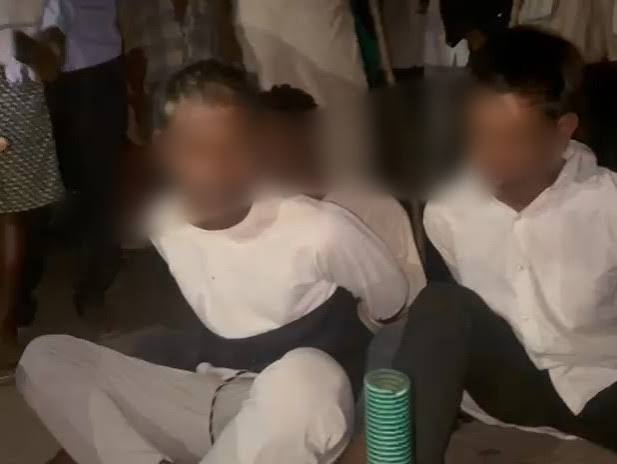
A case of alleged brutality against three Dalit minor children has come to light in Singrauli. The family alleges that the children were forcibly abducted from their homes, beaten, subjected to casteist slurs, and half their heads were shaved. The children are so terrified after the incident that they have stopped attending school. After receiving the complaint, the Superintendent of Police has ordered an investigation… Brutality against Dalit minors in Singrauli: Allegations of heads being shaved on suspicion of theft. Singaroli: A case of alleged assault and inhumane treatment of three Dalit minor children has come to light in Baghadih village, under the Bargawan police station area of Singarauli district, Madhya Pradesh. The victim’s family has alleged that the children were forcibly abducted from their homes, beaten, abused, and half their heads were shaved. The family has demanded strict action and an investigation to ensure the safety of the children. According to family members Urmila Saket, Jagdish Saket, Harishchandra Saket, and Nandlal Saket, the incident occurred on October 1. They allege that Govind Singh, Balram Singh, Indrabhan Singh, and Harinarayan Bais forcibly took their children, Lavkush, Karan, and Ramlal, from their home. They were then allegedly beaten and half of their heads were shaved. These allegations were confirmed only after a police investigation. Children Scared After the Incident, Stopped Going to School The family says the three children are terrified after the alleged incident. They say the incident has had a profound impact on them and they are not attending school out of fear. The family also alleges that they have been receiving death threats since the incident. The court has also accused Govind Singh of being involved in the alleged illegal sand mining. However, this claim has not been independently confirmed. The family says they want an impartial investigation into the entire matter so that the children can get justice and are free from any danger. Alleging chase from the police station, family reaches SP’s office The victim’s family alleged that they had gone to the Bargawan police station with a complaint, but instead of being heard, they were rebuked and chased away. Subsequently, the family reached the Singrauli SP’s office and the Ajak police station, demanding action in the matter. The family requested an investigation into the alleged assault, caste-related abuses, head shaving, and threats, and ensuring the children’s safety. What did the SP say? According to Singrauli SP Shiyaz KM, preliminary information revealed that the children were accused of theft and the victim reported them to the police. The SP stated that a compromise was reached since the children were minors at the time. According to the SP, after receiving the family’s complaint, the Bargawan police station in-charge has been instructed to investigate the matter. He clarified that no one has the right to take the law into their own hands. After investigating the allegations, including assault and head shaving, legal action will be taken based on the facts. Edited by: Chaitanya Soni•Reported by: H Singh About the Author Chaitanya Das Soni is a Consultant Writer at Navbharat Times Online. He works on the Madhya Pradesh-Chhattisgarh desk. He has 23 years of experience working in news agencies, newspapers, electronic media, and magazines. He has worked in the field and on the desk as a contract reporter, senior reporter, and sub-editor. Courtesy: Hindi News