
Why Dalits, youth matter for Congress in Uttarakhand

To kickstart its campaign, the Congress is planning a mass street campaign in Haldwani against a purification ritual performed by a group of people whom the party has accused of having links with the BJP In upper-caste-dominated Uttarakhand, where they constitute more than 50 per cent of the electorate and have a tilt towards the BJP, the Congress is trying to carve out its own support base that can help its ship sail through the magic number of 35 out of the state’s 70 Assembly seats in the elections next year. “Congress has sensed a lot of resentment among youth about paper leaks and unemployment. These two issues will have to be picked up by the party at the grassroots. I think the party has believed in it more since the Chhatron Ki Goonj event, where many young men and women, as well as students, took part and showed support to the Congress,” a party spokesperson said. Moreover, more than 30 per cent of the state’s population is between 18 and 40 and is widely impacted by unemployment, paper leaks and an unprogressive education system. The Congress wants to focus on this group and make it a new voting bloc for the upcoming Assembly elections in 2027. Besides that, the party is also looking to bring the Dalit population into its fold by taking up social justice issues. This bloc is 18 per cent strong in the state. Despite there being only 13 reserved seats, the state has more than 20 such seats with a sizeable Dalit population of more than 20 per cent, and a strong performance among them can help Congress advance in the electoral space of the state. The safest bet for the party is the Muslim bloc, which is around 14 per cent. Congress is certain that the minority community, as strategic voters, will vote en masse for the party and therefore could tone down its outreach to Muslims so that the BJP does not polarise the elections, which has the potential to make Hindu voters sway away from the Congress, by labelling the grand old party a Muslim-based party. With these combinations, it can get a head start in the two districts of Haridwar and Udham Singh Nagar, which seem to be the most favourable regions for the party. The two districts hold 20 Assembly seats, with nine in Udham Singh Nagar and 11 in Haridwar. Muslims and Dalits in the two districts will hold the key this time. This is also because there are fewer chances of division in Dalit votes after the depletion of the Mayawati-led BSP, which has seen an electoral decline in almost all the states where it has been contesting. With around 13 lakh voters, about 2.5 lakh are Dalits and 4 lakh are Muslims. In Udham Singh Nagar, however, it is the Sikh vote that matters. According to political observers, Sikhs are also showing a greater tilt towards the Congress. Of the 11 lakh voters in the district, between 2 and 2.5 lakh voters are Muslims, about 2 lakh voters are Dalits, and about 1.8 lakh are Sikhs. An equation, if the Congress plays it well, can help the party build its long-time electoral base. To kickstart its campaign, the party is planning a mass street campaign in Haldwani against a purification ritual performed by a group of people whom the Congress has accused of having links with the BJP. “The party has weak grassroots in Uttarakhand, and there hasn’t been much improvement in the past few months either. Now, if there are early ground actions, it might add some fervour among the people, and some people can join the party and consolidate the hands of Congress,” a political analyst said. “Not only is a narrative important, as it doesn’t reach enough corners due to a lack of cadre in many places, but a wave is also important this time to win the elections.” Badar Bashir Courtesy : The Week Note: This news is originally published on https:/theweek.com/bha and is used purely for non-profit/non-commercial purposes, especially human rights
Opinion: Has Rahul Gandhi given up his fascination with upper castes and Sanatanis? First, he is surrounded by the Manusmriti, and now by the oppression of Dalit students.

Rahul Gandhi’s Politics: Two recent statements by Rahul Gandhi are generating considerable discussion. He made a statement in Pune regarding the Manusmriti, written nearly 2,000 years ago, which has angered the Sanatani community. Similarly, three days ago, he raised the issue of Dalits. He stated that Dalit students are discriminated against in schools. Regarding discrimination against Dalits, he also stated that tea shops have separate bowls for Dalits. People are ridiculing him for this statement. Rahul Gandhi often makes statements that provoke ridicule. His comments are often in the context of criticizing Narendra Modi, the BJP, and the Rashtriya Swayamsevak Sangh. Criticism of the BJP and the RSS is part of the Congress party’s core agenda. However, his statements often become a laughingstock. Personal criticism of Prime Minister Modi is his hobby. In 2018, he taunted Modi with the phrase “chowkidar chor” (watchman thief). The result was evident in 2019. Before the 2025 Bihar Assembly elections, he called the BJP “vote chor.” The consequences were that Congress was reduced to six seats, while its allies were reduced to a combined 29. Two of his recent statements are widely discussed. Recently, he made a statement in Pune regarding the Manusmriti, written nearly 2,000 years ago, which has angered the Sanatani community. Similarly, three days ago, he raised the issue of Dalits. He said that Dalit students are discriminated against in schools. In a continuation of his discrimination against Dalits, he also said that there are separate containers for Dalits at tea shops. People are ridiculing him for this statement. He was once ridiculed for talking about making gold from potatoes. In 2017, an edited video of Rahul went viral on social media. There was a line from Rahul’s speech: “I will install a machine that will allow potatoes to enter from one side and gold to come out from the other.” This line was widely ridiculed by trolls. However, he had intended this as a taunt against Narendra Modi. Initially, he said, “I will install a machine that will allow potatoes to enter from one side and gold to come out from the other. Put potatoes in from one side and take out gold from the other. You will make so much money that you won’t know what to do with it.” At the end of this statement, he clarified, “These are not my words, these are Narendra Modi’s.” However, BJP’s social media handlers made Rahul a laughingstock by making this line viral. The news spread across the country, and people began mocking Rahul Gandhi. Now, allegations of discrimination against Dalits in schools have been leveled. Just four days ago (August 29, 2026), during a press conference in Pune, Rahul Gandhi raised the issue of discrimination against Dalits. After the Congress National President’s program in Haldwani, Uttarakhand, he was scheduled to speak to the media about the alleged purification. He mentioned it, but in the process of elaborating, he deviated from the main issue. He stated that even today, Dalit students are discriminated against in schools. Dalit children are made to do toilet and cleaning work in schools. He also stated that Dalits face discrimination even at tea shops. They are provided with separate cups. They are served tea in disposable glasses, while upper castes are served washable glasses made of porcelain or glass. Rahul’s assessment has led to widespread ridicule. The truth is, such a system is not prevalent at any tea shop. Rahul’s statement on Manusmriti has sparked controversy. Rahul’s statement on Manusmriti is also being called absurd. First, Manusmriti was composed approximately 1800-2000 years ago. Under the then-current social system, Manusmriti had the concept of Ashrama Chatushtaya and Varna Chatushtaya. Women were solely responsible for household chores. Today’s situation is completely different. People of all castes and religions are now engaged in various types of work. Women are even working alongside men. Now, no work is done according to Manusmriti. Anti-BJP leaders still hope for success by talking about the insults to the Sanatan system of Manusmriti. They perhaps believe that speaking against Sanatanism can mobilize minority and Dalit-OBC votes. They forget that this very thinking unites Sanatanists. It is precisely because of Sanatanism that the BJP’s support has grown across all castes and classes, and its ground has steadily strengthened. Unconcerned about the displeasure of upper castes and Sanatanis Manusmriti may be irrelevant today, but it holds strong sentiments for upper castes and Sanatanis. Brahmins within the upper caste community are deeply upset with Rahul Gandhi over this. The Bharatiya Janata Party has also begun raising the issue. Uttar Pradesh Chief Minister Yogi Adityanath, Union Minister Kiren Rijiju, Assam CM Himanta Biswa Sarma, and Sudhanshu Trivedi have strongly criticized Rahul Gandhi for his statement. The BJP says that Rahul Gandhi only targets Hinduism and its scriptures. He remains silent on patriarchal practices of other religions, such as the hijab, triple talaq, and Sharia. BJP spokesperson Sudhanshu Trivedi alleges that Rahul Gandhi is making such statements as part of a foreign and Marxist agenda to divide society and defame Indian cultural heritage. His statement is evidence of the Congress party’s anti-Sanatan and anti-Hindu mentality. Avimukteshwarananda’s Warning to Rahul Gandhi Shankaracharya Avimukteshwarananda’s rift with Prime Minister Modi and UP CM Yogi is well known. He has frequently clashed with both. Sometimes he taunts Modi for promoting yoga, and sometimes he opposes the Vishwanath Corridor in Kashi. He has also criticized Modi and Yogi over the consecration of the unfinished temple in Ayodhya. His opposition to political interference in religious matters has certainly not been good for the BJP. His closeness to Akhilesh Yadav, the leader of the Samajwadi Party, a strong opponent of the BJP in UP, is also considered a threat to the BJP. Despite this, he has become a harsh critic of Rahul Gandhi’s statement on the Manusmriti. His criticism has reached the point where he has even warned Rahul Gandhi to publicly apologize for misinterpreting a verse from the Manusmriti. Rahul Gandhi has given up
BY Vijayendra tells CM to work for Dalits, BCs or face polls

Speaking to the media near Maski, he said the Congress, which came to power in the name of Dalits, has been meting injustice to them for the last three and a half years. RAICHUR: The BJP padayatra, led by its state president BY Vijayendra, resumed on Day 2 from Santhekellur village in Maski taluk, Raichur, on Wednesday morning with party leaders offering prayers at the Krishi Rishi Ghanamutt Shivayogi Mutt. Women tied rakhi on Vijayendra’s hand, applied tilak on his forehead and wished him well. BJP workers welcomed the padayatra in the villages of Bedara Karlakunti and Ankushadoddi on the way. Arrangements were made for food and rest near Mudabala Cross for thousands of people who participated in the padayatra. The padayatra proceeded towards Maski town after 4 pm. Accusing the Congress government of corruption and anti-people policies, Vijayendra said, “If this government cannot provide justice to Dalits and backward classes, then Chief Minister D K Shivakumar should dissolve the Assembly and face elections. Then the people will decide.” Speaking to the media near Maski, he said the Congress, which came to power in the name of Dalits, has been meting injustice to them for the last three and a half years. “They committed a Rs.187 crore scam in the Maharshi Valmiki Corporation. Reservation was not implemented properly. They did not provide jobs to the youth on the pretext of reservation. They completely neglected not only Dalits but all communities,” he said. “We have already conducted a drought observation in the state on behalf of the BJP. The CM and DCM have now started drought observation. The BJP’s padayatra is the reason they are doing this,” he said. BASAVARAJ BHOGAVATI Courtesy : TNIE Note: This news is originally published on https:/thenewindianexpress.com/bha and is used purely for non-profit/non-commercial purposes, especially human rights
Madras HC orders probe into allegations of Dalit prisoners being forced to clean toilets
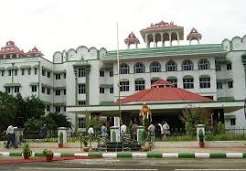
A division bench of Justices CV Karthikeyan and R Sakthivel passed the directions while hearing a Public Interest Litigation (PIL) filed by Madurai-based advocate KR Raja. The Madurai bench of the Madras High Court on Monday, August 31, directed authorities to investigate allegations of prisoners from marginalised communities being forced to clean toilets and carry out manual scavenging work in prisons in Madurai, Trichy and Tirunelveli districts. A division bench of Justices CV Karthikeyan and R Sakthivel passed the directions while hearing a Public Interest Litigation (PIL) filed by Madurai-based advocate KR Raja. Raja alleged that prisoners belonging to marginalised communities were being assigned sanitation work, including toilet cleaning and manual scavenging, at the Madurai Central Prison. He alleged that similar practices existed at the Palayamkottai Central Prison in Tirunelveli district and the Trichy Central Prison. According to the petitioner, certain blocks and barracks in the Madurai and Palayamkottai prisons had allegedly been demarcated for prisoners from marginalised communities. The prisoners in those blocks were allegedly made to clean around 150 toilets, both inside cells and outside barracks. The petitioner claimed that only two sanitary workers had been appointed for the entire prison despite overcrowding. Raja also alleged that similar practices were being followed at the Special Prison for Women in Trichy. According to him, some women prisoners had been permitted to work at the Freedom Petrol Bunk operated by the prison authorities as part of rehabilitation measures. However, the petitioner claimed that instead of working at the petrol bunk, they were made to clean toilets and other sanitary areas on the premises. The petitioner also disputed the prison authorities’ claim that municipal services alone were engaged to clean toilets. Raja, the co-founder of Global Network for Equality, India, an organisation that supports the education of children of inmates and crime victims, said he had made representations to prison authorities in 2025 seeking an end to caste discrimination and legal action against officials responsible for such practices. He also sought preservation of CCTV footage from January 16, claiming that it would help establish whether prisoners had been made to clean toilets and drainage systems. Referring to the Supreme Court’s 2024 judgement in Sukanya Shantha vs Union of India, which dealt with caste discrimination in prisons, and the prohibition of Employment as Manual Scavengers and Their Rehabilitation Act, 2013, the petitioner argued that such practices were discriminatory and violated the dignity of prisoners. The petitioner had alleged that conditions in several district prisons in southern Tamil Nadu were even worse and sought directions to prevent caste discrimination, manual scavenging and the assignment of toilet-cleaning work to prisoners from marginalised communities. However, the prison authorities denied that such practices existed. After hearing the petition, the High Court directed the Principal District Judges and the District Legal Services Authority (DLSA) secretaries of Madurai, Trichy and Tirunelveli to inspect the respective prisons and verify the allegations. The DSLAs were also directed to inquire the prisoners, examine CCTV footage and submit status reports to the court. The superintendents of the respective prisons were separately directed to file reports on the allegations. The matter has been posted for further hearing on October 4. Courtesy : TNM Note: This news is originally published on https:/thenewsminute.com/bha and is used purely for non-profit/non-commercial purposes, especially human rights
Editorial: Our casual practice of caste

India bristles when international agencies point fingers at varna-based discrimination but takes no exception to the casual practice of prejudice in real and symbolic forms in everyday politics. It is of course a coincidence that India’s two biggest political parties are engaged in a row over symbolic cleansing (shuddhi) rituals just at a time when a United Nations committee has yet again expressed concern over the country’s treatment of Dalits. India bristles when international agencies point fingers at varna-based discrimination but takes no exception to the casual practice of prejudice in real and symbolic forms in everyday politics. On August 10, two days after Congress president Mallikarjun Kharge spoke at a Ramlila ground in Haldwani, Uttarakhand, a Sangh Parivar-affiliated group carried out a purification ritual at the venue. They sprinkled ‘holy water’ around the spot where the Dalit leader had delivered his speech and performed a ‘shuddhikaran yagna’ with a ritual fire. Kharge later said in Parliament that he felt subjected to untouchability in a symbolic form. The BJP has made light of the matter, stating that it was a routine cleanup after a political event with no purport to ritual untouchability. Indeed, political parties in India perform purification rituals as a matter of course. It is common to see supporters of a political party wash the statue of a hero with water or milk after it was ‘desecrated’ by opponents. This casual practice of symbols and customs that are redolent of ritual untouchability gives the lie to the Indian state’s protestations that it has low tolerance for varna prejudice. The fact that such practices are considered a legitimate tool of politics, and are employed by the whole spectrum of parties, underscores the fact that prejudice remains lodged in our political culture and expresses itself in codified forms, which the subject of the insult perceives but its perpetrator can always deny by feigning injured innocence or righteous indignation. A fortnight after the insult to Kharge, the UN Committee on the Elimination of Racial Discrimination (CERD) issued its latest findings on India pointing out poor treatment of “ethnic and ethno-religious groups, indigenous and tribal peoples, including Scheduled Tribes, Scheduled Castes, particularly Dalits, and non-citizens”, citing racially motivated violence, excessive use of force, extrajudicial killings, detention without due process, torture, ill-treatment and sexual violence against them. India has a history with UNCERD. In 1996, the UN committee formally ruled that prejudice against Dalits satisfies the definition of descent-based discrimination. That observation strengthened efforts by international human rights groups and Dalit activists to equate varna prejudice with racial discrimination. In subsequent reviews in 2002 and 2007, CERD noted the abiding practice of ritual prejudice in India and criticised the state for trying to obfuscate data on abuse against Dalits. Typically, the Indian government’s reaction to CERD reports has tended to be vituperative. This time too, the Ministry of External Affairs spokesperson Randhir Jaiswal dismissed the findings “with the contempt they deserve”. Responses like that, and the argument that caste discrimination is an internal social issue that is adequately addressed by India’s own constitutional protections, have done nothing to ward off international scrutiny. Although India lobbied to keep caste out of the text of the 2001 UN World Conference Against Racism, the issue now figures prominently in the international agenda against discrimination. It has even made it into legislation abroad. Local laws in Seattle and California and universities like Harvard explicitly outlaw caste discrimination. So, treating caste scrutiny as bad press does not help India’s case. The only solution is to make all those constitutional protections do some real work. Courtesy : DT Next Note: This news is originally published on https:/dtnext.com/bha and is used purely for non-profit/non-commercial purposes, especially human rights
Congress and the Politics of Purification: Rahul Gandhi Is Making a Long-Term Electoral Move Against Mallikarjun Kharge’s ‘Dalit’ Pawn

The Congress party is working tirelessly to capitalize on the Haldwani purification controversy in Uttarakhand. The Congress party sees the primary focus of this issue as the Chief Minister’s seat in Punjab, a position it could hold until 2029. New Delhi: The political underpinnings of the Haldwani incident in Uttarakhand, after a long hibernation, are becoming clear. Congress President Mallikarjun Kharge dropped the alleged ‘purification’ bombshell in Parliament on the final day of the monsoon session. However, Rahul Gandhi hesitated in responding. Now, it appears the party has a strategy in place. On the last day of the monsoon session, Leader of the Opposition in the Rajya Sabha, Mallikarjun Kharge, alleged that after his rally in Haldwani, the venue was allegedly “purified” because he is a Dalit. A week later, Rahul Gandhi raised the issue in a press conference, for which elaborate preparations had been made. Now, with an FIR filed against Rahul Gandhi in this case, the Congress has made it a major part of its political campaign. Congress’s Last Hope in the Punjab Elections If we try to understand the politics behind this late raising of the issue by the Congress, it seems that it sees it as a straw to hold on to in the Punjab Assembly elections. This is because the Dalit or Scheduled Caste population in Punjab is approximately 32 percent. Speculation of a BJP-Akali alliance increases tension Some political pundits, long supporters of the Congress, saw the party as having considerable potential against the Aam Aadmi Party in Punjab. Because, apart from urban areas, the BJP has not been able to achieve much in rural areas. However, in the last few weeks, speculation about an electoral rift between the top leadership of the BJP and the Akali Dal has suddenly intensified. These speculations are pulling the rug from under the feet of Congress strategists. The Dalit CM card failed in 2022. In the 2022 Punjab Assembly elections, a large portion of the Dalit vote bank went to the Aam Aadmi Party. Its unexpected victory speaks for itself. A few months before the elections, after turning its back on Captain Amarinder Singh, the Congress tried Charanjit Singh Channi, but he proved to be a counterproductive for the party. It could not attract enough Dalit votes to Congress to put a brake on AAP. Hoping to capitalize on the ‘Constitution in Danger’ idea Charanjit Singh Channi is already said to be disgruntled in the internal politics of the state Congress. In such a situation, Congress believes that slogans like “Dalits are in danger” can keep its hopes of returning to power alive, even despite a possible BJP-Akali Dal alliance. In the 2024 Lok Sabha elections, Congress and its allies have already tasted the “Constitution is in danger” election slogan. Congress confident of repeating 2024 in UP The “Constitution is in danger” narrative worked most favorably for the India Bloc in Uttar Pradesh. Even Samajwadi Party supporters were surprised to see a large number of Jatavs abandoning the elephant and opting for the paw and cycle. Congress sees the same hope in the “Dalits are in danger” slogan. Assembly elections are also being held in UP along with Punjab, where approximately 20 percent of the population is Dalit. Challenge from BSP, ASP, and BJP However, with the BSP and Chandrashekhar Azad’s Azad Samaj Party (Kanshi Ram), it will not be easy for the Congress and SP to break into the Dalit vote bank in UP in the assembly elections. Furthermore, the BJP has also maintained a strong hold among this community through its governments’ welfare schemes, especially among non-Jatav Dalits. However, the Congress is hopeful that the “Dalits are in danger” slogan, like the “Constitution in danger,” could also work in UP this time. Congress hopes for a slogan for 2029 If leaders like Rahul Gandhi are truly thinking ahead, they may also consider this narrative for the 2029 Lok Sabha elections. The Scheduled Caste population across the country is approximately 16 percent, and the Congress believes that if this strategy works, it could prevent the BJP from achieving an absolute majority in 2024, and this time it could even come close to power. Authored by: Anjan Kumar About the Author Anjan Kumar is an Assistant Editor at Navbharat Times Online and has been a journalist for over 24 years. He joined Navbharat Times Online in April 2025 and has covered politics in digital media for the past 10 years. Courtesy: Hindi News
Dalit brothers allege custodial torture, move SC commission
Patiala: Two Dalit brothers from Kakrala village in Nabha, Patiala district, have complained to the National Commission for Scheduled Castes, alleging that personnel at Chhintanwala police post tortured them in custody over a suspected theft. The daily-wage masons alleged that they were stripped, severely beaten, verbally abused and given electric shocks before being released. They sought an independent inquiry, legal protection and action against the personnel involved. The brothers said they had been working at the house of fellow villager Baghel Singh, where a theft was reported on the night of Aug 24. They alleged they were handed over to the police without any preliminary investigation or credible evidence. In their Sept 1 petition, they urged the commission to take suo motu cognisance of the alleged human rights violation and caste-targeted abuse. They sought an investigation by a senior independent officer or agency rather than the local police. They also sought preservation of CCTV footage, DVRs, daily diary registers and custody records, an independent medico-legal examination, removal of the accused personnel from active duty and security for their family. Punjab BJP Scheduled Caste Morcha vice-president Paramjit Singh Kainth, who visited the family with community leaders, demanded a transparent, time-bound investigation. He warned that the organisation would launch a statewide agitation if officers were shielded. Chhintanwala police post in charge, sub-inspector Chamkaur Singh, rejected the torture allegations. He said the brothers had been questioned only four days earlier as part of the investigation and accused them of using pressure tactics. Chamkaur Singh claimed CCTV footage showed that a son of one of the suspects had left a small gate open, through which burglars later entered the house on the night of Aug 24 and stole gold ornaments worth Rs 10 lakh. He said a case would be registered only after the investigation and collection of evidence, including call details. Courtesy : TOI Note: This news is originally published on https:/timesofindia.com/bha and is used purely for non-profit/non-commercial purposes, especially human rights
Karnataka: BJP’s Vijayendra, Ashoka accuse Congress govt of failing farmers, Dalits

Raichur (Karnataka), State BJP President B.Y. Vijayendra and Leader of Opposition in the Assembly R. Ashoka on Tuesday launched a scathing attack on the Congress government in Karnataka, accusing it of corruption, failing farmers and Dalits, and mishandling recruitment and welfare schemes. Speaking at the launch of the BJP’s Ballari Chalo padayatra in Lingasugur, Vijayendra alleged that the government led by Chief Minister D.K. Shivakumar was a “government of the corrupt, by the corrupt and for the corrupt” and asserted that the BJP’s agitation would continue until the government was removed from power. Vijayendra said the BJP would not withdraw its agitation merely because former Minister B. Nagendra had resigned in connection with the alleged Rs 187 crore Valmiki Corporation scam. “We will continue our fight until the entire money is returned to the Valmiki Corporation, SCP/TSP funds are restored for the welfare of Dalits, justice is delivered to victims of atrocities, and justice is ensured to farmers,” he said. Questioning Shivakumar’s remarks on why the BJP was continuing the padayatra after Nagendra’s resignation, Vijayendra alleged that the Congress government was anti-poor, anti-Dalit, anti-youth and anti-women. He also accused the government of using “drama” and shedding “crocodile tears” over Dalit welfare while allegedly diverting funds meant for their development. Vijayendra said Nagendra’s resignation was the “first victory” of the BJP’s agitation and questioned why he was re-inducted into the Cabinet despite having earlier resigned following allegations linked to the Valmiki Corporation. Ashoka also said the BJP’s struggle would not end with Nagendra’s resignation and claimed that more ministers would have to quit because of the party’s protests. “BJP’s struggle will not stop merely because B. Nagendra has resigned. We are fighting on issues including drought, the KPSC scam and Bidadi Township. Because of our agitation, more ministers will have to resign,” Ashoka said. He alleged that drought conditions prevailed in 175 taluks but the government had declared drought in only 101 taluks. He demanded that all 175 taluks be declared drought-affected and sought Rs 50,000 per acre as relief for farmers. Ashoka alleged that farmers growing sunflower, jowar and tur had suffered heavy losses and claimed that the government had not provided relief despite the worsening situation. He also alleged that villagers were facing difficulties in accessing drinking water. Turning to the Valmiki Corporation case, Ashoka alleged that Rs 187 crore meant for Dalits had been diverted and claimed that the money was used during the Telangana and Ballari elections. He said Nagendra was only a “scapegoat” and demanded accountability from the wider Congress leadership. On the alleged KPSC recruitment scam, Ashoka claimed that posts were being “sold” for large sums and alleged that rates had been fixed for various government positions. He said the BJP would raise the issue in the next Assembly session and demanded that everyone involved in the alleged irregularities be arrested and punished. Ashoka also alleged that Minister Priyank Kharge’s name had surfaced in connection with exam irregularities and claimed that another minister’s resignation was imminent. He said the BJP would continue its agitation over pending pensions, ration card cancellations, alleged garbage tender irregularities, the tunnel road project and Bidadi Township, among other issues. Ashoka further demanded the resignation of Minister Basavaraj Rayareddy over his recent remarks praising Islam. He urged Shivakumar to remove Rayareddy from the Cabinet, alleging that the minister had insulted Hinduism. The Ballari Chalo padayatra was attended by several BJP leaders, including Union Minister Pralhad Joshi, former Chief Ministers B.S. Yediyurappa, Jagadish Shettar and Basavaraj Bommai, former minister B. Sriramulu, BJP leaders and legislators, and a large number of party workers. Courtesy : Social News XYZ Note: This news is originally published on https:/socialnewsxyz.com/bha and is used purely for non-profit/non-commercial purposes, especially human rights
Kerala minister’s intervention sought over alleged denial of PhD to dalit researcher

Thiruvananthapuram: A group of students and research scholars from the University of Kerala’s (KU) department of Sanskrit studies has submitted a petition to higher education minister Roji M John, seeking urgent intervention in the case of dalit researcher Vipin Vijayan, who was allegedly denied a PhD despite completing all prescribed academic stages. According to the petition, Vijayan completed the research admission process, progress assessments, synopsis presentation, periodic reviews and thesis submission. His thesis was also evaluated by external examiners. However, objections that could delay the award of the degree were raised only during the final open defence. The petitioners said claims that Vijayan lacked adequate knowledge of Sanskrit were raised at a late stage, despite several earlier opportunities to assess his academic standards and language proficiency. They alleged that the failure to raise such objections during the initial stages raised questions about the neutrality and transparency of the process. They also pointed out that the same teacher who had guided Vijayan’s MPhil research and certified its successful completion had allegedly claimed that he lacked proficiency in Sanskrit. The petitioners said the contradiction warranted a detailed inquiry. The petition stated that the delay had affected Vijayan’s mental well-being and career prospects, leaving him unable to apply for other jobs. Citing Article 46 of the Constitution, the petitioners urged govt to examine whether caste-based prejudice or personal bias had influenced the proceedings. They clarified that they were not seeking any special concession, but a fair process free from discrimination. They sought an independent inquiry into the entire PhD process and urged govt to direct the university to award the degree if no procedural impediment was found. If corrections were required, these should be communicated in writing and Vijayan should be given a reasonable opportunity to address them, they said. They also called for urgent intervention in accordance with UGC norms. Courtesy : TOI Note: This news is originally published on https:/timesofindia.com/bha and is used purely for non-profit/non-commercial purposes, especially human rights
Dalit woman alleges caste-related abuse and death threats for demanding her son’s wages
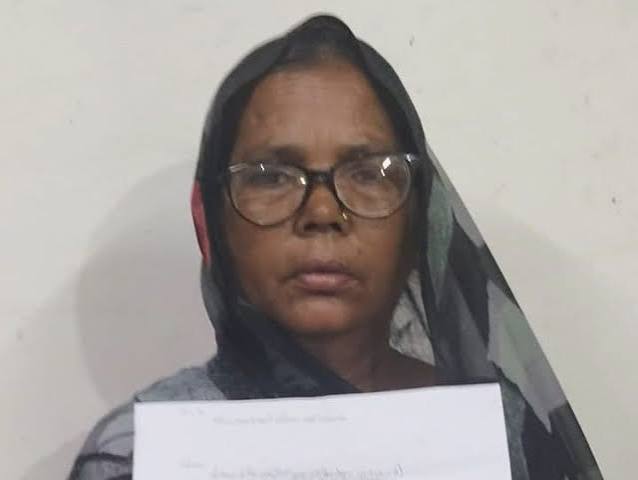
A Dalit woman in the village of Poore Khirodhar, under the Patti police station area, has alleged that she received caste-related abuse and death threats for demanding her son’s wages. The woman has filed a complaint with the Patti police. According to the complainant, Murti Devi, her son, Shivam, alias Chikki, worked as a daily wage laborer for a man in the village. When Shivam went to demand his wages, he was refused payment. It is alleged that during this time, Shivam was subjected to caste-related abuse, abuse, and threats of assault and death. Murti Devi has demanded that the police take cognizance of the matter, register a case against the accused, and take necessary legal action. She has also requested that the police ensure the safety of her and her son’s lives and property. In this regard, Station House Officer (SI) Vijay Yadav stated that he has received the application. The matter is being investigated, and further action will be taken based on the investigation. Amar Jeet Sharma | Patti, Pratapgarh Courtesy: Hindi News