
‘If this can happen to Cong president, imagine what must be happening to Dalits’: Ashok Gehlot on Haldwani row
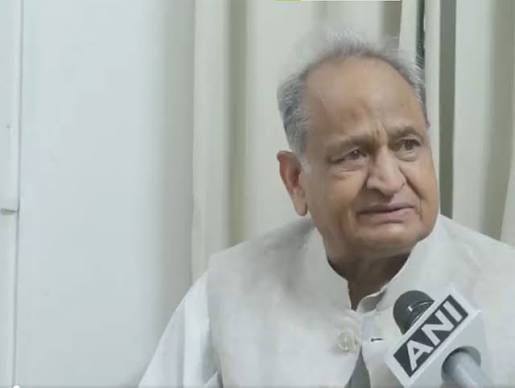
Gehlot said continued injustice and oppression, including the Kharge episode, had hurt Dalits, backward classes, tribals and the poor. Senior Congress leader and former Rajasthan Chief Minister Ashok Gehlot on Saturday described the alleged ‘purification’ ritual conducted after Congress president Mallikarjun Kharge’s rally in Haldwani as a serious incident, saying it had caused pain to the Dalit community. “This is a serious incident. If this can happen to the Congress president, just imagine what must be happening to the Dalit community across the entire nation. Under their rule, this negligence has only increased,” Gehlot told ANI. He said incidents of injustice, oppression and persecution had continued, adding that the episode involving Kharge had hurt Dalits, backward classes, tribals and the poor. “Such incidents of injustice, oppression and persecution have been ongoing, but the incident that happened with Mallikarjun Kharge has caused immense pain to the entire Dalit community of the country, the backward classes, tribals, or any poor person—anyone who has sympathy for Dalits,” he said. Gehlot also referred to Leader of the House JP Nadda’s assurance in the Rajya Sabha on the matter, saying people had expected action following his statement. Nadda had said in the Rajya Sabha that the matter was being taken seriously and that action would be taken. Gehlot said the assurance from the Leader of the House had raised expectations, but no action had followed. “This pain is felt by all of us, by all citizens of the country; there is intense outrage among all people, which the BJP government or the NDA government is failing to understand, but when the time comes, the people will make them understand,” he said. Meanwhile, the Uttarakhand Pradesh Congress Committee will hold a demonstration and march from Dehradun’s Parade Ground to the Chief Minister’s residence on September 7 over the Haldwani ‘purification’ row. The controversy began after a Congress rally at Ramlila Ground in Haldwani on August 8, ahead of the 2027 Uttarakhand Assembly elections. Members of a right-wing group later conducted a shuddhikaran ritual at the venue, drawing criticism from Congress leaders. Gehlot also commented on the controversy surrounding a book on Sonia Gandhi, alleging that publisher Penguin was “hesitating” to publish it due to pressure. “The publisher Penguin is hesitating, making excuses. We had already said that there might be pressure from the government on them because Penguin’s parent company is ready to publish the book,” he said. Gehlot said several major publishers had since approached the authors to publish the book and expressed confidence that it would be launched on November 10. The memoir chronicles Sonia Gandhi’s journey from her childhood in post-war Italy and her relationship with Rajiv Gandhi to the personal losses that shaped her life and relationship with India. In the memoir, the 79-year-old Congress veteran, who was the party’s longest-serving president, revisits her childhood in Italy, her relationship with former Prime Minister Rajiv Gandhi during their time at Cambridge, and the assassinations of her mother-in-law, Indira Gandhi, and her husband, Rajiv Gandhi. Courtesy : TNIE Note: This news is originally published on https:/thenewindianexpress.com/bha and is used purely for non-profit/non-commercial purposes, especially human rights
Court Allows Electronic Evidence in Dalit Youth Murder Case

. The court dismissed the counter-affidavits and technical objections filed by the MLC’s defence counsel, who opposed the petition Kakinada:Principal District and Sessions Judge (SC, ST Special Court), Rajamahendravaram, on Thursday allowed the petition of prosecution seeking permission to record electronic evidence, including CCTV footage, while questioning YSRC MLC Anantha Satya Udaya Bhaskar Rao (Anantha Babu) and his wife Roja in the murder case of Dalit youth Veedhi Subrahmanyam. The court dismissed the counter-affidavits and technical objections filed by the MLC’s defence counsel, who opposed the petition. Special public prosecutor Muppalla Subba Rao appeared for the prosecution. Principal District Judge Junaid Ahmed Maulana issued the orders after hearing the arguments of both sides The prosecution sought to correct the number of Section 65-B certificates taken on record. The prosecution informed the court that the number had been erroneously recorded as “32”, whereas the actual number submitted is “54”. Advocates for the accused opposed the plea and sought dismissal of the petition at the preliminary stage itself, contending that it is not legally maintainable. After hearing both sides, the judge allowed the corrections sought by the prosecution. Courtesy : Deccan Chronicle Note: This news is originally published on https:/deccanchronicle.com/bha and is used purely for non-profit/non-commercial purposes, especially human rights
‘Preventing Dalits From Temple Entry Amounts to Untouchability’: Madras HC
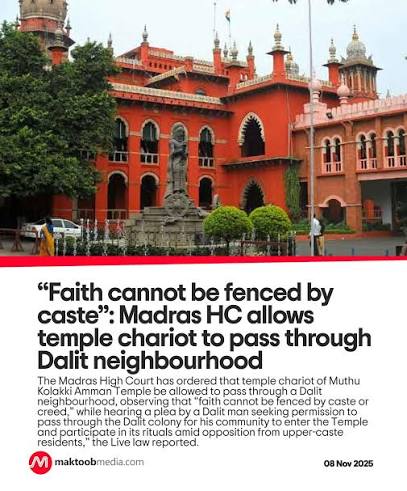
The Madras High Court has held that preventing a person belonging to a Scheduled Caste from entering a temple or participating in a temple festival on caste grounds amounts to the practice of untouchability and violates the fundamental right guaranteed under Article 17 of the Constitution. Justice D Bharatha Chakravarthy made the observation while hearing a petition filed by V Sundaram in connection with the Arulmigu Muthu Mariamman Temple chariot festival at Ramanayakkanpalayam in Salem district. ‘Nobody Can Be Prevented on Caste Grounds’ The petitioner had sought equal participation for members of the Milagu Kattan Adidravidar Community in the temple festival and directions to prevent certain individuals from excluding them. The Tamil Nadu government told the court that a peace committee meeting had been held and that everyone had been allowed to participate in the festival irrespective of caste or creed. It also said that disputes over “Karaikarargal rights” could be taken before a civil court. Sundaram’s counsel, however, urged the court to ensure that members of the community would not face similar exclusion during future festivals. The High Court referred to the Tamil Nadu Temple Entry Authorisation Act, 1947, and said that a person cannot be stopped from entering a temple because of caste. “This Court has also repeatedly passed orders that on the basis of a non existing thing called ‘caste’ nobody can be prevented entry or participation in the temple festival,” the court observed. The court further said that preventing a Scheduled Caste person from entering a temple on casteist grounds would amount to the practice of untouchability. “If any person prevents another person from entering the temple on casteist grounds, particularly if a person belonging to a Scheduled Caste is prevented from entering the temple, such an act would amount to the practice of untouchability and would constitute a violation of the fundamental right guaranteed under Article 17 of the Constitution of India,” Justice Chakravarthy said. The court added that those responsible for such acts could be prosecuted in accordance with law. State Assures No Discrimination The Tamil Nadu government assured the court that there would be no discrimination in participation in the temple festival in future years. The court clarified that disputes concerning the right to conduct or administer the festival could be pursued before the competent authority under the Hindu Religious and Charitable Endowments framework or before the appropriate civil court. Since the festival was already underway and people from all communities had been allowed to participate, the court closed the petition. Courtesy : TOP Note: This news is originally published on https:/theobserverpost.com/bha and is used purely for non-profit/non-commercial purposes, especially human rights
FIR prod to Nadda over ‘purification’ incident; ‘essential to teach lesson,’ says Kharge
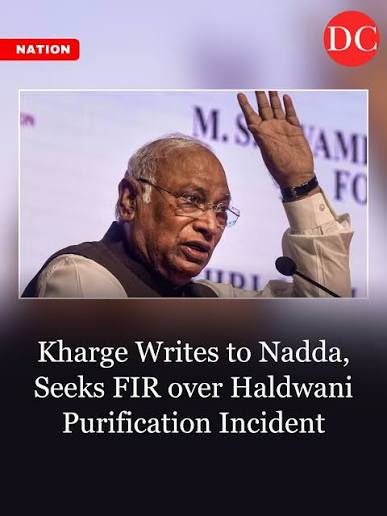
Hindutva activists had carried out the “shuddhikaran” at the venue of a Congress rally at Haldwani in Uttarakhand on August 8, Kharge, a Dalit, had told the Rajya Sabha on August 14 Rajya Sabha Opposition leader Mallikarjun Kharge has written to House leader J.P. Nadda reminding him of his assurance of investigation and action on the “purification” ritual conducted at the spot where the Congress MP had delivered a speech last month. Hindutva activists had carried out the “shuddhikaran” at the venue of a Congress rally at Haldwani in Uttarakhand on August 8, Kharge, a Dalit, had told the Rajya Sabha on August 14. “In response to my intervention, you stood up in the House and said, ‘Sir, what Honorable Kharge ji has said is indeed a very sad matter. It is not only sad for the Congress Party, but it is sad for all of us…. Whatever has happened will definitely be investigated. I want to say that the Bharatiya Janata Party never supports such activity. I condemn it, and the National President will also look into it deeply. The hurt caused to your sentiments is a matter of regret for all of us’,” Kharge wrote to Nadda on Wednesday. “But I am surprised that even after 24 days of this incident, not even a First Information Report (FIR) has been filed against the organisations and individuals involved in this heinous act in Haldwani. “The most objectionable aspect of this incident was that at the Ramlila Maidan site where I addressed the rally, purification was carried out in violation of the spirit of the Indian Constitution and human values.” Kharge, the Congress president, underlined how things had remained unchanged nearly a century after B.R. Ambedkar’s 1927 satyagraha for granting Dalits access to a water tank in Mahad in present-day Maharashtra. “Even when Babasaheb Dr. Bhimrao Ambedkarji drank the water from the tank during the Mahad agitation, people filled with casteist arrogance purified it by pouring 108 pots of cow urine and cow dung into it and chanting mantras,” he wrote. “I want to be clear that this issue transcends my personal responsibility or that of the president of the Indian National Congress, and it concerns the broader sentiments of millions of people who face this brutal reality daily. “It is essential to teach these wrongdoers a lesson. Therefore, this anger is not mine, but the expression of millions of such people; it is an issue of a mindset that directly affects a segment of society.” Kharge concluded: “Therefore, I once again request you that in the light of these facts and the assurance given in the Rajya Sabha, you should direct the Chief Minister of Uttarakhand to ensure that a First Information Report is registered against the persons and organisations involved in this incident….” His letter came days after Lok Sabha Opposition leader Rahul Gandhi vowed to get Kharge justice and demanded an FIR be registered under the SC-ST (Prevention of Atrocities) Act, 1989. Instead, an FIR has been filed against Rahul — ironically, under the SC-ST Act — on the ground that he had insulted Dalits by falsely projecting the venue clean-up as a shuddhikaran against a member of the community. Congress supporters on Tuesday burnt copies of the ancient Hindu code Manusmriti, which lays down caste norms, in front of the RSS office here. The Congress has protested in several cities and submitted complaints to multiple authorities in Uttarakhand. Senior BJP leaders, including Uttarakhand chief minister Pushkar Singh Dhami, have defended the shuddhikaran while giving it a communal angle, claiming it was a response to divisive slogans chanted at Kharge’s meeting by people from a particular community. The controversy comes at a time when the BJP is trying to persuade anti-reservation activists to shun aggressive protests against caste-based affirmative action. Courtesy : The Telegraph Note: This news is originally published on https:/thetelegraph.com/bha and is used purely for non-profit/non-commercial purposes, especially human rights
Dalit woman panchayat president alleges caste discrimination, seeks action against officials in TN
Malarvizhi further alleged that her cheque-signing authority had been taken away, and that cheques for payments relating to works she undertook were being withheld. VILLUPURAM: Kodungal village panchayat president G Malarvizhi on Monday attempted to self-immolate at Villupuram Collectorate following administration inaction on her petition alleging caste discrimination. After police prevented her from self-immolating, she was allowed to submit her petition. Her petition sought action by the Villupuram collector against the panchayat vice-president, her relative, and certain local officials over alleged caste discrimination, intimidation, interference in her official duties, and attempt to strip her of her administrative powers. Malarvizhi told TNIE, “I belong to the Scheduled Caste community. Because of that, I was denied a chair at the panchayat office and prevented from hoisting the national flag during official occasions. I was also prevented from participating in panchayat-related activities for nearly four-and-a-half years.” She alleged that panchayat vice-president Muniyammal and her brother Kathavarayan, both caste Hindus, had kept the ward members under their influence and repeatedly threatened her with a no-confidence motion. “If I attempted to take decisions independently, the ward members would support a no-confidence motion and prevent me from functioning,” she added. She had brought the issue to the notice of the previous Block Development Officer (BDO) and the present BDO. However, they advised her to adjust with Kathavarayan instead of taking action on her complaints, she alleged. Malarvizhi further alleged that her cheque-signing authority had been taken away, and that cheques for payments relating to works she undertook were being withheld. She had also approached the Superintendent of Police’s office with a complaint, a few months back. Following discussions, she claimed, the persons concerned had assured her that such incidents would not recur. However, she alleged that the BDO, Kathavarayan, panchayat clerk Ramachandran, vice-president Muniyammal, and ward member Suresh subsequently pressured her to agree to an alleged commission of more than Rs 10 lakh in connection with 100-day employment scheme works. She claimed they ridiculed her and told her she could not do anything if she refused to cooperate. Malarvizhi urged the Collector to inquire into her allegations, take action against those responsible, release the pending payments for completed works, and restore her cheque-signing authority. Krithika Srinivasan Courtesy : TNIE Note: This news is originally published on https:/thenewindianexpress.com/bha and is used purely for non-profit/non-commercial purposes, especially human rights
BJP trying to portray Rahul as anti-Dalit leader: TPCC president Jagga
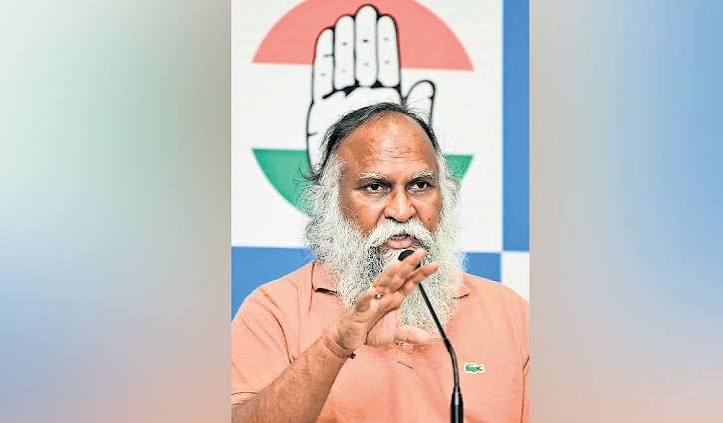
Jagga Reddy also recalled that how the BJP had appointed Bangaru Laxman as its national president but later removed him, this reflected the BJP’s approach towards Dalit leaders. HYDERABAD: Accusing the BJP of deliberately misrepresenting Rahul Gandhi’s remarks to portray him as “anti-Dalit”, Congress working president T Jayaprakash Reddy on Thursday said that saffron party leaders have no moral right to level such allegations. Addressing the media at Gandhi Bhavan here, he said: “The BJP and its affiliated organisations had recently tried to create an anti-Dalit image for Rahul Gandhi.” Referring to “some BJP-affiliated organisations performing purification rituals” after AICC president Mallikarjun Kharge’s visit to Uttarakhand, he said: “Rahul Gandhi had questioned such conduct. He advised the BJP and its affiliated organisations against indulging in such practices. But the BJP is intentionally giving a distorted interpretation of Rahul Gandhi’s comments and using them for political propaganda.” The former Sangareddy MLA, who is popularly known as Jagga Reddy, said that Rahul Gandhi was the “boss” of the Congress but neither he nor his family members have any arrogance. “In contrast, the BJP functions with arrogance, and it routinely opposes and works against the Congress and its leaders,” he added. “Whenever Rahul Gandhi walks alongside Mallikarjun Kharge, he lends support to him,” Jagga Reddy said, citing this as an example of Rahul Gandhi’s respect for Kharge. Jagga Reddy also recalled that how the BJP had appointed Bangaru Laxman as its national president but later removed him, alleging that such decisions reflected the BJP’s approach towards Dalit leaders. Courtesy : TNIE Note: This news is originally published on https:/thenewindianexpress.com/bha and is used purely for non-profit/non-commercial purposes, especially human rights
Karimnagar Dalit families’ Indiramma homes caught in 22A list

The listing has triggered panic among families who say they only learned of the restriction when they tried to deal with their properties. Hyderabad: Nearly 45 acres of land on which Indiramma houses were built for Dalit families decades ago in Karimnagar district has landed on the state’s prohibited property list under Section 22A of the Registration Act, leaving hundreds of beneficiaries unable to register or transfer their own homes. The affected land spans six villages in Gangadhara mandal: Gangadhara, Gattubuthkur, Garshakurthy, Kondaipalli, Burugupalli and Kachireddypalli, where the state government had allotted two guntas of land to each Dalit family in 1975-76 and constructed houses under the Indiramma scheme. The plots were registered in the beneficiaries’ names at the time, residents said, but were quietly added to the 22A prohibited list without any prior intimation. The listing has triggered panic among families who say they only learned of the restriction when they tried to deal with their properties. Many have since approached revenue officials and filed representations through Prajavani, the government’s public grievance redressal programme, demanding that the land be delisted. Kondaipally sarpanch Malliala Vinaysagar, also known as Thirupathi, said three acres in his village alone had been swept into the 22A list. About 80 Dalit families were sanctioned Indiramma houses there in 1975-76 and built them on patta land donated by a local landlord, patta land, not government or assigned property, he said. Officials who received the beneficiaries’ representation acknowledged the error and assured that the matter had been escalated to higher authorities for correction, Vinaysagar said. Gangadhara tahsildar Ambati Rajitha, responding to the concerns, distinguished assigned and patta land. Assigned land will continue to remain under the 22A restriction, she said, but houses built on patta land are eligible for removal from the list. In Kondaipally’s case, she said revenue records confirm the houses stand on patta land, and she has written to the district collector seeking the delisting. The houses will be removed once a response is received from higher officials, she added. The problem is not confined to Gangadhara. Agricultural land in Choppadandi mandal, including plots in Gumlapur, Ragampet, Chityalapalli and Chakunta, has also reportedly been caught up in the prohibited list, with affected landholders similarly filing representations through Prajavani. The Karimnagar cases mirror a wider pattern playing out across Telangana this year. Property owners in Hyderabad and several districts have reported valid plots, flats and houses being pushed into the 22A category, in some instances because a single subdivision within a survey number was classified as government land, dragging the entire survey number into the ban. In Patancheru constituency alone, BRS leader T Harish Rao has claimed more than 50,000 acres across five mandals were placed under the restriction. Chief Minister A Revanth Reddy has publicly assured that genuine owners will not lose their properties and has promised orders to denotify wrongly listed land. For the Dalit families of Gangadhara mandal, however, the assurance so far remains limited to verbal commitments from local officials, with the final decision resting on a response from the district collector’s office. Courtesy : TSD Note: This news is originally published on https:/thesiasatdaily.com/bha and is used purely for non-profit/non-commercial purposes, especially human rights
From silence to testimony: Dalit women’s words as counter-history

Dalit women’s autobiographical writing in India is emerging as a formidable archive of political resistance, functioning less as personal memoir and more as collective testimony to centuries of caste, gender and class oppression, according to a comprehensive analysis by Professor Garima Srivastava. In an unpublished paper titled “The Great Call of the Voiceless: Dalit Women’s Autobiographies”, Srivastava examines narratives across Tamil, Bengali, Marathi and Hindi literatures, arguing that these texts are not merely literary exercises but radical acts of reclaiming identity from the margins of Indian society, where entrenched power structures have historically silenced Dalit voices while mainstream publishing circulated unchallenged and educational curricula deliberately excluded non-Brahminical perspectives. Srivastava, who is with the School of Language, Literature and Culture Studies, Jawaharlal Nehru University, contends that Dalit literature as a whole constitutes a literature of resistance, born from accumulated discontent and an effort to move from untouchability to visibility. She emphasizes that Dalit women have faced multi-layered exploitation, trampled upon in the name of patriarchy, gender and caste by upper-caste men and women alike, and even by Dalit men. The lack of education and basic facilities long denied them the ability to think and decide in their own favour, yet their autobiographies now demand analysis through a feminist lens that seeks to replace male-centered consciousness with an alternative history written from the periphery. Drawing on the Latin American concept of testimonio, Srivastava cites scholar John Beverly to argue that these texts function as first-person narratives where the protagonist bears witness to collective suffering, bringing readers close to the oppressed with an authenticity that statistics alone cannot convey. The paper asserts that Dalit autobiographies cannot be understood as individual life stories alone; rather, they are community narratives that document torture, labour exploitation and sexual violence while attempting to reconstruct the self against fragmentation and destruction. The analysis traces this literary emergence to the women’s movements of the 1980s, when small booklets and translations began reaching audiences outside large publishing houses. Yet Srivastava notes that educational institutions have systematically excluded Dalit literature from syllabi, studying caste only through sociological lenses while avoiding Ambedkarite or Satyashodhak viewpoints. She warns that generalized feminist slogans claiming all women are Dalits often marginalize the specific institutional question of caste, blurring the distinct oppression faced by Dalit women and overlooking the interrelationship between social structure and contemporary change. Among Tamil narratives, the paper highlights Veeramma’s dictated autobiography “Life of an Untouchable,” where she describes how members of her Paraya community prostrated themselves before upper castes and how her childhood marriage to an older man felt like kidnapping by those who made her a woman. Veeramma transforms her personal account into community testimony by addressing an imaginary interlocutor, contrasting past wages of one and a half rupees with government-mandated rates today, declaring that in this Kali Yuga the government itself takes care of people like her. Bama Faustina Mary’s “Karukku,” the first Tamil Dalit autobiography to gain wide readership, moves deliberately from I to we, comparing her sharpened words to a thorny leaf that makes oppressors feel the sting. A Christian Dalit, Bama exposes caste discrimination within the church and the nexus between state power and upper-caste violence, including police atrocities where Dalit women were left behind to face daily sexual assault while men fled to the jungles. In Bengal, Baby Haldar’s “Aalo Andhari” traces her journey from child marriage at twelve and domestic servitude in Delhi to literary recognition, inspired by Prabodh Kumar, grandson of Premchand, who encouraged her to read and write. Srivastava highlights Baby’s transformation from a woman terrified of train conductors questioning her presence in a particular bogie to someone who fearlessly produces her ticket, and her refusal to adopt her husband’s surname, questioning why girls must change their identity after marriage when boys do not. Kalyani Thakur’s “Ami Keno Chandal Likhi” makes the political personal by adding Chandal to her surname in 2003, documenting how she was denied a chair in government offices, made to sit in corners without fans while colleagues were troubled by her very existence, and forced to bring mats from home to sit in school verandahs outside the classroom. The Marathi autobiographies form what the paper calls a golden age of Dalit testimony. Shantabai Dhanaji Dani’s “Raatra Din Amha” recounts childhood hunger so severe that her mother beat her for begging a neighbour for bread, then cried and fed her late at night. In college, Dani was served food thrown from a distance into her plate and barred from the girls’ bathroom, confined behind a bamboo barricade. Mukta Sarvagond’s “Mitaleli Kavade” details how Dalit labourers cleaned wedding grounds with their bare hands and received kheer that had been placed on piles of human excreta as remuneration for four months of work. Baby Kamble’s “Jin Amuchya,” written secretly on scraps of paper hidden from her husband, exposes domestic violence within the Mahar community, where she notes that if Mahars are the other for Brahmins, Mahar women are the other for Mahar men. Kumud Pawade’s “Antahsphot” chronicles her forbidden pursuit of Sanskrit, facing professors who asked what sin caused them to learn the language from a Dalit woman, while Urmila Pawar’s “Aaydan” describes how her illiterate mother, a bamboo weaver, confronted a teacher who beat Urmila for refusing to clean cow dung, threatening him until he retreated and transforming her daughter’s sense of possibility. Pawar later critiques the patriarchy within Dalit movements themselves, noting that women were denied chairs and leadership roles even in meetings organized for them. Mallika Amar Sheikh’s autobiography breaks silence on the private brutality of public revolutionaries, describing her husband Namdev Dhasal, founder of the Dalit Panthers, as a violent drunkard who sidelined her while party workers applauded male dominance. In Hindi, Kaushalya Baisantri’s “Dohra Abhishap” explicitly addresses the double curse of being born both Dalit and female, while Sushila Takbhaure’s “Shikanje Ka Dard” frames caste oppression as a claw that crushes Dalit women into cages. Kaushal Panwar’s “Bavandaron Ke Beech” recalls a teacher who slapped her
Rain in Prayagraj causes houses in Dalit Musahar settlement to collapse: Many families forced to live under tarpaulins.

Incessant rain has caused several mud houses to collapse in the Dalit Musahar settlement of Babhani Hethar village in Prayagraj’s Manda development block. The affected families are forced to live under tarpaulins. The mud houses of several families, including Samaruh Musahar, Dangar Musahar, Bablu Musahar, Arjun Musahar, and Bhim Musahar, collapsed. Buried under the debris, their food grains, clothes, bedding, utensils, and other household items were damaged. It is a matter of relief that all the families had evacuated at the time of the incident, resulting in no damage. Following the house collapse, these families have set up temporary shelters under tarpaulins. Living in the open amid the incessant rain is causing significant difficulties for children and the elderly. These families are facing a significant problem of shelter and food. The affected families have demanded immediate financial assistance, food grains, tarpaulins, and housing from the administration. Villagers say that if relief is not provided soon, the suffering of the affected families may worsen. Aman Sonkar | Manda (Meja), Prayagraj (Allahabad) Courtesy: Hindi News
“Rahul Gandhi has right to raise voice for Dalits”: Karnataka CM DK Shivakumar on FIR against Lok Sabha LoP

Bengaluru (Karnataka) [India], September 2 (ANI): Karnataka Chief Minister DK Shivakumar on Wednesday defended Rahul Gandhi over the FIR registered against him for his remarks on the alleged “purification” ritual after Mallikarjun Kharge’s Haldwani rally, saying that as Leader of the Opposition, he has every right to raise his voice for Dalits. Speaking to the reporters, CM Shivkumar said, “This is a great democratic country…Rahul Gandhi has been pressurising that what has been done wrong has to be rectified through an FIR. Since he is raising his voice for the Dalits of this country, and the BJP is filing an FIR against him…as the Leader of the Opposition, he has every right to speak and every right to raise his voice, stand by all sections of society…” Meanwhile, Congress held a protest at Freedom Park in Bengaluru against the BJP government over the FIR against Rahul Gandhi. Speaking at the protest, KPCC President B K Hariprasad said, “We are protesting against the dictatorial attitude of PM Modi and Amit Shah. Rahul Gandhi was demanding that an FIR be filed against the people who have insulted one of the seniormost politicians of this country, All India Congress Committee President, Mallikarjun Kharge. Instead of filing an FIR against the people who disrespected the Constitution and disrespected Mallikarjun Kharge, they have filed an FIR against Rahul Gandhi,” he told ANI. The remarks came after the FIR was registered on August 30 on a complaint filed by 26-year-old Amit Kumar, a resident of Jawahar Nagar Colony, Haldwani, and a member of the Valmiki community. Kumar is also an office-bearer of the Shri Ram Sena Dharmarth Seva Nyas organisation. Police have invoked provisions of the SC/ST (Prevention of Atrocities) Act, 1989, including Sections 3(1)(r) and 3(1)(u), along with Section 196 of the Bharatiya Nyaya Sanhita (BNS), 2023. Section 199 of the Bharatiya Nagarik Suraksha Sanhita (BNSS), 2023, pertaining to jurisdiction, has also been cited in the FIR. Kumar alleged that Gandhi’s remarks hurt the sentiments of the Scheduled Caste community. Earlier, Rahul Gandhi had demanded immediate registration of an FIR under the SC/ST Act against those who allegedly carried out the purification ritual in Uttarakhand following Kharge’s visit. Gandhi had alleged that the purification ritual was “another name for untouchability” and demanded action against those involved under the SC/ST Act. “This act violates the SC/ST Act. Performing a ‘purification’ ritual is a crime. Yet, no action has been taken. Therefore, we demand that an FIR be registered immediately against those who carried out this purification ritual in Uttarakhand,” Gandhi had said. (ANI Courtesy : ANI News Note: This news is originally published on https:/aninews.com/bha and is used purely for non-profit/non-commercial purposes, especially human rights