
Unity among BCs, Dalits, minorities need of the hour: Markfed Director
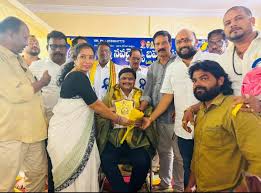
Nava Chaitanya Bahujana Sangham organisation members felicitating Markfed Director Anepu Ramakrishna Naidu in Srikakulam on Sunday. Nava Chaitanya Bahujana Sangham organisation members felicitating Markfed Director Anepu Ramakrishna Naidu in Srikakulam on Sunday. | Photo Credit: Special arrangement Andhra Pradesh Markfed Director and Turpu Kapu Samkshema Sangham’s State honorary president Anepu Ramakrishna Naidu said unity among the Backward Classes, Scheduled Castes, Scheduled Tribes and Minorities was need of the hour, asserting that these communities were not getting legitimate political opportunities as they face troubles from influential persons. The State Nava Chaitanya Bahujana Sangham invited Mr. Naidu as a chief guest to a meeting, in which the issues of Backward Classes, Scheduled Castes, Scheduled Tribes, were discussed. The Markfed Director was also felicitated at the event. He said administration had to be done in accordance to the Indian Constitution which ensured several welfare measures and opportunities for neglected sections of the society. Mr. Naidu said political power needed to be shared with BCs, SCs and STs. Courtesy : The Hindu Note: This news is originally published on https:/thehindu.com/bha and is used purely for non-profit/non-commercial purposes, especially human rights
Horror killing: Sister strangled to death; brother was angry over her eloping and marrying a Dalit boy.

When the husband was released from jail, he released a video demanding the arrest of his wife’s killers, prompting the police to launch an investigation. The girl’s brother was taken into custody and questioned, leading to the discovery of the murder. Reported by: In the Siwaipatti police station area of Muzaffarpur, a girl’s love marriage with a Dalit boy proved costly. Her brother Abhishek Kumar strangled her to death. When the police took the accused into custody and interrogated him, he confessed to the crime and explained the reason for the murder. The police arrested the accused brother and his accomplice and sent them to jail. Love Marriage with a Dalit Man The woman’s brother, Abhishek Kumar Yadav, told the police that his sister was in love with a Dalit man and had eloped with him and married him, leaving him deeply hurt and angry. When the man went to jail and the court sent the woman to her aunt’s house, the woman’s mother persuaded her to return home on Holi. Then, her brother, along with other relatives and associates, strangled the woman to death. The body was then cremated. The girl ran away from home in January. Gauri Shankar Kumar (22), son of Raju Ram, a resident of Ghansaut village, had been in a relationship with Sujata Kumari, a resident of Kodaria Gosaipur, since 2020. The girl was studying at her maternal uncle’s house in Ghansaut village. It was there that Sujata met Gauri Shankar and they would communicate. On January 18, 2026, they ran away from home. The girl’s family filed a police report. Gauri Shankar arrested from Haryana Gauri Shankar and Sujata got married at their friend’s house in Samastipur. On January 20, they moved to Haryana and began living there. Police arrested them on February 11 and brought them to Bihar on February 12. After presenting them in court, the man was sent to jail, and the girl was sent to her aunt’s house. After being released from jail, Gauri Shankar spoke to Sujata for the last time on the phone. After that, when he couldn’t hear from her, he went to the police and filed a complaint. When his complaint was not heard, he released a video and threatened suicide. Subsequently, the police became active, detained the woman’s brother, and began questioning him. The police uncovered the murder. Mani Bhushan Sharma, Correspondent, Muzaffarpur Edited by : Upendra Singh, Bihar Courtesy : Hindi News
A Dalit youth was brutally murdered by slitting his throat in Sant Kabir Nagar; an angry mob set the main accused’s house on fire.

A Dalit youth was brutally murdered in Sant Kabir Nagar, Uttar Pradesh, for protesting against molestation. An enraged mob set the house of the main accused, Nasir, on fire. Uttar Pradesh: The Bakhira area of Sant Kabir Nagar district was gripped by intense tension on Friday. A day earlier, on Thursday, a 29-year-old Dalit youth was brutally murdered by slitting his throat with a sharp-edged weapon. The horrific incident sent shockwaves through the area, and angry villagers staged a protest by placing the body on the road. The situation escalated to the point where the angry mob, demanding justice, set the main accused’s house on fire. According to police, the deceased, Anand Kumar, a resident of Kolki village, was a tile-layer. On Thursday, while he was returning home, he was ambushed by the attackers near Babhani intersection. The accused brutally slit Anand’s throat and fled the scene. As news of the murder spread, the victim’s family and villagers erupted in anger, blocking the road for several hours. Initial investigations have revealed that the murder stems from a dispute that occurred approximately 10 days ago. Police say that during a function, Anand’s niece complained that the main accused, Nasir Ali, had molested her. Angered by this, Anand confronted Nasir, leading to a scuffle. It is believed that the murder was orchestrated to avenge this rivalry. An FIR has been registered at the Bakhira police station against three people, including Nasir Ali. One of the accused remains unidentified. Police have formed several teams to apprehend the killers. Since the incident, the accused and his family have fled their homes to neighboring villages. A heavy police force has been deployed to prevent any untoward incidents and maintain peace in the area. Additional Director General of Police (ADG) of Gorakhpur Zone, Mutha Ashok Jain, stated that the situation is currently under control and a vigorous search for the accused is underway. When the mob set the accused’s house on fire on Friday, senior police and administrative officials immediately arrived at the scene. They spoke with the victim’s family and villagers and calmed them down. The family’s clear demand was that the accused be arrested as soon as possible, given severe punishment, and that their house be demolished. Only after the administration provided firm assurances of a fair investigation and prompt legal action did the protesters decide to end their protest. Following this, the administration took possession of the body and sent it for post-mortem, and the family performed Anand’s last rites on Friday itself. This single incident has forever devastated a happy family. Anand leaves behind his wife and two innocent children, the youngest of whom is just three months old. Rajan Chaudhary Courtesy: Hindi News
A case of molestation and assault of a Dalit woman in Asandra: FIR filed on court orders, neighbor accused of filling water from a government tap

A case of molestation, assault, and caste-related abuse of a Dalit woman has come to light in the Asandra police station area of Barabanki district. The police did not take action against the accused, prompting the victim to file a petition in court. On Friday night, the police registered a case of assault and under the Harijan Act. In the petition filed with the court, the victim, from the Asandra police station area, stated that on the evening of May 30th, she had gone to fill water and wash clothes at the government tap in front of her house. When her neighbor, Narendra Verma, arrived and began making obscene remarks to her, she objected. According to the victim, Narendra Verma became enraged. He hurled caste-related abuse at her and pushed her to the ground. When she ran inside to save her life, the accused, Narendra Verma, also entered the house after her. He tore her clothes and beat her with kicks, punches, and sticks. Hearing the woman’s screams, her sister-in-law and other neighbors rushed to the scene. Seeing the neighbors approach, the accused, Narendra Verma, threatened to kill the victim and her family and fled. Following the incident, the victim called 112 and complained about filing a report at the police station. However, the victim alleges that the police, under the influence of the accused, did not take appropriate action. The victim approached the court for justice. On Friday night, on the orders of the court, Asandra Police Station Officer Anil Singh filed a case against the accused, Narendra Verma, under sections 333, 76, 115, 352, 351 of the Indian Penal Code, and the Scheduled Castes and Scheduled Tribes Act. The case is being investigated by CO Ramsanehi Ghat, Saurabh Srivastava. Neeraj Shukla | Haidergarh, Barabanki Courtesy: Hindi News
Thirty years on, justice remains elusive for Dalits in Uttar Pradesh, Uttarakhand and Haryana
A chapter in a major 30-year review of the PoA Act argues that institutional failures, rather than legislative gaps, remain the biggest obstacle to justice Thirty years after Parliament enacted the Scheduled Castes and Scheduled Tribes (Prevention of Atrocities) Act, 1989, a landmark review of the law has concluded that the promise of justice for Dalits and Adivasis remains far from realised. Published by the Human Rights Advocacy and Research Foundation (HRF), The Elusive Search for Justice: 30 Year Review of the SCs & STs (PoA) Act brings together the work of former civil servants, lawyers, academics, human rights defenders and Dalit rights activists to assess how India’s principal anti-atrocities legislation has functioned over three decades. Across its chapters, the report paints a troubling picture of rising atrocities, persistently low conviction rates, and poor implementation of victim compensation schemes, weak monitoring mechanisms, and widespread institutional failures that continue to undermine access to justice. The report’s central conclusion is that while Parliament has repeatedly strengthened the law through amendments and expanded protections for victims, the institutions responsible for implementing these safeguards have largely failed to match the law’s ambition. Among the most revealing contributions to the volume is a chapter by activist, writer and human rights defender Vidya Bhushan Rawat, who examines the functioning of the Act in Uttar Pradesh, Uttarakhand and Haryana. While the broader report identifies national trends of weak implementation and institutional apathy, Rawat’s chapter shows how these failures manifest on the ground, in police stations, district administrations, courts and villages across northern India. Unlike chapters that focus on legislative history or national statistics, Rawat’s contribution is rooted in lived experiences. Drawing on field investigations, case studies, Right to Information disclosures and years of engagement with Dalit communities, he examines the obstacles faced by survivors seeking justice under the PoA Act. Rawat’s account suggests that the greatest barriers often emerge not in the courtroom but much earlier, at the stages of complaint registration, investigation and administrative response. Rawat’s central argument is that the crisis confronting the PoA Act is no longer one of legislative inadequacy. Over three decades, Parliament has progressively strengthened the law, expanded the list of recognised offences, enhanced victim protections and introduced new accountability mechanisms. Yet the effectiveness of these provisions ultimately depends upon the willingness of police officers, prosecutors, district administrations and local governments to enforce them. It is at this level, he argues, that the law repeatedly breaks down. The result is a system in which the formal existence of legal rights often bears little resemblance to the realities experienced by Dalit survivors attempting to access protection, accountability and justice. The hidden crisis behind atrocity statistics Rawat begins by challenging a common assumption that official crime statistics adequately capture the scale of caste violence. For many observers, NCRB data provides the principal measure of atrocities committed against Scheduled Castes and Scheduled Tribes. Rawat argues that these figures reveal only a fraction of the reality. The larger problem, he suggests, lies in the vast number of incidents that never enter official records at all. Across Uttar Pradesh and neighbouring states, Dalit complainants frequently encounter resistance at the very first stage of the criminal justice process. Police officials may refuse to register FIRs under the PoA Act, dilute charges, classify incidents as ordinary criminal disputes, or encourage parties to arrive at informal compromises. In many villages, survivors must navigate local power structures before they can even reach a police station. The consequence is that official statistics may reflect only those cases that successfully overcome multiple layers of institutional resistance. Rawat argues that any assessment of the PoA Act that relies exclusively on registered cases risks overlooking the structural barriers that prevent countless incidents from being formally recognised as atrocities in the first place. Uttar Pradesh: The limits of legal protection Among the three states examined, Uttar Pradesh occupies a central place in Rawat’s analysis. The state has long recorded some of the highest numbers of crimes against Scheduled Castes in the country. Yet Rawat contends that these figures tell only part of the story. The deeper problem lies in the persistent inability of victims to secure meaningful justice after a case is reported. According to the chapter, many police officials continue to approach caste atrocities through the lens of local disputes rather than recognising them as manifestations of entrenched social discrimination. Complaints are often discouraged, investigations delayed, and statutory provisions under the PoA Act either ignored or improperly applied. Rawat argues that this administrative response reflects a broader reluctance within state institutions to confront caste power directly. Rather than functioning as neutral enforcers of the law, institutions frequently mirror the social hierarchies that the legislation was intended to challenge. The Case of Shivam: A child, a crushed arm, and a system that failed To illustrate these dynamics, Rawat recounts the case of Shivam, an eight-year-old Dalit child from Jaunpur district whose arm was allegedly crushed in a sugarcane-crushing machine owned by an upper-caste family in December 2015. The incident should have triggered an immediate legal response. Instead, according to the account presented in the chapter, the family encountered resistance from law-enforcement authorities when they sought to pursue the matter. Efforts to register a complaint were allegedly met with indifference, while those assisting the family reportedly faced hostility from officials. What makes the case particularly significant for Rawat is not merely the injury itself but the social environment surrounding it. The family belonged to a community economically dependent upon dominant-caste landowners. Villagers were reportedly unwilling to speak openly about the incident, fearing repercussions. The imbalance of power was such that even seeking justice carried social and economic risks. Ultimately, concerns for safety and survival reportedly forced the family to leave the village. For Rawat, the episode demonstrates how caste violence cannot be understood solely as a criminal act. It is sustained by relationships of economic dependence, social exclusion and institutional indifference that make accountability exceptionally difficult to achieve. Hundreds of cases, no convictions Perhaps the
Krishna Lanka CI Case: Dalit Youth’s Father Seeks Justice Over
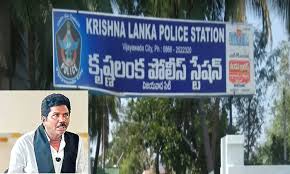
Suicide He urged Chief Minister, Deputy Chief Minister Pawan Kalyan, and other officials to respond immediately to the incident and sought an investigation to ensure justice for his son. Venkateswara Rao also denied allegations that he had compromised with the police. Vijayawada: The alleged disappearance of G Sai Krishna, whose mother accused Vijayawada’s Krishna Lanka police CI Nagaraju of torturing her son to death and then secretly cremating his body without the knowledge of family members, has created a sensation in the state of Andhra Pradesh. In the lines of this case, a selfie video surfaced of a Dalit man, Perupogu Kranthi Kumar, who alleged that he was tortured by the tainted CI Nagaraju and was taking his life, unable to bear the harassment. The incident took place on May 21 Perupogu Venkateswara Rao Madiga, the father of the deceased, who is the AP MRPS State President, has appealed to AP Chief Minister N Chandrababu Naidu to order an inquiry and take action against the former CI, alleging that his son committed suicide due to the CI’s actions. Speaking to the media at the Vijayawada Press Club on Friday, he also made some allegations about how the police system worked and said that some police officials turn rowdy-sheeters into informants for personal gain and subject individuals to torture using “third-degree” methods if they do not comply with their demands. He also stated that police harassment on the grounds of caste-based slurs came to light only because his son had recorded a selfie video before his suicide, mentioning that since he was a Dalit, he was being subjected to harassment. He urged Chief Minister, Deputy Chief Minister Pawan Kalyan, and other officials to respond immediately to the incident and sought an investigation to ensure justice for his son. Venkateswara Rao also denied allegations that he had compromised with the police and accepted Rs 10 lakhs. The suspended inspector has been charged with wrongful confinement, murder and destruction of evidence under the BNS Act, and a high-level team is currently conducting a comprehensive investigation into the case. Courtesy : Deccan Chronicle Note: This news is originally published on https:/deccanchronicle.com/bha and is used purely for non-profit/non-commercial purposes, especially human rights
30-year-old Dalit man beheaded in UP’s Sant Kabir Nagar
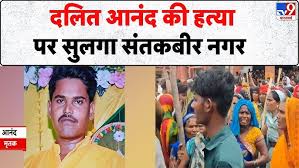
According to the police, the murder was the result of that personal rivalry. LUCKNOW: A 30-year-old Dalit man was brutally beheaded with a sword at a market square in Sant Kabir Nagar, in eastern UP, allegedly to avenge a slap five days earlier. The victim had confronted and slapped the accused after he allegedly molested his niece during a wedding ceremony. According to the police, the murder was the result of that personal rivalry. Meanwhile, enraged villagers started protesting by blocking the road at the Babhani intersection. During this, the shop and house of the accused Nasir were set on fire. The incident took place late on Thursday night in the Bakhira police station area, around 28 km from the district headquarters. Victim Anand, a resident of Kolki Chamarsan village in the Bakhira police station area, was returning home when the accused, Nasir Ali (18), a resident of a nearby village, along with four accomplices, allegedly surrounded him and attacked him with a sword. The blow to his throat was so severe that Anand, who used to work as a tile layer in Chennai, died on the spot. Eyewitness and the deceased’s cousin, Rohit, stated that Anand had come to Babhani Chowk around 7 PM to deliver a machine. After delivering the machine, he bought some items and stayed at the chowk for a long time. Then, late at night, he was returning home. Police from three police stations reached the spot after receiving information. SP Sandeep Kumar Meena and CO also arrived with force. They pacified and calmed down the angry villagers. Late at 11 PM, ADG Ashok Mutha Jain, DIG Sanjeev Tyagi, and DM Alok Kumar also reached the spot. Police have deployed several teams in search of the main accused, Nasir Ali and his associates. It is being told that there is a distance of about two kilometres between Nasir’s and Anand’s houses. When the police started taking the body for a post-mortem, angry family members tried to stop the ambulance and scuffled with the police. Meanwhile, on Friday, a large number of women came out on the streets carrying sticks in protest and demanded the encounter of the accused. “My husband was brutally murdered. We want life for a life, nothing less than that,” said the wife of the deceased. Currently, based on the complaint of the deceased’s father, the police have registered a case against four accused, including three named individuals. The accused include Nasir and Nirhu, residents of Kusumha village in Bakheera police station area, Jaigam, a resident of Jivdhara village, and one other unknown person. Anand got married around seven years ago. Besides his wife, he has two daughters. The elder daughter, Ananya, is three years old, while the younger daughter, Aradhya, is six months old. Anand was the youngest of three brothers. According to family members, he had come home from Chennai on May 6 and was preparing to return a few days later. ADG Ashok Mutha Jain said that the victim had stopped in the market to buy goods. During that time, he was murdered by slitting his throat. In the initial investigation, a case of dispute at a wedding ceremony had come to light. Several police teams were continuously conducting raids to arrest the accused. The police tried to pacify the villagers, but they did not agree. Women started banging sticks in front of the police. They started pushing and shoving. The police used force to snatch the sticks from the women. Seeing the anger of the villagers, the police swiftly took bulldozer action on the main accused Nasir’s barber shop and his associates’ chicken shop on Friday afternoon. The police demolished all three temporary shops. Namita Bajpai Courtesy : TNIE Note: This news is originally published on https:/thenewindianexpress.com/bha and is used purely for non-profit/non-commercial purposes, especially human rights
Dalit student suicide: Kerala HC denies anticipatory bail to Kannur Dental College professor Dr. MK Ram
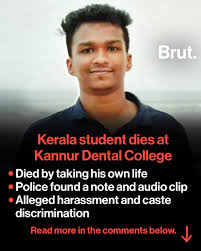
Dr MK Ram stands accused of verbally harassing a dalit student, Nithin Raj, who later died by suicide. The Kerala High Court on Friday dismissed an anticipatory bail plea filed by Kannur Dental College professor, Dr. M Kodanda Ram, who is accused of verbally harassing a Dalit student, Nithin Raj, who died by suicide in April [Dr. M Kodanda Ram v State of Kerala & ors]. Nithin Raj, a dental college student in Kerala, died by suicide on April 10 after jumping from a building near the college. Before his demise, Raj is alleged to have faced caste-based harassment from the faculty at the dental college. Dr. Ram, the head of the department at the dental college, is the prime accused in the case. The police booked Dr. Ram and two other staff members for abetment of suicide and for offences under the Scheduled Castes and the Scheduled Tribes (Prevention of Atrocities) Act, 1989 (SC/ST Act), based on a complaint by the student’s father. Dr. Ram and another accused faculty member Dr. Sangeetha Nambiar, had earlier approached a sessions court seeking anticipatory bail. While the sessions court granted the relief to Dr. Nambiar on April 25, it denied anticipatory bail to Dr Ram. This prompted him to approach the High Court for anticipatory bail. The State opposed the plea. The State’s Public Prosecutor told the Court that the statements of two students indicated that Dr Ram’s conduct with students was improper and that he even instigated other teachers to harass the deceased student. During hearings, the Court had made observations regarding recurring allegations of harassment in medical colleges and suggested that the state should consider constituting a committee to study such complaints and recommend remedial measures. Meanwhile, Dr Ram’s counsel denied the allegations of caste-based harassment. The counsel relied on CCTV footage showing Raj in the college principal’s room before his death and documents indicating loan recovery harassment faced by the student. After considering the rival submissions, the Court has dismissed his plea today. Dr. Ram’s plea was filed through advocates S Rajeev, V Vinay, MS Aneer, Anilkumar CR, Sarath KP, Dipa V, KS Kiran Krishnan, Akash Cherian Thomas, Azad Sunil, TP Aravind, Maheswar Padickal, Akshara S and Nivedita Rajeev. Praisy Thomas Courtesy : Bar And Bench Note: This news is originally published on https:/barandbench.com/bha and is used purely for non-profit/non-commercial purposes, especially human rights
Chennai Police Files Charge-sheet against 6 Cops in Custodial Death of Dalit Youth

The CB-CID has filed a charge sheet against six police officials in connection with the alleged custodial death of a 26-year-old The case pertains to the death of Delison, a resident of Krishnarajapuram in Manamadurai, who was detained on March 5 in connection with an attempted murder case. He succumbed to severe injuries on March 8 while undergoing treatment at the Chennai: The CB-CID has filed a charge sheet against six police officials in connection with the alleged custodial death of a 26- year-old Dalit youth, Akash Delison, in Sivaganga district earlier this year, police said on Friday. The police personnel named in the charge sheet are Inspector of Police Dileepan, Sub-Inspector Gugan, Head Constables Palani (Madhagupatty Police Station) and Deivendran (Sivagangai Town PS), and Grade 1 Constables Kaleeswaran (Manamadurai PS) and Mahendran (Thiruppuvanam PS) The case pertains to the death of Delison, a resident of Krishnarajapuram in Manamadurai, who was detained on March 5 in connection with an attempted murder case. He succumbed to severe injuries on March 8 while undergoing treatment at the Government Rajaji Hospital in Madurai. While the local police initially claimed that the youth sustained a severe leg fracture after jumping from a bridge while attempting to escape, his family alleged that he was subjected to brutal torture. According to his relatives and a dying declaration reportedly given to a judicial magistrate, officers severely beat his legs with an iron rod during interrogation. Forensic experts also later flagged significant discrepancies in the initial medical reports, noting massive internal tissue damage inconsistent with a simple fall. The youth’s death triggered massive outrage and a prolonged protest by his family, who refused to accept his body for over 100 days while demanding the arrest of the erring personnel. The standoff ended only recently after the Madurai Bench of the Madras High Court intervened, leading to a state-conducted cremation under heavy police security. Following the widespread uproar, the investigation was transferred to the CB-CID, which suspended the involved officials and has now formally filed the charge sheet Courtesy : Deccan Chronicle Note: This news is originally published on https:/deccanchronicle.com/bha and is used purely for non-profit/non-commercial purposes, especially human rights
‘Dalit’ is a term of unity for the oppressed: Social Justice Minister Vanni Arasu
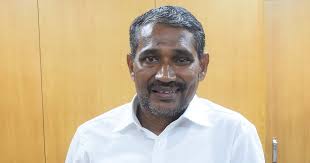
Intervening, Public Works Minister Aadhav Arjuna said the MLA had used the term several times and requested members to avoid it. CHENNAI: There was a brief debate in the state Assembly on Friday over the appropriate term to refer to Scheduled Caste communities. The issue arose during the discussion on the motion thanking the governor’s address, when AIADMK MLA V Sampathkumar from Harur used the term “suppressed people” while referring to the Scheduled Castes. Intervening, Public Works Minister Aadhav Arjuna said the MLA had used the term several times and requested members to avoid it. He said SC communities should instead be referred to as ‘Scheduled Caste people’ or ‘Adi Dravidar people’. He added that MLAs need not use words that could be seen as lowering the dignity of a community. Social Justice Minister Vanni Arasu joined the discussion and offered a different view. He said the term ‘Dalit’ had been widely promoted by the Viduthalai Chiruthaigal Katchi as part of its struggle against caste discrimination. According to him, the word had become a symbol of unity for oppressed communities across India and represented more than just a label. Vanni Arasu said the term had helped bring together people facing caste-based discrimination and had gained socio-political significance over the years. Referring to debates involving Dr B R Ambedkar and Mahatma Gandhi on how marginalised communities should be addressed, he said names and identities carried political and social meaning. At the same time, the minister said there was nothing wrong in using the term ‘Adi Dravidar’, as it was also officially recognised and linked to the name of the government department dealing with the welfare of these communities. The discussion ended without any formal decision, but highlighted differing views on the terminology used to refer to SC communities. Courtesy : TNIE Note: This news is originally published on https:/thenewindianexpress.com/bha and is used purely for non-profit/non-commercial purposes, especially human rights