
Dalit woman’s house bulldozed: Administration accused of taking action without notice, woman demands investigation
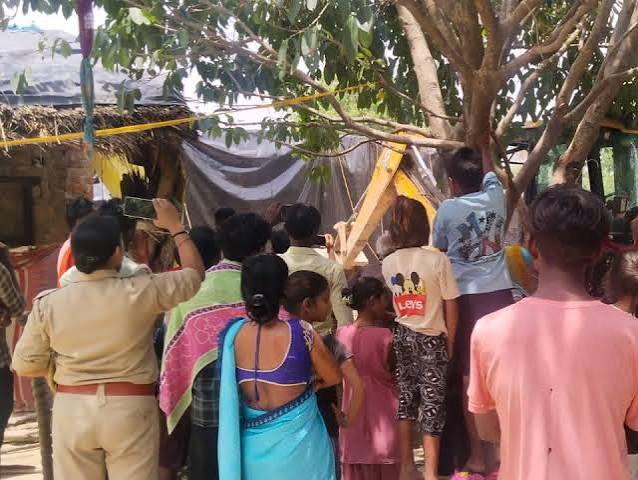
Mala Devi, a Dalit woman in Chhidi village of Prayagraj’s Bara tehsil area, has leveled serious allegations against the tehsil administration. She alleges that the administration bulldozed her house without notice. Mala Devi, calling this action illegal and unconstitutional, has demanded an impartial investigation and action against the culprits. According to Mala Devi, her family had been living in a makeshift house built on Arazi number 1014 for generations. This land is registered as barren land. She claims that her family had been living in this house for years. The woman alleges that after a complaint from the village head, the tehsil administration arrived at the scene with police force, bulldozers, and some local residents. Her house was subsequently demolished. Mala Devi stated that the administration did not provide her with any prior notice nor did they provide her with an opportunity to present her side of the story. They allege that their house was demolished without following any legal procedures, leaving their entire family homeless. Mala Devi filed her complaint at the Sampoorna Samadhan Diwas held on June 20th, pleading for justice. She says no effective action was taken on this complaint, and a bulldozer was used to demolish her house shortly thereafter. The victim and her family have demanded an impartial investigation of the entire matter from the district administration and the government. They have also stated that if rules were violated in the action, legal action should be taken against the responsible officials and those involved. The family has also demanded adequate compensation and rehabilitation. At present, the administrative authorities have not officially released their statement on this matter. Only after receiving their response will it become clear under what circumstances this action was taken. Shivam Verma | Bara Courtesy: Hindi News
Dalit farmer denied land despite measurement: Opponent builds wall at disputed site, seeks DM’s help

A Dalit farmer in Mainpuri has appealed to the District Magistrate for justice over the lack of demarcation and permanent fencing of his land. The farmer alleges that due to the negligence of the Revenue Department and the dominance of the opponent, a permanent fencing has not been completed on his land despite the measurement. The opponent has also illegally constructed a wall on the disputed land, deepening the dispute over ownership. This case is from village Adupur in the Mainpuri tehsil area. Village resident Ganesh, son of Lalaram, stated in his complaint letter to the District Magistrate that he had applied to the Sub-District Magistrate, Mainpuri, for demarcation of his land on September 30, 2025. According to the complaint, the revenue team arrived at the site and measured the land and also erected a temporary fencing. Ganesh says that the measurement was correct and he hopes that a permanent fencing will be completed soon. Ganesh alleges that on May 18, 2026, when revenue officials arrived at the site to construct a permanent boundary wall, they colluded with the opponent, Jaiveer Singh. According to the farmer, the revenue officials left the process incomplete and returned without properly measuring the land. Ganesh also alleged that the officials threatened him and threatened him with threats from the opposing party if he exerted more pressure. Ganesha then filed a second complaint with the Sub-Divisional Magistrate. Based on the complaint, the Sub-Divisional Magistrate, along with a revenue team, arrived at the site under the Mission Samadhan Yojana and inspected the land. Ganesh alleges that it became clear on the spot that the opponent, Jaiveer Singh, had illegally erected a wall on the disputed site. However, the process of removing the wall and constructing a permanent boundary wall has not yet been completed. Abhishek Jain | Mainpuri Courtesy: Hindi News
Bulandshahr: Dalit Youth Allegedly Beaten, Caste Slurs Used in Balrampur Village
A case of alleged assault on Dalit youths has been reported from Balrampur village under Narasena police station in Bulandshahr district of Uttar Pradesh. The victims have accused several villagers of attacking them, using caste-based slurs, and issuing death threats. According to a written complaint submitted to the police, the victims have demanded strict action against the accused. Victims Name Four Accused in Complaint In their police complaint, Ankita Kumar (son of Dharmveer), Dharmendra (son of the late Sukhdev Singh), and Bobby Kumar (son of Vijendra Singh) alleged that they were attacked by Shivam (son of Kiranpal Singh), Shailesh, Mainpal, and others from the same village. The complainants said the accused assaulted them with sticks and sharp weapons, including a spade (phawda), causing serious fear and injuries. Caste Slurs and Death Threat Alleged The victims further alleged that when they tried to resist the attack, the accused abused them, used caste-based derogatory language, and threatened to kill them. They also claimed that the accused are “dominant and influential” in the village, which has created an atmosphere of fear among their families after the incident. Police Begin Investigation Following the incident, the victims approached Narasena police station and submitted a written complaint naming the accused. They have demanded that an FIR be registered and strict legal action be taken. Station House Officer Ram Kishore Gautam confirmed receipt of the complaint and said the matter is under investigation. “The complaint has been received and the case is being examined. Further legal action will be taken based on the findings of the investigation,” the SHO said. Courtesy : TOP Note: This news is originally published on https:/theobserverpost.com/bha and is used purely for non-profit/non-commercial purposes, especially human rights
Dalit woman’s land illegally occupied, construction demolished: Casteist slurs and death threats for protesting in Shahabad
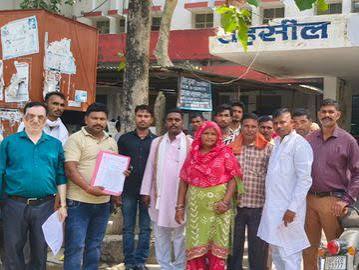
A Dalit woman in Shahpur Dev village, Shahabad tehsil of Rampur, has alleged illegal occupation and demolition of a construction on her purchased land. The woman says that some villagers occupied her land and, when she protested, used casteist slurs and threatened to kill her. The victim has filed a complaint with the authorities and demanded strict action against the accused. Demand for action against the accused Complainant Kranti, a resident of Shahpur Dev, stated that she purchased 0.0162 hectares of land in plot number 408 from Sonia of the village on May 11, 2026. After the sale deed, the seller handed over possession of the land to her. Kranti constructed the foundation and boundary wall on her purchased land. After this, she went to Chandigarh (Punjab) to work as a laborer. Some time later, she received information that some villagers had broken the foundation and boundary of her land and taken possession of it. The accused behaved rudely When Kranti returned home and questioned these people, they claimed the land as theirs and admitted to the occupation. It is alleged that when she protested, the accused behaved rudely with her, used casteist slurs, and threatened to kill her. Family terrified after the incident The victim stated that her family has been terrified since this incident. They have demanded the administration free the land from illegal occupation and take strict legal action against the accused. In this regard, Sub-District Magistrate Ashutosh Kumar stated that upon receiving the complaint, the matter will be investigated and necessary action will be taken. Vishal Kumar Joshi | Shahbad, Rampur Courtesy: Hindi News
Outfit seeks arrest of prime accused in dalit murder case

Madurai: The Dalit Unity Federation staged a picketing at the Madurai district collectorate on Monday, demanding the immediate arrest of the prime accused in the murder of a 34-year-old dalit man from Avaniyapuram. The federation members submitted a petition to Madurai collector Nishant Krishna, seeking the arrest of one of the main accused in the case. Balaji was hacked to death on Friday following a dispute that reportedly broke out during a temple festival held earlier last week at Avaniyapuram near Madurai. Police said the incident was linked to a quarrel during the Veerakaliyamman Temple festival on June 12, when Sanjay Ramasamy allegedly misbehaved with girls. When Balaji questioned him, an argument broke out, leading to hostility between the two groups. On Friday around 2.30pm, Sanjay, along with five others, allegedly chased and attacked Balaji and his friend Raja Hussain with swords. While Raja Hussain escaped with minor injuries, Balaji suffered multiple head injuries and died on the spot. Raja Hussain is undergoing treatment at Government Rajaji Hospital. Earlier on Saturday, Balaji’s family staged a sit-in protest at the collectorate, demanding the arrest of the accused. The protest was withdrawn after police assured them of action. Courtesy : TOI Note: This news is originally published on https:/timesofindia.com/bha and is used purely for non-profit/non-commercial purposes, especially human rights
Human Rights Commission Takes Strict Action on Liquor Shops in Dalit Settlements: Demands Report from Agra DM-Commissioner within Four Weeks
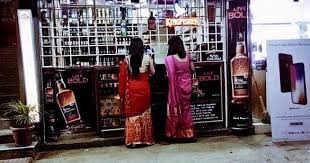
Agra: The National Human Rights Commission has taken a very serious view of liquor shops operating in Dalit, slum, and densely populated residential areas, issuing a notice to the Agra administration. Taking cognizance of a complaint filed by human rights activist and advocate Naresh Paras, the Commission has directed the District Magistrate and the concerned administrative officials to submit a detailed Action Taken Report (ATR) within four weeks. Issues of Security and Social Justice In the complaint, advocate Naresh Paras argues that the presence of liquor shops in these areas has made life difficult for women, students, and ordinary citizens. Incidents such as gatherings of antisocial elements outside the shops, molestation, abuse, and assault have become a daily occurrence, violating the fundamental rights of citizens. He also cited the recent tragic road accident in Nagla Budhi, New Agra, where five people lost their lives due to the negligence of a drunk driver. Proposed Solution: ‘Wine Zones’ and Strict Policies The complainant not only demanded the removal of liquor vends, but also suggested the development of ‘wine zones’ (controlled areas) as a concrete solution. He proposed that all liquor vends be relocated from residential and sensitive areas to the outskirts of the city or industrial areas. These zones should have CCTV surveillance and adequate police security. Liquor sales hours should be limited to 10 a.m. to 10 p.m. Emphasis on Constitutional Provisions In his complaint, Naresh Paras cited Article 21 (Protection of Life) and Article 46 (Protection of the Interests of Scheduled Castes and Scheduled Tribes) of the Constitution, demanding accountability of the administration. They have also appealed for an investigation against the excise officials who allowed the liquor shops to open in populated areas. Suggestions for the Future The proposals presented to the Human Rights Commission include important demands such as ensuring a minimum distance of 200 meters between liquor shops and schools, religious places, and residential complexes, making public hearings mandatory, and making a Social Impact Assessment a prerequisite for contract approval. This issue has now become not just about local law and order, but about social justice and the protection of women’s dignity. This directive from the Commission poses a major challenge to the administration, as it will now have to explain its stance on the operation of liquor shops in these sensitive areas. Courtesy: Hindi News
Deadly attack on Dalit youth in Balrampur: Casteist slurs hurled, FIR filed against 4

A case of assault, casteist slurs, and death threats against Dalit youth has come to light in Balrampur village, under the Narsena police station jurisdiction. The victims have filed a complaint against four named accused at the Narsena police station, demanding strict action. According to the complaint, Ankit Kumar, son of Dharamveer, Dharmendra, son of late Sukhdev Singh, and Bobby Kumar, son of Vijendra Singh, residents of Balrampur village, told the police that they were attacked by Shiva, son of Kiranpal Singh, Shailesh, and Mainpal, along with others from the same village. The attackers allegedly assaulted them with sticks and sharp weapons (shovels). The victims reported that when they protested, the accused abused them, used casteist slurs, and threatened to kill them. The victims allege that the accused have a domineering nature, creating an atmosphere of terror within their families. Following the incident, the victim’s family reached the Narsena police station and filed a written complaint naming the accused, demanding legal action by filing a case against them. Station House Officer Ram Kishore Gautam stated that the complaint has been received and the matter is being investigated. Further legal action will be taken based on the investigation. Dushyant Kumar Rana | Unchagaon (Syana), Bulandshahr Courtesy: Hindi News
Police solve mystery behind Dalit youngster’s murder in Adilabad

Adilabad police arrested six persons for the murder of 23-year-old Nathari Sathish in Neradigonda. Investigators said the crime was linked to a personal dispute involving a girl. The case was solved within 48 hours using technology and CCTV footage Adilabad: Police swiftly solved the mystery behind the sensational murder of a Dalit youth by arresting six persons in Neradigonda on Sunday. Police seized five mobile phones, two motorcycles and empty beer bottles from the accused. Briefing newsmen, Utnoor ASP Ruthwik Sai Kotte said that Shaik Sumer and Gangadhari Sai Krishna, both from Neradigonda mandal, and Bojja Vishnuvardhan, Shaik Akram and Syed Noman, belonging to Boath town, were apprehended on charges of killing Nathari Sathish (23) on June 17. During interrogation, Sumer confessed to killing Sathish as he was obstructing his efforts to pursue a relationship with a girl. He allegedly strangled Sathish to death after forcing him to consume excessive liquor at an irrigation tank with the help of the other accused. He revealed that they later dumped the body in the tank. The accused further disclosed that they shifted Sathish’s two-wheeler to Adilabad town and threw his mobile phone from a train. Police initially registered a missing case after Sathish’s parents lodged a complaint when he went missing on June 17. They traced the body in the tank and altered the case to murder on June 19. Two special teams were formed to crack the mystery. Ruthwik said the investigators managed to unravel the mystery within 48 hours with the help of technology and CCTV camera footage. He stated that a case had been registered against the accused under the SC/ST (Prevention of Atrocities) Act. Courtesy : Telangana Today Note: This news is originally published on https:/telanganatoday.com/bha and is used purely for non-profit/non-commercial purposes, especially human rights
A 16-year-old Dalit girl was gang-raped in Kishangarhbas.

Khairthal-Tijara. A case of gang rape of a 16-year-old Dalit girl has come to light in a village in the Kishangarhbas police station area of Khairthal-Tijara district in Rajasthan. The victim’s grandmother, while filing the case on Sunday, stated that after the death of their son, the family had gone to the Ganges River to immerse his ashes. At around 12 a.m. on June 20th, two men from the same village forcibly abducted her granddaughter, who was sleeping at home. They took the girl to a nearby field, where two other men were present. The four men raped her. Police have registered a case and launched a search for the accused. Courtesy: Hindi News
As India Gets Hotter, Clothing Adds a Layer to Caste Inequality

Wearing breathable textiles like cotton is becoming a form of heat adaptation, but for many Dalit families, they remain out of reach. Inside the narrow lanes of Shahbad Dairy, a suburb outside north-west Delhi, is a concrete maze of houses packed tightly together. Trees are scarce. A breeze is hardly able to pass through these cramped and unventilated alleys, and by afternoon, the heat is oppressive and inescapable. Poonam and her sister-in-law Ritika, who live next door to each other, ask their kids not to play outdoors under the hot sun. But though the temperature outside is 40°C, it feels a lot hotter indoors. The tin and concrete roofs of their houses trap heat. With no windows, there is barely any ventilation. Had they been men, Poonam and Ritika could have changed into shorter or looser clothing. Instead, tradition dictates that they cover their bodies in multiple layers. “This material makes you sweat more. It does not absorb sweat,” says Poonam, gesturing towards her salwar kameez and dupatta made of synthetic textiles. This forms a three-piece ensemble consisting of a long tunic, ankle-length trousers and a scarf – the dupatta – draped around the shoulders, neck and sometimes over the head. As heatwaves become more frequent and intense, experts Dialogue Earth spoke to say wearing natural fabrics like cotton and linen is emerging as a form of heat adaptation. But for many like Poonam and Ritika, they are a luxury, costing double their synthetic counterparts. Their family belongs to the Dalit community, a historically oppressed group of castes. Despite finishing high school, their father-in-law Paale Ram was pushed into sanitation work because of his caste, cleaning sewers like his father and grandfather before him. His sons do the same work, their family’s economic circumstances reflecting generations of exclusion from better paid and more secure livelihoods. (The Dalit families Dialogue Earth spoke to do not use last names to avoid further caste-based discrimination.) The family’s earnings barely cover household expenses, leaving little money for clothing. In Delhi, many of the workers most exposed to extreme heat, including sanitation and informal labourers, continue to come from historically marginalised caste communities. A 2024 analysis by The Hindu notes that nearly 70% of sewer and septic tank workers in India belong to oppressed castes. For workers spending long hours performing physically demanding labour in hot conditions, clothing matters. But “when income is limited, food and shelter become bigger priorities,” says Afrose Farid, a professor in the Department of Textile Design at Kerala’s National Institute of Fashion Technology. The cost of comfort Natural fabrics such as cotton and linen are widely preferred for hot weather because of their superior moisture absorption and breathability, Farid tells Dialogue Earth. Synthetic materials like polyester and nylon can feel uncomfortable in extreme heat, particularly for those spending long hours outdoors or in poorly ventilated homes. But the cost of polyester and cotton in India differ significantly. Dalit families struggle to reconcile that steep difference. Paale Ram earns around INR 35,000 (USD 371) a month, while Poonam’s husband, a bus conductor who also cleans sewers, earns up to INR 40,000 (USD 424). Their combined income, for a family of seven, barely covers household expenses and their three children’s education. “A cotton salwar suit [consisting of a salwar kameez and dupatta] will cost you more than INR 1,000 (USD 10), whereas blended fabric or synthetic fibres will only cost you INR 300,” says Riya, who is also from a Dalit household in Shahbad Dairy. Her husband works on the city’s sewer lines and earns INR 15,000 a month. They have five kids, and buying them clothes made of breathable fabric has been an added expense the family never anticipated. “Unequal access to comfortable clothing is not just poverty but a caste issue,” says Bezwada Wilson, the national convenor of the Safai Karmachari Andolan, an Indian organisation campaigning to eradicate manual scavenging, which means cleaning human waste from sewers by hand. Historically, clothing has been a tool of caste discrimination, Farid notes. “Earlier, caste-based discrimination focused on giving them less clothes to wear to humiliate them. But today, they are unable to access proper clothing because of their economic conditions,” she says. “In India, class is always… going to be affected by caste. You cannot take caste away from class,” anti-caste activist and designer Jay Sagathia tells Dialogue Earth. Double discrimination Marginalised communities face “double discrimination” – economic deprivation layered with caste-based exclusion that determines where services, infrastructure and dignity are available, notes Wilson, who is also from the Dalit community. Many Dalit families working in caste-linked occupations rely on second-hand clothing or local markets that cater to low-income customers, he says. Local markets often reflect assumptions about what poor communities can afford. “Near our houses, we won’t get cotton at all because they know that we are not using this,” Wilson adds. Despite India being one of the largest producers of cotton globally, with an industry employing up to 50 million people, the fabric remains out of reach for many low-income families. Sagathia says during visits to craft-producing communities in Gujarat, he met artisans from marginalised communities making intricate garments that were sold at prices they themselves could not afford. “The people who are making it are not able to wear it,” he says. Synthetic clothing could also become more ubiquitous in India through government schemes to boost the textile industry. In 2021, the government began offering companies incentives totalling over INR 10,000 crore (USD 1.1 billion) to expand production of manmade fabrics such as polyester, acrylic and viscose. Government officials told industry publication Apparel Resources earlier this month that the scheme could be extended by several years to accommodate more applicants. Unequal impacts of heat For five to six hours a day, 60-year-old Paale Ram wears a uniform made of synthetic materials to carry out his sanitation work, which involves shovelling waste from open drains near hot paved surfaces. Though it’s a simple vest worn over clothes, it traps