
Two get eight life terms each for attempt to murder four Dalits in Coimbatore
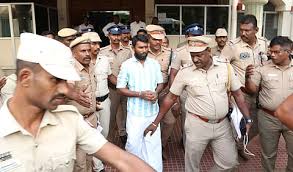
Police said, a private poultry farm at Kullichettipalayam had employed six Dalit families and four OBC families, and they were provided quarters near the farm. COIMBATORE: The Special Court in Coimbatore for the exclusive trial of cases under the SC/ST (PoA) Act awarded eight life terms each to two accused who had tried to murder poultry farm workers in a village near Kinathukkadavu in 2017 after hurling caste slurs at them. Police said, a private poultry farm at Kullichettipalayam had employed six Dalit families and four OBC families, and they were provided quarters near the farm. On November 3, 2017, OBC members played movie songs that had references to their caste. The Dalits too started playing songs about their community, fuelling tension. Subsequently, four Dalits were assaulted by OBC members, and they were admitted to hospitals. The injured were identified as K Karuppu, M Kalimuthu, his brother M Sadayandi and R Sundarraj, all from Dindigul. Police arrested P Senthilkumar (34) and V Chinnadurai (43), both from Thoothukudi, in connection with the case. Senthilkumar and Chinnadurai were consuming alcohol near the quarters when Dalits played the song. Irked, the duo assaulted them with a sickle and an iron rod, police said. On Friday, the court awarded eight life terms and imposed a fine of `16,000 on each accused. Courtesy : TNIE Note: This news is originally published on https:/thenewindianexpress.com/bha and is used purely for non-profit/non-commercial purposes, especially human rights
Villagers block roads in Yadgir over denial of access to Dalit families

Yadgir: Villagers in Guranur village of Gurmitkal taluk have blocked all roads leading to the village in support of Dalit families, alleging that two upper-caste households have denied them access to their farmlands for the past two years. The protest follows what villagers describe as a prolonged dispute over access routes. They alleged that an alternative pathway was blocked a week ago and that the families concerned refused to reopen the roads despite repeated requests. “You can complain to whoever you want, but we will not open the road,” the families allegedly told villagers, according to those leading the protest. Muttanna Hiremani, a Dalit activist in the village, claimed that an open meeting convened at the village temple to resolve the issue also failed, with the two families refusing to agree to reopening the road. Dalit families said they had submitted representations to authorities, but no action was taken to restore access, prompting villagers to join them and launch the road blockade from Thursday. The protest has also disrupted the daily routine of schoolchildren, who are now forced to cross agricultural fields to reach their schools due to the road closures. Courtesy : TOI Note: This news is originally published on https:/timesofindia.com/bha and is used purely for non-profit/non-commercial purposes, especially human rights
Disabled Dalit family gets land after 17 years: Administration in Ballarpur grants possession of 3 bighas, demand for 2 more

A disabled Dalit family in Ballarpur village, Bhogaon tehsil in Mainpuri, has been granted partial possession of their leased land after 17 years. This action was taken under Operation Mission Samadhan, a program being run by the District Magistrate. The family is now demanding possession of the remaining 2 bighas of land. Geeta Balmiki, a resident of Ballarpur, filed a complaint with the District Magistrate about 20 days ago. She explained that her disabled father, Balakram, had received a lease for 5 bighas of agricultural land about 17 years ago. Since receiving the lease, village strongmen Ratan Singh, Ram Singh, and their family members had illegally occupied the land. According to Geeta, her disabled parents filed numerous complaints at the Tehsil Day and Police Station Day, but the Lekhpal, Kanungo, and police ignored these complaints and filed false settlement reports. Geeta took up the fight herself after her parents became unable to move. Upon learning of the “Mission Samadhan” campaign, she met with the District Magistrate along with her disabled parents and pleaded for the return of their land by removing the illegal encroachment. Following the complaint, a team of Lekhpal-Kanungo arrived at the scene with police force. After measurement, the family was given possession of 3 bighas of agricultural land. The land was marked with lime and millet was sown. Geeta stated that she would soon meet with the District Magistrate and demand the removal of the illegal encroachment from the remaining 2 bighas of land. SDM Neeraj Dwivedi stated that the victim would be given possession of the remaining 2 bighas of land within three days. He also stated that an investigation would be conducted into why the Lekhpal-Kanungo had acted in the past. The SDM issued a stern warning to the illegal encroachers not to re-occupy the land. Anupam Awasthi | Bhogaon, Mainpuri Courtesy: Hindi News
Ladki Hai Ek, Naam Rajni Hai: Dalit, Daughter Of Pushcart Puller And Labourer Set To Join Bihar Police
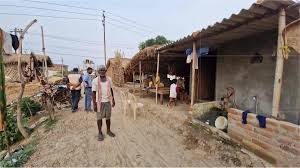
Rajni Kumari will be the first woman from Paswan Tola of Bhajaur village to join the police force. Jamui: For Rajni Kumari, life has been a journey of perseverance amid extreme poverty, deprivation, debt and manual labour. Finally, her courage has paid off, and she is now a constable in Bihar Police. Behind her success is the story of the immense sacrifice of her parents. Daughter of a father who is a pushcart puller and a mother who works as a labourer, Rajni has emerged as the pride of the Paswan community. As soon as the news of her selection reached Bhajaur village, located around 3 km from Jamui district headquarters, a festive atmosphere spread among the Paswan community. There are around 10 families living in the small hamlet of Paswan Tola, whose primary source of livelihood is manual labour. Till now, no girl of this hamlet had ever made it to the Bihar Police. Rajni grew up in a small, two-room mud house near a pond, with a roof of straw and sacks. “It’s a matter of great joy that my granddaughter’s future is secured. She worked hard and became successful. I have five sons, all of whom work as labourers. None of their families have been able to educate their children. Nor have their children achieved anything yet. However, one of my granddaughters has succeeded in clearing the Bihar Police exam, bringing glory to the entire family,” said her grandmother Shyampari Devi. The family’s financial situation was so bad that making ends meet was often a challenge. But they always had big dreams. Despite the struggles, Rajni never wavered from her goals and her resolve grew stronger. Her father, Dashrath Paswan explained, “It wasn’t possible to run the family and pay for the children’s education solely through labour wages. I took a loan and bought a handcart so that my daughter could study.” Leaving home at four in the morning, accepting whatever work came his way and working late into the night became his daily routine. He never considered any task to be small but kept working with the sole goal of educating his daughter. “We were determined to educate our daughter, no matter what difficulties we faced. Today, our hard work has paid off. Rajni is the first daughter of the entire Paswan community here to become a Bihar Police official,” Dashrath said. Rajni’s mother Sunita Devi had tears in her eyes as she recalled the family’s struggles. “At times, the situation became so difficult that it was difficult to imagine what the future held. But the family never gave up. Uncles, aunts and other relatives also helped when needed,” she said. She said that the extended family were always there to support financially and morally whenever needed. This family unity became the foundation of Rajni’s success. Rajni recalled that her parents never sent their children to work but worked to educate them. “My parents told us that they would educate us even if they had to work hard day and night,” she said. She received her primary education in Buxar and then did her matriculation and intermediate from Jamui High School. She is currently a third-year undergraduate student. Along with the studies, she prepared for the Bihar Police recruitment exam. Her goal was to get a government job. Her elder brother broke the news of her selection. “I’ll never forget that moment. The whole family was filled with joy. It felt as if my parents’ long-cherished dream had come true,” Rajni narrated. Courtesy : ETV Bharat Note: This news is originally published on https:/etvbharat.com/bha and is used purely for non-profit/non-commercial purposes, especially human rights
Madhya Pradesh: What Does It Mean To Live In Localities With Caste Indicative Names?
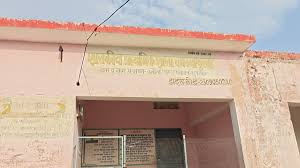
Chhatarpur: The scourge of casteism continues to be rampant in certain parts of Bundelkhand, despite the Constitution guaranteeing equality to every citizen of the country. Chhatarpur district still has hamlets and neighbourhoods with caste indicative names. Members of the Dalit community living in these areas have not been able to integrate into the mainstream of the society and have reportedly endured social discrimination and mental anguish for generations. They feel humiliated and ashamed when their village is referred to by its caste indicative name, Chamaruwa Purva is one such hamlet in Bagota village that continues to retain its caste indicative name. Residents claim families of prospective brides turn away upon hearing the area’s name, and even the rickshaw and auto drivers refuse to drop passengers here. There are many such areas and settlements in Chhatarpur whose caste-based names are mentioned in government records. Some of them are Kacchiyana Purva, Dhimran Purva, Ghusyana Mohalla and Koryana Mohalla. The residents claim that these caste-based names have caused Dalits to bear social stigma for generations. They say future generations will continue to suffer, until the names of such places are changed. Chamruwa Purva is inhabited solely by Dalits who were reportedly resettled 2 km away from the main village before Independence. The Dalits living in this hamlet are troubled by its name. One of the public representatives (Janpad Sadasya) Dalpat Ahirwar, who lives in Chamaruwa Purva, explained, “We still face social stigma. Whenever our children go for employment or to an educational institution, people look down upon us after hearing the name of our hamlet.” He added that the residents of the hamlet are unable to find a house on rent elsewhere or a job once they mention their address. “When we go to enroll our children in school, we’re asked about the area we live in. We feel embarrassed to reveal the name. We face difficulties because the area’s name is caste-indicative.” He claimed that several applications have been submitted to the local administration to change the name of the hamlet, but there has been no positive response. Meanwhile, Advocate Devendra Anuragi of Chhatarpur disclosed, “Not only is Chamaruwa Purva caste indicative, but even the Koryana Government School in Toriya Mohalla is referred to by the same name in government records. Dalits have been suffering the consequences of this for centuries. Upon hearing the name, people associate their identity with caste.” Another resident of Chamaruwa Purva, Bhubani Bai Ahirwar, disclosed, “When we return from shopping in the city, rickshaw pullers and auto drivers refuse to drop us home. Hearing the hamlet’s name, no one comes this way. Even the family of a prospective bride doesn’t come to the area to arrange a match.” Chief Executive Officer (CEO) of Chhatarpur District Panchayat, Namah Shivay Arajaria, said that to change the caste indicative names of hamlets or areas, the Gram Panchayat has to pass a resolution and get it forwarded by the Gram Sabha. “If the file comes to me from the Panchayat, we can propose a name change,” he said. A resident of Chamaruwa Purva, Sunil Kumar, candidly admitted, “The name of the hamlet is like an abuse. When one goes to get a child admitted to a school and the address is asked, it feels insulting.” Meanwhile, Anuragi pointed out that while the country and society have changed with time, Chhatarpur continues to have neighbourhoods, hamlets, and schools that are known by caste indicative names that remind the people of the old social order. “Now, these need to be changed for social harmony,” he underlined. Courtesy : ETV Bharat Note: This news is originally published on https:/etvbharat.com/bha and is used purely for non-profit/non-commercial purposes, especially human rights
Balrampur: Dalit shopkeeper stabbed for demanding payment for food at a dhaba; both accused arrested

Police arrested Raju Singh and Sanjay Singh, who stabbed Dalit dhaba owner Rahul Sonkar, and sent them to jail. Balrampur: In the city Kotwali area of Balrampur district, Uttar Pradesh, a Dalit shopkeeper’s request for payment for food served at his own dhaba proved costly. Over a small sum, the shopkeeper was brutally attacked with knives by the goons, leaving him seriously injured. Following the incident, the bloodied shopkeeper was taken to a nearby hospital for treatment, from where he was referred to Bahraich District Hospital. Both named accused arrested: Following the incident, police arrested the two main accused in the deadly attack. Police also recovered the knife used in the attack at the location of the arrested accused. City Police Circle Officer Jyotishree stated on Thursday that the victim, Rahul Sonkar, runs a small dhaba. There, on Wednesday evening, he was fatally attacked. Raju and Sanjay were being left without paying: According to CO Nagar, Raju Singh and Sanjay Singh went to Rahul Sonkar’s shop on Wednesday to eat. After eating, the two accused tried to leave the counter without paying. The shopkeeper stopped them. When Rahul asked for money, Sanjay Singh and Raju Singh became enraged and began abusing him publicly, using casteist slurs. The dispute escalated to the point where they pulled out knives and attacked Rahul with intent to kill, seriously injuring him. Referred to Bahraich due to critical condition: The injured shopkeeper was initially taken to the local District Memorial Hospital for treatment. Doctors there deemed his condition critical and referred him to Bahraich for treatment. The police have registered a case in this matter. The named accused are Raju Singh, son of Ram Jag Singh, a resident of Nanpur Majgawa in the Maharajganj police station area, and Sanjay Singh, son of Gopal Singh, a resident of Risalpur Koyalara in the Kotwali Dehat area. Police have completed the legal process and sent both accused to jail. Courtesy: Hindi News
Two Dalit Youths Beaten to Death by Mob on Theft Suspicion at Rajgir Temple Fair in Bihar
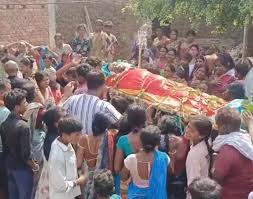
Two Dalit youths were allegedly beaten to death after being accused of theft at the famous Jhunkia Baba Temple during the ongoing Malmas fair in Rajgir. The victims, identified as Pintu Paswan (24) and Shravan Paswan (18), were residents of Ganjpar village in Nalanda district. Both had reportedly gone to the temple fair on Sunday night. Theft Suspicion Led to Mob Attack According to reports, the incident took place around 3:30 am on Monday when four youths allegedly entered the Pangat area of the temple premises. Temple authorities claimed the youths were trying to steal. All India Mahamandaleshwar Mahant Antaryami Sharan said there had been several theft incidents in recent days, which had created anger among devotees. “In the last few days, many theft incidents were reported in the temple. Devotees were already upset, and because of the Malmas fair, thousands had gathered there,” he said. When devotees noticed suspicious movement, they chased the youths. While two of them managed to escape, Pintu and Shravan reportedly fell while running and were caught by the crowd. Soon after, the mob allegedly attacked them brutally with sticks. Temple Security Handed Victims to Police The temple security team later rescued the injured youths from the mob and handed them over to the Rajgir Police. The victims were first taken to a local hospital and later referred to Patna Medical College and Hospital (PMCH) for better treatment. However, both died during treatment due to serious injuries. Police Call It Double Murder Nalanda Superintendent of Police Bharat Soni said the case is being investigated from all angles. “We are investigating the case from every aspect. This is a case of double murder. Postmortem has been completed, and the report is awaited. Several teams have been formed to arrest all the accused. Some suspects are under interrogation,” he said. Police have formed a Special Investigation Team (SIT) under the leadership of the Rajgir DSP. Heavy police force has also been deployed in the area to maintain law and order. Family Demands Justice Pintu’s mother, Saroj Devi, said her son was a daily wage labourer and the only earning member of the family after his father’s death. “I don’t know why my son went near the temple. He and his friend were beaten so badly that they died. We want the killers arrested immediately,” she said. She added that Pintu was the eldest among five brothers and three sisters and his death has left the family devastated. Courtesy : TOP Note: This news is originally published on https:/theobserverpost.com/bha and is used purely for non-profit/non-commercial purposes, especially human rights
How Bengaluru’s Neeli Paradé creates space for Dalit stories that go beyond trauma
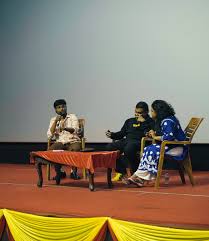
The third season of Neeli Paradé featured four short films by Dalit filmmakers. The post-screening discussion explored the films’ themes, creative processes, and social contexts. On June 14, the Dr Ambareesh Auditorium in Chamrajpet hosted season 3 of Neeli Paradé, a screening of four short films by Ambedkarite filmmakers. Presented by Neelavarana, a Bengaluru-based Ambedkarite production house and artists’ collective, the event celebrates Dalit and Bahujan lives and experiences while creating space for dialogue between filmmakers and audiences through post-screening discussions. Neeli Paradé was first organised in 2022, and has since evolved from a small show into a recurring platform for Dalit and Bahujan filmmakers and conversations around their cinema. Among the short films screened, the spotlight rested on Moda Moda by MK Abhilash and Out of Syllabus by Mahishaa, who is also the founder of Neelavarana. Moda Moda follows a couple who decide to name their would-be child Moda (clouds). Out of Syllabus centres on the blooming companionship between two girls, Sneha and Kritika, and their shared backgrounds as they walk home from school. Following the screenings, both filmmakers participated in a discussion moderated by Vijeta Kumar, an assistant professor at Bengaluru’s St Joseph’s University. The discussion explored the films’ themes, creative processes, and social contexts. The focus remained on community and shared values, while the stories told made the setting intimate and personal. “I think films are a great way to get people to think about things that they might not otherwise be comfortable talking about,” remarks Taanika Shankar, a schoolteacher who had attended Neeli Paradé for the first time. “I moved to Bengaluru a couple of years ago, and I too come from a Dalit background. I wanted to find a community where there are Dalit filmmakers and films about issues that impact Dalits. That’s when I came across the channel Neelavarna Media,” recalls Abhiraj Dethe, a director and writer whose recent works include projects with Flying Dosa Films. Abhiraj has attended earlier sessions and even remembers having previously watched one of the films screened on June 14. The post-screening discussion reflected on how the films moved beyond conventional portrayals of Dalit lives. “Since the time we started making films, I have seen that stories dealing with Dalit issues often portray us either as victims or as fighters,” commented an audience member. “Here, I see that the characters are also smiling, and the filmmaker is also smiling.” The event also featured stalls run by community-owned small businesses selling crochet products, artwork, and homemade chocolates. The initiative was aimed at supporting independent artists and entrepreneurs. Looking ahead, Mahishaa aspires to make Neeli Paradé an annual festival and to expand its reach to other cities like Mysuru and Mangalore through special invitations. Neelavarana is also open to where the future might lead, including the possibility of venturing into longer formats, which may be difficult, Mahishaa notes. “The next major step is to move towards feature films. That is a challenge. That’s something we have to figure out how to do, but we do want to eventually go into feature films and bigger screenings and events,” he told TNM. Written by:Swetha Anil Kumar, Deva Manohar Manoj (Students interning with TNM) Courtesy TNM Note: This news is originally published on https:/thenewsminute.com/bha and is used purely for non-profit/non-commercial purposes, especially human rights
‘Why should a Dalit worry about RSS’: BJP MP to Priyank Kharge; gets sharp ‘fear none’ reply
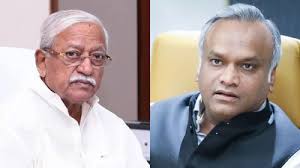
NEW DELHI: A remark by BJP MP Ramesh Jigajinagi questioning why a Dalit minister should be concerned about the RSS triggered a sharp response from Karnataka home minister Priyank Kharge on Thursday, with the Congress leader saying he “fears none” because he follows BR Ambedkar’s ideology. The controversy started from Priyank Kharge’s letter earlier this week to RSS chief Mohan Bhagwat, seeking clarity on the organisation’s legal status and asking it to disclose details of its funding, income, expenditure and assets in the interest of transparency and constitutional accountability. Addressing a press conference in Vijayapura on Wednesday, Jigajinagi criticised the move, saying Priyank Kharge was overstepping his role as Home Minister. “Is it his job to ask such questions about RSS? People will only tell him (what RSS is). Whoever came in the way of RSS did not survive. He is unnecessarily picking up an issue with the RSS. We feel bad about it,” the BJP MP said, according to news agency PTI. “My question is – why does this Dalit man need to be concerned about the RSS?” he asked.Jigajinagi also said Priyank Kharge became a minister because his father, Congress president Mallikarjun Kharge, had “toiled hard” for the party and advised him to focus on governance instead of targeting the RSS. Responding to the BJP leader, Kharge said Jigajinagi’s remarks could be interpreted in several ways. “Is it a word of caution, advising Dalits not to associate with the RSS, which believes in the fundamentals of a hierarchical social order?” he asked. He also questioned whether the BJP MP was suggesting that, as a Dalit, he had no right to question “an organisation formed to safeguard the interests of those with a sense of social superiority.” Priyank Kharge further asked whether Jigajinagi’s remark that “no one who has taken on the RSS has survived” was made out of fear or intended to intimidate him. “What are the reasons behind this threat? What does he mean by saying ‘no one has survived’? Is the RSS a terrorist organisation? Does it eliminate those who question it?” the minister asked. Asserting that he draws strength from Ambedkar’s ideals, Priyank Kharge said, “I am a follower of Babasaheb’s ideology. The courage to question and my intellectual conviction come from him. Those who believe in Babasaheb do not fear.” “I fear only a lack of morality, not threats, because Ambedkar’s blood runs in our veins,” he added. Courtesy : TOI Note: This news is originally published on https:/timesofindia.com/bha and is used purely for non-profit/non-commercial purposes, especially human rights
Gobarha—the wages of untouchable laborers, extracted from animal dung! Baba Saheb revealed the extent of casteism in villages.

In some parts of Uttar Pradesh, Dalit laborers were paid “gobarha,” meaning “grain from cow dung,” for agricultural work. New Delhi—Imagine a poor laborer who has toiled all day in the scorching sun—sweating in the fields, harvesting crops, driving oxen to separate the grain from the chaff. His back is bent, his palms are chapped, but there is a small hope in his eyes that perhaps today he will receive some worthy reward for his hard work. Exhausted, he goes to his master to ask for his wages, hoping that perhaps today his children will have a full meal. But what does his master give him? Not money, not clean grain, but a bag full of gobarha—the very grain sifted from oxen dung. The same grains that passed through the stomachs of animals were now placed in the bag of this laborer, so that he could grind them into flour and make bread for his family. This is the story of Gobarha—a practice that symbolizes the inhumanity of the untouchables and the cruelty of the Hindu social system, as described by Dr. B.R. Ambedkar in his writings. This is a truth that shakes the heart and brings us to the depths of the oppression that the untouchables endured for centuries. Dr. Bhimrao Ramji Ambedkar’s Writings and Speeches, Volume 5, Chapter 4, poignantly describes the harsh realities faced by the untouchables (Dalits) in India’s caste-dominated society, with the practice of Gobarha emerging as a prominent symbol of their inhumanity. The practice of Gobarha highlights the systematic oppression of the untouchables under the Hindu social system. It explains how this degrading practice reflects the economic, social, and cultural marginalization of the untouchables, keeping them outsiders in the so-called “village republic.” Villages Divided Ambedkar described the then Indian village as a divided society, divided into two parts: Touchable: Upper-caste Hindus who lived within the village and held economic and social power. Untouchable: A marginalized minority group forced to live in separate settlements outside the village and treated as “hereditary bonded labour.” A strict code of conduct enforced by the touchables governed every aspect of the untouchables’ lives, criminalizing even dignified actions, such as: Acquiring wealth (e.g., land or livestock). Building houses with tiled roofs. Wearing clean clothes, shoes, or gold jewelry. Giving children respectable names or speaking a cultured language. Violation of these rules invited punishments ranging from social ostracism to violence, ensuring the oppression of the untouchables. Ambedkar calls the Indian village a “republic of the negated,” in which there is no place for democracy, equality, liberty, or fraternity. It is a “republic of the touchables, by the touchables, and for the touchables,” where the untouchables are deprived of rights and are reduced to mere service and subservience. Gobarha: A Symbol of Inhumanity In parts of Uttar Pradesh, untouchables were given “gobarha,” meaning “dung grain,” for agricultural work. During the harvest season (March or April), oxen tread on the threshing floor to separate the grain from the chaff, consuming some of the grain and chaff. The next day, the partially digested grain is extracted from their dung, sieved, and given to untouchable laborers as their wages. These laborers turn this grain into flour and make bread, a result of their compulsion. Ambedkarite thinkers point out that gobarha was not merely a form of payment, but a deliberate insult. It symbolized the denial of dignified labor and food to untouchables, forcing them to survive on the remains left by animals. Ambedkar’s documentation of this practice underscores the cruelty of the caste system, where the labor of untouchables is so undervalued that even their livelihoods become degrading. Economic Exclusion and the Role of Gobarha In an agrarian society, land ownership is key to economic stability, but untouchables were systematically denied this due to: Financial constraints: Most did not have the means to purchase land. Social resistance: Upper-caste Hindus opposed attempts by untouchables to purchase land, seeing it as a challenge to their superiority and often punished such “courage.” Legal barriers: In areas like Punjab, laws such as the Land Alienation Act explicitly prohibited untouchables from purchasing land. As a result, untouchables were forced to become landless laborers, dependent on touchable farmers for work. Lacking bargaining power, they were forced to accept minimal wages—often in the form of commodities like cow dung—or face starvation and violence. Gobarha symbolized the economic exploitation of the untouchables: it was not valuable labor, but a byproduct of animal waste, reflecting the disdain of the touchables for untouchable labor. The process of extracting, sifting, and converting cow dung into food is laborious and degrading, further deepening their inferiority. This practice, prevalent in regions like Uttar Pradesh, reflected the widespread denial of fair compensation, forcing untouchables to exist on the margins of human dignity. The Right to Beg: A Parallel Livelihood Mechanism Baba Saheb writes that when agricultural work is unavailable (outside the harvest season), untouchables rely on precarious means of subsistence: Selling grass and firewood: Collected from forests, often requiring bribes to forest guards, and sold in towns where touchable buyers collude to drive down prices. Statutory begging: In many villages, untouchables have the “right” to beg for food from touchable homes. This is not charity, but a systematic practice that ties untouchable families to specific touchable families, akin to medieval slavery. Ambedkar points out that even in government jobs, the “value” of the food begged is taken into account when determining untouchables’ wages. Like cow dung, begging also increases dependency and dehumanization, trapping untouchables in a cycle of survival at the mercy of touchables. The Village Republic: An Empire of Exploitation Ambedkar calls the Indian village a “republic of the negation,” in which there is no place for democracy, equality, freedom, or fraternity. It is a “republic of the touchables, by the touchables, and for the touchables,” where the untouchables are deprived of rights and are reduced to mere service and subservience. Cowsheds and alms are the cornerstones of this exploitative system, designed to keep the untouchables “outside