
Tamil nadu polls: DMK using dalits for mere votebank, says PMK
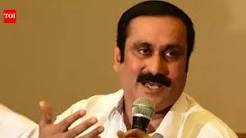
CHENNAI: PMK president Anbumani Ramadoss on Friday alleged that dalits were being reduced to a “mere vote bank” under DMK regime, saying no real welfare reaches them. Anbumani launched his campaign for the upcoming election for his candidate K Balu after offering prayers at the Thiruporur Kandaswamy Murugan temple. “DMK is using dalits for votes without delivering justice or dignity. It has been allocating six to eight seats for VCK president Thol Thirumavalavan, which will not lead to empowerment of dalits. In the Cabinet, DMK gave limited importance to Scheduled Caste ministers by making them sit in the last row,” Anbumani said at the campaign, recalling the seats given to Puratchi Bharatham MLA Poovai M Jagan Moorthy and Tamil Manila Bajuhan Samaj party founder Porkodi Armstrong. “There are more than 62,000 crimes against children in five years, including 27,000 Pocso cases, averaging 35 cases a day. The state has become unsafe for women and children,” Anbumani said. “Social justice declined in DMK after the demise of the late chief minister M Karunanidhi,” he added. Courtesy : TOI Note: This news is originally published on https:/timesofindia.com/bha and is used purely for non-profit/non-commercial purposes, especially human rights
Bhadohi Crime News: Elderly Dalit Man Murdered in Bhadohi; Attacker Stabs Him to Death in Broad Daylight, Arrested

In Bhadohi, Uttar Pradesh, a deranged young man publicly stabbed a 60-year-old elderly Dalit man to death. A live video of this heart-wrenching incident has also surfaced. Acting with promptness, the police have arrested the accused, Shravan Kumar, seizing the blood-stained knife from his possession. Bhadohi News: A spine-chilling report has emerged from Bhadohi, Uttar Pradesh. The authority of the law appeared to crumble here when a deranged youth publicly stabbed a 60-year-old elderly Dalit man to death in a bustling market. A “live video” of this bloody crime has surfaced, leaving everyone who witnessed it in shock. This daylight murder has spread terror throughout the entire locality. However, demonstrating swift action, the police have arrested the killer—recovering the “blood-stained knife” from him—and have commenced further investigations. The events that unfolded at Pal Crossing in Jagdishpur village have put humanity to shame. The images captured on camera bear witness to how a 32-year-old youth chased after the elderly Bachhan Ram—a man twice his age—wielding a “knife of death.” The elderly man pleaded for his life and begged for mercy, but the attacker, Shravan Kumar, was consumed by a murderous rage. He continued to strike the elderly man in the middle of the street until he breathed his last. In the ensuing chaos, several bystanders who attempted to intervene and save the victim also sustained injuries, yet the killer’s brutality remained undiminished. Knife Attack in the Middle of the Market A blood-soaked Bachhan Ram was rushed to the hospital in a frantic effort to save him, but fate had other plans. He breathed his last moments before even reaching the hospital’s doorstep. As soon as the news of his death reached the village, it was met with an outpouring of grief and wailing. The protective shadow of a father has now been lifted forever from over the heads of the deceased’s four sons. There is widespread outrage throughout the entire Dalit settlement over this audacious act. This broad-daylight murder has shaken the Bhadohi police department to its core. Deputy SP (CO) Prabhat Rai personally took charge of the situation and stepped into the field to lead the operation. He stated that, thanks to the police cordon, the prime accused—32-year-old Shravan Kumar—was apprehended within just a few hours. From the killer now in police custody, the police have recovered the very “blood-stained knife” used to carry out this bloody crime. **Police Arrest the Accused** Circle Officer Prabhat Rai stated that, according to preliminary investigations, the aforementioned incident appears to stem from an old feud and a personal dispute. Prabhat Rai emphasized that intense interrogation of the accused is currently underway, and anyone who takes the law into their own hands will not be spared at any cost. Currently, police personnel are patrolling the village streets, and appeals are being made to maintain peace. Rohit Gupta Courtesy: Hindi News
AIADMK functionary arrested for assaulting dalits
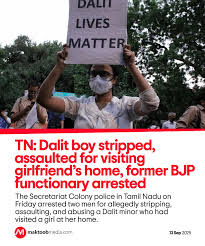
Trichy: An AIADMK functionary was arrested for allegedly assaulting a group of dalit youths campaigning for a DMK candidate in Mannachanallur constituency and was later released on bail following a protest by his supporters on Thursday. The complainant, S Rahul, 26, of Mahalikudi near Samayapuram, along with two others, was campaigning near Maniyampatti on Tuesday in support of DMK candidate S Kathiravan when the incident occurred. Police said a group of AIADMK cadres led by P Kumar, 47, confronted them, allegedly abused them using casteist slurs, threatened them and assaulted them. Rahul sustained injuries in the attack. Based on the complaint, Pulivalam police registered a case under relevant sections of the Bharatiya Nyaya Sanhita for assault, abuse and criminal intimidation, along with provisions of the SC/ST (Prevention of Atrocities) Act, and arrested Kumar on Wednesday. Following the arrest, AIADMK workers and locals staged a road blockade on the Trichy–Thuraiyur State Highway near Peramangalam on Thursday, demanding his release. Traffic was disrupted for about an hour before police intervened and pacified the protesters. Kumar was later released on bail. Courtesy : TOI Note: This news is originally published on https:/timesofindia.com/bha and is used purely for non-profit/non-commercial purposes, especially human rights
Five Dalit stories that changed how I read
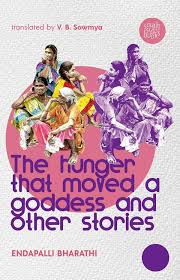
These books pushed me to confront what I thought I understood and to sit with discomfort I am still reading to learn. But this year, I am learning to heal. Healing is not always soft. Sometimes, it comes with a lot of pain. Sometimes, it burns before it soothes. Through these books I’m not just gathering my scattered pieces of history, I am also sharpening them. The Hunger That Moved a Goddess and Other Stories (Hyderabad Book Trust) by Endapalli Bharathi, trs. V.B. Sowmya Bharathi’s stories are demographically rooted in rural Andhra Pradesh, but ideologically they travel far beyond geography. They centre women’s lives from Dalit communities with an honesty that refuses pity. There is hunger, yes, but also defiance, humour, and small, everyday rebellions. The “goddess” in the title doesn’t sit in temples; she walks in bodies that endure and resist. What struck me most is how quietly radical these short stories are. And in between these lives, almost gently, the book teaches you how to eat, how to cook, how to remember through food. Recipes and eating habits appear not as instructions but as stories — of survival, of scarcity, of community. Exquisite Cadavers (Context/Westland) by Meena Kandasamy This is not a conventional novel. It is not biographical or fictional. It is fragmented, self-aware, almost impatient with storytelling itself. Kandasamy weaves together multiple narratives: a love story, a political landscape, a writer’s struggle with form. The title itself suggests bodies — broken, rearranged, reimagined. It feels like a response to violence, not by narrating it cleanly, but by refusing coherence. The book asks: how do you write when language itself has been wounded? Untouchable Goa (Panther’s Paw Publication) by Dadu Mandrekar, trs. Nikhil Baisane Mandrekar disrupts the postcard image of Goa. Through essays and reflections, he exposes the deep entrenchment of caste in Goan society — within Catholic communities, within everyday social structures, within spaces that claim modernity. The writing is sharp, almost journalistic at times, but never distant from storytelling. It forces you to confront how caste adapts, survives, and hides behind narratives of progress, liberalism, and tourism. Pulayathara (OUP India) by Paul Chirakkarode, trs. Catherine Thankamma Set in Kerala, Pulayathara documents the life of the Pulaya community with a depth that feels archival and intimate at once. It engages with landlessness, bonded labour, and generational trauma, but also with community, memory, and continuity. The novel doesn’t rush; it lingers. It allows you to sit with the weight of history. What stays is not just the suffering, but the persistence of life despite it. My Father’s Garden (Speaking Tiger) by Hansda Sowvendra Shekhar This collection of stories is deeply tied to Santhal Adivasi life. Shekhar writes about land, family, migration, and loss with a quiet, observational style. There is no spectacle here — just layered, lived realities. The “garden” becomes a metaphor for belonging and rupture. Development, displacement, and memory intersect in ways that feel both personal and political. It made me think about how landscapes hold histories we are often taught to ignore. Special mention: Ek Dalit Banker Ki Atmakatha by Nimesh Gautam For Hindi readers, this autobiography brings us into a very different terrain — the formal, bureaucratic world of banking. Gautam traces his journey as an employee of the State Bank of India, navigating the institution that claims meritocracy but is structured by caste. He reveals how discrimination operates subtly: in postings, promotions, everyday behaviour, and silence. It’s a rare account that connects caste to white-collar spaces, showing that oppression doesn’t disappear with education or employment. These books didn’t just meet me where I am. They pushed me further. To learn more. To heal more. Siddhesh Gautam The writer is an artist, thinker, and Ambedkarite. Courtesy : The Hindu Note: This news is originally published on https:/thehindu.com/bha and is used purely for non-profit/non-commercial purposes, especially human rights
Dalit History Month | Shocking RTI Revelation from IIM Ahmedabad: Out of 100 Filled Faculty Positions, 99 Belong to Upper Castes—Not a Single Dalit or Adivasi!

This situation stands in stark contrast to the reservation policy, which was designed to promote diversity and social equity. According to the policy, positions for the OBC, SC, and ST categories should ideally constitute 27%, 15%, and 7.5% of the total, respectively; however, in this instance, there is absolutely no representation from these categories. New Delhi—A recent Right to Information (RTI) response from the Indian Institute of Management Ahmedabad (IIM-A) has revealed the category-wise distribution of faculty positions within the institute. The findings are startling: the entire faculty belongs to the ‘General’ category, with not a single member hailing from the Bahujan community. Gaur Kiran Kumar, National President of the All India OBC Students Association (AIOBCSA), had filed the RTI application in January 2026. In its response, IIM Ahmedabad stated that the institute has a total of 120 sanctioned faculty positions across the ranks of Professor, Associate Professor, and Assistant Professor. Of these, 100 positions are currently filled, while 20 remain vacant. According to the data provided in the RTI response, out of the 100 filled positions, 99 belong to the General category, while only one position belongs to the OBC category—and that, too, at the Assistant Professor level. No filled positions were reported from the SC, ST, EWS, or PwD categories. This RTI revelation comes amidst the ongoing struggle regarding the implementation of reservation policies in higher education institutions. On January 29, 2026, the Supreme Court stayed the University Grants Commission (Promotion of Equity in Higher Education Institutions) Regulations, 2026, thereby allowing the 2012 regulations to remain in force. Multiple RTI applications filed by Kiran Kumar Gaur across various IITs and IIMs nationwide have consistently highlighted the overwhelming dominance of the General category in faculty positions. In these premier institutions, more than 80 percent of the faculty members belong to the General category, while in several institutions, this figure exceeds 90 percent. *The Mooknayak* has previously reported on similar facts, highlighting cases involving several IIMs where reserved posts for the SC, ST, and OBC categories have remained vacant for years. **The Situation in Other IIMs** A response received from IIM Indore in 2024 revealed that out of 150 faculty positions, numerous vacancies reserved for specific categories have not been filled. Of these, 106 positions have been filled by General category candidates, leaving 41 positions vacant. In the OBC category, there were only two Assistant Professors, while in the Scheduled Caste/Scheduled Tribe category, there were none. According to an RTI response received in October 2024, the total sanctioned strength of faculty members at IIM Calcutta stood at 126. However, the data reveals significant discrepancies in filling these positions in accordance with the reservation policy. 53 positions were allocated for Unreserved (UR) candidates. The RTI revealed that a total of 73 UR faculty members were recruited—exceeding the allocated limit by 20 positions—and, additionally, 20 UR positions remain vacant. Another RTI inquiry directed at IIM Tiruchirappalli brought to light startling figures: 83.33% of faculty positions for OBCs, 86.66% for SCs, and 100% for STs remained vacant, whereas all positions in the General category were filled. Multiple reports indicate that in many premier institutions, over 80 percent of the faculty members belong to the General category, with some institutions recording a representation of over 90 percent from this category. **Upper Castes Dominate in IITs as Well** Data obtained from IIT Delhi, Kharagpur, Kanpur, Roorkee, BHU, Guwahati, Hyderabad, Gandhinagar, Ropar, Palakkad, Mandi, Jodhpur, Bhubaneswar, Indore, Tirupati, Dharwad, Goa, and Patna reveals a consistent pattern: representation from the General category is disproportionately high, while there is a severe deficit in the representation of OBC, SC, and ST communities. IIT Palakkad: Out of 161 faculty members, 121 (75.15%) belong to the General category; OBC members number 24 (14.9%), SC members 15 (9.31%), and there is only 1 (0.62%) from the ST category. The institute does not have a single SC or ST professor. IIT BHU (Varanasi): Out of 344 faculty members, 79.36% belong to the General category, 11.63% to OBC, 7.85% to SC, and only 1.16% to ST. Out of 608 sanctioned posts at the institute, 260 remain vacant; however, the institute failed to provide a category-wise breakdown of these vacant positions. IIT Kharagpur: This large institution has 775 faculty members, with the General category holding the largest share at 91.22%. Representation for OBC stands at a mere 5.55%, for SC at 2.71%, and for ST at a negligible 0.26%. Out of 1,600 sanctioned posts, 825 are vacant, and no category-wise data has been provided. IIT Gandhinagar: Out of 135 faculty members, 85.93% belong to the General category, while OBC members constitute 5.93%, SC members 5.91%, and ST members 2.96%. At the professor level, representation for OBC, SC, and ST categories is zero. IIT Ropar: Out of 177 faculty members, 78.53% belong to the General category, 14.69% to OBC, 5.65% to SC, and 1.69% to ST. IIT Patna: One of the few institutes that has provided data on category-wise sanctioned posts. Out of 390 sanctioned posts, 228 have been filled. Among the filled posts, 38.16% belong to OBC, 21.49% to SC, and 12.72% to ST; these figures are significantly better compared to other IITs. IIT Roorkee: Here, there are 939 sanctioned posts, but only 533 have been filled. The institute has not provided any category-wise breakdown of sanctioned, filled, or vacant posts. IIT Tirupati: Out of 114 faculty members, 69.30% belong to the General category, 18.42% to OBC, 8.77% to SC, and 2.63% to ST. IIT Mandi: Out of 175 faculty members, 81.14% belong to the General category, 11.43% to OBC, 5.71% to SC, and 1.71% to ST. At the Professor level, the number of faculty members belonging to the OBC, SC, and ST categories is zero. IIT Bhubaneswar: Out of 213 faculty members, 80.28% belong to the General category, 13.15% to OBC, 5.63% to SC, and only 0.46% to ST. IIT Jodhpur: Out of 244 faculty members, 79.10% belong to the General category, 13.11% to OBC, 6.15% to SC, and 0.82% to ST. IIT
Dalit IAS Officer Rinku Singh Rahi Resigns from U.P. Cadre Alleging Harassment and Bureaucratic Corruption

2022-batch Dalit IAS officer Rinku Singh Rahi resigns from Uttar Pradesh cadre, alleging harassment, sidelining, and bureaucratic corruption, calling the system morally flawed. Rinku Singh Rahi, a 2022-batch IAS officer of the Uttar Pradesh cadre, resigned from his position on March 31, 2026, alleging systematic harassment and a denial of meaningful work. Rahi, who belongs to the Dalit community, claimed he was “sidelined” and kept in an “attached” position at the U.P. Revenue Board without any public-service responsibilities. Despite receiving a salary, the officer termed his lack of duties as a “form of corruption” and a moral failure of the administrative system. His resignation has sparked criticism from political figures like Nagina MP Chandra Shekhar Aazad, who highlighted the struggle of honest officers within the current bureaucracy. A “Moral Decision” Against Bureaucratic Inertia In his resignation letter, Rahi articulated that being paid to do no work was fundamentally against his principles of integrity. He alleged that a “parallel system” exists within the administration where honest officials are effectively neutralised by being denied active roles. Rahi’s marginalisation intensified in July 2025 after a video went viral showing him performing sit-ups as a gesture of “moral responsibility” for the poor state of public toilets in Shahjahanpur. Following this incident, he was removed from his post as Sub-Divisional Magistrate (SDM) of Puwayan within just 36 hours. “In the system, there is perhaps a special kind of punishment reserved for honest people they get paid, but no work is assigned to them,” Rahi stated, describing his tenure at the Revenue Board as a period of forced inactivity. A Legacy of Defiance and Survival Rinku Singh Rahi’s journey to the Indian Administrative Service is one of extraordinary resilience. Before becoming an IAS officer, he served in the Provincial Civil Service (PCS), where in 2009, he exposed an ₹83-crore scam in the social welfare department. His whistleblowing led to a brutal assassination attempt where he was shot seven times, leaving him disfigured and blind in one eye. Despite the trauma, he cleared the UPSC examination in 2021 under the disability quota. His recent resignation is seen by supporters as the final straw in a long-standing battle against a system he feels has consistently opposed his efforts to instill transparency. Member of Parliament Chandra Shekhar Aazad echoed this sentiment, stating, “A Dalit IAS officer was forced to quit due to neglect. It raises a question mark on the entire administrative system.” The Logical Indian’s Perspective At The Logical Indian, we believe that the strength of a democracy lies in the protection of its whistleblowers and the empowerment of its honest officers. Rinku Singh Rahi’s resignation is not just the story of one individual; it is a distressing symptom of a system that often prioritises silence over accountability. When an officer who survived seven bullets for the truth feels forced to leave because he is “denied work,” it reflects a failure to foster an inclusive and ethical work environment. We advocate for a bureaucracy that values empathy and transparency over rigid hierarchies and political convenience. True social change can only occur when those within the system are allowed to work with dignity, regardless of their background or their refusal to stay silent against corruption. Sandipta Ghosh Courtesy : TLI Note: This news is originally published on https:/thelogicalindia.com/bha and is used purely for non-profit/non-commercial purposes, especially human rights
SC/ST Commission Chief Warns Against Discrimination
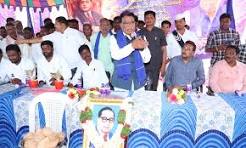
Dalits allowed to enter temple, community dining programmes held NIZAMABAD: SC/ST Commission chairman Bakki Venkataiah,, warned that strict action would be taken under the SC/ST Atrocities Act against any injustice or discrimination towards Dalits, and urged victims to come forward and file complaints without fear. He said the Indian Constitution guarantees equality and stressed the need to eliminate caste-based discrimination and divisions in society, adding that it is a collective responsibility to ensure equal rights for all. A social equality programme was conducted in Narsampalli village of Kamareddy district on Wednesday, aimed at addressing caste discrimination in rural areas. As part of the initiative, Dalits were allowed entry into temples in the village, and community dining programmes were organised. Officials and villagers also visited the Anjaneya Swamy and Shiva temples and performed prayers, with participation from all sections. Venkataiah said coordinated efforts by the government, officials and the public were necessary to address discrimination, and emphasised equal access to temples, social events and festivals. Additional collector (revenue) Victor, SC Corporation official Venkateshwarlu, sarpanch Ravi, DTDVO Soujanya and tahsildar Himabindu were present. At the start of the programme, Venkataiah paid tributes to B.R. Ambedkar by garlanding his portrait. Community meals were later organised, with participation from villagers across sections. Narender Pulloor Courtesy : Deccan Chronicle Note: This news is originally published on https:/deccanchronicle.com/bha and is used purely for non-profit/non-commercial purposes, especially human rights
IAS officer row: Akhilesh alleges ‘systemic neglect’ under BJP; Bhim Army chief raises Dalit angle
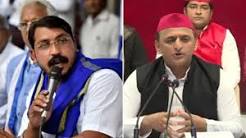
IAS officer Rinkoo Singh Rahee sought to return to Provincial Civil Services due to a lack of work. Opposition leaders, including Akhilesh Yadav and Chandrashekhar Aazad, alleged administrative bias and neglect of honest officers under the BJP government. They criticized the sidelining of competent officials, with Aazad noting Rahee’s past anti-corruption efforts despite his Dalit identity. *AI-generated summary. Check context in original text. Lucknow, Political reactions poured in on Wednesday after Uttar Pradesh cadre IAS officer Rinkoo Singh Rahee sought to return to his parent service, with opposition leaders alleging administrative bias and neglect of “honest officers” under the BJP government. Rahee, a 2023-batch IAS officer currently attached to the Board of Revenue in Lucknow, has written to the president requesting repatriation to the Provincial Civil Services (PCS), citing a lack of work for several months and the absence of meaningful responsibilities. Samajwadi Party chief Akhilesh Yadav alleged that capable officers are not valued under the present dispensation. In a post on X, he said efficient officers have “no importance” in the BJP government and are often sidelined, while those involved in corruption are given preference. He urged officers not to take decisions in haste, expressing hope that a future government would ensure “due respect and proper roles for competent officials.” Yadav also said that quality governance requires skilled officers and maintained that his party has always valued professional competence in administration. Azad Samaj Party chief and Bijnor MP Chandrashekhar Aazad termed the development “deeply concerning” and indicative of larger issues within the administrative system. In his remarks, Azad highlighted that Rahee, who belongs to the Dalit community, had earlier exposed corruption and survived a life-threatening attack, and yet he now finds himself without work. He also pointed to what he described as contradictions in the administrative setup, alleging instances where ministers, including those from marginalised communities, were not accorded due protocol by officials. Such developments raise serious questions about institutional functioning and suggest deeper imbalances within the governance structure, Aazad said. PTI KIS CDN VN VN This report is auto-generated from PTI news service. ThePrint holds no responsibility for its content. Courtesy : The Print Note: This news is originally published on https:/theprint.com/bha and is used purely for non-profit/non-commercial purposes, especially human rights
Dalit groups protest alleged saffronisation of KSOU
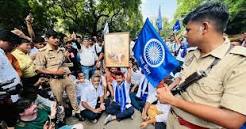
Mysuru: Several Dalit and progressive organisations held a protest in front of the Karnataka State Open University (KSOU) administrative block at Mukthagangotri in Mysuru on Wednesday, accusing the varsity administration of saffronisation of the university. They alleged that VC Sharanappa V Halse allowed the conclave to commemorate 60 years of Deendayal Upadhyaya’s lectures on ‘Ekatma Manav Darshan’ for his personal gains and urged the state govt to take stern action against him. Activists, writers and artists who gathered in front of the university shouted slogans against the VC for allowing the ‘Ekatma Manav Darshan: Bharat’s Worldview’ event, which, they claimed, was anti-democratic and anti-people. They urged the governor to sack the VC pending inquiry over various allegations against him. The agitators urged the state govt to register FIR against the VC for violating its order. BJP MLC AH Vishwanath, who met the agitators, assured them that he will raise the issue with the governor. Later, they submitted a memorandum to the governor through university registrar SK Naveen Kumar. In the memorandum, the agitators alleged that the VC is following communal policies and his decisions are affecting the functioning of the varsity. AHINDA leader Javarappa alleged that even though the KSOU is now facing acute shortage of students, there is no end to the new recruitments. “The university has become a den of corruption. There is no fear of law to those who are committing corruption,” he charged. “Several previous judicial committee investigative reports are lying idle. As a result, corrupt are carrying out misdeeds without the fear of law. There is an urgent need for action against the VC for his various controversial decisions,” he said. Courtesy : TOI Note: This news is originally published on https:/timesofindia.com/bha and is used purely for non-profit/non-commercial purposes, especially human rights
Dalit girl manhandled in hostel
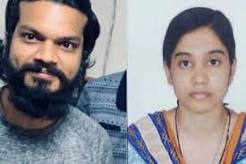
Lucknow: A Dalit girl residing at Lucknow University’s BR Ambedkar Hostel was allegedly manhandled and targeted by a group of girls from the same hostel for uploading a photograph of BR Ambedkar as the display picture in the WhatsApp group of the hostel, of which she was an admin. The incident took place on March 26 at LU’s second campus. On Wednesday, the panel formed by the proctor started a probe into the incident and recorded the statements of the complainant and accused girls. The complainant, an LLB III student, told TOI, “I was physically manhandled and verbally abused with casteist slurs by some girls in the hostel just because of the WhatsApp group profile picture. The provost and Dean Students’ Welfare also came to meet me but did not offer any help, after which I mailed my complaint to the proctor of the university.” The video of the incident also went viral on Instagram. Courtesy : TOI Note: This news is originally published on https:/timesofindia.com/bha and is used purely for non-profit/non-commercial purposes, especially human rights