
Dalit Father and Son Beaten in Mainpuri; Thugs Unleash Violence Over Ribbon-Cutting at Fair

It is alleged that the *Pradhan* (village head) and his supporters were armed with illegal weapons; following the assault, they fled the scene after openly issuing death threats. Both the father and son sustained serious injuries in the incident. In Mainpuri, Uttar Pradesh, a Dalit father and son were beaten by a group of thugs over a dispute regarding the ribbon-cutting ceremony at the Radha-Krishna Fair. The incident took place in Lakhanmau village, under the jurisdiction of the Barnahal police station, where the *Pradhan* and his supporters assaulted the Dalit father and son. Despite the presence of the police, the thugs brutally beat and intimidated the victims without any hindrance. In Mainpuri, Uttar Pradesh, a Dalit father and son were brutally beaten by a group of thugs over a dispute concerning the ribbon-cutting ceremony at the Radha-Krishna Fair. A video of this entire incident is rapidly going viral on social media. It is reported that the *Pradhan* and his supporters took strong offense to a member of the Dalit community performing the ribbon-cutting ceremony at the Radha-Krishna Fair, which was organized in Lakhanmau village under the Barnahal police station area. Enraged by this, the thugs launched a violent assault on the Dalit youth and his father. Shockingly, the entire incident unfolded in the presence of the police; however, the thugs were so emboldened that they showed no regard for anyone. Throughout the assault, the young victim kept pleading for mercy, but the accused remained unmoved. **Injured Father and Son Referred to Saifai** It is alleged that the *Pradhan* and his supporters were armed with illegal weapons; following the assault, they fled the scene after openly issuing death threats. Both the father and son sustained serious injuries in the incident; they were initially admitted to a local hospital but were subsequently referred to Saifai after their condition deteriorated. **Case Registered Against 5 Named Individuals and Others** The victims have filed a formal complaint at the police station against five named individuals and several unidentified persons. Currently, the police are engaged in investigating the entire matter. Reported by: Pramod Kumar, Edited by: Abhishek Pareek Courtesy: Hindi News
Congress Targets Rajasthan Govt Over Ajmer Dalit Rape Case
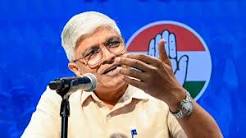
New Delhi: The Congress on Saturday launched a sharp attack on the Rajasthan government, alleging that those accused in the gang rape of a 15-year-old Dalit girl in Ajmer are being shielded and that the victim’s family has been left without adequate protection. The party also flagged what it described as a broader rise in atrocities against Dalits in BJP-ruled states. Speaking at a press conference, Rajendra Pal Gautam said the handling of the case reflects serious lapses by the police. He stated that the incident occurred in July 2024 but came to light only after the minor became pregnant. A Zero FIR was initially registered in New Delhi and later transferred to Ajmer. Despite the victim recording her statement before a magistrate under Section 164 of the CrPC, Gautam alleged that no arrests were made for nearly eight months. He said that out of the three accused, only one has been arrested so far, while the other two were briefly detained under preventive provisions and subsequently released. Gautam further alleged that on March 16, just ahead of a scheduled court hearing, the victim’s family was attacked with axes after they refused to agree to a compromise. He added that a counter-FIR was filed against the family, though it was later closed. Raising legal concerns, Gautam pointed to alleged violations of the Scheduled Castes and Scheduled Tribes (Prevention of Atrocities) Act. He said the authorities failed to provide protection to the victim as mandated under Section 15(A) and did not take action against officials responsible for negligence under Section 4. He demanded immediate security for the victim and her family, adequate compensation, and strict legal action, including the arrest of police officials found to have violated the law. Highlighting a wider trend, Gautam cited data claiming that 76 percent of reported atrocities against Dalits are concentrated in five BJP-ruled states. He said Uttar Pradesh, Madhya Pradesh and Rajasthan account for the highest number of such cases, followed by Bihar and Maharashtra, and argued that the figures point to a systemic issue requiring urgent attention. The Congress also referred to related political developments, noting that Rahul Gandhi has written to the Prime Minister seeking withdrawal of cases linked to the 2018 protests held to protect the SC/ST Act. Gautam said this reflects the party’s continued focus on safeguarding the rights of marginalised communities. He also announced that Rahul Gandhi will flag off a “Run for Ambedkar, Run for Constitution” marathon in Delhi on April 12 to mark the birth anniversary of B. R. Ambedkar, calling on people to participate in large numbers. The Congress maintained that the Ajmer case underscores the need for accountability, stronger enforcement of laws, and timely justice for victims, warning that failure to act decisively would further erode public trust in the system. By Purna Singh Courtesy : THI Note: This news is originally published on https:/thehansindia.com/bha and is used purely for non-profit/non-commercial purposes, especially human rights
Vengaivayal: Non-dalits announce poll boycott

Pudukottai: Tensions surrounding the 2022 Vengaivayal water contamination case have resurfaced, with residents of Erayur village in Muttukadu panchayat announcing they will boycott the upcoming election. Non-dalit Hindus of the village erected flex banners in this regard on Friday night. It may be recalled that human waste was found mixed in an overhead water tank supplying water to the dalit village, triggering outrage across the state. Subsequently, CB-CID registered a case alleging involvement of three Vengaivayal residents, ruling out a caste motive. They said it was done due to personal enmity. However, villagers have strongly opposed the charges, claiming innocence and alleging that people from neighbouring Erayur and Muttukadu areas could be responsible. The differing claims have since led to repeated friction between residents of the two villages. In their banners erected on Friday night, Erayur villagers listed several demands, including arrest of the actual culprits in the case, withdrawal of cases filed against them under Scheduled Castes and Scheduled Tribes (Prevention of Atrocities) Act, and other civic issues. Revenue and police officials have begun inquiries into the banner protest. Sources said residents of Vengaivayal have also indicated they may boycott the upcoming polls. Courtesy : TOI Note: This news is originally published on https:/timesofindia.com/bha and is used purely for non-profit/non-commercial purposes, especially human rights
76% of Dalit atrocities in 5 BJP-ruled states: Congress
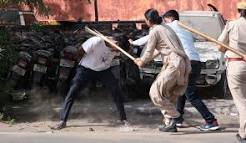
The Congress on Saturday accused the BJP government in Rajasthan of shielding the perpetrators in the gang rape of a 15-year-old Dalit girl in Ajmer and a subsequent life-threatening attack on her family. Addressing a press conference, AICC SC Department Chairman Rajendra Pal Gautam said the police had failed to act and added that atrocities against Dalits were rising in BJP-ruled states. Citing data, Gautam said 76 per cent of cases of atrocities against Dalits were reported from five BJP-ruled states, with Uttar Pradesh, Madhya Pradesh, and Rajasthan topping the list, followed by Bihar and Maharashtra. He said the crime took place in July 2024 but came to light only after the minor became pregnant, following which a Zero FIR was registered in New Delhi and later transferred to Ajmer. Gautam noted that despite the victim recording her statement before a magistrate under Section 164 of the CrPC, no arrests were made for eight months. Article_Author Tribune News Service Courtesy : The Tribune Note: This news is originally published on https:/thetribune.com/bha and is used purely for non-profit/non-commercial purposes, especially human rights
Identity vs dignity: Virudhunagar Dalits to boycott TN polls over caste-based village name

Because of the village name – “Paraicheri” – residents say they are forced into a position of humiliation even at workplaces. Synopsis: Over 60 Dalit families in North Achamthavilthan, Virudhunagar, face daily humiliation as their locality is officially recorded as “Paraiyar Cheri.” Despite petitions for 15 years, the caste-marked name persists in voter lists, Aadhaar, and bank records. Frustrated by inaction, residents have resolved to boycott the 2026 Assembly elections, demanding dignity through a permanent name change. “Hey Suryakala, come here” — this is how Kannan (name changed), a 30-year-old man, calls out to Suryakala, who is over 60 years old, without even a trace of respect. Ironically, Kannan studied in school with Suryakala’s daughter. Not just Suryakala — over 60 families from North Achamthavilthan village in Srivilliputhur taluk of Virudhunagar district have been facing such disrespect and humiliation for years, solely because they belong to the Dalit community. What is more troubling is that not only the general public, but even government records refer to their locality as “Paraicheri,” explicitly marking their caste identity. The residents say that wherever they go, this name subjects them to humiliation and caste-based discrimination. For over 15 years, they have submitted petitions—from local Tahsildar to the Chief Minister—requesting a change in the village name. But as no action has been taken so far and the indignity continues, the residents of North Achamthavilthanhave now announced that they will boycott the 2026 Assembly elections. Village carrying burden of caste humiliation North Achamthavilthan is located in Achamthavilthan revenue village under Achamthavilthan panchayat in Srivilliputhur taluk of Virudhunagar district. While multiple intermediate communities live across the broader village, over 60 families belonging to the Dalit Paraiyar community reside in the northern part. Because of this, the area has come to be referred to as “Paraicheri” — not just by neighboring villagers but also in official records. This name appears in documents such as voter lists, bank records, Aadhaar, and PAN cards. However, in land patta records, the village is still officially recorded as Achamthavilthan. Thus, while some government documents mention Achamthavilthan, others continue to use “Paraicheri.” A Abi, a native of this village who is currently pursuing a PhD in Chennai, shared how this caste-based naming has affected her since childhood. “I did all my schooling in and around my village. We had to go to a neighboring village for school, where students from other communities also studied. They would mock us by calling out our village name, and even write it on classroom desks to ridicule us,” she said. She added that upon hearing the name of their village, some students from certain intermediate castes would even avoid speaking to them. “Not just students, even today, elders from those communities expect us to address even their children with respect, using ‘vaanga, poonga.’ But they, from children to adults, never extend the same respect to us,” she said. Even though Suryakala is over 60, she, and others from her community, are still addressed disrespectfully by people from intermediate castes in the same village, often being called by name without basic courtesy. Abi noted that while the intensity of such behaviour may have reduced over the past decade, it still continues. 15-year-long struggle Because of the village name, residents say they are forced into a position of humiliation even at workplaces. SV Kumar, a resident, has been leading the fight to change the name for over 15 years. “When children go to school, they hesitate to even say the name of our village. Even when we go to work, if someone asks where we are from, we say Achamthavilthan. But those who know will immediately correct it and say ‘No, they are from Paraicheri.’ At that moment, we feel deeply humiliated. We lose the sense of being free individuals and are pushed into a mindset of inferiority, as if we are slaves to others,” he said. Despite years of suffering, residents continue to fight for change. While in manual processes at local offices they manage to get the name recorded as North Achamthavilthan, digital government services like Aadhaar and tax records still reflect “Paraicheri.” “In some cases, during Aadhaar enrolment or updates, we insist and get the name corrected. But many people who cannot argue are left at the mercy of e-service operators, who continue to enter ‘Paraicheri,’” Kumar said. He added that even when opening bank accounts, despite submitting the name as North Achamthavilthan, officials, often local and from other communities, override it and record “Paraicheri.” Even the Election Commission’s voter list continues to carry the caste-based name. This is despite residents submitting forms with the correct name during the recent Special Intensive Revision. “We have submitted petitions to everyone, from the Tahsildar to the Chief Minister. There is no one we haven’t approached. Yet nothing has changed,” Kumar said. Over the past decade, resolutions demanding the name change have been repeatedly passed in the gram sabha. Petitions have been sent at every level. Seeking accountability, Kumar even filed RTI queries with the district collector’s office. According to the RTI response, in March 2023, the Srivilliputhur revenue divisional officer recommended changing the name from “Paraicheri” to North Achamthavilthan and forwarded it to the Virudhunagar district collector. In July 2025, the collector forwarded the recommendation to the Commissionerate of Revenue Administration and Disaster Management in Chennai. However, Kumar says the RTI reply revealed that the request is currently pending at that department. “Our village has central government employees, award-winning teachers, and highly educated graduates. Yet, wherever we go, we are humiliated because of our village name,” said Abi. “No matter how far we progress, the moment we say our village name, people’s perception of us changes. We feel like we are not free individuals. Changing the name will give us the dignity of being equal citizens of this country. It will free the next generation from the humiliation we have endured for years,” Kumar said. “When people hear our village name, some look at us with ridicule,
‘No one is going to fall for their rhetoric…’ Rajbhar hits back at Akhilesh’s statement
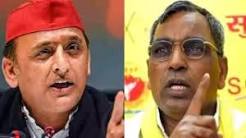
Om Prakash Rajbhar, hitting back at Akhilesh Yadav’s statement, has asserted that the Dalit and Backward Classes will no longer be swayed by the Samajwadi Party (SP). Rajbhar hits back at Akhilesh Yadav’s statement. Dalits and Backward Classes will not fall for the SP’s rhetoric. SP accused of abolishing Dalit reservation and instigating riots. State Bureau, Lucknow. Om Prakash Rajbhar—President of the Suheldev Bharatiya Samaj Party (SBSP) and a cabinet minister—has hit back at the statement made by SP President Akhilesh Yadav on Friday, declaring that the Dalit and Backward Classes have now seen through his strategy of misleading the public. “No one is going to fall for their rhetoric,” he asserted. Rajbhar stated that this is the very same SP that worked to abolish reservation for Dalits in promotions. He noted that while BSP Chief Mayawati had established districts and universities named after prominent Dalit icons, it was the SP that subsequently worked to change those names. During the SP’s rule, riots were a frequent occurrence, and Dalits often lost their lives in the ensuing violence. SP goons, he alleged, used to encroach upon and seize land belonging to Dalits. He further remarked that whenever the SP forms a government, a single specific caste comes to dominate the administration; even the Muslims—who play a pivotal role in bringing the party to power—are subsequently sidelined. Rajbhar acknowledged that the SP had benefited in the recent Lok Sabha elections from false propaganda claiming that the Constitution was under threat of being abolished; however, he asserted that Dalits and Backward Classes will no longer fall for their deceptive ploys. BY HEMANT KUMAR SRIVASTAVA | EDITED BY: AYSHA SHEIKH Courtesy: Hindi News
Farmer Beaten by Thugs in Hamirpur; Attempted Murder: Locked in Tubewell Room and Nearly Hanged with a Rope

Bharua Sumerpur: In Bank village within this region, a Dalit farmer was brutally beaten by a group of thugs following a dispute over the installation of thorny fencing along a farm embankment. The accused also attempted to kill the farmer by locking him inside a tubewell room and trying to hang him with a rope. The police have registered a case regarding this incident. Raghuvar Prasad, a resident of Triveni Maidan in the town, has filed a complaint with the police. He stated that he was in his ancestral village, Bank, installing thorny fencing along the farm embankment to protect his fruit-bearing trees. During this time, Babu Kushwaha, Nokhelal, Chhote, Rajkumar, and others—all residents of Bank—stormed onto the scene. It is alleged that these individuals hurled casteist slurs at Raghuvar Prasad and, drawing a country-made pistol, charged at him with the intent to kill. To save his life, Raghuvar Prasad fled into the tubewell room. The attackers followed him inside, where they brutally beat him with kicks and punches, leaving him covered in blood. Subsequently, they placed a rope around Raghuvar Prasad’s neck and attempted to hang him. The police have registered a case against the accused under the Dalit Atrocities Act (SC/ST Act), along with other relevant sections of the law. The police are currently investigating the matter and have launched a search for the accused. Deepak Kumar | Kalauli Teer (Hamirpur) Courtesy: Hindi News
Rape Convict Sentenced to 10 Years in Sonbhadra: Court Imposes Fine of ₹55,000 in Case Involving Rape Under False Pretext of Marriage

In a significant verdict delivered on Tuesday, the court of Special Judge (SC/ST Act) Abid Shamim in Sonbhadra convicted Dhanesh—alias ‘Stander’ Patel—of rape and sentenced him to 10 years of rigorous imprisonment. The court also imposed a monetary fine of ₹55,000 on the convict. The court clarified that in the event of non-payment of the fine, the convict would be required to undergo an additional six months of imprisonment. The period already spent in judicial custody will be adjusted against the sentence. Half of the imposed fine amount is to be awarded to the victim. This case dates back approximately five years, when a young Dalit woman from the Karma police station area filed a complaint. The woman alleged that Dhanesh—alias ‘Stander’ Patel (son of Rajkumar Raja Patel, a resident of Khairpur Sirsiya Thakurai, under Karma Police Station, District Sonbhadra)—had engaged in sexual relations with her on multiple occasions under the false pretext of marriage. According to the victim, when Dhanesh announced his intention to marry a girl from his own caste community and was confronted about it, he verbally abused her and issued death threats. Subsequently, on May 17, 2021, the Karma police registered an FIR against him under various sections, including those pertaining to rape and the SC/ST Act. The Circle Officer (CO) investigated the matter and, based on sufficient evidence, filed a chargesheet in the court. The court heard the arguments presented by the counsels for both the prosecution and the defense, recorded the statements of seven witnesses, and conducted a thorough examination of the case records. Based on all these facts, Dhanesh—alias ‘Stander’ Patel—was found guilty. Government Counsel C. Shashank Shekhar Katyayan represented the prosecution during the arguments. Manoj Kumar Verma | Sonbhadra Courtesy: Hindi News
Can Dalit voters become game-changers in 2027 UP polls?:SP banks on Constitution; Congress leans on Jagjivan Ram’s legacy

Two recent political statements have made it clear that Dalit voters—who constitute around 21% of Uttar Pradesh’s population—could play a decisive role in the 2027 Assembly elections. “Mayawati only used Dalits and later abandoned them. Even today, Dalits and weaker sections remain marginalized,” said Ajay Rai on April 2. “We will celebrate Ambedkar Jayanti at the village level and discuss the threats facing the Constitution,” said Akhilesh Yadav on April 3. These remarks indicate that both the Samajwadi Party (SP) and Congress are actively trying to consolidate Dalit voters ahead of the elections. Congress revives Jagjivan Ram’s legacy Jagjivan Ram, India’s first Dalit Deputy Prime Minister, played a crucial role in the 1971 India-Pakistan war that led to the creation of Bangladesh. As Agriculture Minister, he also contributed to the Green Revolution. His rise to the top echelons of power sent a strong message that Dalits could play a decisive role in mainstream politics. Although Jagjivan Ram hailed from Bihar, Congress used his legacy for decades to maintain a strong hold over Dalit voters in Uttar Pradesh. Read in this report… Samajwadi Party cheif Akhilesh Yadav said on Friday in Lucknow that the constitution will be discussed in every village. Samajwadi Party cheif Akhilesh Yadav said on Friday in Lucknow that the constitution will be discussed in every village. Congress outreach through Meira Kumar To reinforce this connection, Congress is organizing a seminar in Lucknow on the eve of Jagjivan Ram’s birth anniversary (April 4). The party has invited his daughter Meira Kumar and Dalit thinker and Delhi University professor Ratan Lal as key speakers. Through this, Congress aims to send a message that Dalit interests are best protected under its leadership. Party workers have also been instructed to spend more time in Dalit localities and engage directly with their concerns. Why Dalit votes matter Senior journalist Ratan Mani Lal explains that Dalits constitute around 20–21% of UP’s population. There are 84 Assembly seats reserved for Scheduled Castes, and nearly 120 constituencies where Dalit voters exceed one lakh. Since Mayawati weakened after 2012, there has been no single dominant Dalit leader to unify the community. In 2014, a significant section of Dalit voters supported Narendra Modi, contributing to the BJP’s sweeping victories. However, voting trends suggest that such support typically lasts about a decade before voters begin exploring alternatives. Dalit vote shifts and Political competition After a BSP rally on October 9, 2025, there were indications that Dalit voters were returning to Mayawati. This prompted SP and Congress to intensify efforts to prevent a consolidation of Dalit votes in BSP’s favor. Their strategy showed partial success in the 2024 Lok Sabha elections, where the alliance secured around 43% of the vote in UP, with significant support from Dalit voters. They now aim to replicate this in the 2027 Assembly polls. Election data reflects changing trends In the 2022 Assembly elections, Congress contested 399 seats independently but won only two, with a vote share of 2.33%. However, in the 2024 Lok Sabha elections, the party won six seats and increased its vote share to 9.46%. The Samajwadi Party also saw a 2% increase in vote share compared to 2022. Percentage of Major Dalit Sub-Castes Sub-Caste % in Dalit Population % in Total UP Population (Approx.) Area of Influence Jatav/Chamar 54.2% 11.3% Strong in Western and Eastern UP Pasi 15.8% 3.2% Influence in Awadh and Purvanchal Dhobi 5.9% 1.2% Central and Eastern UP Kori 5.5% 1.1% Bundelkhand and Awadh Valmiki 3.2% 0.7% More in urban areas Khatik 2.2% 0.5% Small but active Search for a new Dalit leadership Senior journalist Sharat Pradhan notes that Dalits once saw Jagjivan Ram’s image reflected in Mayawati. However, as her influence declined post-2012, dissatisfaction grew among Dalit voters. This has led to the emergence of new leaders like Chandrashekhar Azad. Congress, traditionally seen as the “old home” of Dalits, regained some traction in 2024, aided by Rahul Gandhi’s campaign centered on the narrative that the Constitution is under threat. This messaging also benefited SP, helping consolidate Dalit support for the opposition alliance. Dalit sub-castes and Voting patterns Dalits make up about 20.7% of UP’s population (around 41.4 million people) and are divided into 66 sub-castes. Six major sub-castes account for 87% of the Dalit population The remaining 60 sub-castes are smaller and fragmented Among them, the Jatav community is the most influential and forms the core vote base of BSP. Non-Jatav Dalits—including Pasi, Kori, Dhobi, Khatik, and Balmiki communities—are more divided. The BJP successfully consolidated these groups between 2017 and 2024. However, in the 2024 Lok Sabha elections, a section of non-Jatav voters shifted towards the opposition alliance, contributing to its strong performance with 43 seats. Santosh Singh, Uttar Pradesh Courtesy : Bhaskar English Note: This news is originally published on https:/bhaskarenglish.com/bha and is used purely for non-profit/non-commercial purposes, especially human rights
The quiet denial of justice to Dalit converts: Conversion without freedom in India
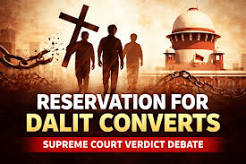
India often takes pride in being the world’s largest democracy, a constitutional republic anchored in rights, representation, and the promise of equality. But as B. R. Ambedkar warned, political democracy without social democracy is fragile – perhaps even hollow. Nowhere is this contradiction starker than in the experience of Dalits who convert out of Hinduism, seeking dignity, only to find that the law withdraws its protection the moment they do so. Ambedkar powerfully expressed this sentiment: “Turn in any direction you like, caste is the monster that crosses your path”. In India’s long and unfinished struggle with caste, there exists a paradox so glaring that it ought to trouble the conscience of any constitutional democracy. A Dalit may change their religion, but not their social reality. Yet, in the eyes of the law, that act of conversion is treated as if it dissolves centuries of oppression. The result is a quiet but profound injustice—one that is not always loudly proclaimed, but deeply felt. At the heart of this paradox lies a legal and constitutional anomaly, upheld and sustained over decades, including by the Supreme Court of India. The issue concerns Dalits who convert to Islam or Christianity and, in doing so, lose their Scheduled Caste (SC) status—and with it, the protective safeguards and affirmative action benefits designed to address historical discrimination. The question that demands asking is simple: does conversion erase caste? And if not, can a constitutional democracy justify withdrawing protection from those who continue to suffer its consequences? A Legal Framework Built on a Narrow Assumption The origins of this exclusion lie in the Constitution (Scheduled Castes) Order, 1950, which initially restricted SC status to Hindus. Subsequent amendments extended this recognition to Sikhs and Buddhists, but conspicuously left out Muslims and Christians. The rationale offered has been that caste – and specifically “untouchability”- is a phenomenon unique to Hindu society. This reasoning, though convenient, is increasingly difficult to defend. It relies on a theological abstraction rather than a sociological reality. Courts, including the Supreme Court of India, have often deferred to this framework, as seen in cases such as Soosai v. Union of India, where the burden of proof was placed on demonstrating that caste-based disabilities persist after conversion. But decades of scholarship, lived experiences, and community testimony suggest that caste does not disappear – it adapts, survives, and often reasserts itself in new forms. The Persistence of Caste Beyond Religion Dalit Christians and Dalit Muslims across India continue to face forms of discrimination that are unmistakably caste-based. Segregated burial grounds, separate seating in places of worship, endogamous marriage practices, and social exclusion are not uncommon. These are not isolated incidents but patterns that have been documented by sociologists, activists, and even government-appointed commissions. To suggest that conversion erases caste is to ignore this lived reality. It is to privilege doctrinal ideals over empirical truth. And when such an assumption informs policy and judicial reasoning, it risks turning the Constitution’s promise of equality into a selective guarantee. The legal and social status of Dalit converts in India – particularly those who convert to Christianity or Islam—represents a critical intersection of religious freedom, constitutional rights, and enduring social reality. While conversion is intended as an act of liberation, it often leads to a “quiet denial of justice,” where individuals lose state-mandated protections against caste discrimination without escaping the stigma of their birth. A Penalty for Seeking Dignity (The Wire) Perhaps the most troubling aspect of this framework is the implicit message it sends: that a Dalit who seeks to escape caste through conversion must pay a price for that choice. By losing SC status, the convert is effectively stripped of access to reservations in education and employment, as well as other safeguards intended to level a historically uneven playing field. The act of seeking dignity—of rejecting a system that has long dehumanised—is met not with support, but with withdrawal. This creates a perverse situation. Those who remain within the fold of the caste system are eligible for protection, while those who attempt to leave it behind are rendered invisible to the law. It is a paradox that borders on coercion, subtly discouraging religious freedom by attaching material consequences to it. The Constitutional Tension This framework sits uneasily with the broader principles enshrined in the Constitution, particularly Article 14 of the Constitution of India and Article 15 of the Constitution of India. If two individuals suffer the same social and economic disadvantages rooted in caste, can the State justify treating them differently solely on the basis of religion? The answer, from a strictly moral standpoint, would seem to be no. Yet, legally, the distinction persists. The judiciary, including the Supreme Court of India, has often adopted a cautious approach, refraining from issuing sweeping directions and instead deferring to the executive or calling for further study. While judicial restraint has its place, there are moments when restraint can appear indistinguishable from reluctance. The Burden of Proof and the Politics of Delay One of the recurring features of this issue has been the insistence on “adequate data” to establish that caste discrimination persists among converts. While the demand for evidence is not unreasonable in itself, it has, in practice, contributed to a cycle of delay. Commissions are appointed, reports are commissioned, and findings are debated—but the status quo remains unchanged. In the meantime, generations of Dalit converts continue to navigate a system that acknowledges their marginalisation in society but not in law. This raises a difficult question: how much evidence is enough? And at what point does the demand for further proof become a means of postponing a necessary decision? Between Law and Justice It would be simplistic to attribute this entire situation to judicial failure. The framework itself is rooted in legislation and executive orders, and any comprehensive reform would likely require political will as much as judicial intervention. Yet, the role of the judiciary in interpreting and, where necessary, challenging unjust frameworks cannot be overlooked. The Supreme Court of