
Dalits, backward classes lose out to SP’s core voter constituencies in Uttar Pradesh
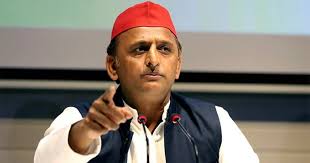
About 70% of SP’s 97 district and metropolitan presidents belong to Yadav and Muslim communities, raising questions over the enforcement of PDA slogan within the party organisation. LUCKNOW: When Samajwadi Party (SP) bagged 37 of 80 Lok Sabha seats in UP in 2024 polls by playing out its PDA (Pichhda, Dalit and Alpsankhyak) narrative, it was expected that leaders from backward classes, Dalits and Muslims would get wider representation in the party structure. However, the current organizational structure reflects the dominance of SP’s core M-Y (Muslim-Yadav) combination. About 70% of the party’s 97 district and metropolitan presidents belong to Yadav and Muslim communities, raising questions over the enforcement of the PDA slogan within the party organisation. Though the Yadav population in the state is estimated to be 8-9%, this core vote bank dominates the SP’s organisation. As many as 42 district president posts have gone to Yadavs. Muslims come second with 24 positions. Only seven people from the general category have been made district chiefs. “SP had achieved success in the 2024 Lok Sabha elections with PDA slogan. Akhilesh Yadav went to the Lok Sabha from Kannauj vacating his Karhal assembly seat. He had the opportunity to field a person from PDA category in Karhal bypoll, but he fielded his nephew Tej Pratap Yadav. SP’s PDA narrative now stands exposed,” a BSP leader said. BJP spokesperson Rakesh Tripathi said SP’s PDA model was a facade. “Outside the family, they will not give major responsibility to anyone. In the organization too, they don’t look beyond the M-Y equation,” he said. SP spokesperson Udayveer Singh said district presidents are chosen based on people’s opinion. “In the state committee, it is ensured that every section of society gets a place,” he said. Namita Bajpai Courtesy : TNIE Note: This news is originally published on https:/thenewindianexpress.com/bha and is used purely for non-profit/non-commercial purposes, especially human rights
Trans “trusted sisters” in India bring healthcare to over 1,500 migrant kids
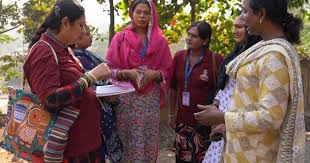
Twelve “Sakhee didis” were recruited for an innovative vaccination program. For two years in slum neighborhoods outside Mumbai in India, a group of trans women known as “Sakhee didis,” or trusted sisters, have been on a mission to vaccinate migrant children in the densely populated settlements. Twelve trans residents in the neighborhoods were recruited by two groups — NGO ZMQ and Gavi, the Vaccine Alliance — for the “Sakhee Project,” to educate and raise vaccination numbers among a population of mostly Muslim migrants from other Indian states. “People thought we had bad intentions,” recalled Tulsi Agarwal, one of the transgender women staffing the project. “Some even believed we would kidnap their children and turn them into eunuchs.” Trans women have conflicting reputations in India, as both modern-day outcasts and ancient bearers of blessings and good fortune for families and communities. Early days of the two-year pilot program were devoted to changing one estimation for the other. “We are always seen as beggars or troublemakers,” said Amrin Khan, another Sakhee didi. “We don’t get respectable jobs. This was a chance to earn with self-respect – but more than that, it was a chance to serve society.” Wadia Qureshi, another member of the group, said the Sakhee didis “were determined to make ourselves useful in a noble mission.” Program organizers recognized unique traits among trans women that would be helpful in the outreach effort. They were fluent in multiple languages and deeply embedded in informal neighborhood networks. The women often knew when a child was born or when a mother was pregnant before the formal health system did. And cultural skills — like storytelling, singing, and humor — could help turn intimidating public health messaging into “conversations that felt familiar rather than threatening,” organizers said. “Urban slums are crowded and complex,” said Hilmi Quraishi, founder of ZMQ. “Migrant families often fear authorities, especially if they lack documents. The program succeeded because it recognized strengths that already existed within the transgender community. We needed a bridge between the health system and the community.” “At first, we were chased away,” Amrin Khan said. “Later, people started inviting us in, offering us tea, and asking for advice. They would say, ‘Come in, sister. Sit down and talk.’” 1,500 children received life-saving vaccines over two years, with the Sakhee didis visiting approximately 40 households every day. Health workers reported they reached families they wouldn’t have otherwise. “They made our work much easier,” said Yasmeen Khan, an auxiliary nurse and midwife. “When we went with them, people opened up. They were excellent communicators and played a crucial role in overcoming vaccine hesitancy.” NGO ZMQ hasn’t said if a permanent program will follow the successful pilot, but the innovative outreach has changed the lives of migrant children and the Sakhee didis alike. The women said the work gave them a sense of legitimacy they hadn’t known before. “Earlier, people avoided us,” one worker said. “Now, when we talk about children’s health, they listen.” Subscribe to the LGBTQ Nation newsletter and be the first to know about the latest headlines shaping LGBTQ+ communities worldwide. Greg Owen writes about politics and culture for LGBTQ Nation. An award-winning writer, producer and journalist, he was recently recognized for Excellence in Online Journalism by NLGJA: the Association of LGBTQ Journalists for his coverage of the 2024 election. He’s written for Q Digital since 2015 and for LGBTQ Nation since 2022. Author Greg Owen Courtesy : LGBTQ Nation Note: This news is originally published on https:/lgbtqnation.com/bha and is used purely for non-profit/non-commercial purposes, especially human rights
A Group of Trans Women in India Helped Vaccinate Almost 1,500 Children
“People started inviting us in, offering us tea, and asking for advice,” one trans woman involved in the campaign said. A group of transgender women in India helped vaccinate nearly 1,500 children over the past two years as part of a non-governmental pilot program, organizers reported this week. The Sakhee Project, which launched in April 2023, sought to improve vaccination rates and health outcomes for migrant communities in the Indian state of Maharashtra. The program was operated by the nonprofit non-governmental organization ZMQ Development and funded by the international health partnership Gavi, per a post about the project on Gavi’s website published Thursday. Looking to combat vaccine skepticism and mistrust of officials among migrant residents — especially those who are undocumented — organizers enlisted trans women to bridge the communication gap. Members of the trans cohort were collectively dubbed “Sakhee didi” (a common Hindi phrase denoting a trusted sister-like friend), and were trained to go door-to-door providing vaccine information and accompanying health workers to perform immunization. “Migrant families often fear authorities, especially if they lack documents,” ZMQ founder Hilmi Quraishi explained, per Gavi. “We needed a bridge between the health system and the community.” Two years later, the Sakhee didis have filled that role, helping vaccinate almost 1,500 children in Maharashtra by reaching about 40 households per day, according to Gavi’s report. Across three cohorts of children, all had received at least one vaccination dose since 2023, and community members reportedly adhered to vaccination schedules more consistently. Despite early incidents of mistrust and abuse directed at the women, including fears that they would kidnap and injure children, community attitudes shifted over time, some of the workers recalled. “At first, we were chased away,” said, Amrin Khan, one of the women who acted as a Sakhee didi. “Later, people started inviting us in, offering us tea, and asking for advice. They would say, ‘Come in, sister. Sit down and talk.’” That’s a significant shift for trans people in India, who face heavy marginalization, stigmatization, and violence. As many as 80% of trans women in the region rely on sex work or begging to survive, Indian trans activist Abhina Aher told Open Democracy in 2023. The organizers and workers of the Sakhee Project hoped that the program would provide better work opportunities and a chance to push back against common anti-trans prejudice — and appear to have succeeded. “They [the Sakhee didis] made our work much easier,” nurse and midwife Yasmeen Khan told Gavi. “When we went with them, people opened up. They were excellent communicators and played a crucial role in overcoming vaccine hesitancy.” Unfortunately, it’s not clear what the future holds for the Sakhee didis or the life-saving initiative they made possible. Gavi’s report noted that the project, described as a two-year pilot program, “has since ended,” and did not provide information about any plans for its future. Them contacted ZMQ via its website for further details, but did not immediately receive a reply. Economic and social opportunities are slowly opening up for trans people in India, though discrimination and abuse are still common. In 2021, another nonprofit organization chose Maharashtra as the site for Kinnar Vidyalaya, a school providing free education specifically for trans students of all ages. The following year, the Indian Department of School Education and Literacy hired three trans teachers for government school positions for the first time in history. Here’s hoping the celebrated Sakhee didis can likewise start well-deserved careers in public health soon. By Samantha Riedel Courtesy : Them Note: This news is originally published on https:/them.com/bha and is used purely for non-profit/non-commercial purposes, especially human rights
Reservation vs affirmative action
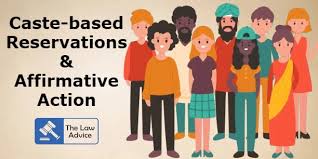
Dalit assertion in India is different from Black political mobilisation in the US. For one, the faculty of elite institutions in America are much more diverse than in India. Reservations were designed as corrective mechanisms in a society where social capital, networks and inherited privilege determine life trajectories The recurring charge that marginalised communities advance by ‘playing the victim card’ reflects a deep misunderstanding of both history and constitutional morality. In India, the language of victimhood is often deployed to delegitimise Dalit assertion and trivialise structural discrimination. Yet, constitutional democracy does not treat the articulation of injustice as a pathology; it treats it as the starting point of reform. The debate must therefore shift from personalities to principles: from rhetorical dismissals to a substantive examination of Dalit rights, and from superficial comparisons with American race politics to a grounded comparative analysis of affirmative action in the US and reservation policy in India. Attempts to equate Dalit assertion with Black political mobilisation in the US frequently ignore a fundamental difference identified by B R Ambedkar. He argued that untouchability is structurally distinct from slavery. Slavery, however brutal, permitted the theoretical possibility of emancipation through legal abolition. Untouchability, by contrast, was a system of graded exclusion embedded in social, religious and economic life. It did not merely subordinate; it stigmatised and segregated across generations. Ambedkar warned that statutory reform alone would not dissolve caste stigma. The social order would require sustained intervention—educational, administrative and political—to dismantle entrenched hierarchies. The Indian Constitution thus embedded reservations not as charity, but as instruments of equal citizenship. Consider faculty diversity in elite institutions. In the US, even the most prestigious universities have institutionalised diversity monitoring. At Harvard, roughly a quarter of the faculty belongs to minority groups such as Blacks, Hispanics and Asians. This has not diluted academic excellence; Harvard continues to rank at the top globally. Contrast this with India’s premier science and technology institutions. An analysis published in Nature reported that at leading IITs and at the Indian Institute of Science, nearly 98 percent of professors are drawn from socially privileged castes. Assistant and associate professors too show a similar skew. Even in universities celebrated for progressive politics, representation of scheduled castes, scheduled tribes and other backward classes among faculty remains disproportionately low. This divergence is not incidental. In India, recruitment processes often involve roster complexities, interview-stage filtering, and the recurrent declaration of candidates as ‘not found suitable’. These mechanisms cumulatively impede the entry of marginalised scholars into higher decision-making echelons. The issue, therefore, is not about ‘victimhood’, but about measurable access to institutional power. A comparison of government workforce statistics further clarifies the structural gap. In the US, Whites constitute approximately 61 percent of the population and hold about 59 percent of federal government positions—a narrow variance. Black Americans form roughly 18 percent and hold about 12 percent of federal positions. While disparities remain, representation is broadly aligned with demographic presence, and Black participation in higher administrative tiers has steadily improved over decades. In India, the demographic picture is starkly different. SCs, STs and OBCs together constitute close to 80 percent of the population. Yet their aggregate representation across Union government services is just above 50 percent. This headline number conceals deeper stratification: marginalised groups are concentrated in Group C and D positions, while their presence in Group A and senior civil services remains far below their proportionate share. The representational gap—nearly 28 percentage points between population share and government jobs—cannot be dismissed as incidental. It signals enduring barriers to upward mobility within the state apparatus itself. Another important distinction lies in the scope of intervention. In the US, affirmative action historically extended beyond public universities to federal contracting, corporate diversity mandates and structured minority enterprise programmes. Even where judicial retrenchment has occurred in recent years, diversity practices remain embedded in corporate governance and hiring frameworks. In India, reservations are largely confined to public sector employment and publicly funded educational institutions. The private corporate sector, which commands increasing economic influence, operates without comparable mandatory inclusion mechanisms. Moreover, disparities in primary and secondary education—where marginalised children disproportionately attend under-resourced schools—compound inequality long before university admissions begin. Thus, the structural ecosystem supporting Black upward mobility in the US has been broader than the Indian framework supporting Dalit advancement. The claim that Dalit assertion mirrors a ‘temporary drug’ mischaracterises the nature of constitutional safeguards. Reservations were not designed as emotional compensations; they were designed as corrective mechanisms in a society where social capital, networks, and inherited privilege determine life trajectories. Empirical evidence across wealth distribution, land ownership, literacy, and professional representation demonstrates persistent intergenerational disparity among Dalits and Adivasis. While Black Americans continue to face racial inequality, their integration into mainstream educational and administrative institutions is measurably higher than Dalit integration into elite Indian institutions. The argument, therefore, is not about comparative suffering as a moral competition. It is about recognising that the structural design of caste exclusion has produced uniquely durable inequalities. Public acknowledgment of this reality is not self-pity; it is democratic accountability. A mature democracy does not silence marginalised voices by branding them perpetual victims. It measures inclusion, audits outcomes, and reforms institutions accordingly. If India seeks to become a genuinely developed nation, representation in knowledge systems, civil services, and wealth creation cannot remain skewed. The relevant question is not whether Dalits speak too often of discrimination. It is whether the Republic has fulfilled its constitutional promise of equality of status and opportunity. To describe Dalit rights discourse as “victimhood” is to misunderstand both history and the Constitution. Assertion is not weakness; it is participation in the democratic project. The true benchmark of progress will not be rhetorical discomfort with grievance, but tangible parity in education, employment, and institutional authority. Only when representation reflects demographic reality—and when stigma no longer determines destiny—can the debate on victimhood finally become obsolete. Nethrapal Nethrapal | Commissioner of income tax and author of The Pain of Merit (Views are personal) Courtesy : TNIE Note: This news
Internal reservation: Dalit Ministers hold meetings to arrive at a consensus ahead of Karnataka Cabinet meeting on March 5
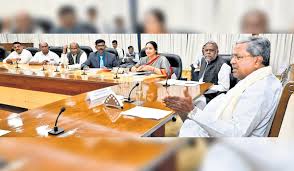
Ahead of the Cabinet meeting during which the internal reservation issue is scheduled to be discussed, Dalit Ministers held parleys to arrive at a possible broader consensus on the issue that has now driven a wedge among Scheduled Castes and left the Cabinet divided Ahead of the Cabinet meeting on Thursday during which the internal reservation issue is scheduled to be discussed, Dalit Ministers on Wednesday held parleys to arrive at a possible broader consensus on the issue that has now driven a wedge among Scheduled Castes and left the Cabinet divided. The BJP, meanwhile, has announced a State-wide protest against the confusion. Ministers from both the Dalit Right (Holeya) and the Dalit Left (Madiga) castes separately met Congress president Mallikarjun Kharge, the senior most Dalit leader in the State. Dalit Left Ministers K.H. Muniyappa and R.B. Thimmapur also met Dalit Right Minister G. Parameshwara to find a possible solution. Kharge’s guidance Mr. Muniyappa said they held a comprehensive discussion with Mr. Kharge on implementing internal reservation, and the latter gave guidance to arrive at a settlement. “A just and balanced sharing of reservation among the SCs will be discussed with the Chief Minister,” he said. The Cabinet is divided over the government’s decision to kickstart the recruitment process for 56,432 posts, adhering to the 50% cap in reservation and without internal reservation among SCs. While the Dalit Right Ministers are against internal reservation within 15% quota for SCs, the Dalit Left Ministers are insisting the internal reservation matrix should be drawn for the 15% quota. Meanwhile, defending the decision, another Dalit Right Minister Priyank Kharge told presspersons about the legal hurdles, “The government favouring social justice stopped recruitment process before the internal quota matrix was drawn. Based on empirical data, the legislature passed a law. How are we then against internal reservation? If someone goes to court, is it the government’s fault? There are a total of six cases in court.” Stating that everything had to be done legally, he said, “We have been transparent. We are ready to provide 6% as backlog. Let the court give its verdict.” On the opposition to 15% reservation for SCs, he said, “Is there empirical data for 15%? It (data) was (based on) a 15-year-old census. We do not know how it was arrived at.” State-wide protest Accusing the Congress government of meting out injustice to Scheduled Castes communities, the BJP has warned of a State-wide protest if provisions were not made for including internal reservation for SC communities during the proposed recruitment initiative. Addressing a press conference in Bengaluru on Wednesday, BJP State president B.Y. Vijayendra took exception to the decision to go ahead with the recruitment without internal reservation and also peg the total reservation quantum at 50% as against 56% provided by the erstwhile BJP government. He warned that this would create unrest among oppressed communities. Mr. Vijayendra accused Chief Minister Siddaramaiah of meting out injustice to Dalits despite coming to power with the support of communities from AHINDA (Kannada acronym for Minorities, Backward Classes and Dalits). He said that the government was citing the reservation issues being challenged before the court as an “alibi.” Right and Left divide The Dalit Left communities, under the Federation of Madiga Sanghas, are also seeking legal opinion about the government decision to keep away internal reservation from the recruitment process. A handbill issued to create awareness in the community terms the decision on internal reservation as “betrayal by Congress”. On the other hand, welcoming the government’s decision to hold recruitment with 15% quota and without internal reservation, the Federation of Karnataka State Dalit Right Communities has asked the government to reject the H.N. Nagamohan Das Commission report as “unscientific” since it had “under reported” the numbers of Dalit Right by spreading communities in various other categories. K.H. Muniyappa Courtesy : The Hindu Note: This news is originally published on https:/thehindu.com/bha and is used purely for non-profit/non-commercial purposes, especially human rights
Dalit outfit’s 13-year wait for Ambedkar statue ends in TN’s Erachakulam
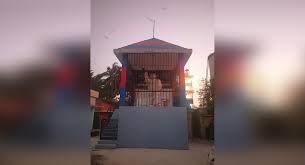
Sources said the authorities did not grant permission to the outfit to install the statue allegedly because it did not have patta land. KANNIYAKUMARI: Deputy Chief Minister Udhayanidhi Stalin is scheduled to unveil a nine-ft bronze statue of Dr BR Ambedkar at Arulgnanapuram in Erachakulam on Friday, bringing to fruition the 13-year-long struggle of Tamil Nadu Dalit Rights Protection Movement that has been trying to install the statue. Sources said the authorities did not grant permission to the outfit to install the statue allegedly because it did not have patta land. Vai Dinakaran, president of the outfit said the unveiling of the statue would help the DMK garner Dalit community votes in the district. After 13 years of struggle, we received permission from the district administration to instal a 9-feet bronze statue of Dr Ambedkar last year. We staged 42 protests for this over the last 13 years, including black flag protest, hunger protest and a month long continuous protest in 2024. Both the previous DMK and previous AIADMK governments refused permission stating the land meant for installing the statue was not a patta land. Hence, we brought 2.5 cents patta land and installed the statue.” The deputy Chief Minister unveiling the statue will make the Ambedkar followers happy and would help the DMK in the assembly election, he added. M Abdul Rabi Courtesy : TNIE Note: This news is originally published on https:/tkenewindianexpress.com/bha and is used purely for non-profit/non-commercial purposes, especially human rights
Congress surprises with ‘unblemished’ Haryana Dalit leader Karamvir Baudh’s Rajya Sabha nomination
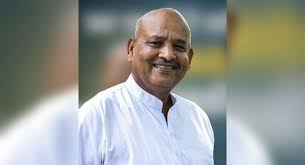
Baudh is a former Haryana government employee, having served 32 years in the Haryana Civil Secretariat with a clean record The Congress surprised many by announcing Dalit activist Karamvir Singh Baudh, a ticket aspirant from the reserved Mullana assembly segment in Ambala, as the party’s candidate for the Rajya Sabha seat. While the party was keen on an “insider” candidate, it chose an SC leader to balance caste representation in the state. Among other contenders were former state chiefs Udai Bhan and Ashok Tanwar, both SCs; former MLA Jaiveer Balmiki, also an SC; and three Ahir leaders—state chief Rao Narendra Singh, Rao Dan Singh, and Capt Ajay Yadav. Ultimately, the party opted for Baudh, a Dalit activist closely associated with SC employees and the SC officers’ lobby within the Haryana bureaucracy. Belonging to Rohtak, he is seen as a neutral candidate with no allegiance to any of the multiple party factions. His name was proposed by the AICC SC cell. Who is Karamvir Singh Baudh? Baudh is a former Haryana government employee, having served 32 years in the Haryana Civil Secretariat with an unblemished record. He held key positions, including Administrative Officer, and had responsibilities in the Home Department and Industries & Commerce Department. He also worked on governance coordination, vigilance assignments, and policy implementation. He has built strong credibility among SC government employees, advocating for service justice and reservation in promotions aligned with the 85th Constitutional Amendment. Since 1998, Baudh has been active in grassroots Dalit mobilization and social justice leadership. He has served as the President of the Confederation of SC/ST/OBCs Haryana since 1998. Originally from Bhaini Maharajpur village in the Meham Assembly segment of Rohtak district, Baudh completed his early education in Meham before moving to Ambala after securing a government job. Article_Author Geetanjali Gayatri Courtesy : The Tribune Note: This news is originally published on https:/thetribune.com/bha and is used purely for non-profit/non-commercial purposes, especially human rights
Under pressure from the Dalit Left, recruitment GO likely to come up for discussion again in Karnataka Cabinet
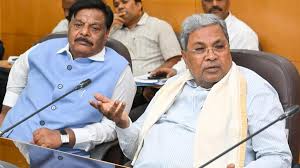
Dalit left community delegation, including Ministers K.H. Muniyappa and R.B. Thimmapur, met Chief Minister Siddaramaiah on Tuesday and is learnt to have exerted pressure for withdrawal of GO on recruitment The Dalit Left community has also sought replacement of Social Welfare Minister H.C. Mahadevappa, accusing him of being ‘biased’ against internal reservation. The Dalit Left community has also sought replacement of Social Welfare Minister H.C. Mahadevappa, accusing him of being ‘biased’ against internal reservation. | Photo Credit: file photo Under pressure from Dalit Left community leaders, who have criticised a Government Order that has not provided for internal reservation for the recruitment of 56,432 posts, the State government is likely to discuss the reservation issue again during the next Cabinet meeting. The issue seems to have driven a wedge among the Dalit communities in the State. On Tuesday, a Dalit Left community delegation, including Cabinet Ministers K.H. Muniyappa and R.B. Thimmapur, met Chief Minister Siddaramaiah and is learnt to have exerted pressure for the withdrawal of the notification. It has also sought replacement of Social Welfare Minister H.C. Mahadevappa, accusing him of being “biased” against the internal reservation. Later in the evening, the two Ministers told prespersons that the matter would be discussed during the next Cabinet meeting on Thursday. Disappointed, say Ministers Sources said that the two Ministers expressed their disappointment and disapproval of the GO that has asked recruitment authorities/department to stick to the reservation quota that existed before December 2022, which effectively means sticking to the 50% cap and without internal reservation. Sources said that the two Ministers told the Chief Minister that they were kept in the dark and were not told about internal reservation not being part of the GO. Among others present in the delegation were former MLC and KPCC SC cell head Dharmasena, former Minister Anjaneya, and former MP L. Hanumanthaiah. The Dalit Left community has been upset over the State government’s plan to recruit 56,432 posts, one of the biggest recruitment drives in recent decades, without implementing the internal reservation. This comes amid the Karnataka Sub classification Bill that seeks to provide internal reservation in 17% quota getting Governor’s assent. The community estimates that SCs and STs will lose 1,129 posts and 2,258 posts, respectively, as per the GO. Resignation sought In another development on Tuesday, a number of Dalit Left community organisations that met here decided to seek the resignation of Dr. Mahadevappa, and immediate withdrawal of the GO. A note issued after the meeting said that the government should reconsider recommendations of either the A.J. Sadashiva Commission or the H.N. Nagamohan Das Commission to ascertain backwardness. They also discussed the future action to exert pressure on the government not to hold recruitment without internal reservation. The Hindu Bureau Courtesy : The Hindu Note: This news is originally published on https:/thehindu.com/bha and is used purely for non-profit/non-commercial purposes, especially human rights
Karnataka: A major initiative against untouchability; the government opened a salon after a barber refused to cut the hair of Dalits.
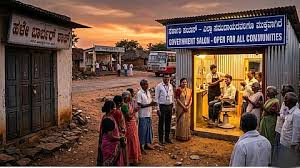
Following the high-handedness of barbers in Gadag, Karnataka, the government launched a historic initiative, opening a “government salon” in a village to eradicate untouchability and caste discrimination. Karnataka: The Karnataka government has taken a significant step towards eradicating caste discrimination. After local barbers in Singatalur village, Gadag district, refused to provide services to Dalits, the government opened a new salon in the village at its own expense. This is likely the first government initiative of its kind in the state. This government salon has been built on government land near the village bus stand. Several officials from the Social Welfare Department and the Gram Panchayat were present at the inauguration. Constructed at a cost of ₹1.2 lakh The Social Welfare Department spent approximately ₹1.2 lakh on the construction and necessary equipment for this tin-framed shop. Initially, a barber from Mundargi was specially called in to run this salon. What was the whole controversy? According to officials, the Hadapada family, traditionally engaged in barbering, had been refusing to cut the hair of Dalits in the village for several years, citing religious beliefs. An official explained that the Hadapada family are devotees of the village deity, Veerbhadreshwar. They believe that the deity visits their homes during a specific time of the year, and therefore, they cannot provide services to Dalits during that time. The matter escalated when Dalit youth began demanding their legal right to receive services at the village’s only barber shop. They approached the district administration, stating that denying service based on caste is completely illegal. Administrative Strictness and New Solution As the controversy escalated, the old shop was closed. Subsequently, the district administration held several meetings with the villagers and the barber community. They were persuaded to reopen the shop and offer services to all sections of society. When negotiations failed, notices were issued threatening legal action, but the problem remained unresolved. Finally, with no other option left, officials decided to establish a separate government salon to ensure equal rights for all. At the administration’s request, Devu Hadapada, the state president of the Hadapada Annappa Samaj, agreed to send his brother (who is also a barber) to run the new shop. A Step Towards Social Change Devou Hadapada supported the move, saying, “It’s very sad that the sick mentality of looking down on the backward classes still exists in society. But we have extended our full support to the government to end such practices. This shop is now open to all communities.” Mundargi Taluka Panchayat Executive Officer Vishwanath Hosamani explained that the problem had been ongoing for nearly two years. He added, “Now, with the coordination and efforts of all concerned departments, we have been able to find a peaceful solution to the issue.” Villagers heave a sigh of relief Villagers have wholeheartedly welcomed the administration’s move. Mariyazza, a resident of Singatalur, expressed hope that this initiative will help eliminate discriminatory practices. She said, “This step has given us hope that this evil practice of untouchability will now end forever.” Officials also believe that this unique initiative could serve as a role model for addressing such discrimination elsewhere in the state. Rajan Chaudhary Courtesy: Hindi News
The suffering of the SC/ST/OBC community in India is unique in the world: Why did senior IRS officer Netra Pal call it more serious than America’s ‘Black Victimhood’?

“Approximately 50 million SC, ST, and OBC students will be affected by the UGC Regulations 2026; demanding rights cannot be called victimhood.” New Delhi – In a recent Science Journey podcast, senior IRS officer Netra Pal sharply criticized the controversial statement made by Jawaharlal Nehru University Vice Chancellor Shantishree Dhulipudi Pandit. He stated that Madam is saying that Dalits have become addicted to victimhood, playing the victim by claiming they haven’t had water for centuries. Netra Pal called this clear bias and prejudice and pointed out that the person making this statement is the head of an institution with a very high number of SC, ST, and OBC students. He emphasized that approximately 90 million SC, ST, and OBC students are studying in universities across India, which is a very large number, yet displaying such a mindset exposes prejudice. Presenting comparative data, Netrapal explained that Harvard University, which is among the top 10 universities in the world, states in its 2023 Diversity Report that faculty of color, i.e., non-White faculty, represent 22 percent, of which 232 include Black, Hispanic, and other faculty. Meanwhile, SC, ST, and OBC faculty representation at IITs is only 1.92 percent, while at IIMs it is less than 0.8 percent. This is data from five or six years ago, and while there may have been some slight improvement, the difference is not significant. He said that while the Black community has been oppressed in the United States for centuries, their representation is still good due to affirmative action. In India, the problems of Dalit, OBC, and tribal communities are unique in the world and even more serious than Black victimhood. This community, which constitutes over 85 percent of the population, lacks even 2 percent representation in institutions like IITs and IIMs. He emphasized that this comparison is incorrect, as there is no affirmative action even in the private sector in India. Right now, the UGC will form an equity committee, but who will head it? The Vice-Chancellor. What will happen if SC/ST/OBC victims approach the Vice-Chancellor? They will say they are victims, so how will they rule in their favor and deliver justice? In the podcast, Netrapal also deeply analyzed the controversy surrounding the UGC 2026 Regulation. He explained that those opposing the regulation are claiming that it will divide Hindu society and that OBCs were included for political reasons. However, the truth is that the 2012 UGC Regulation was only for SCs and STs, and OBCs were added later on the recommendation of a parliamentary committee. A 31-member parliamentary committee, majority upper-caste, reviewed the data, acknowledged the atrocities against OBCs, and recommended their inclusion. Following the Rohith Vemula and Payal Tadvi suicide cases, the Supreme Court also mandated proper implementation of the 2012 regulations. Netrapal clarified that while OBC reservations were implemented in 2006, they were implemented in universities only in 2013, and in medical education only in 2021. He also cited historical evidence that during the British era, Shudras were not admitted to institutions like Hindu College; only some Kayasthas were exempted because their social status was comparable to that of the upper castes. From the 1901 caste census to current data, 50-70 percent of OBCs are extremely backward, denied access to higher education and government jobs. Netrapal said that SCs and STs received reservations after 1947, but OBCs had to fight until 1990 and wait until 2012 for university admissions, ruining generations. Education data revealed that the general category’s representation at the primary level is only 11.85 percent, which rises to 50 percent in higher education. While SC, ST, and OBC students are higher in primary education, their enrollment declines due to increased dropout rates. SCs’ primary enrollment falls from 21 percent in primary education to 14.82 percent in secondary education and 4.72 percent in engineering. The situation is similar among OBCs. Dropout and suicide rates at IITs are higher among SCs, STs, and OBCs, while at institutions like Anna University, this is not the case, proving institutional discrimination. OBC professors in central universities are only 1.1 percent, compared to 33 percent in state universities. Muslims are represented as high as 45 percent because they have separate institutions. “SCs, STs, and OBCs are automatically a minority in universities because there are no members of this class in all the top faculty positions. At IITs, there are 1-2%, a maximum of 10%, and even in the administration, there are very few non-faculty cadres. Here, SCs, STs, and OBCs are a significant minority. There are many more outside. That’s why they are backward, right? We’re not getting higher education so easily. So what’s the situation here? We’re the ones facing discrimination.” The most shocking statistic is the vacancies for faculty positions. In central universities, 95.5 percent of OBC professor positions are vacant, 91.95 percent of associate professor positions are vacant, while 78 percent of SC positions are vacant. There are no SC/ST principal positions at Delhi University. Netrapal stated that this is institutional discrimination, where low interview marks, NFS, and vacancies are deliberately created. The conviction rate for SC/ST atrocity cases in Uttar Pradesh is 70-80 percent, far higher than murder and rape, yet the case is often called a fake one. At the end of the podcast, Netrapal concluded that approximately 50 million SC, ST, and OBC students will be affected by this regulation. Education is their only weapon, so discrimination cannot be tolerated. Demanding rights cannot be labeled victimhood. He also suggested opening a Buddhist minority university. The podcast stated that data never lies and the Bahujan community should spread this information to ensure equality and justice. Geetha Sunil Pillai Courtesy: Hindi News