
SCSP-TSP fund diversion BJP plans major offensive, Congress govt uncomfortable
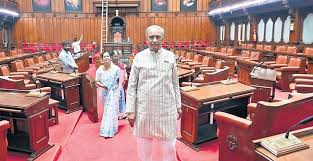
While the government has defended the move, arguing that many beneficiaries of the guarantees belong to SC and ST communities, the issue has triggered dissent among Dalit legislators within Congress. BENGALURU: Even as tensions continue to simmer within Congress over the alleged diversion of funds under the Scheduled Caste Sub-Plan (SCSP) and Tribal Sub-Plan (TSP), BJP is preparing a strategy to corner the state government ahead of the budget. It is said that funds earmarked exclusively for Scheduled Castes (SC) and Scheduled Tribes (ST) welfare are being redirected to finance the five guarantees. While the Siddaramaiah government has defended the move, arguing that many beneficiaries of the guarantees belong to SC and ST communities, the issue has triggered dissent among Dalit legislators within Congress. Sensing an opportunity, BJP has stepped up its political campaign. A pre-budget round table has been convened in Bengaluru at noon on Tuesday at the Legislators’ House Auditorium. The event, organised by the Reservation Protection Forum for Scheduled Castes and Scheduled Tribes, Karnataka, is aimed at mobilising public opinion against what the opposition terms as “diversion” of constitutionally mandated funds. Senior BJP leaders, including Council Opposition Leader Chalavadi Narayanaswamy, former Union minister A Narayanaswamy and others, are expected to attend, and they could use the platform to highlight what the party calls a betrayal of Dalit and tribal interests by the Congress government. Within Congress, the issue has reportedly been raised during Legislature Party meetings with some Dalit MLAs expressing concern over reallocation of funds. The discontent could complicate budget preparations if not addressed decisively, party insiders say. BJP is likely to intensify its outreach to SC/STs in the coming weeks, framing the issue as one of social justice and financial accountability. Political observers said this could be a flashpoint during the budget session, as the opposition is poised to mount pressure inside and outside the Houses. It is said that the Congress government has diverted Rs 27,000 crore over two year as against an allocation of around Rs 81,000 crore. BJP claims that this violates the law under 7(c), which allows diversion of funds for education, health and child labour, whereas the guarantees have no relevance to these categories One Dalit legislator said, ‘Congress which justified diversion under 7(c) has not read this provisions properly.’’ Bansy Kalappa Courtesy : TNIE Note: This news is originally published on https:/thenewindianexpress.com/bha and is used purely for non-profit/non-commercial purposes, especially human rights
Kanshi Ram emerges as rallying point of Dalit mobilisation in U.P.
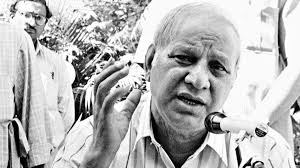
With Assembly poll approaching, major political parties in Uttar Pradesh intensify outreach to Scheduled Castes around the BSP founder’s birth anniversary, signalling a renewed battle for the State’s crucial 21% Dalit vote Mobilisation focused on the Scheduled Castes (SC) has gathered momentum on Uttar Pradesh’s political chessboard ahead of the Assembly elections due early next year. The immediate trigger is the March 15 birth anniversary of Kanshi Ram, founder of the Bahujan Samaj Party (BSP) and Dalit Shoshit Samaj Sangharsh Samiti (DS-4). With SCs constituting roughly 21% of the State’s electorate, political parties are intensifying efforts to engage the community and position themselves as staunch advocates of the marginalised community. Mayank Kumar Courtesy : The Hindu Note: This news is originally published on https:/thehindu.com/bha and is used purely for non-profit/non-commercial purposes, especially human rights
Black history month and Dalit history month: Memory, resistance and recognition

While Black History Month has decades of institutional recognition, Dalit History Month is a grassroots initiative—yet its theoretical and political importance is equally profound… The observance of Black History Month is not merely ceremonial. It is a recognition, it is epistemic. It is an intervention in memory. The observance of Black History Month is not merely ceremonial. It is a recognition, it is epistemic. It is an intervention in memory. Photo | AP Every February, the United States observes Black History Month, a commemoration dedicated to remembering the struggles, contributions, and intellectual traditions of African Americans. What began in 1926 as “Negro History Week” under the initiative of Carter G Woodson and the Association for the Study Negro life and History and later expanded into a month-long observance and was formally recognised by the US federal government in 1986. Since then, presidential proclamations have reaffirmed its significance, acknowledging that Black history is not peripheral to the American story, it is foundational to it. The observance of Black History Month is not merely ceremonial. It is a recognition, it is epistemic. It is an intervention in memory. It challenges the structure of historical narration itself by insisting that a people long excluded from official archives must be placed at the centre of national consciousness. Across the globe, another community continues a parallel struggle for historical recognition—Dalits in South Asia. Activists initiated Dalit History Month in 2015, marking April as a month to document, celebrate, and assert Dalit histories, intellectual traditions, resistance movements, and cultural contributions. While Black History Month has decades of institutional recognition, Dalit History Month is a grassroots initiative—yet its theoretical and political importance is equally profound. History as a site of power History is never neutral. It is shaped by those who hold power, political, economic, and cultural. For centuries, dominant groups controlled the archive, the curriculum, and the narrative. In the United States, slavery and segregation were not only economic systems but epistemic regimes: they denied Black people authorship over their own history. Similarly, in the caste-based social order of South Asia, Dalits were excluded not only from land and literacy but from the production of knowledge itself. To be denied history is to be denied humanity. The sociological insight of WEB Du Bois remains relevant here. Du Bois wrote about “double consciousness”, the experience of seeing oneself through the eyes of a society structured by racial prejudice. This tension arises when dominant narratives attempt to fix identity within limiting definitions. Yet double consciousness is not simply a fractured state; it is a heightened awareness, an ability to perceive both the imposed gaze and one’s own autonomous self-understanding. In caste-structured contexts, a comparable dynamic has operated. Social hierarchies have historically sought to define worth and status in inherited terms, but communities positioned at the margins have not passively absorbed these definitions. Instead, they have cultivated counter-traditions of dignity, intellectual critique, and collective assertion. Through movements of self-respect, constitutional struggle, and cultural production, they have transformed imposed categories into platforms for democratic re-articulation. What emerges, therefore, is not internalised hierarchy, but an evolving political consciousness that refuses to let inherited structures determine selfhood. Black History Month and Dalit History Month disrupt this imposed gaze. They assert that oppressed communities are not subjects of oppression but producers of thought, culture, and transformation. Structural racism and structural casteism: Parallel logics Though racism and casteism arise from different historical trajectories, their structural logic is comparable. Both systems institutionalise graded inequality. Both naturalise hierarchy. Both regulate access to education, labour, dignity, and spatial belonging. In the United States, the history of slavery, Jim Crow laws, and racial segregation created enduring socio-economic disparities. The civil rights movement challenged these systems, but their legacies remain embedded in institutions. In South Asia, caste operates as a deeply entrenched system of social stratification, historically justifying untouchability, exclusion from temples and wells, segregation in housing, and violent enforcement of occupational roles. Despite constitutional guarantees of equality, caste-based discrimination persists in subtle and overt forms. The intellectual interventions of Dr BR Ambedkar are crucial in this context. Dr Ambedkar not only fought for the abolition of untouchability but analysed caste as a system of “graded inequality” where oppression is normalised and internalised through religious and social codes. His insistence on education, agitation, and organisation echoes the emancipatory tradition of Black intellectual resistance. Both Black and Dalit struggles reveal that oppression operates not only through overt violence but through the management of memory and meaning. Black History Month’s institutionalisation in 1986 signalled an acknowledgment by the US state that historical omission itself is a form of injustice. Presidential proclamations do not erase centuries of suffering, but they symbolically affirm the legitimacy of Black historical experience. Dalit History Month seeks a similar recognition—though it has yet to achieve equivalent global institutional status. April holds symbolic weight because it includes the birth anniversaries of icons Jyotiba Phule and Dr Ambedkar, whose life represents intellectual rebellion against caste oppression. The month becomes a pedagogical space where Dalit literature, art, scholarship, and activism are highlighted. Recognition is not merely symbolic; it redistributes dignity. Philosopher Charles Taylor argued that misrecognition can inflict harm by imprisoning someone in a false, distorted image. In caste and racial systems, this distortion is structural. Therefore, commemorative months function as corrective narratives, rewriting distorted histories with truth and pride. Memory as resistance Memory, when consciously reclaimed, becomes an act of resistance. It refuses erasure, challenges selective histories, and asserts dignity in the face of structural silencing. Black History Month and Dalit History Month are not merely commemorative observances; they are intellectual and political interventions that reposition marginalised histories at the centre of democratic imagination. Black History Month foregrounds the narratives of civil rights mobilisations, cultural renaissance, and institutional transformation. From the philosophical interventions of Du Bois to the moral leadership of Martin Luther King Jr., and from the literary brilliance of Toni Morrison to the scientific excellence of Katherine Johnson, the month celebrates creativity and achievement that flourished
IndiaActivists push for better counting of transgender Indians in 2026 Census

2011 count noted 488,000 trans people in country India is preparing to conduct a nationwide Census in April, the first since 2011. Interim projections based on the previous Census placed India ahead of China as the world’s most populous country. A Technical Group on Population Projections projection in July 2020, chaired by the Registrar General of India, estimated the country’s population in 2023 was 1.388 billion. Transgender Indians are now raising concerns about the data collectors and their sensitization. Activists have raised concerns about whether data collectors are adequately sensitive to the community ahead of the Census. Government training material emphasizes household engagement, data privacy and sensitivity while asking personal questions, but publicly available flyers do not outline specific guidance or training related to recording trans identity during enumeration. Concerns around the counting of trans people in India are not new. The 2011 Census recorded around 488,000 trans people, a figure activists and researchers have described as a likely undercount due to stigma, misclassification, and a reluctance to self-identify. Subsequent surveys and field reports have pointed to inconsistencies in how gender identity is recorded and the absence of uniform sensitivity among Census data collectors. Rights groups and policy researchers have also warned that gaps in official data affect access to welfare schemes, legal recognition, and targeted public policy, making accurate counting central to future Census exercises. A decade after the 2011 Census formally recorded trans people as a distinct category, multiple studies have continued to document entrenched socio-economic disparities. Research has pointed to lower literacy rates, limited workforce participation and barriers to healthcare access within the community. A National Human Rights Commission-supported study cited in subsequent reporting found a significant proportion of trans respondents reported employment discrimination, underscoring the gap between formal recognition and lived economic inclusion. Educational exclusion has remained a persistent concern within the trans community. Studies have documented higher dropout rates, lower literacy levels and barriers to continuing education, often linked to stigma, discrimination and limited institutional support. Policy researchers note that despite formal recognition in official data after 2011, targeted interventions addressing school retention and access for trans people have remained uneven. Access to housing schemes has reflected similar gaps. The Washington Blade in December reported only a small number of trans people have benefited from India’s flagship low-income housing program, despite its nationwide rollout and eligibility provisions. The findings underscored continuing barriers to inclusion in welfare delivery systems. The Social Justice and Empowerment Ministry and the Office of the Registrar General and Census Commissioner did not respond to the Blade’s multiple requests for comment regarding sensitization measures for Census data collectors and the recording of trans identity in the upcoming Census. Karnataka state in southern India last September conducted its first statewide baseline survey of gender minorities. The Department of Women and Child Development, in collaboration with the Karnataka State Women’s Development Corporation, launched the initiative to document the lives of trans people across 31 administrative districts. When the results were released, the survey identified 10,365 trans people. The country’s 2011 Census, by comparison, recorded 20,266 trans people in Karnataka, nearly double the 2025 figure. The discrepancy raised questions about how the state’s recorded trans population appeared to decline over 14 years. The discrepancy in Karnataka’s survey has intensified scrutiny over how gender minorities are counted. Reports questioned the methodology used in the 2025 exercise, which was conducted over 45 days beginning in mid-September. Instead of door-to-door enumeration, trans people were required to report to designated registration sites — primarily district-level public hospitals and sub-district government health facilities. The approach presented barriers for potential participants, particularly those in rural areas, those without reliable transportation, those wary of institutional settings due to prior discrimination, or those who did not know about the count, raising the possibility of exclusion. Bihar state in eastern India in January 2023 conducted a caste-based survey that included trans respondents. The final report identified 825 trans people in the state, compared with 40,827 recorded in the 2011 Census. Activists disputed the figure, calling it inaccurate and pointing to community estimates that suggested higher numbers, including in Patna, the state capital, raising concerns about significant undercounting. The 2011 Census marked the first attempt to enumerate trans people at the national level, but researchers and activists have described the exercise as limited in scope. It recorded 487,803 people under the “other” category, a classification used for respondents who did not identify as male or female. Analysts have argued that the figure likely underestimated the community’s size. The Census questionnaire provided three sex categories — “male,” “female,” and “other” — a framework that critics said did not fully capture the diversity of gender identity and may have affected how some respondents chose to identify. During the 2011 Census, enumeration practices varied across regions. In states such as Tamil Nadu, local reporting indicated estimates were at times derived from existing administrative records, including state-issued trans identity cards, rather than solely through door-to-door identification. Such approaches risked excluding individuals who did not possess identity documentation or were not registered with welfare boards, raising concerns about gaps in coverage. Official data from the Social Justice and Empowerment Ministry shows only a few hundred trans people as of early 2025 have been issued identity cards through the national portal, despite nearly 2,000 applications being submitted. Many are still pending or have been rejected. Critics of the 2011 Census said many Census data collectors were not adequately trained or sensitized to engage with gender identity beyond traditional binary classifications. Similar, detailed guidelines specific to trans sensitization have not been publicly made available for the 2026 Census, according to an examination of training materials and official circulars. Akkai Padmashali, a trans rights activist, told the Blade that Census data collectors in earlier exercises were often not sensitized and lacked awareness of intersex people and gender-diverse communities. She said trans people and other gender and sexual minorities continue to face social exclusion and require careful handling during door-to-door data collection. Padmashali
The Blistered Hands No One Talks About: Reading Dalit Women’s Labour Through Literature And Data
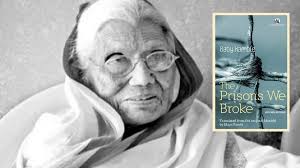
Scholarly work needs to centre Dalit women as narrators of their own labour—like Kamble, Pawar and Bama—whose literary testimonies document care work as political resistance. Dear reader, this article is free to read and it will remain free – but it isn’t free to produce. If you want to support the work that goes behind publishing high-quality feminist media content, please donate to FII and keep us paywall free. Thank you! » Editors Note: #MoodOfTheMonth for February 2026 is Gender and Literature. We are inviting submissions on this theme throughout February 2026. If you would like to contribute, please refer to our submission guidelines and email your pitches to info@@feminisminindia.com. When Babytai Kamble penned The Prisons We Broke, the first published autobiography by a Dalit woman in Marathi, she did more than just narrate a life; she exposed the architecture of caste-determined care. “We clean the filth others create, then are called filthy ourselves,” wrote Kamble, naming an untouchable reality that Indian literature has long rendered invisible. While mainstream narratives celebrate the housewife’s domestic sacrifice, they systematically erase the Dalit and Bahujan women whose blistered hands scrub floors before dawn, wash vessels others have dirtied, and absorb the household’s emotional dumping, only to disappear from the stories when the time comes. Their labour is what sustains the upper-caste domesticity, yet remains the silent infrastructure of comfort: foundational, uncredited, unnamed. Literary Testimonies of Embodied Labour Kamble’s testimony resonates powerfully across Dalit feminist literature. Bama’s seminal Tamil autobiography Karukku (1992) documents how Paraiyar Christian women scrubbed floors on their knees while being denied dignity by upper-caste nuns who “would not even drink water touched by our hands.” Similarly, Shantabai Kamble’s Majya Jalmachi Chittarkatha (The Kaleidoscope Story of My Life) traces how Mahar women’s bodies became sites of caste-allocated sanitation work, writing, “Our hands were meant only for sweeping, scrubbing, and serving.” Dalit feminist scholar Urmila Pawar writes in The Weave of My Life, “My mother used to weave aaydans,” the Marathi generic term for all things made from bamboo. “I find that her act of weaving and my act of writing are organically linked. The weave is similar. It is the weave of pain, suffering, and agony that links us.” This metaphor transcends poetry: her mother’s bamboo weaving, like the Dalit domestic worker’s scrubbing, was never “just labour”. It was an unacknowledged infrastructure of survival, transformed into literary resistance. Interestingly, however, Pawar has analysed the differences between Brahman and Dalit women, arguing that the Dalit woman, in contrast to the Brahman woman, was not bound by customs such as sati, child marriage, among others. Pawar further exploded some myths regarding the gender question in relation to the Dalit movement, such as the wide gap between Dalit and Brahman women on economic, social and educational levels. Pawar continues, “A myth is harboured that unlike the brahman woman the dalit woman is free from bondage and stifling restrictions. The pain of the devadasi, the deserted woman and the murali is ignored in this stand. In fact the woman in the household is yet to get recognition as a full and equal human being (ibid: 94).” On similar lines, Joanna Liddle and Rama Joshi, in their work entitled Daughters of Independence, write about the non-sexual and the sexual divisions of labour. Although economically deprived, Dalit women lead more sexually liberated lives than upper-caste women. Lower caste women, by contrast, experience far fewer controls over their physical freedom. “The economic benefits and the social constraints of seclusion are unknown to them. Sati was never demanded of them, widowhood was no curse, divorce was allowed in many lower caste communities and widows and divorced people could re-marry without disgrace (Liddle and Joshi 1986: 95-69 and 91).” In Aayda: Mahila Adivasi Jivan Katha (edited by Pawar and Meenakshi Moon), oral histories of Adivasi and Dalit women reframe domestic work not as a naturalised duty but as caste-determined exploitation. Oxfam’s data confirms this structural truth: urban Indian women spend 312 minutes daily on unpaid care work, compared with men’s 29 minutes; rural women spend 291 minutes, compared with men’s 32 minutes. What The Data Says? The rate of this invisibility is concerning. Oxfam’s 2020 report, Time to Care, along with an India-focused supplement, demonstrates how our sexist economies are acting as a catalyst for the inequality crisis. “Women and girls are among those who benefit least from today’s economic system. They spend billions of hours cooking, cleaning and caring for children and the elderly. Unpaid care work is the ‘hidden engine’ that keeps the wheels of our economies, businesses and societies moving. It is driven by women who often have little time to get an education, earn a decent living or have a say in how our societies are run, and who are therefore trapped at the bottom of the economy,” stated former Oxfam India CEO Amitabh Behar. Furthermore, the report suggests that women make up two-thirds of the paid ‘care workforce’. Jobs such as nursery workers, domestic workers, and care assistants are often poorly paid, provide scant benefits, impose irregular hours, and can take a physical and emotional toll. Thus, pressure on carers, whether unpaid or paid, is set to grow over the coming decade as the global population ages. Climate change could worsen the looming global care crisis —by 2025, up to 2.4 billion people will live in areas without enough water, and women and girls will have to walk even longer distances to fetch it. 80% of indigenous people live in Asia and the Pacific, a region vulnerable to climate change. “Governments must prioritise care as being as important as all other sectors in order to build more human economies that work for everyone, not just a fortunate few,” said Behar. In the Periodic Labour Force Survey (2017–18) report, it is seen that in rural areas, the share of helper in household enterprises was nearly 17 per cent among male self-employed workers whereas 67 per cent among female self-employed workers while in urban areas, the
Father, son booked for assaulting Dalit minor in moral policing incident in Mangaluru

The complainant has further alleged that caste-based insults were hurled at the boy and that he was publicly threatened with dire consequences if he returned to the area. MANGALURU: In an alleged case of moral policing, a 14-year-old Dalit boy was assaulted by a father and son near a railway track at Babugudde in Mangaluru city. According to the complaint filed by the boy’s father, his son was sitting and conversing with his female friend near the railway track on February 23 at around 4 pm. At that time, the accused, Stevan Montheiro, approached them while recording a video on his mobile phone, questioned their presence, accused them of inappropriate behaviour, and threatened to upload the footage on social media. When the boy attempted to leave the spot, he was stopped and taken to a nearby road, where he was verbally abused and assaulted by Stevan and his son, Avil. The complainant has further alleged that caste-based insults were hurled at the boy and that he was publicly threatened with dire consequences if he returned to the area. The accused are also alleged to have circulated the video on WhatsApp. Based on the complaint, the police have registered a case under Section 176 of the BNSS. Further inquiry is underway. Vincent D’ Souza Courtesy : TNIE Note: This news is originally published on https:/thenewindianexpress.com/bha and is used purely for non-profit/non-commercial purposes, especially human rights
Kharge family has meted out injustice to Dalit leaders, says Chalavadi Narayanaswamy
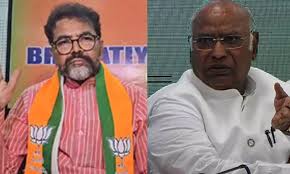
The Leader of Opposition in the Council says the Kharge family has deprived many Dalit leaders, including himself, of opportunities Leader of Opposition in the Legislative Council Chavaladi Narayanaswamy has said that the Kharge family has snatched away opportunities of many Dalit leaders, including himself. Speaking to presspersons in Dharwad on Tuesday, he took exception to Minister Priyank Kharge terming him an opportunist and said that the Kharge family has deprived him of opportunities he deserved after his four decades of service to the Congress. “Your (Priyank Kharge) father has been in politics for six decades and there is no example of him grooming a Dalit leader,” he quipped. Mr. Narayanaswamy also said that several Dalit leaders, including three-time legislators Prasad Abbayya, A. Narayanaswamy, P.M. Narendraswamy and Shivanna, have been sidelined in the Congress. “On other hand, Priyank Kharge, who has won three times, has been made a Minister on all three occasions,” he said. He also said that in Kalaburagi, the former Chief Minister N. Dharam Singh’s son has been politically suppressed by the Kharge family. Mr. Narayanaswamy also sought an answer from Priyank Kharge about allegations of them amassing wealth. The Hindu Bureau Courtesy : The Hindu Note: This news is originally published on https:/thehindu.com/bha and is used purely for non-profit/non-commercial purposes, especially human rights
Social stigma and data gaps limit transgender enumeration in India, complicating the State’s policy design
In January 2026, the Karnataka government announced findings from a statewide survey on transgender persons. This is undeniably significant because the National Family Health Survey (2019-21) and the Periodic Labour Force Survey do not even enumerate transgender persons as a distinct demographic category, despite their recognition as a separate gender category by the Supreme Court of India. The recent Karnataka survey identified 10,365 transgender persons in the state, which is, however, only about half the population recorded in the 2011 National Census. It also significantly diverges from estimates produced by other datasets. Electoral data from the Karnataka assembly elections (2023) listed 4,927 registered transgender voters, while Election Commission figures from the 2024 Lok Sabha polls recorded 5,012 transgender electors. In contrast, community activists’ macro-estimates for 2024-25 place their population at over 200,000. A recent ethnographic study conducted as part of an ongoing project at the Institute of Social and Economic Change (ISEC), Bengaluru, finds an approximate estimate of more than 300,000 transgender people in Karnataka. Inconsistencies are visible in other state datasets as well. The statewide transgender survey conducted in Kerala (2014-15) estimated their population at over 25,000, which is an exponential divergence from the mere 3,902 persons recorded in the 2011 Census. These inconsistencies across surveys signal layered processes of undercounting, which deepens the statistical opacity surrounding transgender population in India. Thus, what is at stake is not merely demographic precision but persistent data inconsistency that shadows transgender realities in India. The questions that arise are: why do transgender populations appear differently across datasets? And why do the State and its enumeration regimes continue to find transgender populations difficult to count? Why do the numbers differ? The first explanation lies in methodology. Typically, population surveys rely on door-to-door enumeration, simultaneously mapping spatial coverage and demographic triangulation across documentation systems. In contrast, relying on community outreach and voluntary disclosure makes surveys contingent on network reach and willingness to self-identify. This introduces data distortions: those outside welfare databases, facing bureaucratic barriers in updating certificates, or geographically dispersed beyond outreach clusters risk exclusion. The dataset thus becomes vulnerable to network reach and assumptions of homogeneous identity assertion, rather than ground realities. The second explanation lies in definitional rigidity. Due to the Euro-American origin of the term ‘transgender’, many local non-binary identities do not neatly fit into this category. Therefore, who is counted as transgender varies across categories, welfare eligibility criteria, medical certification regimes, and community self-identification practices. Moreover, there are significant variations in terms of individuals who currently identify as transgender; those who transition into binary male or female identities after medical or social transition; andthose who occupy a liminal space within ritual and cultural frameworks. Thus, rigid definitional categories struggle to resolve who counts. In turn, it becomes a regulatory act to compress the very population into homogeneity, which it claims to represent. Third, stigma shapes participation. Uneven response rates, due to a wariness of being included in state databases, are widely acknowledged as a structural challenge in surveys that involve gender minorities. Disclosure can carry perceived risks, ranging from employment precarity and housing discrimination to heightened institutional scrutiny. For transgender community, where historical interactions with the State have been marked by surveillance, exclusion, or bureaucratic friction, willingness to self-identify within official data systems remains understandably uneven. Fourth, in states like Karnataka that experience a high rate of migration and mobility, demographic capture is bound to be complex, especially for transgender communities who often have limited access to structured labour markets. Consequently, they often inhabit circulatory geographies, moving between districts, informal economies, and seasonal labour networks. Thus, typical survey methods struggle to capture populations that are spatially fluid and temporally mobile. Finally, household rejection produces statistical erasure. A significant proportion of the transgender population lacks family acceptance. Expulsion from natal homes pushes them into alternative kinship structures unrecognised by typical survey methods, rendering them demographically invisible. These discrepancies are not technical errors. They emerge from structural conditions that make transgender lives difficult to enumerate within conventional demographic frameworks. It is also precisely what makes enumeration consequential to frameworks of recognition, resource allocation, and policy design. Beyond the statistics Counting matters because numbers produce policy legitimacy. Welfare boards require demographic baselines, reservations depend on quantification, and budget allocation follows population scale. Therefore, any survey of the socially and historically marginalised transgender communities must move beyond extraction towards collaboration. Such an enumeration requires partnership with community networks, involving experts, and most importantly, recognising the dynamic forms of transgender identity and a method that is informed by their realities. Without such shifts, surveys risk becoming instruments of symbolic inclusion rather than structural transformation. While the Karnataka survey signals administrative willingness to map the welfare needs of the marginalised and produce targeted interventions, which is welcome, it also reveals the epistemic limits of demographic knowledge itself in other Indian states. Transgender lives exceed the statistical frames designed to contain them. They move across everyday experiences of precarities, kinship reconfigurations, and identity transitions that resist bureaucratic fixity. Enumeration, in this context, becomes necessary, but often insufficient. There is already a lot of work in trans scholarship which argues that AI’s facial recognition software is a regulatory regime for trans people and how it perpetuates biases. The noted inadequacies in transgender enumeration undermine the sustainable formulation of economic, housing, and social policies for them, which are missing in most Indian states. But Karnataka and Kerala provide examples for other Indian states to follow, not only to make these populations inclusive but also to contain inconsistencies in their counting, as most states move to present their budgets. Swarupa Deb Kala S Sridhar (The writers are, respectively, a post-doctoral scholar and a professor at the Institute for Social and Economic Change) Disclaimer: The views expressed above are the author’s own. They do not necessarily reflect the views of DH. Courtesy : DH Note: This news is originally published on https:/deccanherald.com/bha and is used purely for non-profit/non-commercial purposes, especially human rights
Dismissing Dalit Assertion as Victimhood Is an Insult to the Constitution
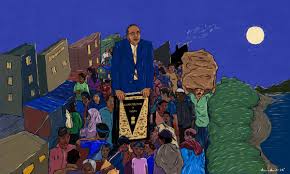
Calling Dalit assertion ‘victimhood’ is not a philosophical position. It is the oldest reflex of every dominant order: discredit the claim before examining its truth. There is a particular kind of violence that never raises its hand. It arrives, instead, in the language of wellness and self-improvement. It does not deny history, it pathologises the act of remembering it. Nowhere is this violence more precisely deployed than in the recurring accusation that Dalits – one-sixth of India’s population, constitutionally recognised as the subjects of the country’s most urgent social justice provisions – ‘play the victim card.’ When that accusation comes from a person occupying a position of institutional authority, it does not merely insult the community, it also rejects the constitutional philosophy of the Republic of India. The ‘victim card’ Let us be precise about what the ‘victim card’ accusation actually claims. It claims that Dalit assertion is not a legitimate constitutional exercise but a psychological performance – that the demand for the implementation of Articles 15, 16, and 17 of the Constitution is not citizens asking for their rights but dependency; that the invocation of the Supreme Court’s jurisprudence on caste discrimination is not law but theatre. It is, in short, a demand that Dalits stop using the Constitution of India in the manner that the Constitution of India was specifically and explicitly designed to be used. Dr. B.R. Ambedkar – the man who designed that Constitution, warned in his closing address that ‘political democracy cannot last unless there lies at the base of it social democracy’. He did not write Articles 17 and 46 as aspirational poetry, but as tools to help dismantle the unequal social order. He knew that a formal constitution in fundamentally unequal society could not produce justice. The reservation system, the anti-atrocity law, the National Commission for Scheduled Castes – these were not gifts from the state to a disadvantaged community. They were constitutional rights, extracted by democratic assertion from a state that would, without them, have perpetuated the very order the Constitution claimed to abolish. Calling Dalit assertion ‘victimhood’ is not a philosophical position. It is the oldest reflex of every dominant order: discredit the claim before examining its truth. What the data shows In 2022, the National Crime Records Bureau recorded 57,582 cases of atrocities against people from Scheduled Caste (SC) communities. That is roughly 157 cases every single day. These were not mere reports of discrimination or allegations of social slights, but registered cases of violence, humiliation, and abuse — everything from murder and rape to the forced drinking of urine, the destruction of homes, and the prevention of access to public water sources. According to the fifth National Family Health Survey, women from SC communities face significantly higher rates of violence than caste Hindu women. According to the 2011 Census, 79.8% of India’s manual scavengers – those who clean human excrement by hand because no one with a choice would do so – belong to SC communities. A landmark 2007 study by economists Sukhdeo Thorat and Paul Attewell found that identical job applications sent to employers with only the applicant’s name changed resulted in 67% fewer callbacks for Dalit names compared to upper-caste ones. Oxfam India’s 2022 Discrimination Report found that SC households earn, on average, 21% less than upper-caste and dominant caste households even in formal, regulated employment, where the law theoretically guarantees equal treatment. CASTE OPPRESSION IN NUMBERS ■ 57,582 registered SC atrocity cases in 2022 alone (NCRB) — 157 every single day ■ 79.8% of manual scavengers belong to Scheduled Caste communities (Census 2011) ■ 67% fewer job callbacks for identical CVs with Dalit names (Thorat & Attewell, 2007) ■ 21% income gap between SC and upper-caste workers in formal employment (Oxfam 2022) ■ 3.6% SC literacy rate at Independence — the direct product of millennia of educational prohibition ■ 20 Dalit student suicides at elite central institutions between 2014 and 2023 These are not the numbers of a community suffering from a psychological addiction to grievance. They are the numbers of a community living inside a system so comprehensively hostile to their existence that the real question is not why they assert their rights, but why they are required, in the face of this evidence, to justify the assertion to anyone at all. The American lesson The comparison to the Black community in the US is frequently used in this debate – usually to suggest that India, like the US, should move beyond race or caste-conscious remediation toward a colour-blind meritocracy. This selective reading of American history is a reversal of what that history actually demonstrates. Martin Luther King Jr., writing from a Birmingham jail cell in 1963, described the greatest obstacle to Black freedom as not the violent racist but the ‘white moderate’ – the liberal who was ‘more devoted to order than to justice,’ who told Black Americans their demands were badly timed, their demonstrations extreme, their sense of urgency unreasonable. King wrote that this moderate preferred a ‘negative peace which is the absence of tension to a positive peace which is the presence of justice.’ The counsel to stop playing the victim card is, in every era and in every country where it has been deployed, the voice of King’s white moderate. The Kerner Commission, appointed by President Lyndon Johnson after the 1967 urban uprisings, concluded with the full authority of the American federal government that the United States was moving toward ‘two societies, one Black, one white – separate and unequal’ and that passive non-discrimination was woefully inadequate to address centuries of structural racism. The US responded with affirmative action. When the US Supreme Court struck down race-conscious university admissions in 2023, Black and Latino enrolment at elite institutions dropped within a single admissions cycle. Evidently, its removal immediately reconstituted the exclusion it had been designed to address. India, with thirty centuries of caste oppression and a SC literacy rate of 3.6% at independence, is in a far more severe position
Aiyar, Rahul and the dynasty politics of leadership
Keshav Upadhye, a young, dynamic and prominent face, has been working with the Bharatiya Janata Party for over two decades. In 2014, the then state president Devendra Fadnavis … MORE Senior Congress leader and former Union Minister Mani Shankar Aiyar has recently exposed the internal unrest within the party. “I am not a ‘Rahulian’”, said Mani Shankar Aiyar. Only he can tell why he chose this particular time to make this statement. Aiyar is known to be a part of late former Prime Minister Rajiv Gandhi’s inner circle. He also served as a Union Minister for some time. Even before Aiyar, several senior Congress leaders had written a letter to Sonia Gandhi a few years ago, urging her not to make Rahul Gandhi party president and not to hand over the reins of the party to him. Through a letter, they demanded that the Congress must have a full-time president. Over the past 25–30 years, several limitations of Rahul Gandhi as a leader have been repeatedly exposed. After realizing that he cannot be a strong alternative to Prime Minister Narendra Modi, Rahul Gandhi has begun spreading false narratives about the Modi government at both national and international levels. Be it demonetization, the surgical and air strikes on Pakistan, Operation Sindoor, the purchase of Rafale aircraft or the Agniveer scheme of the Defence Ministry, Rahul Gandhi has attempted to spread blatant lies on several such issues over the past 12 years. He tried to accuse Prime Minister Narendra Modi by alleging irregularities in the purchase of Rafale aircraft. After reviewing all documents related to the Rafale aircraft purchase, the Supreme Court clearly stated in its judgment that there was no irregularity in the deal. While delivering its judgment, the Supreme Court not only cleared all doubts concerning the deal but also exposed Rahul Gandhi’s falsehood. But even after that, the Congress prince kept on lying about this deal. As a result, he had to tender an apology before the Supreme Court. Despite this big blow from the Supreme Court, Rahul Gandhi continued his campaign of spreading false narratives against the Modi government. Rahul Gandhi does not miss a single opportunity to malign the country and the Modi government on the international stage, based on lies. He has every right to criticize the government’s policies and decisions not only as the Leader of the Opposition in the Lok Sabha, but also as an ordinary citizen. Prime Minister Narendra Modi never expresses his opinion on the allegations made by Rahul Gandhi. Rahul Gandhi persistently tried to poison the minds of the country’s youth regarding the Defence Ministry’s Agniveer scheme. Many former officials of the armed forces have analysed in detail how beneficial this scheme is for the country’s internal security. Despite that, Rahul Gandhi, with the aim of creating doubts in the minds of youngsters, stated that the martyred Agniveers were not receiving compensation from the government. The families of the martyred Agniveers had dismissed Rahul Gandhi’s claim. For Rahul Gandhi, being aggressive against the government means giving priority to creating unrest by spreading baseless allegations. Rahul Gandhi has started the same game of spreading utterly false narrative about the India-US trade deal. Experienced leaders within the Congress do not agree with his tactics. Yet, he is dragging the party along in the name of aggression. Mrs. Sonia Gandhi and Rahul Gandhi are always extremely vigilant about not letting anyone outside the Gandhi family assume the reins of the Congress party. In 1997-98, senior leader Sitaram Kesri refused to step down as Congress president even though it was a wish of the Gandhi family. Back then, Mrs. Gandhi wanted to take the reins of the party by becoming its president. Several senior party leaders know how Kesri was confined to a room at that time. Sonia Gandhi had considered the age and several political limitations of Mallikarjun Kharge while appointing him as the party president. Former External Affairs Minister Shashi Tharoor contested the election for the post of party president against Kharge. Mrs. Sonia Gandhi and Rahul Gandhi systematically pulled all the strings behind the scenes to make sure that Kharge gets elected. Rahul Gandhi was afraid that Shashi Tharoor would become more popular than him. For the same reason, young and dynamic leaders like Jyotiraditya Scindia and Sachin Pilot were denied the post of Chief Minister in their states. Unaware that leadership can be proven through constructive and constitutional ways, Rahul Gandhi has chosen a path of disruptive aggression. Although the Modi government had assured, by releasing the details of the India-US trade deal, that the agreement would not harm the country’s dairy producers or farmers, Rahul Gandhi still blatantly lied in Parliament. Rahul Gandhi does not care that his opposition tarnishes the country’s image on the international stage. It should not be a surprise if Congress leaders who do not agree with such extreme politics unite in the near future. Keshav Upadhye Courtesy : TOI Note: This news is originally published on https:/timesofindia.com/bha and is used purely for non-profit/non-commercial purposes, especially human rights