
‘Deadly Game’ at Private Hospital Ahead of CM’s Visit; Dalit Woman Loses Life

In Sheikhpura, a pregnant Dalit woman died due to medical malpractice at an illegally operating private hospital, just prior to the Chief Minister’s scheduled visit. Trapped in the clutches of touts, the woman’s family was extorted of ₹51,000; yet, her life could not be saved. Sheikhpura – A shocking incident that puts humanity to shame has come to light at ‘Ananya Hospital,’ located on Bhojdih Road in Sheikhpura district. Soni Devi, a resident of Kashichak in the neighboring Nawada district, was admitted to this facility through an ASHA worker after she went into labor. Her family alleges that the hospital administration extorted a hefty sum of ₹51,000 under the pretext of performing a surgical operation. Contrary to official government claims, touts active at the grassroots level deceived this impoverished family, effectively pushing them into a “well of death”—the very place masquerading as a hospital. **A Farce of Treatment and the ‘Referral Game’** As soon as the surgical procedure began, the hospital management—in a desperate attempt to conceal their incompetence—sent the family scrambling to procure two units of blood. By the time the family returned with the blood, the patient’s condition had already deteriorated critically. To save their own skins, the hospital authorities hastily referred the patient to Bihar Sharif. Tragically, the woman succumbed to excessive bleeding while being transported in the ambulance. This was, unequivocally, a fatal outcome resulting from gross medical negligence and a severe lack of necessary medical resources. **Old Peddlers of Death, New Address** Alarmingly, the hospital where this tragedy occurred is reportedly linked to the ‘Maa Savitri Hospital,’ a facility that had previously been sealed by the authorities. Locals allege that whenever the administration shuts down a hospital, the very same individuals simply put up a new signboard and resume their deadly trade under a different name. The names of the establishments change, but the operators—and their horrific modus operandi—remain exactly the same. From Patel Chowk to Bhojdih Road, numerous such clinics continue to flourish without any valid medical licenses. Doctors and Staff Flee Amidst Uproar As news of the woman’s death spread, the fury of her family members erupted. A massive commotion ensued outside Ananya Hospital, accompanied by loud demands for justice. Perceiving that the situation was spiraling out of control, the doctors and the entire hospital staff locked up the premises and fled the scene. This hasty escape, in itself, speaks volumes about their complicity and fear. The crowd gathered at the site raised vociferous slogans against the administration, creating an atmosphere of palpable tension in the area. Questions Raised Over the Administration and Health Department Occurring just prior to Chief Minister Nitish Kumar’s arrival in the district, this incident has placed the functioning of the Health Department squarely in the dock. The pertinent question remains: if the administration is aware that illegal clinics are operating in the region, why is no concrete action taken against them? Are authorities waiting for yet another poor person to lose their life? It now remains to be seen what action the district administration will take against these “white-collar criminals”—or whether the matter will once again end up buried within bureaucratic files. Report – Umesh | Edited By: Anubh Suman | Courtesy: Hindi News
In UP, Rahul says RSS has no place for dalits, backwards in its ranks
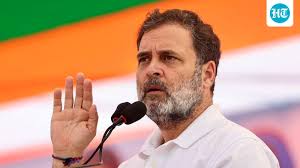
Meanwhile, the event, which was attended by over 4,000 Congress functionaries, came to an end with a proposal seeking Bharat Ratna for Kanshi Ram posthumously. LUCKNOW: Launching a scathing attack on the Rashtriya Swayamsevak Sangh (RSS) and the ruling BJP, Congress’s Reabareli MP and Leader of Opposition in Lok Sabha Rahul Gandhi claimed that there was no place for Dalits and the backwards in both the right-wing organisation. He was addressing Congress functionaries while deliberating over the issues of social justice and the constitution here on Friday. The Congress leader was participating in a Samvidhan Sammelan organised by the party in Lucknow, where he paid tribute to BSP founder president Kanshi Ram two days ahead of his birth anniversary. Claiming that if Jawaharlal Nehru were alive today, Kanshi Ram would have been the CM, Gandhi said the late leader’s struggle and vision were relevant in the contemporary political scenario. Meanwhile, the event, which was attended by over 4,000 Congress functionaries, came to an end with a proposal seeking Bharat Ratna for Kanshi Ram posthumously. Criticising the RSS, Gandhi alleged that the senior ranks lack representation from OBCs, Dalits and Adivasis. “A review of the organisation’s top structure and senior functionaries would show the absence of these communities,” he said, adding that it reflected a wider imbalance of representation in the country’s power structure. Referring to Kanshi Ram, Gandhi said his politics were rooted in the idea that growth should be relegated to a small section of society; rather, it should benefit even the poorest and most marginalised ones as well. He claimed that India’s major institutions still did not reflect the country’s social composition. He said that large sections of the population, especially Dalits, Adivasis, backward classes, extremely backward groups and minorities, were under-represented in the judiciary, bureaucracy, cabinet, education system and corporate sector. Describing the Constitution as more than a legal text drafted after Independence, Gandhi said it embodied the voices and values of reformers and thinkers such as Ambedkar, Mahatma Gandhi, Narayana Guru, Basavanna and Gautam Buddha. Namita Bajpai Courtesy : TNIE Note: This news is originally published on https:/thenewindianexpress.com/bha and is used purely for non-profit/non-commercial purposes, especially human rights
The Impact of the Partition of India on Dalits: An Ambedkarite Perspective in South Asia
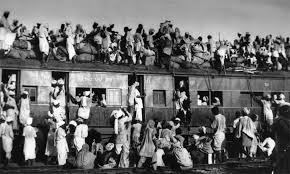
The Partition of the Indian subcontinent in 1947 is widely regarded as one of the most traumatic events in modern history. The division of British India into the independent states of India and Pakistan triggered massive communal violence, widespread displacement, and one of the largest migrations in human history. Historical narratives of Partition generally focus on the conflict between Hindus and Muslims and the political rivalry between leaders such as Jawaharlal Nehru and Muhammad Ali Jinnah. While these perspectives illuminate important political developments, they often overlook the experiences of marginalized communities, particularly Dalits. From an Ambedkarite historiographical standpoint, the Partition of India cannot be fully understood without examining how caste structures shaped both the violence and the aftermath of the event. The ideas of B. R. Ambedkar provide a critical framework for analyzing these issues. Ambedkar repeatedly argued that Indian society was fundamentally divided by caste hierarchies and that political independence without social transformation would not produce genuine equality. The experiences of Dalits during Partition illustrate the continuing power of caste in shaping social and political realities. Dalits were affected by violence, displacement, and economic loss, but their suffering remained largely invisible in mainstream narratives. In many cases, they faced not only communal violence but also discrimination within their own religious communities. Consequently, the impact of Partition on Dalits reveals the intersection of religion, caste, and power in South Asian history. This essay examines the impact of Partition on Dalits from an Ambedkarite perspective, highlighting the ways in which caste shaped displacement, political representation, and post-independence social structures. Dalits as the Invisible Victims of Partition One of the most striking features of Partition historiography is the relative absence of Dalit experiences. Historical accounts usually describe violence in terms of religious communities—Hindus, Muslims, and Sikhs—without recognizing the internal stratification within these groups. Dalits, who occupied the lowest positions in the caste hierarchy, were frequently marginalized in both historical narratives and relief efforts. Many Dalits were victims of violence during Partition, but their suffering often went unrecorded because they lacked political representation and social visibility. Unlike dominant castes, Dalit communities rarely had access to leadership networks or institutional support that could document their experiences. From an Ambedkarite perspective, this invisibility reflects a broader problem within Indian society: the tendency to treat caste inequality as secondary to other political issues. Partition therefore reinforced an existing pattern in which Dalit voices were excluded from national narratives. Displacement and Refugee Experiences Partition triggered the displacement of approximately fifteen million people across the newly created borders of India and Pakistan. Among these refugees were large numbers of Dalits, particularly in regions such as Punjab and Bengal. In eastern India, the Namasudra community—a major Dalit group in Bengal—was severely affected. Many Namasudra peasants initially remained in East Pakistan after 1947, hoping to continue their lives without migrating. However, continuing insecurity and communal tensions forced many of them to migrate to India in subsequent years. When Dalit refugees arrived in India, they often faced harsh conditions in refugee camps. Unlike many upper-caste refugees who were able to secure land or employment through social networks, Dalits frequently lacked the resources needed to rebuild their lives. As a result, many Dalit refugees were relocated to remote areas such as the Dandakaranya region, where they were expected to cultivate previously undeveloped land. These resettlement policies reflected the persistence of caste-based inequalities even within state rehabilitation programs. Double Marginalization: Religion and Caste Dalits experienced a form of double marginalization during Partition. On one hand, they were affected by communal violence directed at their religious communities. On the other hand, they continued to face caste discrimination from members of their own religious groups. In refugee camps across northern India, upper-caste refugees often maintained social distance from Dalits. Dalits were sometimes assigned menial tasks such as sanitation work and were excluded from community decision-making processes. Relief distribution and rehabilitation opportunities were also influenced by caste hierarchies. This situation demonstrates that the violence of Partition did not erase caste distinctions. Instead, caste continued to shape social relations even in the context of humanitarian crisis. Forced Conversions and Vulnerability During the chaotic violence of Partition, Dalits were particularly vulnerable to coercion and forced conversion. In several regions, competing religious groups sought to increase their numbers by converting marginalized communities. Dalits sometimes faced pressure to adopt a different religious identity in order to secure protection or access resources. Because they lacked strong political representation and social power, they were often unable to resist such pressures. These experiences highlight the precarious position of Dalits during Partition. While dominant castes could mobilize resources and networks to protect their communities, Dalits were often left to navigate the crisis with minimal support. The Political Dilemma of Dalit Leadership The political challenges faced by Dalits during Partition are illustrated by the career of Jogendra Nath Mandal, a prominent Dalit leader from Bengal. Mandal believed that an alliance between Muslims and Dalits could counterbalance the dominance of upper-caste Hindus in Indian politics. On this basis, he supported the creation of Pakistan and became the country’s first law and labour minister. However, Mandal’s expectations were soon disappointed. Reports of violence and discrimination against Dalits in Pakistan led him to resign from his position and return to India in 1950. His experience revealed the difficulty of finding a political arrangement that would genuinely protect marginalized communities. Mandal’s story illustrates the complex choices faced by Dalit leaders during the final years of colonial rule. They had to navigate between competing nationalisms while seeking to safeguard the interests of their communities. The Disruption of Dalit Political Movements Before independence, Dalit political movements had begun to develop significant momentum. Organizations representing the Depressed Classes advocated political rights, social reform, and greater representation in government. However, the upheaval of Partition disrupted many of these movements. In regions such as Bengal and Punjab, the displacement of populations weakened the social networks that sustained Dalit political activism. As a result, many Dalits who had previously engaged in organized political activity
Dalit Man Claims He Was Assaulted In Custody By Cops, Dies Later At Hospital
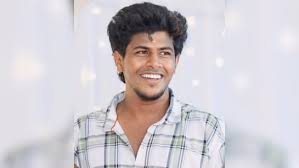
A document detailing the alleged torture of a 26-year-old Dalit man in police custody in Tamil Nadu’s Sivaganga district has come under sharp focus after it was presented before the Madurai Bench of the Madras High Court. Akash, a 26-year-old Dalit, who claimed he was brutally assaulted in police custody in SivagangaChennai: A document detailing the alleged torture of a 26-year-old Dalit man in police custody in Tamil Nadu’s Sivaganga district has come under sharp focus after it was presented before the Madurai Bench of the Madras High Court. The document – a remand order recorded by a judicial magistrate based on the victim’s statement – has now effectively become a dying declaration, as the man later died while undergoing treatment at a hospital in Madurai. The victim, identified as Aakash, had described in detail the alleged torture he faced in police custody. According to the statement recorded by the magistrate, Aakash alleged that he was blindfolded and brutally assaulted by police personnel after being taken into custody. He claimed that officers placed stones below and above his right leg, covered it with a wet gunny bag and repeatedly beat it with an iron rod. The assault, he said, broke his leg and caused severe bleeding. Aakash further alleged that police threatened him and instructed him to tell doctors at the Manamadurai Government Hospital that he had sustained the injuries after falling from the Melapasalai bridge. In his statement, he also told the magistrate that around 10 cops in plain clothes first picked him up along with his co-accused, Guna, on the evening of March 6. Later that evening, four uniformed policemen took them away, he said, adding that he was placed in a separate vehicle and blindfolded. Human rights defender Henri Tiphagne, Executive Director of People’s Watch, told NDTV that the document is a crucial piece of evidence. “This is the first document that establishes police torture in Sivaganga,” Mr Tiphagne said, adding that although the case has been transferred to the CB-CID, no police personnel have been arrested or suspended so far. Aakash, a graduate, had been arrested after a clash with two men a day earlier and was charged for attempt to murder. He had sustained injuries and was initially admitted to the Sivaganga Government Hospital before being shifted to the Government Rajaji Hospital in Madurai, where he died the following morning. Police officials had earlier said the 26-year-old developed breathing complications while undergoing treatment. His family, however, has consistently alleged custodial torture. Tiphagne earlier told NDTV that Aakash had informed his parents in the hospital that police had placed his leg between stones and beaten him. The state had denied allegations of torture and argued he fell from a bridge. A senior police officer told NDTV that a magisterial inquiry has been ordered and that the law will take its course. On the allegations of torture, the officer said the investigation is underway and declined further comment. The incident comes less than a year after the custodial death of Ajith Kumar in the same district following alleged police torture that was reportedly caught on camera. The case is currently being probed by the CBI, with five police personnel arrested and ten officers named in the case. Meanwhile, the Madurai Bench of the Madras High Court has also directed the registration of a case under the SC/ST (Prevention of Atrocities) Act in connection with Aakash’s death. Reported by: J Sam Daniel Stalin Courtesy : NDTV Note: This news is originally published on https:/ndtv.com/bha and is used purely for non-profit/non-commercial purposes, especially human rights
India Moves To Broaden Legal Definition Of Transgender Persons. What Does It Mean?
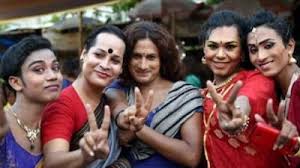
The amendment is also expected to spell out clearer criteria for identifying transgender persons, which the government says will help prevent misuse of the law’s provisions. The Union Cabinet on Tuesday approved a proposal to amend the Transgender Persons (Protection of Rights) Act, 2019, in a bid aimed at expanding the definition of transgender individuals in the country. As per reports, the proposed changes are intended to make the law more inclusive so that a broader range of individuals can access the rights, protections and welfare measures provided under the legislation. The amendment is also expected to spell out clearer criteria for identifying transgender persons, which the government says will help prevent misuse of the law’s provisions. Community leaders have consistently raised concerns regarding the implementation of the law, prompting ongoing discussions around its effectiveness. The Supreme Court has also voiced concerns regarding delays in implementing the law provisions. While the Cabinet has approved the proposal, detailed provisions of the amendment have not yet been made public. The Transgender Persons (Protection of Rights) Act, 2019, which came into force on January 10, 2020, provides legal recognition to transgender individuals, prohibits discrimination and mandates welfare measures for the community. The rules for implementing the law were notified in September 2020. Under the current law, a transgender person is defined as someone whose gender identity does not match the gender assigned at birth. Section 2 of the Act provides crucial definitions regarding who qualifies as a transgender person. The definition includes trans men and trans women, persons with intersex variations, gender queer individuals, hijra and others. The law applies regardless of whether a person has undergone sex reassignment surgery or hormone therapy. It also requires transgender persons to go through a district magistrate and district screening committee to get certified as a trans person. According to the 2011 census there are more than 4.80 lakh transgenders in the country. As per the reports, the proposed amendment aims to bring greater clarity to the definition and ensure that genuine beneficiaries receive the protections and benefits provided under the law. Curated By : Shobhit Gupta Courtesy : News18 Note: This news is originally published on https:/news18.com/bha and is used purely for non-profit/non-commercial purposes, especially human rights
Dalit Family in Sidhauli Forced to Flee Home: Allegations of Assault and Threats Against Local Bullies; Appeal Made to SP
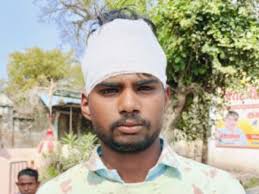
In Karaunda village, located within the Nigohi police station area of Shahjahanpur, a Dalit family has alleged that local bullies (known as *dabangs*) forcibly entered their home, physically assaulted them, hurled caste-based slurs, and damaged their property. The victimized family states that they are receiving continuous threats, compelling them to abandon their village. They have appealed to the Superintendent of Police (SP) for justice and protection. Ramlal, a resident of Karaunda, stated in a written application submitted to the Superintendent of Police that on the evening of March 3, around 7:30 PM, several local bullies forcibly barged into his home. It is alleged that the accused subjected him to caste-based verbal abuse and assaulted him using sticks and clubs. During this attack, Ramlal sustained severe head injuries and was left bleeding profusely. In addition to breaking down the front door, the accused also damaged a motorcycle parked in the courtyard and a storage chest kept inside the house. Immediately following the incident, the victim alerted the police via the ‘Dial 112’ emergency service. Upon arriving at the scene, the police arranged for Ramlal’s medical examination. He initially received treatment at the Primary Health Centre in Nigohi, followed by further treatment at the District Hospital. A case has also been registered against some of the accused individuals in connection with this matter. Ramlal alleges that since the incident occurred, the accused have been continuously pressuring him to reach a compromise. He is being threatened that if he does not agree to a settlement, he will not be allowed to continue living in the village. Terrified of the accused, Ramlal and his family are living in constant fear and are contemplating leaving the village. On Tuesday, Ramlal appealed to the Superintendent of Police, requesting that he and his family be provided with police protection. He also pleaded for arrangements to be made—under police supervision—to retrieve his household belongings from his home, so that he and his family may relocate to a safe location. In this regard, Shahjahanpur Superintendent of Police Rajesh Trivedi has assured that an investigation will be conducted and appropriate action taken. Viresh Kumar | Mishripur (Sidhauli), Courtesy : Hindi News
Dalit Woman Beaten with an Iron Rod in Maharajganj; VIDEO: Youth Attacks Over Old Feud, Victim Referred to Medical College
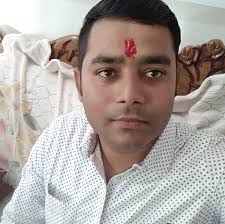
On Tuesday evening, in the Senani Nagar ward of the Siswa Municipality in Maharajganj, an aggressive youth severely injured a Dalit woman by beating her with an iron rod, stemming from an old personal feud. The incident was captured on CCTV footage, a video of which has now surfaced. According to reports, Punita (30)—wife of Jitendra Gautam, a resident of the Senani Nagar ward—was walking along Block Road around 4:00 PM for some work. According to eyewitnesses, an unruly youth from the same ward intercepted her on the way and began beating her with an iron rod. After the assault, the accused fled the scene, leaving the woman half-dead. Upon receiving information about the incident, police from the Kothibhar station arrived at the scene and admitted the injured woman to the Siswa Primary Health Centre (PHC). After receiving primary treatment there, and given her critical condition, she was referred to the District Hospital. Later, as her condition deteriorated further, she was transferred to a Medical College. The entire incident was captured by a nearby CCTV camera, and the resulting video is currently going viral on social media. The victim’s husband, Jitendra Gautam, currently resides in Bengaluru. Speaking over the phone, he stated that the accused youth—known for his aggressive behavior—had previously assaulted him twice over a land dispute. It is for this very reason that he has been living in Bengaluru to ensure his personal safety. According to police sources, the accused youth has been taken into custody. Regarding the matter, Dharmendra Singh stated that the police have received information about the incident. Once a formal written complaint is received from the victim’s side, a case will be registered against the accused, and further legal action will be initiated. Brijesh Kumar Gupta | Maharajganj | Courtesy : Hindi News
‘You didn’t vote for me… I won’t get any of your work done’: Watchman in Bhadohi set ablaze with petrol, dies in hospital; Village Head’s husband and son accused
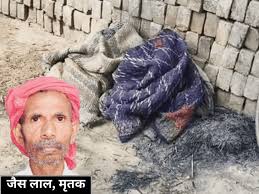
A watchman in Bhadohi, who was set on fire with petrol, passed away at 5:00 AM on Tuesday morning. The elderly man, who had sustained severe burns, was undergoing treatment at BHU (Banaras Hindu University), where he breathed his last. He had gone to the Village Head’s residence to collect a pipe needed for repairing a handpump. During this visit, an altercation broke out with the Village Head’s husband, who remarked, “You didn’t vote for me, did you? In that case, I won’t get any of your work done.” The dispute subsequently escalated into a physical altercation. Following the scuffle, the Village Head’s husband and her son doused the watchman with petrol and set him on fire. In this incident, the watchman sustained burns covering approximately 70 percent of his body. This entire incident took place in Pipergaon, located within the jurisdiction of the Gyanpur Kotwali police station. Jais Lal Saroj (55), a resident of Pipergaon, served as a watchman for the Gyanpur Kotwali police station. His wife, Phoolkumari, has been suffering from an illness (paralysis) for the past three years. Jais Lal Saroj is survived by six children—five sons and one daughter. His sons are Kadedeen (32), Raju (30), Sanjay (25), Ashuraj (23), and Santosh (20), while his daughter is named Priya Saroj (17). On Monday morning at 7:30 AM, Jais Lal rode his bicycle to the home of the village’s *Gram Pradhan* (Village Head), Chanda Devi, to collect a pipe required for handpump repairs. The distance between their respective homes is approximately one kilometer. Upon his arrival, the Village Head’s husband, Ramnayak, confronted him, saying, “You didn’t vote for me, did you? Then I won’t get any of your work done. Get out of my house… go to the Secretary instead.” In response, the victim, Jais Lal Saroj, asked, “If you are the *Pradhan*, why should I go to the Secretary? Please provide the pipe needed for the handpump repairs.” His request for the pipe enraged them. Ramnayak retorted, “Don’t talk back to me; leave immediately, or else I will start beating you.” At that very moment, his son, Kamlesh, poured petrol over the victim. When the victim attempted to flee the scene, he was set on fire using a matchstick. Upon receiving news of the incident, local villagers rushed to the spot and transported the injured elderly man to the hospital. He was initially taken in critical condition to the Maharaja Balwant Singh District Hospital in Gyanpur. From there, he was referred to the Trauma Center—and subsequently to BHU, Varanasi—for advanced medical treatment. According to his family members, he passed away early Tuesday morning while undergoing treatment. **Son Accuses the *Pradhan’s* Husband** The victim’s 17-year-old daughter, Priya, stated that she had gone to visit her brother’s in-laws’ home. She learned of the incident via a phone call around 8:00 AM, after which she immediately rushed back home. Meanwhile, the deceased’s son, Santosh Saroj, has alleged that his father was doused with petrol and burned alive. He has accused Ramnath Yadav (alias Ramnayak) and his son, Kamlesh Yadav, of being involved in the incident. **Victim’s Family Demands ₹1 Crore** The deceased’s elder brother, Babu Ram Saroj, has demanded strict action against the accused. He stated that rigorous measures must be taken against the culprits to ensure justice for the family. Additionally, he has demanded financial assistance of ₹1 crore from the government, a plot of land measuring one *bigha*, and that the government assume responsibility for the education of the deceased’s children. He further demanded that “bulldozer action” (demolition) be taken against the properties of those accused in the incident. **Police Force Deployed in the Village** Given the situation in the village, a heavy police force has been deployed. During this time, various political and social activists—including Bhim Army District President Pramod Kumar Chaudhary, District General Secretary Vinod Gautam, Azad Samaj Party State Secretary Ashok Gautam, and the Organizing Secretary—arrived to meet with the victim’s family. Bahujan Samaj Party District President Shiv Narayan Gautam, Mirzapur Division In-charge Ramashankar Saroj, Pappu, and Rajesh Gautam were also present. Furthermore, Lok Janshakti Party State President Rajiv Paswan, District President Vikas Dubey, Organizing Secretary Dhananjay Dubey, and State General Secretaries Ashutosh Gaharwar and Avneesh Tiwari also reached the scene. **Superintendent of Police Abhimanyu Manglik Stated:** “We have received information regarding the incident, and the accused have been taken into custody for interrogation. The police are conducting an investigation while taking all aspects of the case into consideration.” The police have registered a case against Kamlesh Yadav in this matter under Sections 109(1), 118(1), and 101(1), as well as under the SC/ST Act. Further legal action will be initiated only after the investigation is complete. Raj Kumar | Bhadohi Courtesy: Hindi News
Haunted Histories Of Faith And Dalit Christian Women’s Voices In Malayalam Literature
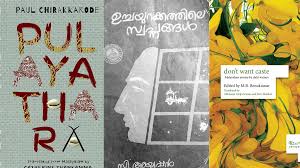
From the spectral testimony of Rosykutty to the everyday defiance of schoolgirls, these texts challenge the histories produced by upper-caste Kerala literature, which frequently marginalises or silences Dalit experiences. Dalit Christian literature emerges from a space of historical rupture, where the Dalit Christian self is continually compelled to view itself through the oppressive caste gaze. Conversion held the promise of equality, but caste ‘marks’ the body and name anyway, creating a fracture of being spiritually Christian, however socially treated as Dalit. Positioned within this hyphenated identity of being both Dalit and Christian, such writing becomes a crucial archive of resistance, recording the lived contradictions of Brahmanical Christianity and casteist society. The formation of Dalit Christian identity is inseparable from Kerala’s specific caste history, Christian institutional structure, and twentieth-century reform movements. Kerala’s caste order was structured not only around untouchability but also ‘unseeability’, with agrarian slavery binding communities such as the Pulayas and Parayas to upper-caste landlords (Mohan, 2015). By the twentieth century, Kerala witnessed powerful anti-caste and reform movements led by figures such as Ayyankali and Poykayil Appachan, that politicised questions of dignity, education, and collective mobilisation. These movements produced a new consciousness that inevitably entered literary production (Mariya, 2023). Crucially, such narratives also register the invisible burdens borne by Dalit Christian women, domestic labour, their embodied trauma, and systematic denial of speech within both caste society and ecclesiastical structures. The Quiet Work of Sustaining Family and Caste Honour When Paul Chirakkarode (1963) wrote Pulayathara, he was responding not only to caste oppression within Kerala, but also to the concrete social realities of the state, agrarian landlordism, anti-caste movements and Syrian Christian dominance within the church, alongside the persistence of Brahmanical hierarchies within both Hinduism and Christianity. Considered the first Dalit-Christian novel, Pulayathara (Pulaya Home/Land) reads as a yearning for belonging and dignity in a society that denied both. In Brahmanical Kerala, Pulayas and other ‘slave castes’ were historically landless, tied to the soil as bonded labourers but never permitted to own or inhabit it as their own. Conversion to Christianity appeared to offer a threshold into stability, access to mission land, the possibility of settlement, and a fragile claim to space, but Chirakkarode reveals how this ‘home’ was never truly theirs. The novel begins in the fields of nineteenth-century Kerala, where Thevan Pulayan bends over soil that will never belong to him. “This thara is all I have” (p. 12), he tells his son Kandankoran one evening, pointing to their fragile hut. During a particular instance following a minor mistake, Thevan is evicted without mercy, his home declared a temporary concession rather than his right. Dispossessed and humiliated, Thevan and Kandankoran seek refuge in the house of Pathrose, a Pulayan who has converted to Christianity. Kandankoran falls in love with Anna Kidathi, Pathrose’s daughter, but marriage requires what he still lacks: a home. To secure it, he converts, becoming Thomas. This new name does not grant him a new social body. He is mocked as a poocha kristiyani, a fake Christian, as his spiritual skin is still stained by untouchability. The soil, songs, and soul of his Pulaya heritage continue to call to him, reminding him and the readers of the emotional and cultural cost of leaving one world only to enter another that never truly accepts him. “He thought to himself, what a cursed creature he was!” (p. 115). Now, in this narrative, conversion and dignity are articulated through male crisis as in Thevan’s eviction, Kandankoran’s humiliation, and Thomas’s fractured identity. But the structure of that crisis depends on women. Anna is the reason for conversion, marriage, and settlement. Her body becomes the site that negotiates caste mobility, while her subjectivity remains unrecorded. This asymmetry reveals how Dalit Christian women occupy a precarious place within the intersection of caste and religion. The ‘search for home’ is therefore gendered. Men seek land and recognition; women sustain the fragile domestic space through labour and emotional endurance. After marriage, Anna Kidathi lives only a few hundred yards from her natal home, but never visits it because Kandakoran refuses to accompany her, knowing her mother disapproves of him. Anna fears that going alone would result in society labelling her an ‘incapable woman’. Her body marks the shift from daughter to wife, but she has no agency over movement between these spaces. When the narrator describes “a mist-like barrier” (p. 130) between the two houses, it signifies how caste anxiety and patriarchal norms quietly enforce her emotional and spatial exile despite physical proximity. Her longing intensifies the silencing that operates within both the household and the church. In such contexts, literature becomes the only viable space for articulation. This is powerfully echoed in C. Ayyappan’s short story Prethabhashanam (The Ghost Speaks), first published in his 1986 collection Uchayurakkathile Swapnangal (Dreams in the Afternoon Sleep), where those who were denied a voice in life return as ghosts to narrate their suffering. As John (2019) observes, “these characters were silenced and never given answers. Their ghostly afterlife becomes a paradoxical rebirth, an additional dimension of freedom that allows them to speak while still bearing the weight of their human wounds.” Haunting, Silence, and the Weight of Injustice Prethabhashanam unfolds through an unsettling monologue, the voice of Rosykutty, a Pulaya woman who returns as a ghost not to frighten but to finally speak. Sixteen days after her death, she enters the body of Kunchako’s sister, a Syrian Christian girl, to reveal the truth of her exploitation and death. In life, Rosykutty was only fifteen when Kunchako, an upper-caste man, seduced and abused her. When she became pregnant, he spat on her and beat her for daring to carry his child. As the story progresses, we find out that Rosykutty’s mother was also a victim of sexual exploitation by Kunchako’s father, revealing a haunting cycle of violence passed down through generations. This exposes Rosykutty as Kunchako’s illegitimate half-sister. Upon knowing, the spirit condemns God by asking, “How can an upper caste Christian have a Dalit girl
A case has been filed based on a complaint that a Dalit was run over by a tractor and his leg was broken.
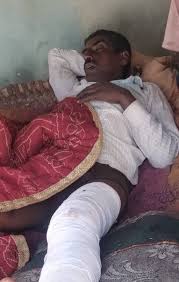
Sumerpur, Hamirpur. A complaint was filed with the police regarding a tractor that ran over a Dalit standing at a crossroads in the village of Kaithi in the local area. The victim’s wife filed a case alleging that Kallu, the village headman, climbed on the door, abused him, and threatened to kill him after he was asked to seek medical treatment. The incident occurred on March 4th. In filing the case, Jahari, a resident of Kaithi, stated that her husband, Kallu, was standing at the crossroads when Kariya, a resident of the village, drove a tractor over his husband’s leg, breaking his leg. This resulted in a broken leg. Angered by the request for medical treatment, Mohit Singh, along with his brother Rohit Singh and village resident Kamlesh Kori, came to the door, abused him, and threatened to kill him. Based on Jahari’s complaint, the police have filed a case against the three under serious sections, including Dalit harassment. Brijendra Kumar Courtesy: Hindi News