
SC status sought for Dalit Christians in A.P.
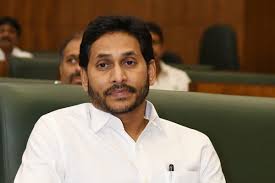
Dalit Christians continue to face untouchability, social exclusion and economic backwardness, says former DGP Purnachandra Rao Addressing the media, former DGP J. Purnachandra Rao alleged that successive governments headed by Chief Ministers from dominant communities, including Kamma and Reddy leadership, for decades had not made adequate efforts to secure a favourable decision from the Centre. Despite having political influence at the national level, the issue was not accorded a priority, he alleged. Pointing to the implementation of the reservation for Economically Weaker Sections (EWS), he said political leadership had acted with speed and coordination to extend benefits to the dominant communities, while the long-pending demand of Dalit Christians had not received with similar urgency. “If governments could move swiftly to ensure EWS reservations for the Kammas and Reddies, why has there been no comparable effort to secure SC status for Dalit Christians for over seven decades?” he asked. Mr. Rao said that Dalit Christians continued to face untouchability, social exclusion and economic backwardness, but were denied SC status solely on the basis of religion. He argued that this amounted to ‘discrimination’ and called for corrective action in line with constitutional principles. Former IAS officer Samuel Anand Kumar, CCC president Ashok Kumar and others demanded the repeal of Paragraph 3 of the Constitution (Scheduled Castes) Order, 1950, and the granting of SC status to Dalit Christians. Later, the leasders submitted a representation addressed to the President of India to the NTR district Collector. The Hindu Bureau Courtesy : The Hindu Note: This news is originally published on https:/thehindu.com/bha and is used purely for non-profit/non-commercial purposes, especially human rights
99 Years After Mahad Satyagraha: The Invisible Walls of the Chardar Tank
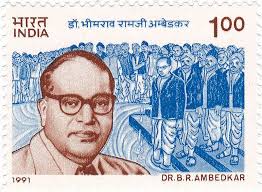
On March 20, 1927, Dr. B.R. Ambedkar led thousands of Dalits to the Chardar Tank in Maharashtra to drink water, a revolutionary act of reclaiming human dignity. While the physical tank may be open, the ritual codes of purity have merely migrated into the boardrooms of industry, the fields of science, and the hidden data of our national surveys. While the world admires the craftsmanship of Agra’s shoes, the Dalit artisans who create them remain trapped in a state of precariousness. From the manual scavengers cleaning sewer lines at night in Maharashtra to the Dome community in Banaras tasked exclusively with cremation, specific occupations remain caste-locked. Today, India marks the 99th anniversary of the Mahad Satyagraha. On March 20, 1927, Dr. B.R. Ambedkar led thousands of Dalits to the Chardar Tank in Maharashtra to drink water, a revolutionary act of reclaiming human dignity. In the popular imagination, this struggle is often viewed as a historical victory, a battle won before the ink of the Constitution was even dry. However, as we stand on the threshold of the centenary, a deep dive into the modern landscape suggests that while the physical tank may be open, the ritual codes of purity and pollution have merely migrated into the boardrooms of industry, the fields of science, and the hidden data of our national surveys. Professor Atul Thorat of JNU highlights that the exclusion Dr. Ambedkar fought against has become sophisticated and, in many cases, invisible to the urban eye. Nowhere is this more apparent than in the leather industry of Agra. While the world admires the craftsmanship of Agra’s shoes, the Dalit artisans who create them remain trapped in a state of precariousness. Thorat points out a stark contrast with Europe: in Italy or England, a handmade leather shoe is a brand of prestige where the artisan captures the full value and credit. In India, the system is designed to keep the creator hand to mouth. Because the retail, branding, and management systems have been captured by specific business communities, the Dalit worker, despite being the primary skilled worker, is denied the path to becoming an entrepreneur. They are forced to buy raw materials on credit, ensuring they never gather enough capital to start their own enterprise. They provide the skill, but the market system ensures they remain labourers rather than proprietors. This obsession with ritual hierarchy even acts as a barrier to scientific and medical innovation. Thorat recounts the story of an American-educated PhD engineer who returned to India to revolutionise agriculture using organic manure derived from human waste, what is known as Okla manure in Delhi. “Despite the scientific fact that organically decomposed waste is simply fertilizer, the project collapsed under the weight of caste-based perception. Farmers rejected it, claiming human excreta is defiling and polluting, whereas cow dung is celebrated as pure.” Thorat said. This unscientific divide mirrors a historical tragedy in Indian medicine. Thorat notes that Ayurvedic medicine historically failed to evolve as rapidly as Unani or Chinese medicine because practitioners, bound by codes of purity, refused to perform autopsies or examine polluting bodily fluids like urine and stool. Even today, this manifests in the fields: when truckloads of manure are delivered, the driver may be middle-caste, but the off-loaders are exclusively Dalits, relegated to the task because it is their traditional assignment to handle what the body gives up. This is rooted in the Bühler (1867) definition of Hindu ritualism: anything the body sheds—blood, sweat, spit, or excreta, is considered spiritually polluting for the priest-class, leading to the relegation of these tasks to a designated untouchable group. The persistence of these practices is backed by hard data that challenges the narrative of a post-caste India. Thorat, who co-authored research with Diane Coffey of Princeton and UT Austin, explains that traditional face-to-face surveys often hit a wall of survey guilt. When an urban interviewer asks a person if they practice untouchability, only about 30% admit to it. However, when the same questions were asked in an anonymised telephonic survey, the mask of political correctness slipped. In Delhi, 40% admitted to practicing untouchability; in rural Uttar Pradesh, that figure surged to 64%. This data provides a sobering context to the hidden-camera research conducted by the Indian Institute of Dalit Studies (IIDS). Their work documented the covert reality of 21st-century India: Dalit girls in villages sitting in corners for hours, waiting for the sun to set and for every other community to finish before they are allowed to touch the Chhapakaal (handpump). Once they finish, the pump is ritually washed and purified. At village tea stalls, the two-cup system persists, where Dalit men must wash their own glasses kept outside and receive tea poured from a height to avoid physical contact. From the manual scavengers cleaning sewer lines at night in Maharashtra to the Dome community in Banaras tasked exclusively with cremation, specific occupations remain caste-locked. National Sample Survey data reveals that across hundreds of occupational codes, categories like leather workers and tanners remain almost exclusively the domain of Scheduled Castes. Whether it is the Vaidyas (physicians) of old who were sidelined for their indigenous herb knowledge or the basket weavers of today, the Hindu fold has historically expanded by relegating frontier communities to the status of untouchables based on their proximity to polluting materials like dead hide. As we enter the 99th year of the movement at Mahad, the message is clear: Article 17 of the Constitution may have abolished the word untouchability, but it has not yet abolished the mind that practices it. The struggle of 1927 was not just about water; it was about breaking the monopoly on merit and purity. Until the skilled artisan in Agra can brand his own shoe and the farmer in Karnataka can see science instead of pollution, the Chardar Tank remains a mirror reflecting a journey that is far from over. Pritha Vashisth Courtesy : Outlook India Note: This news is originally published on https:/outlookindia.com/bha and is used purely for non-profit/non-commercial
Chirag Paswan’s Party Outraged Over Murder of Elderly Dalit Man in Bhadohi; Calls SP’s ‘PDA’ Slogan a Farce
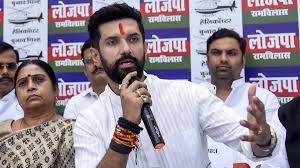
Bhadohi News: Politics has intensified in Bhadohi following the murder of an elderly Dalit man who was burned alive. On Wednesday, a delegation from the Lok Janshakti Party met with the victim’s family. **Murder of an Elderly Dalit Man in Bhadohi** The case involving the brutal murder of Jaislal Saroj—an elderly Dalit man from the Bhadohi district of Uttar Pradesh who was burned alive—continues to gain momentum. The incident has also sparked heated political debate. A delegation from the Lok Janshakti Party (Ram Vilas) met with the victim’s family and provided financial assistance of ₹100,000. During the visit, they launched a scathing attack on the Samajwadi Party’s ‘PDA’ (Pichhda, Dalit, Alpsankhyak—Backward Classes, Dalits, and Minorities) slogan, labeling it as completely deceitful. Following the brutal murder of Jaislal Saroj—an elderly Dalit watchman—in Peepargaon, Gyanpur, a high-level delegation from the Lok Janshakti Party (Ram Vilas) met with the victim’s family on Wednesday. Led by the party’s UP State President, Rajiv Paswan, the delegation offered condolences to the bereaved family and handed over the assistance amount of ₹100,000. This financial aid was provided under the directives of LJP President and Union Minister Chirag Paswan. **LJP Leaders Meet the Family** After meeting with the victim’s family, the LJP State President launched a strong attack on the Samajwadi Party, dismissing their ‘PDA’ slogan as a complete sham. He pointed out that the SP State President had visited Bhadohi and even traveled to a neighboring village, yet failed to reach the doorstep of the victimized Pasi family. He alleged that opposition parties merely engage in caste-based politics and maintain a deliberate silence regarding the injustices faced by Dalits, simply because the accused—the village *Pradhan* (head)—belongs to the Yadav caste. **SP’s ‘PDA’ Formula Dubbed a Farce** Rajiv Paswan stated that the extent of his party’s commitment to this issue was clearly demonstrated on Tuesday in the country’s highest legislative body—Parliament—when Jamui MP Arun Bharti forcefully raised the Jaislal Saroj murder case. Taking aim at the opposition parties, Arun Bharti remarked that while they were present in Bhadohi, the leaders of the PDA were indeed talking about caste-based protection; however, they could not spare the time to look after the victimized Dalit, Jayalal Saroj. The LJP has demanded that the Uttar Pradesh government take immediate and stringent action against the land mafia involved in this massacre, demolish the illegal properties of the culprits using bulldozers, and ensure that they are sentenced to death. Rajiv Paswan reiterated the party’s resolve to continue its struggle—from the streets to the Parliament—until justice is secured for the family of the deceased, Jayalal Saroj. By: Rohit Gupta Courtesy: Hindi News
The dangerous logic of the Transgender Persons Amendment Bill 2026
Considering these multitudes of historical contexts, the current Amendment Bill, if incorporated into an Act, will prove detrimental and disastrous to the quality of life, housing, healthcare, and employment of thousands of transgender people. In 2014, the Supreme Court of India ruled in favour of the transgender community in NALSA vs. Union of India, the landmark judgment which granted official recognition to all the citizens of the country who identified out of their assigned sex at birth, to lead dignified lives under the gender marker of their choice: transgender, female, or male. In retrospect, this was the most and only dignified recognition the community ever received in this country, because what followed later was no less than a nightmare. Soon after, without consulting the transgender community, Transgender Persons (Protection of Rights) Bill 2016 was introduced, which was met with nationwide protests. Then an amended version of the same Bill was presented and later passed as an Act in 2019. This, after further community interference, was followed by the Transgender Persons (Protection of Rights) Rules in 2020. As the rules were drafted in consultation with the community, they preserved the SC granted right to self-identify, which, after a decade, has now come under attack by the so-called “protective” Amendment Bill of 2026. The current set of amendments, while appearing “ambitious” to eradicate “unauthentic” or “fake transgenders,” is attempting to formalise categories that didn’t come into existence as a result of a systemic nomenclature. Rather, all these communities in their regions came into being as a result of the rejection of transgender individuals by their natal families and subsequent ostracisation from the rest of society. On the surface, it may look like the transgender community, once segregated under the Criminal Tribes Act of 1817 under the British Raj, especially the Hijras, Kwajasiras, and Kinnars, is being promised a restoration of their “glorious past.” But in reality, this Amendment Bill betrays them in its criminalisation clauses. The Bill, in vague language, penalises “coercion into sex change”, which, if found guilty, is to be met with life imprisonment and Rs 1.2 lakh fine. This clause can be easily misinterpreted and even weaponised — by natal family members who reject their wards’ gender identity and decision to transition or join a Hijra Gharana — against the very same members whom the Bill claims to protect. So even the Hijras are not guaranteed absolute immunity; rather, what awaits them would be life imprisonment in a country where corrective facilities still lack transgender cells. This Bill limits access to the “Transgender” marker on official documents, and to associated policies and social benefits to members of North-Indian socio-ethnic transgender communities like the Hijras and Kinnars. Alongside the self-proclaimed protection of socio-ethnic trans groups, the Bill also forces intersex individuals into the “Transgender” category, even those who do not wish to be identified as transgender or prefer to be known as a male or female. The inclusion of just two other regional communities, Aravanis and Jogta, is, at best, a performative failure. There is no provision for an exhaustive schedule for all the regional communities, such as Thirunangai, Thirunambi, Thirunar, etc., from Tamil Nadu, or the Nupi Maanbis of Manipur. There is also consideration for southern states like Keralam, where transgender individuals are at risk of a lexically induced social erasure as a result of this Bill, because identitarian labels are absent in their native language, Malayalam, making them rely on English equivalent labels to be seen as members of the society. This Bill can lead to a translational and linguistic catastrophe, as it rests state validation on the backs of select community labels, largely founded in Hindi/Sanskrit-majoritarianism. Moreover, for the transgender community in the Southern States of India, this is concerning on an additional note of the 2026 Delimitation, as it puts their stakes in state-gender representation nexus in the Rajya Sabha at a double-fold risk. So the power we have now to oppose the Bill might not be there after it is incorporated into the Act. There is also a lesser-known community awareness that sometimes former members of the Gharana system, after experiencing power struggles and casteism, often escape the violent, unequal structure just as they escaped their natal family violence, and they all exist in our country as non-hijra transpeople, which this bill refuses to shelter. Then there are transmen and non-binary citizens who don’t have a historically recognised, socio-cultural representation, yet they survive the same natal violence, which is well documented in “Apnon ka Bohot Lagta Hai: Our Own Hurt Us the Most,” as testimonials from an open court hearing held in 2023. The “think tanks” (if any were involved) could have deduced the amendment’s dangerous impact from the first 20 pages of this report. Furthermore, neither the members of the National Transgender Welfare Board nor their state-level committees were consulted before drafting the Bill, which is evident in its regressive stance. This Bill clearly directs towards a monopoly of religious, regional, and gender biases in legislative, policy-making, and political decisions — all of which are unconstitutional. Considering these multitudes of historical contexts, the current Amendment Bill, if incorporated into an Act, will prove detrimental and disastrous to the quality of life, housing, healthcare, and employment of thousands of transgender people. Transgender is an umbrella term; let’s not break its spine, and let decades of hard work, care, and resilience wash down the drain. Finally, following lazy American and British anti-trans scripts should be recognised, shamed, and retaliated against with awareness, pride, and freedom. In a country whose freedom was fought for, let the transgender people be free of colonial aftertaste, live as they choose to live, love, and be. Written by:Anasuith P Pridhvish Anasuith is a Sahitya Akademi-published Scholar of Language and Gender, and works as an Associate Education Consultant in New Delhi. She graduated from Ashoka University with a PG Diploma in Liberal Studies and an MA in English, and writes on transgender experience, the partition, and translation. Views expressed are the
Hyderabad: Activists condemn Transgender Persons Amendment Bill 2026
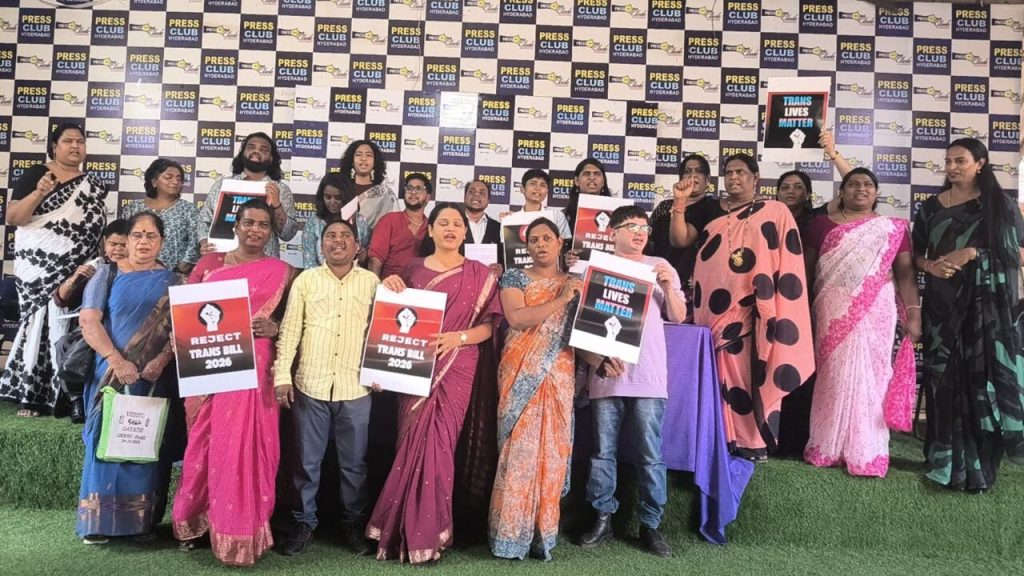
They also pointed out the “alarming” criminal provision in the bill under Section 18 that allows imprisonment of up to five years for “alluring” or “forcing” someone to become transgender. Hyderabad: Transgender, intersex, gender nonconforming, queer individuals, collectives, and allies in Hyderabad formally opposed and condemned the Transgender Persons (Protection of Rights) Amendment Bill, 2026, that was introduced in the Lok Sabha on March 13 by Union Minister for Social Justice and Empowerment Dr. Virendra Kumar. The Hyderabad community of activists called on lawmakers to withdraw the Transgender Persons (Protection of Rights) Amendment Bill, 2026 immediately and “without condition”. “Any future amendment must retain the definition of “transgender person” as established in the 2019 Act, uphold the right to self-identification as affirmed by NALSA (2014) vs Union of India, and K. S. Puttaswamy (Retd) and Anr. vs Union of India (2017) judgements, and be developed only through meaningful, democratic consultation with transgender communities across India,” they said. At a press confere in Hyderabad on Tuesday, MArch 17, the community said that the bill threatens to undo over a decade of hard-won legal protections. Stating that it is a step backwards for constitutional rights, transgender, intersex, gender nonconforming, and queer communities in Hyderabad unequivocally stated that it erases entire identities, mandates invasive medical procedures, criminalises community support networks, and creates a two-tier citizenship where legal existence depends on access to surgery. “It is not a reform. It is a reversal of the Supreme Court’s NALSA judgment, of the 2019 Act, and of decades of hard-won constitutional protections. The amendment proposes to replace self-identification with mandatory medical certification by a government-appointed District Medical Officer, with no defined criteria, no transparency, and no accountability. Medically, there is no biological marker that confirms or denies transgender identity,” said a statement from the activists. Community members and activists said that the current bill also introduces a provision under which a person undergoing gender-affirming surgery has to report it to the District Magistrate, which violates the constitutionally provided fundamental right of privacy. “Forcing individuals through physical examinations to “prove” their gender is not only scientifically baseless but also deeply traumatic and unconstitutional,” added the statement. They pointed out that the bill is “particularly” alarming because it erases entirely the identities of people, and restricts the definition of “transgender person” to a narrow set of socio-cultural identities and intersex variations. Activists added that the bill excludes trans men, trans women who are not part of socio-cultural communities, non-binary individuals, genderqueer people, and gender-diverse persons across India. At the press briefing, activists also said that trans men will be “rendered entirely invisible as they will have no socio-cultural framework recognised by the bill. “They face deep marginalisation already because they are assigned female at birth and carry the burden of presenting as a woman compulsorily and cannot safely come out in many contexts. This bill worsens each of those realities,” added their statement. The bill gives offers legal recognition only via medical intervention, which forces individuals toward surgeries they may not want, cannot access, or are medically unable to undergo, said the activists. ‘Criminalisation Is Not Protection’ The activists from Hyderabad also pointed out an alarming criminal provision in the Transgender Persons Amendment Bill 2026, under Section 18 that allows imprisonment of up to five years for “alluring” or “forcing” someone to become transgender. “There is no credible evidence that such conduct exists as a social pattern. What does exist and what this provision threatens is the vast community support network that transgender persons rely on: fundraisers, temporary housing, help escaping abusive households, access to therapy, and gender-affirming healthcare,” they stated. The statement said that providers of gender-affirming care, supportive parents, and community members who have historically protected and nurtured transgender individuals now face the risk of criminalisation. “This echoes the legacy of colonial-era laws such as the Criminal Tribes Act of 1871 and the Telangana Eunuchs Act of 1919 which are laws that treated gender-diverse communities as inherently devious and criminal,” it added. Yunus Lasania Courtesy : TSD Note: This news is originally published on https:/thesiasatdaily.com/bha and is used purely for non-profit/non-commercial purposes, especially human rights
Transgender communities across India demand withdrawal of Bill to redefine trans people
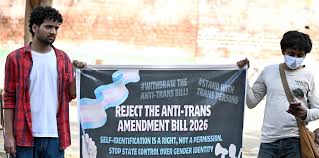
Add Your Heading Text HereThe Centre’s action led to protests and public meetings within the transgender community across cities such as New Delhi, Pune, Hyderabad and Kolkata, calling for protecting the right to self-perceived gender identity The Union government’s proposed legislation to withdraw transgender people’s right to “self-perceived gender identity” and redefine who a “transgender person” is, has led to student protests and public meetings within the transgender community across cities such as New Delhi, Pune, Hyderabad and Kolkata, calling for the government to withdraw the Bill and protect the right to self-perceived gender identity. This has come even as spontaneously formed coalitions of civil society groups, lawyers, doctors, activists, and other professionals in cities such as Guwahati, Chennai, Varanasi, Bengaluru, and several others are planning campaigns to write to MPs, organising awareness and support group meetings, and strategising over how to register their opposition to the proposed legislation. A public petition has also been initiated online, calling for the withdrawal of the Bill, gathering over 13,000 signatures as on Monday evening. Karnataka transgender coalition writes open letter to Prime Minister opposing Amendment Bill On Friday, Social Justice Minister Virendra Kumar introduced the Transgender Persons (Protection of Rights) Amendment Bill, 2026, proposing widespread amendments to the law enacted in 2019. At the Indian Women’s Press Corps in New Delhi, a similar coalition of people from the transgender community, lawyers, activists, and rights-based organisations came together for a press conference, calling the amendments “discriminatory and unjust”, arguing that the government was “snatching back” a right recognised in 2014, and that this is not “how a democracy functions”. In the 2014 NALSA judgement, the Supreme Court had laid down the law that the right to self-identification of gender fell under the ambit of personal liberty, a fundamental right guaranteed under Article 21 of the Constitution. ‘Trans rights being pushed back by a decade’: Community members oppose proposed transgender law changes Devansh, a transman who was on the panel for the coalition, said, “After a long fight, in 2014, the government gave us recognition. With that recognition, we moved ahead with our lives, took very important decisions, such as starting the process of gender-affirming surgery, and getting transgender cards made. We came out to the world that we are transgender. After 12 years and all these important decisions, you stop recognising us. Where are we supposed to go now?” Open letter to PM In Karnataka, people from the transgender community came together under the banner of the Karnataka State Gender and Sexuality Minorities Coalition for a press conference in Bengaluru. This coalition also issued an open letter to Prime Minister Narendra Modi on Monday, saying, “Passing this amendment will put in jeopardy the rights of thousands and millions of persons who are currently recognised as transgender.” They added that instead of expanding the rights of trans people, the proposed legislation “contracts it”. Grace Banu, a community leader based in Chennai, said a press conference was being held at the Chennai Press Club on Tuesday to register the community’s opposition to the proposed amendments, while community leaders in cities like Varanasi said similar strategies were being planned in their cities. Transgender activists in Guwahati also said they were currently holding discussions within the community on how to organise against this proposed legislation. Akkai Padmashali of the Karnataka coalition said, “We are also organising protests and public meetings in Bengaluru against these proposed amendments.” On Saturday, the Mumbai Queer Pride issued a statement opposing the proposed amendments, calling the shift in the government’s approach a “regressive step that undermines established constitutional protections and reverses the progress made toward inclusive citizenship”. “Reject Trans Bill 2026”, another coalition of civil society, human rights activists, lawyers, and other professionals that came up during the weekend, put out a collective statement condemning the Bill as well. Meanwhile, a Students’ Federation of India-led protest against the amendment Bill in New Delhi also submitted a memorandum to Mr. Virendra Kumar, seeking the Bill’s withdrawal. At the Delhi presser, Krishanu, a transwoman and queer activist, spoke of the Section on offences against transgender people that criminalised “compelling” children to “outwardly present a transgender identity”. She explained that such words give the impression that a transgender adult or child is not exercising consent while expressing their gender. “This then criminalises anyone who is helping them transition, or with identification, or expression,” she said. She added that the amendment Bill “misconstrues the ideas of what transgender and intersex bodies look like, by conflating them into one.” The panelists also spoke about how the amendments suggest they had to be part of gharanas and communities to be considered transgender, referring to the recognition of “socio-cultural identities as hijra, kinner, aravani, jogta, and eunuch” in the proposed definition. Ritu, a transwoman, said, “I don’t have to be part of a gharana or community to be trans. These structures were built because society had no other place for us.” Elaborating on this, Raghavi, a transwoman and a lawyer, said, “Essentially, you are saying that trans persons stay within that fold, and do not go beyond.” The panelists argued that gharanas have their own challenges, and that these communities are usually associated with transwomen, further invisiblising transmen. Fiza Sultana, a Muslim transwoman, who was among the audience, shared that a few transgender persons have started an organisation to address issues this amendment poses for Muslim and Dalit trans people. “A lot of the identities mentioned here are from Savarna Hindu cultures. Other socio-linguistic categories exist, too.” Ashna Butani,Abhinay Lakshman Courtesy : The Hindu Note: This news is originally published on https:/thehindu.com/bha and is used purely for non-profit/non-commercial purposes, especially human rights
‘Trans rights being pushed back by a decade’: Community members oppose proposed transgender law changes

Proposed amendments to the Transgender Persons (Protection of Rights) Act, 2019 could push transgender rights in India back by nearly a decade by diluting the principle of gender self-identification as recognised by the Supreme Court in the landmark National Legal Services Authority v. Union of India, activists have warned. The amendment, recently introduced in Parliament, proposes changes to how transgender identity is defined and recognised under the law. According to the proposal, recognition of transgender identity may require verification through official procedures, including possible medical scrutiny, before authorities issue a certificate of identity. Activists argue that this shift towards medical or administrative verification undermines the principle of self-determination laid down by the Supreme Court in the NALSA judgment. Jayanth, founder of Queer Nilayam, said several groups have begun coordinating responses to the proposed changes: “This feels like we are being pushed back by a decade. These people are already going through a lot of trauma while exploring their identity. When something like this comes up, the question many people are asking is: where will they go?” Students at the University of Hyderabad held a protest on March 14 condemning the proposed changes. They expressed concern that the creation of a government-appointed medical board to determine gender identity would amount to an invasion of privacy and could lead to increased policing of transgender bodies. Patruni Sastry, a Hyderabad-based activist who identifies as non-binary, said the proposal has created anxiety within the community. “We never ask a cisgender man or a cisgender woman to get a medical certification to prove who they are. Trans identity is not only physical. It is psychological and based on lived experiences and community acceptance. Sastry also raised concerns about the preparedness of the medical system to handle such verification processes. He asked, “How many trans-friendly clinics are there in India?” Activists have also raised concerns about the narrowing of the definition of transgender persons. Gayathri, a Hyderabad-based community member, said the proposed changes could make an already restrictive legal framework more exclusionary. Prachii Rathore, one of the first transgender doctors in the country, who served as the medical officer of Osmania General Hospital in Hyderabad, says such a process is neither scientifically sound nor ethically justified. “As a doctor, I can say that medically proving whether someone is transgender is not possible. Transgender persons are not patients and they are not suffering from a disease that can be diagnosed through tests,” she added. Siddharth Kumar Singh Courtesy : The Hindu Note: This news is originally published on https:/thehindu.com/bha and is used purely for non-profit/non-commercial purposes, especially human rights
Kanshi Ram Becomes Indispensable to All Parties; Fierce Race to Woo the Dalit Vote Bank Intensifies

These days, a visible competition is unfolding among all political parties to commemorate BSP founder Kanshi Ram. These days, a visible competition is unfolding among all political parties to commemorate BSP founder Kanshi Ram. This is not merely a gesture of symbolic respect; rather, it is driven by the underlying power of the Dalit vote bank. This is precisely why, alongside the BSP, the Samajwadi Party and the Congress are also actively involved in celebrating Kanshi Ram’s birth anniversary, whereas the BJP appears relatively subdued in this regard. **The SP’s Strategy** BSP founder Kanshi Ram’s birth anniversary falls on March 15. Ahead of this date, all major parties have already announced various commemorative programs. The BSP is organizing a public rally in Lucknow, while special events are also being held in other states. The Samajwadi Party has announced that it will celebrate Kanshi Ram’s birth anniversary across all districts. The Congress, for its part, organized a birth anniversary ceremony and a ‘Dalit Dialogue’ session on Friday. Speaking at the event, Rahul Gandhi—the Leader of the Opposition in the Lok Sabha—drew a lifelike sketch of Kanshi Ram using his pen and asserted that Kanshi Ram should be conferred with the Bharat Ratna. Rahul Gandhi further remarked that had Jawaharlal Nehru been alive, Kanshi Ram would have become a Chief Minister. **Electoral Calculus and the Significance of the Dalit Vote** According to analysts, the sudden surge of affection for Kanshi Ram among various parties is merely a component of their political strategy. In Uttar Pradesh, the Dalit population stands at approximately 21%, and 85 of the state’s Assembly seats are reserved for Scheduled Castes (Dalits). Furthermore, even in the remaining constituencies, the Dalit vote bank possesses the potential to significantly influence electoral outcomes. Ramakant Shukla Courtesy: Hindi News
Dalit and Adivasi food on the menu, stigma on the plate. ‘I was told it is fed to cattle’

At a Heritage Dialogues talk, author Shahu Patole and food entrepreneur Aruna Tirkey discussed Dalit and Adivasi food traditions and why many still hide or disown what they eat. Dalit and Adivasi food traditions, long stigmatized, are now appearing in mainstream menus and books. Writer Shahu Patole and entrepreneur Aruna Tirkey are documenting and reviving these cuisines, promoting cultural pride and sustainable livelihoods. Tirkey’s restaurant, Ajam Emba, champions Adivasi ingredients like millet, combating historical prejudice and internalized stigma surrounding these vital foods. New Delhi: A millet that farmers grow for their cattle. Sausages made with animal blood. A kheer sweetened with mahua flowers foraged from the forest floor. Foods that Dalit and Adivasi families have eaten for generations, out of necessity, and usually behind closed doors, are now appearing in restaurant menus and books. At Humayun’s Tomb Museum, Dalit writer Shahu Patole and Adivasi food entrepreneur Aruna Tirkey spoke about how culinary traditions and recipes from their communities are disappearing, and their initiatives to document them— even as the internalised stigma around these foods lingers. The talk, held on 27 February as part of the public lecture series The Heritage Dialogues, was titled ‘Pride and Prejudice on the Indian Plate: What We Can Learn from Dalit and Adivasi Cultures Today’. For Patole, author of The Dalit Kitchens of Marathwada, culinary practices such as meat drying or eating the carcasses of certain animals have long been obscured by caste taboos and politics. “Adivasis and Dalits are never vegetarian,” said Patole. “Dalit food is about survival. Whatever my grandparents ate to survive is why I am still alive. My simple objective was to find what my community ate, not to criticise other communities or castes.” Tirkey’s efforts to revive the food traditions of her Oraon community are hands-on. In Ranchi, she runs Ajam Emba, a restaurant and training centre specialising in Adivasi ingredients and cooking traditions. It’s part of a movement to champion slowly disappearing Adivasi food practices. For anyone living in an Indian city, the menu would seem exotic, with ingredients such as mahua flowers, jirhul flowers, roselle, and dozens of local leafy greens. Seasonal offerings include dishes like madua (finger millet) momos, rice tea, and desi chicken bhaat. Over the course of two hours, the discussion ranged from identity and discrimination to sustainability and food supply chains. A new life for gondli One of the accomplishments Tirkey is most proud of is reviving gondli, a type of millet, through her restaurant. The grain, which was once seen as unfit for human consumption, now appears in dishes such as gondli kheer and millet momos at her restaurant. “When I went to buy gondli in the local market years ago, I was told it is fed to cattle,” said Tirkey. That encounter gave Tirkey the idea for Ajam Emba. She realised she wanted to bring back heirloom grains rooted in local food traditions while also creating livelihoods. The restaurant was launched in 2017, well before fancy millet preparations became a staple of state banquets for foreign dignitaries. “Now with the millet revival, its prices have soared, and it’s become a delicacy,” she added. “These ingredients have a low carbon footprint, require little or no inputs, and include a wide variety of uncultivated foods.” At the restaurant, food is served in reusable earthen pots and plates, as well as biodegradable leaf plates. Takeaways are packed in raw green sal leaves. Everything is sourced from local growers, and the kitchen is managed entirely by tribal women and girls. “Our approach is to link indigenous food revival with female entrepreneurship and employment, making it a sustainable business model,” said Tirkey. Her endeavour is also to instil pride in local food traditions, and create awareness about hyperlocal ingredients and cooking practices — something Patole’s book also attempts. A glossary of Dalit food In 2015, Patole’s book was published as Anna He Apoorna Brahma (‘food is an incomplete creation’). The title plays on the popular Marathi proverb Anna he poornabrahma, which means food encompasses all of creation. The book was later translated into English by Bhushan Koragaonkar as The Dalit Kitchens of Marathwada in 2024. “I wrote my book in Marathi, and no one cared. But when it came out in English translation, everyone called it a great literary work,” said Patole. The recipes in the book are foods everyone in his community would recognise, according to him. Many even asked why he needed to write about them. But for Patole, it was about creating a glossary that no one else had bothered to compile. “I looked at Hindu mythological texts where the four varnas have been mentioned, along with what each should eat. We come under tamasic, perhaps even below that,” Patole said. “A common proverb in these texts says you become what you eat. But most people do not have a choice in what they eat, and yet certain qualities are attached to each food group. I have tried to bring together these different ideas in my book.” One chapter describes hunting rabbits and ghorpads (monitor lizards) for their meat at the start of the monsoon, as well as eating the eggs of pigeons, quails, ducks, and peahens when they could be found. Preparation methods and cultural meanings are described in sensory detail. Through Savarna eyes Dalits often look at themselves through the eyes of the upper castes, according to Patole. Many disavow the community’s traditional practices. “Everyone wants to hide, and say things like ‘We don’t eat all that’. There is an aspiration to be like the upper castes. Eating their food will not make us them. As long as there is a caste system, no matter what you eat, you cannot change your caste,” said Patole. Tirkey agreed. “Since gondli has been associated with poverty, local people will grow and sell it, but they will still not eat it,” she said. At the same time, some of these foods are getting new traction. Many even romanticise the ‘forbidden’ foods of Dalits, Patole
Why has Transgender Persons Amendment Bill drawn widespread flak?

Activists, legal experts, and political parties argue the bill undermines self-identification, privacy, and the rights recognised under the 2019 Act and SC’s NALSA verdict The Union government’s move to introduce the Transgender Persons (Protection of Rights) Amendment Bill, 2026 in Parliament has come under fire from transgender rights groups, activists, and opposition parties. The bill, tabled in the Lok Sabha by Union Social Justice Minister Virendra Kumar, proposes significant changes to the existing law governing the rights and recognition of transgender persons in India. The controversy is primarily about the proposal to remove the provision recognising “self-perceived gender identity”, a principle that had been incorporated in the Transgender Persons (Protection of Rights) Act, 2019. Under the current law, transgender persons could identify their gender based on self-declaration while applying for a certificate from the district administration. The amendment bill seeks to omit that clause and introduce a more structured process for determining transgender status. Trans rights under threat According to reports, the amendment aims to introduce a narrower legal framework for identifying transgender persons and determining eligibility for official recognition. The bill proposes that certification would involve a medical board headed by a Chief Medical Officer, with the final decision subject to scrutiny by the district magistrate before identity documents are issued. The proposed changes have triggered strong reactions from sections of the transgender community and civil society organisations. Activists argue that removing the principle of self-identification marks a major shift away from the framework established by the Supreme Court more than a decade ago. In a joint statement issued by a group of transgender activists and community supporters, the amendment was described as a “We jointly demand the withdrawal of the amendment to the Transgender Act, 2019. The bill violates the Supreme Court’s judgement recognising the rights of transgender persons, undermines their fundamental rights and runs contrary to international human rights principles,” the activists said. Medical boards over self-identification The statement points to the landmark verdict delivered by the Supreme Court in the National Legal Services Authority vs Union of India case. The ruling recognised the right of individuals to identify their gender as male, female or third gender based on their self-perception. Activists say the new amendment departs from that principle by introducing a system of verification by medical boards and district authorities. “The amendment removes the right to self-determination and replaces it with compulsory state verification through medical boards and administrative scrutiny. This intrudes upon the privacy and dignity of transgender persons and places their identity under continuous state surveillance,” the statement said. Another area of concern raised by community organisations is the redefinition of the term “transgender person”. According to activists, the proposed changes narrow the definition and could exclude several identities that were previously recognized under the 2019 law. Privacy concerns spark outrage The earlier legislation explicitly acknowledged trans men, trans women, gender queer persons and other diverse gender identities within the scope of protection. Critics argue that the amended definition risks leaving many individuals outside the legal framework meant to safeguard their rights. The amendment has also drawn criticism for provisions related to gender affirming medical procedures. Activists say the bill includes clauses that require hospitals to inform district authorities about such procedures, raising concerns about medical confidentiality and privacy. Health decisions, activists argue, should remain confidential between patients and medical professionals rather than becoming part of administrative reporting systems. Political backlash over amendment The controversy has also drawn political responses. The CPI (M) has strongly opposed the amendment, describing it as a violation of constitutional guarantees and a rollback of rights already recognised by the judiciary. In a statement, the party’s Polit Bureau said the amendment fundamentally negates the principle of gender self-determination affirmed by the Supreme Court. “These amendments fundamentally negate the principle of self-determination of gender identity affirmed by the Supreme Court in the NALSA judgement. The bill substitutes self-perceived identity with certification by a medical board and scrutiny by district authorities, subjecting transgender persons to invasive bureaucratic and medical oversight,” the statement said. The party also criticised the narrowing of the definition of transgender persons under the proposed amendment. According to the CPI(M), the earlier law recognised a range of gender identities including trans men, trans women and gender queer persons. CPI(M) flags regressive approach “The amended definition drastically restricts recognition and effectively erases trans men, non-binary persons and gender fluid individuals from the ambit of legal protection,” the Polit Bureau said. The party further argued that the amendment represents a broader ideological attempt to impose rigid social categories. According to the statement, the bill reflects what the party described as a regressive approach to gender and social order. It also referred to the Union government’s position before the Supreme Court regarding restrictions on blood donation by transgender persons. The CPI(M) said that legislation affecting the rights of a marginalised community should not be introduced without consultations with the stakeholders concerned. Legal challenges likely ahead Legal experts say the controversy surrounding the amendment is likely to reopen debates about the constitutional principles governing gender identity. Many lawyers working on LGBTQ rights issues point out that the right to identity and dignity is closely linked to the right to privacy recognised by the Supreme Court. They argue that subjecting gender identity to medical and bureaucratic verification could raise constitutional questions if challenged in court For transgender activists, the debate is not merely about administrative procedures but about recognition and autonomy. Many in the community recall that the 2019 law itself had faced criticism for introducing bureaucratic processes in identity certification. The current amendment, critics say, risks strengthening those mechanisms instead of addressing long-standing concerns. As the bill moves through Parliament, the debate around it is expected to intensify. Civil society organisations, political parties and legal groups are already preparing responses ranging from public campaigns to possible court challenges. Rajeev Ramachandran Courtesy : The Federal Note: This news is originally published on https:/thefederal.com/bha and is used purely for non-profit/non-commercial purposes, especially