
Sub-Inspector Accused of Violating Widow’s Privacy: BKU Swaraj Submits Memorandum to SP in Kannauj, Demanding Inquiry and Action
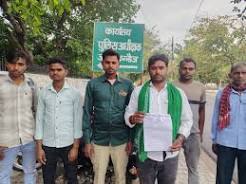
On Wednesday, the Bharatiya Kisan Union (Swaraj) visited the office of the Superintendent of Police (SP) and leveled serious allegations against a Sub-Inspector (SI) stationed at the Talgram police station. Led by District President Pushpendra Singh Rathore, the organization’s members and farmers submitted a four-point memorandum—addressed to the Chief Minister and the Director General of Police—to the Superintendent of Police. The memorandum accuses the Sub-Inspector of behaving inappropriately with women, engaging in corruption, and being involved in unethical activities. The Union alleged that on March 26, 2026, the Sub-Inspector forcibly entered the home of a widow residing in the Girikuan locality of Talgram without permission or prior notice. At the time, the woman was bathing, resulting in a violation of her privacy. When the woman expressed her outrage over this incident and lodged a complaint, the Sub-Inspector, acting out of a spirit of vendetta, initiated proceedings against her brother and another individual for disturbing the peace. The Union has demanded that these proceedings be quashed. Furthermore, the Sub-Inspector faces allegations of negligence and collusion in another separate case. In December 2025, a young man died in the village of Kalkattapurwa (Kudra) within the Talgram area after consuming a poisonous powder provided by a gym operator. An FIR was registered in this matter; however, it is alleged that the Sub-Inspector colluded with the accused gym operator, failed to arrest him, and allowed the investigation to remain pending. Additionally, negligence is reportedly being shown in the completion of necessary legal formalities. Through the memorandum, the Union has put forward four key demands. These include the immediate transfer of the Sub-Inspector out of the district; a swift and impartial inquiry into all allegations leveled against him, accompanied by departmental action; the immediate arrest of the accused gym operator involved in the Kalkattapurwa (Kudra) case; and the immediate revocation of the proceedings initiated against the widow’s brother and the other individual for disturbing the peace. The organization has warned that if their demands are not met in a timely manner, they will be compelled to stage protests and sit-ins in solidarity with the victims, farmers, and women. Several activists, including Santosh Kumar, Akshay Kumar, Yogendra Rajput, Rajkumar, Vineet, and Pramod, were present on this occasion. Station House Officer (SHO) Vinay Sharma stated that the matters in question would be investigated, and further action would be taken once the investigation report is received. Sanjeev Kumar | Bamrauli (Chhibramau), Kannauj Courtesy: Hindi News
Farmer Beaten by Thugs in Hamirpur; Attempted Murder: Locked in Tubewell Room and Nearly Hanged with a Rope
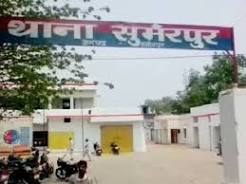
Bharua Sumerpur: In the village of Bank within this region, a Dalit farmer was brutally beaten by a group of thugs following a dispute over the installation of thorny fencing along a farm embankment. The accused also attempted to kill the farmer by locking him inside a tubewell room and trying to hang him with a rope. The police have registered a case regarding this incident. Raghuvar Prasad, a resident of Triveni Maidan in the town, has filed a complaint with the police. He stated that he was in his ancestral village, Bank, installing thorny fencing along the farm embankment to protect his fruit-bearing trees. During this time, Babu Kushwaha, Nokhelal, Chhote, Rajkumar, and others—all residents of Bank—stormed onto the scene. It is alleged that these individuals hurled caste-based slurs at Raghuvar Prasad and, drawing a country-made pistol, rushed at him with the intent to kill. To save his life, Raghuvar Prasad fled into the nearby tubewell room. The attackers followed him inside, where they brutally beat him with kicks and punches, leaving him covered in blood. Subsequently, they placed a rope around Raghuvar Prasad’s neck and attempted to hang him. The police have registered a case against the accused under the Dalit Atrocities Act (SC/ST Act), along with other relevant sections of the law. The police are currently investigating the matter and have launched a search for the accused. Deepak Kumar | Kalauli Teer (Hamirpur) Courtesy: Hindi News
‘Forced into death for wages’: Dalit sanitation worker dies cleaning drain without safety gear in Delhi
Rahul (32), a contractual sanitation worker from the Valmiki community, died on March 30 while manually desilting an 8–to 10-feet-deep drain in Tahirpur, Dilshad Garden, allegedly without any safety gear, supervision, or mechanised support. The incident, which occurred under the jurisdiction of the Public Works Department, has raised serious questions about illegal manual scavenging practices, caste-based labour exploitation, and institutional accountability. According to findings by a fact-finding team from Dalit Adivasi Shakti Adhikar Manch (DASAM), Rahul had gone to collect two months of unpaid wages on the morning of the incident but was allegedly coerced into cleaning the hazardous drain, with payment conditional on completing the task. Witnesses and family members claim that he was forced to enter the toxic environment without protective equipment, exposing him to lethal gases such as methane and hydrogen sulphide. Rahul and a co-worker began the work from 8 am and by 2 pm, he was found unresponsive inside the drain. Rescue operations reportedly took nearly two hours, and he was declared dead on arrival at Guru Teg Bahadur Hospital. His family was informed only hours later, around 5 pm by an unknown person, raising concerns about official delay and insensitivity. Police initially registered a case at Seemapuri Police Station but did not include key provisions of the Prohibition of Employment as Manual Scavengers and the Rehabilitation Act, and the SC/ST (Prevention of Atrocities) Act. These sections were reportedly added later following pressure from the family and civil society groups. Authorities have since invoked provisions under the Bharatiya Nyaya Sanhita, including Section 106 (causing death by negligence), but no arrests had been made at the time of reporting. Family members have alleged that Rahul’s death was not accidental but the result of toxic gas exposure and unsafe working conditions. They also raised suspicions of evidence tampering, noting that his body was found in clean clothes, contrary to standard conditions of sewer work. “We sent Rahul at 8 in the morning to collect his pending salary, but instead of paying him, the contractor told him to first clean the drain and only then he would get his two months’ wages”, Rahul’s sister said in conversation with DASAM. “We never imagined this would lead to his death. This tragedy happened because of toxic fumes, hazardous conditions, and the negligence of the contractor and the PWD”, she added. “It has been three days, and no one has come to us, not from the department, not any official, not even the contractor. We received his body on March 31”, she further said. “He was found dead in the drain around 2 p.m., and the police took nearly two hours to recover him and bring him to Guru Teg Bahadur Hospital, where he was declared dead. We were not informed by anyone, neither the contractor nor co-workers. Someone else told us around 5 pm and we were asked to rush to the hospital.” Rahul’s brother Vijay said, “When people clean drains, they usually wear only underwear, but Rahul was found in full clothes, and they were clean. He was forced into death for wages. We suspect the contractor tried to remove evidence,” said Vijay.” A sewer worker, Jayvir said, “Workers were given no safety equipment at all,” noting that Rahul earned just 350 rupees a day. “He was the youngest in our family, with five brothers and one sister, and he was unmarried. Some people even threatened us to remove the contractor’s name, but the best officer assured us that justice would be done. The police kept pushing for cremation, but we refused until we were given assurance of 30 lakh rupees compensation”, Vijay said. The case has drawn attention to the continued existence of manual scavenging despite its legal prohibition and repeated judicial interventions. In its 2023 ruling, the Supreme Court of India increased compensation for sewer deaths to 30 lakh rupees and reiterated the state’s obligation to eradicate the practice. Activists argue that Rahul’s death highlights a persistent gap between legal safeguards and their implementation. The fact-finding report by DASAM also points to a multilayered system of contractors and subcontractors, allowing state agencies to deflect responsibility. “While the work fell under the PWD, officials have reportedly distanced themselves by attributing operational control to private contractors, a practice critics say enables systemic evasion of accountability”, National Coordinator of the organisation, Mohsina Malik told Maktoob. She added, “We along with the family demanded compensation, accountability, and the immediate arrest of the contractor, but the authorities kept refusing. It was only after sustained pressure from the SDM, MLA Kuldeep, and organisations like DASAM that the administration began to respond and included the appropriate sections in the FIR.” Malik said, “So far compensation had been promised but not disbursed. No arrests had been made. The investigation remains ongoing.” The fact-finding team recommended immediate arrest of all responsible contractors and officials, along with the payment of ₹30 lakh compensation in line with guidelines laid down by the Supreme Court of India. It also called for interim financial relief and rehabilitation support for the family, strict enforcement of the Prohibition of Employment as Manual Scavengers and the Rehabilitation Act, and mandatory mechanisation of all sewer and drain cleaning work. The recommendations emphasised the need to eliminate informal subcontracting chains and clearly fix principal employer liability, while ensuring provision of safety gear, proper training, and supervision. Further, it urged formalisation of employment through written contracts, timely payment of wages, and access to social security and insurance for workers. The report also demanded criminal liability for officials permitting illegal manual scavenging, regular independent audits of sanitation work, and public disclosure of contractor details and working conditions. Additionally, it called for awareness campaigns on the prohibition of manual scavenging, training for police and municipal authorities, and community-level initiatives to promote safe sanitation practices. Rahul, the youngest of six siblings, earned between 300 and 400 rupees per day under precarious employment conditions. His family delayed his cremation until assurances of compensation were made. The last rites were
Why activists see the imprint of Hindutva in the new transgender law
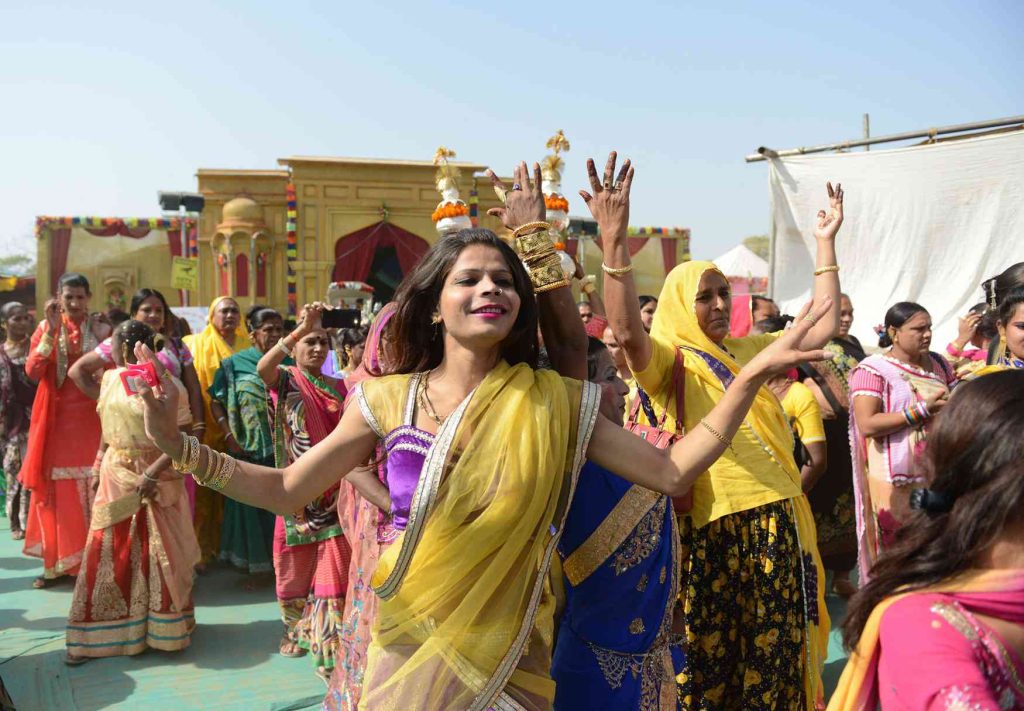
The law foregrounds trans identities that lie broadly within Hindu society, and cuts off paths to recognition for a range of others. What is common between khwaja sira in Punjab and Kashmir, thirunar in Tamil Nadu and nupi maanbi in Manipur? These are some of India’s traditional trans communities whose legal standing is left uncertain under the new transgender law passed in March. The law in force earlier, the Transgender Persons (Protection of Rights) Act, 2019, contained a wide and inclusive definition of a transgender person. It began by stating that a transgender person was someone “whose gender does not match with the gender assigned at birth”. This included a “trans man or trans woman”, irrespective of whether or not they had undergone a medical procedure such as a sex reassignment surgery, someone “with intersex variations” and “genderqueer” individuals. Apart from these categories, the 2019 law also included individuals “having such socio-cultural identities as kinner, hijra, aravani and jogta”. Further, it accorded all transgender individuals “a right to self-perceived gender identity”. In contrast, the new law has a far more restrictive definition of a transgender person. It foregrounds the four socio-cultural identities of kinner, hijra, aravani and jogta, adding “eunuch” to the list. The other categories it includes are individuals who have “intersex variations”, “a congenital variation” in certain sexual characteristics, or have been “by force, allurement, inducement, deceit or undue influence” been put through one of several medical procedures. The 2026 law leaves out all other categories. Its statement of “objects and reasons” notes that the act’s aim is “not to protect each and every class of persons with various gender identities, self-perceived sex/gender identities or gender fluidities”. Activists are alarmed at this dramatic reduction of the scope of the definition of transgender individuals. They fear that the prominence given in the definition to the four specific socio-cultural categories, combined with the complete omission of self-determined identities, represents a grave threat to numerous other traditional transgender communities in the country, including the khwaja sira in Punjab and Kashmir, thirunar in Tamil Nadu and nupi maanbi in Manipur. These identities are Muslim, syncretic or unaffiliated with any particular religions – in contrast, the four specifically named socio-cultural groups are broadly located within Hindu society. Thus, activists argue that the new law is, in effect, an extension of the Bharatiya Janata Party and the wider Sangh Parivar’s Hindutva agenda. As a statement by the All India Students’ Association noted, the act was restricting the definition to communities that were “already culturally legible to the state”. It observed that the hijra, kinnar, aravani and jogta communities were “historically visible through ritual roles at births, weddings, and religious spaces” and so “may be tolerated within this framework”. The queer feminist academic Jennifer Loh made a similar argument in a 2022 book chapter, noting that the “Hindu right favours Hindu trans (feminine) identities above other less visible, non-homonormative trans identities and Muslim trans people”. Loh argued that this was because Hindu trans feminine identities such as hijras align with the “broader goals of promoting Hindu ideologies, through the reinforcement of existing gender and religious norms”. A statement by the All India Students’ Association noted that the hijra, kinnar, aravani and jogta communities were “historically visible through ritual roles at births, weddings, and religious spaces”. Photo: Sam Panthaky/AFP The writer and filmmaker Rayyan Monkey argued that even the traditional communities mentioned in the act were in a sense limited by it. “While the hijra and kinnar communities do want to sustain their place in the spiritual ecosystem of India, they also want to get into schools, colleges and jobs,” she said. Scroll spoke with experts and trans activists in Manipur, Nagaland, Tamil Nadu and Punjab to learn about the traditional identities that are at increased risk of exclusion under the new act. Thirunar, thirunangai, thirunambi in Tamil Nadu Activists from Tamil Nadu explained that the late chief minister, M Karunanidhi, had introduced the terms thirunar, thirunangai and thirunambi in the late 2000s, to refer to trans persons, trans women and trans men, respectively. They noted that the positive intent underlying the move was evident in the fact that the word “thiru” translates to “respected” in Tamil. Many activists prefer this term to others, like aravani and “third gender” that are also used in the state. Negha, a trans activist and actor, noted that the former term, used for trans women, is rooted in Hindu mythology. The traditional aravani community worships the Mahabharata character Aravan – the son of Arjuna, who marries Krishna in the form of a woman, Mohini, before going to war and dying. Not all trans women in Tamil Nadu participate in the rituals of the aravan community, Negha noted. “The term aravani is not an inclusive word,” she said. “Many trans women are concerned about being pushed to assume a Hindu identity. Not everybody believes in the Ramayana and Mahabharata.” In comparison, she said, the terms thirunar, thirunangai and thirunambi were rooted in the legacy of the state’s self-respect movement, which promoted social justice and gender equality, and challenged caste-based oppression. Karunanidhi “researched Tamil literature and then came up with the words thirunar and thirunangai,” Negha said. “It is an inclusive word which can be used by Hindus, Buddhists and Dalits regardless of caste and religions. This amendment will erase and invisibilise these words.” Activists and members of these and other communities are also anxious about the fact that the new act lays emphasis on medical procedures and clearance from authorities before a transgender individual is accorded recognition, such as with an identity certificate recognising them as transgender. Negha explained that these identities were not typically linked to gender reassignment surgeries or other medical procedures, but were based on individuals’ self-perception. Under the previous law, a transgender individual could obtain such a certificate by applying through an online portal to the district magistrate – the rules of the act only required that they furnish a self-attested affidavit, along with identity documents
Student Harassed by Molesters Sets Herself on Fire; Molesters Also Beat Her Father After Complaint Was Filed

In Sagar, a 14-year-old Dalit student, tormented by harassment, set herself on fire following a brutal assault on her father. The molesters had beaten her father after he filed a complaint with the police. A case has been registered against four minors. Student Tormented by Harassment Sets Herself on Fire A deeply tragic and harrowing incident has come to light from the Sagar district of Madhya Pradesh. In the Malathone (Khurai) police station area of the district, a 14-year-old Dalit student—a 9th-grader—who was tormented by the harassment of local miscreants, poured diesel over herself and set herself ablaze. The student was driven to take this horrific step because, after she complained about the molesters, the accused individuals had severely assaulted her father right in front of their home. The critically burnt student has been admitted to the Bundelkhand Medical College in Sagar for treatment. Molester Had Been Harassing Her on the Bus for a Long Time The victim’s father stated that his daughter studies at a government school in Malathone and commutes daily by bus. A boy from a nearby village, Kapil Lodhi, had been harassing her for the past three months, frequently calling her on the phone and pressuring her to talk to him. When the molester refused to desist despite being reasoned with, the father filed a complaint against him at the Malathone police station. Upon Complaint, Accused Came to House and Beat Father According to the father, on the evening of April 5—after he had filed the police complaint and returned home with his daughter—the accused, Kapil, was standing outside their house along with three accomplices. The four began hurling abuses, and when the father objected, they brutally beat him with kicks and punches. As they left, the accused also issued death threats. Terrified by Her Father’s Beating, Daughter Sets Herself on Fire Witnessing her father being beaten right before her eyes, the innocent student became utterly terrified. She ran inside the house, doused herself with diesel, and set herself on fire. Hearing the child’s screams, family members rushed to the scene and used a bedsheet to extinguish the fire; however, by that time, her neck, the right side of her chest, and both hands had already sustained severe burns. The family members immediately transported her to a hospital with the assistance of the ‘Dial 112’ and ‘108’ ambulance services, from where she was subsequently referred to Sagar for further treatment. **Case Registered Against All Four Minor Accused; Investigation Underway** Additional Superintendent of Police (ASP) Lokesh Sinha stated that the police had promptly registered a case regarding the assault on the girl’s father. In her statement, the victim also corroborated the allegations of molestation and the physical assault on her father. The police have registered a case against four individuals—including two who were specifically named—under various sections of the Bharatiya Nyaya Sanhita (BNS) and the SC/ST Act. All four accused are reported to be minors. The matter is currently being investigated with the utmost seriousness. By: Vinod Arya, Sagar Courtesy: Hindi News
Stop State Repression: Citizens Urge Odisha CM to Halt Violence Against Adivasis and Dalits in Sijimali Region
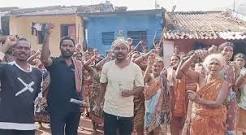
To Sri Mohan Majhi, The Chief Minister of Odisha Bhubaneswar, Odisha Subject: Urgent Appeal to Take Immediate Steps To Curb State Violence on Adivasis and Dalits of Raygada and Kalahandi Dear Sir, As concerned citizens, we express our collective condemnation of the brutal violence unleashed on the villagers of Kantamal in Kashipur block of Raygada district from late night to the wee hours this morning. Both the police and senior district officials were present. We are deeply concerned that in a democracy, Adivasis and Dalits opposed to the mining operations of Vedanta Limited and its contract company Maithri, have been subject to ceaseless violence and arbitrary arrests since mid-2023. Now, to begin construction work, the violence has escalated targeting the leaders of Ma Mati Mali Surakhya Mancha, the people’s local forum. It is to be noted that people have adopted all democratic means to protect their land, livelihood, water and air while also holding on to their cultural heritage and the abode of Tij Raja their scared deity. This entire area is protected under the Fifth Schedule Area of the Indian Constitution. In order to reject the proposed mining project, Ma Mati Mali Surakhya Mancha has appealed to all authorities from the local administration to the state government and from the concerned union ministers to the President of India. They have asserted their objections against mining in testimonies in the public hearings of the Odisha Pollution Control Board. In the same way, as per the FRA provisions, villagers organised Gram Sabhas in which they have clearly and unanimously rejected the mining project and the required forest clearance to protect their lives, livelihood and cultural identity. However, in this Scheduled Area, the state administration has resorted to repression to push through Vedanta Limited’s mining project. As a result, hundreds of criminal cases have been foisted on the people and almost a hundred of them have undergone incarceration and many still continue to languish in jail. Repression on the people has escalated sharply in the last few months. We urge your attention to a few incidents: On the night of March 10, after a local village conflict, hundreds of police descended on Talaampadar village in the middle of the night and picked up 21 adivasis, including 10 women. They raided houses and damaged people’s houses and belongings. Among the women, there is a nineteen-year old who is pregnant and some with small children at home. They are now languishing in District Jail of Bhawanipatna of Kalahandi district. On 25 March, Lingaraj Azad and Suresh Sangram of Samajwadi Jan Parishad were arrested and are today in Raygada Jail. The actions of the police and administration instead of being in accordance with the law clearly seems to be aiding the company. On February 26, 27 and 28, around 200 police and paramilitary forces caused much terror and intimidation under the cover of executing arrest warrants issued by the SDM Rayagada and JMFC Kashipur on the walls of some members of “Ma Mati Mali Surakhya Mancha”. Sagabari, Bantej, Bondel, Kantamal and Talaampadar are witnessing a massive presence of armed police and vehicles, drones flying on the area, and police on the lookout for leaders. Drones are followed by 18 to 25 vehicles and marches of armed police through the area along with private persons. Adivasi peasants and wage workers are losing out on earnings and cultivation work. They can no longer go out to the forest and river for nature’s call or other daily chores because of the surveillance done by drones flying overhead as it violates their privacy. People are now carrying water to their houses to do the daily chores. They can neither buy medicines nor go to shops to buy essentials from sheer intimidation. On 3rd April, the police and administration announced prohibitory orders from loud speakers. People were prohibited from assembling in more than four within 100 meters of the approach road being constructed to the mining area. As construction work began with a massive presence of police force, villagers stood ground and refused them entry from April 4 to 6. After three days of peaceful disobedience of prohibitory orders, the police resorted to violence by entering Kantamal village at midnight of April 7. They fired tear gas shells. They killed a cow. People came rushing out; many were injured by police lathis. Two women have sustained head injuries. People are unable to seek medical assistance. Sir, as local Adivasi and Dalit communities continue to live under a climate of terror and constant fear, we urge you to take the following steps without delay: Revoke the prohibitory orders issued by the Rayagada SDM under Section 163 of the BNSS. Revoke the proposed mining lease in Sijimali and ensure the protection of the jal, jangal and jameen of the Adivasis of the region. Ensure that the proposed approach road to the mining area is stopped immediately. Withdraw the entire police force in the area and immediately stop all drone surveillance. Withdraw all criminal cases foisted on villagers who are opposed to bauxite mining. Ensure the immediate release of all those in prison. Implement properly the PESA and FRA in Fifth Schedule areas. We urge you, in your capacity as Chief Minister and Chairperson of the Tribal Advisory Council, to intervene urgently and ensure that all necessary steps are taken to protect and uphold the constitutional and democratic rights of the people of this region. Thanking you, On behalf of Concerned Citizens Forum, Odisha Ananta Lokmukti Sangathan, Jharsuguda Asutosh Parida, Poet, Bhubaneswar Archana Rath, Analyst Akankshya Mahapatra, Writer and Researcher Balabhadra Mallick, Chasi Mali Surakhya Samiti, Kandhamal Bibhrant Biswajit, Mulnivasi Student & Youth Front (MSYF) Bichitra, TUCI Biswapriya Kanungo, Advocate British Kumar, Khandualamali Sthai Surakhya Samiti, Kalahandi Damodar Behera, Dalit Adhikar Andolan, Kalahandi Dandapani Mohanty, Political Activist Deba Prasad Rai, Lohia Academy Debaranjan, Gantantrik Adhikar Surakhya Sangatha, Bhubaneswar Debati Behera, AICCTU Dr Bijay Bohidar, Retd Professor, Bhubaneswar Dr Birendra Nayak, Retd Professor, Bhubaneswar Dr Biswajit, Gandhi Peace Foundation, Odisha Dr Randall
A Dalit Was Beaten, The Court Said He No Longer Was One in Annihilate Caste
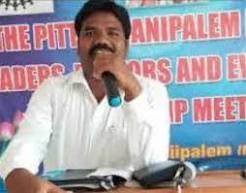
In the villages of Andhra Pradesh’s Guntur district, where Madiga families have for generations tanned hides and buried the dead, Chintada Anand thought the law might finally see him. A Dalit by birth, he had converted to Christianity and become a pastor. When oppressor caste men assaulted him in 2021, dragging him by his collar and hurling slurs, he filed a complaint under the Scheduled Castes and Scheduled Tribes (Prevention of Atrocities) Act. An FIR was filed and the case reached the Supreme Court. On 24 March 2026, Justices Prashant Kumar Mishra and Manmohan delivered their verdict in Chinthada Anand v. State of Andhra Pradesh where the bench ruled that “conversion to Christianity meant immediate and complete loss of Scheduled Caste status”. No certificate. No Prevention of Atrocities Act shield. No reservations in education or jobs. Clause 3 of the Constitution (Scheduled Castes) Order, 1950, they reminded the country, is “categorical and absolute.” The judgment was not new law but a reiteration which simply slammed shut a door that Dalit Christians and Dalit Muslims (Arzals and Pasmandas) have been rattling for 76 years. Estimates place Dalit-origin Christians at around 25-30 million and Dalit Muslims in similar numbers, though precise census data remains elusive because the state refuses to count them as such (National Commission for Minorities reports; Deshpande & Bapna, 2008). In a secular republic that guarantees equality before the law, the most powerful tool of affirmative action, the Scheduled Caste status, remains chained to three religions: Hinduism, Sikhism, and Buddhism. To trace how we arrived here, one must return to the Constituent Assembly’s anxious drafting in the shadow of Partition of ‘47. Article 341 empowered the President to notify communities suffering untouchability as Scheduled Castes. The 1950 Order listed hundreds of castes and tribes, but Paragraph 3 added a fatal line: “no person who professes a religion different from the Hindu religion shall be deemed to be a member of a Scheduled Caste.” The logic, offered in parliamentary whispers and later judicial glosses, was pragmatic. Untouchability was framed as a peculiar Hindu affliction; other faiths, at least in doctrine, rejected it. When Sikh leaders pressed their case, Parliament relented in 1956. When lakhs followed Dr. B. R Ambedkar into Buddhism after 1956, the 1990 amendment brought them in. Christianity and Islam, however, remained foreign imports, their converts presumably cleansed the instant they crossed the threshold of the church or mosque. Yet this legal scaffolding crumbles against historical facts. Dalits were never inside the varna system; they were its exiles— the avarnas, panchamas, those whose touch polluted the fourfold order. Historians and Dr. Ambedkar himself described them as “broken people,” performing labour no varna would touch: scavenging, leatherwork, corpse disposal. Their oppression was existential, enforced by custom and violence long before scriptures codified it. Citizen activist and journalist Cynthia Stephen, who has documented these realities for decades from Bangalore, captured the absurdity of this reiteration, “Dalits were never part of the varna system. They were the “outsiders”, the untouchables whose very existence challenged the purity of caste. So what religion did they originally belong to that conversion could erase it? What proof do we have they were all Hindus?” Colonial censuses separated Dalits from “clean” Hindu castes. Many converted precisely to flee ritual degradation— molten lead in ears for learning to read, separate burial grounds, sexual violence framed as right. “A change of religion never guaranteed relief from prejudice, discrimination, or violence,” Stephen continued. “Walk any village in Karnataka or Tamil Nadu. The Dalit Christian is still called by their caste name. Their church may have a separate entrance. The state pretends conversion dissolves caste. It doesn’t. It never has”. Organisations like Evidence, the Madurai-based Dalit rights group founded by A. Kathir, have documented hundreds of cases where faith made no difference. In a 2011 study of 336 atrocity cases across southern districts of Tamil Nadu, Evidence recorded 44 brutal murders with conviction rates at a shocking 3.9 per cent. Many victims were Paraiyar or Pallar Christians. In an incident in Melur, in 2011, Dalits hoisting a political flag were attacked not for creed but for asserting dignity. Churches were burned, pastors assaulted, Dalit Christian women gang-raped— all under the shadow of caste. As recently as March 2026, Evidence’s fact-finding in Nanguneri, Tirunelveli, revealed police refusing to invoke the Atrocities Act against attackers of a Dalit Christian because “the victim is Christian.” Kathir has intervened in over 1,800 cases since 2006, repeatedly noting that separate temples, separate water sources and social boycotts persist regardless of baptism. The National Campaign on Dalit Human Rights’ (NCDHR) fact-finding missions and its 2026 report on five years of caste-based atrocities highlight “double marginalisation” for Dalit Christians and Muslims: caste violence from society, legal invisibility from the state. UN treaty bodies like International Convention on the Elimination of All Forms of Racial Discrimination (ICERD), which India has ratified, have repeatedly urged India to apply the Atrocities Act to Dalit Muslims and Christians, noting that social exclusion does not respect religious conversion. The Ranganath Misra Commission (2007) and Sachar Committee (2006) had already reached the same conclusion: indicators for these oppressed groups— poverty, literacy, landlessness, violence, all mirror or exceed those of Hindu Dalits. Yet the law renders their suffering invisible. It is this lived reality that Dr Ruth Manorama, a member of the National Federation of Dalit Women and the Christian Dalit Liberation Movement, confronted head-on when we spoke in the verdict’s immediate aftermath. “What you have given in the name of caste, you are now taking away in the name of religion.” Dr. Manorama expressed. “Dalits have faced systemic violence and exclusion for centuries. So the Constitution provides benefits—education, reservations, opportunities—to help them rise.” Conversion, she stressed, was survival. Dalit identity, she stressed, is not monolithic. “I am a Dalit Christian. My mother converted… Generations before us may have converted, not randomly, but to escape caste oppression.” In India’s 600,000 villages, every Dalit colony endures untouchability. “Even today, atrocities don’t stop just because
Sachin, a Dalit laborer from Amroha, went to collect his wages from Naushad, Haseen, and Samuddin; what the trio did to him will leave you shuddering.

UP News: In Amroha, a Dalit laborer named Sachin went to Naushad, Haseen, and Samuddin to collect his wages. The treatment he received for simply demanding the money due to him has caused a massive uproar. In Amroha, UP, a Dalit worker named Sachin was working as a laborer in Dhawarsi village, located in the Adampur area. He was employed by Naushad, Haseen Khan, and Samuddin. However, asking for his wages proved to be a costly affair for Sachin. Upon demanding his pay, he was beaten with extreme brutality. He was subjected to a severe physical assault; his clothes were torn to shreds, and he was verbally abused with vile language. A video capturing this act of barbarism against Sachin is now going viral. **The Brutality Captured in the Video** The video shows three individuals restraining him; they are holding both of his arms while physically assaulting him. His clothes are being ripped apart. The three youths beat him with extreme ruthlessness, all while hurling expletives and insults at him. This video is reported to be from last Sunday. **What Happened to the Perpetrators?** Following the viral spread of the video, the victim, Sachin, has filed a case against the accused. The police have registered a case against Naushad, Haseen Khan, and Samuddin on charges of assault, verbal abuse, and the use of caste-based derogatory language. A case has also been registered under the Scheduled Castes and Scheduled Tribes (Prevention of Atrocities) Act. All three individuals have been arrested. The police have stated that they will take strict action in this matter. The incident has sparked widespread outrage among the public. The manner in which Sachin was beaten is shocking. The sheer barbarism displayed by the dominant figures—Naushad, Haseen Khan, and Samuddin—against Sachin, simply for demanding his rightful wages, is utterly shameful. B.S. Arya Courtesy: Hindi News
Why many Dalits in Punjab who convert to Christianity do not change names, religion in records
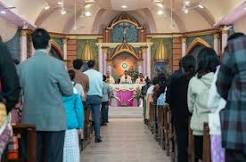
Practice of not changing names or religion is more prevalent among those under the influence of self-styled pastors of Pentecostal churches In Punjab, many Dalits are embracing Christianity, but official records often remain unchanged. The trend has come under focus after a recent Supreme Court decision upheld that Dalits who convert to Christianity or Islam are no longer entitled to SC reservations, highlighting the immediate socio-economic consequences of changing one’s religion in documents. Many people in Punjab who have embraced Christianity are not changing their names or religion in official records. They want to keep their Scheduled Caste (SC) certificates so they can continue getting reservation benefits in jobs and education. The same trend is seen across Doaba — Jalandhar, Kapurthala, and Hoshiarpur. Churches are full, but the change of faith is not shown in official records. Even some popular Christian leaders are following the same names, just as the former Chairperson of the Christian Welfare Board Punjab, Amandeep Gill, or Christian Youth Punjab leader Charanjit GIll. Hailing from a village of Jalandhar Cantonment, Mangat Ram and his family embraced Christianity about two years ago. He attends the holy mass every week in the church of his village. His daughter Sunita took wedding vows as per Christian rituals. But the family has neither changed their names nor altered anything in the official records. Their SC certificates are still intact. Article_Author Deepkamal Kaur Courtesy : The Tribune Note: This news is originally published on https:/thetribune.com/bha and is used purely for non-profit/non-commercial purposes, especially human rights
2 Accused Arrested in Murder of Dalit Teenager in Deoria: Attacked En Route to Get Mobile Repaired; Suspicion of Love Affair Cited as Motive

Acting swiftly in the case involving the murder of a Dalit teenage girl in Nautan Hathiagarh village, Deoria, the police have arrested two accused individuals. On Monday, both were produced before the court, from where they were remanded to judicial custody. The police have also recovered the knife used in the murder. The incident occurred on Saturday night. The teenager was on her way to Sahodar Patti Chowk with her brother, Anish, and elder sister, Gudia, to get a mobile phone repaired. During the journey, she was attacked while still on the road. Following the crime, the accused fled the scene. **Acquaintance Formed During Visits to Maternal Relatives’ Village** Police investigations revealed that Aditya Singh—alias Shivam Singh—a resident of Shahbazpur, has maternal relatives in Nautan Hathiagarh village. Consequently, he was a frequent visitor to the village. During these visits, he became acquainted with Anjali, a local intermediate-level student, and a romantic relationship developed between the two. **Dispute Escalated Due to Suspicion, Leading to Murder** It is reported that over the past few days, Aditya had begun to harbor suspicion regarding the teenager. This suspicion led him to frequently scold and reprimand her. On Saturday night, acting in collusion with his accomplice, Rakesh Kumar Gaur, he attacked the teenager with a knife, resulting in her death. **Accused Attempting to Flee to Bihar via Kushinagar** Upon receiving information about the incident, the police registered a case of murder and launched a manhunt for the accused. Under the leadership of Station House Officer (SHO) Ashwani Pradhan, a police team conducted a late-night cordon-and-search operation. The police apprehended both accused individuals near Patnawa Bridge while they were attempting to flee to Bihar via Kushinagar. During interrogation, the knife used in the murder was also recovered based on the information provided by the accused. **Last Rites Performed with Tearful Eyes Following Post-mortem** Late on Sunday night, following the post-mortem examination, the family members brought the body back to the village, where the final rites were performed in the presence of the police. On Monday evening, around 8 PM, on the banks of the Chhoti Gandak River, the father, Malkha Prasad, lit his daughter’s funeral pyre. During the last rites, the mother—Mansa Devi—along with her brothers, Ankit and Anish, and sister, Gudiya, were inconsolable with grief. The eyes of the villagers present at the scene also welled up with tears. Following the incident, an atmosphere of mourning and outrage prevails throughout the entire village and the surrounding area. Police Statement: We Will Ensure Strict Punishment for the Guilty Police officials have stated that strict action will be taken in this case. By strengthening all available evidence, every effort will be made to ensure that the accused receive severe punishment. Anugrah Narayan Shahi | Deoria Courtesy: Hindi News