
“This Ritual Is Not for People Like You”: In Damoh, a Differently-Abled Dalit Groom Was Pulled Off His Horse During the ‘Rachwai’ Ceremony and Subjected to Such Treatment That…!

Wedding guests captured a video of this brutality, which has now gone viral on social media, becoming a source of shame for the entire society. Damoh—In Bijori Pathak village, located within the jurisdiction of the Hatta police station in Madhya Pradesh’s Damoh district, a heartbreaking and reprehensible incident has come to light. This event has exposed the deep fissures of caste-based discrimination that, despite official claims of social equality, remain a stark reality in rural India. Golu Ahirwar—a 23-year-old differently-abled Dalit groom—was subjected to such brutal physical assault during the pre-wedding ritual known as ‘Rachwai’ that it sent a wave of outrage across the entire state. The casteist thugs showed absolutely no mercy, not even sparing the groom due to his physical disability. The incident occurred on Tuesday evening as Golu, mounted on a mare, was passing through the village accompanied by his family and the wedding procession. At that moment, certain self-proclaimed strongmen of the village objected to the procession and launched an attack. According to the victim, individuals identified as Guddu Singh, Krishna, Hakam, and Paltu Lodhi not only forcibly dragged him off the mare but also beat him so severely with sticks and clubs that the festive atmosphere of the wedding was instantly transformed into one of mourning. The wedding guests managed to record this act of brutality on video; the footage has since gone viral on social media, bringing shame upon the entire society. Humiliating and inflicting violence upon an individual based on their caste during a significant social and cultural occasion like a wedding reflects the narrow-minded mentality prevalent in society; furthermore, subjecting a differently-abled person to such treatment is an act of extreme inhumanity. Recounting that heart-stopping moment, the victim’s sister, Manisha Ahirwar, stated that as the procession was moving forward, the accused deliberately blocked their path by parking their vehicle in the narrow lane. When they were requested to move the vehicle, they rushed forward aggressively, shoved Golu off the mare, and knocked him to the ground. He recounted that four individuals collectively attacked him, explicitly stating that a mare could not enter this lane, nor could a procession of “people like them” be taken out here. They further made it clear that this ritual was not meant for people of their kind. An even more shocking fact is that, despite the groom being differently-abled, the attackers showed absolutely no mercy. Golu’s mother, Vidya Ahirwar, stated that her son was dragged off the mare and brutally beaten; when her daughter attempted to intervene, she too was assaulted. Amidst the chaos of the attack, some of her daughter’s gold jewelry also went missing. Following the assault, the entire family and the wedding guests proceeded directly to the Hatta Police Station to seek justice. Confirming the incident, Station In-charge Sudhir Kumar Begi stated that during Golu Ahirwar’s *Rachwai* (pre-wedding procession), as the entourage approached the village’s shrine, Vishwanath Lodhi, Chintu Lodhi, and others raised objections to the groom riding a mare and launched an attack. The police have registered a case under relevant sections of the law, including the SC/ST Act. However, this is not the first instance of such an incident occurring in this village. Locals recall that on a previous occasion, when a *Dalit* groom’s procession was being taken out, members of the upper castes had raised objections; subsequently, social organizations had to intervene to somehow ensure the procession could proceed. The police have deployed security forces in the village, and following a medical examination, the groom’s family has departed for Budhi Semra village in the Chhatarpur district to complete the wedding rituals. Expressing deep concern over this entire episode, social activist and Bhim Army leader Sunil Astey stated that the incident of assault is extremely grave and condemnable. He asserted that this event constitutes not merely a criminal act, but a blatant violation of the rights to equality, dignity, and liberty enshrined in the Constitution. Asteya stated that humiliating an individual and resorting to violence against them on the basis of their caste during a social and cultural occasion—such as a wedding—reflects the narrow-minded mentality prevalent in society; such treatment is particularly inhumane when directed at a person with disabilities. He has urged the administration to ensure the swift arrest of all accused individuals, conduct an impartial investigation to initiate strict punitive action against the culprits, and take action under the National Security Act (NSA) against elements that seek to sow fear and unrest within society. Furthermore, he emphasized the need to formulate a “Special Protection Framework” to safeguard Dalit grooms and social gatherings, thereby preventing the recurrence of such incidents in the future. It is imperative that the rule of law be upheld and that every citizen be granted the freedom to exercise their social and cultural rights without any discrimination, as maintaining harmony, dignity, and equality within society is a shared responsibility of the administration, civil society, and all sections of the community. Geetha Sunil Pillai Courtesy: Hindi News
Babasaheb had said—’The educated have betrayed us’; the meeting between former CJI Gavai and Dhirendra Shastri has rubbed salt into the wounds of the Bahujan community!
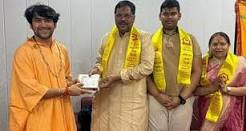
Users have termed this meeting an insult to the ideals of Babasaheb Ambedkar. Many users also recalled that historic statement by Babasaheb in which he had issued a warning regarding a ‘Hindu Rashtra’ (Hindu Nation). New Delhi—A recent meeting between former Supreme Court Chief Justice B.R. Gavai and Dhirendra Shastri, the head priest (Peethadhishwar) of Bageshwar Dham, has sparked a storm on social media. Following this meeting, outrage has erupted across the spectrum—from the Bahujan community to constitutionalists. On social media, users are condemning the former CJI for meeting with a staunch Hindu spiritual guru, despite being a Buddhist and an Ambedkarite himself. Many are also recalling Gavai’s infamous ‘shoe incident,’ when a lawyer attempted to throw a shoe at the former CJI right inside the courtroom. Recently, photographs of the meeting between former Chief Justice B.R. Gavai and Bageshwar Dham’s head priest, Dhirendra Shastri, went viral on social media. Dhirendra Shastri—popularly known as ‘Bageshwar Baba’—has openly advocated for the establishment of a ‘Hindu Rashtra’ and championed the *Manusmriti*. Consequently, when an individual who once held the country’s highest constitutional office went to meet him, it triggered widespread outrage within the Bahujan community. Public interest lawyer Prashant Bhushan posted on his X account: “I can’t believe my eyes! Former CJI Gavai with a hate-mongering charlatan! What kind of message is he sending to the judiciary? Shocking!” Dr. Babasaheb Ambedkar had issued a stern warning regarding a ‘Hindu Rashtra,’ describing it as the “greatest calamity” and a “terrible disaster” for the country. He asserted that such a state would pose a threat to democracy, liberty, equality, and fraternity, and must be prevented at all costs, as it could be detrimental to the interests of Dalits, women, and minorities. Users have characterized this meeting as an affront to the ideals and vision of Babasaheb Ambedkar. Many users also recalled that historic statement by Babasaheb in which he issued a warning regarding the concept of a ‘Hindu Rashtra’ (Hindu Nation). Journalist Nadeem Ahmed Sheikh stated, “The visit of former Chief Justice B.R. Gavai to Bageshwar Dham—and his meeting with Dhirendra Shastri—is a matter of concern. India is a pluralistic and constitutional nation; it does not seem appropriate for an individual holding a position of such dignity as a former Chief Justice to meet with a speaker who repeatedly advocates for a ‘Hindu Rashwar’ and makes scathing remarks against other religions. The judiciary must appear impartial and equal in its treatment of all; when a former Chief Justice openly visits such a platform, it raises the question: have constitutional values and secularism been confined merely to the pages of books? Faith is a personal matter, but the responsibilities of an individual who has held a constitutional office are not merely personal. India must proceed along the path of ‘Sabka Saath, Sabka Vikas’ (Support of All, Development for All), rather than engaging with platforms that espouse the language of division.” Journalist Shakeel Akhtar observes, “Until the Dalit community realizes who, from within their own ranks, is actually tightening their chains, outsiders like Rahul Gandhi will be unable to offer them much assistance. Bageshwar Dham—or Dhirendra Shastri—has faced numerous allegations of making anti-Dalit statements. His own brother, in fact, stands accused of threatening a Dalit family while brandishing a country-made pistol. In such a context, Justice Gavai’s visit to the site serves only to encourage ordinary Dalits to visit there as well. Perhaps that is precisely why Bageshwar Dham itself tweeted the news of this visit, complete with accompanying photographs.” One user wrote, “Bhim Jayanti has just passed—the very ‘Bhim’ who ensured that justice was delivered to us. And yet, thanks to that very justice—which enabled individuals to ascend to high offices—we now see such a person visiting a place steeped in superstition.” Journalist Avesh Tiwari writes, “This is former CJI B.R. Gavai, being honored by the number-one fraud, charlatan, and loudmouth, Dhirendra Shastri. I recall the time when a lawyer threw a shoe at him; back then, I completely shredded the haters who mocked him. When Gavai was elevated to the bench, it was hailed as a victory for Ambedkarism and a major achievement for Dalits. Looking at this photograph fills me with shame. I have no hesitation in stating that, to this day, Ambedkarites have failed to find honest leadership—an honest hero—for themselves. Of all those they have found, not a single one possesses a strong moral spine. This is a truly obscene image.” Ambedkarite activist Rohit Raj writes, “It was this very judge who, because of his Dalit identity, once had a shoe thrown at him. Seeing this saddens me—yes, it truly saddens me—that such a highly educated man, a former Chief Justice no less, would seek out a charlatan. What compulsion drives this? On one hand, you chant ‘Jai Bhim,’ yet on the other, you succumb to blind superstition. It is truly baffling.” One user wrote, “Babasaheb Ambedkar once said, ‘It is the educated people who have betrayed me.’ Former CJI Gavai belongs to that very category. To this day, he has not delivered a single verdict that truly upholds social justice.” **Why the Meeting with Shastri Recalled the ‘Shoe-Throwing Incident’** This meeting takes on even greater significance when we look back at the events that led to the infamous ‘shoe-throwing incident’ involving former CJI Gavai and lawyer Rakesh Kishore. The entire controversy revolved around an idol of Lord Vishnu located in Khajuraho. The head of an ancient, 7-foot-tall idol of Lord Vishnu within the temple premises had been damaged. A Public Interest Litigation (PIL) was filed in the Supreme Court demanding the restoration of this idol. On September 16, 2025, the then-CJI B.R. A bench presided over by Justice Gavai was hearing this matter; during the proceedings, Justice Gavai remarked to the petitioner: “You claim to be a devout devotee of Lord Vishnu. In that case, go now and pray directly to the Lord.” This comment was taken in great offense by advocate Rakesh Kishore. On the morning of October
MP: Attack on Dalit Groom’s Pre-Wedding Procession in Damoh; Pulled Off Horse and Assaulted; Family Reaches Police Station with Wedding Procession

A case has come to light in the Hatta police station area of Damoh, where a Dalit groom with a disability was pulled off his horse and assaulted by local strongmen during his *Rachwai* (pre-wedding procession). The police have registered a case under the SC/ST Act and have initiated an investigation. On Tuesday evening, a dispute erupted during the *Rachwai* of a disabled groom belonging to the Dalit community in Bijori Pathak village, located within the Hatta police station jurisdiction of Damoh district. It is alleged that certain influential individuals (strongmen) from the village pulled the groom down from his horse and assaulted him using sticks and clubs. The incident caused chaos and panic at the scene. Members of the groom’s side, accompanied by the entire wedding procession, proceeded to the Hatta police station and lodged a formal complaint. The police have registered a case under various sections, including the SC/ST Act, and have deployed a police force in the village to maintain order. **Wedding Procession Bound for Chhatarpur; Pre-Wedding Procession Being Held First** According to reports, the wedding procession of Golu Ahirwar (23)—son of Bhagirath Ahirwar and a resident of Bijori Pathak village—was scheduled to travel on Tuesday to Budhi Semra village in the Buxwaha region of Chhatarpur district. Before the main wedding procession departed, the groom’s *Rachwai* was being carried out within the village around 5:00 PM. Golu was seated on a horse, while his family members and fellow community members were celebrating. During this time, as the *Rachwai* reached the ‘Lodhi Mohalla’ (neighborhood) of the village, certain individuals raised objections. It is alleged that they demanded the groom dismount from his horse. When he resisted, the physical assault began. **Groom Levels Serious Allegations** The victim, groom Golu Ahirwar, stated that as soon as the *Rachwai* reached the front of a particular house, some people present there pulled him down from his horse and attacked him with sticks and clubs. He alleged that Guddu Singh, Krishna, Hakam, Paltu, and others were involved in assaulting him. Golu further mentioned that despite his disability, the accused beat him mercilessly. **Allegations of Assault Against Sister and Mother as Well** The groom’s mother, Vidya Ahirwar, stated that when family members announced that the groom’s wedding procession (Baraat) was about to depart and the traditional pre-procession ritual (Rachhwai) was being observed, the accused launched an attack. She further reported that her daughter—the groom’s sister, Manisha—who intervened to mediate the situation, was also physically assaulted. A complaint has also been lodged regarding the disappearance of some of her gold jewelry during the altercation. **Entire Wedding Procession Reaches Police Station; Police Conduct Medical Examination** Following the incident, members of the groom’s side, outraged by the events, took the groom and the entire wedding procession to the Hatta Police Station. A formal complaint was registered there. The police subsequently arranged for a medical examination of the groom. Thereafter, the wedding procession was allowed to proceed under police protection. **Case Registered Under SC/ST Act and Other Provisions** Late at night, following the registration of the case, Hatta Police Station In-charge Sudhir Kumar Begi stated that, based on the complaint filed by the aggrieved party—Gariba Ahirwar—a case has been registered against local villagers Vishwanath Lodhi, Bichchhu Lodhi, Paltu, and other accused individuals under various sections of the law, including the SC/ST Act. He added that, in view of the prevailing tension in the village, an adequate police force has been deployed to ensure that the wedding rituals can be conducted peacefully. **Outrage Within the Dalit Community; Preparations Underway for a Major Protest** The incident has sparked widespread outrage within the local Dalit community. Community members have demanded the immediate arrest of the accused and strict punitive action against them. Several social organizations have also condemned the incident, issuing a warning to the administration that if strict action is not taken against the culprits, a framework for a large-scale protest movement will be devised. **Questions Raised Regarding Social Responsibility and the Spirit of the Constitution** This incident is not merely a criminal matter; it serves as a test of social consciousness and constitutional values. The Constitution of India guarantees every citizen the right to live with equality, respect, and dignity. Preventing any individual from participating in weddings, festivities, or social traditions on the basis of caste is not only a legally punishable offense but also a violation of fundamental human values. **Similar Disputes Have Occurred in the Past** For years, the government, social welfare organizations, and conscientious citizens have been striving to strengthen social harmony by propagating messages of equality, brotherhood, and mutual respect. Such efforts are having a visible positive impact on society, with people in numerous villages and cities setting aside caste distinctions to celebrate festivals and ceremonies together. However, incidents of this nature indicate that the narrow-minded and casteist mentality of certain individuals continues to act as a hindrance to social progress. Such individuals must respect the law, understand the rights and duties enshrined in the Constitution, and convey a message of equality and harmony—rather than discrimination—to the younger generation. According to villagers, disputes regarding the wedding procession (*rachwai*) of a young man from the Dalit community have arisen in the village on previous occasions as well. Even at that time, the procession was eventually carried out only after the intervention of social organizations. The recurrence of such an incident has once again created an atmosphere of tension within the village. **Here, for the First Time, a Dalit Groom Rode a Horse** On Saturday evening, in the village of Patna Durga—located adjacent to Damoh city—a wedding procession featuring a Dalit groom riding a horse was carried out for the very first time. The event concluded peacefully. Deepraj Jatav, the District President of the Azad Samaj Party (Kanshiram), along with his team, had proactively requested police protection in advance. In recent times, several incidents involving attempts to prevent Dalit grooms from riding horses—often accompanied by physical assault—have come to light within the district. The case involving
Play documenting stories of oppression showcased in Bengaluru
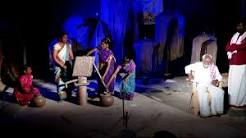
The 33-minute Kannada documentary traces the many socio-political realities faced by Dalits in contemporary India. ‘Song of Ghetto’ (Keri Haadu), directed by Chandrashekara K and produced by city-based arts collective Jangama, won the Best Documentary Award at the P K Rosy Film Festival. The festival is organised as part of the Vaanam Art Festival, an annual initiative during Dalit History Month by acclaimed filmmaker Pa Ranjith’s Neelam Cultural Centre The 33-minute Kannada documentary traces the many socio-political realities faced by Dalits in contemporary India. The film focuses on the lives of a Dalit community in Dindagur of Hassan district — their resistance against untouchability and their fight to claim their fundamental right to enter their village temple The film shows how discrimination persists — from being denied access to temples and eateries to them being barred from drinking water from public tanks, and how caste segregation seeps in like DNA, with children from privileged castes refusing to mingle with their Dalit counterparts. Even as many believe education is a way out, caste continues to shadow their lives when they return to their hometowns. There is significant evidence to show that such practices are seen across the country and not limited to Dindagur. Chandrashekara shot the entire film on his mobile phone. During a workshop conducted by Jangama in the village, he began documenting people’s stories, eventually shaping 17 hours of footage into this documentary. He aims to document more such instances of caste-based oppression across villages. Pranati A S Courtesy : DH Note: This news is originally published on https:/deccanherald.com/bha and is used purely for non-profit/non-commercial purposes, especially human rights
Dalit voters of Villupuram share support across parties over lack of development and emanicpation

Even cadres within the DMK raised opposition to Lakshmanan canvassing in GRP Street, alleging that he betrayed former MLA S Pushparaj by not facilitating him a seat in Vanur in this Assembly election. VILLUPURAM: With just a day to go for the election, the voter mood in Villupuram town is swaying in a three-cornered contest between the DMK, AIADMK and TVK. With the last leg of campaign rallies under way in the town, residents expressed dissent against the DMK government for not providing basic amenities in Dalit residential areas such as Valudareddy and GRP Street. Both areas, which have nearly 3,000 voters each, still lack proper drinking water facilities, roads and infrastructure. With dense populations and cramped housing, the localities almost sink during peak monsoon periods, but mitigation has not been carried out through proper infrastructure development. A Arumugam (55), a resident of Annai Indira Nagar, said, “We need to fetch water from a common pipe, so we go there as early as 4 am. This lifestyle, driven by lack of amenities, makes us wonder if we really live in the modern era.” Meanwhile, young supporters of TVK in both areas criticised the DMK and AIADMK for playing “cunning” politics over the years. They are also influencing their parents to vote for actor-turned-politician Vijay’s whistle symbol, seeking “a fresh political space devoid of caste equations”. “Both parties ruled us for so long, but I am still stigmatised for coming from a ‘colony’. My neighbourhood is not hygienic, decent or healthy. Whose fault is it, and why should we choose them again now? They claim social justice and equality, but in reality they do not live up to it. We don’t want to support such cunning politics,” said Kumudha (22, name changed), a resident of GRP Street and a member of TVK. Even cadres within the DMK raised opposition to Lakshmanan canvassing in GRP Street, alleging that he betrayed former MLA S Pushparaj by not facilitating him a seat in Vanur in this Assembly election. Several supporters of the latter pointed out that Dalit emancipation has not been enabled by either AIADMK or DMK leaders in Villupuram due to casteist intentions. In a video circulating on social media, a DMK supporter was heard saying, “Only he (Lakshmanan) wants to be minister and MLA. Why not a Scheduled Caste person come to power?” “Pushparaj, a Dalit politician, is a resident of Villupuram. If he becomes an MLA in Vanur, that would mean social empowerment of Dalits not only in Vanur but also in Villupuram town. This is essentially a problem for dominant caste politicians in Villupuram, and the town is entrenched in casteist politics that does not allow a Dalit person to rise within party structures, especially in the DMK,” said P K Diwakar (32). This is no different in the AIADMK. “I have been working in the party for the last 19 years, but former minister C Ve Shanmugam has not visited or even asked me about deaths in my family. Their Dalit aversion is so evident that I decided to quit politics altogether,” said a 56-year-old Dalit block-level cadre in the AIADMK from Villupuram (on condition of anonymity). Speaking to TNIE, Viduthalai Chiruthaigal Katchi (VCK) district secretary R Periyar said the current DMK MLA had provided welfare measures to Valudareddy, including an anganwadi building, two fair price shops, a cremation shelter and borewell mechanisms that are yet to be made operational for public use. He added that though development for Dalit residents in the town is not adequate, it is important to consider the consequences of supporting the AIADMK, which would indirectly mean supporting the BJP. “VCK cadres will work for the victory of the DMK-led Secular Progressive Alliance in Villupuram constituency,” he said. Though there is a broader sentiment favouring the DMK, such nuanced emotions among Dalit residents, whose votes could decide the outcome in Villupuram, cannot be overlooked. With youngsters leaning towards TVK, some elders shifting support to the AIADMK, and growing dissent against the DMK MLA, the contest is likely to be closely fought with narrow margins. Krithika Srinivasan Courtesy : TNIE Note: This news is originally published on https:/thenewindianexpress.com/bha and is used purely for non-profit/non-commercial purposes, especially human rights
Odisha Reconstitutes State Transgender Welfare Board to Strengthen Inclusive Governance

In a significant move towards inclusive development, the Government of Odisha has reconstituted the State Transgender Welfare Board, aiming to enhance welfare initiatives and ensure better coordination for the transgender community across the state. New Structure to Improve Governance The earlier board, constituted on May 15, 2025, with a three-year term, has been dissolved within a year and replaced with a newly structured body. Under the revised framework, the Chief Secretary of Odisha will now serve as the Chairman, marking a shift towards stronger administrative leadership. The Secretary of the Social Security and Empowerment of Persons with Disabilities Department has been appointed as Vice-Chairperson, while the Director of the department will act as the Member Secretary. Multi-Departmental Representation To ensure comprehensive policy implementation, the reconstituted board includes senior officials from key departments such as: Health and Family Welfare Women and Child Development Panchayati Raj and Drinking Water Housing and Urban Development Skill Development and Technical Education Higher Education School and Mass Education Additionally, the Director General of Police and senior administrative officials are part of the board, reinforcing inter-departmental collaboration. Community Representation Ensured The board places strong emphasis on representation from the transgender community. Notable members include Dipti Mohapatra, the state’s first third-gender doctorate recipient, and Soumya Das, a prominent rights activist. Representatives from organizations such as the Transgender Suraksha Trust in Bhubaneswar and the Chetana Organization in Balugaon have also been included, ensuring grassroots-level participation. District-Level Participation To strengthen regional representation, District Collectors from Balangir, Angul, and Khordha will serve as members on a rotational basis. Focus on Welfare and Inclusion The reconstituted board is expected to improve implementation of schemes related to: Education and skill development Healthcare access Social security Livelihood opportunities This initiative reflects the state’s commitment to promoting dignity, equality, and empowerment for transgender persons through inclusive governance. By Ananya Pattnaik Courtesy : Pragativadi Note: This news is originally published on https:/pragativadi.com/bha and is used purely for non-profit/non-commercial purposes, especially human rights
People of goodwill urged to come together to fight caste-based injustice

“Thirteen Dalits are murdered every week across India due to ever-increasing caste-based violence. Yet many incidents of horrific caste-based discrimination and violence go unreported due to fear, social pressure and lack of support,” said Sister Manju Devarapalli, a Carmelite religious sister and General Secretary of National Dalit Christian Watch in India. Sister Devarapalli was speaking at a conference organised by The Christian Network Against Caste Discrimination (CNACD) at the London Jesuit Centre last Thursday 16th April. She said: “The caste system is not a relic of the corrupt past, it is an indictment of a present in which millions are being exploited and abused. It is carried out in plain sight and perpetuated by wealth, influence and an instinct to defer to those at the top.” Sister Devarapalli urged not passive sympathy but an active response: “Legal reforms that bury abuse; international advocacy and financial support.” She explained how India’s caste system of social stratification became a central mechanism of British colonial governance. Despite being officially outlawed at independence in 1947, it stubbornly endures. Within this system, the Dalits – categorised as ritually unclean ‘untouchables’ – are condemned to a harsh life of segregation and exploitation. They are obliged to use separate water sources, cremation and burial grounds, and to live in marginalised communities. Their access to places of worship is restricted. Social ‘transgressions’ – such as wearing footwear or riding a horse – can be brutally punished. Those crimes which are reported against Dalits occur every 18 minutes. Less than ten per cent of marriages are inter-caste and, in rural north India in particular, women who defy such social stigma are vulnerable to murder (the grotesquely misnamed phenomenon of ‘honour killings’). According to Sister Devarapalli, hate speech in general is on the rise in India, with the Hindu nationalist majority, including its leadership, targeting Muslims and Christians. She explained that the ‘upper castes’ such as Brahmins and Rajputs dominate key economic and political positions and have disproportionate ownership of the land. Conversely, most Dalits remain landless labourers and 1.3 million are ‘manual scavengers’ – responsible for cleaning dry latrines, despite a 1993 banning of this degrading work. Other Dalits carry out leather work and waste collection. Fifty million Dalits are estimated to exist under conditions of modern slavery. Sister Devarapalli concluded by saying, “Desmond Tutu warned: if you are neutral in situations of injustice, you have chosen the side of the oppressor.” In a video address, the Catholic cross-bench peer David Alton lamented the endless daily atrocities of the caste system which, like the Apartheid system, deprived the Dalits of essential humanity. He said, ‘We must learn from the Anti-Apartheid movement and apply economic sanctions, boycotts and diplomatic isolation.’ Dr Anderson Jeremiah, the Anglican Bishop of Edmonton, and a Dalit from Tamil Nadu, spoke of the crippling educational barriers for his community. He himself endured humiliation and obstruction, made to sit at the back of the class and only able to learn English when aged 20, but ‘I saw the power that knowledge brings.’ He also decided to become a priest. ‘I saw the Church has the capacity to provide transformation, to bring dignity, humanity and freedom to people.’ He noted that 75 per cent of Christians in India are from Dalit communities although the leadership structure is generally still from the ‘higher’ castes. He applauded the fact that the Catholic church now had a Dalit cardinal and two Dalit bishops. Fr Roy Sebastian SJ from India, who works alongside the Dalits, spoke of the grim reality of funds for Dalit development being withheld by government, of rampant violence, and of exclusion of Dalit Christians by other Indian Christians. More positively, he was able to report of the training of 6000 community leaders thanks to Church support. Meena Varma, Executive Director of the International Dalit Solidarity Network, spoke of the struggle to ‘get the UK government to fulfil its responsibilities’ by providing legislative protection for the Dalits, because the caste-based system remains a lived reality in the South Asian diaspora (7.5 per cent of the UK population). It is estimated, that world-wide some 260 million people suffer from discrimination based on caste. Some 25 million are estimated to have migrated from South Asia to other countries. Caste-based prejudice and discrimination are operative in more than 100 countries where South Asians have migrated, including the UK. Following general discussion, the conference advocated intersectional solidarity with all people of goodwill. It urged ongoing fact-finding and the need to give voice to the Dalits in the struggle to provide justice and dignity. A synodal approach should be maintained: both the Bishops’ Conferences in Britain, and the Roman conference with bishop synodal presidents reporting to Pope Leo in the autumn, should discuss this issue as a matter of serious and urgent ongoing concern. The CNACD warmly invites people to contact it in the hope of instilling fresh momentum into its crucial work. Dr Philip Crispin Courtesy : ICN Note: This news is originally published on https:/independentcatholicnews.com/bha and is used purely for non-profit/non-commercial purposes, especially human rights
Road Construction Halted in Jaunpur; Dalit Families Protest: Interlocking Road Being Built via Village Fund; Justice Sought from DM
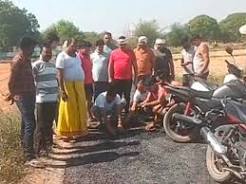
On Tuesday, hundreds of men and women staged a protest within the Collectorate premises in Jaunpur’s Pariyawa village, opposing the halting of work on an interlocking road project being constructed using the Village Fund. The protesters chanted slogans demanding, “DM Sir, give us justice,” and submitted a memorandum to City Magistrate Indra Nandan Singh. Village Head S.P. Manav alleged that the construction of the interlocking road had been initiated using the Village Fund. He claimed that certain opposing parties forcibly obstructed the work, thereby disrupting the commute of approximately 150 Dalit families residing in the village. The Village Head stated that this pathway is nearly 100 years old. Between 2010 and 2015—during the tenure of former Village Head Prabhavati Devi—a 600-meter *kharanja* (stone-paved road) was constructed at this site. Currently, this *kharanja* has fallen into a completely dilapidated state and is in urgent need of reconstruction. On Monday, the incumbent Village Head commenced the work of constructing the interlocking road using the Village Fund. However, certain opposing parties and neighboring landowners prevented the work from proceeding. At the site, the width of the existing *kharanja* was reported to be 9 feet. Upon receiving information, a police team—contacted via the ‘112’ emergency helpline—arrived at the scene, but the construction work was still not allowed to move forward. The following day, Tuesday, a team from the Revenue Department along with police personnel reached the site. The team assessed the width of the previously constructed *kharanja* and issued directives to continue the construction work. Despite this, the opposing parties allegedly resorted to physical aggression and once again brought the work to a halt. The Village Head and the affected Dalit families maintain that this is their sole route for commuting, and it is being forcibly blocked. They have demanded that legal action be initiated against the opposing parties to ensure the unhindered movement of the 150 Dalit families, thereby allowing the road construction project to be completed. Ankit Srivastava | Jaunpur Courtesy: Hindi News
Write Mind | TCS Nashik Scandal: A Case For Muslim Society To Stand In Solidarity With Dalits

The case prompts fresh reflection on the often-highlighted slogan “Jai Bheem-Jai Meem,” first popularised by AIMIM leader Asaduddin Owaisi. At the Tata Consultancy Services BPO unit, eight women employees along with one male colleague have come forward with serious complaints of systematic sexual harassment, mental coercion, and alleged attempts at forced religious conversion. Nine complaints have been registered with the Nashik City police, leading to the arrest of seven individuals -mostly team leaders and an HR functionary – including people with names such as Tausif Attar, Danish Sheikh, Shahrukh Qureshi, Raza Memon, Asif Ansari, Shafi Sheikh, and Nida Khan. The incidents, reported from 2022 into early 2026, allude to a perpetual disturbing pattern rather than motley and scattered incidents: the complainants being young Hindu women and the molesters, Muslim men. Details emanating from the official complaints and the ongoing SIT investigation reveal a calculated approach. The accused, who held supervisory positions, purportedly focused on young Hindu women, largely between 18 and 25 years old and raised in financially challenged and socially backward backgrounds. These selections were not serendipitous. Police have unearthed a documented trail of evidence of internal WhatsApp groups that acted as coordination points, where “hunting lists” were reportedly maintained. They purportedly discussed the victims’ financial struggles, family issues, and emotional isolation, etc., and planned grooming strategies. Promises of career growth or adjustments linked to participating in Ramzan-related practices often served as entry points. Victims have admitted to being implored to join namaz during office hours, observe roza, consume beef, or recite the kalma, sometimes under the shadow of professional consequences or blackmail involving private photographs. One male employee claimed he was told his father’s illness was tied to his Hindu faith and could only improve through conversion. Repeated complaints to HR were allegedly ignored or downplayed, allowing the pattern to continue unchecked for years. This Machiavellian case is not to be misconstrued as a run-of-the-mill workplace issue. It raises questions about an unprecedented abuse of corporate structure for Islamist radicalisation and indoctrination. TCS has acted by suspending the accused employees, restating its long-standing zero-tolerance policy against any form of harassment or coercion, and launching an internal review led by its COO, Aarthi Subramanian. Chairman N Chandrasekaran has called the matter deeply concerning. The moot question remains on pondering if this response addresses the issue or sidelines the elephant in the room. The case also prompts fresh reflection on the often-highlighted slogan “Jai Bheem-Jai Meem,” first popularised by AIMIM leader Asaduddin Owaisi and taken up in certain political quarters. Presented as a bridge between Dalit aspirations, drawing on Dr BR Ambedkar’s legacy, and Muslim political identity, the phrase has been offered as a symbol of progressive unity and social justice. Yet the Nashik allegations bring forward some uneasy questions. The victims largely belong to the very economically and socially backward Hindu communities that the “Bheem” part of the slogan claims to uplift – young people from these sections entering corporate roles with hopes of stability and growth. This naturally leads to an honest inquiry: does the Meem-Bheem framework truly serve to empower backward classes, or does it sometimes create conditions that fragment them along new lines for electoral convenience? And importantly, what about Muslim civil society groups and everyday Indian Muslims who have have consistently distanced themselves from extremist elements? The point here is not to paint an entire community with one brush but to encourage thoughtful self-examination where it matters. Muslim organisations and leaders – bandying the flag of Dalit-Muslim unity – who have long presented themselves as guardians of constitutional principles and minority interests now have a cogent chance. By offering clear and open support to the victims – daughters from the very backward classes often invoked in Meem-Bheem talk – they can show that a common Indian identity matters more than narrow calculations. Such a step would help mend social bonds rather than weaken them. In doing so, they would move beyond any slogan towards a deeper commitment – one in which every Indian, regardless of faith, can chase their aspirations feeling secure under the national flag. That kind of shared understanding, more lasting than any rallying cry, would genuinely honour the backward classes and help weave a stronger national fabric. Additionally, the lack of public condemnation from those who champion this slogan highlights a certain selectivity when it comes to issues of marginalisation. Also, there is a cabal that has long tom-tommed itself as the shining beacon, a trailblazer and a saviour of feminism. One wonders where these usual voices championing women’s dignity and safe workplaces have been on this matter. Then there are media outlets and commentators who pretend to stand up for secular values and communal harmony but have consumed fevicol since this dastardly scandal broke out. In a country where discussions on injustice often spread quickly, the relatively subdued reaction to the plight of these young women, many from Dalit and backward backgrounds, feels noticeable. The Maharashtra government has pushed for a thorough probe, and the SIT continues its work. Yet the true measure lies in how society at large responds. At its core, any form of forced conversion or harassment strikes at the constitutional promises of religious freedom and equal dignity. Will this episode become just another internal corporate machination, or will it encourage earnest dialogue across communities? Objectivity makes it imperative that we ask whether the response would look different if the roles of faith were reversed. Genuine solidarity, after all, cannot depend on convenience or political calculation; it must stand up for the vulnerable no matter who is involved. This bone-chilling scandal that has unfolded in the bustling IT hub of Nashik sends ripples of concern across the country. It is at the forefront of a debate: Are we petrified to call a spade a spade? Is Bharat at the cusp of a nefarious Islamist machination aimed at slyly changing the demography of our democracy? Is this the time to confront the radical Jinn being unleashed upon us
Transforming Rights: Transgender Lives Against Legal Exclusion| Book Excerpt

This excerpt is from Transforming Lives, Edited by Jayna Kothari examines how transgender, non-binary, and intersex people are denied the fundamental human rights of love, marriage, family, and kinship through law and social prejudice Bell Hooks said, ‘Love is an action, a participatory emotion,’ but sadly, for transgender-queer folx, love remains a silenced feeling buried deep in the chambers of their hearts, for love as an action and in its momentum is thwarted by State and society. Love and family—in our collective imagination—like everything else, is seen through the lens of heteronormativity, biology and the gender binary, and any act of digression invites penalties. In a world where even rights are pathologised, transgender2 persons are restricted to discussions about their bodies, and rarely do the conversations transcend superficiality or attempt to understand transgender persons as bodies with emotions—capable of loving and being loved. The inherent desires to form intimate relationships, have children and establish families are systematically denied to transgender persons through various acts of commission and omission. The naturalisation of trans persons’ non-existence as equal citizens is ensured by laws and policies that treat transgender, non-binary and intersex persons as less than equal, and by denying them the rights readily available to those that form the perceived normative. As Taylor Flynn aptly highlights, ‘We live in a highly gendered society where sex distinctions have significant legal consequences, particularly within the realm of family—these distinctions affect issues including whom you can marry, whether you can inherit your spouse’s estate, or whether you provide an “appropriate” role model for your children. The emotion of love extends to the various relationships that we form throughout our lives and is subject to the State’s architecture of control; the relationships that citizens forge around blood, community, cast and class are defined and certified by the majoritarian morality and the State. The interference of the State in our personal lives—love, marriage kinship, family, property and inheritance—passes unnoticed till we go against and challenge the system approved by it—a system that is patriarchal, casteist, endogamous and heteronormative. The right to love becomes subversive when it does not align with the frameworks of caste, patriarchy and heteronormativity. As Arvind Narrain writes, ‘What links queer people to couples who love across caste and community lines is the fact that both are exercising their right to love at an enormous personal risk and in the process, disrupting existing lines of social authority.’ Love, marriage and family formation seem like ordinary tasks and rarely do cisgender-heteronormative people perceive them as a matter of rights—unless the exercise of those rights is obstructed and denied. However, for transgender and nonbinary persons, the right to love, marry, have children or make families is denied legitimacy or legal recognition altogether. Family in our society is defined in structural terms, with patrilineal underpinnings. The members of one’s family must be related to each other through marriage, blood or adoption… It is important to recognise that the chosen families and kinship networks of transgender persons are often functional in nature, and at times a blend of both structural and functional, but rarely do they align with the narrowly defined structural models legitimised by law. These familial bonds revolve around the core functions that a family performs, such as caring for each other and the sharing of resources. Marriage, being the foundation of the Indian family system, is reserved for unions that conform to a cisgender, binary, heterosexual framework. The law and language governing love, marriage, family and property continue to exclude transgender persons, reinforcing a patrilineal and cis-heteronormative structure. The denial of love, marriage, kinship and family extends and permeates further into the right to reproduce and/or have children, and lead a healthy sexual and reproductive life. Law, language and healthcare coalesce to ensure the exclusion of transgender persons. Protest against Transgender Persons Amendment Bill 2026 | The Love That Dares Not Speak Its Name The ideas of love, marriage and family—from recognition to regulation—have historically been subject to State and societal interference. As Saurabh Kirpal observes in his essay: If dignity and autonomy are the pillars of the constitution, there is possibly no greater manifestation of that autonomy than the right to choose a sexual partner. And nothing is a greater expression of that choice than marriage. It seems apparent that both the right to choose a partner and the right to marry are intensely personal choices over which the state and the community really ought to have no control… The decision of the Madurai Bench of the Madras High Court in Arunkumar v Inspector General of Registration is a milestone in the affirmation of marriages of transgender persons. The Court, in line with the NALSA, Puttaswamy and Navtej Singh Johar judgments, held that the word ‘bride’ in Section 5 of the Hindu Marriage Act, 1955 includes intersex and transgender persons who self-identify as woman. The judgment is significant as it gives legality to a marriage between a trans woman and a cisgender man, and further provides scope for interpreting the Hindu Marriage Act in light of the aforementioned judgments, so that it includes both trans and intersex persons. However, the scope of the judgment remains limited, as it can be read to validate only those marriages that are heterosexual in nature—such as between a trans person and a cis person, or between two trans persons (a trans woman and a trans man)—thereby continuing to exclude same-sex, non-binary and gender-nonconforming partnerships from its protective ambit. This was affirmed in Supriyo alias Supriya Chakraborty v Union of India. Who Owns Identity?: Himanshi, 20, lives at Garima Greh in Uttam Nagar, Delhi. She left her home in Agra at 18, when her family disapproved of her identity as a trans woman. She resumed her education after moving to Delhi. The most recent constitutional moment in the marriage equality struggle came in Supriyo. The judgment marked a watershed moment in form, but not in substance. Despite the progressive language employed—on love, dignity, autonomy and non-discrimination—the judgment ultimately