
Bike snatched in Ayodhya, ‘goonda tax’ demanded: Dalit harassment case registered on SSP’s instructions

A case of snatching a bike and demanding ‘goonda tax’ in exchange for its return has come to light in the Bikapur Kotwali area of Ayodhya district. On the orders of the Senior Superintendent of Police (SSP), the Kotwali police have registered a case against one named and several unidentified accused under serious sections, including Dalit harassment. Shiv Shankar, a resident of Vaijapur Shivgarh in Sultanpur district, stated in his complaint to the SSP that he belongs to the Scheduled Caste. His daughter, Rinku Kumari, is married to Rohit Kumar, a resident of Khajuri village in the Bikapur area. He had gifted his daughter a Bajaj Pulsar bike, financed by Bajaj Finance, as a wedding gift. According to Shiv Shankar, on March 30, 2026, his daughter and son-in-law had gone to the Community Health Center in Bikapur. During the incident, some people assaulted them, hurling casteist slurs at them, and snatched their bike. After reporting the incident to Dial 112, police arrived at the scene, apprehended the accused, and brought them to the police station. Police then stated that some installments on the bike were outstanding. The victim contacted the finance company and paid all outstanding installments on April 9, 2026, and obtained a NOC (No Objection Certificate) and a No-Dues Certificate. The company clarified that there were no outstanding dues on the vehicle and it could be returned. Despite this, it is alleged that Romesh Patel (address unknown), the bike snatcher, is demanding a “goonda tax” in exchange for returning the vehicle. The victim submitted a petition to the Bikapur police station, requesting the return of the bike, but the police initially refused to register a report. Action was taken after the matter reached the SSP. Inspector-in-Charge Amarendra Bahadur Singh stated that a case has been registered on the SSP’s instructions, and legal action is being taken. Kaushal Kumar Shukla | Bikapur (Ayodhya), Courtesy: Hindi News
Maharashtra | Quotas within quota
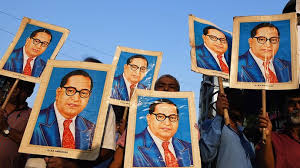
The volatile debate over SC sub-categorisation sharpens in the state. In special focus is the Buddhist Dalit cohort Before caste quotas return to the national headlines with the Census, Maharashtra is offering a sneak preview of the wars that lie ahead—with a proposed quota within a quota for Dalits. The siege is on the very birthplace of reservations in India, centred around Buddhist Dalits, the erstwhile Mahars, who exited Hinduism with Dr Babasaheb Ambedkar in 1956. So the chief question is on uneven development within Dalit communities, but a volatile subclause has been tagged: religion. The Scheduled Castes have a 13 per cent quota. In 2011, they numbered around 13.2 million out of Maharashtra’s 112.3 million population. Hindu Dalit bodies allege Buddhist Dalits, the largest sub-bloc at about 60 per cent, secure most of the benefits; the latter refute this narrative. ‘HINDU VS BUDDHIST’ This old debate will now be addressed within a formal process. In March, a one-man committee under former Patna High Court judge Anant Manohar Badar submitted its report on sub-categorisation of SC reservations. The state has appointed another committee, under chief secretary Rajesh Aggarwal, to invite suggestions and objections and conduct hearings—though the report is not public yet. A total of 59 castes are in the state’s SC list. Despite a rise in reach, the Sangh parivar has struggled to shed its Brahminical image. With disruptions in the Dalit sphere like Bhima-Koregaon behind it, Sangh affiliates have countered with inroads into Hindu Dalit groups like the Matangs and Charmakars, who form the bulk of Hindu Dalits. New ring-fencing of categories, they say, will protect their interests. This has a precedent in the state’s 30 per cent OBC quota: 11 per cent within that is set aside for Vimukta Jati (VJ) and Nomadic Tribes (NTs); the latter spectrum is further subdivided into denotified tribes or VJ (3 per cent), NT B-category (2.5 per cent), C-category (Dhangars, 3.5 per cent) and D-category (Vanjaris, 2 per cent). RESERVATIONS OVER IT Such a prospect for Dalits splits even the Mahayuti into a spectrum of opinions. Some BJP leaders, like MLC Amit Gorkhe, seek sub-quotas; others, like former BJP Rajya Sabha MP Amar Sable and ex-minister and NCP MLA Rajkumar Badole, well, have reservations. Sable demands a “fact-finding committee” to prove uneven benefits. Badole questions the haste around the Badar panel. “The new Census will yield contemporary data on the economic, educational, and political progress made by various SC casteswhy not first wait for its results,” he asks. Badole also puts his finger on the key political point: any quota within a quota would divide the sense of consolidation among Dalits, whom he calls a homogenous class insofar as having been equal victims of untouchability. “A Presidential order is needed to include a caste in the SC category. How can it be left to the discretion of states to go in for sub-categorisation?” he asks. Opposition leaders like Dr Amb-edkar’s grandson Prakash and former Congress minister Nitin Raut, too, have slammed the move. Raut questions the empirical and technical basis of the exercise, and asks how political reservations would be split. Five Lok Sabha seats and 29 assembly seats in Maharashtra are reserved for SCs. Vikram Gaikwad of the Matang Samaj Sangh, a face of the second largest Dalit group, insists quotas presently pass over “the deprived sections”. Splitting them into four sub-categories will ensure all castes will benefit, instead of a select few, goes the line. The government says the process is on, though social justice minister Sanjay Shirsat admits the Badar report needs to be made public for the public to file their objections and suggestions. Outside the policymaking sphere, the move promises to run into the main current of Dalit empowerment politics. Sociologist P.G. Jogdand, former dean, Faculty of Arts, University of Mumbai, says sub-categorisation is not in line with the constitutional scheme. “This is part of divide-and-rule politics,” he alleges. Refuting the contention that Buddhist Dalits had “cornered” quota benefits, he says the community is simply more numerous and was also the first to take to education and hence enabled to avail the opportunities. The counter is six decades old. In 1965, the B.N. Lokur committee had noted: “It has been in evidence for some time now that a lion’s share [of quota benefits] is appropriated by numerically larger and politically well-organised communities. The smaller and more backward communities have tended to get lost, though more deserving of special aid.” That was the logic behind the Supreme Court’s August 2024 permission for state-level sub-quotas. Dhaval S. Kulkarni Courtesy : India Today Note: This news is originally published on https:/indiatoday.com/bha and is used purely for non-profit/non-commercial purposes, especially human rights
South First impact: TN SC/ST Commission seeks explanation over ‘Paracheri’ tag in Virudhunagar village
The move follows a boycott call by Dalit residents of the village for the 2026 Assembly elections. They said the caste-based name continues to humiliate them. Synopsis: The Tamil Nadu Adi Dravidar and Tribal Welfare Commission has sought an explanation from the Virudhunagar district administration over the continued use of the caste-linked term “Paracheri” in official records of Vadakku Achamthavilthan village. The Commission said this violates a 2025 government order mandating the removal of caste-based names, and has asked officials to clarify the delay and action taken within a week. Acting on a South First ground report that shows the continued use of a caste-linked village name, the Tamil Nadu Adi Dravidar and Tribal Welfare Commission has sought an explanation from the Virudhunagar district administration. Commission chairman Imayam (V Annamalai) has written to the District Election Officer (District Collector), asking why the term “Paracheri” still appears in official records linked to Vadakku Achamthavilthan village in the reserved Srivilliputhur Assembly constituency. The move follows a boycott call by Dalit residents of the village for the 2026 Assembly elections. They said the caste-based name continues to humiliate them. Commission flags violation of government order In a communication dated 24 April, 2026, the Commission said the Tamil Nadu government had already issued clear directions to remove caste-based names from public records. Citing Government Order (Ms) No 313 (Municipal Administration and Water Supply Department, October 6, 2025), it said the state had instructed all local bodies and revenue authorities to remove or rename caste-based identifiers in habitations, streets, roads, water bodies and revenue villages. Despite this, the Commission said: The locality “Vadakku Achamthavilthan” (Ward No. 12, Part No. 280) in the Srivilliputhur constituency is still recorded as “Paracheri”. The same term remains in the voter list. Media reports and online circulation have brought wider attention to the issue. It added that residents boycotted the April 23, 2026 Assembly elections because the name was not changed. The Commission has asked the District Election Officer to submit a detailed explanation within one week, seeking: Reasons the caste-based name was not removed despite the government order. Steps taken, if any, to implement the renaming. Details of action against officials responsible for the delay or non-compliance. The letter also cites communications from the Municipal Administration, Rural Development, and the Revenue Administration and Disaster Management Commissionerate, showing the issue has been under consideration across departments since 2025. A name that marks caste, not place In the northern part of Achamthavilthan revenue village, more than 60 families from the Paraiyar community live in a segregated cluster. Over time, the locality came to be called “Paracheri”, a name residents say is now used both socially and in official records. It appears in voter lists, Aadhaar, PAN and bank records, while land records still carry the original village name. This split keeps the caste label in daily use. Residents say this has fixed caste identity in everyday life. “Wherever we go, the moment we mention our village name, people identify our caste,” said A. Abi, a PhD scholar from the village. For more than 15 years, residents have petitioned authorities—from the Tahsildar to the Chief Minister—to rename the locality “North Achamthavilthan”. S.V. Kumar, who leads the effort, said the effect goes beyond administrative inconvenience. “When we say our village name, others immediately correct it to ‘Paraicheri’. That moment is humiliating,” he said. RTI responses show the renaming proposal has moved through multiple levels of administration: Recommended by the Srivilliputhur RDO in March 2023 Forwarded by the district collector in July 2025 Pending with the Commissionerate of Revenue Administration and Disaster Management Election boycott Frustrated by delays, residents announced a boycott of the 2026 Assembly elections. The village has 113 voters. Election officials who met them on 4 April urged them to participate, saying action could follow after the elections. Residents refused. But on 23 April, most of them voted, hoping for change. For North Achamthavilthan residents, the demand is simple: to live without a name that marks them by caste. “No matter how far we progress, the moment we say our village name, people’s perception changes,” Abi said. Kumar added, “If you can say your village name without hesitation and I cannot, that itself shows the difference in dignity. That is why we are fighting.” Subash Chandra Bose Courtesy : South First Note: This news is originally published on https:/southfirst.com/bha and is used purely for non-profit/non-commercial purposes, especially human rights
From Rights To Red Tape: India’s Transgender Law Amendment

The move narrows legal recognition and removes self-identification, leaving community members, shelter homes and healthcare providers in uncertainty New Delhi: “Only I knew what I felt, trapped in a body I did not recognise or feel at home in,” says Ayaan, a 24-year-old transman. In 2016, his parents took him to consult a doctor in Uttar Pradesh’s Muzaffarnagar, who tried to counsel his family of his need for support, hormone-replacement therapy (HRT), and eventually surgery. For the first time, Ayaan felt heard. His family did not take the advice; they said he was mentally ill. For years, his attempts to assert his identity were met with verbal, physical and mental violence. In December 2025, he left home with nothing but a bag and an address to a Garima Greh, a shelter home for trans persons, in Delhi. There, he found a community, is being counselled, and getting HRT at the All India Institute of Medical Sciences. He does not yet have a transgender identity card. Stories of familial violence and opposition to assertion of trans identity are commonplace, and leave young persons without shelter, support and a sense of security. But now, with the enactment of the Transgender Persons (Protection of Rights) Amendment Act, 2026, this assertion is further complicated. The Supreme Court in 2014 had recognised transgender persons as a ‘third gender’, affirming their fundamental rights under the Constitution. The judgment in a case between the government of India and the National Legal Services Authority (NALSA)—known popularly as the NALSA case—gave transgender people the right to “self-identification” as male, female or third-gender and held that they would be granted reservations in educational institutions as well as public employment. India was one of the few South Asian countries to have led an active struggle towards equal rights to transgender persons and communities. Nepal, for instance, has maintained self-identification since 2007, reaffirmed as recently as 2024. The 2026 amendment reverses this, making state and medical approval a prerequisite for legal identity—a shift critics describe as a legislative U-turn. “What we are moving towards is a very narrow understanding of transness, which is sort of rooted in biology and not what it was stated to be in the NALSA judgment,” says Raghavi Shukla, a transwoman and an advocate at the Supreme Court. The definitional problem The amendment removes from the definition trans-man, trans-woman and gender queer, retrospectively applying this exclusion by stating that the definition “shall not include, nor shall ever have been so included, persons with different sexual orientations and self-perceived sexual identities”. It includes specifically persons with socio-cultural identities as kinner, hijra, aravani and jogta, or eunuch, or a person with intersex variations, and persons/children who were, with or without consent, “compelled to assume…a transgender identity” by surgical, chemical or hormonal procedure. This last provision has created other fears and insecurities, as we explain below. Further, the new amendment makes legal recognition subject to a medical board’s recommendation, before an approval from the district magistrate, adding scrutiny and bureaucracy. Several members of the National Council of Transgender Persons resigned after the amendment was passed in March 2026, and parts of the country saw protests against it. The amendment is “clearly unconstitutional” and “a breach of rights that have been recognised by court and have been traced within the framework of the Constitution”, such as the right to privacy, dignity, autonomy and self-determination, Shukla added. Even before the amendment, it was not easy to get a transgender identity card—mandatory to access government welfare schemes. The 2011 Census estimates that India had about 490,000 transgender persons. Activists say this in itself is an underestimate. Yet, government data show that about 33,000 identity cards have been issued so far, which is 7% of the estimated population. “By dismantling the principle of self identification, the Act fundamentally clashes with the judicial precedents established over the last decade,” says Katyayani Vishnupriya, female of trans experience from intersex variation, and an advocate practising at the Chhattisgarh high court. IndiaSpend reached out to the social justice ministry for comment on the new amendment. We will update this story when we receive a response. Whose welfare is it anyway? “We are stuck in uncertainty,” says Rudrani Chhetri, director of a Garima Greh in Delhi. “Because of the way this law has been framed, we do not know what will be the government’s interpretation, and how we can interpret it according to the Constitution. “Maybe under our own interpretation we can continue some services, but it is possible that later it will be challenged,” she says. “Secondly, those who are already in the Garima Greh are very hassled and have already started leaving, gradually. They have realised that suddenly things are changing. We are trying to give them courage and tell them to stay put and keep up the work.” Chhetri questions the hurried enactment of the amendment, leaving all schemes including shelter homes in uncertainty. A 2018 study by the National Human Rights Commission found that 96% of transgender persons were denied jobs despite meeting eligibility criteria. Even today, only a small proportion are part of the formal workforce, with a large number pushed into informal sectors such as begging, sex work, and daily wage labour. Under the 2019 Act, the government had promised a framework of recognition and welfare, including the right to self-perceived gender identity, protection from discrimination, and access to schemes for healthcare, housing, education, and employment. Even those promises remained unrealised. Between 2021 and 2024, only about 11% of the allocated funds were spent, as IndiaSpend reported in April 2025. Government initiatives such as SMILE have attempted to address this gap through skilling and rehabilitation. Under this scheme, Garima Greh shelter homes were set up in 2020 to provide housing and support to transgender persons. However, there are only 18 Garima Grehs in the country reflecting the narrow reach of institutional support. With the new Act, residents and staff members at Garima Greh also find themselves in an information black hole. “The work
How Ramgarh Is Changing The Story Of Transgender Communities In Jharkhand

Ramgarh in Jharkhand is emerging as a model for transgender inclusion, offering jobs, healthcare, and basic facilities. Administrative initiatives such as identity cards, dedicated OPD, and employment opportunities are enabling dignity and independence, though gaps remain. At 24, Himanshi is pursuing an MBA through distance learning, and quietly redefining what it means to be seen. She counts herself among what she calls the “0.001 per cent” of people whose families have accepted and supported them as transgender. Today, however, her identity reaches far beyond that label. She is also a government employee, and she says so with unmistakable pride. Since January, Himanshi has been working as an office attendant at the Deputy Commissioner’s office in Ramgarh district, around 50 kilometres from Ranchi. For her, the role represents more than employment; it is recognition long denied to many like her. It wasn’t the same for 23-year-old Samira, also known as Bodra. A graduate, but her family did not accept her transgender identity. She was rejected both at home and in society. Yet today, she too is a government employee. As a ward in-charge at the Ramgarh Municipal Corporation, Samira lives in a relatively normal environment—one where her transgender identity does not invite discrimination. Then there is Alia, 28, whose childhood was marked by trauma. Also a graduate, she says her struggles began within the walls of her own home. At just 11, she was sexually abused by a cousin. By the time she reached Class 10, her family had thrown her out. Today, Alia serves as support staff at Ramgarh Sadar Hospital — another transgender woman who has carved a space for herself. All three come from West Singhbhum and East Singhbhum districts of Jharkhand, regions known to have a significant transgender population. Each carry their own story of pain and social stigma. Himanshi reflects on the contradictions. “My family never rejected my identity, but I have endured society’s rejection and hostility all my life. I realised early in school that I had feminine traits. As I began expressing myself openly, the bullying, both in school and outside, became severe. People called me names. I was scared to even tell my family or teachers why this was happening to me. I was inappropriately touched and sexually abused several times, both in school and in society.” For her, societal change must begin with children. Schools, she believes, must sensitise and educate students about transgender identities and teach them to treat transgender individuals with dignity. According to her, society’s mindset remains deeply toxic and urgently needs transformation. Samira has been away from her home for five years. Her mother was happy to hear about her job, but Samira cannot return home to share that happiness. transgender government jobs IndiaIn recent years, Ramgarh has emerged as a district making meaningful strides towards transgender inclusion. Photo: Asghar Khan She says, “I was tortured at home. My father passed away early, and my mother didn’t want me to leave, but my brother and relatives harassed me constantly because of my identity. I tried many times to live like a boy, but I couldn’t. Gradually, my family stopped talking to me altogether. I was rejected everywhere—at home and outside. No one tried to understand our emotions. It’s not like we choose to become this way. Why is it so hard for people to accept that we are also part of this society?” Alia’s experience echoes a similar pattern of violence and rejection. She recounts, “When I was 11, the first person who noticed my feminine traits—my cousin—was the one who abused me. He told me not to tell anyone. I didn’t even understand what had happened. At home, everyone blamed me. My mother supported me, but after she passed away, the pressure from society forced my father to ask me to leave. Ironically, when my father fell ill later, none of those relatives helped him. I did whatever I could. If my parents were alive today, they would have been proud of my job.” These three women were employed through outsourcing in government offices only a few months ago. Alongside their day jobs, they also run a café called Trans Café. In recent years, Ramgarh has emerged as a district making meaningful strides towards transgender inclusion. After Ranchi, it is the second district in Jharkhand to build transgender-friendly toilets, with four such facilities across the city. It may also be the first district in India to establish a dedicated OPD for transgender people at the Sadar Hospital. This progress was driven by the efforts of former Deputy Commissioner of Ramgarh, Faiz Aq Ahmed Mumtaz, who took a personal interest in understanding and addressing the community’s challenges. According to the three women, the facilities introduced in Ramgarh under his leadership are unmatched anywhere else in Jharkhand. They hope this “Ramgarh model” is replicated across the state. Mumtaz explains: “A group of transgender people came to me asking for identity cards. But their problems went far beyond that. Many had no ration cards or pension cards. There were no toilets for them, and doctors often refused to examine them. Our first step was to secure their identity cards and link them to government schemes. At Sadar Hospital, we started a dedicated OPD for transgender people every Saturday afternoon so doctors could examine them properly. We also built separate toilets so they would not face difficulties in public places.” transgender identity cards IndiaUtthaan, an organisation working on transgender rights, says that the transgender population in Jharkhand is close to 30,000, yet very few facilities exist for them. Photo: Asghar Khan He says the efforts to connect community with employment and help them start a café were meant to strengthen their independence so that they would not have to depend on begging, singing, or giving ceremonial blessings for survival. It was to help them enter regular workplaces, interact with people, and become part of everyday social life. Now, there is growing demand to replicate the Ramgarh model across Jharkhand. Utthaan,
Kannur Dental College Student Death Case: Dalit Organizations Demand ₹10 Crore Compensation and High Court-Monitored Probe

Dalit organizations outraged over the suspicious death of student Nitin Raj at Kannur Dental College; demand ₹10 crore in compensation, a High Court-monitored investigation, and a ‘Kerala Bandh’ (state-wide shutdown) on April 28. A tragic incident in Kannur, Kerala, has shaken the entire state. Demands for justice have intensified regarding the suspicious death of Nitin Raj—a first-year BDS student at the Kannur Dental College in Ancharakandy—who died after falling from the college building. On Tuesday, an Action Council comprising several Dalit organizations in Kerala demanded that the state government provide compensation of ₹10 crore to the victim’s family. During a press conference held at the venue, the Action Council refused to accept the incident as a mere suicide, instead labeling it an “institutional murder.” They have demanded an impartial investigation into the entire affair, to be conducted under the direct supervision of the Kerala High Court. It is worth noting that on April 10, Nitin Raj was found in a critically injured state after falling from the college building; he subsequently succumbed to his injuries while undergoing treatment. Protesting the student’s death and seeking justice for the perpetrators, the Action Council has also called for a state-wide strike across Kerala on April 28. The organizations have categorically stated that the strictest possible legal action must be taken against the faculty members responsible for this tragic incident. Meanwhile, on Tuesday itself, Nitin Raj’s father and other family members visited the dental college. Upon seeing the exact spot within the college premises where his son had been found lying critically injured, the father could not hold back his tears. It was a deeply emotional scene that moved everyone present to tears. Given the gravity of the case, the police have registered a case against two faculty members: Dr. M.K. Ram and Dr. Sangeetha. Charges have been filed against both individuals for abetment to suicide, as well as under the stringent provisions of the SC/ST Act. Nitin’s family members and supporters allege that he was being subjected to constant harassment regarding his caste and physical appearance. Meanwhile, to evade arrest, both accused doctors have filed anticipatory bail petitions in the District Court. The case took a new turn when it emerged that the student’s death was also linked to online loan apps. The police have registered two FIRs against various online loan apps. In one of these cases, three individuals operating an illegal loan app from Noida, Uttar Pradesh, have also been arrested. However, Nitin’s family categorically asserts that pressure related to loans alone could not have been the cause of their son’s death. They firmly believe that the mental harassment he endured within the college campus was the primary reason behind this tragedy. Rajan Chaudhary Courtesy: Hindi News
Dalit History Month | ‘Panchayat’ Actor Vinod Suryavanshi Exposes the Dark Side of the Glamour World; Learn About the Film Industry Stalwarts Who Endured Caste-Based Humiliation

Recently, Vinod Suryavanshi—an actor from the popular web series *Panchayat*—spoke candidly about the caste-based discrimination he endured during his early struggles, both in his village and within the film industry. His personal account sheds light on a dark facet of the Indian entertainment world—one that is often overshadowed by the glitz and glamour of the industry. Vinod Suryavanshi, who gained recognition for his portrayal of the new secretary in the fourth season of the *Panchayat* series, recently shared his painful story of falling victim to caste-based discrimination during an interview. Suryavanshi—who has worked in projects such as *Panchayat* and *Jolly LLB 3*—revealed in a recent interview that the roots of casteism run deep even today in his ancestral village in Karnataka. His statement comes at a time when voices against not only caste discrimination but also gender bias and colorism are growing increasingly louder within the film industry. In recent times, several films have been produced that brilliantly depict caste-based hatred and the hierarchical mindset prevalent in society. The most recent example is the film *Vadh-2*, in which Prakash (played by Kumud Mishra) portrays a casteist and ruthless jailer who exhibits a fanatical mindset regarding caste distinctions, even within the confines of the prison. The film depicts how he brutally murders his niece and her husband for entering into an inter-caste marriage, with the blame ultimately falling upon the protagonist—played by Neena Gupta—who subsequently endures a lengthy prison sentence. Similarly, the central theme of the 2025 film *Dhadak-2*—directed by Shazia Iqbal—revolved around caste-based discrimination, inequality, and the challenges faced by inter-caste romances. This film portrays the conservative societal attitudes toward the love shared between an upper-caste girl and a lower-caste boy. The birth month of Babasaheb Ambedkar is celebrated globally as ‘Dalit History Month.’ In keeping with this tradition, *The Mooknayak* presents a comprehensive report examining this issue in depth, drawing upon the experiences of discrimination shared by various artists within the film industry. In a recent podcast conversation with Siddharth Kannan, Vinod Suryavanshi revealed that casteism remains as entrenched as ever in his village in Karnataka. He stated, “My village is divided into two sections—one for the upper castes and one for the lower castes. The area inhabited by Dalits is segregated from the rest of the village. When I was 12 years old, I visited the village with my father; whenever we ate at a local eatery, we were required to wash our own plates—even after paying for the meal. Furthermore, there is a temple in our village to this day that we are forbidden from entering.” Vinod also spoke of the severe financial hardships he endured. He shared that his mother worked as a domestic help, while his father was a mason. Whenever his father failed to find work, he would return home intoxicated and physically abuse his mother. “Festivals were a time of tears for us,” he recalled, “because we could never afford to celebrate them.” “No one treated the junior artists with any respect. We were frequently subjected to verbal abuse and humiliation. The assistant directors, in particular, treated us very poorly. However, the established, senior actors never insulted us.” — Vinod Suryavanshi Moreover, even after entering the industry, Vinod continued to face humiliation based on his physical appearance. Once, while he was eating during a shoot as a junior artist, a senior colleague snatched the plate right out of his hands. Vinod recounted, “Even for the role of a beggar, they would specifically ask for someone with a fair complexion. I was told, ‘You have a dark complexion; you can pack up and leave.’” He added, “I was rejected on numerous occasions solely because of my physical appearance. When I auditioned for television roles, casting directors were almost always looking for someone who had an ‘affluent look.’ They wanted someone who *looked* rich—even for the role of a beggar.” “I was told that I wasn’t worthy.” Neeraj Ghaywan Opens Up About the Pain of Concealing His Identity Director Neeraj Ghaywan—known for acclaimed works such as *Masaan* and *Homebound*—has frequently spoken out against the “Savarna dominance” prevalent within the film industry. Neeraj has admitted that, during the early stages of his career, he was afraid to disclose his caste identity. He often observes that in Bollywood, Dalit characters are typically portrayed either as “pitiable victims” or as “criminals.” Through films like *Homebound* and his own storytelling, he has consistently advocated for presenting Dalits as “heroes.” In an interview, the National Award-winning filmmaker stated, “Traditionally, Hindi cinema has told stories that revolve around only 10–15% of the population—primarily the upper-caste demographic. Over the 100-year history of cinema, we have largely overlooked a vast segment of the population.” He added, “Hardly anyone from Dalit or Adivasi communities—whether in front of the camera or behind it—has been represented. I am, perhaps, one of the very few individuals from this community to have gained recognition. This is a monumental issue. We must make amends for it.” Pa. Ranjith Transformed Cinema into a Weapon of Resistance Pa. Ranjith, a stalwart director of South Indian cinema, not only endured discrimination but also made it the central theme of his films (*Kabali*, *Kaala*, *Sarpatta Parambarai*). The Rajinikanth-starrer blockbuster *Kaala* portrays the lives of the urban poor. “Land is a right”—this is the core idea that *Kaala* champions. Our urban policies forcibly evict slum dwellers overnight, displacing them and shattering their lives. Furthermore, these policies implicitly convey the message that there is no place for slum dwellers within the urban landscape. Pa. Ranjith believes that even on a film set, people’s attitudes shift based on one’s caste and background. He established “The Casteless Collective”—an initiative utilizing music and art—to provide a platform for marginalized artists. Set against the backdrop of the Kolar Gold Fields in Karnataka, his upcoming film *Thangalaan* is significant not merely for its attempt to rewrite and reclaim Dalit history; it is particularly remarkable because it is rooted in a largely unheard and unexplored history—the story of how Dalits
THE UNION OF INDIA VS. MY UNDERWEAR

On the eve of International Trans Day of Visibility, March 30th 2026, the Indian Government formally Gazetted the amendments to the THE TRANSGENDER PERSONS (PROTECTION OF RIGHTS) ACT. The Indian transgender community has for ages been fighting for its rights. Since the British Raj, trans people have been labelled as criminals and condemned into poverty, homelessness, begging, and forced sex work. Only as recently as 2014 did the Supreme Court of India, with the National Legal Services Authority (NALSA) vs. the Union of India judgement, recognise transgender people as a separate third gender. In 2019, the Transgender Persons (Protection of Rights) Act adopted a broader and more inclusive recognition of trans people—explicitly including trans men, trans women (irrespective of medical transition), and genderqueer persons—by self identification. It upheld the “right to dignity,” a core value of the Indian constitution. But seven years later, the ruling nationalist government suddenly decided that they weren’t ‘protecting trans people enough.’ So they took it all away in under two weeks. On March 13, 2026, Union Minister Virendra Kumar introduced the Transgender Persons (Protection of Rights) Amendment Bill 2026 in the Lok Sabha (lower house of the Indian Parliament). Less than two weeks later, the bill cleared both houses of Parliament, despite drawing widespread criticism, and without consulting statutory bodies like the National Council for Transgender Persons. The Parliament passed it by voice vote because they didn’t even have the nerve to put it to a proper count—why would they when the entire opposition spoke against this draconian bill? Multiple members and activists resigned from their positions from the Council in retaliation. President Droupadi Murmu assented to the bill, thereby completing the rollback one day before the International Transgender Day of Visibility. THE NERVE ! So what exactly got passed? The official Gazette of India, No. 3 of 2026: The 2019 Act defined a transgender person as someone “whose gender does not match the gender assigned at birth, a broad, self-determined definition”. This amendment guts it. The new definition of “transgender person” under the amended clause (k) lists only: Persons with socio-cultural identities such as kinner, hijra, aravani, jogta, or eunuchs; persons with specific intersex variations or congenital differences in primary sexual characteristics, external genitalia, chromosomal patterns, gonadal development, or hormonal response; Any person who has been “by force, allurement, inducement, deceit or undue influence, either with or without consent, compelled to assume, adopt, or outwardly present a transgender identity.” It shall not include, nor shall ever have been so included, persons with different sexual orientations and self-perceived sexual identities. While the new definition includes intersex people who underwent forced genital mutilation as children, the government clearly rejects all self-identification, confusing sexual with gender identity, intersex people with transgender. This bill strips away the dignity of transgender individuals, characterising the individuals of the community either as (1) members of a religious caste and biological deviants, (2) unfortunate, and underprivileged by nature of being transgender, or (3) condemned sexual criminals. This separation of traditional communities from non-conforming criminals explains the broader character of the ruling government. In order to avail the government’s ‘protection’ under the new amendment, we trans people have to undergo pain, insult, exploitation, and dehumanization only to prove to the state that we fit their traditional and orthodox boxes. That we’re the ‘correct kind of transgender,’ that we’re pure and sanctioned, sanctioned by the casteist, misogynist, and transphobic traditions of orthodoxy. This is the expression of the growing Elite-Hindu Nationalism, which ties itself to all the identities that stand by, support, and bow down to the religious and cultural elite. The ‘Protection of Rights’ amendment is only for those trans people that choose to uphold traditions of deep-rooted misogyny, casteism, and cultural hegemony. As for the rest, it is an excuse for erasure. Using these identities as tokens, the government is illegalising everyone who chooses their reality. The state is after everyone who speaks their own voice. And they will check and ensure that we are the ‘correct kind’ themselves. Under the amended Section 6, a transgender identity card can now only be issued by the District Magistrate “after examining the recommendation of the authority and, if he considers either necessary or desirable, after taking the assistance of other medical experts.” Your surgery (if you get one), your hormones, your hairstyle – all of this, reported to and authorised by the government. Your body, logged in an official registry. This is not protection. This is surveillance. This is the government trying to invade our bodies. Imagine having to take off your clothes and presenting yourself in front of socially unconscious government-appointed doctors. They will judge you, sneer at you, perform all the ‘necessary examining’ that they want to, and then approve whether you are ‘considered’ transgender or not. Describing their personal experience, VJ writes: Let me be very clear about what this gazette means. I, a non-Hindu, disabled, queer, non-binary trans person, have been written out of existence. In the eyes of the Indian government, I do not exist. My identity has been legislated away. I am a trans-masculine student who, until now, hadn’t had to worry about what was in my fucking pants. Yes, there had been instances where I’d been stopped outside public bathrooms, looked up and down, told I was in the wrong place based on how I looked. But if I said “I am trans,” “I am a woman,” or “I am a boy,” no one could legally stop me. That liberty existed. That small, hard-won protection was real. It wasn’t perfect, but it was enough to breathe. I fought tooth and nail to pursue my Bachelor’s thesis on Architecture of Queer spaces, facing humiliation through every jury, in rooms where even my existence was up for debate. If educators couldn’t find it in themselves to respect my identity even when the law was on my side, what chance do any of us have now that it isn’t? What happens to my research, to all of us who
Ambedkar Jayanti Controversy: Dalit Professor at CURaj Held in Police Custody for 4 Hours; Had Written in Email: ‘I Will Not Attend the Political Gathering’
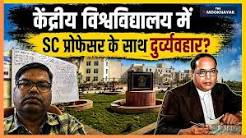
Professor States: ‘We Are Not for Sale’ Ajmer—A serious incident has come to light at the Central University of Rajasthan (CURaj), where Dr. Rakesh Kumar, an Associate Professor in the Department of Physics, was forcibly removed from his own office by the police and detained for approximately four hours. It is alleged that this action was taken without any FIR or formal complaint, solely because he had expressed his intention not to attend an event featuring the Deputy Chief Minister. Dr. Kumar has termed this a conspiracy to stifle his voice and has alleged that the university administration, in collusion with the police, subjected him to communal and discriminatory treatment. Professor Dr. Rakesh Kumar—who himself belongs to the Scheduled Caste (SC) community—was accused of conspiring to disrupt the Deputy Chief Minister’s event on April 15. However, according to his written complaint, the reality is quite different. The police allegedly barged into his office, snatched his mobile phone, threw aside his laptop bag, issued threats, and held him in custody within the university administration building for four hours. Is this the appropriate way to celebrate Ambedkar Jayanti, or is it a conspiracy to crush the voices of the SC/ST community? In a detailed written complaint, Dr. Rakesh Kumar has leveled serious allegations against ten individuals. These include Ajmer SP Harsh Vardhan Agarwal, Inspector Dayaram Chaudhary, Constables Ram Gopal, Bajrang Lal Morya, and Anil Kumar; as well as University Vice-Chancellor Prof. Anand Bhalerao, Registrar Amardeep Sharma, Dr. Pramod Kamble, Dr. Anand Kumar, and PRO Anuradha Mittal. According to the professor, on the morning of April 15 at 9:30 AM—just as he stepped off the university bus and reached his office—four police personnel barged in. They alleged that the professor was planning to disrupt the Deputy Chief Minister’s event. Dr. Rakesh Kumar immediately demanded to know which specific email contained such a statement. The police responded by saying that the email was written in English and that they were unable to read it. The professor showed his email, in which it was clearly stated: “I can’t be a part of a crowd, especially for a political gathering. Sorry!” In other words, he did not wish to be part of the crowd at a political event. Nevertheless, the police created a commotion inside his office. Inspector Dayaram Chaudhary threw aside the bag containing his expensive laptop, pulled up a chair to sit right next to him, and completely hemmed him in. He threatened to send him to jail. The professor responded that if he were indeed a criminal, they should go ahead and send him to jail—but only after first showing him a copy of the complaint or the FIR. Despite this, the police snatched away his mobile phone, denied him the opportunity to close his office door, and dragged him out in full view of the students and faculty members. Once he had been placed inside the police vehicle, Inspector Dayaram Chaudhary spoke with SP Harsh Vardhan Agarwal and Registrar Amardeep Sharma. Dr. Rakesh Kumar overheard Amardeep Sharma praising Dayaram Chaudhary. Subsequently, he was held in custody for four hours—until 1:30 PM—in a room located near the offices of the University’s Vice-Chancellor and Registrar. Upon regaining access to his mobile phone, he discovered that the media had already covered the incident. However, the University’s PRO, Anuradha Mittal, falsely told the media that the University had not sent any email to the police. Dr. Rakesh Kumar alleges that he had sent the email to only 34 individuals (32 SC/ST faculty members, the Vice-Chancellor, and the Registrar). Who, then, forwarded it to the police? He has accused Prof. Anand Bhalerao, Amardeep Sharma, Dr. Pramod Kamble, and Dr. Anand Kumar of conspiring against him. Is Raising Questions the Real Reason for the Harassment? Dr. Rakesh Kumar has long been raising questions regarding students, faculty members, and academic scandals within the university. He told *The Mooknayak* that Prof. Anand Bhalerao and Amardeep Sharma never respond to his emails. Amardeep Sharma’s emails frequently contain serious grammatical and typing errors—an issue about which Dr. Kumar has complained on multiple occasions. Recently, he raised the issue of academic scandals within the university. Prior to this, a professor in the Department of Biotechnology faced allegations of sexual harassment involving several female students (including those from SC/ST backgrounds). This matter dragged on for months, but Prof. Anand Bhalerao allegedly suppressed it because the accused faculty member was a close associate of his. Despite the allegations leveled against him, the said professor was appointed as the Dean of Student Welfare and, subsequently, as the Head of the Department. “As a symbolic gesture of protest, I refused to participate in this event. This stance was clearly articulated in my email correspondence. Consequently, the Vice-Chancellor and the Registrar conspired to stifle my voice and subject me to indirect harassment.” — Dr. Rakesh Kumar The email read: “The SC/ST community is not for sale.” On April 12, Dr. Anand Kumar, the Convener of the SC/ST Cell, sent an email stating that Ambedkar Jayanti would be celebrated on April 15, and that every SC/ST faculty member was expected to bring at least five students to the event attended by the Deputy Chief Minister. Dr. Rakesh Kumar argued that since Babasaheb was born on April 14, there was no justification for holding the commemorative event a day late. He replied to the email stating that the SC/ST community is not for sale. He questioned how they could expect him to mobilize students for a political event when they had failed to stand up for SC/ST female students in cases involving harassment allegations. He explicitly stated that he would not participate in a political event. Four other SC/ST faculty members voiced similar concerns, but neither Dr. Anand Kumar nor Dr. Pramod Kamble (the SC/ST Liaison Officer) offered any response. Dr. Rakesh Kumar alleges that this was, in fact, the real reason behind the harassment. Vice-Chancellor Prof. Anand Bhalerao and Registrar Amardeep Sharma attempted to stifle their voices by
“This Ritual Is Not for People Like You”: In Damoh, a Differently-Abled Dalit Groom Was Pulled Off His Horse During the ‘Rachwai’ Ceremony and Subjected to Such Treatment That…!

Wedding guests captured a video of this brutality, which has now gone viral on social media, becoming a source of shame for the entire society. Damoh—In Bijori Pathak village, located within the jurisdiction of the Hatta police station in Madhya Pradesh’s Damoh district, a heartbreaking and reprehensible incident has come to light. This event has exposed the deep fissures of caste-based discrimination that, despite official claims of social equality, remain a stark reality in rural India. Golu Ahirwar—a 23-year-old differently-abled Dalit groom—was subjected to such brutal physical assault during the pre-wedding ritual known as ‘Rachwai’ that it sent a wave of outrage across the entire state. The casteist thugs showed absolutely no mercy, not even sparing the groom due to his physical disability. The incident occurred on Tuesday evening as Golu, mounted on a mare, was passing through the village accompanied by his family and the wedding procession. At that moment, certain self-proclaimed strongmen of the village objected to the procession and launched an attack. According to the victim, individuals identified as Guddu Singh, Krishna, Hakam, and Paltu Lodhi not only forcibly dragged him off the mare but also beat him so severely with sticks and clubs that the festive atmosphere of the wedding was instantly transformed into one of mourning. The wedding guests managed to record this act of brutality on video; the footage has since gone viral on social media, bringing shame upon the entire society. Humiliating and inflicting violence upon an individual based on their caste during a significant social and cultural occasion like a wedding reflects the narrow-minded mentality prevalent in society; furthermore, subjecting a differently-abled person to such treatment is an act of extreme inhumanity. Recounting that heart-stopping moment, the victim’s sister, Manisha Ahirwar, stated that as the procession was moving forward, the accused deliberately blocked their path by parking their vehicle in the narrow lane. When they were requested to move the vehicle, they rushed forward aggressively, shoved Golu off the mare, and knocked him to the ground. He recounted that four individuals collectively attacked him, explicitly stating that a mare could not enter this lane, nor could a procession of “people like them” be taken out here. They further made it clear that this ritual was not meant for people of their kind. An even more shocking fact is that, despite the groom being differently-abled, the attackers showed absolutely no mercy. Golu’s mother, Vidya Ahirwar, stated that her son was dragged off the mare and brutally beaten; when her daughter attempted to intervene, she too was assaulted. Amidst the chaos of the attack, some of her daughter’s gold jewelry also went missing. Following the assault, the entire family and the wedding guests proceeded directly to the Hatta Police Station to seek justice. Confirming the incident, Station In-charge Sudhir Kumar Begi stated that during Golu Ahirwar’s *Rachwai* (pre-wedding procession), as the entourage approached the village’s shrine, Vishwanath Lodhi, Chintu Lodhi, and others raised objections to the groom riding a mare and launched an attack. The police have registered a case under relevant sections of the law, including the SC/ST Act. However, this is not the first instance of such an incident occurring in this village. Locals recall that on a previous occasion, when a *Dalit* groom’s procession was being taken out, members of the upper castes had raised objections; subsequently, social organizations had to intervene to somehow ensure the procession could proceed. The police have deployed security forces in the village, and following a medical examination, the groom’s family has departed for Budhi Semra village in the Chhatarpur district to complete the wedding rituals. Expressing deep concern over this entire episode, social activist and Bhim Army leader Sunil Astey stated that the incident of assault is extremely grave and condemnable. He asserted that this event constitutes not merely a criminal act, but a blatant violation of the rights to equality, dignity, and liberty enshrined in the Constitution. Asteya stated that humiliating an individual and resorting to violence against them on the basis of their caste during a social and cultural occasion—such as a wedding—reflects the narrow-minded mentality prevalent in society; such treatment is particularly inhumane when directed at a person with disabilities. He has urged the administration to ensure the swift arrest of all accused individuals, conduct an impartial investigation to initiate strict punitive action against the culprits, and take action under the National Security Act (NSA) against elements that seek to sow fear and unrest within society. Furthermore, he emphasized the need to formulate a “Special Protection Framework” to safeguard Dalit grooms and social gatherings, thereby preventing the recurrence of such incidents in the future. It is imperative that the rule of law be upheld and that every citizen be granted the freedom to exercise their social and cultural rights without any discrimination, as maintaining harmony, dignity, and equality within society is a shared responsibility of the administration, civil society, and all sections of the community. Geetha Sunil Pillai Courtesy: Hindi News