
Manipur peace can be restored in five minutes if government decides, says Rahul Gandhi
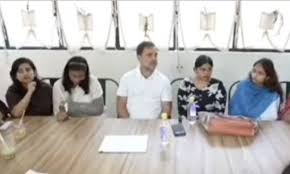
Imphal: Congress leader Rahul Gandhi has said that much-needed peace in Manipur could be restored through dialogue between the two communities, which he described as the ultimate solution to the current crisis. Interacting with young women from Gargi College and Delhi University on Tuesday, he stated that if the Government of India decided to restore peace in Manipur, it could be achieved within five minutes. “If the United Progressive Alliance (UPA) were in power, it could be settled within hours,” he said, adding that both communities need to build bridges for the restoration of peace. The UPA was a coalition of centre-left political parties in India, primarily led by the Indian National Congress (INC), which governed the country from 2004 to 2014. He added that the Indian Army is supposed to stop people from fighting each other. Reiterating his point, Gandhi said both communities need to build bridges for lasting peace in the state. He accused the ruling government of lacking the intention to end the violence, noting that the Prime Minister has not visited conflict-hit Manipur in recent months. He further expressed hope that if the UPA were in power, the situation would be resolved within hours. Gandhi emphasised that Manipur deserves peace and said that families who have lost loved ones must be taken care of. He advocated a bottom-up approach to peacebuilding, suggesting that educated youth and civil society can help bridge divides. Gandhi said Manipur is going through a “very difficult time” and encouraged young people to stand against injustice and empathise with the suffering of the people. He argued that peacebuilding must emerge from the middle and grassroots levels, suggesting that educated groups from both sides should organise workshops and peace initiatives. Notably, Rahul Gandhi made multiple visits to Manipur, including relief camps in Churachandpur, Moirang, and Jiribam in 2024, where he met victims of ethnic violence. He focused on listening to the grievances of displaced people, including women and children, and called for peace and central intervention. By Bit Irom Courtesy : North East Now Note: This news is originally published on https:/northeastnow.com/bha and is used purely for non-profit/non-commercial purposes, especially human rights
From ‘reluctant prince’ to assertive challenger
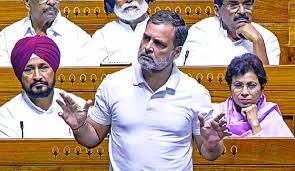
Has Rahul Gandhi become a credible Leader of the Opposition in the Lok Sabha since his appointment in June 2024? With nearly two years having passed, how effective has he been? Has he held the government accountable and changed his party’s approach to budget reviews? Has he demonstrated leadership qualities such as strategic communication and coalition-building during this time? These questions are essential for evaluating his influence and effectiveness. Rahul began his political career in 2004 and has faced both successes, challenges, and failures. He has worked behind the scenes, guiding the party through victories and defeats, while choosing not to take a ministerial role in the Manmohan Singh government from 2004 to 2014. Gandhi’s rise to a prominent position within the Congress Party was largely expected, reflecting his positioning within the party. He has the final say in party appointments. While many party members viewed his leadership as a positive development, others expressed concern that it highlighted the party’s lack of alternatives and its dependence on the Nehru-Gandhi family. Ultimately, he resigned, and senior leader Mallikarjun Kharge became the party president. Rahul’s role as LOP has included pointing out the government’s mistakes in Parliament and outside on behalf of the Opposition and his own party. However, there have been important occasions when he was not present. Rahul has taken on a more assertive, visible role, focusing on defending the Constitution, addressing income inequality, and challenging the BJP-led government on various issues. He has rebranded his image to align with the formal role, focusing on job creation, safety for marginalised groups, and the rights of farmers. This is the first time in a decade that a cabinet-level position has been filled. Since 2014, no opposition party has achieved the 10% of 543 seats needed to be recognised as the Leader of the Opposition. This presents a significant opportunity for the Opposition to challenge the Narendra Modi government. On his first day in the Lok Sabha as LOP, Rahul Gandhi stressed the need for the ruling coalition to uphold the rule of law and for the Opposition to address issues such as the economic downturn, unemployment, a caste census, and the farmers’ crisis. As the Leader of the Opposition, he participates in selecting key officials, such as the Chief Election Commissioner and the CBI Chief, to ensure that the Opposition has a say in these appointments. Rahul’s presence in Parliament has become more confrontational and assertive, reflecting his strategic shift to challenge the government directly. With the ruling party loudly defending the Modi government, noisy scenes have ensued in Parliament. Still, it has also enabled the Opposition to oppose key bills, such as the Women’s Reservation Bill and the farmers’ bills. His active participation in legislative debates and initiatives demonstrates his growing influence and impact as Leader of the Opposition, consistently challenging the Modi government on multiple issues. One successful step was his Bharat Jodo Yatra, which boosted his image by allowing him to mingle with the public and learn about their problems firsthand. Educated at some of India’s most prestigious schools, he went on to study economics in the United States and gain international experience working in London before returning to Mumbai in 2002. Gandhi is often referred to as the “reluctant prince” by his critics, who believe he is hesitant to fully embrace the responsibilities that accompany his significant influence. However, many consider him to have been the unofficial number two in the party for a long time. However, some were worried about the party’s continued reliance on the Nehru-Gandhi family for leadership. Rahul decided to enter politics and won a seat in 2004 from Amethi. In September 2007, he became the party’s secretary-general while his mother, Sonia Gandhi, remained president. By January 2013, he had risen to Vice-President of Congress, highlighting his growing influence. Critics say that even though he is more visible now, the party lost key state assembly elections in late 2024 and 2025. This raises doubts about his ability to turn popularity into votes. Rahul became the Leader of the Opposition in the Lok Sabha in June 2024. As time passes, he could lose support if he fails to secure the backing of regional allies and continues to struggle in local politics. The Opposition created the INDIA bloc and worked together in the 2024 General Election. As a result, the Opposition won more seats. The Congress Party doubled its number of seats. Additionally, there has been feedback regarding his attendance at key events and his focus on topics that some critics view as less significant. He is trying to be more approachable by engaging in activities that demonstrate his commitment to ordinary people’s concerns. Different groups view his performance differently. During Rahul Gandhi’s tenure as Leader of the Opposition, he has become a more focused and articulate leader. However, whether he has gained “credibility” is subjective. Supporters see improvement, while opponents argue his style remains unchanged. By Kalyani Shankar Courtesy : The Pioneer Note: This news is originally published on https:/thepioneer.com/bha and is used purely for non-profit/non-commercial purposes, especially human rights
Indian archdiocese launches pastoral care for transgender people
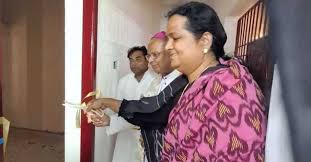
Move inspired by synodal call to ‘integrate marginalized communities, help them live a dignified life,’ priest says For years, Inba Ignatius, a Catholic transgender leader in the southern Indian city of Chennai, felt like a visitor in her own church — welcomed at the altar on special occasions but largely invisible in the daily life of the parish. Today, she feels the beginnings of a permanent home. Her sense of belonging is being fostered by a pioneering initiative of Madras-Mylapore archdiocese: a dedicated pastoral care desk for transgender persons. Launched on Feb. 26 by Archbishop George Antonysamy, the desk represents a structured, institutional effort to move beyond sporadic outreach toward a sustained ministry toward this marginalized group. For Father Leo Joseph, the priest who started the pastoral desk, the initiative is not merely a social project but a direct response to the universal call of the Catholic Church. “We have started this desk as an answer to a call from the recently held Synod of Synodality, which urges the Church to ‘integrate marginalized communities like transgender people and help them live a dignified life,’” he told UCA News. The desk’s mandate, however, draws a clear pastoral boundary. Joseph emphasized that the focus is on holistic care and social integration, clarifying that the ministry is intended to provide “only pastoral care and not sacramental care.” Ignatius, who runs a non-governmental organization for transgender rights and has collaborated with Joseph for years, sees the pastoral desk as a watershed moment. “It is a welcome initiative by the archdiocese,” she told UCA News. Transgenders in Chennai (formerly Madras) — the capital city of Tamil Nadu state, where the archdiocese is based — “need genuine pastoral care, and this pastoral desk can be a big help,” Ignatius noted. The archdiocese’s pastoral move unfolds against a backdrop of broader societal recognition in Tamil Nadu. The state government already maintains a special welfare board for transgender persons and has recently announced new schemes for their welfare and development. Furthermore, Tamil Nadu is home to the annual Koothandavar festival, a major Hindu religious and cultural event that prominently celebrates the transgender community — a testament to the deep cultural roots and visibility of transgender persons in the state’s social fabric. The Catholic archdiocese’s initiative brings together a small but dedicated team — two other priests and two nuns — with plans to expand by enlisting volunteers from religious congregations and the laity. The goal, Joseph explained, is to coordinate and amplify the scattered efforts already being undertaken by individuals and religious communities across the archdiocese. Currently, the team is drafting a formal mandate and action plan, which they hope to present to the Tamil Nadu Bishops Council (TNBC) for adoption. The vision is to eventually elevate the desk to an archdiocesan commission, creating a model that could be replicated in other dioceses across the southern state. The scale of the need is significant. Joseph estimates that around 10,000 transgender persons live in Chennai. Many face stark marginalization. “Most survive by begging near toll roads and indulging in commercial sex work,” he said. The desk’s immediate strategy focuses on economic empowerment as a way to dignity. Plans are already underway to provide training in employable skills such as tailoring and jewelry making, intending to secure stable jobs. For Joseph, this work is a continuation of a commitment that began nearly a decade ago, when he first started building relationships with the transgender community in 2015. Ignatius noted that small but significant steps toward inclusion have paved the path to this moment. Joseph, she recalled, has long facilitated interactions between transgender persons and seminarians, priests, and nuns, helping to break down misconceptions and foster understanding. “We were invited to be part of various events like Maundy Thursday celebrations and other church events and festivities,” she said. “Because of the exposure and opportunities we received, we feel now as part of the local Catholic parishes.” She hopes that the new pastoral desk will build on this foundation, moving from symbolic inclusion to structural integration. “I believe this pastoral desk can help us become more visible and integrate with the larger mainstream community, especially with the Catholic community in the archdiocese.” Publisher William J. Grimm M. M. Courtesy : UCA News Note: This news is originally published on https:/ucanews.com/bha and is used purely for non-profit/non-commercial purposes, especially human rights
From India to US, how gender self-identity battles State control

India’s amended transgender law and the US Supreme Court’s ruling on conversion therapy for minors signal a shift towards institutional scrutiny of gender identity Over the past one month, three developments across continents converged with unusual clarity. In India, a newly amended transgender law diluted a foundational principle laid down over a decade ago: the right to self-identify one’s gender. Almost in parallel, the Rajasthan High Court, on April 21, issued notices to the Centre on a public interest litigation (PIL) challenging certain provisions of the Transgender Persons (Protection of Rights) Amendment Act, 2026. Earlier, the same court had pushed for affirmative action for transgender persons. On the other hand, the United States Supreme Court opened the door to legal challenges against bans on conversion therapy for minors, foregrounding free speech arguments over blanket prohibitions. These developments together point to a global recalibration of how gender identity is being understood, validated and regulated. The shift is significant: from self-declared identity towards institutional scrutiny. At the heart of this churn lies the question: who defines gender, the individual or the State? The PIL in the Rajasthan High Court contends that the requirement of the chief medical and health officer (CMHO) examining a transgender to submit a report to the local magistrate to issue gender identity certificate exposes an individual’s gender identity. It also takes away the right to self-perceived gender identity. The 2014 NALSA (National Legal Services Authority) judgment was widely seen as a landmark affirmation of dignity and autonomy. It recognised the right of individuals to self-identify as male, female or transgender without requiring medical intervention or bureaucratic validation. It was, in essence, a rights-based framework rooted in personal liberty. The recent amendment law marks a departure from that philosophy. By introducing certification through state-appointed medical boards, it effectively reintroduces institutional gatekeeping into the process of identity recognition. The definition of “transgender” is also being narrowed, raising concerns about exclusion and standardisation. Critics argue that this amounts to re-medicalisation of identity. Supporters, however, point to the practical challenges of policy implementation. Welfare schemes, reservations and targeted benefits require definitional clarity. Without some form of verification, they argue, the system risks misuse or administrative paralysis. This tension is now playing out in courtrooms as well. The Rajasthan High Court’s intervention reflects it. While advocating for reservation and welfare measures for transgender persons, it has also questioned the viability of unrestricted self-identification under the amended framework. The message: the State is willing to extend benefits but on terms it seeks to define. The United States presents a different legal landscape but arrives at a similar crossroads. The US Supreme Court’s willingness to entertain challenges to bans on conversion therapy—particularly on grounds of free speech—signals a shift in how gender identity, especially among minors, is being framed. The debate here is not about certification but intervention. Should gender identity be affirmed unconditionally or can it be subject to exploration, counselling or even attempts at change? By allowing such challenges, the court has legitimised the argument that identity, particularly in younger individuals, may not be entirely beyond scrutiny. Overlay this with political developments, such as the push in some quarters to recognise only binary gender categories, and a pattern emerges. Across jurisdictions, there is a growing discomfort with the idea of gender as purely self-defined and infinitely fluid. This shift is not occurring in a vacuum. It is being driven by a mix of social change, policy dilemmas and political calculation. Over the past decade, gender identity has expanded far beyond the traditional male-female binary. Non-binary, gender-fluid and other identities have gained visibility and, in some cases, legal recognition. This expansion has been empowering for many, but it has also introduced complexities that legal and administrative systems are struggling to manage. Consider the design of reservation systems. If identity is entirely self-declared, how does the State ensure that benefits reach intended groups without misuse? Or take the question of minors. Should they be allowed to make irreversible decisions related to gender without oversight? In spaces like prisons, sports and public facilities, how should competing claims of identity, privacy and safety be balanced? So, what is being witnessed is a transition—from recognition to regulation. The first phase of gender rights was about visibility and legitimacy. It sought to correct historical injustices by acknowledging identities that had long been marginalised or erased. Courts and legislatures played a crucial role in this phase, often stepping ahead of public consensus. The current phase is about integration into systems—welfare, law enforcement, healthcare, education. And systems, by design, demand categories, definitions and verifiability. This is where friction arises. A framework built on fluidity encounters institutions built on fixed criteria. The result is a push towards standardisation. India’s move towards certification and the US debate over therapeutic interventions are both expressions of this broader shift. The central question, then, is whether this shift represents necessary governance or creeping control. Proponents of regulation argue that medical oversight and certification provide safeguards, ensuring that individuals, particularly minors, are protected from premature or coerced decisions. They also see it as essential for designing effective welfare policies. Critics, however, view the same mechanisms as barriers. Requiring individuals to “prove” their gender to a medical board risks humiliation, exclusion and bureaucratic delay. It also undermines the principle that identity is deeply personal and not subject to external validation. Is all of this reflection of a broader cultural moment? Gender, once seen as a fixed biological category, is now understood by many as a spectrum. This shift has been driven by activism, academic work and personal narratives. High-profile cases and growing visibility have brought these conversations into the mainstream. The debate is clearly far from settled. Courts will continue to interpret laws, governments will tweak policies and societies will negotiate new norms. What is clear, however, is that the era of uncomplicated affirmation is over. Gender identity is no longer just a question of recognition—it is becoming a site of negotiation between individual rights and institutional
Dalit Woman Raped and Murdered in UP; Body Found Hanging from Tree; Akhilesh Yadav Slams Yogi Government, Calls Claims of Women’s Safety ‘Hollow’
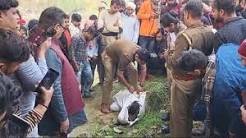
Lucknow: Samajwadi Party (SP) President Akhilesh Yadav on Monday targeted the Bharatiya Janata Party (BJP) government in Uttar Pradesh over the incident involving the rape and subsequent murder of a young woman from the Dalit community in Pratapgarh. Speaking on the social media platform ‘X’, Yadav stated that the news of the heinous murder of a Dalit woman in Pratapgarh is deeply distressing and condemnable. ‘The “Wandering Honorable” Should Cast a Glance at the Plight of UP’s Daughters’ Linking the incident to the PDA (Pichhde—Backward Classes, Dalit, and Alpsankhyak—Minorities) demographic, he asked, “The question is: why does the series of murders of PDA women continue unabated in Uttar Pradesh? Are the BJP government’s claims regarding women’s safety merely hollow rhetoric, or is there discrimination even in the provision of women’s safety?” Taking an indirect dig at Chief Minister Yogi Adityanath—who has been actively campaigning for the West Bengal Assembly elections—Yadav remarked, “Once the ‘Wandering Honorable’ finds a moment of respite from election campaigning, he should cast a glance at the plight of the daughters of his own Uttar Pradesh. Although, apart from injustice and atrocities, no sister, daughter, or mother in the state expects anything else from him.” **Details: What is the Full Case?** A case involving the rape and subsequent murder of a young Dalit woman has come to light in the Manikpur area of Pratapgarh. Additional Superintendent of Police (West), Brijnandan Rai, stated in a press release that the police have detained a juvenile offender in connection with the murder of a young woman in Kakraha Miria village, located within the jurisdiction of the Manikpur police station in Pratapgarh. He informed that on Sunday, April 26, a resident of Manikpur reported to the police that his 19-year-old sister was sleeping on the veranda of their home when an unidentified person murdered her and hung her body from a tree. Rai added that, acting on this information, a case was immediately registered at the police station. The subsequent post-mortem examination of the body revealed that the young woman had been raped and subsequently strangled to death. He stated that the investigation into the case revealed that the girl used her father’s mobile phone and was involved in a romantic relationship with a minor boy who was her own relative. The Additional Superintendent of Police further informed that the inquiry established that, on the night of the incident, the girl had gone to the orchard, where the minor boy and his friends perpetrated the rape and murder. He added that the minor boy accused of the crime has been taken into custody, and the remaining accused individuals will also be arrested shortly. Edited By Purnima Singh, Courtesy: Hindi News
Bengal Elections 2026: Why Political Parties are Averse to the Dalit Question
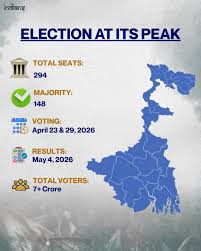
There is a broad consensus among the Bengali upper caste bhadraloks of the Left, Right and Centre that Dalit aspirations and autonomous Dalit politics should not re-emerge. Bengal’s dominant political and cultural discourse often disassociate themselves from Dalit history and anti-caste assertions. The hegemonic common sense prevalent in the state has been, Bengal is a “casteless society”. Such a narrative is rooted in denial of social recognition of Tapashilis, who are categorised as Scheduled Caste (SC) and their historically transformative anti-caste politics in undivided Bengal. Even the social justice icon Dr B R Ambedkar is not celebrated in the state beyond the few assertive independent Dalit groups while he is duly acknowledged with remarkable state honours in rest of the country. If selective amnesia had not engulfed the Bengali upper caste “bhadraloks” at large, it wouldn’t be tough to remember Ambedkar’s long association with Bengal. It was his All India Scheduled Castes Federation (AISCF), whose Bengal branch was headed by Jogendranath Mandal, a prominent leader from SC community in 20th century Bengal. The association of Mandal with Ambedkar grew so unwaveringly loyal that, in 1946, Ambedkar turned to Bengal to be elected to the Constituent Assembly of India. Mandal and six other Dalit MLAs of the Bengal legislative assembly secured the seat for him. Ambedkar later went on to be the chairman of Constitution Drafting Committee. The glorious role of Bengal and its autonomous Dalit leadership in sending the main architect of Indian Constitution to the Constituent Assembly is today grossly erased institutionally. The caste question and Ambedkarite politics too, despite its powerful legacy in Bengal, is relegated to the background through coercion and social misrecognition. Bengal has sixty constitutionally recognised scheduled caste communities, which is 23.51% of state’s total population according to the 2011 Census. Bengal comes second after Punjab among Indian States in size of Dalit population. And yet, the question of Dalit political aspirations and substantive caste representation doesn’t find any resonance in the Bengal assembly elections. At the same time, the Dalit factor is one of the driving factors in every Punjab assembly elections Interestingly, 19th and early 20th century’s popular historiography of Bengal was largely shaped by majoritarian Hindu upper caste supremacism camouflaged as nationalist movement and deeply influenced by ‘’practicing Hindu rituals and glorification of Hindu kings’’. Sumanta Banerjee in his book ‘Unravelling the Bengali Identity’ writes, how the Bengali upper caste hindu intellectuals of the 19th century tended to put emphasis on the Brahminical, Sanskrit oriented elements in that culture, while the same century had contemporaneously witnessed Dalits’ progressive assertions against upper caste Bengali bhadraloks’ caste supremacism. Dalit assertions in Bengal From early 19th century onwards, a host of Dalit social reformers started challenging the blatant casteism of Brahminical Bengali bhadraloks. In fact, the absence of Dalit sensibilities in Bengali nationalists’ anti colonial struggle had been looked at with suspicion by Dalit political leadership. Harichand Thakur (1812-1878), Benimadhab Halder (1858-1923), Panchanan Barma (1866-1935), Raicharan Sardar (1876-1942), Mahendranath Karan (1886-1928), Guruchand Thakur (1846-1937), Anukul Chandra Das Naskar (1894-1947), Basanta Kumar Das (1898-1984), Rajendranath Sarkar (1903-1979) are some of anti-caste stalwarts being pushed out of the mainstream by the Bengali upper caste historiographers. The hostility of Bengali upper caste bhadralok intellectuals towards the Dalit reformist movement against casteism is a well calculated move to sustain the former’s complete social and political dominance in post-colonial Bengal. The Hindu Mahasabha, Communists and Congress in undivided Bengal were deeply antagonistic towards autonomous Dalit politics. The political parties in post-colonial Bengal has also retained the narrative of Bengali exceptionalism entrenched in castelessness that depoliticised Dalit social and political aspirations in contemporary Bengal. It is a well concerted effort of the upper-caste political class of Bengal to sustain complete political dominance of Brahmins, Baidyas and Kayastha bhadraloks. The possibilities of Ambedkarite Dalit autonomous politics once launched by Jogendranath Mandal remains a perpetual threat to the Right, Left and Centrist political forces. Therefore, radical Dalit political consciousness observed in Maharashtra, Uttar Pradesh and some pockets of Southern India are consciously suppressed in the mainstream Bengali polity, society and academia. Bengal: A caste conscious society A Pratichi India Trust report of 2005 studied ‘’Cooked Mid-day Meal Programme in West Bengal – A study in Birbhum district’’ found out explosive caste bias among the Caste Hindu Savarna Parents and their children’s attitudes towards marginalised caste students and Dalit mid-day meal cooks. The study has shown how Dalit and Adivasi students benefited immensely from mid-day meal scheme but the upper-caste students disliked the scheme while their parents had reservations about Dalit cooks cooking the mid day meal. In fact. the practicing of endogamy is also high in West Bengal, with inter-caste marriages being very low in the state, a fact that doesn’t sit well with its progressive claims. A mere 9.5% of the marriages happening in the state are inter-caste. The social backwardness of Bengali Dalit communities due to upper-castes’ hegemony is so stark that the state has never thought of implementing Scheduled caste special component plan like other states such as Andhra Pradesh, Telangana, and Karnataka. It is only recently, that the the huge deletion of Dalit voters in Bengal through the Special Intensive Revision (SIR) exercise the of Election Commission of India (ECI) prompted the Bharatiya Janata Party (BJP) top leadership of prime minister Narendra Modi and home minister Amit Shah to pacify them with the promise of citizenship and restoring their names once they come to power in the state. The Trinamool Congress (TMC) has since last few years started the corporate style ‘Tapashilir Sanglap’(interaction with the Scheduled Castes) outreach campaign during election season, which is purely an electoral connect programme with Dalits. Even though the BJP is very careful this time in addressing the Scheduled Castes of Bengal, they are trying to broadly mobilise the Hindu vote bank cutting across the castes. The communal campaign around ‘ghuspaithiye’ (infiltrators) is very willfully advanced by the BJP to mobilise and appropriate Dalits so that independent Dalit political agency never grows in
High command to decide on leadership change or cabinet reshuffle, says Parameshwara
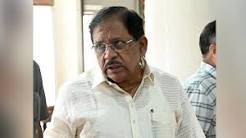
Speaking at a press conference here, G. Parameshwara said the Congress high command is aware of all developments and will take a decision shortly, which everyone will abide by. KALABURAGI: Karnataka Home Minister G. Parameshwaraon Tuesday said the Congress high command will soon take a decision on whether there will be a change of guard in the State or a cabinet reshuffle. Speaking at a press conference here, G. Parameshwara said the Congress high command is aware of all developments and will take a decision shortly, which everyone will abide by. Replying to a question on the frequent visits to New Delhi by groups aligned with Chief Minister Siddaramaiah and Deputy Chief Minister D. K. Shivakumar to meet the party high command, Parameshwara said ministers visit the national capital to hold discussions with Union ministers and senior officials of various departments regarding development works and to seek funds for their respective departments. He added that it is natural for them to meet the party high command during such visits, as Congress leaders treat the high command as their temple. “Whenever they meet the party high command, they will discuss several things, including politics. What is special in it?” he asked, adding that he is not going to Delhi as of now. On the demand to make a Dalit leader the Chief Minister of Karnataka, the Home Minister said it was the desire of the people, including Dalits. Responding to another question on whether ministers in the Siddaramaiah cabinet were lobbying for a Dalit Chief Minister, he denied the claim. On Dalit ministers meeting frequently over dinner, Parameshwara said, “Yes, we are meeting frequently for dinner and the Chief Minister Siddaramaiah has also joined the dinner meeting. Do you consider it wrong?” He added, “During dinner, we discuss many subjects, including politics. There is nothing wrong in it, and we have not asked the high command to make any one among Dalit leaders the Chief Minister. It is left to the Congress high command.” Minister for Medical Education Dr. Sharanaprakash Patil, Kalaburagi North MLA Kaneez Fatima, Kalaburagi South MLA Allamaprabhu Patil, Afzalpur MLA M. Y. Patil, and MLCs Jagadev Guttedar and Tippannappa Kamaknoor were present at the press conference. Ramakrishna Badseshi Courtesy : TNIE Note: This news is originally published on https:/thenewindianexpress.com/bha and is used purely for non-profit/non-commercial purposes, especially human rights
Andhra MLA appoints transgender woman as personal assistant

Amaravati (Andhra Pradesh) In the bustling streets of Guntur, where traffic signals often become silent witnesses to untold struggles, Varsha’s life once stood still, defined by survival, not dignity. Born with dreams but pushed to the margins of society, Varsha, a well-educated transgender woman, found herself with no choice but to beg for a living. Like many in her community, rejection followed her everywhere, from job interviews to everyday interactions. Society saw her identity before her ability, but destiny took a turn when she crossed paths with Galla Madhavi, the legislator from Gunturu West. The Gunturu West MLA said, “Many times I felt pained seeing transgender persons begging at traffic signals. I wanted to do something meaningful, not just offer sympathy. Recognising Varsha’s education and determination, I appointed her as a Personal Assistant in my office. A role that not only provides employment but restores dignity and self-worth. Varsha said, “She didn’t just give me money like others do. “She spoke to me, understood me, and gave me an opportunity. I will prove myself worthy of this trust” Varsha said Today, instead of standing at traffic signals, Varsha walks into an office at the Secretariat with pride, her identity no longer a barrier, but a symbol of resilience. Varsha’s journey is not just personal; it reflects the silent aspirations of thousands in the transgender community. Meanwhile, Kalpana, a doctor from Guntur, speaking to ANI, said,” Galla Madhavi, Guntur West MLA, appointed transgender Varsha as her PA. It is well appreciated by the community because transgender people are also normal human beings. They have all the rights of a human being. All transgender by birth born in equal ratios. As Versha grew up, at the age of 13-14 years, she recognised she was not developing a secondary sexual character of a male. Her mindset and heart were telling her that she is female. So, she told the entire story at home. Everybody, her friends and family, thought she was a boy, but later everybody come ot know she is a girl. The decision taken by the MLA, I, as a doctor and activist, appreciate taking transgender people into jobs.” From the harsh glare of traffic signals to the dignified corridors of governance, her story proves one powerful truth: Sometimes, all it takes is one person to see potential where others see difference. This is not just a story of employment, it’s a story of dignity, inclusion, and hope. A reminder that real change begins when society chooses empathy over indifference. Posted by Ashhar Alam Courtesy : Awaz The Voice Note: This news is originally published on https:/awazthevoice.com/bha and is used purely for non-profit/non-commercial purposes, especially human rights
Varanasi: ‘Amit’ turns out to be ‘Aftab’… Married posing as a Hindu, then began a game of conversion and brutality.

Varanasi News: A sensational case of love jihad has come to light in Varanasi. A young man named Aftab, posing as ‘Amit’, lured a Dalit woman into a love trap and married her according to Hindu customs. Everything was fine until the truth was hidden, but once the truth was revealed, the woman was pressured to convert and was tortured when she resisted. The victim has also filed a serious rape charge against her brother-in-law. Police have registered a case and deployed teams to search for the absconding accused, Aftab. Varanasi News: A case of love jihad and fraud has come to light in the religious city of Kashi, which has shocked everyone. A Muslim man, posing as ‘Amit’, not only lured a Dalit woman into his love trap but also married her according to Hindu customs. But before the wedding vermilion had even dried, the young woman discovered Amit’s true identity as “Aftab,” and her life became a living hell. A trap was laid under the pretext of providing employment. The entire incident took place in the Kotwali police station area of Varanasi. The victim, a Dalit, works as a waiter at weddings to support herself. In 2024, she met a young man named Amit, who contracted waiters at weddings. Under the pretext of providing employment, Amit obtained her mobile number and gradually began to grow closer to her. A temple ritual revealed his true identity. The accused first engaged in physical relations with the young woman under the pretense of marriage. In March 2025, he solemnly married her according to Hindu rituals. The victim believed she had found her life partner, but the reality was far different. A few days after the wedding, when the young man took her to his original home in Harhua, Varanasi, the young woman was devastated by the conditions there. She discovered that the man she thought was ‘Amit’ was actually Aftab. Pressure to Convert and the Brutality of Her Brother-in-law As the truth came out, Aftab and his family changed their stance. The victim alleges that Aftab began pressuring her to convert (marry him). When she resisted, she was brutally beaten. The victim has made another shocking allegation: Aftab’s elder brother (brother-in-law) also raped her. She managed to escape the clutches of the brutal men and reached her parents’ home and told her family the entire incident. Police registered a case; the accused is still at large. The police have taken the matter seriously following the victim’s complaint, who accompanied her family to the Kotwali police station. Police have registered a case against accused Aftab and his family under serious charges including fraud, forced conversion, and rape. Accused Aftab has been absconding since the incident. Police have formed several teams to arrest him and are conducting raids at possible hideouts. Varanasi police claim that the accused will soon be behind bars. Reported by: Ravi Pandey, Edited by: Rahul Goel About the Author Rahul Goel works for News18 Hindi Hyperlocal (UP, Uttarakhand, Haryana, and Himachal Pradesh). He has over 16 years of experience in the media industry. Courtesy: Hindi News
Khargone: Dalit bride and groom denied entry into temple; police forced them to visit, community cuts off access to food and water.

In Padlya Gawli village, Khargone, a Dalit couple was punished for worshipping at a temple, leading the entire village council to turn against them. The police reopened the temple, but the village shops have now refused to supply the family with milk and rations. Khargone: Shocking news has emerged from Padlya Gawli village, under the Gogawan police station area of Khargone district, Madhya Pradesh. A newlywed Dalit couple has alleged that they were barred from entering the local Hanuman temple. Furthermore, they were subsequently socially boycotted as per the panchayat’s decision. Video released on social media Farmer and dholak player Nirmal Kanade alleged in a video released on social media that he and his wife and family had visited the temple on Friday, the day after their wedding, but the committee closed the temple gates and asked them to worship outside. A complaint was subsequently filed on Dial 112, prompting police to arrive at the scene, opening the temple and allowing the couple to perform puja. Police Opened the Temple and Allowed the Couple to Perform Darshan Khargone SP Ravindra Verma stated that upon receiving the information, the Ahirkheda police outpost in-charge was dispatched to the scene, and the temple was opened, allowing the bride and groom and their families to perform the puja and perform the rituals. The dispute escalated after the temple reopened. According to Gogawan Police Station in-charge Deepak Yadav, the other parties objected to the temple being opened after the scheduled time and special arrangements being made for the darshan. Community Seniors Provide Explanation Senior members of the Patel, Banjara, and Gawli communities, among others, offered a different perspective, stating that the temple’s darshan time had expired, which is why the gates were closed. They also alleged that the couple and their family were attempting to enter the temple wearing slippers. Furthermore, local tradition prohibits women from approaching the Hanuman statue, which is why they were denied permission. Even tea leaves and milk were not available. According to the police, after the darshan, some members of the Dalit community allegedly used offensive language against other communities. Following this, a panchayat was called in the village. According to the station in-charge, the panchayat decided to not employ certain individuals and impose a social boycott. Upon receiving the complaint, the police immediately reopened the temple and performed the puja. The social boycott complaint is serious. Both parties are being counseled and counseled. Maintaining peace in the area is our priority. Following the boycott decision, members of the groom’s community recorded videos of goods being denied at three different shops. The family says that shopkeepers, citing the panchayat’s decision, refused to provide even tea leaves and milk. Some shopkeepers threatened to pay fines if they provided goods. Police trying to reach a compromise SP Ravindra Verma stated that after receiving the complaint of social boycott, the police arranged a meeting between the two parties. In the meeting held on Saturday evening, both parties were counseled separately. Police say efforts are underway to reconcile the two communities so that the situation can return to normal. Edited by: Akash Sikarwar•Reported by: Animesh Jain About the Author Akash Sikarwar works as a consultant for the Madhya Pradesh and Chhattisgarh digital team of NavbharatTimes.com. He has over seven years of experience in print, web, and broadcast journalism. Courtesy: Hindi News