
TN election results 2026 | Vijay alters caste matrix; Brahmins in, more room for Dalits
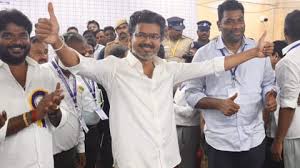
TVK wins 24 reserved segments, while DMK alliance (13) and AIADMK front (9) lag behind; two brahmin legislators break jinx in Dravidian heartland CHENNAI: In a verdict that departs from Tamil Nadu’s entrenched caste calculus, the Tamilaga Vettri Kazhagam (TVK) has delivered a socially broad mandate while also reviving Brahmin representation in the Assembly, an area largely sidestepped by Dravidian majors, signalling a shift in the State’s electoral grammar. Led by C Joseph Vijay, a practising Christian, the party moved away from conventional caste alignments, prioritising candidate selection and local credibility. The outcome reflects that approach: more than 20 MLAs from Scheduled Castes and Scheduled Tribes, representation from the Muslim community, and notably, two Brahmin legislators elected from Mylapore and Srirangam. The victories of P Venkataramanan in Mylapore and Ramesh in Srirangam are being seen as politically significant. At a time when Dravidian majors have largely avoided fielding Brahmin candidates, fearing that their relatively small numbers could be outweighed by dominant caste blocs, TVK chose to field them, and they went on to win, marking a clear departure from prevailing electoral practice. Of the 234 Assembly constituencies, 46 are reserved. TVK candidates secured 24 of these seats, forming a crucial pillar of its overall tally. The remaining 22 reserved constituencies were won by the DMK-led alliance (13) and the AIADMK (9), indicating that while traditional formations retained ground in parts, TVK made decisive inroads. The party’s gains extended beyond reserved constituencies. In Virudhunagar, P Selvam, a Scheduled Caste candidate fielded in a general seat, defeated V Vijay Prabaharan, reinforcing the view that caste identity did not singularly dictate voter choice in this election. Party leaders maintain that the mandate reflects a shift in voter behaviour. “Brahminism refers to domination and discrimination, not a community itself. Those are issues of the past. Today’s youth are more aware. We chose candidates based on their work and public connect. There was no discrimination in giving tickets, including to women and minorities,” TVK treasurer and Mylapore MLA-elect P Venkataramanan said. Across both reserved and general constituencies, candidates from marginalised communities secured victories under the TVK banner, pointing to a consolidation that cut across caste and religious lines. The party’s strategy of fielding candidates from diverse backgrounds, including communities underrepresented in recent electoral cycles, appears to have resonated with voters. Ramakrishna N Courtesy : DT Next Note: This news is originally published on https:/dtnext.com/bha and is used purely for non-profit/non-commercial purposes, especially human rights
Supreme Court issues notice to Union govt on plea against constitutional validity of Transgender Amendment Act 2026

Hearing arguments by senior advocate A M Singhvi for the petitioners, the bench asked if allowing selfidentification would not pose a danger and allow those masquerading as transgenders to corner the benefit. New Delhi: The Supreme Court on Monday issued notice to the Union government on a plea challenging the constitutional validity of the Transgender Persons (Protection of Rights) Amendment Act, 2026 for replacing the individual’s own understanding of their gender or identity with a biological or socio-medical category of the State’s choosing. A bench of Chief Justice of India Surya Kant and Justice Joymalya Bagchi sought a response from the Centre and others within six weeks on the petition filed by Laxmi Narayan Tripathi, the chairperson of National Council for Transgender Persons (NCTP), and its member Zainab Patel and others Hearing arguments by senior advocate A M Singhvi for the petitioners, the bench asked if allowing self During the hearing, the court was also informed the Act is yet to come into force as the Centre has not notified it, and hence the petitions were premature. The petition contended the Amendment Act amended the Transgender Persons (Protection of Rights) Act, 2019, in its structure, object, and affect, and thus violated the fundamental rights of transgender persons guaranteed under Articles 14, 15, 19, and 21 of the Constitution. The plea pointed out in National Legal Services Authority Vs Union of India, (2014), the Supreme Court, recognised for the first time that transgender persons have a fundamental right to be identified as a third gender, distinct from the male-female binary. It highlighted that the court then directed that transgender persons would be treated as socially and educationally backward classes for the purposes of reservation under Articles 15(4) and 16(4), and called upon the State to take affirmative steps to address the marginalisation they face. Above all, NALSA judgment established that the right to self-identification of gender is a fundamental right under Article 21, not a privilege to be conferred by a certificate, not a status to be earned through surgery and not a conclusion to be reached by a medical board, the plea said. The 2019 Act preserved the core of what NALSA required. However, the Amendment Act arbitrarily removed the provision, which stated that a transgender person is someone whose gender does not match their birth assignment, and that they have the right to self-identify, the plea contended. “The deepest constitutional wound inflicted by the Amendment Act is the substitution of the definition of “transgender person” in Section 2(k) of the Principal Act,” it stated. The plea emphasised in NALSA judgment, the Supreme Court explicitly and unequivocally repudiated the requirement of surgical intervention as a precondition for legal gender recognition. This court further held that each person’s self-identification of gender must be accepted as the foundation of their legal gender identity, without the State imposing medical, psychiatric, or bureaucratic gatekeeping. The right to determine one’s own gender, free from coerced bodily alteration, was held to flow directly from the right to privacy and dignity under Article 21, it pointed out. The plea contended a legislature cannot repeal a provision that gives concrete form to a fundamental right recognised by this court without violating Article 21. Ashish Tripathi Courtesy : DH Note: This news is originally published on https:/deccanherald.com/bha and is used purely for non-profit/non-commercial purposes, especially human rights
Why is a medical examination of transgender people necessary? This has sparked controversy.

The new transgender law’s mandatory medical board examination for identification has sparked controversy. Experts say that a physical examination alone is not scientifically sufficient and could impact the identity of many people. New Delhi: The purpose of medical examinations for transgender people is not to question their identity, but to ensure safe and appropriate treatment. The process for identifying gender dysphoria often begins with a psychological evaluation to determine whether the person has experienced long-term gender incongruence. Other mental health issues are also examined, and the person’s consent is obtained for treatment. Before starting hormone therapy or surgery, doctors assess hormone levels, bone strength, heart risks, and fertility through a physical examination and lab tests. This medical monitoring helps reduce the risk of long-term hormone use complications, such as blood clots, liver damage, or osteoporosis. What are the regulations in other countries? In many countries, medical examinations are required to change gender in legal documents. Some sports organizations also conduct such tests to maintain fair competition. While critics say some rules are excessively strict, experts agree that these tests are intended to prioritize patient safety, informed decision-making, and long-term health. Why are there protests over transgender rights in India? The debate over transgender rights has once again intensified in India. Last month, Parliament passed the Transgender Persons (Protection of Rights) Amendment Bill 2026, which makes significant changes to the 2019 law. The new law makes it mandatory for a medical board to confirm a person’s transgender identity. Experts and rights activists have raised serious questions about this provision. Critics argue that a person’s gender identity cannot be determined solely based on a physical examination. Medical experts believe that gender identity is a complex issue, with psychological, social, and personal identities also playing a significant role. Determining this based solely on a physical examination cannot be considered scientifically accurate. What do experts say? Experts have also stated that the new law could exclude many trans men, trans women, and non-binary individuals. The definition of a transgender person in the law is primarily limited to social and cultural identities such as Hijra, Kinnar, and Aravani. This could pose difficulties for those who identify as transmen, transwomen, or non-binary. What does the government say? The government states that the purpose of this change is to clarify the identification process and prevent fraudulent claims. However, those protesting consider it an affront to personal freedom and dignity. Edited By: Km Jaya Courtesy: Hindi News
Congress seems willing as Vijay reaches out, Mamata returns Rahul gesture
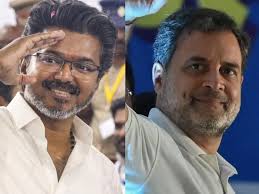
TNCC to discuss TVK letter seeking Congress support to form govt, Mamata says will work for national alliance now. Would DMK be left out in the cold? Having suffered morale-sapping defeats in the recent Assembly elections, bickering INDIA bloc allies Congress and Trinamool Congress sent out first signals of rapprochement Tuesday. At the same time, a rupture in ties between the DMK and Congress in Tamil Nadu seems to be on the cards. After a meeting chaired by Congress president Mallikarjun Kharge, and attended by Rahul Gandhi and AICC in-charge of Tamil Nadu Girish Chodankar, Congress general secretary (organisation) K C Venugopal indicated Tuesday evening that the party was ready to support TVK president Vijay, the surprise winner of the Tamil Nadu elections, to form a government. Addressing the media, Venugopal said the party was “clear that the mandate in Tamil Nadu was for a secular government committed to protecting the Constitution”, and that it should keep out “the BJP and its proxies”. “Thiru Vijay has spoken about drawing inspiration from perunthalaivar Kamaraj also. Accordingly, the Congress leadership has directed the TNCC to take a final decision… keeping in view the sentiments of the state reflected in the electoral verdict,” he said. Soon after, a meeting of the TNCC was called by Chodankar over Zoom on Tuesday night to decide on the matter. Gandhi is known to have been in favour of a pre-poll alliance with the TVK, and is reported to have made his unhappiness with Kharge known for having pushed the party to stay on with the DMK, which lost power to finish a distant second in the state. With 108 seats, the TVK is 10 short of a majority in the 234-member Tamil Nadu Assembly; the Congress has 5 MLAs. Sources said a section of the Congress leadership in Tamil Nadu as well as newly elected MLAs favour extending support to the TVK. While a TVK-Congress deal may prompt an irate DMK to distance itself from the INDIA bloc, those in the pro-Vijay camp say the Congress can’t “go against the sentiments of youths” in Tamil Nadu, or ignore the reality of the 2029 Lok Sabha elections. The party has 9 MPs currently from the state. One solution being considered to placate the DMK is abstaining from voting when Vijay takes a majority test in the Assembly. In contrast with Tamil Nadu’s new strains stood the Congress’s striking outreach to the TMC, with Gandhi himself tweeting as soon as the results in Bengal confirmed the Mamata Banerjee-led party’s big defeat at the hands of the BJP. The ties between the Congress and TMC have been frayed for a while, and had been further strained by Gandhi’s attacks on Mamata personally during the Bengal campaign. However, on Monday, Gandhi was one of the first Opposition leaders to endorse Mamata’s “vote loot” claims. While thanking the people of Kerala for its mandate to the Congress and congratulating Vijay, he posted: “Assam and Bengal are clear cases of the election being stolen by the BJP with the support of the EC. We agree with Mamata ji. More than 100 seats were stolen in Bengal.” Linking it to the Congress’s previous claims, which incidentally not all INDIA bloc allies have been on board with, Gandhi said: “We have seen this playbook before: Madhya Pradesh, Haryana, Maharashtra, Lok Sabha 2024 etc.” Notably, Gandhi, who followed up this post with a phone call to Mamata as well as Vijay, was silent on the DMK’s defeat, including the loss personally of M K Stalin, with whom he once shared a close rapport. On Tuesday, in another post, Gandhi signalled to Congress leaders that the electoral wrangling with the TMC was to be put behind. “Some in the Congress, and others, are gloating about TMC’s loss. They need to understand this clearly – the theft of Assam and Bengal’s mandate is a big step forward by the BJP in its mission to destroy Indian democracy… This is not about one party or another. This is about India,” he said. In Kolkata, Mamata signaled a turn too, saying in her first post-result press conference, held Tuesday, that she had spoken with both Sonia and Rahul Gandhi, and that several INDIA bloc leaders, including the Samajwadi Party’s Akhilesh Yadav, the JMM’s Hemant Soren, the RJD’s Tejashwi Yadav, the AAP’s Arvind Kejriwal, and the Shiv Sena (UBT)’s Uddhav Thackeray, had reached out to her in solidarity. Many of them had also campaigned for the TMC during the polls. Akhilesh may travel to Kolkata Wednesday to meet Mamata. Mamata also asserted that she would now focus on strengthening the Opposition alliance at the national level – a tie-up she has earlier expressed unhappiness with often. In 2024, the TMC chief had hinted that the Congress should not assume itself as the natural leader of the INDIA bloc. “I formed the INDIA bloc, now it is up to those leading the front to manage it… I would just say that everyone needs to be taken along,” she said in a television interview. Asked if she could take charge of the bloc, Mamata said: “If given the opportunity, I would ensure its smooth functioning.” The quick recalibrations by the INDIA bloc parties since Monday show that they realise the alliance is on the brink after the defeat of Mamata’s TMC and Stalin’s DMK – two of the strongest regional and foundational pillars of the Opposition bloc. Another INDIA constituent, the Left, now has no government anywhere in the country in nearly five decades. The Congress itself can barely take solace from the Kerala win as it coincided with a battering in Assam and all of two seats in Bengal. The Opposition remains unable to take forward its political planks centered around the Special Intensive Revision and the functioning of the Election Commission, as well as delimitation plans. The elation of a united Opposition thwarting the government’s women quota amendment Bill in Parliament is fast receding. Written by: Manoj C.G Courtesy
Congress calls late-night meeting to decide on possible support for Vijay’s TVK in Tamil Nadu

The move follows Congress leaving the final decision to its state unit after directing it to consider Vijay’s request and public sentiment in TN. NEW DELHI: The Congress is considering a possible alliance with actor Vijay’s Tamilaga Vettri Kazhagam (TVK), with sources indicating that a power-sharing arrangement is under active discussion. An urgent meeting of the Tamil Nadu Congress Political Affairs Committee has been convened at 10:30 pm on Tuesday to take a final call on the matter, according to sources. The late-night meeting has been called by AICC in-charge Girish Chodankar and will be held virtually via Zoom. The move follows the central leadership’s decision to leave the final choice to the state unit, shortly after directing it to consider Vijay’s request for support in forming a government in Tamil Nadu, taking into account public sentiment in the state. All India Congress Committee (AICC) in-charge for Tamil Nadu Girish Chodankar TVK led govt’s oath taking ceremony likely on May 7 even as uncertainity looms The decision to delegate the matter was taken at a high-level meeting attended by party president Mallikarjun Kharge, senior leader Rahul Gandhi, general secretary (organisation) K. C. Venugopal, and Tamil Nadu in-charge Girish Chodankar. Speaking to reporters after the meeting, Venugopal said TVK president Vijay had sought Congress support to form a government in Tamil Nadu. He added that the party remains committed to ensuring that the BJP and its allies are kept out of power in the state. “The INC is clear that the mandate in Tamil Nadu is for a secular government committed to protecting the Constitution in letter and spirit,” Venugopal said. All India Congress Committee (AICC) in-charge for Tamil Nadu Girish Chodankar Political observers see uncertain path ahead as TVK falls short of majority in Tamil Nadu Assembly The Congress leadership has instructed the Tamil Nadu unit to take a final decision based on the political situation in the state following the electoral outcome, he added. The TVK secured 108 seats, falling short of the 118 required to form a majority. The Congress, along with allies such as the DMK, VCK, CPI, CPI(M), and IUML, currently holds a fragmented position within the broader alliance structure. According to sources, there is growing support within the party for exploring an arrangement with TVK. However, the central leadership has placed responsibility on the state unit to avoid any impression that the decision is being imposed from above. Party insiders said this approach is also aimed at preventing strain in its long-standing relationship with the DMK. Sources also indicated that Rahul Gandhi is understood to be open to examining a potential understanding with Vijay’s party. Preetha Nair Courtesy : TNIE Note: This news is originally published on https:/thenewindianexpress.com/bha and is used purely for non-profit/non-commercial purposes, especially human rights
Casteism in Rajasthan: Initially said at a Sikar temple ceremony, “Dalits will not be seated in the yagna,” he apologized unconditionally after the video went viral!
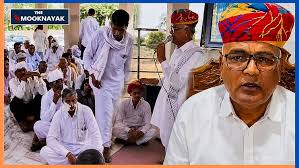
The director of a private college in Ringas made a controversial statement, and after facing intense social pressure and criticism, he publicly apologized. Sikar – During a meeting of all communities held at the Tejaji Temple in Shahpura Tikaria, Sikar district, Rajasthan, Babulal Yadav, director of Tejal Shikshan Sansthan, Ringas, made a highly controversial statement. In the video, he is heard saying that the upcoming yagna-havan is being conducted according to Vedic tradition, and therefore, members of the Scheduled Castes will not be allowed to sit in it. He also clarified that while everyone has the right to sit in the Arya Samaj tradition, this ceremony is being conducted according to Vedic tradition, therefore, no one from the Scheduled Caste community will be allowed to sit in it. He specifically stated that women will not be allowed to sit in the ceremony. He tried to justify this discrimination by citing Vedic tradition and also stated that women could participate in the Kalash Yatra if they wished, but would not be given a place in the Yagya. He then asked those present to raise their hands, and many did. As the video spread on social media, widespread outrage erupted among Dalit organizations, social activists, and ordinary citizens. People not only described it as a vile manifestation of casteism but also a direct violation of Article 17 of the Indian Constitution, which completely prohibits untouchability. It was also noteworthy that the person making the statement was directly associated with the educational world, which further deepened the controversy. After the video went viral and faced immense social pressure, Babulal Yadav publicly apologized. Such incidents have occasionally made headlines in Rajasthan, although Article 17 of the Constitution prohibits untouchability and guarantees equal rights to all citizens in religious activities. After facing immense social pressure and criticism, Babulal Yadav publicly apologized. He acknowledged his statement as incorrect, stating that he made an unintentional mistake but did not intend to hurt anyone’s sentiments. He stated that he respects the socio-religious sentiments of all communities and that he apologizes unconditionally, putting an end to the controversy. Many argue that an apology alone should not be the end of the matter, and that legal action should be taken against him under the SC/ST (Prevention of Atrocities) Act. This incident once again raises the question of how deeply rooted caste discrimination is on the ground, despite laws and constitutional provisions. At present, no official police action has been confirmed in the case, but social pressure and discussion continue. Geetha Sunil Pillai Courtesy: Hindi News
A Dalit e-rickshaw driver was brutally treated in MP! He was stuffed into a tractor, beaten, and paraded around the village wearing a garland of shoes.
The Bhim Army demanded justice: “The accused should be arrested in such a way that future generations remember that no one is greater than the Constitution.” Morena – A serious case of caste-based assault, kidnapping, and public humiliation has come to light against 40-year-old Bharatlal Jatav, a resident of Jatawar village in Morena district, Madhya Pradesh. The victim has filed a First Information Report at the Civil Lines police station, accusing the accused of assault, abuse, caste-based insults, kidnapping, and threats to kill. The victim, Bharatlal Jatav, son of Bhikharam Jatav, stated in the report that he had a dispute with Bhura Gurjar and Sheru Gurjar, residents of Janakpur, during Diwali. Due to the same rivalry, on May 2nd, at around 3:45 pm, while returning from the bus stand to his village Jatawar in an e-rickshaw, a Swaraj tractor with a trolley stopped his rickshaw near Chambaldeep Hotel. The tractor driver refused to let him proceed, and Bhura Gurjar, Sheru Gurjar, and Surendra Gurjar got off the trolley and began assaulting him. According to the victim, the accused abused him, used derogatory terms for the Chamar caste, and said, “You behave very arrogantly.” When Bharatlal asked them to stop, the three slapped and punched him, beat him severely, and threw him into the tractor. Bhura Gurjar ordered the tractor driver to take him to Janakpur. The victim’s niece, Anjali, and nephew, Akash, were also present at the scene. Upon reaching Janakpur, Karua Gurjar, son of Surendra Gurjar, Mahendra Gurjar, and Dilip Gurjar joined in. They also hurled abuses at his mother and sister, hurled caste-related insults, and beat him with shoes. After this, the accused made a garland of shoes and placed it around the victim’s neck and paraded him around the village. A large crowd had gathered there during this time. The victim reported that when a police vehicle was seen approaching, Ballo Gurjar took out a pistol and placed it on his chest, threatening to kill him if he reported the matter to the police station. He suffered a bloody facial injury near his right eyebrow and sustained injuries elsewhere on his body. Strongly condemning the incident, Bhim Army leader Sunil Asteya said, “Just because he’s a Dalit, he was kidnapped, beaten with shoes, and made to wear a garland. The country has reached the moon, but Dalits still don’t have the right to walk on village streets like human beings. In Morena’s village of Jatawar, a man from the Jatav community was beaten in a trolley, then garlanded with shoes and paraded through the village. This isn’t an incident, but a slap in the face of the Constitution. Shame on the system that trumpets “equality” in every election, yet on the ground, Dalits are still treated worse than animals. It seems some casteist mindsets are still intoxicated with their upper caste status, not the law. It’s a good thing an FIR was filed, otherwise, the insults of Dalits are often swept under the rug under the guise of “compromise” in this country. Now, not just an FIR, but the accused should be arrested so that future generations remember that no one is greater than the Constitution.” The police have registered an FIR and begun investigating the case. The accused have been identified as Bhura Gurjar, Sheru Gurjar, Surendra Gurjar, Karua Gurjar, Mahendra Gurjar, Dilip Gurjar, and Ballo Gurjar, among others. The situation remains tense. Geetha Sunil Pillai Courtesy: Hindi News
A dispute in Chhatarpur, Madhya Pradesh, erupted over a demand for wheat in the name of a temple. A deadly attack on a Dalit family left several injured, including women.

The incident took place in the Maharajganj Civil Lines police station area. The dispute escalated over a demand for one quintal of wheat. The Azad Samaj Party demanded strict action. Bhopal. A serious incident has emerged from the Maharajganj Civil Lines police station area of Chhatarpur district, Madhya Pradesh. A dispute between two communities over a demand for wheat in the name of a temple escalated to a violent clash. It is alleged that some members of the Patel community forcibly demanded one quintal of wheat from poor families belonging to the Dalit Ahirwar community. When the affected families, citing their financial situation, offered only 50 kg of wheat, the dispute escalated and escalated into a physical altercation. It is reported that the Ahirwar community members clearly stated that they were unable to provide a quintal of wheat and could only provide 50 kg. Despite this, the accused refused to comply and continued to pressure them to provide one quintal. When the victim’s family persisted, it is alleged that members of the Patel community took an aggressive stance and attacked them with sticks and bricks. Both men and women were seriously injured in the attack, creating a tense atmosphere in the area. Those accused of assault include Shyam Patel, Ramswaroop Patel, Bhagwatdayal Patel, and Raja Bhaiya Patel. The victims include Kura Ahirwar, Chiddi Ahirwar, Sohan Ahirwar, Viru Ahirwar, Girija Ahirwar, and Kavita Ahirwar. The injured have reportedly been admitted to the hospital for treatment, where their condition is being monitored. According to the victims, when they demanded only 50 kg of wheat for the temple, citing their financial situation, the accused became abusive. The victims say the accused forcibly pressured them to give a quintal of wheat and, when they refused, allegedly began abusing them. The situation gradually became tense, and the matter escalated into a dispute. In the interview, the victims stated that when they protested against this indecent behavior and abuse, the accused began assaulting them. They were attacked with sticks and bricks, injuring several family members. According to the victims, women were also targeted and injured in the attack. Since the incident, the entire family has lived in fear and is demanding strict action against the accused. The incident has also sparked political backlash. Azad Samaj Party leader Sunil Astey tweeted on the matter, saying that a temple is a center of faith, but forcibly demanding grain from a poor Dalit farmer family in its name, and then attacking the entire family, especially the women, when they refused, is extremely shameful and condemnable. He said that this is not just a simple assault, but reflects a mentality of intimidation and oppression of the weaker sections. Speaking to The Muknayak, ASP leader Sunil Astey said that such illegal extortion and bullying in the name of religion is unacceptable under any circumstances. He demanded that the administration provide immediate security to the victim’s family, ensure proper treatment for the injured, and take strict legal action against all the accused. He also stated that hooliganism in the name of faith will not be tolerated in villages and that the law must be upheld. Currently, the police are investigating the case and are said to be taking action after considering all aspects of the incident. Ankit Pachauri Courtesy: Hindi News
Plates Apart: Junagadh Temple Feast Exposes Gujarat’s Caste Fault Lines

In Gujarat, a 3% conviction rate means that most accused of caste-based crimes walk free; the Bhutdi case is headed into the same odds. Junagadh: Five men walked into Bhutdi village, Junagadh district, on the evening of April 27, 2026. They had an invitation to deliver to the consecration feast of a newly built Ram temple, two days later. However, the Patostav invitation came with conditions. Residents belonging to the Dalit community were told to arrive only after members of other castes had eaten. They were to bring their own plates and bowls and food and water arranged for them would be kept separately. Lastly, they were to stay out of the temple itself. Ajay Chatur Boricha, 25, filed a formal complaint at the Visavadar police station the next morning. By the time the temple was consecrated on April 29, the community feast had been cancelled, five organisers were facing First Information Reports (FIRs) under the Scheduled Caste (SC)/Scheduled Tribe (ST) Prevention of Atrocities Act, and the case had gained the attention of Deputy Superintendent of Police (DySP) Ravirajsinh Parmar of the Junagadh SC/ST Cell, who confirmed that statements had been recorded and notices issued to all accused under Bharatiya Nagarik Suraksha Sanhita (BNSS) 35(3). As we file this news report, investigators are also looking for digital evidence. The fact that a complaint was filed before any violence occurred and the Dalit community chose legal redress over participation on humiliating terms, marks a small but significant assertion of dignity. What happens to that complaint in the Gujarat’s courts is another matter entirely. The temple in Bhutdi where people belonging to the Dalit community were asked to bring their own plates to eat, Photo: By special arrangement, Vibes of India. A grammar of exclusion The conditions imposed on people belonging to the Dalit community in Bhutdi — separate vessels, a later sitting, barred entry to the sanctum — are not inventions of rural backwardness. Dalit manual scavengers in Ahmedabad district, whose testimonies have been documented by civil society organisations, describe the same logic at work in a city setting. Not only are members of SC/ST communities made to clean their own utensils and use separate tea tumblers in canteens, they also struggle to access basic amenities such as water, barred from using “upper-caste” water taps and forced to walk long distances for drinking water. A Dalit man engaged in manual scavenging said that when he and his colleagues demanded their rights from the municipality, officials threatened to fire them. In most so-called “posh” and “high caste” houses in Gujarat, there are two separate sets of utensils, especially tea cups and drinking glasses, which even the non-Dalit domestic workers refuse to touch. In March last year, a Dalit man from the Vadol village in Sabarkantha district was beaten, stripped, and paraded naked through the streets for an alleged extramarital affair with an upper-caste woman. Two Dalit men in Mandal village were assaulted by cow vigilantes for refusing to dispose off a dead animal, a task that caste hierarchy has historically forced upon SC communities. During Navratri, a young Dalit girl was dragged out by her hair as she was participating in a public garba event. Shailesh Solanki, a 38-year-old Dalit labourer, was assaulted and abused with casteist slurs at a crossroads in Sabarkantha, simply for wishing to visit the Kal Bhairav temple in Himatnagar. As recently as February 2026, a Dalit groom’s wedding procession in Patan district was stopped at sword-point by upper-caste men who objected to his riding a horse, a ritual they considered their exclusive right. The video circulated widely. In Banaskantha, a Dalit lawyer named Mukesh Parecha who wanted to arrive at his own wedding on horseback requested police protection. A team of 145 policemen arrived in Gadalvada village to escort him. Although the wedding passed without incident, the spectacle of state force required for a man to exercise a social custom that others take for granted was, in itself, evidence of the distance between constitutional guarantee and ground reality. The conviction rate The Bhutdi FIR, once it travels the familiar path of Gujarat’s criminal justice machinery, will encounter a set of odds that are well-documented. Between 2018 and 2021, the conviction rate in cases reporting atrocities against SCs in Gujarat was 3.06%. Of the 5,369 cases registered during that period, only 32 held the accused guilty. In 1,012 cases, including murder and rape charges registered under the SC/ST Act, the accused were quickly acquitted. A further 1,044 cases were settled out of court. Martin Macwan, veteran activist and founder of the Navsarjan Trust, noted that in the rare cases where conviction has been achieved, it is because non-governmental organisations (NGOs) looking after Dalit rights sustained the case despite the social pressure and threats the complainant and witnesses usually face. Ahmedabad alone recorded 189 cases of atrocities against SC persons in 2022, the highest of any district in the state, out of a state total of 1,425 registered cases. In March 2019, Gujarat’s then-minister for social justice told the state assembly that crimes against Dalit people had risen 32% between 2013 and 2017. The national conviction rate under the Atrocities Act stands at 3-4%. Advocates working in the space have offered a structural explanation: a prejudiced or compromised police officer at the investigation stage, or a biased judge at trial, can ensure that justice is never served while simultaneously encouraging the accused to file counter-complaints against the victim. The acquittal, in this reading, is not a failure of the law but of its gatekeepers. The prosperity paradox Gujarat’s governance record is frequently cited as evidence that development and social order can coexist. The state’s per capita income is among the highest in the country. Its industrial corridors, port infrastructure and export numbers are points of pride in every budget speech. The ‘Gujarat Model’ has been exported as a national template. Against this backdrop, the persistence of caste atrocity is not incidental. Instead it is, as researchers and activists
SC nixes Odisha’s ‘odious’ bail conditions to Adivasi, Dalit accused to clean police stations
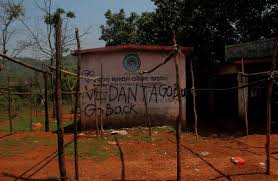
Such “abhorrent” bail conditions, issued by both HC and trial courts, reflect the “regressive mindset”, caste-based biases of Odisha judiciary, says SC; sends warning against such bail conditions to all HCs When the Odisha judiciary set “odious” bail conditions, like cleaning police stations for two months, for members of Adivasi and Dalit communities, it suggested that judges had a “regressive mindset” and caste-based biases, the Supreme Court said on Monday (May 4, 2026). “Assuming that such conditions were imposed inadvertently or without any premeditated bias, the nature of the condition is so abhorrent, degrading, and unknown to law that it carries the potential to cast a serious aspersion, suggesting that the Odisha Judiciary is afflicted by a caste-based bias,” a Bench of Chief Justice of India Surya Kant and Justice Joymalya Bagchi observed in a seven-page order. Odisha mining project protest: Congress seeks independent probe; alleges PESA, FRA violations Indigenous protesters The subjects of these bail conditions are a group of indigenous people facing criminal charges after their three-year-old protest against the acquisition of their land for a Vedanta Group bauxite mining project in Rayagada and Kalahandi districts allegedly turned violent. Around 40 protesters were arrested and cases registered against them. Some of them were subsequently allowed bail by various courts in the State. However, a range of bail conditions, some of which the top court found extremely humiliating, were thrust upon the accused in return for exercising their fundamental right to personal liberty. New railway line proposed to connect ‘controversial’ bauxite hills in Odisha ‘Obnoxious, unpalatable’ Chief Justice Kant, who had taken suo motu cognisance of the orders imposing “obnoxious” and “unprecedented” bail conditions, said they had brought a bad name to the judicial institution itself. The Bench noted that, between May 2025 and January 2026, six such bail orders were issued by a local trial court, all imposing similar conditions. The court said it was both unfortunate and disheartening to see that the State High Court and the trial courts were on the same plane, both passing “unpalatable” bail conditions. ‘Underlying caste bias’ “Such conditions reflect the underlying, albeit unarticulated, bias of the Odisha State judiciary premised on the perception that the accused individuals belonged to the marginalised Adivasi community,” the Supreme Court observed. The court said the promise of a casteless society was one of the greatest gifts the people of India gave themselves through the Constitution. The judiciary, in its role as the sentinel on the qui vive, had to stand guard on the Constitutional guarantees and protect the most vulnerable in the society, the Supreme Court observed. The court noted that every Constitutional doctrine or philosophy in a diverse country like India stood up for substantive equality, the individual dignity of all people, and an end to caste barriers. Mining push meets tribal resistance Directive sent to all HCs “We declare such conditions and any other similarly worded condition imposed by the State judiciary as null and void. Let the petitioners approach the High Court to forthwith delete such conditions and not substitute it with any other analogous condition,” the court ordered, clarifying that the accused persons would continue on bail. The court directed that all State judiciaries should refrain from imposing conditions that carry caste implications, which could lead to social discord. “Thus, let this order be made available to all judicial officers across the country, not to impose such conditions,” the Bench said. It also directed the Supreme Court registry to circulate the order to all High Courts across the country. “Each High Court shall ensure that a copy of this order is sent to each judicial officer in its jurisdiction, accompanied by a communication that such conditions shall not be imposed while granting bail,” it said. The court directed the Registrar General of the Orissa High Court to file a compliance report in four weeks. Krishnadas Rajagopal Courtesy : The Hindu Note: This news is originally published on https:/thehindu.com/bha and is used purely for non-profit/non-commercial purposes, especially human rights