
Shivani, killed by her father at a police station for marrying a Dalit man

Controversy and outrage mount across the country over the latest femicide committed within the family. Fuelling the controversy is the fact that it occurred under the eyes of police officers who were supposed to protect the victim. Activists blame the killing on a mix of patriarchy, caste, and failure to enforce the law in Uttar Pradesh. Delhi – Patriarchy, the (sick) logic of caste, and a systematic failure to enforce the law and human rights in the heart of India are the main ingredients in the tragic and brutal death of Shivani Chauhan, a 19-year-old woman, killed by her own father inside a police station (pictured, police source). This is the latest episode of violence against a young woman in Uttar Pradesh, a state ruled by Prime Minister Narendra Modi’s ruling Bharatiya Janata Party (BJP), where minority and marginalised communities remain vulnerable even when they are supposed to be under state protection. The tragic murder of Shivani Chauhan – stabbed to death by her father, Satya Kumar Chauhan, while her mother held her down, at the Badausa police station in Banda District – highlights the persistent threat of honour killings. Such a practice is still widespread in the country, but this time, what shocked public opinion is the location where it occurred: inside a government facility, where the victim should have been under government protection, not in danger and defenceless. The young woman belonged to an Other Backward Class (OBC) community and had freely chosen to marry her neighbour, 20-year-old Lalit Verma, even without her parents’ approval. Since Verma was a Dalit, the marriage crossed rigid socio-religious caste boundaries, sparking strong opposition from the young woman’s family. Following the couple’s escape to Madhya Pradesh, Shivani’s family filed a kidnapping complaint against Verma. Uttar Pradesh police then tracked down the couple and took them to the Badausa police station for legal statements and a mandatory medical examination. During a formal counselling session at the police station, Shivani repeatedly maintained her initial position, declaring that she had married voluntarily and would remain with her husband. As tensions reached a fever pitch, Shivani’s mother, Ranno, reportedly pinned her arms from behind while her father, Satya Kumar Chauhan, 55, stabbed her with a knife he had hidden under his clothes. As a result of the attack, Shivani suffered multiple severe stab wounds to her abdomen and upper limbs and died hours later from her injuries as doctors at Banda Medical College desperately tried to save her life. The incident highlights the limitations of the state’s “counselling” system for cross-caste couples. Instead of prioritising physical safety, police routinely engage families to mediate, exposing vulnerable people to hostile environments and family contexts. The state’s failure to ensure a safe environment on the premises of a police station triggered widespread condemnation from the Indian public. Although her father has been arrested and faces charges of murder under Section 103 of the Indian Justice Code (BNS),[*] institutional responsibility remains unaddressed and a source of debate. Shivani Chauhan’s death, finally, highlights the reality that adult franchise and legal registration do not guarantee the safety of inter-caste couples. When the state fails to ensure security even in its own police stations, activist groups argue, the promise of constitutional freedom remains out of reach for vulnerable citizens. By Nirmala Carvalho Courtesy : Asia News Note: This news is originally published on https:/asianews.com/bha and is used purely for non-profit/non-commercial purposes, especially human rights
Anti-Conversion Laws in India: Not Only Anti-Minority but Also Anti-Dalit in Annihilate Caste

Anti-conversion laws, formally known as Freedom of Religion Acts, have been enacted in approximately twelve Indian states. These laws seek to regulate religious conversions by prohibiting those induced through force, fraud, or allurement. They typically mandate prior intimation to district authorities and prescribe penalties, often with enhanced punishments when the convert belongs to vulnerable groups such as women, minors, Dalits (Scheduled Castes), or Adivasis (Scheduled Tribes). While proponents present these statutes as protective measures safeguarding cultural identity and vulnerable populations from coercive missionary activities, critics contend that they curtail individual freedom, enable selective enforcement, and disproportionately harm Dalits seeking dignity and escape from caste oppression. The stated rationale behind these laws is rooted in concerns over demographic shifts and exploitation of the socio-economically disadvantaged. Advocates, often aligned with Hindu nationalist perspectives, argue that conversions—particularly to Christianity or Islam—frequently involve material inducements, social services, or “love jihad,” targeting lower castes and tribals who are portrayed as especially susceptible. By imposing stricter penalties for conversions involving Dalits, the laws ostensibly shield them from manipulation. However, this framing reveals a paternalistic undertone: it assumes Dalits lack the agency to make informed religious choices, thereby infantilizing a community that has long fought for equality. The impact on Dalits is particularly profound and multifaceted. Historically, conversion has served as a powerful tool for social mobility and resistance against caste discrimination. Dr. B.R. Ambedkar’s landmark 1956 mass conversion to Buddhism exemplified this quest for dignity free from the hierarchies of Hinduism. Similar patterns exist among those embracing Christianity or Islam in pursuit of equality. Anti-conversion laws erect administrative barriers, invite police scrutiny, and foster fear of prosecution, effectively deterring voluntary exits from the Hindu fold. This restricts a vital avenue for asserting personal autonomy in the face of persistent untouchability and social exclusion. A more glaring inequity arises from the linkage between religious identity and affirmative action benefits. Under the 1950 Presidential Order (and subsequent amendments), Scheduled Caste reservations, protections under the SC/ST (Prevention of Atrocities) Act, and related safeguards are largely confined to Hindu, Sikh, and Buddhist Dalits. Conversion to Christianity or Islam typically results in the loss of these benefits, despite evidence that caste-based discrimination often continues irrespective of faith. Dalit Christians and Muslims have long argued that this framework is discriminatory, as it ties constitutional protections to religious affiliation rather than lived social reality. Supreme Court rulings have largely upheld this distinction, treating caste as intrinsic to Hinduism for reservation purposes while adopting a more ethno-cultural approach for Scheduled Tribes. Consequently, anti-conversion laws compound this disadvantage by raising the cost of leaving Hinduism, sometimes compelling individuals to re-convert or conceal their faith to retain reservations. Enforcement patterns further underscore the laws’ adverse effects on Dalit communities. Reports frequently document arrests of pastors, missionaries, and community workers engaged in charitable activities—schools, health services, or prayer meetings—in Dalit-majority areas, often triggered by third-party complaints from Hindutva groups rather than the alleged victims themselves. Vague provisions such as “allurement” (which may encompass education or humanitarian aid) lend themselves to misuse, chilling social service initiatives and heightening vulnerability. While the laws claim to protect Dalits, they simultaneously limit access to services that could empower them and penalize those facilitating spiritual choices. This is not to suggest the laws are exclusively anti-Dalit. They are primarily deployed against conversions to minority faiths, notably Christianity and Islam, and have featured prominently in cases involving interfaith marriages or alleged demographic engineering. Claims of widespread forced conversions remain contested, with empirical data often showing limited scale relative to natural population growth. Mass Buddhist conversions by Dalits, notably, frequently preserve eligibility for benefits, highlighting inconsistencies in application. Moreover, general criminal laws under the Indian Penal Code already address coercion, cheating, and fraud, raising questions about the necessity of religion-specific statutes that risk majoritarian overreach. From a broader perspective, these laws intersect uneasily with Article 25 of the Indian Constitution, which guarantees freedom of conscience and the right to profess, practice, and propagate religion, subject to reasonable restrictions. The tension between protecting vulnerable groups and upholding individual liberty remains unresolved. Caste, as a deeply entrenched social reality, does not vanish upon conversion, yet Indian law treats it inconsistently across religions. This creates a contradictory framework: one that claims to safeguard Dalits while constraining their religious choices and material opportunities. In conclusion, anti-conversion laws are not merely instruments targeting religious minorities; they also function as barriers to Dalit emancipation. By restricting exit options from caste-laden Hinduism, paternalistically curtailing agency, and linking affirmative action to religious fidelity, they undermine the very dignity and equality Dalits have historically sought through conversion. Genuine protection against coercion can and should be achieved through neutral criminal laws applicable equally to all, without selective burdens on propagation rights. Reforming these statutes—through clearer definitions, uniform application, and decoupling reservations from religion—would better align with constitutional values of liberty, equality, and fraternity. Ultimately, a society committed to truth and human flourishing must prioritize individual agency over majoritarian control, empowering every citizen, including Dalits, to choose their beliefs free from both coercion and state-imposed obstacles. By SR Darapuri, I.P.S.(Retd), National President, All India Peoples Front Courtesy : Counter Currents Note: This news is originally published on https:/countercurrents.org/bha and is used purely for non-profit/non-commercial purposes, especially human rights
Garima Grih rolled out in Dhanbad for transgenders

Dhanbad: In a step towards ensuring dignity, safety and empowerment of the transgender community, a Garima Grih (shelter home) was inaugurated in Dhanbad on Tuesday. The shelter home is being operated by non-profit organisation Manthan Sanstha under the direction of DC Aditya Ranjan. The inauguration was carried out by district social welfare officer Sneh Kashyap, who said that every individual in society has the right to live with dignity and respect. She stated that the initiative would provide members of the transgender community with safe shelter, social security, counselling, skill development opportunities and support to connect with mainstream society. Addressing the gathering, speakers highlighted that the transgender community has long faced social discrimination and exclusion. In such circumstances, the Garima Grih will not only offer secure accommodation but also facilitate access to education, healthcare, legal aid, mental health counselling and vocational training. The initiative is expected to help community members become self-reliant and lead a dignified life while actively participating in society. During the programme, guests inspected the shelter home and reviewed the facilities being provided there. They appreciated the initiative and stressed that joint efforts by the govt and social organisations are essential for the protection of transgender rights and their holistic development. Representatives of Manthan Sanstha informed that several welfare and empowerment programmes would be conducted through the Garima Grih to create a safe and supportive environment for transgender persons. They added that the objective of the shelter home is to strengthen confidence among community members and provide opportunities for sustainable livelihood and social inclusion. Members of the transgender community who attended the programme welcomed the initiative and described it as a positive step towards bringing meaningful change to their lives. They expressed hope that the shelter home would help them gain social acceptance and access better opportunities in the future. Sharad Chandra Courtesy : TOI Note: This news is originally published on https:/timesofindia.com/bha and is used purely for non-profit/non-commercial purposes, especially human rights
In Lalitpur, Uttar Pradesh, a Dalit youth was beaten to death after refusing to massage their feet at a liquor party. An accident was staged.

Unruly men in Lalitpur were rampaging, forcing a Dalit youth to massage their feet while drunk. When he refused, they beat him to death with belts and iron rods. Uttar Pradesh: A shocking and tragic incident has come to light in Lalitpur district. Three men brutally beat a 33-year-old Dalit youth to death. The sole reason for this horrific incident was that the victim had flatly refused to massage their feet while drinking. Fearing arrest after committing the murder, the accused hatched a heinous plot. They dumped the deceased’s body on the road to make it appear like a road accident. However, after a prompt and thorough police investigation, the horrific truth of the murder was revealed. According to Lalitpur’s Additional Superintendent of Police (ASP) Kalu Singh, Kotwali police received initial information about the incident on Sunday morning. Police were informed that a man was lying unconscious on the road behind Varni Jain College, located near Gurunanak Dharamshala. When police arrived at the scene and identified the man, they identified him as 33-year-old Rajkumar alias Chhannu, who belonged to the Scheduled Caste community. Police immediately rushed him to a local hospital, but doctors there declared him dead after examination. Upon further investigation, police discovered that a drinking party was taking place in the Civil Lines area on Saturday night. The party was held at the home of 38-year-old Samyak Rajnayak alias Rahi Jain, where Rajkumar was also present. 37-year-old Gajendra Narwariya alias Gajendra Singh Rajput and 25-year-old Gaurav Raikwar were also present. Police investigations have revealed that the three accused, who were intoxicated, pressured Rajkumar to massage their feet. When Rajkumar flatly refused, they became enraged. The three then attacked Rajkumar with a belt and an iron rod, resulting in his tragic death on the spot. The ASP stated that immediately after the murder, a failed attempt was made to make it look like an accident by throwing the body on the road. Acting swiftly, the police have arrested all three accused. Based on a complaint filed by the victim’s mother, they have registered a case of murder as well as under relevant sections of the Scheduled Castes and Scheduled Tribes (Prevention of Atrocities) Act. During rigorous interrogation, the arrested accused confessed to their horrific crime. The police have taken possession of the deceased’s body and sent it for post-mortem, and further legal proceedings in the case are being carried out with vigor. Rajan Chaudhary Courtesy: Hindi News
Land grabs in Mahoba: Victim appeals to DM, alleges caste-related abuse

A case of alleged illegal land grab has come to light in Mahoba. Maheshchandra Ahirwar, a resident of Fatehpur Bajaria, has filed a petition with District Magistrate Gazal Bhardwaj alleging that some individuals have forcibly occupied his land in Khata No. 151. The victim also alleges that he was threatened and abused with caste-related abuses when he protested. According to Maheshchandra Ahirwar, his land is located in Khata No. 151 in Fatehpur Bajaria. He stated that he had gone to Delhi for his wife and children’s treatment. During his absence, the land was taken advantage of. The victim alleges that when he returned and protested the grab, the individuals involved and their supporters hurled caste-related abuses and threatened him. He says that as a result, he is unable to cultivate his own land. Maheshchandra Ahirwar has demanded that the Sub-Divisional Magistrate (SDM) investigate the matter, take legal action, and free the land from illegal occupation. The victim also stated that despite the complaint, no concrete action has been taken. He has appealed to higher authorities to intervene and provide justice. Mohammad Shariq Nawaz | Kabrai (Mahoba), Mahoba Courtesy: Hindi News
Will Sharad Pawar’s party, the NCP (SP), merge with the Congress? Supriya Sule and Rohit Pawar’s responses have fueled speculation.

New turmoil has erupted in Maharashtra politics. Speculation is now swirling in the state about whether Sharad Pawar’s party, the NCP (SP), will merge with the Congress. Supriya Sule and Rohit Pawar have also issued statements addressing these speculations. Speculation of the NCP (SP) merging with the Congress. Image Source: PTI There is a growing debate in Maharashtra politics these days about whether the Sharad Pawar-led Nationalist Congress Party (Sharadchandra Pawar) could merge with the Congress. This issue has sparked political turmoil within both the Maha Vikas Aghadi and Mahayuti camps. This speculation was first fueled by Shiv Sena (UBT) leader Sanjay Raut. He said that regional parties that left the Congress to challenge the BJP should rejoin the Congress, and that Sharad Pawar should lead the process. Sanjay Raut said, “A strong Congress, a united Congress, should stand as a strong alternative within the country. Pawar Saheb should come forward (take the initiative) in this regard. Honorable Sharad Pawar ji, if he takes the lead and takes the initiative in this ideology or role that is being formed, this idea of coming together, then this idea will go a long way.” Question: Does this mean that the NCP will also join the Congress? Sanjay Raut said, “I am saying that the parties that have left the Congress ideology, for some reason, are already working on the Congress ideology. They are in the government, they are together in many streams, so if this idea comes together, then a big alternative (challenge) can be posed before the Modi government.” What did the Congress say? The Congress side did not completely dismiss this discussion either. Maharashtra Congress leader Nana Patole claimed that the idea of the NCP merging with the Congress is not new and that this proposal had been put forward before. Meanwhile, some Congress leaders have stressed the need for opposition unity. Nana Patole said that this understanding has now also developed among regional parties in various states. Whether it’s Mamata Banerjee, Sharad Pawar, or other parties representing secular politics, everyone feels they must join forces with the Congress to save the country. This process has already begun. What did the NCP (Sharad Pawar) say? On the other hand, the NCP (Sharad Pawar) has currently ruled out any formal merger proposal. Party leaders have stated that no such discussions have officially taken place, although statements by Rohit Pawar and Supriya Sule indicate that all options are open to consideration regarding opposition unity. Regarding the suggestion of the NCP merging with the Congress, Supriya Sule said, “Sanjay Raut ji is like an elder brother to me; he has made a good suggestion. I don’t know if it will happen or not.” Meanwhile, Rohit Pawar said, “It will happen when it happens. It may or may not happen. But first, it’s essential that all opposition parties come together and stand firmly against the Modi government.” What did CM Fadnavis say? Chief Minister Devendra Fadnavis sarcastically stated that regional parties will not merge with the Congress like a “sinking ship.” He claimed that even if opposition parties unite, it will not impact the BJP’s expansion; instead, it will gain political space. Speculation intensifies in Maharashtra politics Overall, no official decision or announcement has been made regarding the merger of the Congress and NCP (Sharad Pawar). However, Sanjay Raut’s suggestion, positive signals from Congress leaders, and reactions from Rohit Pawar and Supriya Sule have further fueled speculation on this issue in Maharashtra politics. Reported By: Sachin Chaudhary, Edited By: Subhash Kumar Courtesy: Hindi News
Haryana: 32-year-old Dalit youth brutally murdered, head severed from body; police investigating

A heartbreaking murder has come to light in Rohtak. A young man has been beheaded and his body severed. Murder of Dalit Youth in Rohtak Rohtak: A case of the brutal murder of a Dalit youth has come to light in Rohtak, Haryana. The youth has been identified as Neeraj of Ismaila village. He was 32 years old. The incident has created a stir in the area. A Dalit youth was brutally murdered in Ismaila village, under the jurisdiction of Sampla police station in Rohtak. The youth’s head was severed from his body. No information has yet been released about the murderer. All that has been known is that someone slit his neck with a sharp-edged weapon. The youth’s body was found in the village water tank this morning. The deceased’s name was Neeraj, and he was only 32 years old. Police and FSL teams arrived at the scene to investigate. The deceased’s body was taken into custody and sent to Rohtak PGI for post-mortem. The police have registered a murder case and initiated an investigation. This incident has created a sensation in the area and created an atmosphere of fear among the people. The visuals of the incident are so terrifying that even a normal person would be shaken by them. Even the police team arriving at the scene was stunned. This incident was carried out with extreme brutality. The case is under investigation, and people say that the perpetrator of such a crime should be severely punished. At present, no information has been obtained about the accused, but the police are conducting a continuous search operation. So far, no update has been received regarding the motive behind the murder or any enmity with the deceased. Discussions are ongoing in the surrounding area, and people are hoping for justice from the police. People believe that the police will soon uncover the truth behind this brutal murder and reveal the truth to the public. It remains to be seen how long it takes the police to solve this case. Currently, this incident has sparked anger among the Dalit community. Written By: Rituraj Tripathi Report by Sunil Kumar Courtesy: Hindi News
‘TN elections showed the way, now the government must bring about ‘true change”: Madras High Court grants bail to SI in Dalit engineer ‘honor killing’ case, makes 5 key observations on casteism

The court issued a stern warning to the state government, stating that laws like the SC/ST Act have failed to deliver the desired results. The court noted that incidents registered under this law are increasing day by day. The court directed the government to change the curriculum at the school level to change the mindset of the younger generation. Madurai – The Madurai Bench of the Madras High Court, while hearing the highly publicized case of the ‘honor killing’ of a Dalit IT engineer, strongly criticized the casteism prevalent in society by granting bail to a police sub-inspector. The High Court said that the recent Tamil Nadu assembly elections have proven that people can vote beyond caste and community barriers, and now it is time for the state to take responsibility for bringing about ‘true change’. A bench headed by Justice B. Pugalendhi made this observation while hearing the bail plea of Saravanan, a police sub-inspector. Saravanan is accused of harboring his son, who had brutally murdered a Dalit youth because he was in love with his sister, Saravanan’s daughter. What is the entire case? Kavin (the deceased) was an IT engineer and belonged to the Dalit community. The accused, Saravanan, is a sub-inspector in the Tamil Nadu Police, and his daughter attended the same school as Kavin. They were in a love relationship, which the girl’s family did not approve of. On July 27, 2025, Kavin came to Tirunelveli for his grandfather’s treatment. He informed Saravanan’s son, Surijit (accused No. 1), of his arrival. Surijit put Kavin on his bike and took him to Lakshmipuram. At around 2:17 p.m., a quarrel broke out between the two. It is alleged that Surijith poured chili powder into Kavin’s eyes and then attacked him with a sharp-edged weapon (Aruval). Kavin tried to escape but was chased and killed near Ambala Hospital. A total of 19 wounds were found on the deceased’s body. Just one minute after the murder, Surijith called his father, Saravanan, to inform him of the incident. Police say Saravanan informed his wife (Accused No. 3) about the incident and contacted relatives (Accused No. 4) to help his son hide. Saravanan himself visited the scene and falsely informed the head constable present there that the deceased belonged to a different community. It is alleged that he purchased a bike with a fake license plate for his son and conspired to destroy evidence. Saravanan and his son were arrested on August 11, 2025, and have been in judicial custody since then. Why the Court Granted Bail Saravanan claims he is innocent and was the one who provided information about his son to the police. He also stated that he surrendered his son to the police, which was reported in the newspapers. He argues that he played no active role in the murder and did not destroy any evidence. The Court decided to grant Saravanan bail for the following reasons: Saravanan had been in jail for the past 10 months (since August 11, 2025). The investigation had been completed and a charge sheet had been filed. The case is pending as SC.No. 120/2025. The Court acknowledged that “there were no calls between Saravanan and the deceased or the victim’s family before the incident.” Therefore, there was insufficient material to prove his active role in the murder. The Court stated, “If this were a simple murder case, he would have been granted bail by now.” The court also stated that it was not appropriate to keep the accused in “pre-sentence detention” for a long period. Saravanan filed a petition (Crl OP(MD) No. 995/2026) in the High Court requesting the quashing of the proceedings against him, which the court granted an interim stay on April 29, 2026. However, the court granted bail with strict conditions: Saravanan will be released on a bond of ₹1 lakh and two sureties (one lakh each). He will have to reside in Coimbatore and report to the B2 R.S. Puram police station twice a day (at 10:30 a.m. and 5:00 p.m.). He will not go near the crime scene (Tirunelveli) or attempt to influence any witnesses. If he violates any of the conditions, his bail will be revoked. The recent Tamil Nadu Assembly election results have proven that people can vote without regard to caste or community. A government has been formed by ignoring caste factors. – Madras High Court 5 key observations from the Madras High Court on casteism This decision was not limited to granting bail. Justice Pugalendhi used it as a platform to comment on the “disease of caste” prevalent in society. Some of his key observations are as follows: “Even we judges are not immune to casteism.” The court openly acknowledged that casteism is not limited to ordinary people but also affects the judiciary. The court said: “Every person, no matter how powerful or privileged, experiences casteism in some form or another. Even we judges are not immune. Our orders are often influenced by caste, even when cases are being decided on merit.” “There is no honor in honor killing; it is a shameful act.” The court described honor killing as the “extreme form of casteism,” stating that it is wrong to call it “honor.” “Honor killing is the extreme manifestation of casteism. Casteism is a curse for the nation. Nature recognizes no caste. The sun gives light to everyone, rain falls on everyone, and air is for everyone. Only when society transcends the artificial barriers of caste will it realize the truth: there is no honor in honor killing; rather, it is a shameful act.” Praising the Tamil Nadu Elections – “Voting Without Caste Is Possible” In its judgment, the Court commended the Tamil Nadu voters and the recent Assembly election results, making a landmark observation: “The recent Assembly election results in the state of Tamil Nadu have proven that people can indeed be confident in voting without considering the caste or community of the candidates. A government has been formed by largely
Uttarakhand: Dalit taxi driver humiliated by garlanding him with shoes for picking up passengers at a lower fare, video also filmed!

The accused allegedly abused, used casteist slurs, assaulted him, and demanded 50,000 rupees for charging a lower fare. When Prem Ram protested, they put a garland of shoes around his neck, snatched his mobile phone, and uploaded a video of the incident to social media. Champawat – A shameful incident involving a Dalit taxi driver has occurred in the Lohaghat area of Champawat district, Uttarakhand, following a dispute over carrying passengers at a lower fare. The victim driver was allegedly assaulted and publicly humiliated by other taxi drivers by garlanding him with shoes. After the video of the incident went viral on social media, police took immediate action and filed a case against four accused under the SC/ST Act. On June 10, Prem Ram was carrying passengers from Lohaghat to Delhi at the old fare rate when other taxi drivers stopped his vehicle near Devradi Band. The accused allegedly abused Prem Ram, used casteist slurs, assaulted him, and demanded 50,000 rupees for charging a lower fare. When he resisted, they put a garland of shoes around his neck, snatched his mobile phone, and uploaded a video of the incident on social media. The victim has filed a complaint at the Lohaghat police station. The family stated that they are deeply hurt by the incident. Prem Ram is currently in Delhi. Lohaghat police have registered a case against four accused: Sohan Singh, Harish Bohra, Virendra Singh, and Mohan Chandra. The case has been registered under various sections of the SC/ST Act, the IT Act, and the BNS, including sections 352, 351(3), 133, 126, 308(2), 309(3), 356, and 152(2). Champawat SP Rekha Yadav has personally monitored the case. CO Niharika is investigating. The search for the accused is ongoing. On June 13, the victim’s side submitted a memorandum to District Magistrate Manish Kumar. The District Magistrate assured strict action and directed the Transport Department to investigate fares on the Delhi-Dehradun route. Meanwhile, a large crowd gathered at the Lohaghat police station and demanded strict punishment for the accused. The SC community called it “inhumane.” Geetha Sunil Pillai Courtesy: Hindi News
Punjab Congress eyes Dalit-OBC consolidation ahead of 2027 polls, Channi emerges as frontrunner for party chiefPublished Date: 14-06-2026 | 7:01 pmAayush Goel
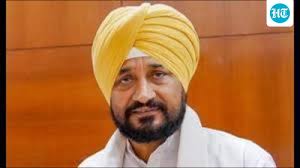
Chandigarh: With the 2027 Punjab Assembly elections now firmly on the horizon, the Congress is scrambling to resolve a leadership crisis that has simmered for months — and is increasingly pointing toward former chief minister Charanjit Singh Channi as its best bet to lead the state unit and anchor the party’s Dalit and OBC outreach. Punjab’s demographic arithmetic makes the calculus compelling. Dalits constitute approximately 32 per cent of the state’s population — the highest SC share of any state in India — while OBCs account for an estimated 15–20 per cent. Together, the two groups represent nearly half the state’s electorate, spread across communities including Mazhabi Sikhs, Ravidassias, Balmikis, Sainis, Kamboj, Ramgarhia and Gujjars. Yet despite their numbers, neither group has historically exercised political influence proportionate to their share of the vote. The Congress high command convened a meeting of top party leaders last week to finalise the shape of an organisational overhaul in Punjab. The party has also appointed senior leaders Ajay Maken, Meenakshi Natarajan and Bhajan Lal Jatav as observers for Punjab, a move seen within the organisation as part of the ongoing exercise to assess the state unit and recommend structural changes ahead of the 2027 elections. According to party sources, internal popularity surveys conducted as part of the Congress leadership’s review of the Punjab unit have shown Channi in a stronger position than incumbent PPCC chief Amrinder Singh Raja Warring — a finding that has sharpened the pressure on the high command to act. When contacted, Channi refused to confirm or deny his candidature for the post. Sources in Delhi Congress, however, said he remained the party’s most viable option given his mass appeal, Dalit identity, and ability to cut across regions. His strongest appeal lies among sections of the Dalit electorate, particularly in Doaba, with some resonance in Malwa. As Punjab’s first Dalit chief minister, his identity adds a powerful political dimension that no other contender in the race can replicate. A section of leaders has been flagging that ahead of the 2027 polls, the optics of two Jat leaders — Warring and CLP leader Partap Singh Bajwa — occupying both top positions would need to be reworked by adjusting Dalit, OBC and Hindu faces. Channi himself raised the point publicly, questioning why all key positions — PPCC chief, Leader of Opposition, and women’s wing president — were held by upper-caste leaders, despite Dalits alone constituting over 32 per cent of the population and OBCs adding a further 15–20 per cent. Others in contention for the PPCC post include Partap Singh Bajwa, former minister Pargat Singh, Fatehgarh Sahib MP Dr Amar Singh, and former MP Vijay Inder Singla. Warring’s position has weakened considerably. The pressure has intensified after the recent municipal elections, where the Congress failed to convert anti-incumbency sentiment into a statewide challenge. Out of 1,977 wards, AAP won 954, while Congress finished a distant second with 393. Independents secured 251 wards, followed by SAD with 192, BJP with 172 and BSP with seven. The results reinforced AAP’s organisational advantage at the grassroots level despite Congress leaders’ claims of growing public discontent with the Mann government. Concerns have mounted over the party’s organisational performance, particularly after setbacks in Gidderbaha — considered his traditional stronghold — where AAP swept 17 of 19 wards in municipal council elections. At the May 29 meeting in New Delhi — attended by Rahul Gandhi, Congress president Mallikarjun Kharge, Punjab in-charge Bhupesh Baghel, and senior state leaders — most state party leaders pressed for Warring’s replacement, though Baghel publicly denied any immediate proposal to do so. The party’s Punjab unit has long been dominated by Jat Sikhs, who account for roughly 25–30 per cent of the population but have held the chief ministerial post for all but a brief interlude since 1966. While Congress has made conscious efforts since 2021 to broaden its social coalition through Dalit, OBC and Hindu outreach, structural realities — land ownership, rural seats, and community mobilisation — continue to give Jat Sikhs the upper hand internally. The dilemma for the high command is acute. Replacing Warring with Channi could consolidate the Dalit-OBC bloc — collectively the state’s single largest voting constituency — that Congress desperately needs to dent AAP’s 2022 mandate of 92 seats. But any move risks deepening Jat Sikh alienation within a party already down to 15 of 117 assembly seats. The Congress top brass has so far not signalled enthusiasm for projecting Channi as a chief ministerial face, with Bhupesh Baghel recently stating the party would not declare a CM candidate ahead of the 2027 polls. That position, insiders say, is unlikely to hold. Aayush Goel Courtesy : The Financial World Note: This news is originally published on https:/thefinancialexpress.com/bha and is used purely for non-profit/non-commercial purposes, especially human rights