
Cartography of India’s future
Jorge Luis Borges wrote a famous fable on a 1:1 map that covered the entire land. In a way, our leaders are also offering us maps to cover the India of our imagination. One is about roads to a shiny future, the other about hazards to avoid In his one-paragraph fable ‘On Exactitude in Science’, Jorge Luis Borges imagines an empire whose cartographers become so obsessed with accuracy that they produce a map as large as the empire itself. It matches the territory point for point. The result is a masterpiece that nobody can use. Borges’s point is simple: every map leaves something out. When a map claims to represent everything, it stops helping us understand where we are. In India, we now live with two such maps. One is drawn by the cartographer of dreams, Narendra Modi. The other is sketched by Rahul Gandhi, who sees in the same dreams the makings of a nightmare. These maps are laid over the same territory, and yet they do not line up. The result is a peculiar double vision: we inhabit two countries at once and are at home in neither. Modi’s map is bright with ambition, infrastructure and civilisational purpose. He claims to have lifted India from an era of drift into an era of execution. Roads, bridges, expressways, factories, digital payments and welfare schemes all form part of a narrative in which “stability and development at an unprecedented speed and scale” have replaced the instability and “mis-governance” of earlier regimes. What makes Modi’s map attractive is not merely its optimism but its legibility. Roads lead somewhere. Airports appear where there were none. The citizen can point to a bridge, a welfare transfer, or a railway station and say: there, that is the future. The map offers destinations. It tells Indians not merely where they are, but where they are headed. Rahul Gandhi’s map is dominated by institutional decay and ecological loss. He sees a democracy in which “the BJP controls the institutions of the State… the legal system… the bureaucracy… the intelligence agencies” and even the Election Commission. The distance between election and selection, he argues, is shrinking. Level playing fields are history. Yet the difficulty for Rahul Gandhi is not that his map is necessarily false. It is that a map made entirely of hazards is difficult to follow. A traveller may wish to know where the swamps and cliffs are, but he also wants to know where the road leads. Gandhi identifies dangers that many independent observers would acknowledge, but he struggles to show citizens what lies beyond the warning signs. You could say the problem is also one of persuasion. Rahul Gandhi, for all his courage, may never be Prime Minister; he is like the salesman who turns up at your door and tells you the vacuum cleaner he is offering probably will not work. A moment later, Modi appears with the same machine and sells you two by showing you an image of your soon-to-be spotless house. The first model requires effort—you, the citizen, must roll up your sleeves and resist, organise and demand accountability. The second offers something closer to the ideal: buy the product and trust the company. ‘Bharat’ was recently represented at an innovation jamboree in Nice, where the leaders of India and France jointly inaugurated ‘Bharat Innovates 2026’, a showcase for Indian startups and venture capital. As a reasonable citizen of this cartographic wonderland, one might be forgiven for asking: what exactly have we innovated that is not packaging and scale? Yet, the spectacle works. Modi is an effective peddler of this dream. Rahul Gandhi’s latest map, outlined in his speech to the INDIA bloc partners on June 8, is harder to inhabit. He spoke of “unity and resistance” and compared today’s unequal playing field to the colonial period. He may be substantially right. There is mounting evidence, from Great Nicobar to the managed dismantlement of opposition parties, that the system is skewed. Yet his own allies—Mamata Banerjee, Akhilesh Yadav and others—do not fully buy the argument that every defeat is the product of rigging. To admit that would be to accept the need for something like a sustained civil disobedience movement. Nobody is ready for it. This is a country whose political culture is built on inertia. We are a civilisation more comfortable with meditation than mediation. Passive resistance—Mahatma Gandhi’s great insight—suited us because it allowed for the grace of restraint without constant confrontation. As new entrants like the Cockroach Janta Party discover, even mobilising the much-hyped Gen Z is hard. The poor, who might once have been the natural constituency for street politics, have seen their anger blunted by welfare. People remain poor, but they are not destitute in quite the same way. Welfare is both a genuine gain and an effective tranquilliser. Ironically, Rahul Gandhi has also been a strong advocate of this model, from NYAY (Nyuntam Aay Yojana or minimum income scheme) to a more generous safety net, which means his own politics co-opts the very constituency that might otherwise be tempted by insurrection. The clientele for his cartography has been neutralised by the policies he supports. In Borges’s story, the perfect map ends up in shreds, an object of pity in the desert. Our two Indian maps are nowhere near perfect, but they compete to cover every inch of the India of our imagination. Perhaps the country awaits the arrival of another cartographer, another map. C P Surendran Author whose latest volume of poetry is Window with a Train Attached (Views are personal) Courtesy : TNIE Note: This news is originally published on https:/thenewindianexpress.com/bha and is used purely for non-profit/non-commercial purposes, especially human rights
Gobarha—the wages of untouchable laborers, extracted from animal dung! Baba Saheb revealed the extent of casteism in villages.

In some parts of Uttar Pradesh, Dalit laborers were paid “gobarha,” meaning “grain from cow dung,” for agricultural work. New Delhi—Imagine a poor laborer who has toiled all day in the scorching sun—sweating in the fields, harvesting crops, driving oxen to separate the grain from the chaff. His back is bent, his palms are chapped, but there is a small hope in his eyes that perhaps today he will receive some worthy reward for his hard work. Exhausted, he goes to his master to ask for his wages, hoping that perhaps today his children will have a full meal. But what does his master give him? Not money, not clean grain, but a bag full of gobarha—the very grain sifted from oxen dung. The same grains that passed through the stomachs of animals were now placed in the bag of this laborer, so that he could grind them into flour and make bread for his family. This is the story of Gobarha—a practice that symbolizes the inhumanity of the untouchables and the cruelty of the Hindu social system, as described by Dr. B.R. Ambedkar in his writings. This is a truth that shakes the heart and brings us to the depths of the oppression that the untouchables endured for centuries. Dr. Bhimrao Ramji Ambedkar’s Writings and Speeches, Volume 5, Chapter 4, poignantly describes the harsh realities faced by the untouchables (Dalits) in India’s caste-dominated society, with the practice of Gobarha emerging as a prominent symbol of their inhumanity. The practice of Gobarha highlights the systematic oppression of the untouchables under the Hindu social system. It explains how this degrading practice reflects the economic, social, and cultural marginalization of the untouchables, keeping them outsiders in the so-called “village republic.” Villages Divided Ambedkar described the then Indian village as a divided society, divided into two parts: Touchable: Upper-caste Hindus who lived within the village and held economic and social power. Untouchable: A marginalized minority group forced to live in separate settlements outside the village and treated as “hereditary bonded labour.” A strict code of conduct enforced by the touchables governed every aspect of the untouchables’ lives, criminalizing even dignified actions, such as: Acquiring wealth (e.g., land or livestock). Building houses with tiled roofs. Wearing clean clothes, shoes, or gold jewelry. Giving children respectable names or speaking a cultured language. Violation of these rules invited punishments ranging from social ostracism to violence, ensuring the oppression of the untouchables. Ambedkar calls the Indian village a “republic of the negated,” in which there is no place for democracy, equality, liberty, or fraternity. It is a “republic of the touchables, by the touchables, and for the touchables,” where the untouchables are deprived of rights and are reduced to mere service and subservience. Gobarha: A Symbol of Inhumanity In parts of Uttar Pradesh, untouchables were given “gobarha,” meaning “dung grain,” for agricultural work. During the harvest season (March or April), oxen tread on the threshing floor to separate the grain from the chaff, consuming some of the grain and chaff. The next day, the partially digested grain is extracted from their dung, sieved, and given to untouchable laborers as their wages. These laborers turn this grain into flour and make bread, a result of their compulsion. Ambedkarite thinkers point out that gobarha was not merely a form of payment, but a deliberate insult. It symbolized the denial of dignified labor and food to untouchables, forcing them to survive on the remains left by animals. Ambedkar’s documentation of this practice underscores the cruelty of the caste system, where the labor of untouchables is so undervalued that even their livelihoods become degrading. Economic Exclusion and the Role of Gobarha In an agrarian society, land ownership is key to economic stability, but untouchables were systematically denied this due to: Financial constraints: Most did not have the means to purchase land. Social resistance: Upper-caste Hindus opposed attempts by untouchables to purchase land, seeing it as a challenge to their superiority and often punished such “courage.” Legal barriers: In areas like Punjab, laws such as the Land Alienation Act explicitly prohibited untouchables from purchasing land. As a result, untouchables were forced to become landless laborers, dependent on touchable farmers for work. Lacking bargaining power, they were forced to accept minimal wages—often in the form of commodities like cow dung—or face starvation and violence. Gobarha symbolized the economic exploitation of the untouchables: it was not valuable labor, but a byproduct of animal waste, reflecting the disdain of the touchables for untouchable labor. The process of extracting, sifting, and converting cow dung into food is laborious and degrading, further deepening their inferiority. This practice, prevalent in regions like Uttar Pradesh, reflected the widespread denial of fair compensation, forcing untouchables to exist on the margins of human dignity. The Right to Beg: A Parallel Livelihood Mechanism Baba Saheb writes that when agricultural work is unavailable (outside the harvest season), untouchables rely on precarious means of subsistence: Selling grass and firewood: Collected from forests, often requiring bribes to forest guards, and sold in towns where touchable buyers collude to drive down prices. Statutory begging: In many villages, untouchables have the “right” to beg for food from touchable homes. This is not charity, but a systematic practice that ties untouchable families to specific touchable families, akin to medieval slavery. Ambedkar points out that even in government jobs, the “value” of the food begged is taken into account when determining untouchables’ wages. Like cow dung, begging also increases dependency and dehumanization, trapping untouchables in a cycle of survival at the mercy of touchables. The Village Republic: An Empire of Exploitation Ambedkar calls the Indian village a “republic of the negation,” in which there is no place for democracy, equality, freedom, or fraternity. It is a “republic of the touchables, by the touchables, and for the touchables,” where the untouchables are deprived of rights and are reduced to mere service and subservience. Cowsheds and alms are the cornerstones of this exploitative system, designed to keep the untouchables “outside
The Vatan system was abolished 67 years ago. Learn about the system that made Mahars hereditary slaves.
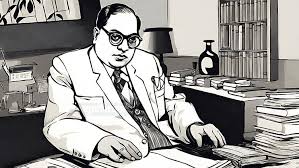
On June 16, 1956, Dr. Ambedkar founded the Bombay State Inferior Village Vatandar Association. Through this organization, he gave new direction and momentum to the struggle against the oppressive Vatan system. On June 16, 1956, 70 years ago, Dr. Ambedkar founded the Bombay State Inferior Village Vatandar Association, and he was also its president. Through this organization, he gave new direction and momentum to the struggle against the oppressive Vatan system. For decades, Babasaheb had been campaigning against the Mahar Vatans. This hereditary village service system deprived marginalized communities of their dignity, land rights, and economic independence. He sought constitutional and legislative solutions to ensure justice for the Vatandars and end this system based on social inequality. On this day, he organized affected communities to eradicate the Vatan system through democratic and legal means. Members of the Mahar community were required to perform compulsory services such as village security, delivering messages, and assisting in administrative work. The land they were granted in return was called ‘Mahar Watan Bhumi’. The Watan system was a hereditary system prevalent in the villages of Maharashtra for centuries. Under this system, certain families, particularly members of the Mahar community, were granted Watan land in exchange for various village services such as watchman duty, delivering messages, disposing of dead animals, cleaning, and other laborious tasks. This land was hereditary and could not be easily sold or transferred; in this system, the land was not completely private property. Due to this service obligation, the Watandars were essentially bound as bonded laborers to feudal lords or upper castes. Dr. Ambedkar had been fighting against this system since 1927. In 1937, he even introduced a bill in the Bombay Legislative Council to abolish the Mahar Watan system. His persistent efforts culminated in the Bombay Inferior Village Watan Abolition Act, 1958 (Act I of 1959), which came into effect on January 20, 1959. This Act abolished all inferior watans and merged watan lands with the state. Watandars received land rights under a re-grant, providing for possession after paying three years’ worth of taxes and full ownership after paying 13 years’ worth of taxes. These laws aimed to transform watan lands into regular agricultural land, although disputes and conflicts over the redistribution and possession of this land continue to this day. Dr. Ambedkar’s unwavering commitment to equality and social democracy played a crucial role in ending this oppressive practice. This Act proved to be a significant step towards socio-economic justice, paving the way for the end of hereditary exploitation. However, in practice, many watandar families faced challenges in obtaining land rights. Geetha Sunil Pillai Courtesy: Hindi News
Bihar: Two Dalit youths, who had gone to see the fair at the Jhunkiya Baba Temple in Rajgir, were beaten to death by a mob mistaking them for thieves.
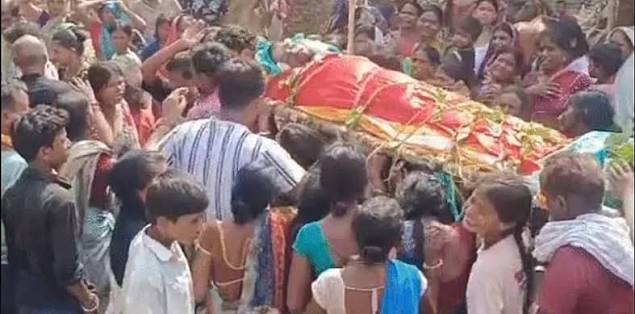
An SIT has been formed under the leadership of the Rajgir DSP to investigate the mob lynching incident, and security has been increased to maintain law and order. Nalanda: Two Dalit youths, who had gone to enjoy the Malmas fair at the famous Jhunkiya Baba Temple in Rajgir district, were beaten to death by a mob mistaking them for thieves. The incident, which occurred on Sunday-Monday morning, left Pintu Paswan (24) and Shravan Paswan (18) victims of the mob’s brutality. The two youths, who were severely beaten with sticks and rods on suspicion of theft, died from their serious injuries. Both were residents of Ganjpar village in the Deepnagar police station area. This incident is extremely painful and heartbreaking not only for the families but for the entire Dalit community. All India Mahamandaleshwar Mahant Antaryami Sharan told local media that several incidents of theft had occurred at the temple in the past few days, causing widespread anger among devotees. Thousands of devotees had gathered at the temple premises on Sunday night due to the Malmas fair. The incident occurred around 3:30 a.m. on Monday when four young men entered the dining area with the intention of stealing. Seeing suspicious activity, people chased them. While fleeing, two of the young men fell and were caught by the mob. Initially, heated arguments ensued, but then they were accused of theft and severely beaten with sticks. The temple security team rescued the young men from the mob and handed them over to the Rajgir police. The young men were first taken to Sadar Hospital and then referred to Patna Medical College and Hospital (PMCH) for better treatment, where both died during treatment. Police are also investigating the background of the deceased. Nalanda Superintendent of Police Bharat Soni said, “We are investigating every aspect of the case. This is a double murder. The postmortem has been completed, and the report is awaited. Several teams have been formed to arrest all the accused. Some suspects are being interrogated.” Pintu Paswan’s mother, Saroj Devi, said that Pintu was a daily wage laborer and the sole breadwinner of the family after his father’s death. He was the eldest of five brothers and three sisters. Saroj Devi said, “I don’t know why my son went near the temple. He and his friend were brutally beaten and killed. We want the killers arrested immediately.” A Special Investigation Team (SIT) has been formed under the leadership of the Rajgir DSP, and a heavy police force has been deployed in the area. Security has been increased to maintain law and order. Bahujan and Dalit organizations have condemned the incident on social media and demanded justice. Geetha Sunil Pillai Courtesy: Hindi News
A 65-year-old Dalit woman was left running around for eight months, and the Orissa High Court sharply reprimanded the police for claiming a “lost file.”
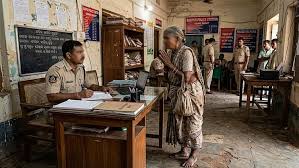
The Orissa High Court took a strong stance on the eight-month delay in filing an FIR against an elderly Dalit woman who was defrauded of ₹2.10 lakh in a land deal, completely rejecting the police’s excuse of “lost file.” New Delhi: A 65-year-old Dalit woman, who was defrauded of ₹2.10 lakh in a land deal, had to approach the Orissa High Court for justice. Despite a magistrate’s clear instructions, the police did not file an FIR in the fraud case for more than eight months. The High Court has issued a stern remark, criticizing the police for this significant delay. The court clarified that arguments such as “lost file” or “unavailability of court orders” can no longer be routine excuses to undermine the judicial process. In her June 12 order, Justice Savitri Ratho expressed deep concern over the local police’s attitude towards court orders. While hearing the case, he stated that it is possible for files to go missing, but unfortunately, this is not an isolated incident. The judge explained that he has encountered numerous cases where local police do not comply with the orders of the family court or magistrate. Despite repeated reminders and extensions, police officers remain unmoved. The timeline for this case is astonishing. The magistrate had clearly ordered the registration of an FIR in the case on August 6, 2025. However, the case was registered at the Ranpur police station eight months later, on April 24. The court noted that in such cases, the police often make the same common excuse: that the court order or warrant was lost, or that the officer concerned had recently joined duty. The court found this explanation completely unacceptable. The court argued that every police station maintains separate registers to record orders and letters received from various courts and officials, making the claim of a missing file meaningless. In light of these negligences, the Orissa High Court has urged the state’s Director General of Police (DGP) to issue necessary guidelines to his officers to ensure respect for judicial orders and their prompt implementation. The root of this entire dispute stems from a fraud that occurred in May 2025. The 65-year-old petitioner, belonging to the Scheduled Caste community, was duped into selling her land by the accused. Under the pretense of registering a sale deed with the sub-registrar, the accused extorted a hefty sum of ₹2.10 lakh from the elderly woman. However, they never executed the sale deed nor returned her money despite repeated requests. Fighting for her rights, the victim first approached the lower court, which took the matter seriously, registered an FIR, and ordered an investigation. When the police refused to listen to her complaint and took no action, she was forced to seek recourse to the High Court through advocate Umakant Sahu. On the other hand, representing the state government, Additional Standing Counsel Saroj Kumar Rout informed the court that an FIR has now been registered in the matter and Sub-Inspector Hasina Pradhan is investigating it. Despite this, the Orissa High Court continued to strongly criticize the eight-month delay in complying with the magistrate’s order and the irresponsible explanation given by the police. Rajan Chaudhary Courtesy: Hindi News
Passed the police recruitment exam in 2018, won a legal battle for appointment, yet this transgender woman from Tamil Nadu still awaits uniform!
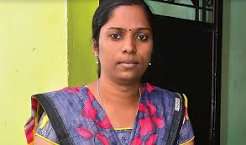
Aradhana, along with five Tirunangas, joined forces to raise their voices for their rights. In 2022, the court issued clear instructions that all five Tirunangas be given female-like privileges in all stages, including the physical efficiency test, and that the entire recruitment process be completed within eight weeks. Theni – Aradhana, a Tirunangas (transgender) woman in Theni district, Tamil Nadu, dreamed of getting a job in the police department, but even after eight years, her dream remains unfulfilled. Aradhana passed the Class II police recruitment exam in 2018, but has not been appointed. She fought a legal battle against the government and won a court decision, but her difficulties remain unresolved. Aradhana (33), a resident of Parastrode 6th Street in Theni, is currently serving in the Home Guard (Oorakkaval Padai). She had a passion for wearing a police uniform since childhood. She explains, “When I wanted to apply for the second-tier police recruitment exam in 2018, I was denied permission because there was no separate application system for transgender people at that time.” Aradhana didn’t give up. She approached the court and, following a court order, took the exam. She passed the written exam, but when it came to the Physical Efficiency Test, she wasn’t called. Following this, Aradhana filed another petition in the Madras High Court. Recognizing the gravity of the matter, the High Court delivered a historic verdict. The court stated that transgender people live in extremely disadvantaged conditions in society, and therefore, they should be given reservations in government jobs. Based on this court order, a position was reserved for Aradhana in the police department in 2018. Aradhana’s case was combined with those of other transgender people. A total of five transgender people joined forces to raise their voices for their rights. In 2022, the court issued clear instructions that all five Tirunanga candidates be given female-friendly privileges in all stages, including the physical efficiency test, and that the entire recruitment process be completed within eight weeks. While this court decision gave hope to Aradhana and her colleagues, the Tamil Nadu government filed an appeal against the decision in the High Court. This appeal is still pending. Aradhana says, “We fought a legal battle, we won the decision, but it was of no use. The government appealed against us, and since then we are back in the same waiting phase.” A few years ago, driven to despair, Aradhana filed a petition with the Teni Collector’s office. She stated, “If my dream of becoming a police officer is not fulfilled, revoke my citizenship and kill me through euthanasia.” Her action created a sensation in the area, but even then, her problem remained unresolved. Aradhana explained that her fascination with the police uniform inspired her to join the Home Guard in 2019. She now serves there, but her true dream remains unfulfilled. She says, “It’s very difficult for us Tirunangas to live a normal life in this society. Our identity itself becomes the biggest obstacle to our dreams. Should we not get police jobs just because of our gender?” Keeping her dream alive, Aradhana has appealed to the Tamil Nadu government, “Please withdraw the appeal filed against the court decision we won. Implement the court order. If this happens, the darkness in our lives will be lifted. May the Tamil Nadu government have mercy on us.” Pa. Ranjith’s Neelam Social Organization has also supported Aradhana and appealed to the Tamil Nadu government for support. Geetha Sunil Pillai Courtesy: Hindi News
The Supreme Court has taken a major step in the new transgender law, immediately halting proceedings in four high courts.

The Supreme Court has immediately stayed the hearing of petitions challenging the new Transgender Persons (Persons) Act 2026 in four different high courts. Following the central government’s demand, all these cases are now likely to be heard in a single court to avoid any contradictory decisions. New Delhi: The Supreme Court has issued a significant order regarding the constitutional validity of the Transgender Persons (Protection of Rights) Amendment Act, 2026. On Monday, June 15, the apex court immediately stayed proceedings in four different high courts challenging the law. The central government had requested the transfer of all pending petitions in this matter to the Supreme Court to avoid conflicting decisions from different courts on the same law. A bench comprising Chief Justice (CJI) Surya Kant and Justice V. Mohana issued notice on the central government’s transfer petition and stayed the ongoing hearings in the Rajasthan, Delhi, Karnataka, and Kerala high courts. Solicitor General Tushar Mehta, representing the Government of India, informed the court that the Supreme Court is already hearing the case. Furthermore, several other High Courts are also challenging the constitutional validity of the 2026 amendment. Accepting this request, the Chief Justice stated that it would be better if all the cases were heard by either a single High Court or the Supreme Court itself delivered its final verdict. The court believed this would avoid scattered and divergent judicial opinions. The next hearing in the case will take place in July, when the court resumes regular work after its partial working period. Earlier, on May 27, the Central Government had expressed concern that hearings in different courts could lead to contradictory judgments on the validity of the law. Mr. Mehta clarified that the Supreme Court should convene these cases to avoid divergent opinions on the same act. During Monday’s hearing, Chandresh Jain, a petitioner from the Delhi High Court, also appeared before the Supreme Court. They argued that their petition comprehensively challenges the new law and establishes why the amendments are constitutionally unsound. The bench stated that if the cases are transferred to the Supreme Court, the court would be happy to seek Mr. Jain’s assistance in this matter. The petitioners’ main argument is that the 2026 amendment undermines the landmark 2014 NALSA judgment, which recognized the right to self-determination as a fundamental right. According to the petitioners, Section 3 of the 2026 Act eliminates the right to self-perceived gender identity and leaves gender determination to biology or state verification. On the other hand, the central government maintains its position. The government maintains that the amendment does not prohibit voluntary gender-affirming treatments. Its primary purpose is only to regulate procedures performed under coercion or pressure. Solicitor General Tushar Mehta also requested the court to transfer the petitions to the Supreme Court before a three-judge bench. He pointed out that the current challenge is primarily based on the 2014 NALSA decision, delivered by a two-judge bench. It may be difficult for high courts to take a view contrary to that decision. Just last month, the Supreme Court refused to stay the implementation of the new law on an interim basis. The court then remarked that the constitutional questions raised by it require detailed and in-depth examination. At that time, the Chief Justice also expressed a serious concern. He stated that in a country with a population of 1.4 billion, there could be a threat from individuals who may pretend to be transgender simply to benefit from reservations in government jobs or other welfare schemes. The Chief Justice questioned whether such fraud would not deprive those who are truly entitled to these benefits due to their physical or biological conditions. Rajan Chaudhary Courtesy: Hindi News
“My son’s killers will be destroyed”: Dalit youth killed in police custody cremated after 101 days

Following strict instructions from the Madras High Court, the funeral of a 26-year-old Dalit youth, a victim of police torture in Tamil Nadu, took place after 101 days. Family members wept inconsolably as they pleaded for justice. A 26-year-old Dalit youth, who died due to alleged police torture in Madurai, Tamil Nadu, was cremated on Wednesday after 101 days. Following strict instructions from the Madras High Court, the youth’s funeral took place at an electric crematorium in Madurai amid tight security. This entire incident raises serious questions about police accountability and human rights violations. The youth’s name was Akash. Following his death, the family refused to accept his body for more than three months. The family demanded the immediate arrest of all police officers involved in the alleged custodial murder. However, after court intervention, the funeral was finally completed amid protests and deep grief from the family. Aakash, a resident of Manamadurai in Sivaganga district, was arrested by local police on March 6 in connection with an assault case. Police claimed that Akash fractured his leg while trying to escape. On the other hand, Akash filed a statement before a judicial magistrate stating that the policemen brutally beat him and broke his leg. He subsequently succumbed to his injuries on March 8 while undergoing treatment at the Government Rajaji Hospital in Madurai. The post-mortem report released after Akash’s death shocked everyone, revealing approximately 28 injury marks on his body. This revelation sparked massive protests from Scheduled Caste welfare organizations and family members. Given the gravity of the case, the investigation was handed over to the CBI on March 9, and six police officers, including an inspector and a sub-inspector, were suspended. Taking suo motu cognizance of the matter, the Madras High Court on March 13 directed the CB-CID to register a case against the accused officers under murder and relevant sections of the SC/ST (Prevention of Atrocities) Act. Subsequently, the CB-CID interrogated 11 police officers, including Manamadurai DSP Raja and several other inspectors. Meanwhile, the victim’s father, Rajesh Kannan, approached the High Court, demanding compensation of ₹50 lakh and the arrest of 16 police officers involved in the incident. The family continued to protest near the old bus stand in Manamadurai to press for their demands. To end the dispute, the High Court ordered on June 15 that if the family did not accept the body by 5 pm that evening, the local administration would proceed with the funeral in a dignified manner. Following the family’s refusal to accept the body, the court assigned the responsibility of conducting the funeral to the Madurai District Collector, Corporation Commissioner, and hospital officials. When police and administrative officials arrived at the hospital mortuary on Wednesday morning to take the body, the family staged a fierce protest. Law enforcement officers briefly detained the protesting relatives in a police vehicle and then brought them to the crematorium to witness the final rites. The atmosphere at the crematorium became extremely somber when Akash’s mother burst into tears. She threw a handful of dirt at the policemen and cursed that those responsible for her son’s death would one day be completely destroyed. Rajan Chaudhary Courtesy: Hindi News
Andhra Pradesh Home Minister responds to the “kilograms of makeup” remark, saying she was targeted for being a woman and a Dalit.
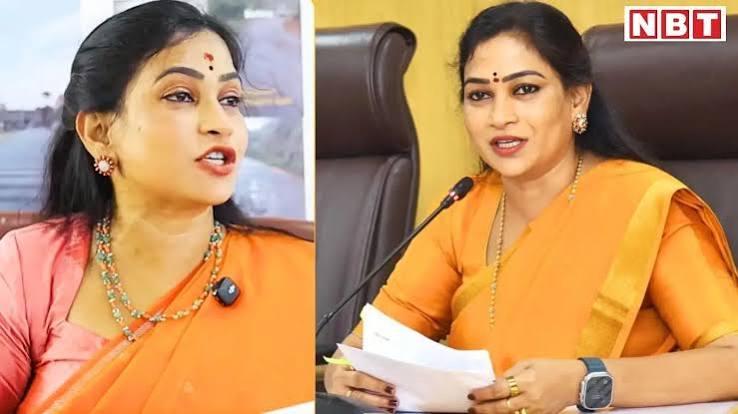
Vangalapudi Anitha Makeup Row: Andhra Pradesh Home Minister Anitha has broken her silence and issued a strong response to the comments made against her. She said that the comments were not only offensive but also a caste-based attack because she was a Dalit and a woman. Anitha is considered a confidante of Chief Minister Chandrababu Naidu. Andhra Pradesh Home Minister responds to the “kilograms of makeup” remark. Amaravati: Vangalapudi Anitha, who holds the responsibility of Home Minister in Chandrababu Naidu’s government in Andhra Pradesh, has responded to the “kilograms of makeup” remark. Andhra Home Minister Anitha said that she was targeted for being a woman and a Dalit. Gudivada Amarnath, a leader of the Jagan Mohan Reddy-led YSRCP party in Andhra Pradesh, had made the offensive remark. Amarnath had said that Home Minister Anitha wears kilograms of makeup. I was attacked in a casteist manner… A controversy has erupted in Andhra Pradesh after a Jagan Mohan Reddy party leader’s “kilograms of makeup” comment. The Deputy Chief Minister and the YSRCP have condemned the remark. Speaking at a public meeting on Wednesday, Amarnath reportedly claimed that TDP leader Anitha wears kilograms of makeup. Speaking to NDTV, Home Minister Anitha described the remark as more than just a personal insult, saying that what the YSRCP leader said about me on camera, at a public meeting, was not just an insult. It was a vile, casteist attack aimed at demeaning a woman and a Dalit woman holding a constitutional position. Home Minister Anitha demanded an apology. The remark has also drawn strong reactions from TDP leaders, who have criticized the YSRCP leader’s misogynistic and derogatory remarks. TDP leader Nara Lokesh also condemned the remark and accused the YSRCP of promoting a toxic political culture. He said that the shameful and anti-women comments against Vangalapudi Anitha Garu expose the true character of the YSRCP. Home Minister Anitha has been quoted as saying that targeting a woman and a Dalit leader is unacceptable and demanded an apology from the YSRCP. Comments on a woman’s appearance are an insult In response to this incident, TDP women leaders protested and pelted the Gudivada Amarnath flex banner with eggs and slippers, demanding an apology for the alleged remarks. Deputy Chief Minister and Janasena chief Pawan Kalyan also criticized the incident. He said that the comments made against Home Minister Anitha were objectionable. Commenting on a woman’s attire and appearance is an insult to every ordinary woman. Meanwhile, YSRCP leaders have rejected the allegations and accused the government of diverting public attention from law and order issues. Curated by: Achalendra Katiyar About the Author Achalendra Kumar Katiyar covers the events in western states for Navbharat Times Online based in Gujarat. He has over 17 years of experience in print, digital, and electronic media, as well as teaching. During this time, he has worked as a reporter and editor in states such as Uttar Pradesh, Delhi, and Haryana. Courtesy: Hindi News
UP: Encounter with two accused of gang-raping a Dalit woman; police shot one in the leg, arrested both.
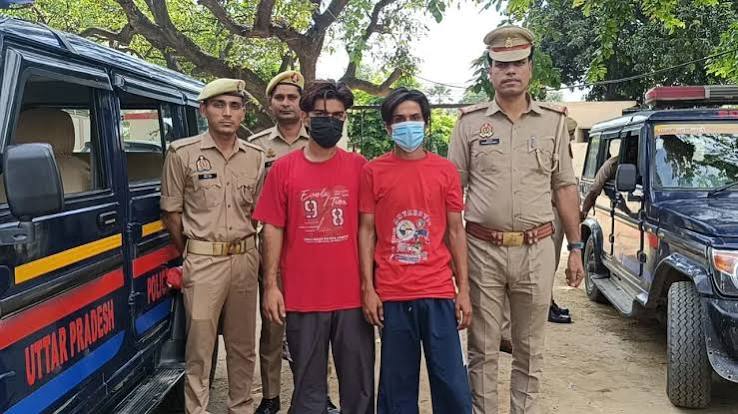
Police in Muzaffarnagar, UP, have taken major action and shot the accused in the leg of a gang-rape victim. Police have arrested two accused in this case. Muzaffarnagar: Police in Muzaffarnagar, UP, engaged in an encounter with the accused of gang-raping a Dalit woman. During this encounter, police shot one accused in the leg and arrested both. What is the whole matter? A joint team of Charthawal police station and the Special Operations Group (SOG) arrested two notorious criminals wanted in the gang-rape case of a Dalit woman after an encounter on Tuesday, June 16, 2026. One accused was injured in the police retaliation. Two illegal pistols, four live and one empty 315-bore cartridge were recovered from the arrested accused. It should be noted that on June 13th, in the Charthaval police station area of Muzaffarnagar, the plaintiff filed a complaint at the Charthaval police station, stating that the accused, Umar, son of As Mohammad, a resident of Dadhedu Khurd, along with his associates, drugged his daughter, rendering her unconscious. They then took her to the forest on a motorcycle and gang-raped her. Based on the victim’s complaint, the police registered a case and began searching for the accused. Under the direction of Senior Superintendent of Police Sanjay Kumar Verma, teams were formed under the supervision of Superintendent of Police City Amrit Jain and the leadership of Circle Officer Sadar Vinay Kumar Dwivedi. On June 16th, a team led by Station House Officer Satyanarayan Dahiya and Special Operations Group (SOG) in-charge Mohit was on patrol. Two suspects were spotted standing on the road leading to Dadhedu Khurd near the Dadhedu Bridge. Upon seeing the police, they opened fire and fled onto a dirt road. The police team surrounded them and warned them to surrender. The accused opened fire again. In retaliation, police fired controlled fire, in which Umar alias Salim, son of Aas Mohammad, age 25, was shot in the left leg. He was arrested while injured. The second accused, Maulana Abdullah, son of Matloob, resident of Bagowali, age 22, was apprehended during the combing operation. The injured Umar has been admitted to the hospital. A case has been registered against both accused. Umar already has a rape case registered against him. Police are taking further legal action in the matter. A statement from Senior Superintendent of Police, Muzaffarnagar, Sanjay Kumar Verma has also been released. Written By: Rituraj Tripathi (Report by Yogesh Tyagi) Courtesy: Hindi News