
Dalit youth allegedly beaten for demanding wages: Died during treatment in Chitrakoot; family files murder case and demands action

A Dalit tribal Kol youth, injured in an alleged assault at a brick kiln in the Manikpur police station area of Chitrakoot, died while undergoing treatment at the district hospital. The family has accused the kiln operators of brutally beating him, the police of failing to listen to his complaint, and a hospital doctor of inhumane behavior. The family is demanding action by filing a murder case. According to the family, they took the injured youth to the Manikpur police station hoping for justice, but instead of registering their complaint, they were turned away. Subsequently, the youth was admitted to the district hospital for treatment, where his condition remained critical throughout treatment. The deceased’s family has also made serious allegations against a doctor at the district hospital. They claim that the youth’s leg was not functioning. While trying to check his leg, the doctor allegedly burned his leg with a lighter, worsening his condition. The young man died during treatment around 10 p.m. on Wednesday night. Upon receiving the news of his death, his family was enraged. They alleged that if the police had acted promptly and the hospital had provided sensitive treatment, the young man’s life could have been saved. The family has demanded that a murder case be filed against the kiln operators, an investigation into the role of the police officers who failed to act on the complaint, and strict action be taken against the doctor involved. Currently, questions are being raised about the police’s performance and hospital management in the case. However, no official statement has yet been issued by the police or the health department on these allegations. Attempts were made to contact Manikpur police station in-charge Ajit Pandey, but he was unsuccessful. Jitendra Kumar | Chitrakoot Courtesy: Hindi News
Dalit woman gang-raped in Baheri, video captured and blackmailed: Victim went to village headman’s house, case filed against 3 under SC-ST Act, 2 detained

A Scheduled Caste woman in Gursauli village, under the Baheri Kotwali area, has accused three young men of gang-raping her, blackmailing her with a video, and threatening to kill her. Based on the victim’s complaint, police have registered a case under serious sections and the SC-ST Act. Two accused have been detained in the case. According to the police report, the victim’s 30-year-old husband is disabled and was away working. On the afternoon of July 6th, the woman went to the village headman’s house to inquire about a gas connection. The village headman’s son and several other young men were present. She was told the headman was not home and was asked to return later. The victim alleges that while returning, the three accused stopped her, forcibly took her inside a house, and raped her one by one at gunpoint. The accused also filmed the incident. The woman said that when she protested, the accused used casteist slurs. They also threatened to make the video viral on social media and kill her and her family if she complained. Police have registered a case against Ajay, son of Dayashankar, Guddu alias Tejpal, son of Nathu, and Shivam, son of Niranjan Lal. This action has been taken under relevant sections of the BNS and the Scheduled Castes and Scheduled Tribes (Prevention of Atrocities) Act. Baheri Inspector Dinesh Kumar said that after preliminary investigations revealed Ajay and Shivam’s role, both have been taken into custody. Police are investigating the case based on the video and other evidence. Mumtaz Ali | Baheri Courtesy: Hindi News
Teen alleges forced sex-change surgery, conversion bid, beef eating by transgenders

An 18-year-old UP resident has alleged that a group of transgender people forcibly took him to Delhi, subjected him to sex-change surgery, attempted to convert him to Islam and force-fed him beef. An 18-year-old man in Uttar Pradesh has alleged that a group of transgender people forcibly took him to Delhi, subjected him to surgery to make him a transgender person and attempted to force him to convert to Islam. He also alleged that he was force-fed beef by the group. Police said they have received complaints from both sides and are investigating the matter. According to the complaint, 18-year-old Janu Yadav, alias Simran, a resident of Kanpur, approached the Police Commissioner alleging that a transgender person named Hina Kinnar invited him to stay at her house and later forcibly made him undergo sex-change surgery in Delhi. In his complaint, Yadav alleged that after staying at Hina Kinnar’s house for two to three months, his nose and ears were pierced. He claimed that he later returned to Kanpur, from where he was called back, taken to Delhi by a young man and forcibly subjected to an operation on March 10. He further claimed that there were plans to sell him and that he was fed beef and asked to recite the Kalma and convert to Islam. He alleged that he later escaped and filed a complaint with the police. However, Hina Kinnar has also filed a counter-complaint against the teenager. According to police, the complaint accuses Janu Yadav of theft and of disrupting her daughter’s marriage. Confirming the development, police officer Praveen Malik said the police received an application from Yadav alleging that he had been taken from Kanpur to Delhi and forcibly made a transgender person through an operation. “A counter application has also been filed by Hina Kinnar, in which she has alleged theft and disrupting her daughter’s wedding. Both cases are under investigation. Legal action will be taken only after the investigation,” Malik said. Police said both complaints are being examined and further action will depend on the findings of the investigation. Vinay Pandey Courtesy : India Today Note: This news is originally published on https:/indiatoday.com/bha and is used purely for non-profit/non-commercial purposes, especially human rights
Pawar vs power: NCP (SP) leaders push for BJP alliance as Sharad Pawar resists
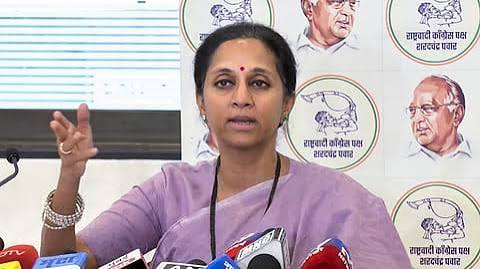
As Supriya Sule categorically rejected reports of an NDA switch, sources say six of the NCP (SP)’s 10 Lok Sabha MPs and nine of its 10 MLAs favour joining hands with the BJP. MUMBAI: Sharad Pawar’s NCP (SP) appears to be facing internal divisions over the prospect of joining hands with the BJP, with party sources indicating that while Pawar wants to keep his distance, several Lok Sabha MPs and MLAs favour exploring an alliance with the ruling party. According to party sources, the 86-year-old Pawar has categorically conveyed to senior party leaders that he is not comfortable joining hands with the BJP at the fag end of his political career. However, those in favour of the move believe they should initiate talks with the BJP and assess what it is willing to offer. The buzz in the Opposition camp comes weeks after six MPs of Maha Vikas Aghadi ally Shiv Sena (UBT) switched to ruling Shiv Sena. The NCP (SP)’s stand on the BJP’s proposed Delimitation Bill is likely to emerge as a litmus test for Sharad Pawar and his daughter, Supriya Sule, signalling where the party intends to position itself in Maharashtra’s evolving political landscape. The issue gained prominence on Wednesday after Sule, the party’s working president, said there would be “little reason to oppose” the Bill if it proposed a uniform 50% increase in seats across all states. Sule, however, said any decision on supporting the legislation would be taken only after discussions within the INDIA bloc. Rejecting speculation about the NCP (SP) joining the ruling alliance, Sule said the media had been predicting her swearing-in and ministerial portfolio for the past 12 years. Notably, the NCP (SP) has 10 Lok Sabha MPs. Of them, six are reportedly keen to join the BJP-led government at the Centre, while two — Sule and Amol Kolhe — are opposed to the move. Similarly, nine of the party’s 10 MLAs are said to favour joining hands with the BJP, with Rohit Pawar the lone dissenter. Interestingly, Rohit has conveyed to the party leadership that he is prepared to make sacrifices and continue fighting the BJP. He has also said that he is less concerned about three years in power than the next 30 years of his political future and that of Maharashtra. Rohit, the grandnephew of Sharad Pawar, has also opened a channel with the Congress and is in direct touch with Congress leader Rahul Gandhi should he decide to join the party. Rahul is also reportedly keen to induct Pawar into the Congress because of his willingness to take on the BJP. Meanwhile, senior NCP leader Jayant Patil has reportedly opened channels of communication with the BJP through two senior leaders, including Maharashtra Chief Minister Devendra Fadnavis and BJP general secretary Vinod Tawde. “Patil has the support of six Lok Sabha MPs and nine NCP SP MLAs to initiate the talks with the BJP. In this talk, there are two thoughts, one given by the BJP that the NCP SP should merge with the NCP, not to be a separate entity of the NDA, but others are not keen to be with the NCP. They want to keep their separate identity,” a source told TNIE. Patil, meanwhile, said he met Fadnavis only to discuss an issue in his constituency, and asserted that there was no discussion in the Sharad Pawar-led party about joining the NDA. “There are no discussions going on in our party about joining the NDA. I met the chief minister only to raise the issue of the Islampur municipal council president, whose election has been declared invalid. (Deputy Chief Minister) Eknath Shinde was in Delhi, so I sought the chief minister’s appointment. The meeting lasted barely five to ten minutes, and there was no political discussion,” he told reporters. Patil’s meeting with NCP leaders Praful Patel and Sunil Tatkare in the presence of CM Fadnavis is understood to be part of the first proposal for a merger, sources said. However, Patil denied reports that he met Patel or Tatkare during his visit to the CM’s residence. Interestingly, Patel and Tatkare are also said to favour bringing Patil and the NCP (SP) into the NCP to curb the growing influence of Parth Pawar and make the party’s existing power structure more democratic. According to sources, the letter challenging Deputy Chief Minister Sunetra Pawar’s election as NCP national president is intended to convey that she can be replaced if required. Sudhir Suryawanshi Courtesy : TNIE Note: This news is originally published on https:/thenewindianexpress.com/bha and is used purely for non-profit/non-commercial purposes, especially human rights
From ‘Untouchable’ to India’s Spin Bowling Legend: How Palwankar Baloo Became an Inspiration for Dr. B.R. Ambedkar and Thousands of Dalits
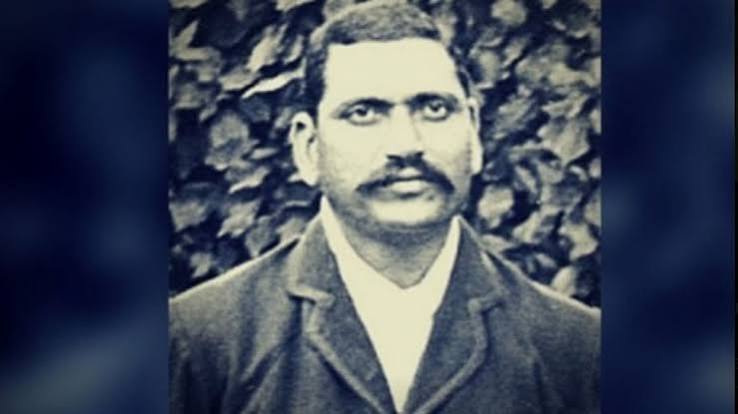
Palwankar Baloo was not only an inspiration for aspiring cricketers but also for young B.R. Ambedkar, who is known as the architect of the Indian constitution. CRICKET IN THE SUBCONTINENT is marked by spin tracks and a few masters of the art. Bishan Singh Bedi, Bhagwat Chandrashekhar, S. Venkataraghavan are some of the legends that come to mind when we speak of Indian spinners. However, Palwankar Baloo was a name that laid the foundation on which this fortress was built. He was not only an inspiration for aspiring cricketers but also for young B.R. Ambedkar, who is known as the architect of the Indian constitution. Despite his achievements on the field, Palwankar Baloo was never treated as an equal off it. At tea breaks, while his upper-caste teammates sat inside the pavilion drinking from porcelain cups, Baloo, a Dalit, was made to stand outside and drink from a separate clay cup. His story is not just about a legend of the sport, but an example of an era where caste discrimination persisted even in a sport often called the “gentleman’s game.” Palwankar Baloo: From Groundsman to India’s Greatest Spin Bowler Palwankar Baloo was born on March 19, 1876 in Dharwad to a family belonging to the Chamar community. According to historian and cricket enthusiast Ramachandra Guha’s book A Corner of a Foreign Field: The Indian History of a British Sport, Baloo’s father worked with the British Army in Poona, where Baloo and his younger brothers first learnt cricket using equipment discarded by British officers. Like many children in poor families, he began working at a young age. His introduction to the game was not as player but as a groundsman. “Baloo’s own first job was at a cricket club run by Parsis. Here he swept and rolled the pitch, and occasionally bowled to the members at the nets. For this work he took home Rs 3 a month,” Guha writes. Later, he joined the prestigious Poona Club, where he prepared pitches, set up nets and bowled to British club members. One of those members was English cricketer Captain J.G. Greig, who quickly realised Baloo’s spin bowling talent. According to Guha, Hindu cricket administrators were divided over selecting Baloo in the team because he belonged to a Dalit community. It was Greig who convinced them that leaving out such a talented bowler because of his caste would be foolish. Guha notes that Greig’s attempt shouldn’t necessarily be seen as him trying to reform society, but simply wanting to test himself against a talented net bowler in competitive matches. Once selected, Baloo soon became the biggest weapon of the Poona Hindus team. His left-arm spin troubled even the strongest European sides. His performances also earned him a place in the historic 1911 All-India team that toured England—the first Indian cricket team to play on British soil. Historian Prashant Kidambi writes in Cricket Country that it took “12 years and three failed attempts” before an Indian team could finally make “its debut on the playing fields of imperial Britain.” When the team returned to Bombay on September 15, 1911, thousands gathered at the harbour to welcome them. Baloo had finished the tour as India’s leading wicket-taker and returned home as one of the country’s biggest sporting heroes. The Spin Legend Who Was Still Treated as an ‘Untouchable’ The Indian society’s taboo was hard to forego especially in the early 20th century. Success on field did not change how Baloo was treated by his own teammates. According to Guha, caste discrimination continued even inside the cricket ground. “At the tea interval… Baloo was served the liquid outside the pavilion, and in a disposable clay matka, while his colleagues drank in white porcelain cups inside,” Guha writes. He faced similar treatment during lunch. “Baloo also ate his lunch off a separate plate, and on a separate table. But he took plenty of wickets all the same. Due chiefly to Baloo’s bowling the Poona Hindus defeated the Poona Europeans and other local sides as well,” Guha writes. Even then, Baloo’s performances were impossible to ignore. Social reformer Mahadev Govind Ranade publicly honoured him after one of his major victories, while Indian freedom fighter Bal Gangadhar Tilak also praised his achievements. Slowly, Baloo’s cricket started challenging many caste prejudices, even if they did not disappear. It was also reinforced in his own family as the Palwankar family became one of Indian cricket’s first great sporting families. His brothers Shivram, Vithal, and Ganpat all went on to play at a high level. In 1923, Baloo’s younger brother Vithal Palwankar became the first Dalit captain of the Hindu team in the Bombay Quadrangular and led the side to several famous victories. The Cricketer Who Inspired Ambedkar, But Later Became His Adversary Dr. B.R. Ambedkar sitting on desk signing documents Being a Dalit, Baloo’s influence reached far beyond cricket. After the 1911 England tour, Bombay’s Depressed Classes organised a public felicitation for him. According to Guha, the welcome address was delivered by a young college student who was then unknown—Bhimrao Ramji Ambedkar. Quoting historian Eleanor Zelliot, Guha writes that this was “the first public appearance” of the man who would later become the architect of the Indian Constitution. “By virtue solely of his deeds on the cricket field, Baloo had become a hero and inspiration to countless Untouchables. And the young B.R. Ambedkar was one of them,” Guha writes. However, when both of them became influential figures for their community, they later disagreed on the future of Dalits in India. Guha writes that Baloo strongly believed in Mahatma Gandhi’s view that caste discrimination could be removed through reform within Hindu society. Ambedkar, on the other hand, believed the Depressed Classes would get justice only through independent political rights and by moving beyond the Hindu social order. During Gandhi’s fast against the Communal Award in 1932—a proposal by the British government to allow ‘untouchables’ to become an electorate separate from the main Hindu community, Baloo was among those who appealed
UP: Dalit priests may be appointed for the Sapta Mandapam, a decision on the recruitment of new priests is likely on July 22nd.

A decision on the recruitment of new priests for the Ram Temple complex is likely to be made at the meeting on July 22nd. According to sources, for the first time, qualified Veda-reading priests from the Dalit community may be offered the opportunity to serve in the Sapta Mandapam temples. This initiative is being taken keeping in mind the increasing number of devotees and social harmony. The Shri Ram Janmabhoomi Teerth Kshetra Trust is preparing to appoint new priests for the Ram Temple complex. According to sources, the new recruitment process for priests may begin after the proposed trust meeting on July 22nd. For the first time, priests from the Dalit community are also likely to be included in this recruitment. If this happens, it will be considered an important step towards further strengthening the message of social harmony in the Ram Temple complex. According to sources, the proposed appointments may include priests from the Dalit community, who may be responsible for performing pujas in the Sapta Mandapam temples located in the Ram Temple complex. The Sapta Mandapam houses temples dedicated to Maharishi Valmiki, Maharishi Vashistha, Maharishi Agastya, Maharishi Vishwamitra, Nishadraj, Mata Shabari, and Mata Ahalya. All these figures and sages are considered symbols of social harmony and inclusion in Indian tradition. Opportunities for priests being considered Sources indicate that given the growing number of devotees and the expansion of the temple complex, there is a need for new priests. Keeping this need in mind, along with social representation, opportunities are being considered for qualified priests from the Dalit community. Recently, the Trust appointed Dr. Krishna Mohan, a Dalit, as interim General Secretary. Consequently, the proposed priest appointments are being seen as aligned with the Trust’s vision of harmony and inclusion. However, no official announcement has been made by the Trust in this regard. A final decision is expected to be made at the July 22nd meeting Currently, 35 priests are serving at the Ram Temple. Currently, a total of 35 priests are serving at the Ram Temple complex. Of these, 20 perform puja at Ram Lalla and Ram Darbar. Ten priests are deployed in two shifts, morning and evening, each with 10 priests. In each shift, five priests perform puja at Ram Lalla and five at Ram Darbar, while the responsibility of aarti is assigned to all priests in turn. The remaining 15 priests perform puja at the fort and Sapta Mandapam temples. Nitin Mishra, Amar Ujala Network, Ayodhya Published by: Akash Dwivedi Courtesy: Hindi News
Immerse in this new book that dives into the life of a Dalit boy in Gujarat
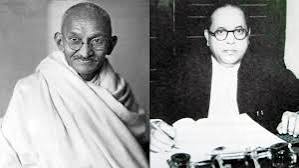
This is most prominently witnessed in the chapter exploring his relationship to Mahatma Gandhi and his ideas Title: Homes Without WindowsAuthor: Chandu MaheriaGenre: MemoirPublisher: JuggernautCost: Rs 699 Gujarati writer Chandu Maheria’s new book Homes Without Windows (Juggernaut), translated into English by Hemant Ashwinkumar, is an honest account of what it meant to grow up as a Dalit boy in the working-class suburb of Rajpur in Gujarat. We learn how several Dalit families left their villages after independence to settle in parts of Ahmedabad. Through 11 essays, Maheria helps readers draw a brief history of caste politics in Gujarat: from aggression in schools of the Khadol village in the 1960s, to the anti-reservation riots and the growing consciousness of Dr Babasaheb Ambedkar’s ideology across the state in the 1980s. Through it all, Maheria’s tone is understated and nuanced. This is most prominently witnessed in the chapter exploring his relationship to Mahatma Gandhi and his ideas. He excavates the reasons why a majority of the Dalit community resents Gandhi and prefers to advocate Dr Ambedkar’s views. Without disagreeing with the concerns of the community on the Gandhi-Ambedkar debate, he argues that one cannot disregard Gandhi’s role in bringing the subject of caste to the forefront of public discussion and politics. Maheria’s most distinctive quality is how he examines everyday objects and gives evidence from his personal experience to portray how deeply entrenched the caste system is in India. Chapters like ‘Your Chappals, Our Skulls’, which highlights footwear, or ‘The Mayor’s Bungalow’, which looks at public toilets, become significant in this regard. For instance, he recollects being turned away at the school gate as a kid, on the first day of school, because he couldn’t afford footwear and reached barefoot. The final chapter on fighting rumours and sicknesses with multiple hospitalisations offers a poignant closing to a sensitive and necessary book Nandini Varma Courtesy : Mid-Day Note: This news is originally published on https:/mid-day.com/bha and is used purely for non-profit/non-commercial purposes, especially human rights
The road to the Dalit settlement in Gorakhpur is dilapidated and muddy: Villagers face difficulties commuting, demanding repairs from the administration.

The road leading to the Dalit settlement in Mainabhagar Gram Panchayat, in the Jungle Kaudiya development block of Gorakhpur, is extremely dilapidated and muddy. Local villagers allege that the condition of this road has been poor for a long time, causing significant difficulties in commuting. According to villagers, children, women, elderly people, and other villagers travel this route daily. The situation becomes even worse during the rainy season, as the entire route is waterlogged and muddy. Local residents reported that while other roads in the village are in good condition, the road to the Dalit settlement has not been repaired. Consequently, schoolchildren face particular difficulties commuting to and from school. Villagers say they have lodged complaints several times in this regard, but no action has been taken yet. They have demanded that the administration and public representatives resolve the transportation problem by constructing the road as soon as possible. Sugreev Kumar Yadav | Bhauramal (Gorakhpur Sadar), Gorakhpur Courtesy: Hindi News
Sonam Wangchuk Protest: Over 1,800 celebrities urge, “Sonam Wangchuk is a national treasure, please end your 17-day fast.”
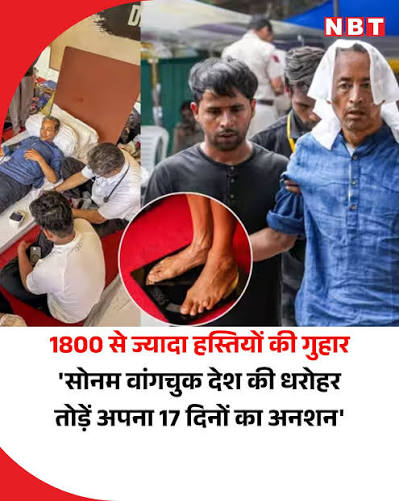
Sonam Wangchuk’s fast at Jantar Mantar continues for the 17th day. The CJP has called several leaders, including Rahul Gandhi and JP Nadda, to express their support. Over 1,800 celebrities and several opposition leaders have appealed to Wangchuk to end his fast. Concerns over Wangchuk’s health, appeal to end fast New Delhi: The Cockroach Janata Party (CJP), which is protesting at Jantar Mantar against the alleged rigging and paper leak in the NEET-UG exam, on Tuesday wrote to leaders of all political parties in the country, urging them to come forward in support of the students. The party has invited leaders from both the ruling and opposition parties to reach Jantar Mantar to stand with the youth in their struggle. BJP National President and Union Minister Jagat Prakash Nadda, as well as Leader of the Opposition in the Lok Sabha Rahul Gandhi, have been specially invited in this letter. Several other senior leaders, including veteran South Indian cinema actor and politician Thalapathy Vijay, have also been invited. On the other hand, several prominent figures and opposition leaders have urged environmental activist Sonam Wangchuk, who has been on a hunger strike for 17 days, to end her fast. More than 1,800 prominent figures in the country, including renowned artists, writers, academics, and social activists, have issued an open letter in support. Signatories to this letter include Naseeruddin Shah, Ratna Pathak Shah, Arundhati Roy, economist Jean Dreze, Jayanti Ghosh, Nivedita Menon, and Anuradha Chinoy. Urge to End Fast Earlier, TMC MP Mahua Moitra and NCP leader Rohit Pawar expressed concern and urged him to end the fast. Meanwhile, Samajwadi Party MP Priya Saroj and Bharatiya Kisan Union Chaduni leaders reached Jantar Mantar, stating that Wangchuk’s condition was deteriorating due to his fast and that he was rapidly losing weight. They called for a march to Parliament on July 20, at the start of the monsoon session. Samajwadi Party chief Akhilesh Yadav appealed to Wangchuk to end his fast. ‘Nothing should happen to him’ On Tuesday, Omi Vaidya, who played Chatur in the film 3 Idiots, shared an emotional video on social media, urging Sonam Wangchuk to end his hunger strike. He said that the popular character Phunsukh Wangdu was inspired by Sonam Wangchuk in real life. He said that nothing should happen to Phunsukh Wangdu. Kejriwal to arrive at Jantar Mantar tomorrow In a press conference on Tuesday, Kejriwal expressed his support for the ongoing protest by the Cockroach Janata Party at Jantar Mantar demanding the resignation of Union Education Minister Dharmendra Pradhan. Kejriwal stated that he would visit Jantar Mantar on Thursday (July 16) at 5 p.m. to express his support. Rahul and Nadda also invited Leaders from both the ruling and opposition parties invited Several senior leaders, including Thalapathy Vijay, were also invited Kejriwal said Wangchuk is a national treasure Akhilesh Yadav also appealed to break the fast Hope for change, courage not waning even at night The streets of Delhi are currently buzzing with traffic, but inside Jantar Mantar, a different world exists. The clock is striking 10 p.m. Black tarpaulins are stretched overhead, sheets are spread below, and young people sitting among them are keeping the protest alive in their own ways. The crowd isn’t very large, but those present don’t seem in a hurry to leave. A guitar riff begins in a corner. A few boys and girls begin singing revolutionary songs in unison. As soon as the song ends, applause erupts, and then a new song begins. A circle has formed a short distance away. A young man sitting in the center expresses his views on the education system with hand gestures. Those around him listen without interruption. The protesters here are between 20 and 30 years old. The main stage of the protest is quiet. Large banners hang behind the stage, with messages related to ‘hunger strike’ and education visible from a distance. Educator and climate activist Sonam Wangchuk lies on the same stage. The fast continues. People come around the stage, stand for a while, watch, and then quietly leave. Posters are plastered all over the protest site. Some demand changes to the education system, while others demand the resignation of the Education Minister. Students have handwritten messages on many posters: “Government, let us live,” “Change the education system,” “We want transparency in exams.” Slogans are also raised, but not continuously. Occasionally, a group raises its voice, and then the atmosphere returns to songs and discussions. The protest here isn’t just in its voices, but also in its stillness. Interestingly, most of the people present appear to be between 20 and 30 years old. Some are sending live updates on social media. Some join in the discussion. Many faces are tired, but their spirits remain undiminished. Small groups have formed at the protest site. Each group has its own topic. Some are debating education policy, others are discussing unemployment, and others are discussing the Constitution. The protest isn’t limited to slogans; it’s also evident in the conversations. The night is drawing in, but Jantar Mantar hasn’t slept yet. “People have come to register their presence.” The banners flashing in the light, the youth sitting on the ground, the resounding songs, and the occasional slogans testify that while the numbers may not be large, the people present here have come to make their presence felt. Perhaps the most striking image of this night at Jantar Mantar is that the protest here is not just in voice, but also in steadfastness. There is no haste, no hurry. The only hope is that their voices will be heard, the education system will change, and the questions they are sitting here with will be answered. Contributed by: Mohd. Asgar, Edited by: Tina About the Author Tina works as a consultant at Navbharat Times Online and is in the process of establishing her identity in the world of digital journalism. Currently, she actively works on national, crime, jungle news, good news, and local news. Courtesy: Hindi News
Rahul Gandhi likely to summon CM Shivakumar, state netas to Delhi

Back home, aspirants such as Ramdurg MLA Ashok Pattan, Sringeri MLA T D Raje Gowda, and Arsikere MLA K M Shivalinge Gowda called on Kharge. BENGALURU: With LoP in Lok Sabha Rahul Gandhi having returned to India from his foreign trip and AICC president Mallikarjun Kharge back to New Delhi from Bengaluru, the countdown has begun for the expansion of the Shivakumar cabinet.“It will happen as soon as possible, as we will discuss the matter with Rahul after he returns (from abroad),” Kharge told reporters in Bengaluru before leaving for the national capital. According to sources, AICC general secretary (organisation) KC Venugopal, who was in his home state, Kerala, is also bound for Delhi. Also, former CM Siddaramaiah, Deputy CM Dr G Parameshwara and KPCC president BK Hariprasad are likely to be summoned by the party top brass before a final decision is taken. Meanwhile, Rahul is likely to travel to Dehradun on Thursday, where his family members, including his mother Sonia Gandhi, are vacationing. Hence, the decision on the cabinet expansion is likely to be taken before Thursday, a legislator, who is camping in Delhi, told TNIE. Back home, aspirants such as Ramdurg MLA Ashok Pattan, Sringeri MLA T D Raje Gowda, and Arsikere MLA K M Shivalinge Gowda called on Kharge. “Let us see how things pan out in the next two to three days. The CM may go to Delhi tomorrow. The session will be held from August 6, and by then, the cabinet expansion will be done. What is the connection between the month of Aashada and cabinet expansion?” Water Resources Minister Ramalinga Reddy said. Devaraj B Hirehalli Courtesy : TNIE Note: This news is originally published on https:/thenewindianexpress.com/bha and is used purely for non-profit/non-commercial purposes, especially human rights