
Delhi Police arrests illegal Bangladeshi national, disguised as transgender, for illegal activities

In a major action, Delhi Police has arrested an illegal Bangladeshi national. He was living in India illegally and posing as a transgender woman to carry out illegal activities. Delhi Police arrests illegal Bangladeshi national, Image Source: ANI Delhi Police has arrested a 24-year-old Bangladeshi national who was living in India illegally and posing as a transgender woman to carry out illegal activities. The Foreigners Cell of the North-West District arrested Mohammad Abdul Aleem (also known as Preeti) near the NS Mandi in the Mahendra Park police station area of Jahangirpuri in the early morning hours of July 14, 2026. Acting on information, a police team apprehended the suspect, who was roaming suspiciously in the area. Several things revealed during interrogation During interrogation, Aleem could not produce any valid Indian travel or identity documents. Further investigation and questioning confirmed that he was a Bangladeshi citizen from Mokapur village in Khulna district. He admitted that he had undergone gender-affirming surgery and often disguised himself as a woman by wearing makeup, saris, salwar-suits, wigs, and adopting feminine mannerisms. He reportedly used this disguise primarily for illegal activities at night. Several things recovered Police also recovered a smartphone from Aleem, which contained the banned IMO app, and the phone’s gallery contained photos of his Bangladeshi national identity documents. The operation was conducted by a team led by SI Sapan, under the supervision of ACP Ranjit Dhaka, Inspector Vipin Kumar, and the supervision of ACP Sapan. Alim was produced before the Foreigners Regional Registration Office (FRRO) and deportation proceedings have been initiated against him as per the law. This arrest is part of the Delhi Police’s ongoing campaign against illegal immigration in the national capital. Seven illegal Bangladeshis were also arrested last year. Earlier last year, on July 1, 2025, Delhi Police arrested seven illegal Bangladeshi nationals, including five transgender people, from the city’s Shalimar Bagh area. According to the police, three smartphones were recovered from them. Police also said that an app banned in India was found on these mobile phones, through which these people used to communicate with their families in Bangladesh. Police also said that a deported Bangladeshi national who had entered India illegally for the second time was arrested again. Written By: Ritu Raj Courtesy: Hindi News
Innocent girls were traded for 1.5 lakh rupees: Learn about the exploits of this human trafficking gang, which spanned from Uttar Pradesh to Rajasthan.
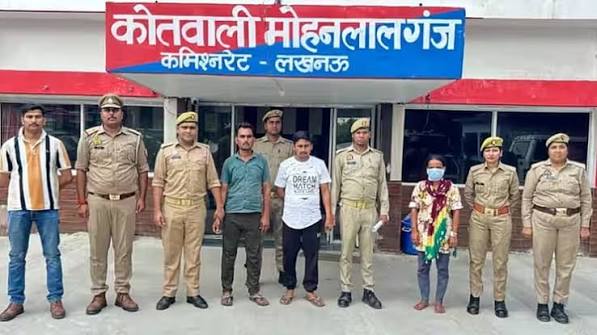
A human trafficking racket spanning Uttar Pradesh and Rajasthan has been busted. Innocent girls were traded for 1.5 lakh rupees in the name of marriage; 3 arrested. Uttar Pradesh: Police in the capital Lucknow have busted a major interstate child trafficking ring that sold innocent girls in Rajasthan under the guise of marriage. These girls were traded for up to 1.5 lakh rupees. Police have arrested three adults, including a woman, and a minor in this case. The search for the gang’s main leaders, based in Rajasthan, has been intensified. This horrific syndicate was exposed when Kamlesha, a resident of Ganiyar village in Mohanlalganj, filed a complaint with the police on May 12th. She reported that her two granddaughters, aged 16 and 12, had suddenly gone missing. The investigation revealed that the girls were kidnapped under the pretext of reuniting them with their estranged mother and providing them with a better life. Since the case involved minor girls, the police took immediate action and deployed four special teams in plain clothes. Footage from approximately 150 CCTV cameras was scanned during the investigation. Although the girls’ mobile phones were switched off, their location was traced to Rae Bareli using technical surveillance and ground intelligence. Acting swiftly, the police safely rescued both sisters on May 18th. The victims’ statements, recorded under the Indian Civil Defence Code, revealed a disturbing truth: the girls were being taken to Rajasthan for forced marriage and sold. Based on solid evidence, the police arrested the main suspects from Atrauli intersection on June 3rd. Those arrested include 25-year-old Anurag Yadav, 32-year-old Mohammad Akhtar, 23-year-old Priya Patel alias Sheela, and a 17-year-old juvenile. Additional DCP (South) Vasant Kumar Rallapalli stated that the investigation revealed several shocking revelations. This entire network had been active between Uttar Pradesh and Rajasthan since 2020. During interrogation, it was revealed that accused Priya Patel had contacted a woman named Sonam, who lived in Kota, Rajasthan. Priya, along with her live-in partner Anurag and associate Akhtar, began targeting orphans or girls from poor families whose families could not easily reach the police. This vicious gang lured girls by promising them jobs, travel, and a better life. In this latest case, the accused gained the girls’ trust and took them to Rae Bareli. There, they were dressed in new clothes and photographed. These photos were then sent via WhatsApp to Sonam and her husband, Bhupendra Chaudhary, in Rajasthan. Once the girls’ faces were “approved,” the deal was finalized. According to the police, the plan was to take the girls to Bambori in Kota district, where Priya was to receive ₹1.5 lakh per girl. Investigators have also uncovered important clues indicating that two sisters from Rae Bareli were previously sold through this network. Police have also seized two four-wheelers used to transport the girls from one district to another. According to Additional DCP Rallapalli, this is a highly organized gang, with pre-determined roles. Currently, the police are focused on arresting the masterminds, Sonam and Bhupendra Chaudhary, who are based in Rajasthan, and identifying other victims, for which raids are being conducted. Rajan Chaudhary Courtesy: Hindi News
UP police, searching for a Dalit son, woke a sleeping father; his body was found hours later; a murder case has been filed against six people, including a sub-inspector and a constable.

In Ballia, UP, police, searching for a son, detained a Dalit father. Following the suspicious death, a murder case has been filed against six people, including a sub-inspector, a constable, and the village head. Uttar Pradesh: A particularly tragic incident has come to light from Ballia district. Police arrived at the home of a 22-year-old man in search of him, but when they failed to find him, they detained his 44-year-old Dalit father. A few hours later, the laborer father died under suspicious circumstances. The deceased has been identified as Kamji Gond. The family alleges that the police severely beat and tortured Kamji to extract information about their son. A named FIR has been filed against two policemen, a village head, and three others for murder. The accused policemen have been suspended with immediate effect. However, the police have completely denied any allegations of custodial assault. Following the incident, the deceased’s family and villagers staged a massive protest. They alleged that the police assaulted Kamji, threw him unconscious in a field, and fled, where he later died in the hospital. Based on a complaint by Kamji’s son, Vishal, a murder case has been registered at the Revati police station against six people: Sub-Inspector Sachin Saroj, Constable Ankit Singh, Village Head Ashutosh Shankar Singh, and three local citizens. Ballia Superintendent of Police Omveer Singh stated that the accused inspector and constable have been suspended. SP Omveer Singh also stated that the SHO of Revati police station, Raj Kishore Singh, has been removed from his post and placed on the line. Given the seriousness of the matter, a magisterial inquiry has been ordered. No arrests have been made yet, and two of the accused belong to the Dalit community. The actual conflict began on July 7th. The deceased’s son, Vishal, had an argument with shopkeeper Suraj Kannaujiya over purchasing chicken at a shop near Khedan intersection in Gaighat village. The argument quickly escalated into a scuffle, which was later resolved with the intervention of local residents. Vishal claims that under pressure from the village head and others, the shopkeeper filed a complaint of assault against him. Based on this complaint, two policemen arrived at Vishal’s house at 1:20 pm on July 8th in search of Vishal. Vishal was not at home, so the policemen picked up his father, Kamji, who was sleeping there. The son alleges that the police took his father to a nearby brick kiln and brutally assaulted him to force him to reveal Vishal’s hiding place. According to family members, when Kamji fell unconscious due to the severe beating, the policemen abandoned him in a garden near the brick kiln and fled. Around 6 pm, locals found him unconscious and informed the family. He was immediately taken to a nearby hospital, where a team of doctors referred him to Varanasi. Kamji died while undergoing treatment at the Varanasi hospital. On the other hand, the police version is completely different. The police department states that Kamji began experiencing breathing difficulties during interrogation. According to officials, he was left in the custody of a neighbor at around 4 pm on July 8th, and that neighbor took him away. The police have denied the allegations of assault and abandonment. The police also clarified that the post-mortem report could not confirm the exact cause of Kamji’s death. Consequently, doctors have preserved the viscera for forensic examination, the report of which is currently awaited. Furthermore, the police also informed that the complainant, Vishal, already faces several serious criminal charges, including murder. Following this incident, the angry family refused to cremate the body, demanding strict action against the accused. After massive protests, when the police filed a murder case against the named accused, the family agreed to proceed with the funeral. Rajan Chaudhary Courtesy: Hindi News
Madras HC sternly remarked on the prohibition of temple processions in the Dalit-dominated North Street: Stopping religious processions in the name of caste amounts to untouchability!

High Court rebukes caste discrimination at temple festivals, orders Dindigul Collector to investigate within 12 weeks Madurai – In a landmark judgment, the Madurai Bench of the Madras High Court has held that any practice or custom that excludes any class of citizens on the basis of caste from any public religious festival cannot be constitutionally valid. The Court clarified that Article 17 of the Constitution completely abolishes untouchability and this prohibition is not subject to any custom, tradition, or social acceptance. The Bench headed by Justice L. Victoria Gauri issued these important directions while hearing a petition filed by Bakkiyaraj. Petitioner Devendra belongs to the Kula Vellalar community and alleges that during the annual festival of the Arulmighu Ayiram Aruval Kottai Karuppasamy Temple in Muthalapuram village, Nilakottai taluk, Dindigul district, a wooden casket decorated with silk cloth is prevented from entering North Street, which is dominated by his community. Why the procession is not taken to North Street? Petitioner Bakiyaraj Devendra, belonging to the Kula Vellalar community and a resident of Muthalapuram village’s North Street, filed a petition in the High Court, stating that the village deity is a public deity and is worshipped by people of all castes. Every year during the Thai month, a wooden casket decorated with silk cloth is taken out in a procession through the village streets. However, for the past several years, the respondents (Kumanesan, Raghupathi, Seeni, Satish, Kathinisan, and Kannan) have deliberately prevented the procession from entering North Street. The petitioner alleges that this restriction is based solely on caste grounds. The private respondents allege that the deity’s procession through North Road will be defiled and polluted. Furthermore, members of the Devendra Kula Vellalar community are not included in the temple administration, are prevented from offering offerings, and are excluded from making decisions related to the festival. The petitioner sought directions to officials, including the District Collector, Superintendent of Police, Revenue Divisional Officer, Tehsildar, and Police Inspector, to ensure the procession enters North Road and ensure a peaceful celebration by including some members of the Devendra Kula Vellalar community in the festival committee. Respondents stated that there is no discrimination based on caste in the village. Each community has its own temple and its own customs. The procession route has remained the same for centuries and has never been diverted through the petitioner’s community’s road. People from all communities can enter and worship at the temple, and there are no caste-based restrictions. Citing an earlier order, they argued that this petition attempts to reopen the same issue. The government stated that maintaining law and order was its priority and that all devotees, regardless of caste, would be allowed to worship and participate in religious activities at the temple. The court did not consider this matter merely a dispute over the route of a village procession. Rather, it was an issue of constitutional morality and social democracy. In its order, the court clearly stated: “The Constitution of India does not merely establish political democracy. It envisions a social democracy based on liberty, equality, and fraternity. The framers of the Constitution consciously recognized that caste discrimination had deprived a large section of Indian society of dignity and equal status for centuries. Therefore, the Constitution guaranteed equality before the law under Article 14, prohibited discrimination under Article 15, and abolished untouchability in all its forms under Article 17.” The court further stated that when members of a Scheduled Caste community are prevented from participating in a public religious festival or having equal access to a public temple, it is not merely a private dispute. “Such allegations strike at the very core of constitutional morality.” Interpreting Article 17, the Court wrote – “Article 17 abolishes untouchability and forbids its practice in any form. This constitutional prohibition is absolute. It is not subject to custom, usage, local tradition, or social acceptance. The Constitution does not merely prohibit physical segregation. Any disability imposed on a citizen on account of caste identity falls within the broad constitutional scope of Article 17, which it seeks to eradicate.” Regarding Article 25, the Court stated that religious freedom is subject to public order, morality, health, and other provisions of Part III. “No religious practice or customary usage can withstand constitutional scrutiny if it violates equality, dignity, or fraternity. Constitutional morality must always take precedence over social morality when the two conflict.” The Constitution does not recognize hierarchical participation in public religious life based on caste hierarchy. Faith cannot be divided street by street along caste lines. – Justice L. Victoria Gauri ‘Temple festivals are not just religious events, they are also social institutions’ Citing Article 51A(e), the court stated that temple festivals are not merely religious events. “It is also a social institution meant to unite people. If a festival becomes a means of exclusion, the very purpose of community worship is defeated.” The court, noting the petitioner’s allegations and the respondents’ denials, stated that disputed questions concerning historical routes, practices, and festival administration cannot be decided solely on the basis of affidavits in a writ petition. However, it also clarified: “When allegations of caste-based exclusion from a public religious festival are made, constitutional courts cannot simply relegate the petitioner to a civil forum. Constitutional courts cannot remain silent spectators to issues of equality, dignity, and fraternity.” These instructions were given to the District Collector The court assigned primary responsibility to the District Collector, stating: “The District Collector must remember that the issue is not merely about route management. It is linked to the constitutional promise of equal citizenship. The Constitution does not recognize hierarchical participation in public religious life based on caste hierarchy. Faith cannot be divided street by street along caste lines. Deities worshipped by the entire village belong to the entire village. Public religious institutions cannot become instruments for perpetuating social exclusion.” The court ordered a detailed investigation within 12 weeks, directing the Collector to convene a meeting of all stakeholders (petitioner community, private respondent, village elders, revenue,
Ramnarayan Baghel Murder Case | The family will receive an additional compensation of ₹8.25 lakh in the lynching case of a Dalit migrant worker in Kerala, but shortcomings in the police investigation have exacerbated the trouble!

A Dalit migrant worker from Chhattisgarh was murdered seven months ago by a mob after being branded a “Bangladeshi.” Thrissur – Ramnarayan Baghel’s family has received a major relief in their fight for justice. The district-level monitoring committee has made a historic decision to award them an additional ₹8.25 lakh in compensation, in addition to the previously approved amount. Earlier last year, the Kerala government had announced a grant of ₹30 lakh to Ramnarayan’s family. While the additional compensation decision will provide relief from financial hardship, the family is concerned by the court’s findings of flaws in the ongoing police investigation. During a recent press conference in Thrissur, Baghel’s family appealed to the Kerala government to ensure that the investigation into Ramnarayan’s alleged mass murder is not derailed, that the investigation be expedited, and that all culprits be brought to justice. The family stated that they were deeply saddened by the court’s finding of deficiencies in the police chargesheet, which was evidence of repeated lapses in the investigation. They stated that the court’s finding of deficiencies in the chargesheet was evidence of repeated lapses on the part of the police during the investigation, and that it was deeply concerning that the police had shown such negligence in such a serious case. The family demanded that the Kerala government and police conduct the investigation in a manner that ensures justice and that such a brutal ethnic massacre does not occur again in the state. They stated that the government should intervene to expedite the legal process and immediately appoint a special public prosecutor, as demanded by the family. The family also urged the police to address all deficiencies in the chargesheet already filed in court and submit a new, legally correct chargesheet as soon as possible. Addressing the media, Ramnarayan’s wife Lalita Baghel, his mother Shyamabai Baghel, brother Shashikant, Justice for Ramnarayan Baghel Action Council President K. Sivaraman, and convener Advocate K.S. Nisar, member M. Sulaiman Palakkad, and Advocate Nikhil Chandrasekaran, who is also the family’s lawyer, reiterated that ensuring a fair investigation and punishing the accused is essential not only for justice in Ramnarayan’s case but also to prevent such crimes in the future. The case was registered under Section 103(2) of the Indian Penal Code, the first in Kerala since the enactment of new criminal laws criminalizing mob lynching. A case was also registered under the Scheduled Castes and Scheduled Tribes (Prevention of Atrocities) Act. The Tragic Incident That Shamed Kerala It is noteworthy that on December 17, 2025, Ramnarayan Baghel, a 31-year-old Dalit migrant laborer from Karahi village in Sakti district, Chhattisgarh, was allegedly beaten to death by a mob in the Walayar area of Palakkad district, Kerala. Baghel had come to Kerala in search of employment and was suspected of theft in the Attapallam area of Walayar. The attackers called him “Bangladeshi” and began brutally beating him. According to the post-mortem report, he had over 40 serious injuries on his body, including repeated blows with sticks and batons on his head, face, chest, and back. Ethnic and Identity Groups Police arrested five people in connection with the case, including four BJP workers. Two more accused were later arrested. The case was registered under Section 103(2) of the Indian Penal Code, which criminalizes mob lynching, and is the first such case in Kerala. A case was also registered under the Scheduled Castes and Scheduled Tribes (Prevention of Atrocities) Act. Legal hurdles in providing compensation to migrants under the SC/ST Act The Action Council, which provides legal assistance to Ramnarayan Baghel’s family, welcomed the decision of the district-level monitoring committee to award the family an additional compensation of ₹8.25 lakh (approximately $8.25 million) in addition to the previously approved amount. The committee made this decision at its meeting on July 2nd after considering an application submitted by Ramnarayan’s mother through the Action Council. Discrimination and Identity Relationships According to the Action Council, this decision also removed a legal hurdle that typically faced individuals from outside Kerala receiving compensation under the SC/ST Act when they faced caste-based atrocities within the state. The Action Council called this decision a historic milestone in the fight for justice and demanded that this benefit be extended to all victims of caste atrocities in Kerala. The family stated that the government’s prompt approval of compensation in Ramnarayan’s case and the release of funds under the SC/ST Act should become the norm in all cases of atrocities against Dalits. They credited the Action Council’s continued intervention with prompting the government to take swift action. However, they stressed that compensation alone cannot erase injustice. They said this is the first case registered under Section 103(2) of the IPC, which criminalizes mob lynching, in Kerala since the implementation of new criminal laws. They urged the government to ensure that all the accused are punished to prevent such incidents from happening again. The Action Council also demanded that senior police officials investigate whether there were any lapses in the investigation and demanded that everyone involved in the crime be prosecuted and given the maximum punishment under the law. The family stated that they expect a fair, transparent, and professional investigation, leaving no room for allegations of negligence or bias on the part of the police. They stated that they would soon meet with Kerala Home Minister Ramesh Chennithala and other officials to present their demands and vowed to continue their struggle until justice is achieved. Initial allegations of delay, but later, the government bowed to public pressure It is noteworthy that initially, allegations of delay and procedural lapses in the investigation were raised in this case. The family stated that key legal provisions were implemented only after sustained public pressure, while the appointment of a special public prosecutor and other measures sought by the family also took time. Following protests and memorandums, the Kerala government implemented the mob-lynching provisions under the Indian Penal Code, began implementing the Supreme Court’s Tehseen S. Poonawala guidelines, and granted compensation to the
Congress gets strategy in place for opposition
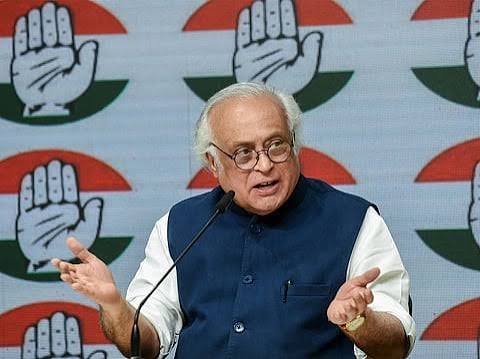
Addressing a press conference after the meeting, Congress general secretary Jairam Ramesh asserted that the BJP will not secure a two-thirds majority in the Lok Sabha. NEW DELHI: The Congress on Thursday said that it would oppose the constitutional amendment bills related to delimitation, dismissal of ministers and chief ministers, and other bills on FCRA and Higher Education, during the Monsoon session of Parliament beginning July 20. The decision was taken at the key strategic meeting, attended by senior Congress leaders, including party chief Mallikarjun Kharge, Sonia Gandhi, Leader of the Opposition in Lok Sabha Rahul Gandhi and others. Addressing a press conference after the meeting, Congress general secretary Jairam Ramesh asserted that the BJP will not secure a two-thirds majority in the Lok Sabha. “We have learnt that the Union Home Minister (Amit Shah) is making efforts to bring back the Delimitation Bill. The government failed to secure a two-thirds majority on 17th April, suffering a significant setback. It now wants to reintroduce the Bill.” This was discussed along with the Constitution amendment bill, which seeks to remove ministers from office for 30 days over serious offenses, he said. The home minister has “split parties” and is looking to manage a two-thirds majority by “cunningness,” which would be an insult to the Constitution, he said, adding that such a majority would be a “blot on democracy”. “LoP Rahul Gandhi and Congress president Mallikarjun are in touch with all parties that had supported us on April 16 and 17 in defeating the government’s delimitation bill,” he said. “The Congress Party has consistently maintained that it will strongly oppose the Delimitation Bill and will continue to do so. We will also make every effort to maintain the unity and solidarity of all Opposition parties,” he said. There was also some discussion on the ‘One Nation, One Election,’ on which a JPC has been constituted, Ramesh said. “We will also oppose the Viksit Bharat Shiksha Adhishthan Bill in its entirety. The Bill may be introduced during this session. There is also a possibility that the FCRA Amendment Bill will be introduced. We will oppose it as well. We had opposed it earlier, following which the government withdrew the Bill. However, we are now hearing that it may be brought back,” Ramesh said. The party will also corner the government on the alleged theft of donations from the Ram Mandir. Preetha Nair Courtesy : TNIE Note: This news is originally published on https:/thenewindianexpress.com/bha and is used purely for non-profit/non-commercial purposes, especially human rights
CO Soumya Asthana, who was investigating the Lalita Gautam murder case in Meerut, has been removed; CO Ramprakash will take over the investigation.

A major reshuffle has been made in the Meerut Dalit student murder case. CO Soumya Asthana, who was investigating the Lalita Gautam murder case, has been removed. A departmental inquiry has also been initiated against her. A departmental inquiry has been initiated against CO Soumya Asthana The newly appointed CO of Brahmapuri will investigate the murder case. The Lalita Gautam murder case has been in the news across the state. Rambabu Mittal, Meerut: A major administrative change has been made in the investigation of the infamous Dalit student Lalita Gautam murder case. CO Soumya Asthana, who was investigating the case, has been removed from the investigation. Her jurisdiction has also been changed. The investigation of this highly controversial murder case has now been handed over to the newly appointed CO of Brahmapuri, Ramprakash. Investigation initiated against CO Soumya Asthana According to sources, an internal departmental inquiry has also been initiated against CO Soumya Asthana. He is accused of being lenient towards some of the accused in the case and attempting to provide them relief during the investigation. In light of these allegations, the police department has decided to change the investigating officer. However, the department’s final conclusion on these allegations will only be revealed after the departmental inquiry is complete. The Lalita Gautam murder case has been a topic of discussion across the state since its inception. The victim’s family and various social organizations have consistently demanded a fair investigation. Meanwhile, the decision to change the investigating officer is being considered a significant administrative step in the case. PAC constable Ankit remains in the news The most discussed aspect of the case has been the accused, Ankit, a constable in the PAC. It is reported that during the initial investigation about 50 days ago, it was stated that insufficient evidence was found against him. However, events quickly changed, and following the lathi charge during a Dalit protest, the police arrested and jailed the accused, Ankit. This action raised many questions about the investigation process and the role of the police. CO Ramprakash will investigate As the new investigating officer, CO Ramprakash will thoroughly review the entire case again. Police officials say that all available evidence, witness statements, and technical facts will be examined impartially to bring the investigation to a logical conclusion. Victim’s family hopes for justice The change of investigating officer in the Lalita Gautam murder case and the initiation of a departmental inquiry have once again brought the case into the spotlight. All eyes are now focused on the new investigation. The victim’s family hopes that the new investigation will be impartial and that effective action will be taken against the culprits based on the evidence. It will also reveal whether there was any negligence or bias in the departmental investigation. Edited by: Vivek Mishra About the author Vivek Kumar Mishra is a Senior Digital Content Producer at Navbharat Times Online (NBT.Com). He monitors the political developments in Uttar Pradesh. UP Political Analysis, keeping an eye on the events taking place in Uttar Pradesh. Courtesy: Hindi News
Lights, camera, caste

This remarkable compendium of scholarship on the intersection of caste and Indian cinema opens up a conversation that goes beyond the portrayal of characters on screen. For several decades, scholars believed that caste does not exist in Indian cinema, or if it does, that it could be studied only through the oppression of Dalits or lower castes. Making a significant departure in cinema studies, The Routledge Companion to Caste and Cinema in India emphasises that caste is an everyday phenomenon in India, and so is its representation in cinema—both on the screen and behind the scenes. The volume, co-edited by Joshil K. Abraham and Judith Misrahi-Barak, begins on a provocative note. The editors note in their Introduction that a year before Raja Harishchandra (1913) was released, a filmmaker named Ramchandra Gopal Torne had already released Shree Pundalik. If Dadasaheb Phalke, and not Torne, came to be known as the father of Indian cinema, was it because the former was born in a Chitpavan Brahmin family? Misrahi-Barak is currently Professor Emerita at the University of Montpellier Paul-Valéry. Abraham, a brilliant scholar, tragically ended his life in December 2025, when he was just 43. The two editors had earlier collaborated on a volume, Dalit Literatures in India (Routledge, 2015). The present work extends the discussion from Dalits to the entire spectrum of caste. The volume brings together 29 essays on various films produced in different Indian languages over the last 100 years. Some contributors are renowned scholars associated with different institutions across continents, while some are young researchers. Such is the staggering spectrum of the films examined that even an ardent cinema lover might find several titles unfamiliar. This volume, which brings together 29 essays on films made in different Indian languages over the last 100 years, helps us understand not only how caste is depicted and received in cinema, but also how it operates in society at large. This volume, which brings together 29 essays on films made in different Indian languages over the last 100 years, helps us understand not only how caste is depicted and received in cinema, but also how it operates in society at large. | Photo Credit: By special arrangement The Routledge Companion to Caste and Cinema in India Edited by Joshil K. Abraham and Judith Misrahi-Barak Routledge India Pages: 440 Price: Rs.1,595 The films can be divided into three broad categories: those which bring a clearer focus on caste, those that invisibilise caste, and the ones that have not been perceived as about caste at all. It is here that the volume often becomes most penetrating. Lagaan (2001) and Chak De! India(2007) are projected as nationalistic works that seek to dissolve sectarian differences and unite the nation. Such is the power of a nationalistic theme that most scholars missed the uneasy matrix of caste that dominates the narrative. In the former, it is thanks to the kindness of the privileged-caste protagonist Bhuvan that the untouchable Kachra gets a place in the team. In the latter, it is the Brahmin Vidya Sharma who alone can captain the hockey team. In his essay, “‘Untouchable’ Body, Labour and Remuneration in Lagaan”, the scholar Purnachandra Naik argues that Kachra serves the role of a subservient and selfless untouchable, the ideal image of a Dalit that Mohandas Karamchand Gandhi had once envisaged. Commenting on the popular reception of Kachra’s role, Naik writes that he is the surplus labour(er) who is “not only expropriated on screen but also commodified and treated off screen for sadistically casteist popular consumption and profit”. Clearly, films made on progressive themes may also betray the caste biases of the filmmaker. In an incisive essay titled “Caste Voyeurism and Kannada New Wave Cinema”, Mahima Raj C. examines two iconic movies to argue that even the dead bodies of oppressed castes receive unfavourable treatment on screen. The corpse of a Brahmin man is at the centre of the narrative in Samskara (1970), and the corpse of a Dalit man in Grahana (1978)—but the two are not shown in the same way. The Brahmin’s corpse and its final rites consume a large part of the theological debate in the movie, based on the eponymous novel by U.R. Ananthamurthy. But the body is never shown entirely on the screen, except for the shot when he dies—a close shot of his face with mouth wide open. By contrast, Grahana “runs wild” in its portrayal of the Dalit man’s “degenerating body images”. Elite filmmakers, distanced from reality One also senses that as India sees increasing political assertion by oppressed castes, elites have become more distanced from the reality. Is it their coping mechanism to avoid the questions that now land with greater force? Consider this. When Achut Kanya (1936) was being made, its director Himanshu Rai and producer Franz Osten worked to erase caste divisions on the set. Not only did every crew member eat together at the canteen, but Rai even asked the protagonist Ashok Kumar Ganguly to drop his Brahmin surname. In the following decades, several eminent male actors would go simply by “Kumar” . It was a quiet transformation that India could once undergo. In absolute contrast, one can turn to the contemporary filmmaker Anubhav Sinha who is known for films that confront social reality. In an interview he gave after Article 15(2019), a film on caste violence, he proudly proclaimed that he did not know the caste of any of his 300 crew members. He simply deluded himself into believing that caste had vanished during the making of his film. Only those who have never been the victims of caste can afford that delusion. Obviously, then, in Article 15 it is a St. Stephen’s graduate, a Brahmin IPS officer, who alone can be the saviour of the Dalits. There is a sharp decline in the social consciousness of contemporary filmmakers when compared to the likes of Shyam Benegal and Govind Nihalani, who pioneered the new wave Hindi cinema in the 1970s. Caste and Cinema is a remarkable
Foundation stones laid for Dalit families’ homes at Pariyathukavu

Higher Education Minister Roji M. John inaugurating the foundation stone-laying ceremony for homes to be built for seven Dalit families under the Paryathukavu Unnathi project on Thursday. Higher Education Minister Roji M. John inaugurating the foundation stone-laying ceremony for homes to be built for seven Dalit families under the Paryathukavu Unnathi project on Thursday. | Photo Credit: R.K. Nithin Higher Education Minister Roji M. John on Thursday laid the foundation stones for houses of seven families belonging to a Dalit settlement at Pariyathukavu near Malayidamthuruth, close to Kizhakkambalam in Ernakulam. The houses are being funded by the State government as part of their rehabilitation on the same land. “Supporting marginalised sections of society is the policy of the State government, and the function exemplified this commitment,” Mr. John said after laying the stones. The Minister attributed the successful outcome to a collective effort involving Chief Minister V.D. Satheesan, ministers, the district administration, and a team of legal experts led by the Advocate General. The government will continue to support the families beyond the construction of houses, he said. Presiding over the function, Kunnathunadu MLA V.P. Sajeendran handed over the cheque for the advance amount to the building contractor. Benny Behanan, MP, attended. Each family will be provided with a 1,000-sq.ft. house, to be completed under government supervision within a year through sponsorship. The houses will have three bedrooms with attached bathrooms, a dining hall, a living room, a sit-out, and a kitchen. All seven families have been allotted five cents with road access. The dispute was amicably resolved last month after the family of the late Kannatt Sankaran Nair, who had won ownership rights over the land through a prolonged legal battle, agreed to allot five cents each to the seven families residing in the settlement within the 2.69 acres of disputed property. It was also agreed that the government would withdraw the cases registered against those who had protested during the 15 attempts to evict the families following a Supreme Court order The Hindu Bureau Courtesy : The Hindu Note: This news is originally published on https:/thehindu.com/bha and is used purely for non-profit/non-commercial purposes, especially human rights
From the memoir: What waiting in line at toilets taught a Dalit writer about social inequality
An excerpt from ‘Homes without Windows’, by Chandu Maheria, translated from the Gujarati by Hemang Ashwinkumar. I think my life shares as deep a bond with my excretory system as it does with my respiratory system, for whenever I jog my memory and drag it to the far end of my early childhood, the odd things that invariably surface on that mnemonic landscape are the sordid toilets of the neighbouring chawl, named after its owner Hiralal. And rightly so. For, as if the question of filling the bottomless pits of hunger was not vexed enough, the daily dilemma of emptying our bowels had made our lives, both personal and social, embarrassing and miserable. The rub was that our chawl didn’t have even a single public toilet attached to it, something that compelled us to use those hellish toilets of Hiralal’s chawl. Kids like us could squat anywhere on the footpath outside, but what would the elders do? And what about the women? Our chawl was inhabited in large part by the Rohits, people of the tanner caste, who had migrated from Charotar, a large swathe of fertile land covering districts like Kheda and Anand in central Gujarat. However, the rest of the chawls, including that of Hiralal, were populated by the Vankars, people of the weaver caste, from Mehsana, a district in north Gujarat. Deprived of the social respectability that separate toilets attached to one’s chawl brought, we had to sheepishly go relieve ourselves at Hiralal’s. Toilets of their own had got the Hiralalwallas inebriated with a sense of entitlement, so they threw their weight around, name-called us with slurs like the chanotara and let go of no opportunity to harass us. We too got even with them by calling them – not publicly, however – bloody patanwadia, the people from Patan district. And all this cheek was for toilets that were no better than hellholes. Can you beat that? Unlike the ones we commonly use these days, the floor of those toilets was not set in marble or glossy, ceramic tiles. With coats of plaster dropping off its walls, the goddamn structures sported big patches of brick-and-mortar design at several places. And in most cases, the lousy excuse for a door had neither a stopper nor a chain latch to boast of. Something that left the squatter on the edge throughout the business … to the mercy of Lord Rama, if you will. A soiled, soggy chamber pot, flanked by two parallelly placed uneven stones, was all one had in the name of a toilet seat. No marks for guessing, one of the stones would either be broken or on the verge of it, which made the whole human squat installation lean on one side. Even in such an awkward position, the user literally had to hold fast to the makeshift chain, or whatever that secured the rickety door, lest someone from outside pulled it open, out of innocence or sheer malice. As the wavy line of prospective users grew outside, a howl of protest from the disgruntled and impatient queuers soared, warning the user inside to make haste. At such moments, if someone snitched about such and such chanotaro occupying such and such toilet, the precariously hinged door would be yanked open with a bang and the water in the brass pot, carried for washing and flushing, would be drained with a resounding kick. Despite waiting in the queue till your legs ached, at the time of your turn, if a patanwadia kid materialised – God knows from where – you had to forgo your right to use the loo and give the queue-jumper the right of way. Again, a rowdy Vankar harrying a chanotari, filling her pitcher with water from the public tap, by thrusting his filthy toilet pot midstream and letting it overflow was a common sight. A strange thing to say but it was in these queues that I had learnt my first lessons in social inequality. All these people were extremely beleaguered, a harried lot that had come here to escape poverty, untouchability, oppression and exploitation, and yet they saw hierarchy and hatred as natural ways of being, such that even the slightest breach in the set order resulted in exchanges of expletives and blows. Though not untouchability in its conventional sense, these practices were rooted in direct discrimination, in an ordained difference between the high and the low, that had seeped right up to the bottom of the caste order. One scene in particular comes back to me repeatedly, no matter how hard I try to forget it. The first house at the mouth of our chawl was that of Bala Dhedh, a Vankar from Kheda and thus, a chanotaro for the patanwadia. In the “thatch” – a kutcha hut – attached to the house stayed Neno Ma’raj, a man of priestly Garoda caste, considered the highest among the Dalits. A mill worker of no consequence, Ma’raj would, in a blatant exhibition of his caste pride, lay his string cot out on the footpath every evening and lounge there like a maharaja, a veritable badshah holding his royal court. At such a time, the area became off-limits for everyone, even for a mangy-looking cur. For if the poor thing came up, barking or sniffing, from within the chawl, an affronted Ma’raj would fly into a lion rage, hurl a stick at it and roar, “Buzz off in, you … stay in ….” In his exhaustive, eye-opening study of the forms of untouchability practised by non-Dalits and Dalits (among themselves) in Gujarat, my friend Martin Macwan has pegged the numbers at ninety-eight and ninety-nine, respectively. Where would this kind of untouchability, and its distinctive, discriminatory form, figure in those lists? And in the dragnet of such divisions and sub-divisions, what happens to Dalit biradari, the idea of fraternity and caste solidarity? I have often wondered why we Dalits use the same word gandh [odour] to refer to both fragrance and stench. Perhaps, in