
Dalit youth brutally beaten in Hathras: Attackers bit him with their teeth for resisting, police investigating
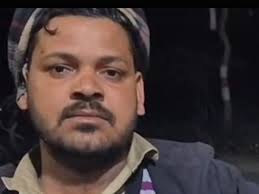
A case of brutal assault on a Dalit youth has come to light in Sikandra Rao, Hathras. The youth was seriously injured by goons in the Sikandra Rao police station area. The victim’s brother, Ranjit Kumar, has filed a complaint with the police. Ranjit Kumar, a resident of Mohalla Qazian, stated in his complaint that his brother Asharfi had gone to the forest to defecate around 4 pm. There, 4 to 5 youths surrounded him and started taking money from his pocket. When Asharfi resisted, the accused attacked him with sticks, rods, and kicks and punches. According to the complaint, during the assault, the attackers bit Asharfi on the back with their teeth, causing him to lose consciousness on the spot. Upon receiving information about the incident, the family members reached the spot and immediately informed the police by dialing 112. The injured Asharfi was taken to the hospital for treatment, where he is currently undergoing treatment. The victim’s family alleges that the attackers are the same goons who run a roadside eatery in the area and illegally sell liquor. Ranjit Kumar also stated that the accused had previously assaulted his brother. He has demanded strict action against the accused and expressed fear for his life. In this matter, Kotwali in-charge Shiv Kumar Sharma said that they have received the complaint and the matter is being investigated. Further legal action will be taken based on the investigation. Jaynendra Varshney | Sikandararao, Hathras Courtesy: Hindi News
SC Commission member urges immediate FIRs for Dalit atrocities reports
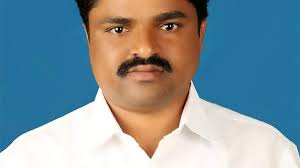
The Andhra Pradesh State Commission for Scheduled Castes member Ravada Seetharam on Monday directed the police department to file First Information Reports (FIRs) immediately when Dalits approach them to report atrocities and other related cases. On the occasion of the 77th Republic Day, he interacted with Dalit leaders and explained the rights guaranteed by the Indian Constitution effective since January 26, 1950. Leaders and activists complained about delays in filing FIRs under The Scheduled Castes and Scheduled Tribes (Prevention of Atrocities) Act-1989 by the police when they approach them. Mr. Seetharam asked them to inform the commission about through the WhatsApp number 9701305417. He said that the Commission would hold a review meeting in February in regards to the pending grievances of Dalit families across the State. K Srinivasa Rao Courtesy : The Hindu Note: This news is originally published on https:/thehindu.com/bha and is used purely for non-profit/non-commercial purposes, especially human rights
From the memoir: A Dalit woman writer on domestic violence, casteism, and emotional subjugation
The savarnas in the village always used coercion to force the safai karamcharis to do the filthy work of collecting night soil. If anyone refused, the village headmen and businessmen would summon and question them. The Thakurs and Raghuvanshis hurled abuses and threats. “Do you want to live in the village or not? We will not spare your lives.” There was no point in leaving the village either, because people of our jati had to do this work everywhere. Besides, forming new relationships in a new place was a daunting task. Our refusal to do this work invited a flood of abusive words and poisonous behaviour, enough to keep our people in constant fear. The threat of sexual violence against our women also remained a powerful weapon of control. Even after the municipality was formed, the savarnas continued to hold on to their dominance. Once, the safai karamcharis of the municipality went on strike. Their monthly wages were a mere five rupees, and even that was never paid on time. They demanded an increase in their pay. The protestors would be summoned to the police station – sometimes urged to compromise, and at other times, beaten brutally by the police. Many people were badly injured. In Seoni, Hari Rathore, Phoolchand Baggan, Chhotelal Baggan, Gorelal, and Dulichand Rathore were the bold and outspoken men of our community. After striking work, a jati panchayat was called, and a unanimous decision was made to go on an indefinite strike. Our people were prepared for the worst, and the savarnas failed to intimidate them. The strike was announced publicly and lasted an entire week, throwing Seoni and Banapura into chaos. Villagers came to our homes, urging us to return to work. People of our jati were summoned to the police station and threatened with dire consequences, but this time, no one gave in. This was the result of their newfound resolve. The distraught women of our community described the condition of their injured husbands and sons to other women and wept over the uncertain future of their children. Another jati panchayat was held to discuss possible solutions to this grim situation. During the strike, policemen constantly patrolled our mohallas, forcing our men into hiding. When they couldn’t find the men, they summoned the women to the police station and made them sit there all day. The women were subjected to verbal abuse and humiliation, threatened with dire consequences, and told to persuade their men to end the strike. Terrified, the women yielded easily. Hearing them weep filled me with fear too. Kalicharan Bhaiya’s wife, Budhia Bhabhi, however, was a bold and fearless woman. Whenever she saw the policemen, she hurled abuses at them: “May you rot in hell! You envy our men and cast lustful eyes on our women. Don’t you have women at home?” The villagers always managed to break such strikes; this was true of strikes in places like Hardi, Itarsi, and Hoshangabad too, which would be forcibly brought to an end. On such occasions, a jati panchayat was convened, and the elders would advise the people of our community to compromise. But we continued to do the same work as before, and we continued to endure the same hardships. This pattern had been reproduced for generations. Young men who resisted and refused to work without pay were summoned to the police station and beaten. False charges of theft and robbery were levelled against them. Then they were given a choice – return to work or rot in jail. The constant threat of the police kept us living in fear. Many such atrocities were committed against our people in Madhya Pradesh, Rajasthan, and other states of northern India. Goons hired by casteist savarnas would storm into our mohallas, beat up our men, and publicly humiliate our women. They even set fire to our bastis. On hearing about such incidents from Pitaji and my brothers, Ma and Nani would tremble with fear and pray to God for protection. Yet the injustices and atrocities committed by the savarnas continued without end. And so, the safai karamcharis of the municipality in Seoni went on strike in 1968 to demand better wages and working conditions, but also to protest against the harassment they were constantly subjected to. I was in class eight then. This time, they showed unity and firm resolve. The demands that had been ignored by government officials for years were now quickly accepted. When the week-long strike ended, the villagers heaved a sigh of relief. After this incident, our people began to be treated with a measure of respect. This was a big achievement, yet our people never realised their own strength. Had they understood the meaning of this change, they could have moved further towards liberation from their oppression. After the strike ended, they struggled immensely clearing the backlog of work that had piled up over those eight days. The second major strike took place in protest against dry latrines. The workers stopped work for many days. Official notifications were issued, recognising the seriousness of the situation. Flush latrines were built to replace the dry ones. This was a major victory for us, yet the work of carrying night soil continued wherever dry latrines remained. Our people still did this degrading work – out of ignorance, fear, or helplessness. Gandhiji’s ideas about the upliftment of the Harijans were widely promoted in our region, but our people didn’t realise that they had brought no real improvement in our condition. Having deep faith in Gandhiji, they often said, “Mahatma Gandhi cleaned his toilet himself. Under his influence, even the traders and moneylenders had begun to pick up the garbage around their homes and dispose of it themselves. When such big businessmen didn’t hesitate to do this work, why should we? We were born into this caste and must do this work, whether we like it or not.” This was a kind of conspiracy, a trap to deceive innocent people and stop them from
‘The People’s Doctor’: This renowned doctor from Patna will reach your home; free treatment also available in Dalit settlements
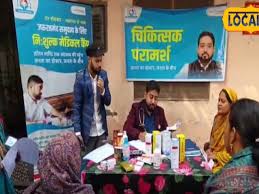
Dr. Dheeraj believes that doctors should go to the patients who cannot reach Patna or larger hospitals. His initiative is not only a new example for the healthcare system but also sends a message to society that treatment given with a spirit of service is true treatment. Vaishali: In today’s times, when medical treatment is becoming increasingly inaccessible to the common man, a unique initiative by a prominent doctor from Patna has forced everyone, from the healthcare department to the general public, to think. Dr. Dheeraj Kumar, a professor at PMCH and a renowned gastroenterologist, has put the concept of “Doctor at Your Doorstep” into practice by visiting Dalit and slum areas to provide free check-ups and distribute medicines to patients. In this era of expensive treatment and exorbitant fees, Dr. Dheeraj Kumar’s step has come as a great relief for thousands of needy people. While the fees of big doctors are usually in the thousands, Dr. Dheeraj has already created a stir in the healthcare system with his decisions. He proved that treatment can be affordable and accessible by offering OPD consultations for just Rs. 50 and X-ray facilities for Rs. 25 at his ‘InCure Clinic’ in Kankarbagh. Famous as the People’s Doctor Now, Dr. Dheeraj has gone a step further, moving out of air-conditioned rooms and large clinics to directly reach slums and Dalit settlements. In this regard, he, along with his medical team, reached Ward Number 31 in Yusufpur, Hajipur, where hundreds of patients were examined free of charge. Patients suffering from stomach problems, liver issues, gas, anemia, and other common ailments were not only given consultations but also provided with free medicines. Among the patients who come from far and wide for treatment, Dr. Dheeraj is now known as the “People’s Doctor.” Serving the poor and underprivileged is true religion. Dr. Dheeraj Kumar, who is educated in England, is a professor at PMCH and is also deeply involved in social causes. He says that becoming a doctor was his mother’s dream, and after fulfilling that dream, he considers serving the poor and underprivileged as his true religion. Edited by: Mohd Majid Courtesy: Hindi News
New program helps transgender people find work in South India
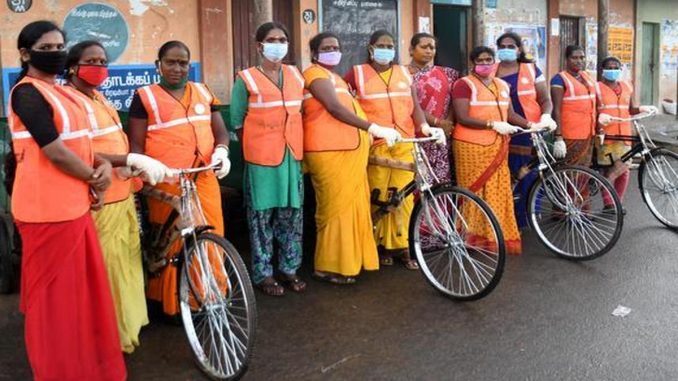
Authorities in the southern Indian city of Visakhapatnam have launched a new effort to help transgender people find stable work and live with greater dignity. The initiative, known as Mission Jyotirgamaya, is being led by the Vizag city police with support from local government bodies and community organisations. The programme was launched with the broader goal of making Visakhapatnam a beggar-free city, but officials say it focuses on providing purpose and opportunity rather than punishment. As part of the first phase, 20 transgender individuals have been hired as sanitation workers by the Greater Visakhapatnam Municipal Corporation. In addition, five people from the community have received loans from the State Bank of India to help them start small businesses. City police commissioner Shankhabrata Bagchi said the programme is based on the belief that everyone deserves respect and a chance to build a better life. “Every individual has a right to live with dignity,” he said, adding that beggars and transgender people should be given opportunities rather than ignored. Police officials said the initiative will continue to expand in the coming months. The long-term aim is to create employment opportunities for all transgender people in the city who are seeking work. The programme reflects a growing push in parts of India to promote inclusion and improve access to jobs for marginalized communities. Korina Estrada Courtesy : Transgenderfeed Note: This news is originally published on https:/transgenderfeed.com/bha and is used purely for non-profit/non-commercial purposes, especially human rights
Is meeting Rahul Gandhi difficult, or is it just a rumor? Are Muslim leaders really being ignored in the Congress party? Find out.
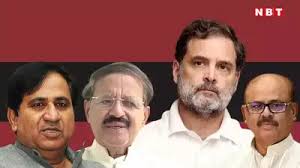
Congress MP Tariq Anwar from Katihar, Bihar, has advised Muslim leaders to communicate with the high command regarding allegations of their neglect. This statement comes after former leader Shakeel Ahmed called Rahul Gandhi a “coward” and Rashid Alvi alleged difficulty in meeting Rahul and neglect of Muslim leaders. Is meeting Rahul Gandhi difficult, or is it just a rumor? Patna: Congress MP Tariq Anwar has appealed to the party’s Muslim leaders that if they feel that Muslim leaders are being neglected, they should discuss the matter with the party’s top leadership. This statement comes at a time when former Congress leader Shakeel Ahmed targeted Rahul Gandhi, calling him an insecure and cowardly leader. Following this, senior Congress leader Rashid Alvi said that Muslim leaders are being neglected in the party and that Rahul Gandhi does not have time to meet Muslim leaders. Meeting Rahul Gandhi is not that easy. Congress MP Tariq Anwar defends Rahul Responding to these statements, Congress MP Tariq Anwar from Katihar, Bihar, said in New Delhi that these are their personal feelings. If there is any such complaint, he has been a senior leader and also a Member of Parliament from the Congress, and he should talk to the Congress leadership about all these matters. If they feel that collective leadership is not being promoted, then this should be discussed. Regarding Congress MP Manickam Tagore’s statement, Tariq Anwar said that if there is such discontent within the party, then why is it there, and it should be properly resolved. The Congress party is a national party, and it is essential for democracy that the Congress party remains strong, improves itself, and works to protect democracy in the country in the future. It should work to save democracy in the country in the coming times. Shakeel Ahmed had called Rahul a ‘coward’ In fact, former Union Minister and senior leader Shakeel Ahmed launched a scathing attack on Rahul Gandhi, calling him a “coward and insecure” leader. Ahmed, a three-time MLA and two-time MP, alleged that Rahul Gandhi feels uncomfortable around senior and popular leaders, which is why he only promotes sycophantic and inexperienced young people. Calling Rahul a dictator and undemocratic, Ahmed said that he does not listen to the advice of senior colleagues. He mocked Rahul’s working style, reminding him that this very attitude led to him losing his family’s traditional seat of Amethi. According to Ahmed, who left the Congress after the 2025 elections, Rahul Gandhi feels insecure in the presence of any prominent personality, which is harming the party’s internal democracy. Meanwhile, on the statement of Congress leader Karti Chidambaram, Congress MP Tariq Anwar from Katihar, Bihar, said that there must be some basis for what Karti said. I don’t deny this, although there is still a debate going on about whether holding simultaneous elections would be right or not. Our constitution grants rights to the states, and any step that harms or weakens those rights will not be acceptable to everyone. Rashid Alvi, who raised questions, U-turns Congress leader Rashid Alvi had said that limited access to the top leadership has created a communication gap in the party. Congress workers also complain that it is no longer easy to meet the Congress high command. There is no platform in the party where issues can be discussed. If people want to express their concerns, where do they go? Not everyone is a member of the Congress Working Committee. He said that Muslim leaders are leaving the party not out of greed for power, but because of the neglect of Muslim leadership. If the neglect of Muslim leadership continues in this way, leaders like Asaduddin Owaisi will continue to become powerful forces in the country. However, Rashid Alvi, who said all this, is now praising Rahul, saying that the country needs Rahul Gandhi. Input – IANS Edited by: Sunil Pandey About the author Sunil Pandey is a Senior Journalist at Navbharat Times Bihar-Jharkhand. He has experience in all three mediums: print, TV, and digital. He has 20 years of experience in politics, sports, business, and ground reporting. He started his career with the prestigious fortnightly magazines Maya and Lokayat. Courtesy: Hindi News
Raebareli: Patwari orchestrated a ‘horrific’ conspiracy, looted 38 lakhs from a Dalit man and seized his land; SP’s action creates a stir

Raebareli News: A shocking case of collusion between land mafia and government employees has come to light in Raebareli, Uttar Pradesh. Here, a patwari (revenue official) conspired with fraudsters to seize property worth crores of rupees from a mentally ill Dalit man. In this case, which has made headlines in UP news, Superintendent of Police (SP) Dr. Yashveer Singh’s zero-tolerance policy has shaken the criminals. The police have registered a case against five people, including the patwari, and have intensified efforts to arrest them. Land looted by instilling fear of a lawsuit This major fraud took place in Khor village (Amawan) under the Mill Area police station. The victim, Rajkumari, told the police that her husband, Ramprasad, is mentally unwell. Local land mafia took advantage of this. The accused threatened Ramprasad and his brother Guddu with an old lawsuit. The accused lured them to an office in Indira Nagar, Lucknow. There, on March 3, 2023, the fraudsters fraudulently got three agreements and two sale deeds registered in their favor in a single day. In this conspiracy, about 10 biswa of land was transferred to Raman Kumar and one bigha of land to Ramsajeevan. In addition, a fake agreement for one bigha of land was prepared in the name of Balkishun. 38 lakh rupees stolen from bank accounts The criminals not only seized the land but also looted the life savings of the victim’s Dalit family. The fraudsters took control of the mobile numbers and ATM cards of the victims, Ramprasad and his brother. The accused gradually transferred Rs 38.55 lakh from the accounts in the Bank of Baroda’s Malikmau branch to their own accounts. The investigation revealed that Rs 18.71 lakh was withdrawn from Ramprasad’s account and Rs 19.84 lakh from Guddu’s account. FIR filed against 5 people, including a revenue officer; police tighten the noose. The police department was thrown into a frenzy after this high-profile fraud came to light. City Circle Officer (CO City) Arun Kumar Nauhwar said that a case has been registered based on the complaint of the Dalit victim. The main mastermind of this conspiracy is Udit Narayan Srivastava, a resident of Kodwal. Bajrang, Ramlakhan Pasi, Manish Sonkar, and the local revenue officer Parmeshwardeen have also been named as accused. The Superintendent of Police has given clear instructions that no culprit will be spared. Police teams are conducting raids to arrest the accused. Poonam Sharma Courtesy: Hindi News
Casteism in Himachal: ‘Mend your ways…’ Dalit leader openly threatened, the horrific truth of casteism in Devbhoomi comes to light
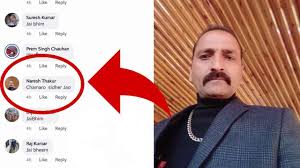
Himachal News: The recent incident has made it clear how deeply rooted casteism is in Himachal Pradesh. A prominent Dalit leader from the state, Ravi Kumar, was openly subjected to casteist abuses on social media. A man named Naresh Thakur fearlessly wrote on his post, “Chamars, mend your ways.” This comment is a direct caste-based attack. Surprisingly, such people have neither fear of the law nor of the Supreme Court’s orders. Serious questions are now being raised about the safety and equality of Dalits in Devbhoomi (the land of gods). Hatred in the name of reservation and tradition Our investigation has revealed strange justifications behind casteism in Himachal. Some people describe it as part of ‘Dev Sanskriti’ (divine culture) and tradition. Many others consider reservation to be the reason for the hatred. People openly write on social media that they practice casteism because of reservations. They claim that as long as reservations exist, discrimination will continue. Casteism is also justified in the name of protecting Dev Sanskriti. These people forget that the use of casteist slurs and discrimination is a serious crime. Serious questions about the role of the police The attitude of the Himachal Police in cases of Dalit oppression has consistently been under suspicion. In many serious cases, FIRs are registered only after immense pressure from Dalit groups. Whether it was the suspicious death of a child in Rohru or the rape of a Dalit woman in Kullu, the police action has been sluggish. The police also showed negligence in the Pallavi death case in Dharamshala. If the police had acted on Pallavi’s complaint two months earlier, her life might have been saved. Kullu incident: The husband himself was made the culprit The most frightening face of the police’s working style was seen in Sainj, Kullu. There, a Dalit woman was gang-raped and murdered. Her body was hung from a tree. Without a proper investigation, the police imprisoned the innocent husband of the deceased woman. He languished in jail for a month. Later, protests by women’s groups and a viral audio clip revealed the real killers. The police have not yet disclosed what happened to those real killers. This means that police officers don’t even consider it necessary to hold a press conference in such heinous cases. Blatant disregard of Supreme Court orders Former Supreme Court Chief Justice Gavai had clearly stated in his order that there is no provision for anticipatory bail under the SC-ST Act. The accused should be sent to jail immediately. Despite this, the police in Himachal Pradesh appear lenient towards the accused. In hundreds of cases, the accused have been given a free pass. Ravi Kumar has more than 200,000 followers on social media. If such a prominent figure can be subjected to casteist slurs, one can imagine the plight of ordinary Dalits. Now it remains to be seen whether the government suppresses this matter or delivers justice. Poonam Sharma Courtesy: Hindi News
New initiative in Tholla Fatehpur, Saharanpur: Dalit community panchayat bans the practice of ‘death feasts’
In Tholla Fatehpur village of Saharanpur, the Dalit community’s panchayat has taken a significant decision to end the practice of death feasts. Villagers believe that this practice… Read more Jagran Correspondent, Saharanpur. The Dalit community’s panchayat in Tholla Fatehpur village has decided to ban the practice of death feasts. People argue that this practice leads to people falling into debt. It also imposes an unnecessary financial burden during a time of grief. Former village head Deshraj said that the death feast is a harmful custom that should be abolished. Taking the initiative in this direction, Mangeram of the village decided not to hold a death feast after the death of his mother. His mother passed away on Saturday. After the last rites, he said that he would only perform the traditional turban-tying ceremony. Villagers believe that other villages should also decide to ban death feasts, as it puts an unnecessary financial burden on the deceased’s family. Many families have to take loans to follow this conservative tradition. In the panchayat, Som Singh Fauji, Gaje Singh Daroga, Shivlal, former head Dr. Ankit Arya, Rajesh, Dr. Sulekh, Nirdosh Kumar, Bhopal, Dr. Ramesh Chand, Sevaram, Anangpal, Yashpal, and many others supported this decision. EDITED BY: SAKSHI GUPTA Courtesy: Hindi News
“This is the new batch of traitors…” Congress MP Manickam Tagore speaks out against those criticizing Rahul Gandhi

A stir has been created in the Congress party after former Congress leader Shakeel Ahmed criticized Rahul Gandhi. In this matter, Congress MP Manickam Tagore has come forward in Rahul Gandhi’s defense. The Congress MP has strongly criticized those who are criticizing Rahul. New Delhi: Congress leader and Lok Sabha MP Manickam Tagore has called the leaders who criticized Leader of the Opposition in Lok Sabha, Rahul Gandhi, traitors. The Congress MP’s statement comes after former Congress leader Shakeel Ahmed’s remark in which he called Rahul Gandhi the most cowardly and insecure leader in Indian politics. ‘How betrayal comes out in the open’ Manickam Tagore wrote in a post on the social media platform X that he was not surprised. He was simply saddened once again to see how betrayal comes out in the open when courage walks the most difficult path. At a time when the Congress needed unity the most, people like Shakeel Ahmed, who joined the group of traitors, and former BSP leader Rashid Alvi, have chosen to attack the very leader who traveled more than 4,000 kilometers to defeat hatred and spread love, and covered a distance of 6,000 kilometers through the Bharat Jodo Nyay Yatra to unite India with justice and respect. Welcome to the 2026 batch of traitors He said that clearly, these attacks are not about ideology or concern. They are about appearing on TV, remaining relevant, and pleasing new masters. He said that this is nothing new, but this is a new group of traitors. Some of them are ministers in the Modi government, some are MPs, one is even a current Chief Minister, and many are unemployed who have switched parties. Welcome to the 2026 batch of traitors. He said that the Indian public knows the truth. When everyone claimed that the INDIA alliance would never cross the 150-seat mark after the temple’s construction, the same leader spearheaded the campaign that brought the INDIA alliance to within just 32 seats of power—a result nobody had imagined. And today, that same leader is being ridiculed. Challenging hatred with love He said that in 2024, with 240 seats, Rahul Gandhi brought politics back to the streets, challenged hatred with love, and proved that myths can be defeated with perseverance. By attacking the Congress president, they are also insulting Mallikarjun Kharge, who is the biggest Dalit leader in current Indian politics and the democratic soul of the Congress. He said that journeys reveal many things. They expose hatred on one hand and betrayal on the other. The public is watching. History will remember who fought for India and who groveled to reach power. Edited by: Anil Kumar About the Author Anil Kumar is part of the homepage team at Navbharat Times Digital. He has about 16 years of experience in both print and digital media. He has been associated with Navbharat Times Online since January 2021. He writes news and analysis related to politics and current affairs for the India and Delhi sections on the homepage. Courtesy: Hindi News