
Bihar Transgender Welfare Board approves proposal to build temple in honour of PM Modi
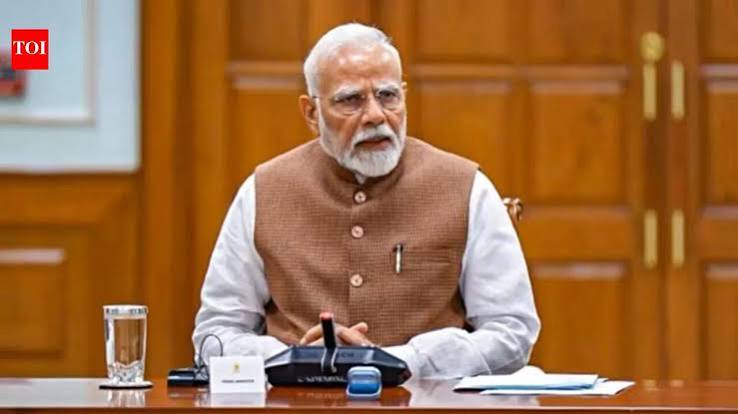
Board member Rajan Singh said the state government will bear all expenses for the construction of the temple. PATNA: Bihar State Transgender Welfare Board has approved a proposal to build a temple in honour of Prime Minister Narendra Modi in recognition of his efforts to give respect and rights to the community. A decision to this effect was taken on Wednesday in the Board’s first meeting, held at the social welfare department in the Old Secretariat. The Board works under the state social welfare department. Board member Rajan Singh, who presented the proposal during the meeting, said that the transgender community wanted to express its gratitude to Prime Minister Modi by constructing a temple dedicated to him. He said that the temple would be built in Patna and the construction work would start after the state government identifies the land for the purpose. The state government will bear all expenses for the construction of the temple, he added. Singh said the transgender community in Bihar did not have a temple of its own, adding that the proposal was unanimously supported by the members and approved by the Board. Referring to the Board’s first meeting, Singh said it was the inaugural session following the implementation of the Transgender Persons (Protection of Rights) Act, 2019, which provided the transgender community with institutional representation within the state secretariat. The Bihar State Transgender Welfare Board (Bihar Rajya Kinnar Kalyan Board) is a 28-member state panel under the Social Welfare Department, formed in August 2025 to protect community rights and drive social empowerment. Ramashankar Courtesy : TNIE Note: This news is originally published on https:/thenewindianexpress.com/bha and is used purely for non-profit/non-commercial purposes, especially human rights
32% Dalit Vote In Play: Why Every Party In Punjab Is Racing To Own Guru Ravidas Jayanti

Since the Jayanti is on February 20, it will fall right in the middle of the election campaign, making it a major event for all the parties Ahead of the Punjab Assembly elections, Guru Ravidas Jayanti has become more than just a religious occasion. With the Ravidasia community wielding considerable electoral influence, particularly in the Doaba region, every major party is using the celebrations to reinforce its outreach to Dalit voters. Guru Ravidas was a revered 14th-15th-century Bhakti movement saint, poet, and social reformer. He has a massive following among Scheduled Castes in Punjab. Punjab has the highest Dalit population in the country at around 32%, according to the 2011 Census. The community plays a decisive role in the electoral outcome of several assembly constituencies, making it a key political constituency for all major parties. Since the Jayanti is on February 20, it will fall right in the middle of the election campaign, making it a major event for all political stakeholders in the state. The Centre’s launch of a special train for Guru Ravidas Jayanti is also likely to add a political dimension to the festivities. The BJP is projecting the launch of the special train as part of the Narendra Modi government’s efforts to facilitate pilgrimage and honour the legacy of Guru Ravidas. The party is showcasing the initiative alongside its outreach to Ravidasia deras and religious institutions, seeking to strengthen its connect with SC voters. The BJP is also using the occasion to expand its social base beyond its traditional urban support. The BJP has already kickstarted seven-month-long celebrations from UP to Punjab under the banner of ‘Samrasta Sankalp Abhiyan’, coinciding with the 650th birth anniversary of Guru Ravidas. The ruling AAP government is highlighting the measures it has taken to mark Guru Ravidas Jayanti, including declaring it a public holiday, organising state-supported celebrations and facilitating devotees travelling to places associated with Guru Ravidas. The party is expected to present these initiatives as part of its broader commitment to respecting all faiths, while combining them with welfare and governance measures targeted at disadvantaged communities. The celebrations are likely to be used to reinforce AAP’s outreach to Dalit voters, who form a key pillar of its electoral support in Punjab. The Congress is expected to leverage its traditional support base among the Ravidasia community, particularly in the Doaba belt, by increasing the visibility of its senior Dalit leaders during the celebrations. The party is likely to argue that while symbolic gestures have their place, the place in Sikhism, with his hymns enshrined in the Guru Granth Sahib, while projecting itself as a party rooted in Punjab’s religious and social ethos. The Akali Dal is also likely to step up its engagement with Ravidasia organisations as it seeks to rebuild its support base before the 2027 polls. Reported by: Gurpreet Singh Chhina Edited by: Mohd Asim Courtesy : NDTV Note: This news is originally published on https:/ndtv.com/bha and is used purely for non-profit/non-commercial purposes, especially human rights
Occupation of 72 Dalit Patta Lands: Women Beaten for Protesting, Appeal to DM

In Niloha village, Falavada, Sardhana tehsil, Meerut, 72 Dalit leased lands have been encroached upon by powerful people. When the women tenants arrived with their land documents, they were assaulted and threatened with dire consequences. The victims met with District Magistrate Dr. VK Singh and requested an investigation and action in the matter. Villagers of Niloha village, Sardhana tehsil, stated that these leased lands were allotted to Dalits during the BSP government. According to government records, the land measures approximately 750 bighas, and all the villagers have valid lease documents. However, despite the land being in their names on the documents, the village’s powerful people have occupied it. According to the villagers, when they go to cultivate their land, the powerful people destroy their crops with tractors. This has caused them losses worth lakhs of rupees and has created a financial crisis. The villagers have accused Satte Pradhan, Mukesh Pradhan, Ompal, Ajay Kumar, Devi Lal, Rajveer, and Vinod, among others, of encroaching the land. The victims stated that they had filed complaints in this regard at the relevant tehsil and police station. However, their complaints were dismissed as land disputes, and no action was taken. On Wednesday afternoon, a large number of villagers reached the District Magistrate’s office. They explained their problems to the administrative officer and alleged that the bullies do not spare even women and beat them with sticks. Administrative officials have investigated the matter and assured impartial action. Shubham | Meerut Courtesy: Hindi News
Alleged rape of Dalit girl in Nasirabad: Main accused arrested, case filed under serious sections including SC/ST Act

A case of rape of an 18-year-old Dalit girl has come to light in a village in the Nasirabad police station area of Rae Bareli. Based on the complaint filed by the victim, the police have registered a case under rape, SC/ST Act, and other serious sections. Police have arrested the main accused and are investigating the matter. According to the complaint filed by the victim’s aunt, on July 28th, at around 4 pm, village resident Prem Sagar Tiwari, son of Dayashankar Tiwari, allegedly lured the girl into his tubewell room. It is alleged that she was forcibly raped there. After the incident, the accused used casteist slurs and threatened to kill her if she mentioned the incident to anyone or complained to the police. The accused also claimed that his family had influential and political connections. The complaint also alleges that when some villagers arrived at the scene, those present allegedly abused the victims, made casteist remarks, and threatened to kill them. As the crowd of villagers grew, the accused fled the scene. Salon Circle Officer Yaduvendra Bahadur Pal stated that after the complaint came to light, a case was registered under serious sections including rape and the SC/ST Act. The main accused has been arrested and is being interrogated. The victim has been sent for a medical examination. He added that an impartial investigation is also being conducted into the role of the other accused named in the case. Strict legal action will be taken based on the facts that emerge from the investigation. According to the police, the investigation is being carried forward based on all evidence and the medical report. Rajiv Sinha | Chhatoh, Raebareli Courtesy: Hindi News
Dalit girl missing for a week: Missing case filed in Machhlishahr, police searching

A minor Dalit girl has been missing from Machhlishahr for the past week. Police have filed a missing person case and launched a search for her. The girl left home on July 19th and has not returned since. The girl’s father, who lives in a neighborhood in the city, stated that his 15-year-old daughter left home at around 10 a.m. on July 19th, saying she was going to the bus station. However, she did not return home until late evening. The girl’s family contacted her friends and relatives the next day to gather information, but found no trace of her. When no information was found despite repeated searches, the father filed a missing person report at the police station on Monday evening. In-charge Inspector Vineet Roy stated that a missing person report has been filed based on the father’s complaint. Police teams are actively searching for the girl. Abhishek Narayan Singh | Machhlishahr Jaunpur Courtesy: Hindi News
Opinion: How important is it for a Dalit to lead the Jantar Mantar movement? Has GenZ changed the political agenda?

CJP Protest: The CJP movement against the NEET paper leak sparked a new debate in the country’s politics and society. Dalit youth Abhijeet Deepak led this movement, but he focused on issues like education, paper leaks, and unemployment rather than caste. Following the movement, the government accepted their key demands. Many see this as a sign of GenZ’s changing mindset, where opportunities, education, and employment are becoming more important to youth than caste. A movement that channeled the anger and frustration of young people in India has recently been in the headlines. The Cockroach Janata Party (CJP) launched a major movement and finally achieved the acceptance of its key demand. Most notably, this movement was led by a Dalit youth, Abhijeet Deepak. For the first time in India, a major mass movement was led by a Dalit, and that too, a movement that was not in favor of reservation. This clearly demonstrates that India’s younger generation is overcoming the curse of caste. This is a very positive development. Abhijeet Dipke, a resident of Chhatrapati Sambhajinagar in Maharashtra, comes from a Dalit family. His father became an engineer from a poor village farmer family. Abhijeet did not prioritize caste in his movement. He clearly stated that his focus was on the education system, paper leaks, and unemployment. Allegations of leaks in exams like NEET, student suicides, and a lack of jobs were the issues. He demanded the resignation of Education Minister Dharmendra Pradhan. In June 2026, he returned from the US and began a protest at Jantar Mantar in Delhi. Gradually, the movement spread to many cities across the country. Protests at Jantar Mantar and Dalit Abhijeet Dipke The protest at Jantar Mantar continued for approximately 36-37 days. The students remained steadfast even in the rain. Abhijeet himself was seen several times pleading with the police, asking for permission to erect a tarpaulin. On July 25, 2026, significant news broke. Talks were held between the government and the CJP. Dharmendra Pradhan resigned. An assurance was given to withdraw the cases filed against the protesters. The CJP called off the agitation. Abhijeet said, “This proves that if you don’t fear, you can win.” Dalit Movement and History To understand this success, it’s important to examine the history of the Dalit movement in Maharashtra. Maharashtra has always been a stronghold of the fight for social justice. In the nineteenth century, Jyotirao Phule laid the first strong foundation in this direction. Phule himself belonged to the Mali caste, but he spoke out against the oppression of the upper castes. He founded the Satyashodhak Samaj. Phule believed that education is the real weapon. Along with his wife, Savitribai Phule, he opened schools for girls and backward castes. This was a significant achievement at the time. Phule’s book “Gulamgiri” is still read today against the caste system. He clearly stated that the Brahminical system enslaved the Shudras and Atishudras. The Ambedkar Era After Phule After Phule came the era of Babasaheb Dr. Bhimrao Ambedkar. Ambedkar belonged to the Mahar community of Maharashtra. He not only criticized the caste system but also waged an organized struggle against it. The Mahad Satyagraha and the Kala Ram Temple Entry Movement—these are pages of history. Ambedkar showed the path of education, organization, and struggle. While drafting the Constitution, he provided for reservations so that Dalits and backward classes could find a place in the mainstream. In 1956, he embraced Buddhism along with millions of followers. Ambedkar’s message was: Be educated, stay organized, and fight. Maharashtra, the land of the Dalit movement The Dalit movement has always been strong in Maharashtra because of these two great men. Later, leaders like Kanshi Ram and Mayawati gave it political strength, but its roots remain in Maharashtra. Ambedkarite thinking still runs deep in Marathwada and Vidarbha. Abhijeet Deepak also emerged from this soil. He held Ambedkar’s book in his hand and spoke about the Constitution. He talks about cleaning up education, ending exam malpractices, and giving opportunities to youth. Has Genji changed his political agenda? This reflects Genji’s thinking. Today’s youth has grown up on social media. Opportunity, employment, and respect matter more to them than caste. The older generation associated caste with every issue. The new generation considers issues as issues. Abhijit’s movement has become a symbol of this sentiment. It is remarkable that a Dalit leader has been able to garner such widespread support for a non-caste issue. This is change. Some critics will argue that caste still exists. Abhijit faced casteist attacks when he identified himself as a Dalit. But the support was overwhelming. Millions of young people stood with him without questioning his caste. This is change. Author: Vivek Shukla Courtesy: Hindi News
CM’s ‘Gen Z’ push sparks buzz over young faces in Telangana Cabinet
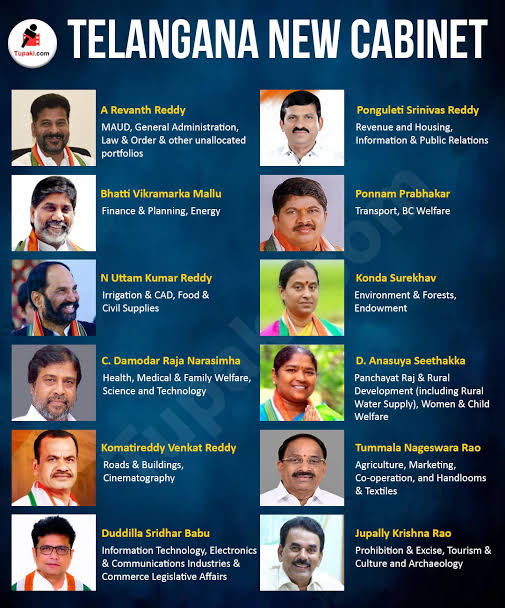
Some believe Revanth is keen to give greater representation to young legislators, while others think move is aimed at enhancing Cong appeal HYDERABAD: Chief Minister A Revanth Reddy’s recent remarks on “Gen Z” have set off speculation within the Congress over the possible induction of younger MLAs into the state Cabinet during the impending expansion or reshuffle. Party leaders said the discussion has gained momentum, with many believing that Revanth is keen to give greater representation to younger legislators. The move is also being seen as an effort to strengthen the Congress’ appeal among young voters, not only in Telangana but across the country. According to senior party leaders, if the proposal goes ahead, one or two young MLAs could find a place in the Cabinet. They say the move would reflect Revanth’s political style while helping the party connect better with younger voters. Sources said Revanth is likely to take up the proposal with the Congress high command, arguing that projecting younger ministers could work in the party’s favour ahead of the next electoral cycle. The speculation has also led to some nervousness among sitting ministers, as any Cabinet expansion or reshuffle could change the existing political equations. According to party sources, the Cabinet expansion or reshuffle is expected in August. They said discussions on the Karnataka Cabinet expansion are almost complete at the All India Congress Committee (AICC) level, after which the focus is likely to shift to Telangana. Young aspirants Following the chief minister’s remarks that Gen Z leaders should become ministers, the names of some of the Assembly’s youngest MLAs, including Mamidala Yashaswini Reddy, Mynampally Rohith Rao and Chittem Parnika Reddy, have begun doing the rounds in Congress circles. Party sources said there is a fair chance that one or two young legislators could be accommodated in the Cabinet. At the same time, there is also talk that up to three senior ministers could be dropped and given organisational responsibilities, either in the state unit of the party or at the national level. Congress leaders expect Revanth to discuss the issue with Leader of the Opposition in the Lok Sabha Rahul Gandhi, who has consistently encouraged greater participation by young people in politics. They believe the induction of younger ministers could send a message beyond Telangana and help the party strike a chord with young voters across the country. Leaders familiar with the chief minister’s political thinking also believe he is likely to give more tickets to younger candidates in the next Assembly elections, particularly if the proposed delimitation exercise increases the number of Assembly constituencies. They say this would fit in with Revanth’s long-term political strategy in both Telangana and the Congress. Party leaders also point out that several first-time legislators are relatively young. They mention MPs Chamala Kiran Reddy, Kadiyam Kavya, K Raghuveer Reddy, Gaddam Vamshi Krishna and Anil Kumar Yadav, along with MLC Balmoor Venkat, as part of the younger leadership, even if they do not fall within the Gen Z age group. Senior Congress leaders also expect the party to field a larger number of candidates in the 40-45 age bracket at the next Assembly elections, especially if the number of constituencies increases from the present 119 to 182 following delimitation. Ireddy Srinivas Reddy Courtesy : TNIE Note: This news is originally published on https:/thenewindianexpress.com/bha and is used purely for non-profit/non-commercial purposes, especially human rights
Rahul Gandhi’s statement, “A person who defends rapists has been appointed Education Minister,” sparked uproar in the Lok Sabha.
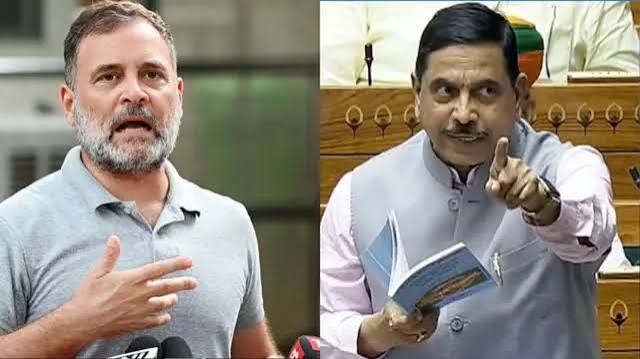
The ruling party strongly objected to Priyanka Gandhi’s statement in the Lok Sabha, calling it baseless and offensive against the Education Minister. Several ministers, including Kiren Rijiju, demanded an apology and action, while Priyanka Gandhi stated that she would verify her allegations through appropriate channels. New Delhi: Congress leader Rahul Gandhi alleged that after youth protests demanding reforms in the education system, PM Modi appointed a person who “defends rapists” as the country’s Education Minister. Rahul Gandhi targeted Education Minister Prahlad Joshi in the Lok Sabha following remarks made by party General Secretary Priyanka Gandhi Vadra. Priyanka had made some comments about Joshi in the Lok Sabha, citing a newspaper report about the accused in the Bilkis Bano case being granted bail, which were expunged from the House proceedings. Following this, Leader of the Opposition Rahul Gandhi said in Parliament, “After protests by young people demanding reforms to the education system in the country, the BJP has appointed a person who defends rapists as the country’s Education Minister. There can be nothing more shameful than someone who advocates for the protection of rapists becoming the country’s Education Minister.” Taking aim at Prime Minister Narendra Modi, he said, “The Prime Minister’s move is strange. He has so many people in his cabinet; he could have appointed anyone as Education Minister, but he chose someone who defends rapists.” Later, Rahul Gandhi posted on X, “No one can be more despicable than someone who defends rapists. Prahlad Joshi is an insult to our education system and every student. Now, the institutions where millions of young women study will be under his supervision.” He emphasized that the women of India will never accept Prime Minister Modi’s new Education Minister. Uproar over Priyanka’s statement When Priyanka Gandhi mentioned this issue in the Lok Sabha, ruling party members objected, calling it a baseless and offensive remark against the Education Minister. The House witnessed a brief uproar over the issue. Parliamentary Affairs Minister Kiren Rijiju objected, stating that the comments made regarding the new Education Minister were character assassination and that it was inappropriate to make such allegations without verification. Demand for an apology from Priyanka Gandhi He said that if Priyanka Gandhi cannot verify her allegations, she should apologize to the House. Lok Sabha Speaker Om Birla said that such statements should not be made in the House without facts. Meanwhile, Union Education Minister Prahlad Joshi said that Priyanka Gandhi Vadra cannot get away with making such allegations. He demanded that the Congress MP apologize to the House and action be taken against her. Priyanka Gandhi said that she would verify her statement in the House through appropriate channels. Edited by: Ashok Upadhyay About the Author Ashok Upadhyay is a Senior Digital Content Producer at Navbharat Times Online. He has 12 years of field reporting and desk work experience. He began his journalism career with Navbharat Times Hindi newspaper in 2014. He has extensive experience reporting on the political and crime beats. He also worked on the central desk at Amar Ujala Dehradun and has done ground reporting for several elections. He has been working on the news desk at NBT Digital for the last six years. Courtesy: Hindi News
Section 2(k) Transgender Persons Amendment Act 2026: Supreme Court Issues Notice on Fresh Plea, Tags With Pending Batch

Petition by transgender advocate challenges the proviso to Section 2(k) of the Transgender Persons (Protection of Rights) Amendment Act, 2026, alleging it violates the Supreme Court’s NALSA ruling and threatens legal recognition based on self-identification. The Supreme Court has issued notice to the Union government on a fresh writ petition challenging the constitutional validity of the proviso to Section 2(k) of the Transgender Persons (Protection of Rights) Amendment Act, 2026. The proviso to Section 2(k) of the Act provides that the term “transgender person” does not include, and has never included, persons with different sexual orientations and self-perceived sexual identities. A Bench comprising Chief Justice of India Surya Kant, Justice Joymalya Bagchi and Justice V. Mohana tagged the petition with the batch of pending cases challenging the 2026 amendment to the Act. The petition has been filed by Ankani Biswas, a transgender advocate practising before the Calcutta High Court. What does the petition challenge? The petition assails the proviso to Section 2(k) of the amended Act, which states that the definition of a transgender person “shall not include, nor shall ever have been so included, persons with different sexual orientations and self-perceived sexual identities”. According to the petitioner, the provision is unconstitutional because it departs from the Supreme Court’s landmark 2014 judgment in National Legal Services Authority (NALSA) v. Union of India (2014), which recognised self-identification as the basis of legal gender recognition. Why has the petitioner approached the court? The petitioner, who was assigned female at birth but later identified as a trans-masculine person, obtained a Transgender Identity Card in 2023 recognising them as a third-gender person. The petition argues that the amended provision creates uncertainty by suggesting that the legislature never intended to include persons with self-perceived identities within the definition of transgender persons. As a result, it raises concerns over the continued legal recognition of individuals who have already been issued transgender identity cards under the earlier legal framework. Concerns over professional identity The petitioner has also highlighted the practical consequences of the amendment, stating that they are an empanelled legal services counsel and one of the few advocates in West Bengal who regularly assist members of the transgender community. According to the plea, any uncertainty over the petitioner’s legal identity could affect professional records, undermine dignity and restrict access to justice for members of the community who seek legal assistance. Reliefs sought Apart from seeking to strike down the proviso as unconstitutional, the petitioner has sought an alternative direction that the amendment should not affect the rights of persons already recognised under the Transgender Persons (Protection of Rights) Act, 2019. In the alternative, the plea seeks a clarification from the Central government on whether the amended provision has any impact on existing holders of transgender identity cards. The present petition comes amid a batch of constitutional challenges pending before the Supreme Court against the Transgender Persons (Protection of Rights) Amendment Act, 2026. On May 3, while issuing notice on the lead petitions, the top court declined to stay the operation of the amended law but agreed to examine the challenge, observing that the issues raised required consideration by a larger Bench. The matter was subsequently referred to a three-judge Bench. Subsequently, the Centre moved the Supreme Court seeking transfer of similar petitions pending before the Delhi, Kerala, Karnataka and Rajasthan high courts. On June 15, the apex court stayed all proceedings before the high courts on challenges to the amendment and directed that the constitutional validity of the law be decided by the Supreme Court itself to avoid conflicting decisions. By – Salil Tiwari Courtesy : Law Beat Note: This news is originally published on https:/lawbeat.com/bha and is used purely for non-profit/non-commercial purposes, especially human rights
Farmers protest in Syana, serious allegations against accountant: Indefinite sit-in protest against indecency and illegal extortion of Dalit woman

On Monday, dozens of farmers, led by State Vice President of Bharatiya Kisan Union (Bhanu), Sunil Singh, staged a strong protest at the tehsil premises in Syana, Bulandshahr. They raised slogans and launched an indefinite sit-in, leveling serious allegations against a clerk posted at the tehsil. The farmers allege that the clerk misbehaved with a Dalit woman in Rukhi village. Furthermore, he is accused of illegally occupying the lands of dozens of farmers in the village and making illegal extortions from them on a daily basis. The protesters also alleged that the clerk is negligent in his official duties. Speaking to the media, State Vice President of Bharatiya Kisan Union (Bhanu), Sunil Singh, said, “This accountant is involved in corruption. He is disrespecting women and encroaching on the lands of poor farmers. Our indefinite sit-in will continue until this accountant is immediately transferred and a case is filed against him and strict action is taken.” The protesting farmers raised slogans against the administration in the tehsil premises. Farmer leaders demanded that the administration conduct a high-level investigation into the matter, take departmental action against the guilty accountant, and provide justice to the victim. They warned that if their demands were not met soon, the agitation would be intensified and a demonstration would be held at the district headquarters. Aman Tyagi | Syana (Bulandshahr), Bulandshahr Courtesy: Hindi News