
Transgender athlete who was born a male cleared to play in Australia’s Women’s Big Bash League after not receiving a response from India

Transgender cricketer Anaya Bangar has been cleared to pursue a place in Australia’s Women’s Big Bash League from March 2027. The 25-year-old, who is the daughter of former India cricketer and national batting coach Sanjay Bangar, received confirmation under Cricket Australia’s Inclusion of Transgender and Gender Diverse Players in Elite Cricket Policy. The decision makes Bangar eligible for elite domestic women’s cricket in Australia once she satisfies the policy’s requirements. However, it does not guarantee her a WBBL contract. She must still attract the interest of a franchise and earn selection through her performances. Bangar has also been cleared to play women’s community and Premier Cricket across Australian states and territories with immediate effect. She described Cricket Australia’s decision as a major breakthrough after previously fearing her playing career had ended. ‘It is a great day for me, especially after knowing the fact that I can play cricket,’ Bangar told The Indian Express. ‘There was a stage when I thought I would never play cricket again, but thanks to Cricket Australia, it has given me another chance.’ Bangar underwent gender-affirming surgery in Thailand in March 2026. Cricket Australia’s elite policy requires transgender women to keep their serum testosterone concentration below 10 nanomoles per litre for at least 12 months. Players must also comply with ongoing monitoring requirements. ‘I am now eligible to play in the Women’s Big Bash League (WBBL) in Australia from March 2027 onwards,’ Bangar told Bombay Times. ‘For me, this is incredibly emotional because there was a point when I genuinely believed I had lost cricket forever.’ Bangar previously played in Mumbai’s youth cricket system as a top-order batter and all-rounder. She trained and competed alongside players including Indian Test cricketer Sarfaraz Khan before later moving to the United Kingdom, where she continued playing and training with local clubs. Her immediate task will be finding an Australian club and rebuilding her match fitness through community and Premier Cricket. ‘The next challenge is to get myself into the best possible physical and competitive shape and put myself in a position to be considered by a WBBL franchise,’ she said. ‘I still have to train, compete, perform and earn that opportunity.’ WBBL clubs recruit international cricketers through overseas-player contracts and the competition’s draft system. That means Bangar must first demonstrate that she can perform at the required level before any franchise considers adding her to its squad. ‘The WBBL has an overseas-player contracting and draft system, where clubs select from the pool of available international players, like it happens in the IPL or the WPL,’ she said. ‘So ultimately, I still have to convince a franchise that I can contribute to their team. ‘For me, that means getting back into competitive cricket in Australian leagues, working on my batting, bowling, fielding and fitness, training consistently and demonstrating that I can perform at that level.’ Cricket Australia’s domestic rules differ from those governing international women’s cricket. The International Cricket Council ruled in 2023 that transgender women who experienced male puberty could not compete in international women’s matches, regardless of whether they had undergone surgery or testosterone treatment. The policy applies to ICC-sanctioned international cricket but does not prevent national governing bodies from establishing their own eligibility rules for domestic competitions. Bangar also contacted the Board of Control for Cricket in India last year to determine whether she could play women’s cricket in the country. She said she had not received a response. A BCCI official subsequently said the governing body had not established a formal policy covering transgender women in domestic cricket. By JOSH ALSTON, SPORTS REPORTER Courtesy : Daily Mail Note: This news is originally published on https:/dailymail.com/bha and is used purely for non-profit/non-commercial purposes, especially human rights
Akash’s Dalit identity known to cops who tortured and killed him, finds CB-CID
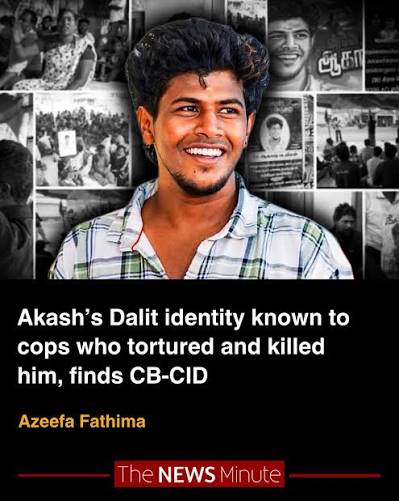
The chargesheet says the six policemen knew Akash Delison belonged to the Scheduled Caste (SC) Devendrakula Velalar community when they took him to a secluded spot and beat him, causing injuries that led to his death. The CB-CID chargesheet in the custodial death of 26-year-old Dalit youth Akash Delison says the six policemen accused in his death knew that he belonged to the Scheduled Caste (SC) Devendrakula Vellalar community and assaulted him with the intention of causing his death. All six have been charged with offences under the Scheduled Castes and Scheduled Tribes (Prevention of Atrocities) Act, along with provisions of the Bharatiya Nyaya Sanhita (BNS). Akash, from Sivaganga district, died on March 8 while under treatment at the Government Rajaji Hospital (GRH) in Madurai, two days after his arrest by the Manamadurai police. Police had arrested Akash and another man, Guna, on March 6, in connection with an attempted murder case. Even though the chargesheet on Akash’s custodial torture and murder was filed before the III Additional District Judge for Protection of Civil Rights (PCR) cases in Madurai on June 18, Akash’s parents received a copy only recently. It names Inspector Dileepan, Sub-Inspector K Guhan, Grade-I Constable S Kaleeswaran, driver constable P Mahendran, constable L Deivendran, and constable B Palaniyappan as accused. The CB-CID has charged all six under section 3(2)(v) of the SC/ST (Prevention of Atrocities) Act, which applies when a person who is not a member of an SC or ST community commits an offence against an SC/ST person knowing their caste or tribal identity, along with the charges of murder and causing disappearance of evidence or giving false information to screen an offender. Dileepan, the first accused, has additionally been charged with knowingly recording or framing an incorrect document or electronic record as a public servant, with the intention of causing injury to another person. The caste identities of both the victim and the accused have been specifically recorded in the chargesheet. Akash is identified as belonging to the Hindu Devendrakula Vellalar community, which comes under the SC category. The chargesheet says Dileepan belongs to the Hindu Piramalai Kallar community, which is classified as Other Backward Class (OBC), and, in specified districts including Sivaganga, also as a Denotified (DNT) community. Guhan belonged to the Hindu Kallar community. Kaleeswaran belonged to the Hindu Tuluva Vellalar community. Mahendran belonged to the Hindu Gounder community and Deivendran and Palaniyappan to the Hindu Agamudayar community. All are categorised as in BC Tamil Nadu. ‘Fully aware that Akash belonged to Scheduled Caste’ The chargesheet explicitly links the alleged assault to the policemen’s knowledge of Akash’s caste identity. “The investigation conducted so far reveals that the accused, fully aware that the deceased Akash Delison belonged to the Hindu Devendrakula Velalar community, took him in a police vehicle on March 6, 2026, around 5.30 pm to a secluded, low-lying area full of eucalyptus trees, off the road to Maanambathi village,” the chargesheet states. It says that the accused took Akash there “with the intention of causing his death” and that all six beat him with an iron rod below his right knee and above his ankle, causing severe fractures. The chargesheet says the injuries resulted in fat embolism, which directly caused Akash’s death. The allegation under the SC/ST Act is significant because section 3(2)(v) applies when a person who is not a member of an SC or ST commits an offence punishable under the IPC/BNS against a person or property knowing that such person is a member of an SC or ST. In this case, the CB-CID has specifically stated that the six policemen were aware of Akash’s SC identity. Chargesheet details alleged plan to break Akash’s leg The chargesheet also gives a detailed account of how Akash was allegedly taken to the location where he was assaulted. According to the chargesheet, Inspector Dileepan told Sub-Inspector Guhan that Akash’s leg had to be broken because he was allegedly involved in criminal cases and instructed him to identify a suitable location. The chargesheet says Guhan, along with constables Deivendran and Palaniyappan, selected a secluded spot near a mud road surrounded by eucalyptus trees on the road from Manamadurai to Maanambathi. Dileepan allegedly then travelled to the location in a police vehicle with Kaleeswaran and Mahendran. Akash, who was allegedly blindfolded, was taken out of another vehicle and placed in Dileepan’s vehicle. The chargesheet says Dileepan, Kaleeswaran, and Mahendran subsequently took Akash to a government eucalyptus grove where Guhan, Deivendran, and Palaniyappan were already waiting. There, according to the CB-CID, all six assaulted Akash on his right leg with an iron rod, causing a fracture. The document says the fracture was so severe that the bone was visible. The injured Akash was then allegedly helped back to the police vehicle by Deivendran, Palaniyappan, Kaleeswaran, and Mahendran, with Dileepan also accompanying them. Police allegedly created false account of injuries The chargesheet also accuses the policemen of concealing the iron rod used in the assault and creating a false account of how Akash sustained his injuries. According to the document, Inspector Dileepan recorded that Akash had sustained the injuries after jumping from the Melappasali bridge near Manamadurai. The CB-CID says Dileepan knew that Akash had not jumped from the bridge but nevertheless recorded the false version in his capacity as a public servant. This allegation forms the basis for the additional charges under sections 201 and 238 of the BNS against Dileepan. Akash was taken to Manamadurai Government Hospital after the alleged assault and later shifted to the Sivaganga Medical College Hospital. He was subsequently admitted to Government Rajaji Hospital in Madurai while in judicial custody. He died on March 8 while undergoing treatment, and Akash’s family had alleged custodial torture. Akash, a resident of Krishnarajapuram near Manamadurai in Sivaganga district, was arrested on March 6 along with another man, Guna, in connection with a case relating to an alleged attack on two men. Police had initially claimed that Akash sustained his injuries after jumping from
Dalit man held hostage, beaten, car snatched in Nawabganj: An additional 50,000 rupees demanded after repaying a loan of 100,000 rupees
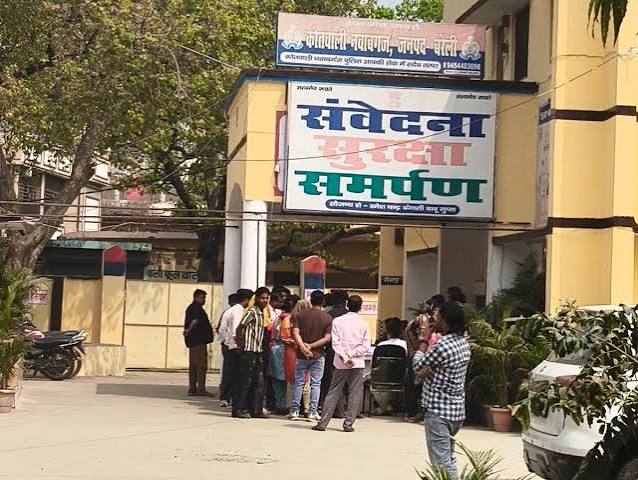
A case has come to light in Gulshan Nagar Basti of Nawabganj where a Dalit man was allegedly held hostage, beaten, and his Eco car snatched. The victim has alleged that an additional 50,000 rupees was demanded from him despite repaying a loan of 100,000 rupees. In a complaint filed with the police, a Dalit man named Shankar Lal has accused a man named Badan Singh of demanding additional money in the name of interest and assaulting him. According to Shankar Lal’s wife, Reena, about six months ago, Shankar Lal borrowed 100,000 rupees from Badan Singh on interest for his Eco car. It is alleged that he has repaid approximately 1.5 lakh rupees including interest. Despite this, Badan Singh is demanding an additional 50,000 rupees. Reena alleged that on August 21st, between 2 and 3 pm, Shankar Lal was repeatedly summoned to Bhagyashree’s house via phone. When Shankar Lal did not return home for a long time, Reena went to look for him. There, she learned that Shankar Lal had allegedly been held hostage and beaten. It is alleged that the miscreants also took possession of Shankar Lal’s Eco car and promised to return it only after paying 50,000 rupees. Reena has filed a complaint with the police, demanding action against the accused and the return of the car. The police are investigating the matter. Station in-charge Arun Kumar Srivastava stated that the complaint has been received and an investigation will be conducted. Further action will be taken based on the investigation. Riyaz Ahmed | Nawabganj, Bareilly Courtesy: Hindi News
The politics of religious ‘purification’

Kharge’s is the latest case in India’s troubling history of ritualistic ‘cleansing’ of places visited by Dalits. It defies the Constitution on untouchability and violates the right to equality. A couple of days after Congress president Mallikarjun Kharge addressed a public gathering at Ramlila Maidan in Haldwani, Uttarakhand, on August 8, members of a right-wing group, reportedly Shri Ram Sena, conducted a ritualistic purification ceremony at the site where Kharge had delivered his speech. The act was widely criticised, with many seeing it as a reminder of the persistence of caste prejudice and notions of ritual purity and pollution. The incident also prompted questions about whether such an act could fall within the scope of laws dealing with untouchability and atrocities against the Scheduled Castes. Whatever its precise legal character, the episode is troubling because it appears to revive a notion that the presence or touch of a person belonging to a historically marginalised caste can render a place impure and in need of purification. The incident, however, should not be viewed in isolation. There have been several instances in the past in which places or objects associated with Dalit leaders or visitors have reportedly been subjected to purification rituals. These include the purification of a statue inaugurated by Union Minister Jagjivan Ram in 1978, a temple purification following a visit by Bihar Chief Minister Jitan Ram Manjhi in 2014, and reported instances involving Munni Devi in Kanpur in 2016 and Manisha Anuragi, a sitting Dalit BJP MLA in Uttar Pradesh, in 2018. The Haldwani incident involving Mallikarjun Kharge, therefore, brings back a question that India has confronted repeatedly: how deeply have notions of ritual purity and pollution associated with caste survived despite the constitutional abolition of untouchability? The cases involving prominent public figures naturally receive attention because they are visible. But similar experiences may be faced by ordinary people in less visible ways. In all, there were as many as 55,865 atrocities registered against members of Scheduled Castes in 2024 alone. The idea of ritual purity and pollution has a long history in parts of the Hindu social order. Ancient dharmashastras and smritis contain several prescriptions concerning contact with those regarded as outside the caste order. The Vishnu Smriti was one of the earliest to refer to the need for purification after contact with a chandala or outcaste (asprushya). The Manusmriti prescribed bath after contact with a chandala, with the touching of food or earthen vessels requiring them to be thrown away and metal vessels scrubbed with ashes. The Apastamba Dharmasutra and Gautama Dharmasutra go beyond touch: if a chandala’s sight falls on another person, that person must look at the sun to purify. If spoken to, the person must converse with a Brahmin or recite a specific Vedic mantra to cleanse themselves. Thus the Kharge incident is not an isolated one, but an inherent outcome of Brahmanical religious, ethical and legal codes, in which high castes are considered victims. Kharge’s case may have been picked up deliberately because he chose egalitarian Buddhist ideology, not iniquitous Brahmanism. It is important to distinguish between the historical existence of such prescriptions and the beliefs and practices of contemporary Hindu society. Hindu traditions have themselves undergone considerable change, and millions of Hindus do not subscribe to notions of untouchability or caste-based exclusion. The Constitution, social reform movements and generations of struggles against discrimination have profoundly altered the social landscape. Yet the persistence of occasional purification rituals suggests that some older ideas have not entirely disappeared. The significance of the Haldwani incident lies precisely here. It raises the uncomfortable question of whether notions that were once embedded in a hierarchical social order continue to influence social behaviour even in a democratic and constitutional India. For B R Ambedkar, the struggle against caste was not merely a struggle for political representation. It was a struggle for equality and human dignity. His advocacy of Buddhism was part of his larger search for a social order based on equality, liberty and fraternity. The construction of a major Buddhist Vihara at Kalaburagi by Kharge can similarly be seen as reflecting his association with an egalitarian social philosophy. The history of India has witnessed a long contest between hierarchical and egalitarian ideas. Buddhism, the Bhakti traditions and later the movements led by social reformers such as Jyotirao Phule, E V Ramasamy Periyar and Ambedkar challenged entrenched forms of social inequality in different ways and in different historical circumstances. These movements did not always share the same philosophy, but they contributed to a continuing debate about social hierarchy, dignity and equality. Independent India ultimately gave this egalitarian principle its strongest institutional expression through the Constitution. Equality, liberty and fraternity became foundational values, while untouchability was expressly abolished under Article 17. The Constitution did not merely prohibit a particular social practice; it sought to fundamentally change the relationship between citizenship and caste. Ambedkar described his struggle as revolution by Buddhism against a counter-revolution by Brahmanism. The final blow to the counter-revolution was the adoption of the Constitution based on equality, liberty and fraternity, and democracy, secularism and socialism. However, the counter-revolutionaries had opposed the Constitution, too. The Shankaracharya of Puri and Hindu Mahasabha had proposed to base the Constitution on Brahmanism and varnashrama. After its adoption in 1950, the Hindu Mahasabha and the RSS had opposed it arguing it did not embody Hindu culture. The continuing appearance of purification rituals, therefore, deserves attention not simply as an isolated religious practice or a political provocation, but as a reminder of the distance that can sometimes remain between constitutional values and social behaviour. It is equally important not to generalise from individual incidents to an entire religious community or tradition. The challenge is to identify and oppose discriminatory practices wherever they occur while recognising the diversity and capacity for reform within Indian society. The Haldwani incident, like earlier episodes, brings an old question into the present. Can a democratic society that guarantees equality to every citizen continue to accommodate practices based
Village funds worth crores, yet drain constructed through donations: Villagers in Nizamabad’s Fariha Dalit settlement constructed the drain themselves, alleging discrimination.
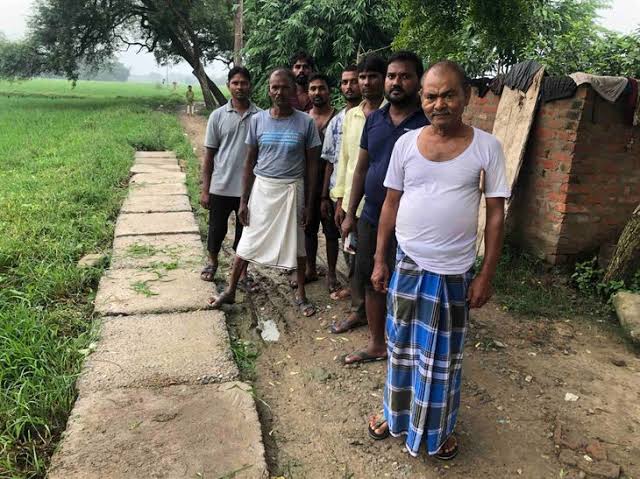
In the Fariha Gram Sabha Dalit settlement of the Rani Ki Sarai block in Azamgarh’s Nizamabad tehsil, villagers collected donations and repaired a drain that had been broken for five years. The villagers allege that despite having a village fund worth crores, they had to do the work themselves. Sunil Kumar, Ganesh Kumar, Sarvesh Kumar, Amresh Kumar, Jaswant Lal, Abhay Kumar, Manichandra, and Rustam, along with other villagers, reported that 90 percent of the settlement’s sewage and rainwater flowed through this drain to the Kunwar River. This drain had been severely damaged for approximately 100 meters for the past five years, causing sewage to overflow onto the road and flood the fields. According to the villagers, they contacted the Fariha village headman dozens of times to get the drain and 300 meters of road constructed. The headman asked them to submit a written complaint, but the drain remained unconstructed. Forced to do so, the residents of the settlement collected donations of one thousand rupees per household, raising approximately one and a half lakh rupees. With this money, a hundred meters of drain was constructed, and new slabs were cast and placed on the drain. However, due to a lack of funds, some slabs remain to be laid. The villagers alleged that after becoming a village head, a person becomes the head of the entire village council, not of any particular community. They said that for the past ten years, no village head has shared their joys and sorrows, let alone the construction of basic amenities like drains, roads, housing, or toilets. The villagers questioned the use of the crores of rupees of funds allocated to the village council by the government for development. They alleged that officials from the block level to the Vikas Bhawan did not even once visit to inspect the work or listen to people’s problems, raising suspicions that officials from the lowest to the highest levels are involved in the embezzlement of crores of rupees. He also reported that approximately 300 meters of the road is in a dilapidated condition, causing dozens of schoolchildren to stumble and fall on their way to school. Shah Alam | Fariha (Nizamabad), Azamgarh Courtesy: Hindi News
The road to the Dalit settlement in Palhanpur is in a dilapidated condition: No repairs for three five-year periods; villagers appeal to the administration.
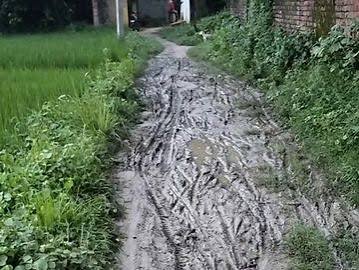
Villagers in Jhaliyahawa, a Dalit settlement in the Palhanpur Gram Sabha under the Bhadaiyan block of Sultanpur district, are upset by the poor condition of the road. This road is located near the Ramganj Rajbaha Canal, and its poor condition is causing significant inconvenience to local residents. Villagers allege that the road has not been paved with soil or repaired for the past three five-year periods. The condition of the road has worsened after the rains, leading to accumulation of mud and water at various places. The poor condition of the road has made it difficult for villagers to walk. Incidents of people slipping and falling in the mud have become common, causing daily problems. Children, the elderly, and women face particular difficulties in commuting during the rainy season. Rajendra, Dharamraj, Ramgulam, Mahendra, Suresh Kumar, and other villagers have demanded the Block Development Officer (BDO) and the administration immediately fill the road with soil to restore traffic. They have requested a permanent solution to the problem by repairing the drain or constructing a new one. In-charge ADO Panchayat Sangeeta Saroj stated over the phone that the matter will be investigated and necessary action will be taken. Villagers are distressed by the poor condition of the road in Jhaliyahawa, a Dalit settlement in the Palhanpur Gram Sabha under the Bhadaiyan block of the district. This road is located near the Ramganj Rajbaha Canal, and its poor condition is causing significant inconvenience to local residents. Villagers allege that neither soil has been filled on this road nor has the drain been repaired in the last three five-year periods. The condition of the road has worsened after the rains, leading to accumulation of mud and water at various places. The poor condition of the road has made it difficult for villagers to walk. Incidents of people slipping and falling in the mud have become common, causing daily problems. Children, the elderly, and women face particular difficulties commuting during the rainy season. Rajendra, Dharamraj, Ramgulam, Mahendra, Suresh Kumar, and other villagers have urged the Block Development Officer (BDO) and the administration to immediately fill the road with mud to ensure smooth traffic flow. They have requested a permanent solution to the problem by repairing the drains or constructing new ones. In this regard, Sangeeta Saroj, the ADO in charge of the Panchayat, stated over the phone that the matter will be investigated and necessary action will be taken. Surendra Kumar | Balampur (Lamhua), Sultanpur Courtesy: Hindi News
Gorakhpur’s Dalit settlement deprived of basic amenities: Roads and drains in Kharpothara hamlet of Pali block are in poor condition.
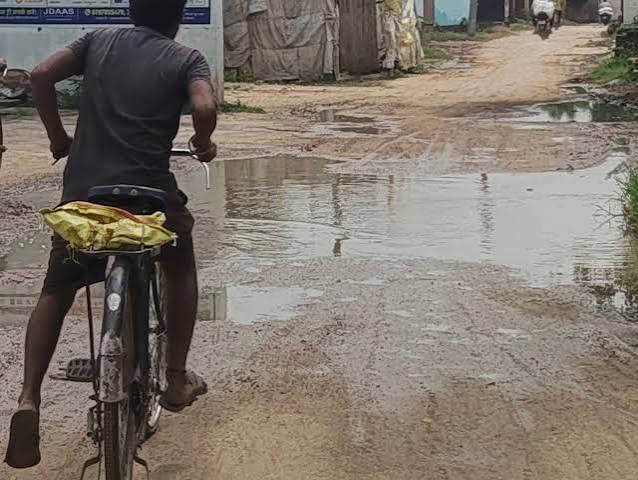
Kharpothara hamlet of Madar Gram Panchayat, located in Pali block of Gorakhpur, still lacks basic amenities. Nestled amidst the marshland, this hamlet comprises approximately 25 houses, mostly inhabited by Dalit families. An investigation by Dainik Bhaskar revealed a dire situation. The hamlet’s roads are in a dilapidated state, disrupting traffic during the rainy season. Due to the lack of regular cleaning of drains, problems of filth and waterlogging persist. There is no proper sanitation system. Local villagers Balchand, Santosh, Prince, and Aman reported that officials do not regularly visit to address their concerns, nor does the government or administration take any action. Expressing their views, the villagers stated that they, too, are citizens of the country and the Gram Panchayat, and therefore, they should also have access to basic amenities like roads, drains, and sanitation. They have demanded a permanent solution to the problems of the Kharpothara hamlet from the government. In this regard, Secretary Arvind Chaudhary stated that this department does not fall under his jurisdiction, but rather under Assistant Development Officer Dharmendra. Assistant Development Officer Dharmendra assured that sanitation workers would be sent to the site to clean the area and repair the drainage system. He also promised to take care of this in the future. Gorakh Singh | Palikhas (Sahjanwa), Gorakhpur Courtesy: Hindi News
The United Nations Committee expressed serious concern over the rights of Dalits and Adivasis in India, stating this on police brutality and hate crimes.

The United Nations Human Rights Committee has expressed concern over alleged violence against Dalits, Adivasis, and minority communities in India and has demanded an immediate and impartial investigation from the government. New Delhi: The United Nations Committee on the Elimination of Racial Discrimination (CERD) has expressed deep concern over alleged extrajudicial killings, torture, and police abuse against Dalits, Adivasis, and minority communities in India. The global body has appealed to the Indian government to conduct a thorough investigation into these cases and ensure legal action against those responsible. It has also called for immediate action to address cases of hate crimes, racial profiling, and forced deportation. History According to findings released by the Committee, there have been reports of widespread violations of the rights of marginalized ethnic and racial groups, particularly Scheduled Castes, Scheduled Tribes, Dalits, and non-citizens, by law enforcement agencies. These violations include serious incidents such as racial violence, excessive use of force, arbitrary and prolonged detention, torture, and sexual violence. This committee, comprised of 18 independent human rights experts, monitors compliance with the Convention on the Elimination of Racial Discrimination (Convention) in 182 member countries. This convention entered into force in 1969 and requires member countries to commit to eliminating racial discrimination, eliminating segregationist practices, and ensuring equality before the law. It is noteworthy that this is the first time India has participated in the review process before the committee since 2007. Solicitor General Tushar Mehta led the Indian delegation at this review meeting. The global committee also expressed concern over campaigns targeting Rohingya, Bengali-speaking Muslims, migrants, and refugees. According to the report, identity checks and racial profiling have led to an increase in cases of arbitrary arrests and ill-treatment without due process of law. The committee urged the prevention of forced deportations and mass expulsions of persons in need of international protection. Discrimination and Identity Relations Although the recommendations of this UN Committee are not legally binding, they are considered to have considerable diplomatic and moral significance internationally. On the other hand, the Permanent Mission of India clarified that during the review, the Indian delegation strongly presented the country’s rich diversity, pluralism, constitutional safeguards, and legal framework. The Indian side underlined that the country is fully committed to ensuring equality, dignity, and opportunity for all its citizens. Rajan Chaudhary Courtesy: Hindi News
‘Honor Killing’ in Tamil Nadu: A 23-year-old Dalit youth died due to the gap between wealth and poverty, TVK leader accused
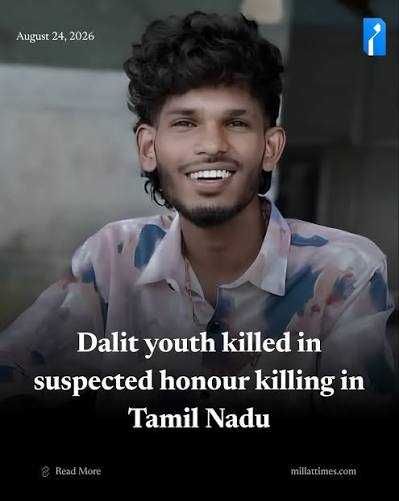
An ‘honor killing’ case in Chengalpattu, Tamil Nadu: A ruling party leader is accused of brutally murdering a 23-year-old Dalit youth due to economic inequality. Tamil Nadu: A heartbreaking incident has occurred in Chengalpattu district. A 23-year-old Dalit youth was brutally murdered on suspicion of honor killing. This horrific incident has shocked the entire area. The deceased youth was Praveen, a resident of Kelambakkam, Chengalpattu. On the night of August 16th, Praveen was attacked with sharp-edged weapons by assailants. He was seriously injured in the violent incident. He was subsequently admitted to the Rajiv Gandhi Government General Hospital in Chennai, where he succumbed to his injuries on August 20th. The police acted swiftly and arrested four of the accused in the murder. They were identified as Manikandan, Ezhumalai, Nandish, and Gautam. All were remanded to judicial custody on August 17th. The administration and police are currently searching for the fifth absconding accused. According to several media reports, the main accused, Ezhumalai, is a member of the ruling Tamil Nadu Vetri Kazhagam (TVK). It is reported that Ezhumalai’s daughter, Aswathy, and Praveen were in a love affair. Satish Kumar, a neighbor of the deceased, stated that Praveen and Ezhumalai both belonged to the Scheduled Caste (Adi Dravidar) community. However, Praveen’s family was financially weak, and this perceived poverty-wealth gap was the primary reason for the murder. Caste and Identity Groups This attack was not a random incident. Aswathy’s family had previously threatened Praveen with death several times. According to neighbor Satish, a relative of Aswathi once came to Praveen’s house armed with a weapon. He tried to attack Praveen with a knife and left, screaming and shouting threats. Not only this, Praveen was also brutally assaulted about six months ago. At that time, Ezhumalai and other accused tied Praveen with ropes and beat him severely. However, fearing the dispute, Praveen’s family decided not to file a police complaint at that time. It is alleged that this brutal murder was carried out as part of a well-planned conspiracy. One of the accused, Manikandan, had befriended Praveen about three months earlier. On the day of the murder, August 16, Praveen had gone to meet Manikandan. He was abducted in a car, taken to another location, and fatally attacked. This incident has once again intensified the demand for stricter laws against honor killings in the state. Anti-caste activists report shocking statistics. In Tamil Nadu alone, 59 cases of honor killings were reported between January and March 2026. Activists believe that the Scheduled Castes and Scheduled Tribes (Prevention of Atrocities) Act is insufficient to address such cases. Social activists say that not only caste superiority, but also class, religion, and gender identity play a significant role in honor killings. As in Praveen’s case, when both the killer and the victim belong to the same Dalit community, enforcing the SC/ST Act becomes legally difficult. Furthermore, activists point out that Christian or Muslim Dalits are also not protected under this law because they are not recognized as Scheduled Castes. People and Society Anti-caste activist and author Shalin Maria Lawrence has expressed deep concern over this incident. She argues that honor killings within Dalit communities are mostly based on economic status or class. She emphasizes the need to understand these attacks from the perspective of Dr. B.R. Ambedkar’s concept of “graded inequality.” Discrimination and Identity Relations He wrote on the social media platform ‘X’ that Praveen’s murder demonstrates how caste, class, and patriarchy intersect even within oppressed communities. Two people may belong to the same caste, but their social or economic status may differ. In such a situation, the claim to family ‘honor’ becomes a weapon against those who try to cross these boundaries. He explained that Praveen was killed because someone felt that his family’s honor outweighed the young man’s right to live and love. This represents the most horrific manifestation of the deeply ingrained inequality and cruelty in society. Rajan Chaudhary Courtesy: Hindi News
Dalit youth beaten in Govardhan temple: Beaten with sticks upon entering Shiva temple
A Dalit youth and his companion were allegedly beaten with sticks upon entering a Shiva temple in Ading village, Govardhan, Mathura district, Uttar Pradesh, during a program organized at a Shiva temple. It is alleged that they were beaten with sticks upon entering the temple. The victims allege that the temple operator and his associates baselessly accused them of desecrating the temple. They were subjected to casteist slurs and brutally beaten with sticks. The victims claim that the local police, under political pressure, are colluding with the accused instead of taking action against them. Despite video evidence of the assault, no action is being taken by the police. After the video of the incident surfaced, the victim’s family directly approached the office of the SSP, Mathura, seeking justice. The victims have appealed for strict action and the registration of an FIR against five named accused, including Kanhaiya Thakur and Vipin, and five to seven unidentified accused. Raju | Son (Govardhan), Courtesy: Hindi News