
Dalit seers seek funds for mutts; meets CM Siddaramaiah
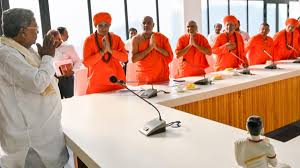
Chief Minister Siddaramaiah assured the seers that funds would be allocated to mutts in the coming days A delegation of seers from Dalit and OBC communities met Chief Minister Siddaramaiah at his residence in Bengaluru on Saturday. A delegation of seers from Dalit and OBC communities met Chief Minister Siddaramaiah at his residence in Bengaluru on Saturday. | Photo Credit: Seers belonging to the Dalit and OBC communities met Chief Minister Siddaramaiah on Saturday and demanded allocation of funds to mutts belong to the Dalit and backward communities. The Chief Minister assured the seers that funds would be allocated to mutts in the coming days. The delegation submitted a petition to the Chief Minister seeking allotment of land for opening a gurukula in Chitradurga district for providing training for OBC and Dalit priests. Mr. Siddaramaiah directed the officials to identify the land for the purpose. Courtesy : The Hindu Bureau, The Hindu Note: This news is originally published on https://thehindu.com/ and is for use by the non-military/non-commercial community, especially those in the human rights sector.
Rajiv Gandhi had opposed in Parliament
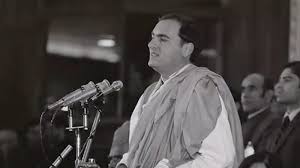
Rajiv Gandhi’s speech and the Congress’s stance damaged the party’s popularity among OBC communities. As a result, the Congress’ political base in states like Uttar Pradesh and Bihar weakened, and the party never again got an absolute majority at the Centre. Rajiv Gandhi said in the Lok Sabha that the government had decided to implement the Mandal Commission report at a time when the country already had a lot of serious problems. He said, ‘The problems of Kashmir have been solved by the government. The situation has never been this bad since independence. The situation in Punjab is also very bad. Assam is also on the same path. Tamil Nadu is also close to it. The Prime Minister himself had said that the country should be prepared for war… Apart from this, tension is increasing between the North and the South over language…” He said that there are many similarities between that time and today. There was peace in Kashmir for some time, but now tension has increased again. The government is having a dispute with the southern states over language. The government has not ‘prepared the ground’ for this big decision. He said, ‘The proof of this is that people are being killed, buses are being burnt, trains are being burnt and buildings are being demolished.’ He said that on one hand the Prime Minister is asking the country to be ready for war, and on the other hand he is dividing our society. Then Congress gave reservation After 16 years, the Congress UPA government took another step to implement the Mandal Commission report. They reserved 27% seats for OBCs in colleges like AIIMS, IIT and IIM. This decision was also opposed a lot. Upper caste people said that the government is eliminating merit and is doing this only for votes. What was BJP’s stand? At that time BJP was in the opposition. BJP supported reservation, but said that the benefit of reservation should also be given to poor people, irrespective of their caste. BJP also said that creamy layer i.e. rich people of backward classes should not get reservation. What is the connection with Jammu and Kashmir? After the terrorist attack in Pahalgam, Jammu and Kashmir, the Modi cabinet has taken a big decision on caste census. 26 people were killed in this attack. The tension between India and Pakistan has increased a lot. Common people Want a response to this attack. In 1990, when the Mandal Commission recommendations were implemented, there was a similar atmosphere. Actually, the situation in Jammu and Kashmir was bad in those days too. Terrorism had increased a lot. Many Hindus were targeted and killed. Lakhs of Hindu families were forced to migrate from Kashmir. VP Singh was under a lot of pressure regarding the situation in Kashmir. About the author Anubhav Shakya After studying journalism from IIMC in 2021, he entered journalism with Zee News. Born in Etah, UP but studied in Aligarh. After writing national and international news there for about one and a half years, he is now working in the news team at Navbharat Times. Courtesy : Anubhav Shakya, NBT, Hindi News
Minor Dalit girl gangraped: Kidnapped and raped in Kanpur, brutally beaten for protesting, one accused arrested

A sensational case of gangrape of a minor has come to light in Kaushambi district of UP. Police has registered a case under serious sections of gangrape, POCSO, SC-ST on the complaint of the father of the victim girl in this case. Kaushambi (Kuldeep Dwivedi): A sensational case of gangrape of a minor has come to light in Kaushambi district of UP. Police has registered a case under serious sections of gangrape, POCSO, SC-ST on the complaint of the father of the victim girl in this case. The main accused of the incident has been arrested by the police team. The remaining two persons are being searched. If he is guilty, he will also be sent to jail. Police had registered a case on the complaint of the victim’s father The incident is from Kokhraj police station area. According to the complaint given by the victim’s father in the police station, his minor daughter was lured and kidnapped by a neighbour Shailendra alias Zahid. When his daughter returned, she told that the accused took her to Kanpur and along with two other people raped her in a mango orchard one after the other. The police have arrested the main accused by registering a case on the complaint of the father. Statement of Additional SP In this case, Additional SP Rajesh Kumar Singh said that a person from Kokhraj police station area had brought his daughter. He told that our girl had gone somewhere. She has returned, we do not want any action on this. On which a case of trafficking was registered in Kokhraj police station area on 24 April 2025. After this, he came again on the 27th and told that there were three people with our girl. Who raped her one after the other. On which an FIR was immediately registered. The investigation proceedings were taken forward. Also, the main accused of the incident has been arrested. The remaining two persons, if found guilty, will also be sent to jail. Courtesy : Purnima Singh,, Hindi News
The hand pump became impure… Muslims stopped a Dalit from drinking water, then beat him up after making him fall! Police started investigation
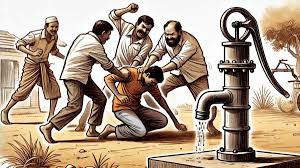
Hamirpur News: Drinking water from a government hand pump proved costly for a Dalit youth who came from a neighboring district in Hamirpur district. When he touched the hand pump to quench his thirst, the village bullies pushed him to the ground. He was also humiliated by beating him in public. On the basis of the complaint of the incident, the police has started investigating the whole matter today. Case of beating a Dalit for touching a government hand pump The village bullies humiliated the youth by calling him untouchable The police has now started investigating the whole matter Pankaj Mishra, Hamirpur: In Hamirpur district of Uttar Pradesh, a thirsty Dalit was beaten up badly for touching a government hand pump. He was also humiliated by calling him untouchable. On the basis of the complaint of the incident, the police has started investigating the whole matter. Police has started investigating the matter. Amit son of Chhotelal Anurag, a resident of Subhash Nagar of Kabrai town of neighbouring Mahoba district, has his maternal home in Chhani village of Binwar police station area of Hamirpur district. He was going to his maternal uncle’s house in Chhani by motorcycle. Then he felt thirsty due to heat. To quench his thirst, he stopped the motorcycle on the way outside Bibhuni village. He started operating the government hand pump to drink water. Meanwhile, Jal Muhammad son of Sayyadin, Saddam, Aziz Hasan son of Hussain Muhammad and Mushtaq son of Basir Muhammad of the same village abused him and forbade him from drinking water from the hand pump. Ignoring the bullies, he started drinking water from the hand pump and the bullies got angry. The bullies said that this hand pump has now become impure. The bullies pushed him off the hand pump and beat him up. The villagers present there were also terrified when he was beaten mercilessly after being thrown on the ground. After this incident, the humiliated Amit reached Binwar police station and gave a written complaint about the matter. He told the police that he was beaten up for drinking water from a government handpump. He was insulted by calling him untouchable. Police investigating the incident Binwar police station in-charge Dharmendra Kumar told on Wednesday that Amit Kumar, a resident of Kabrai Mahoba, has filed a complaint in the police station and accused four people of village Vibhuni of treating him as untouchable and pushing him and beating him while drinking water from a government handpump. On the basis of the complaint, the incident is being investigated. He told that action will be taken in this matter after investigation. About the author Aishwarya Kumar Rai Aishwarya Kumar Rai works as Principal Digital Content Producer in Navbharat Times Online. Hometown Gorakhpur of eastern Uttar Pradesh, where he received education from birth to school. After graduation from Delhi University, he did PG-Diploma in Journalism from Indian Institute of Mass Communication (IIMC). Professional journey started with the country’s only trilingual agency UNI-Varta. Then further journey with NBT. Delhi and Lucknow are our workplaces. Courtesy: Aishwarya Kumar Rai, NBT, Hindi News
One decision of Modi government and Rahul Gandhi’s ‘Brahmastra’ failed, now what will Tejaswi do in Bihar elections?
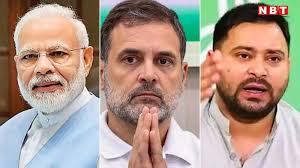
Caste Census In India: After the approval of the Union Cabinet to conduct caste census, the opposition has suffered a major setback. A big issue has slipped out of its hands. The entire opposition, including Congress leader Rahul Gandhi, RJD leader Tejaswi Yadav and Samajwadi Party chief Akhilesh Yadav, had this strong issue to corner the BJP. Its effect was also seen in the Lok Sabha elections. BJP’s seats came down to 240 while the opposition’s seats reached 232. The opposition was also preparing to capitalize on this in the Bihar assembly elections. Central government bows down to the opposition Caste census got approval May get benefit in Bihar elections Patna: The central government finally had to come on the back foot on the question of caste census. Earlier the central government had refused to conduct caste census. During the hearing on this issue in the Supreme Court, the Center had cited technical difficulties. The opposition was making it an issue since the time of the Lok Sabha elections. Rahul Gandhi, who has been the PM face of India Block, has been saying till now that if his government is formed, the first thing he will do is caste census. The law of reservation will be made in proportion to the share of the people in the census. Rahul has even been saying that along with caste census, he will also end the limit of reservation. Caste census was an issue in Lok Sabha elections During the Lok Sabha elections, the opposition had included caste census among the major issues. In Bihar, RJD leader Tejashwi Yadav was the first to take the initiative of caste census. He had first met Nitish Kumar on this issue. Nitish was the head of the NDA government then. Nitish sent a government delegation to Delhi in this regard. Since the central government had already refused to conduct caste census citing technical problems, Nitish Kumar later conducted caste survey at his own expense while running the government with RJD. The state government also bore the huge expenditure of Rs 500 crore on this. On the basis of the survey, the Nitish government increased the limit of reservation to 75 percent. However, the Patna High Court put a stay on the increase in reservation. The opposition in Bihar wanted to make it an issue in the assembly elections. But, BJP has foiled the opposition’s plan. The caste issue slipped out of Congress’ hands In the first Lok Sabha elections, Rahul Gandhi tried to cash in on the caste census. He said that he will get the caste census done if the government is formed. On that basis, reservation will be determined afresh. In the states where assembly elections were held after the Lok Sabha elections, all the opposition parties including Congress made caste census an election issue. In Jharkhand, it has been announced that a caste survey will be conducted by next year if the opposition alliance forms the government. To ensure that the opposition does not take advantage of this issue further, the Union Cabinet on Wednesday approved the proposal to conduct caste census. It may have an impact on Bihar elections Assembly elections are to be held in Bihar this year. All the parties are trying to beat each other with their own moves. Rahul Gandhi has termed the caste survey conducted in Bihar as fake. He has talked about getting the caste census done again. However, now the Center has taken its decision, so the opposition will hardly get any benefit from it now. The opposition can now only boast that the central government, which had earlier refused under its pressure, has now agreed to conduct the caste census. The BJP will definitely try to tell that the caste census is its contribution. Earlier, Karnataka, Bihar and Telangana had conducted the caste census. So far, no benefit of this is visible on the ground in Bihar. Its report has not been implemented in Karnataka. Rahul Gandhi considers the caste census of Telangana to be perfect. He has been in favor of conducting similar caste census in every state. Now this issue of his, which the Congress leaders wanted to use as a ‘Brahmastra’ in the Bihar elections, is over. About the author Sudhendra Pratap Singh Senior Digital Content Producer at Navbharat Times Digital. Started the journey in journalism with the local newspaper Agrabharat. From here the caravan grew and reached NBT.com via Kalpataru Express, Hindustan News Paper, News18. Courtesy: Edited by Sudhendra Pratap Singh | Written by Omprakash Ashk, NBT, Hindi News
Will SC Rights Be Upheld? — Here’s Why AJAK Rajasthan Presses Justice Balakrishnan Commission to Block New Groups in Scheduled Caste List

The letter strongly opposes the inclusion of new groups, such as Dalit Christians or Muslims, in the SC list, arguing that it could harm existing SC communities’ rights. Jaipur-The Dr. Ambedkar Anusuchit Jati Adhikari-Karmchari Association (AJAK Rajasthan) has taken a significant step to safeguard the interests of Scheduled Caste (SC) communities by submitting a detailed letter to the Justice K.G. Balakrishnan Commission. The letter expresses serious concerns over potential changes to the Scheduled Caste list under Article 341 of the Constitution and strongly opposes the inclusion of new groups, such as Dalit Christians or Muslims, which the organization believes could jeopardize the rights and benefits of existing SC communities. Representing SC employees’ communities, AJAK Rajasthan highlighted the daily struggles of caste-based discrimination and hardships faced by its members. The organization urged the Commission to protect the constitutional rights of existing SC communities and ensure that no amendments to the SC list are made for political reasons. The letter emphasizes preserving the sanctity of Article 341 and preventing religion-based restrictions on SC rights. Key Points Raised in the Letter The list of SC/ST citizens in India was prepared on the basis of historical facts of economic, educational and caste discrimination. The Constitution of India is the supreme law of India. Public servants posted in the legislature, judiciary and constitutional institutions take an oath to work according to the Constitution of India. According to Article 51 (a) of the Constitution of India, it is the constitutional duty of every citizen to obey the Constitution of India and behave accordingly. Thus contempt/violation of the Constitution of India falls under the category of punishable offence under Section 2 of the National Dishonour Act 1971. According to the law made by the Ministry of DOPT of the Government of India, the caste of any citizen in India is inherited from his/her father on the basis of birth. The caste of the father is inherited by the son/daughter on the basis of birth. The children of a Scheduled Caste/Scheduled Tribe father get the caste of their father i.e. Scheduled Caste. People belonging to Scheduled Caste are discriminated against on the basis of caste. Similarly, their children also face caste discrimination. Even if the citizens of Scheduled Caste/Scheduled Tribe change their religion, then on the basis of the caste acquired on the basis of birth, they continue to face discrimination on the basis of social, economic, educational and caste in other religions as well. Citizens get their caste from their father, so their caste remains with them till their death and there is always discrimination against them. To solve the social, economic, educational and caste discrimination, the Constitution of India has given the Scheduled Caste / Scheduled Tribe citizens the right to constitutional representation on the basis of caste in Articles 14, 15, 16, 335, 330, 332, 243D and 243T and has tried to reduce their social, economic, educational and caste discrimination. In India, representation in government services to SC/ST citizens in proportion to their population has been given by the Constitution of India on the basis of their social, economic and educational status. On the basis of Articles 15, 16 and 335 of the Constitution of India, the people of Scheduled Castes and Scheduled Tribes have got the constitutional right of representation in educational institutions and government services in proportion to their population. In Articles 15, 16 and 335, the constitutional right of representation has been given on the basis of caste. Neither in government services nor in politics, the constitutional right of representation has been given on the basis of religion. Therefore, the right to representation of Scheduled Castes cannot be restricted on the basis of religion. The Constitution of India does not impose any restriction on the citizens of SC/ST on the basis of religion even in Articles 15, 16 and 335. If the constitutional right of SC/ST citizens to government services and political representation is restricted on the basis of religion, then it would be a violation of Articles 14, 15, 16 and 335 of the Indian Constitution. Ostracized and Deprived: 70 Dalit Families in Haryana Village Pay Heavy Price for Not Supporting Upper Caste Candidate in 2024 Assembly Elections The Constitution of India provides the SC/ST citizens the constitutional right to representation in proportion to their population in Panchayats, Municipal Bodies, Legislative Assemblies and Lok Sabha. The Constitution of India, Article 243(d) provides the Scheduled Caste and Scheduled Tribe citizens the constitutional right to representation in proportion to their population in Gram Panchayats, 243T in Municipal Bodies, 332 in Legislative Assemblies and Article 330 in Lok Sabha. None of the articles providing the constitutional right to representation imposes any restriction on the basis of religion for giving representation in proportion to their population in Gram Panchayats, Municipal Bodies, Legislative Assemblies and Lok Sabha. The right to political representation has been given to socially, economically and educationally backward castes on the basis of caste and historical facts and evidence. Neither the right to representation has been given on the basis of religion nor can any restriction be imposed on it on the basis of religion. On the basis of social, educational and economic and historical facts, the Government of India has made a law for the SC/ST citizens belonging to the castes listed in the Constitution of India that the caste of any citizen is determined by the caste of his father. The father of a citizen naturally determines his caste. The SC/ST citizens have got the constitutional right to representation in government services in proportion to their population under Articles 15, 16 and 335 of the Constitution of India. They have got the constitutional right to representation on the basis of their caste in proportion to their population through Articles 2430, 243T, 330 and 332. There is no restriction on giving representation to Scheduled Caste and Scheduled Tribe citizens on the basis of religion in any of the above articles. The right to representation of Scheduled Caste and Scheduled Tribe has
Muslims, Dalits not disposed to crime, says survey report

This finding marks a departure from perceptions prevalent in other regions of the country and highlights the unique stance of the state’s law enforcement on issues of crime and community relations In a revealing survey conducted among police respondents in Punjab, a significant majority has expressed the firm belief that neither Muslims nor Dalits are naturally predisposed to criminal behaviour. As per the “Status of Policing in India Report’ (SPIR)”, done by the Common Cause and Lokniti-CSDC organisation, this finding marks a departure from perceptions prevalent in other regions of the country and highlights the unique stance of the state’s law enforcement on issues of crime and community relations. According to the survey data, an overwhelming percentage of police officers in Punjab (over 80%) contend that Muslims, Dalits and Adivasis do not have inherent tendencies towards crime. This belief was notably stronger among Punjab’s police compared to respondents from other states, indicating a profound suspicion of the stereotype that links specific communities to criminality. The survey also highlighted law enforcement’s approach to public safety issues. The Punjab Police reported the highest proportion of arrests related to loitering and public nuisance, accounting for 60% of the total arrests, significantly outpacing the other states surveyed. This reflects a proactive stance on maintaining public order, despite the low association perceived between crime and these communities. When it comes to justifying the controversial practice of torture, police respondents from Punjab displayed a relatively low tolerance. Only 15% reported a high propensity to justify such actions, while a considerable 30% indicated a low propensity and another 30% showed a very low propensity. Furthermore, Punjab has been identified as one of the states with the least justification for mob violence, especially concerning allegations of cow slaughter. A robust 62% of the respondents stated that mob violence was not at all justified, aligning with similar findings from states like Kerala and West Bengal, which also exhibited low levels of justification for such behaviour. The survey not only sheds light on the perceptions of crime among law-enforcement officials in Punjab but also reinforces the significance of community relations in upholding justice and security in the region. The findings suggest a move towards a more equitable perspective on crime with respect to community background, which could potentially influence future policing strategies and community outreach programmes. The Status of Policing in India Report (SPIR) 2025 was released on March 26 at the India International Centre by a distinguished panel of experts, including Justice S Muralidhar, former Chief Justice of the Odisha High Court, Vrinda Grover, lawyer and activist, Dr Amar Jesani, public health expert and the Editor of the Indian Journal of Medical Ethics, and Prakash Singh, IPS (retd) and a former DGP of UP, Assam and BSF. The Punjab angle of the report studied by The Tribune talks about the response of the Punjab Police respondents. Sixth in the series, the SPIR 2025 on “Police Torture and (Un)Accountability” is the only report of its kind in India to focus on police high-handedness and custodial violence at police stations across the country. 80 pc Punjab cops hold this view An overwhelming percentage of police officers in Punjab (over 80%) contend that Muslims, Dalits and Adivasis do not have inherent tendencies towards crime. This belief was notably stronger among Punjab’s police compared to respondents from other states, indicating a profound suspicion of the stereotype that links specific communities to criminality Courtesy :Jupinderjit Singh, The Tribune Note: This news is originally published on https://thetribune.com and is used purely for non-profit/non-commercial purposes, especially human rights.
Dalit History Month: Culture as power and other stories to read this weekend

Two powerful essays discussing cultural capital and the modern legacy of caste that shape the lives of Bahujan youth, and other stories to read All through April, Dalit History Month, the team at Lounge has been talking about ways to mark the contributions and resilience of the historically marginalized Scheduled Castes and Scheduled Tribes. In urban settings or in certain circles, caste isn’t always demonstrated, but there are subtle ways in which it plays out to the disadvantage of Bahujans—who lands an internship because their mother went to school with the CEO, finding a crew in the office because you all watch that one show, or swapping football stats with the boss. This trivia for small talk or access to networks is a result of generations of privilege, and we asked two writers to weigh in on these more subtle forms of exclusion—or rather, about the extra work Bahujan youth have to put in to create opportunities for themselves. Ethnographer Balram Vishwakarma sent us a very personal piece on Bahujan youth having to understand pop culture and make it their power to enter a room. A few years ago, a friend showed me Balram’s Instagram page, little stories of everyday life that capture the lived experience of people from the working class. He starts with the question ‘How much do you earn?,’ and his subject could be a vegetable vendor, a Mumbai taxi driver, a weaver, a streetside mechanic or a dhobi. He brings that same voice to his lively and thought-provoking piece about learning cultural shorthand to navigate elite spaces, which can also be read as a comment on the need for humanities education that expands horizons, imaginations and empathy. It is complemented by Raju Kendre’s essay, which says that the modern legacy of caste remains unequal access—to jobs, education, healthcare, culture, and therefore to wellbeing and wealth. The two essays are illustrated by the talented Siddhesh Gautam, whose art for solidarity during Dalit History Month worked perfectly with this idea of elusive cultural capital. Courtesy : Shalini Umachandra, Mint Note: This news was originally published on https://mint.com/30 and has been used purely for non-profit/non-commercial purposes, especially human rights.
Bansa Community Library: Empowering Dalit and Backward Class Children with Free Education in UP Village

From a village struggling with illiteracy to a hub of learning New Delhi. Bansa village, situated about 60 kilometers from Hardoi district in Uttar Pradesh, is setting a new example in education. Where children from Dalit and backward communities once felt compelled to leave their village for better studies, they are now learning for free in their own community at the Bansa Community Library—reading, growing, and shaping their dreams. Bansa has a population of around 11,000, with a majority belonging to Scheduled Castes. Due to a lack of education and resources, children here often remained disconnected from learning. But in 2018, when Jatin Lalit dreamed of opening a library in his village, the tide began to turn. The village temple committee supported this social initiative by providing space near the temple premises. With crowdfunding efforts from Jatin and outside well-wishers, the library’s foundation was laid in December 2020. Gradually, this effort evolved into what is now known as the Bansa Community Library. After completing his schooling, Jatin moved to Delhi to study law. During his time there, he got involved with a community library project that completely changed his perspective. He saw how a space—free from the barriers of caste, religion, or gender—could bring people together purely for learning. Jatin realized that his village needed something similar. When he returned to Bansa during the COVID-19 pandemic, he decided to bring books to the children of his community. Beyond Just Books Today, the Bansa Community Library has around 2,600 registered children, with 100 to 120 visiting daily—all without any fees. But the library is not limited to just books. It also offers: A Pathway for Dalit and Backward Communities Most residents of Bansa come from economically and socially marginalized backgrounds. Many children could not afford to study outside the village—lacking both funds and resources. The Bansa Community Library has emerged as an opportunity for these children, who were long deprived of their right to education. In a conversation with The Mooknayak, Jatin, the library’s founder, said, “Our village was once dominated by illicit liquor. There was no awareness about education. But now, children are reading books, discussions about studies are happening in the village, and this change is far greater than we ever hoped for.” Launching a Pop-Up Library for Women To increase women’s participation, the library initiated a new program. A survey revealed that girls aged 14 to 16 were unable to visit the library, primarily due to lack of permission from their families or restrictions after marriage. Niharika, the library’s director, told The Mooknayak that they addressed this issue by starting a “Pop-Up Library.” Under this initiative, the team sets up a temporary library at different locations in the village every week. Along with books, the pop-up includes storytelling sessions and open-mic activities. “Now, women are engaging on their own—from 14-year-old girls to 60-year-old women,” Niharika explained. “They’re getting access to books and a platform to interact with each other. This initiative is boosting their confidence.” Challenges Were Many, But Determination Was Stronger For Jatin and his team, starting the library was not easy. Limited resources, indifference from some villagers, and lack of experience posed hurdles. Yet, they persisted. Slowly, trust grew, and today, the library has become a community-driven movement. What began as a small effort has now turned into a symbol of change—proving that when education is made accessible, entire communities can rise. Courtesy : Ankit Pachauri, The Mooknayak
16-year-old Dalit girl kidnapped from Etah, gang-raped for months in Noida, SSP gave this assurance
Etah Dalit Girl Kidnapping Gangrape Case: A case of kidnapping and gang-rape of a minor Dalit girl has come to light from Etah. Two boys kidnapped the girl. Took her to Noida and gang-raped her for months. Now after the disclosure in this case, police action has started. Etah: A shocking case has come to light from Etah in Uttar Pradesh. Two people kidnapped a 16-year-old Dalit girl here. They kept the girl hostage in a small rented room in Noida near Delhi. The accused allegedly sexually abused the Dalit teenager for months. They also regularly made videos of the girl. According to the complainant, casteist remarks were constantly made on her during the abuse. Attempts were made to break her mentally. The incident with the minor girl started from Etah on 24 December 2024. She was first lured by a man to Noida. He also had another accomplice there. Both the accused are around 20 years old. It is alleged that both of them regularly abused the girl with casteist slurs. Both of them threatened the girl that if she made any noise, they would upload the video on social media accounts. Left in the village on April 19 The accused finally left the victim girl on April 19. They took her in their car. They left the girl in a village in Etah. From there, she somehow managed to contact the local villagers. Her father lodged a police complaint in this case on Tuesday. On the complaint of the father, an FIR was registered under sections 70(2) (gang rape), 115 (voluntarily causing hurt), 352 (intentional insult), 351(3) (criminal intimidation) of the IPC as well as POCSO and SC/ST Act. The girl’s father is a daily wage labourer. He pleaded for justice in this case. An audio clip has also surfaced online in this case, in which a person can be heard allegedly abusing the girl. In the viral audio clip, he can be heard saying that we will put acid on you. SSP assured Etah SSP Shyam Narayan Singh said in the case of kidnapping and gang rape of the girl that prima facie we have found that the girl knew one of the accused. The same accused took the girl to Noida. There the matter of the incident with her has come to light. The girl has been sent for medical examination on Tuesday. She is in shock, but is stable. He expressed confidence that the accused will be arrested soon. Further investigation is going on in the case. Courtesy : Reported by Sudeep Lavania | Curated by Rahul Parashar, Hindi News