
“How dare you come to the wedding procession of Brahmins..?”, the incident recorded in ‘Jyoti Kalash’ which made Jyotiba Phule a revolutionary
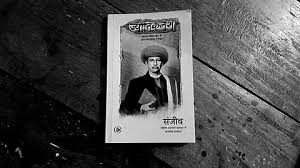
The incident of casteist insult in Mahatma Phule’s childhood which lit the spark of social revolution within him, is described in detail in Sanjeev’s book ‘Jyoti Kalash’. In the childhood of Mahatma Jyotiba Phule, a great hero of extraordinary personality who staked everything for the marginalized society in Indian history, an incident happened after which he got inspired to start a big movement against casteism, Brahminism, superstition and ostentation. The book “Jyoti Kalash” written by Sanjeev, who edited popular magazines like “Hans”, wrote columns and authored many novels, is in itself a sequential document of true events related to the life of Mahatma Jyotiba Phule. In this book published by Rajkamal Prakashan, Sanjeev, who has been awarded the “Sahitya Akademi Award”, mentions an incident from Phule’s life at the very beginning of the book after which Jyotiba Phule became firmly committed to the welfare of the Dalit-backward society. In the book Jyoti Kalash, Sanjeev tells that Jyotiba receives an invitation card for his classmate Paranjape’s wedding. It says, “Tum nahi aaye to kutti?” [If you don’t come, the friendship will end.] On seeing the invitation card for his classmate’s wedding, Phule happily starts dressing up to go to the wedding procession. Seeing him getting ready, his father Govindrao asks, “Where are you going?” Phule says, “I told you, right? I have received an invitation to go to Paranjape’s wedding procession.” Seeing his son’s enthusiasm to go to the wedding procession, Govindrao remembers some humiliating incidents in the Brahmins’ wedding procession. These were pricking him like thorns. But he did not think it right to dampen his son Jyotiba’s enthusiasm. The wedding procession had started with the sound of drums and cymbals. The boys were busy dancing and singing. Paranjape was sitting on a chariot with a sword and crown on his head, his younger brother was beside him. Jyotiba felt like meeting Paranjape. Then he came to know that the Patil who would fire the fireworks was missing. People were whispering that who would fire the fireworks now? It was also important to fire the fireworks at that time. The dancing and singing boys were asked, “Will you fire the fire?” Many said, “I am afraid.” Then Phule came forward and said, “I am not afraid.” He moves forward with the ball and then returns and starts firing the ball with the torch in front of the procession.” At that time, a person wearing a Tripund, Tilkit and a turban, who was garlanding everyone, stood in front of Jyotiba. He said, “You…?” Phule stopped. He asked, “You are Govindrao Gonhe’s son, right?” Phule replied, “Yes!” Immediately, he pounced upon Phule. He said, “How dare you come to the procession of Brahmins?” Phule said, “I had invited you!” Tripund, “Huh invitation! He (Paranjape) did whatever he wanted, but how did you forget that you are a Shudra and this is a procession of Brahmins. You had lost your senses. Since when did you become equal to Brahmins?” Then the kind Brahmin interrupts, “Let him go now, he is a boy. Thinking him to be a friend, the boy called his friend, so the poor guy came! Both are children. He also threw the ball…” “Forgive me considering him to be a child. Find a way out.” The turbaned man says, “Okay, then go to the back where the Ramoshis [a socially lower caste] and the people carrying the luggage are following behind.” Jyotiba goes and stands next to them. Feeling completely insulted! A Ramoshi standing apart from the procession comes near him. He says, “The Brahmins have thrown you out of the procession, right? What were you thinking when you came here? Have you forgotten the old days when the Brahmins used to treat the Shudras and the untouchables? Go home, child! This garland is not for you, the musical instruments are not for you, the torches, the incense, the ceremony is not for you. You are a Shudra! Shudra! You were dragged out of the ceremony by holding your arm.” Jyotiba returned home. Govindrao saw his son’s sad face, “What happened? Didn’t you go?” The son told him the whole story. The father kept listening to the tale of insult and kept looking at his son’s dark face. He remembered his humiliated past and said, “I wanted to stop you! But I kept quiet thinking that your heart will be broken.” He paused for a while and then said, “They didn’t beat you, didn’t punish you – isn’t that enough son! It was your mistake, why did you go?” “But”, Jyotiba’s eyes filled with tears. Govindrao immediately said, controlling himself, “No son, no! How can we be equal to them? They are Brahmins and we are Shudras!” Jyotiba’s wounded heart was struggling again and again. Just then Ramoshi, hiding behind the tree, interrupted, “Why did you come to the Brahmins’ wedding procession? I don’t go.” “This is the result of your previous birth that they were born as Brahmins, you were born as Shudras and I was born as Ramoshi. What can you do?” He said. That heavy night passed with great difficulty. This was perhaps the first incident in Phule’s life that shook him to his core. In his book Jyoti Kalash, Sanjeev also mentions many such incidents and those untold things that Mahatma Jyotiba Phule saw, heard, endured and faced bravely in his life. Courtesy: Rajan Chaudhary, Hindi News
UP: Dalit child who used to go to school barefoot became the first 10th pass student of the village, now he will become an engineer!
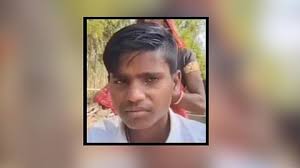
Ramkewal, a Dalit student who used to earn by carrying lights at weddings, became the first 10th pass student of Nizampur, the district administration is taking responsibility for his further studies. Uttar Pradesh: An inspirational news has come from Nizampur, a small Dalit dominated village in Barabanki district. 15-year-old Ramkewal broke the decades-old shackles of the village and became the first student of his village to pass the 10th board examination. The UP Board results were declared on April 25, but the news of Ramkewal’s achievement made headlines on Sunday, when the story of his struggle and courage came to light. Ramkewal studies during the day and at night he carries battery operated lights on his head at weddings, which earns him 250 to 300 rupees per night. In a year, he gets such work for 20 to 40 days, with which he runs his household expenses and buys his own study material. “I bought my own books and stationery. If I don’t get work at weddings, I work as a farm labourer. I mostly study at night,” Ramkewal told reporters in his village, 28 kilometres from the Barabanki district headquarters. His mother Pushpa is a cook at the village’s government primary school, while his father Jagdish Prasad works as a farm labourer. His father never went to school and his mother studied only till class V. The school in Nizampur is only till class V. After that, children have to enrol in the government high school in Ahmedpur, 5 kilometres away. But most of them either drop out or fail in Class X. “I was enrolled in the Ahmedpur school along with two other boys from my village. Lovelesh dropped out in class VIII and Mukesh, who failed this year, will try again next year,” Ramkewal said. Ramkewal is now enrolled in Class XI and dreams of becoming an engineer. His mother Pushpa says, “We have four children – two sons and two daughters. Ramkewal is the eldest. He never asked us for money. He studies hard. If he doesn’t get work, he goes to the fields and studies at night.” On Sunday, District Magistrate Shashank Tripathi called Ramkewal and his parents to his office and announced that the district administration will now take responsibility for his further studies. District School Inspector O.P. Tripathi said, “For now, arrangements have been made for his studies till Class 12, but we will ensure that he can study as much as he wants.” Villagers said that when Ramkewal’s teachers came to know that the DM was going to meet them, they bought new clothes and shoes for their student. Till now he used to go to school barefoot. Ramkewal’s success has infused new energy in the village. Lovelesh’s father Nanku said, “I have studied till Class 8 and work as a labourer in the fields. But now I want my son to start studying again. Education is the only way.” Many women of the village also expressed happiness and said that now they are more determined than before to educate their children. In a village where dreams used to die before they could even be born, now a child has not only picked up the lights but has also lit up the hopes of the entire village. Courtesy : Rajan Chaudhary, Hindi News
Why did Rahul Gandhi suddenly reach PMO? Met Prime Minister Modi
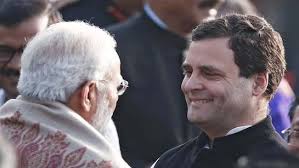
Lok Sabha Leader of Opposition Rahul Gandhi reached to discuss the appointment of CBI Director with Prime Minister Narendra Modi. The appointment of CBI Director is done by a high-level committee, which includes the Prime Minister, Leader of Opposition and Chief Justice. New Delhi: Lok Sabha Leader of Opposition and Congress MP Rahul Gandhi has reached PMO. He met Prime Minister Narendra Modi. According to sources, Rahul Gandhi reached to meet PM regarding the appointment of the next CBI Director. Apart from Rahul Gandhi, CJI Sanjeev Khanna has also reached to meet PM. Who appoints the CBI Director? The selection process and possible candidates for the post of CBI Director are to be discussed. The opinion of the Leader of Opposition is considered important in the appointment of CBI Director, as this selection is done by a high-level committee, which includes the Prime Minister, Leader of Opposition and Chief Justice of India. This committee is chaired by the Prime Minister. How is the CBI Director appointed? The appointment of CBI Director is done under the Delhi Special Police Establishment Act, 1946. The candidate for this post is selected by a committee consisting of the Prime Minister (Chairman), the Leader of the Opposition in the Lok Sabha and the Chief Justice of India or a Supreme Court judge nominated by him. The tenure of the Director is two years, which can be extended subject to conditions prescribed by the Central Government. Candidates are usually senior officers of the Indian Police Service (IPS), who are selected on the basis of their experience, impartiality and administrative ability. Opposition has raised questions on CBI in the last few years In the last few years, the opposition has constantly raised questions about the impartiality and autonomy of the CBI. Other opposition parties including the Congress have been alleging that the CBI is being used by the central government to target political opponents. The controversy deepened after the removal of the then CBI Director Alok Verma in 2018, when the opposition called it an attack on the independence of the investigating agency. Apart from this, the opposition has also questioned the pace and direction of the CBI’s investigation in many high-profile cases, with some cases being allegedly run at the behest of the government. About the author Anubhav Shakya After studying journalism from IIMC in 2021, he entered journalism with Zee News. Born in Etah, UP but studied in Aligarh. After writing national and international news there for about one and a half years, he is now working in the news team at Navbharat Times. Courtesy: Anubhav Shakya, NBT, Hindi News
Denied dignity: How the Indian State enables caste system through manual scavenging
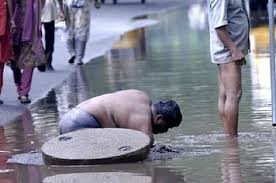
India’s persistent failure to eliminate manual scavenging, despite constitutional guarantees, progressive laws, and technological alternatives, stems not from a legal vacuum but from entrenched behavioural and sociological norms. Across the world, May 1 is set aside to honour the dignity of labour and the long struggle for workers’ rights. In India, this reverence is starkly at odds with the everyday reality faced by its poor and vulnerable working class. Despite being the world’s fifth largest economy, India continues to bury hundreds of its most marginalised citizens, mostly Dalits, in its sewers, septic tanks, and graveyards. The Indian State claims to have abolished manual scavenging, but the reality stinks of apathy, casteism, and systemic failure. The death toll of denial Since 2018, more than 400 workers have died while cleaning sewers and septic tanks in India, according to the Ministry of Social Justice and Empowerment’s admission in Parliament. This figure is widely seen as underreported. Civil society groups like the Safai Karmachari Andolan (SKA) estimate the actual number to be far higher. These deaths aren’t accidents, but caste murders. The victims are overwhelmingly Dalits, forced by social and economic discrimination to enter India’s filthiest spaces, often without safety gear. Take the case of Joy, a 42-year-old sanitation worker in Kerala’s capital, Thiruvananthapuram, who died in July last year while cleaning a clogged canal. His story is not unique. Similar deaths have occurred in Hyderabad, Delhi, Kolkata, Mumbai—cosmopolitan cities where manual scavenging is explicitly illegal, yet continues in plain sight. The contrast between legal prohibition and lived reality is stark. India outlawed manual scavenging over three decades ago, first with the Employment of Manual Scavengers and Construction of Dry Latrines (Prohibition) Act, 1993. The law was expanded in 2013 through the Prohibition of Employment as Manual Scavengers and their Rehabilitation Act, which went further to mandate rehabilitation, alternative employment, and the complete mechanisation of hazardous sanitation work. And yet, the State has largely failed to implement these provisions. The Supreme Court’s 2014 judgement reinforced the ban, ordered compensation of Rs 10 lakh to the families of deceased workers, and even applied this rule retrospectively. Yet compliance remains abysmal. Many states have failed to complete the most basic requirement — identifying the people still forced into this occupation. As a result, their deaths are often unrecorded, uncompensated, and unacknowledged. The court also directed governments to mechanise sanitation, but this remains a broken promise in most places. Machines are either unavailable, dysfunctional, or locked away behind bureaucratic red tape. In many municipalities, mechanisation exists only on official procurement sheets, not on ground. In Delhi, manual cleaning persists under the label of ‘voluntary’ labour performed by contract workers. What emerges is a story of institutional abandonment. At every level – from policy design to municipal governance – the system tolerates this caste-based exploitation. The deaths are not merely technical failures, but moral indictments. Each time a worker enters a sewer without protection, it represents a chain of failures — the failure to mechanise, rehabilitate, record, compensate, and above all, the failure to care. To end manual scavenging, India does not need more laws. It needs political will, administrative integrity, and a rupture with the caste logic that continues to justify this violence. Bone scavenging: A new horror If cleaning human excreta was not already a grotesque affront to human dignity, India now confronts an even more disturbing case in its caste ordeal — bone scavenging. A joint study report by the World Sanitation Workers’ Alliance, the South Asian Sanitation Labour Network (SASLN), and the Safai Karmachari Ekta Manch uncovers this harrowing practice in parts of West Bengal, Odisha, and Rajasthan, where marginalised Dalit communities – many already trapped in manual scavenging – are now collecting human bones from graveyards and cremation sites to earn their bread. This is not macabre curiosity or criminality; it is economic desperation forged by caste dynamics. In districts like Birbhum, Siliguri, and Cooch Behar, at least 178 individuals, mostly Dalits, are engaged in this invisible trade. The bones are sold to unregulated networks supplying calcium-processing units and cosmetic industries. The returns are shockingly low, often just Rs 200 per transaction, underlining the dual economic and social exploitation that defines their existence. This practice is more than illegal; it is profoundly inhumane. It reveals how caste and class conspire to extract value from the oppressed, not only in life but even after death. Historically relegated to ‘impure’ labour such as burial, leatherwork, and waste collection, Dalit communities are once again reduced to their perceived utility. Their suffering is attached even to death, and is monetised. To see bone scavenging as merely an outcome of poverty is to miss the point. This is the machinery of caste capitalism, where certain bodies are made economically viable through morally invisible, caste-coded labour. As anthropologist Veena Das argues, disposability becomes normalised in postcolonial governance. Here, it is institutionalised. The dead are harvested because the living are abandoned. Philosopher Achille Mbembe’s concept of necropolitics – the power to decide whose life matters and whose death is meaningful – finds terrifying resonance here. In India, Dalit death is doubly invisible — their lives are undervalued, and their deaths unacknowledged. The “economy of bones” turns the remains of the oppressed into industrial raw material, commodifying them beyond death and outside the gaze of the State and society. Even more damning is the ritual and moral collapse this exposes. Across cultures, the dead are honoured. The bodies are sacred, and their resting places inviolable. But in India, the poor, especially Dalits and Adivasis, are denied even this final dignity. The graveyard, meant to be a place of peace, becomes another site of caste-determined labour. Dignity is not just denied in sewers and toilets, but also beneath tombstones and smouldering pyres. The State’s silence is deafening. There are no relief packages, no targeted rehabilitation, no serious crackdowns on this underground economy. Welfare legislation like the Prohibition of Employment as Manual Scavengers and Their Rehabilitation Act (2013) ends at the
MP: Brutality with Dalit journalist in Bhind: “He was beaten with chappals when he told his name”, policemen kept beating him in the presence of SP
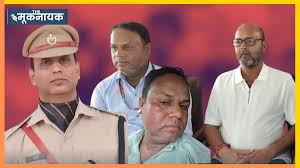
Leader of Opposition Umang Singhar, while talking to The Muknayak, said that after this incident, he has written a letter to the Director General of Police of the state and demanded a fair investigation. Bhopal. An incident that shakes the soul of journalism and democracy has come to light in Bhind district of Madhya Pradesh. About eight journalists of the district were beaten up badly by policemen in the SP office. Among them, two journalists – Shashikant Goyal and Amarkant Chauhan – were beaten up by the policemen only because they used to write against the corruption of the police administration. One of these journalists, Shashikant Goyal, comes from the Dalit community, and he has alleged that he was beaten with chappals after asking his name and caste. All this happened in the presence of Superintendent of Police (SP) Dr. Asit Yadav. “What is the name?” – and then the beating with chappals started Shashikant Goyal told that he was called to SP Asit Yadav’s office on May 1. On reaching there, SI Girish Sharma and Satyabir Singh asked him his name. As soon as he told his name as Shashikant Goyal Jatav, both the policemen started hitting him on the cheeks with slippers. Shashikant said, “I asked Sir, why are you hitting me, what is my fault? To which he replied – you have started writing a lot against the police. He also told that he was forcibly asked to say “ji sir”. When he questioned what is the difference between “sir ji” and “ji sir”, he was beaten again in front of the SP and abused with casteist slurs. “Called for tea, and then beaten” – Amarkant Chauhan’s personal experience Journalist Amarkant Chauhan told The Mooknayak that he too had received a call from the SP office on the evening of 1 May. It was said on the phone that they have to have a “chai pe charcha”. He reached the SP office at around 5 pm, here his phone was snatched first. And then he was kicked from behind and then the policemen started beating him badly. “I had fallen down, but SP sahab was standing and watching everything. No one stopped me. I was abused and told to run away from here, you are acting like a journalist,” Amarkant said. Police reached his house at night, pressurized him to delete the video Amarkant said that police reached his house at around 10 pm. The policemen threatened him that the video he had made after the fight was fake and he should delete it. He was told that no incident had taken place. And the police also made a video by pressurizing him. Amarkant said, “We started feeling that our lives were in danger. So at 12 midnight we caught a truck and reached Gwalior and from there left for Bhopal by train.” Meeting with senior officials in Bhopal, demand for action After reaching Bhopal, the victim journalists, along with Royal Press Club President Pankaj Bhadoria and Joint Secretary Ankit Pachauri, submitted a memorandum to the Director General of Police (DGP) and met Intelligence ADG A. Sai Manohar. The journalists explained the entire incident in detail and demanded that Superintendent of Police Asit Yadav, SI Girish Sharma and Satyabir Singh be removed from their posts immediately and strict legal action be taken against them. The Intelligence ADG assured the journalists that a high-level investigation will be conducted into the matter and the culprits will not be spared. He said, “The freedom and safety of journalists is paramount and the department will work seriously on it.” Protest by journalist organizations, called it an attack on democracy Royal Press Club President Pankaj Bhadoria strongly condemned the incident and said, “This is not just an attack on two journalists, it is a direct attack on the fourth pillar of democracy. If the police itself will suppress the voice of those who ask questions, then where will the society go? “ He demanded that – SP Asit Yadav should be suspended immediately, FIR should be registered against SI Girish Sharma and Satyabir Singh and they should be arrested, Victim journalists should be given security. Congress called it murder of democracy Congress state president Jeetu Patwari has strongly reacted to the brutality with the journalists of Bhind. He said that this incident is not just an attack on journalists, but a direct murder of democracy. He alleged that the police is working under the pressure of the government and unbiased journalism is being crushed. Jeetu Patwari said that Congress will fight against this incident from the road to the House. Leader of Opposition wrote a letter to the DGP Leader of Opposition Umang Singhar, while talking to The Mooknayak, said that after this incident, he has written a letter to the Director General of Police of the state and demanded a fair investigation. Umang Singhar said that he will raise this issue strongly in the assembly. He clearly said, “Attack on journalists will not be tolerated under any circumstances. This is an attack on the foundation of democracy, which we will never accept.” SP called the allegations baseless Reacting to the allegations of assault on journalists, Bhind Superintendent of Police Asit Yadav said in a conversation with The Mooknayak that no such incident has taken place. He said, “Those who are making allegations have already filed a complaint in this matter and withdrawn it. Not only this, they themselves had also made a video saying that no assault took place. Now why are they going to Bhopal and making such allegations, it is beyond comprehension. All the allegations are completely baseless.” Is this incident not a crime under the SC/ST Act? Since the victim journalist Shashikant Goyal belongs to the Dalit community, and he was assaulted and abused after being asked about his caste, the incident is clearly an offence under the Scheduled Castes/Tribes (Prevention of Atrocities) Act, 1989. The journalists are not disheartened Although the victim journalists are scared, Shashikant
UP: Brutality with Dalit minor in a moving bus! 50 people kept watching the spectacle, no one saved her – video viral
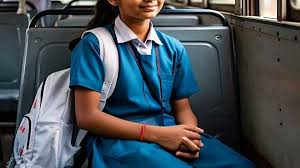
A 16-year-old Dalit girl was brutally assaulted in a moving bus in Lakhimpur Kheri, Uttar Pradesh, 50 passengers saw the spectacle, no one helped, video went viral. Uttar Pradesh: A shocking incident has come to light from Lakhimpur Kheri district, where a 16-year-old Dalit minor girl was assaulted by some youths in a moving bus. When the girl protested against the molestation, the accused beat her brutally. During this, when the driver and conductor of the bus tried to intervene, they were also beaten up. A video of the incident is becoming increasingly viral on social media, in which the accused can be seen slapping the victim and pulling her hair. The incident took place in Padhuva police station area falling under Nighasan area. The most surprising thing is that about 50 passengers present in the bus kept watching the entire incident silently, no one intervened. One of these passengers made a video of the entire incident, which has now gone viral on social media. Bus driver Salim told Dainik Bhaskar that he was going from Dehradun to Lakhimpur when this incident happened. He said, “A girl was going to Lakhimpur in the bus. Some boys were harassing her. When she informed me about this, I tried to convince those boys. But they started quarreling and started beating me.” Salim told that he stopped the bus at Padhuva police station and lodged a complaint against the accused. But he alleges that instead of taking any strict action, the police let the accused go after convincing them. Salim also claimed that during the quarrel, the accused robbed Rs 25,500 from him. Political reaction was also seen on this incident. Uttar Pradesh Congress criticized the government by sharing the video on social media platform ‘X’. Congress wrote in the post, “In Lakhimpur Kheri, miscreants molested a minor Dalit girl in a moving bus, when she protested, she was brutally beaten up. The miscreants were so emboldened that they did not spare even the driver and conductor who came to intervene and beat them badly too. Every day under Baba Ji’s rule, power-protected criminals tarnish the dignity of our sisters and daughters, but how dare Baba Ji admit his failure. Such a government is only worthy of curse!” Meanwhile, Lakhimpur Kheri police issued a statement saying that an FIR has been registered in Padhuwa police station area regarding the incident. Police say that the named accused have been arrested and legal action is being taken against them. Courtesy : Rajan Chaudhary, Hindi News
The Mooknayak Impact: Dalit groom’s Bindauli took place with great pomp, along with police security, Bhim Army also supported the family
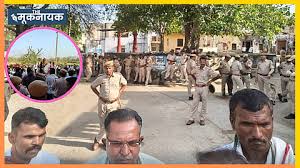
This incident came into the limelight when The Mooknayak first published the news of this matter on May 2, the National Commission for Scheduled Castes (NCSC) took suo motu cognizance and took immediate action. Rajsamand- A Dalit family in Tadawada Gujran village of Charbhuja police station area of Rajsamand district took out their son’s Bindauli on Saturday, May 3 amid tight police security. This incident came into the limelight when The Mooknayak first published the news of this matter on May 2 with the title “In this village of Rajasthan, when the Meghwal community took out Bindauli in 2022, the upper castes boycotted them, now the fear of the upcoming marriage started haunting them!”, the National Commission for Scheduled Castes (NCSC) took suo motu cognizance and took immediate action. Suresh Meghwal, brother of the groom Dinesh Meghwal, had told The Mooknayak about his apprehensions. He said, “We have been ostracised in the village since 2022. I am afraid that my brother’s marriage may be disrupted by anti-social elements. The atmosphere in the village is still tense, and we cannot take any risk regarding the safety of our guests and family.” Suresh cited an incident in 2022, when a bindauli of the Meghwal community was disrupted by upper castes, following which the community has been facing social boycott since then. Following The Mooknayak report, the NCSC took suo motu cognizance of the matter and wrote to Rajsamand Superintendent of Police (SP) Manish Tripathi, directing him to ensure adequate security for the bindauli. The commission also sought a detailed report within 15 days. Following the directions, SP Tripathi deployed around 170 policemen led by an Assistant Superintendent of Police (ASP) in the village on Saturday. Drones were also used to monitor the situation. The Bindauli was held on May 3 from 3 pm to 7 pm, with the groom riding a horse and passing through the main square, Charbhujanath temple and other places in the village. The wedding ceremony is scheduled for Sunday, May 4. “The Bindauli was conducted peacefully. The baraat will be held on Sunday for which we have sought police protection,” Suresh Meghwal said. The groom’s family had also invited the Bhim Army to the ceremony, which joined the Bindauli and extended support to the community. The police kept a tight vigil throughout, ensuring no untoward incident took place. The incident comes just a week after a Dalit groom was attacked during a Ghodchadhi in Madhya Pradesh. The Mooknayak report and the NCSC’s prompt action played a key role in handling the situation in Rajsamand in time, highlighting the importance of media and institutional support for communities facing caste discrimination. Courtesy : Geetha Sunil Pillai, Hindi News
UP: Former Congress Seva Dal leader sentenced to life imprisonment for raping Dalit woman

Dalit woman fought for justice for 7 years, court convicted Congress leader Achhan Khan and sentenced him to life imprisonment Lucknow: A special court in Ambedkar Nagar on Saturday sentenced former Congress Seva Dal official Achhan Khan (50 years) to life imprisonment for raping a Dalit woman – who was his colleague. The court also imposed a fine of Rs 22,000 on the accused. In case of not paying the fine, he will have to undergo an additional imprisonment of three months. Special Judge (SC/ST Act) Ram Vilas Singh convicted Achhan Khan under sections 376 (rape), 506 (criminal intimidation) of the IPC and sections of the Scheduled Castes/Tribes (Prevention of Atrocities) Act. This verdict comes almost seven years after the incident when the first complaint of sexual harassment was lodged. According to Special Public Prosecutor Sudeep Mishra, the victim, who was a grassroots worker of the Congress, alleged that Achchan Khan barged into her house on the evening of September 12, 2018 and raped her. The victim told the court that the accused, who knew her from party work, physically grabbed her, used casteist slurs and threatened to kill her if she told anyone. The victim said she pleaded for justice — lodged a complaint at the Akhbarpur police station and also approached the then Superintendent of Police — but no action was taken. Neither an FIR was registered, nor was a medical examination conducted. The woman also alleged that on September 17, 2020, Achchan Khan called her to Haria area in Basakhri police station area and raped her again. This time, the accused took objectionable photographs of her and threatened to make them viral on the internet if she approached the law. The victim says that one such semi-nude photo was in fact circulated on social media, causing further mental trauma to her. Frustrated by the police’s continued negligence, the victim sent a registered complaint to the Ambedkar Nagar SP on October 31, 2020, but received no response. She then approached the local court, which directed the Basakheri police to register an FIR. The case was registered on September 20, 2021, and the chargesheet was filed on January 28, 2022. Public Prosecutor Mishra said, “The victim’s detailed and consistent testimony in court formed the strong basis of the prosecution.” He further said, “Despite the initial negligence of the police, we ensured a conviction on the basis of her testimony and available evidence.” The court also observed that the delay in the police not taking the complaint seriously did affect the investigation, but it did not affect the credibility of the victim. Courtesy : Rajan Chaudhary, Hindi News
Andhra High Court’s big decision: Dalit Christians cannot avail the benefits of SC/ST Act, know what is the whole case
The court held that the caste system is not recognized in Christianity. The complainant, who has voluntarily converted to Christianity and is working as a pastor, cannot claim protection under the SC/ST Act. Amravati- In an important decision, the Andhra Pradesh High Court has quashed Spl.SC.No.36 of 2021 registered in the Special Sessions and SC/ST Court, Guntur against Akkala Rami Reddy, a resident of Kothapalem village of Pittalavanipalem Mandal of Guntur district and other petitioners. The court said in its order that the complainant (respondent), who has been working as a pastor for the last 10 years, misused the Scheduled Castes and Scheduled Tribes (Prevention of Atrocities) Act, 1989 (SC/ST Act) and filed a false complaint. The court also held that the complainant, who has converted to Christianity, cannot claim protection under the SC/ST Act. Here is the full case The dispute pertains to Kothapalem village in Guntur district, where the complainant had been living with his wife Soujanya and two children, Jackson Paul (7 years) and Mahima Paul (5 years) for the past 11 years. The complainant claimed that he serves as a pastor and conducts Sunday prayer meetings at the house of Doma Koti Reddy in the village for the past 10 years, which is attended by 20-30 people. He also said that he conducted the prayers without any disruption to the peaceful atmosphere of the village. However, on January 26, 2021, the complainant lodged a complaint at the T. Sandole police station, alleging that in December 2020, he received threatening calls from several phone numbers, insulting him on the basis of his caste and threatening to eliminate him and his family. The complaint also stated that on January 3, 2021, while he was conducting a prayer meeting at the house of Doma Koti Reddy, the first accused (Akkala Rami Reddy) called him, slapped and punched him. The complainant said that he forgave the first accused due to his love for Christianity. Further, the complaint mentioned another incident dated January 24, 2021, in which the complainant claimed that while returning home after the prayer meeting, Akkala Rami Reddy and 25 others stopped him, attacked him and threatened to kill him and his family while insulting him on the basis of his caste. Based on this complaint, the police registered a case under Sections 3(1)(r), 3(1)(s), 3(2)(va) of the SC/ST Act and Sections 341, 506, 323, and 34 of the Indian Penal Code (IPC). The police filed a chargesheet after investigation, which included statements of 10 witnesses and the statement of the medical officer of Bapatla Regional Hospital, who described the injury of the complainant as normal. Based on the chargesheet, the case was registered as Spl.SC.No.36 of 2021 in the IV Additional District and Sessions Judge-cum-SC/ST Court, Guntur. The counsel appearing for the petitioners (Akkala Rami Reddy and others) argued that the FIR registered under the SC/ST Act is bad in law. He said the complainant himself has admitted that he is a pastor and conducts Sunday prayers. The counsel argued that a person converting to Christianity cannot claim to be a member of the Scheduled Caste. He cited the Constitution (Scheduled Castes) Order, 1950, which clearly states that a person professing any religion other than Hinduism shall not be deemed to be a member of the Scheduled Caste. The counsel for the petitioners referred to cases like 2016 1 ALD (Cri) 545 (Chinni Appa Rao vs State of Andhra Pradesh) and AIR Online 2024 SC 793 (C. Selvarani vs Special Secretary), where it was held that a person converted to Christianity cannot claim protection under the SC/ST Act. He also argued that the complainant vitiated the social fabric by inciting religious and caste sentiments in the village. The counsel for the complainant argued that the police have filed the chargesheet on the basis of statements of 10 witnesses and medical officer, who confirm the incident. He also said that the Tehsildar of Pittalavanipalem Mandal (witness no. 12) has confirmed the complainant to be of Hindu-Madiga caste, which falls under Scheduled Caste. Therefore, the complainant enjoys the protection of SC/ST Act. The lawyer cited cases such as 2009 LawSuit (SC) 624 (Kurapati Maria Das vs Dr. Ambedkar Seva Samajam) and (2016) 11 SCC 617 (Mohammed Sadiq vs Dabra Singh Guru), where the Supreme Court held that caste is attached to birth and conversion does not change caste. He also argued that the validity of the complainant’s caste certificate is a factual question, which should be decided in the trial court. What did the High Court say? Justice Harinath N of the High Court reviewed the arguments of both the parties and the material available on record. The court held that the SC/ST Act applies only to members of the Scheduled Caste or Scheduled Tribe. The court analysed the complaint and the statements of witnesses, which clearly stated that the complainant has been working as a pastor for the last 10 years and is the treasurer of the fellowship of pastors in Pittalavanipalem mandal. The witnesses also confirmed that the complainant follows Christianity and conducts Sunday prayers. The court held that the caste system is not recognised in Christianity. The complainant, who has voluntarily converted to Christianity and is working as a pastor, cannot claim protection under the SC/ST Act. The court also said that the complainant’s caste certificate, which has not been cancelled, does not provide him the protection of the SC/ST Act, as he is no longer a member of the Scheduled Caste after converting to Christianity. With regard to the allegations under Sections 341, 506, and 323 of the IPC, the Court observed that except the statements of the complainant and witness No. 3, no other witness corroborates the presence of 30 people or the attack. Witness No. 9, who was with the complainant, also only stated that some people wanted to talk to the complainant and later she was threatened. The Court held that these allegations cannot be proved even after a full trial.
End of caste politics of Lalu and Gandhi family! Big disclosure by BJP leader, explained political mathematics

Bihar Politics: The NRI cell of Bharatiya Janata Party has welcomed the decision of caste census. Manish Sinha said that Prime Minister Narendra Modi is realizing the dream of social justice. This decision will formulate policies for the welfare of all sections. This decision will expose the pretentious sympathy of Congress. Patna: The convener of BJP NRI cell has welcomed the decision of the central government to conduct caste census. He said that Prime Minister Narendra Modi is fulfilling the dream of social justice. This decision will help in making policies for the development of all sections of the society. Manish Sinha also said that this will expose the false sympathy of Congress towards the backward class and end caste politics. Manish Sinha belongs to the family of the country’s first President Rajendra Prasad. Praise of PM Modi He said that with this announcement of the PM, the story of caste politics of leaders like Rahul Gandhi and Lalu Yadav will end completely. Prime Minister Modi has worked to realize the dreams of social inclusion of Dr. Ram Manohar Lohia, BP Mandal and Karpoori Thakur. He said that the Congress party has always been pretending with the people of backward classes. Now the caste census will reveal how much benefit each caste has received from reservation. It will also reveal which castes have lagged behind in the race of development. Welcoming the caste census Sinha further said that having caste census along with the general census will end the caste-based politics of Congress. This decision will help in making better policies for the development of all sections of the society. This is an important step towards social equality and development. BJP NRI Cell thanked Prime Minister Narendra Modi and the Central Government for this decision. He said that they will fully cooperate in this effort of social justice. About the author Ashutosh Kumar Pandey Active in print, digital and electronic journalism for more than 16 years. Degree in Political Science and Journalism. Started writing in Jansatta, Hindustan and Dainik Jagran in 2003. Worked in ETV, Maurya TV, Focus TV, Union Ministry of Information and Broadcasting, Prabhat Khabar.com and Network 18. Reporting work in four Lok Sabha elections and many assembly elections. Courtesy: Ashutosh Kumar Pandey, NBT, Hindi News Note: This news is originally published on https://timesofindiahindinews.com/ and is for use by the non-military/non-commercial community, especially those in the human rights sector.