
Used and forgotten: The untold stories of Dalits of 2002 Gujarat riots
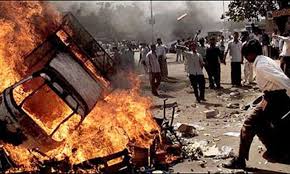
Sejal ben’s day starts at 5 am with usual household chores. She then leaves for work. For the last 20 years, Sejal ben has worked as a manual scavenger around the villages in Ahmedabad district to earn a livelihood and raise her daughter. Forty-one-year-old Sejal is the wife of Dulat Parmar, one of the accused in 2002 Gulberg Society riots case. Her world fell apart in June 2016 when the Metropolitan Court in Ahmedabad found Parmar and 23 others guilty of murdering 69 Muslims including former Congress MP Ehsan Jafri in Gulberg Society, an uppermiddle class gated society in Naroda area of the city. Amongst the accused were VHP leader Jaideep Patel, former BJP corporator Vallabhbhai Patel, Bajrang Dal leader Rajubhai Patel, along with 19 others out of whom 6 belong to Patel community and the other 16 were Dalit men. The plight of Dalit families “When he got jailed in 2016, I had hope that the leaders will help us. After all, my husband was told he is an important member of the Hindu movement. But years passed and he remained in jail. I had to raise my daughter alone with no financial support from anyone. Manual scavenging fetched me around Rs 100 a day as people usually pay less to women. The VHP leaders wouldn’t even meet me. The only person who was accessible was Hitesh bhai (former BJP corporator). He kept assuring me that leaders have not forgotten him (Dulat) and his ‘sacrifice’,” Sejal ben tells The Federal. In December 2019, the Gujarat High Court acquitted 10 accused of Gulberg Society massacre case on ground of lack of evidence while upholding life sentence of 16 Dalit men on grounds that they were ‘positively identified’ by the victims. In April 2025, the Supreme Court upheld the High Court’s verdict. Amongst those acquitted were Jaideep Patel, Valabh bhai Patel, Raju bhai Patel and six other Patel men who had been out on bail. “It was the darkest day of my life. I lost all hope. For years, I have battled financial crisis, social boycott and threats in the hope that one day it will all be fine when Dulat comes home to us. But I feel lost now. They (public prosecutor) told me thecase is closed and nothing can be done,” shares Sejal as she breaks down. “We used to live in Sardarpura area (in East Ahmedabad). We did not have much but we were happy. Shalu, our daughter, was around four years old. I was pregnant with my second child. Dulat used to work in a chemical factory in the city. Money was enough for us sustain. But then he began to attend meetings. Leaders would come and call him and tell him how he had a responsibility as a Hindu to stand up against Muslims,” she says. “At first I told him not to go. But he was promised house and land that Muslims would vacate. And then one day in February 2002, he left saying he is going to attend a meeting and did not come back for a week. When he came back home finally, he had changed… in fact everything had changed. He was arrested in August 2002 and we had to shift out of Sardarpura. We couldn’t live there anymore. Incidents of violence followed many months after the riots. Muslims and Dalits would kill each other for revenge. I left the day I was threatened with rape. The next week, I had a miscarriage,” she adds. Sejal now lives in Vejalpur area of western Ahmedabad where around 60 other Dalit families live in a slum flanked by affluent societies. But the 60 huts of the slum have no access to water, sanitation, electricity or any other civic facility. In fact, the homes have been destroyed by local authorities as illegal encroachment several times already and they face a constant threat of eviction. “In the years, I have lived in many slums across Ahmedabad but have never been accepted by the other residents. Everyone called us murderers and wished my husband was given death sentence. Finally, in 2023, I shifted here in this slum where there are two more families like us whose men are accused of rioting,” tells Sejal. There are many women who face the same fate as Sejal and bear the brunt of being the family of men accused or convicted of rioting and killing people. In 2011, a special fast-track court in Mehsana had sentenced 31 people found guilty of killing and burning 39 Muslims to death and raping and murder of three women. All 31 were awarded life sentence, a fine of Rs 20,000 each. Six months of rigorous imprisonment were added for the accused that couldn’t pay the fine. This was the first verdict in the 2002 Gujarat riots cases. All accused were charged with murder, attempt to murder, arson, rioting and criminal conspiracy. By 2021, all accused belonging to Patel community including a local BJP leader were acquitted except for three men who belonged to Valmiki, a sub community amongst the Dalits. The then additional sessions judge, LG Chudasma, while acquitting the 28 men held that the prosecution case was based on “mere suspicion without any evidence on record”. “There were two parts of the case – one was murder of 39 Muslims, including seven children and the other was rape and murder of three Muslims women. In total 112 witnesses gave their testimony against the accused and identified them. Each witness told their own story of what they endured on the day and singled out the accused who killed their family members. But not one testimony was granted in the first case stating that it was merely the suspicion of the victims who cannot be certain that they saw the same men (accused). Ironically, testimonies of the same victims were admitted in the second case where accused were three dalit men,” says advocate Sohail Tirmizi who represented the victims. “We are not happy with the
Awakening in colours: This is Madhubani artist Malvika Raj who conveys the messages of Buddha-Phule-Ambedkar to the world!
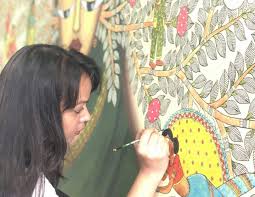
Malvika’s paintings are not just pictures, they are a silent but powerful resistance against caste discrimination prevalent in the society. She has not only given a new social perspective to the Madhubani style, but has also turned it into a document of Bahujan history and self-respect. New Delhi. “In childhood, when school children do not share tiffin with you just because you are a Dalit, that pain stays with you for life,” – these are the words of Malvika Raj, who hails from Samastipur in Bihar and is living in Patna and carving her identity through Madhubani painting. Malvika, who is writing a new chapter in the world of art with her skills, is not only an artist, but is also a strong voice against casteism. In a conversation with ‘The Mooknayak’, she told that she showed the way to make colours and brushes a weapon against social injustice. Malvika is not just an artist, she is one of those voices who are keeping alive the struggle, history and self-respect of Bahujan heroes through art. She has made Madhubani art a symbol of social justice. Today she has made more than 200 paintings, which bring the thoughts and life of great men like Gautam Buddha, Mahatma Phule, Savitri Bai Phule, and Constitution maker Baba Saheb Dr. Bhimrao Ambedkar in colours. A journey from struggle to colours Malvika Raj’s father Ramchandra Ram has retired from the rank of DSP in Bihar Police. She says, “My father’s struggle, his honesty and his support have been my biggest strength. It is because of him that I have reached here today.” Malvika is the second child among four siblings. This family of three sisters and one brother did not give up the path of education and self-respect even in the midst of caste discrimination. Talking about the discrimination she faced while studying in a Hindi medium government school in Patna, she said, “When I was a child, children used to insult my community, not share their tiffin with me, and used to say ‘you don’t look like SC/ST’, I didn’t understand much at that time, but as I grew up, all this used to break me from within, but I made it my strength.” Worked in a private company After completing her fashion designing studies from Chandigarh, she worked in a designing company in Delhi, but due to health problems, she had to leave the job and return to Patna. This is where her art journey began. In 2011, she took up Madhubani painting, but her outlook was traditional. It was different from stories. Madhubani art has often depicted Krishna, Mahabharata, Ramayana, Shivpuran etc. Why are there no paintings of Buddha on the land of Gautam Buddha? When Malvika started to study Madhubani paintings in depth, she was shocked to know that in Bihar, which is considered the land of Buddha, no Madhubani painting of Gautam Buddha can be seen. “If the stories of Ramayana can survive in Madhubani paintings, then why not the legacy of great men like Buddha, Phule and Ambedkar?” — this question gave direction to her art. Malvika had decided then that she would make such paintings, which are not only beautiful, but also give a social message. Each of her works brings alive the identity, struggle and thoughts of the Bahujans. Resistance and identity through art Malvika’s paintings are not just pictures, they are a silent but powerful resistance against the caste discrimination prevalent in the society. She has not only given a new social perspective to the Madhubani style, but has also transformed it into a document of Bahujan history and self-respect. Her paintings are now on display across the country and her art is being collected by many universities and people associated with social movements. Her art reflects the compassion of Buddha, the social conscience of Phule, the torch of education of Savitribai and the Constitution of Ambedkar. Discrimination is still alive Malvika says that caste discrimination still exists in states like Bihar. “When people know my caste, their behavior changes. Some of my friends distanced themselves from me just after knowing my caste.” She also told that many people, looking at her dress and mannerisms, say, “You don’t look like SC/ST,” which is a kind of taunt. The question is, how do those people want to see the people of backward, exploited, deprived society? An artist creating a new legacy Malvika’s journey is proof that no matter how many social barriers there are, if a person has determination and self-confidence, he can change history. She has brought Madhubani painting to a new level, where art is not just decoration, but has become a medium of social justice. Her story is not just an inspiration, it is a living picture of the Bahujan society that is trying to make its mark even amidst discrimination, neglect and struggle every day. What is Madhubani painting? Madhubani painting, also known as ‘Mithila painting’, is a traditional folk painting style of the Mithila region of Bihar. This art has been created by women since ancient times on the walls of the house, courtyard, and on special occasions such as marriages, festivals. The mythological belief of its beginning is that the tradition of this painting started when King Janak ordered to decorate the city at the time of his daughter Sita’s wedding. This painting is mainly done with natural colors and fingers, wooden pen, or cloth bundle. In this, trees, plants, gods and goddesses, animals, birds, marriage, myths and folklore are depicted in a symbolic style. When the walls of houses collapsed after an earthquake on the Nepal-Bihar border around 1947, these paintings were discovered and this traditional art was brought to the world. After this, in the 1960s, the women of Madhubani were taught to paint on paper, due to which this folk art reached the global level. Today it is not only a cultural heritage but has also become a medium of socio-cultural movements. Courtesy : Ankit Pachauri, Hindi
Dalit History Month: Who is the first Dalit Cardinal Anthony Poola? Why is his role special in the Catholic Church?
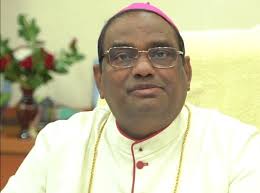
The position of Cardinal is considered the highest in the Catholic Church after the Pope. They are among the most influential people in the Catholic Church and play the role of the Pope’s chief advisors. Their most important job is to elect a new Pope. New Delhi- While the contributions and achievements of the Dalit community are remembered during Dalit History Month, Cardinal Anthony Poola is one name who has created history. In August 2022, Pope Francis appointed two Indian bishops to the College of Cardinals—Archbishop Filipe Neri Ferrao of Goa and Daman and Archbishop Anthony Poola of Hyderabad. Anthony Poola became the first Dalit Christian cardinal, a historic moment for India and the global Catholic Church. This report highlights Poola’s extraordinary life, the significance of his appointment and his iconic role. On 29 May 2022, Pope Francis announced 21 new cardinals, including Archbishop Anthony Poola. With this, he became the first Dalit Christian cardinal. Also, he is the first Telugu person to receive this title. The post of Cardinal is considered the highest after the Pope in the Catholic Church. On 27 August 2022, a ceremony was held at St. Peter’s Basilica in the Vatican, where Poola was formally made a cardinal. Anthony Poola was born on 15 November 1961 in a Dalit family in Chindukur village in Kurnool district of Andhra Pradesh. Growing up amid poverty and social discrimination, Poola started his religious education from Nuzvid Seminary and later studied theology from St. Peter’s Pontifical Seminary in Bengaluru. On 20 February 1992, he was made a priest for the Kadapa Diocese. After this, he always focused on serving the backward and Dalit communities. On 19 April 2008, he was made the Bishop of Kurnool. Later on 19 November 2020, he became the Archbishop of Hyderabad. Why is the role of cardinals so important? Cardinals are also called “Princes of the Church”. They are among the most influential people in the Catholic Church and play the role of the Pope’s main advisors. Their most important job is to elect a new Pope. Currently, the total number of cardinals is 242, out of which 134 are authorized to elect the Pope (under the age of 80). Anthony Poola is also included in these, which means that he will participate in the election of the next Pope. By giving this post to Poola, Pope Francis has given representation to the Dalit and Telugu community at the global level. This appointment is a big step towards equality and inclusiveness in the church. A big hope for Dalit Christians Dalit Christians in India often face discrimination even within the church. Out of India’s 1.9 crore Catholics, a large number are Dalit Christians, but their representation in high positions in the church has been very low. This appointment of Poola is a big step towards changing this situation. During Dalit History Month, Poola’s story has become an inspiration to millions. His journey shows that any obstacle can be overcome with honesty, service and faith. Cardinal Anthony Poola’s life, who rose from a small village to the Vatican, is an example of struggle, faith and dedication. His appointment as the first cardinal from the Dalit community is not only historic, but it also reflects the Church’s commitment to equality and justice. Today he is not only an advisor to the Pope, but also the voice of millions of Dalit Christians around the world. His achievement proves that any position can be achieved with determination and hard work. Courtesy : Geetha Sunil Pillai, Hindi News