
Rahul Gandhi will participate in ‘Shiksha Nyay Samvad’ in Darbhanga on 15th, 62 national leaders of Congress will interact with students
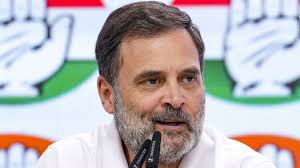
Congress leader Rahul Gandhi will launch the ‘Shiksha Nyay Samvad’ program in Bihar this weekend, which aims to highlight the pathetic condition of the education sector in the state. Kanhaiya Kumar told that Rahul Gandhi will come to Darbhanga on May 15 and the party leaders will visit colleges, universities and interact with the students. Patna: Congress leader Rahul Gandhi will be in Bihar this weekend to launch the ‘Shiksha Nyay Samvad’ program. This public relations program is being run to highlight the pathetic condition of the education sector in the state. Senior Congress party leader and NSUI national in-charge Kanhaiya Kumar gave this information. Rahul Gandhi will come to Darbhanga on May 15 Kanhaiya Kumar told that the Leader of Opposition in the Lok Sabha will come to Darbhanga on May 15, when more than 60 national level leaders of Congress will be in different parts of the state to start the Shiksha Nyay Yatra. Kumar, a former president of the Jawaharlal Nehru University (JNU) Students’ Union, recently took out a state-wide ‘Palan Roko Naukri Do’ padayatra. He also clarified that unlike the previous programme, the ‘Shiksha Nyay Samvaad’ has no time limit. Congress leaders to interact with students Kanhaiya Kumar said that during the yatra, party leaders will visit colleges, universities and hostels and interact with students. Bihar students are facing delays in academic sessions, question paper leaks and state government repression for protesting against raising their voice. Feedback from students will be used to prepare Nyay Patra Kanhaiya Kumar contested the 2019 Lok Sabha elections from his home district Begusarai. He said that the feedback received from the students will be used to prepare Nyay Patra, which is a manifesto of promises. If the ‘India’ alliance forms the next government here, we will fulfill it in Bihar. Kanhaiya Kumar alleged that the Nitish Kumar-led state’s ‘double engine government’ has failed to benefit Bihar while Gujarat, the home state of Prime Minister Narendra Modi and Union Home Minister Amit Shah, is getting “investments and attractive projects like bullet trains.” The Congress leader also said that the party will ensure that the caste census, which the Narendra Modi government at the Center has agreed to, is done in a scientific manner, “taking inspiration from Telangana, where our government has drawn its conclusions on the basis of a comprehensive questionnaire. Assembly elections are now due in a few months in the state, which has been ruled by the Bharatiya Janata Party (BJP)-led National Democratic Alliance (NDA) for nearly two decades. About the author Ravi Sinha Working in the Bihar-Jharkhand team of Navbharat Times Digital. Got a chance to work as Jharkhand representative in Rajasthan Patrika from December 2005 to April 2020. A journey of 17 years as a casual assistant editor in Doordarshan Ranchi and the regional news unit of Akashvani Center. Courtesy : Ravi Sinha, Hindi News
Bihar will become a hot political battle ground after Operation Sindoor, Rahul Gandhi coming before PM Modi; Know the political plan
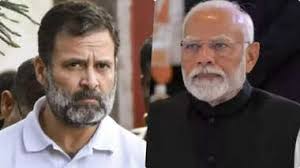
Rahul Gandhi Bihar Tour: Prime Minister Narendra Modi will hold an election rally in Rohtas, Bihar at the end of May. Congress MP Rahul Gandhi may also come to Bihar on May 15. Rahul Gandhi will meet workers in Gaya. In the last week of May, Prime Minister Modi will address a big rally in Bikramganj. Patna: Prime Minister Narendra Modi is coming to Bihar after Operation Sindoor. He will hold an election rally in Rohtas. Congress MP Rahul Gandhi is also coming to Bihar. He will meet workers in Gaya. Modi will come at the end of May. Rahul Gandhi may come on May 15. Bihar BJP President Dilip Jaiswal said that PM Modi will address the rally in Bikramganj. He will give a message to the world on terrorism. Rahul Gandhi will come to Bihar on May 15 According to the information, Prime Minister Narendra Modi is going to visit Bihar soon. This will be his first Bihar tour after Operation Sindoor. At the end of May, he will address an election rally in Rohtas. On the other hand, Congress MP Rahul Gandhi is also coming to Bihar. He is likely to come to Bihar on May 15. This will be Rahul Gandhi’s fourth visit to Bihar in the last five months. This time he will meet workers in Gaya. Many big leaders of Congress can also come to Bihar with him. Date not decided yet BJP’s Bihar state president Dilip Jaiswal said that Prime Minister Narendra Modi will come to Bihar in the last week of May. He will address a rally in Bikramganj of Rohtas district. Jaiswal said that Bikramganj has been chosen for the rally to be held in Shahabad area. Prime Minister Modi will address the countrymen from this platform. Dilip Jaiswal said that the Prime Minister’s visit can happen anytime between 25 and 30 May. Its date will be told in the next 4-5 days. Display of power and leadership He also said that this rally will not be just a political gathering. It will also be a display of the country’s power and leadership. Dilip Jaiswal further said that under the leadership of Prime Minister Modi, the country has given a befitting reply to cross-border terrorism. He has also given a strong message to Pakistan. Similarly, PM Modi will once again roar among the people from the land of Bikramganj. His voice will reach the whole world. Political atmosphere of Bihar is hot Let us tell you that the political atmosphere in Bihar is hot. The election fervor in the state has intensified due to the visit of Prime Minister Narendra Modi and Rahul Gandhi. Both the leaders will try to garner support for their respective parties. It will be interesting to see what impact these visits have on the politics of Bihar. About the author Devendra Kashyap Principal Digital Content Producer at Navbharat Times Digital. Journey in journalism from Mahua TV, Zee News, Eenadu India, Rajasthan Patrika, ETV Bharat to Times Internet. Courtesy: Devendra Kashyap, NBT, Hindi News
South First investigation: A clash with a casteist tag, injured Dalits, deity-less temple, and TN politics
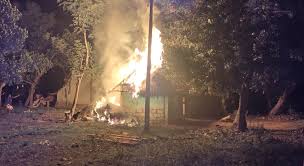
There was a clash between two communities. Several reasons are being cited but a concreate cause is yet to be made public. The Vadakadu violence needs a long-standing solution rather than cosmetic changes. Synopsis: There might be multiple reasons for the violence that left the Vadakadu village in Tamil Nadu’s Pudukkottai district in distress. However, it seems no concerted effort has been made to get to the fundamental, underlying cause or causes and address them for good. Filming violence has become common of late, though not many of those videos get to the root cause of the incident. Videos posted on social media after the clash between two communities at Thiruvalluvar Nagar, a predominantly Dalit settlement in Vadakadu village, in Alangudi Taluk in Tamil Nadu’s Pudukkottai district, too, did not shed light on the developments that had led to the violence. Several reasons have been cited. Police said it was the fallout of a drunken brawl between two youth groups over filling petrol. Some others felt it was a land dispute, many others blamed it on caste discrimination that divides people. The clash occurred on the night of Monday, 5 May, after the chariot procession at the Muthumariamman Temple. Besides local residents, people from other villages, too, have gathered at the temple located in an area dominated by the Mutharaiyar community. Selvarani Kannaiya a resident of Thiruvalluvar nagar, Vadakadu Selvarani Kannaiya, a 66-year-old Dalit, was praying after the procession along with fellow villagers. “We received word from our village that something was happening, and we should return immediately. She left immediately. “Around 50 women and children were with me. While returning, more than 300 youth from the Mutharaiyar community passed her,” Selvarani told South First. The figures she mentioned could not be independently verified. The woman was still in shock when she recalled the incidents of that violent night. “They must have mistaken us for residents of another area,” she continued. Fear had by then gripped the women and children. “After they had passed, we hid in a field. When it seemed clear and safe, we rushed back to our village,” the elderly woman said. She has been living at Thiruvalluvar Nagar. A road separated the village from the area where the temple was located. The women still felt something was about to happen. Along with the children, they hid on the upper floor of a house that was shrouded in darkness. Their fear came true as more than 300 youths from the Mutharaiyar community allegedly stormed Thiruvalluvar Nagar, attacking whoever came their way, setting a hut on fire, damaging houses and vehicles. They recorded their act on mobile phones and later uploaded them, with background music, onto social media. More than 15 residents of Thiruvalluvar Nagar were left injured. Some of the assailants, too, sustained injuries. Those with grievous injuries were admitted to the state-run Medical College Hospital at Pudukkottai. Police version The Pudukkottai police issued a media statement the next morning. The incident had no connection with the temple festival, they said. The violence allegedly stemmed from a drunken altercation over who should be allowed to fill petrol first at a nearby fuel station. The statement warned of action against those who “misrepresent” the incident as festival-related violence. However, on the night of the attack, Tamil Nadu Minister S Regupathy and Tiruchirappalli Range DGP Varun Kumar met with residents of Thiruvalluvar Nagar. They acknowledged that the attack was indeed linked to a long-standing temple-related dispute and that the violence was a continuation of earlier tensions. Whose version is true? On the first night, villagers told the minister one version of the story. The next morning, the police offered a completely different explanation. Long-drawn conflict Vadakadu is a large village, comprising 18 hamlets. While it is home to people from various communities, the Mutharaiyar, an OBC group, form the majority. Thiruvalluvar Nagar, located within Vadakadu, has been home to around 150–200 Dalit families belonging to the Paraiyar community for over seven generations. Growing flowers and jackfruits has been the primary occupation of the residents of Vadakadu. The “Adaikalam Katha Ayyanar” Temple, located on the main Pudukkottai–Alangudi road in northern Vadakadu, is regarded as the clan deity temple of the residents of Thiruvalluvar Nagar. Locals said there was a dispute around this temple. The Ayyanar temple sits on around three acres. Initially, a few youths from another community came to play volleyball there. “Since it seemed harmless, our elders allowed it,” Anandan told South First. Later in the 1990s, the government proposed a police station on that land. Our community protested, saying it belonged to the temple. He claimed that the plan was dropped after a series of negotiations. But ever since, individuals from the other community have been claiming that they too have rights over this land. Escalating the conflict “The issue escalated significantly in 2015. Until then, the temple was just a modest structure built with sand. We decided to renovate and expand it, and when we started digging a pit for the foundation, some people from the other community objected, saying it was their play area and that the land belonged to them.” Both sides went to court, and the case is still pending. “If they had ownership, they would have proven it by now. The problem isn’t about land; it’s about caste pride. Their real concern is how Paraiyars can build and run a temple independently. They can’t tolerate it,” Sethupathi said. Anandan added that more than six peace committee meetings were held to resolve the issue. “But no solution has been reached. I’ve been witnessing this tension since I was 18.” A temple without deity Due to the dispute, the temple has long remained unused for worship. In January this year, when residents of Thiruvalluvar Nagar attempted to clean the premises and celebrate Pongal, members of the other community objected, saying the land was under litigation and could not be used. They blocked the road in protest and prevented the Thiruvalluvar Nagar residents from
SubscriberWrites: Caste Census – Political compulsion or need of the nation
One of the fundamental principles of our constitution is ‘equality for all’. A caste census has the potential to formalise the social stigma connected with SC/ST/OBC/Dalit tagging. The demand for a caste census was a fallout from the infamous slogan credited to Rahul Gandhi – ‘Jitni Abadi, Utna Haq.’ This has to be seen as one of the more absurd arguments ever. The right to all national resources and wealth vests in the nation and it is incumbent on governments not to fritter them away. Instead, they have to use and allocate them judiciously, with the sole aim of multiplying the nation’s wealth continually while ensuring wellbeing of all citizens with focus on ensuring a Minimum Acceptable Standard of Life (MASL) for all. The failure of the nation in not being able to dismantle the caste system is evident in the rising demand for a nationwide caste census. It is a retrograde step in every possible way and yet all opposition political parties are clamouring for it. The aim of the political opposition is to paint the current government as anti-lower castes and anti-backward sections of the society. They hope to veer Dalit/SC/ST/OBC votes to their fold and ride them for a victory in national elections. It is a blatant exploitation of the poor and the less privileged but our political fraternity could not care less. The reality is that all they want is to convert them to vote banks and mark the caste of every Indian on his forehead. It is indeed a pity that the BJP government, despite its known anti caste census stance, has capitulated to this demand. It is not that such caste numbers were not collated earlier. The first such national census was carried out in 1872. In 1901, 1,646 distinct castes were identified, this number increased to 4,147 in 1931. The last figure was also the basis of the Mandal Commission report in 1980. The 2011 census collected caste-based data for the first time after independence, but it was not made public. Reportedly, the Socio-Economic and Caste Census (SECC) of 2011 identified over 4.6 million castes and subcastes in the country. For the record, in ancient India there were only four proper castes Kshatriyas, Brahmins, Vaishyas and Shudras based on Varna (occupation) and not birth. It may be prudent to note that the SC/ST population was estimated to be about 25% at the time of independence. More recently, a report in the Times of India dated 30 July, 2021 published an estimation of current SC/ST/OBC population based on the records of children enrolled in primary schools. It estimated that there were 45% OBC, 19% ST and 11% SC students and rest 25% were upper castes including others. These figures were in line with the data of last census in 2011 with variations limited to one or two percentage points for SC/ST and a bit higher for OBCs. For the record, in 1989-90, the Mandal Commission had estimated the OBC population at about 52%. The data shows that not only have the percentage figures for ST/SC increased over the years, the overall figure for backward classes has shown a quantum jump with addition of OBCs. One major reason for this state of affairs is the underlying principle of once a SC/ST/OBC – always a SC/ST/OBC. The lure of reservations scores over any social stigma and that has resulted in a continual addition of new communities in these categories. One of the fundamental principles of our constitution is ‘equality for all’. A caste census has the potential to formalise the social stigma connected with SC/ST/OBC/Dalit tagging. This goes against the need of the hour which is to remove all forms social tagging and promote equality. All those clamouring for a caste census, normally justify it by saying that with such data in hand, the government can work towards improving their financial status by allocating necessary resources. It is obvious that they have a very limited understanding of the implications of being ‘backward’ in a society. The term ‘backwardness,’ apart from a below par financial status, also reflects a more serious malady of social barriers and distancing that these sections face from others who are better placed in the society. Therefore, aim of addressing backwardness has to include both economic and social upliftment. Perhaps, the latter is more important in the long run for a life of dignity. It is comparatively simpler to define and talk about financial needs as a suitable threshold can be laid out keeping MASL life as the target. This goal can be reached through a judicious mix of doles, freebies and development of such backward people to get jobs or prepare them for other vocations that can help them to earn a decent living. A prudent approach will aim to reduce the freebies and doles with time while increasing their abilities to find jobs or pursuing other remunerative vocations. Does the social status of a Dalit/SC/ST/OBC change automatically if his financial status moves up by a few notches? One will have to be very naïve to answer this in the affirmative. History tells us that social biases continue unabated even if financial status improves. The large volume of complaints in the government services to investigate biases against employees from such communities stands testimony to this hard truth. If this is the harsh reality in educated and well-placed strata of the Indian society, the situation in the underdeveloped and rural areas will be many times worse. This brings us to an important conclusion that removal of social biases is not a function of financial status alone. At the best it can act as a facilitator or a start point. Social distancing or biases are a function of the mind set of both – the one being shunned and the one who shuns. The phenomenon of social bias is a two-way traffic, where both the less privileged and the more privileged are involved. Therefore, both sections of the society have to be educated.
Truce again, Barbers return, villagers vow to shun untouchability in Koppal
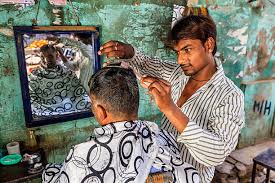
Truce reached in Muddaballi after 50-day boycott; officials urge unity, warn against social evils KOPPAL: Almost 50 days after some eateries and two salon owners shut their shops after some Dalits visited a salon for a haircut, a truce was arrived at between the warring upper caste community and Dalits in Muddaballi village in Koppal district. Barbers carried out their business during this period by visiting houses. The truce became possible after Koppal district administration and police officials visited the village and held meetings with the two groups. The officials succeeded in pacifying the hotel and salon owners, and told them that in today’s digital world, they should root out social evils like untouchability and live together in peace. The officials held a mass meeting with the police, and villagers took an oath that they will not follow untouchability henceforth, and allow everybody into their eateries and salons. Village seniors also played a role in convincing the two parties, following which the barbers came forward and cut Dalit leaders’ hair. However, some leaders say this is a temporary solution and some eatery owners will revert to their earlier stand, and not entertain Dalits. Some villagers, who did not want to be named, said, “We appreciate the efforts of the district administration, but officials should keep vigil as some people will repeat the same thing. The truce will continue for some days and some eatery and salon owners may shut their shops, giving one or other reason out of fear of being targeted. But this time, all villagers have made a promise and let’s hope nobody breaks it.” An official from Koppal district administration said, “We went to Muddaballi village and convinced the villagers. We have also told people to treat all as equal and be a role model for others by maintaining unity. We have spoken to some seniors to intervene if any small disputes arise.” Courtesy : Raghottam Koppar, TNIE Note: This news is originally published on https://thenewindianexpress.com/ and is for use by the non-military/non-commercial community, especially those in the human rights sector.
Buddha Purnima 2025: Bollywood’s first silver jubilee film was based on the conflict between Buddhism and Hinduism – 1934’s ‘Amrit Manthan’ had a message of peace and kindness
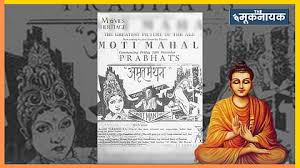
The friendship between the film’s director V. Shantaram and Dr. Ambedkar was very special. Both wanted change in the society. New Delhi- This time Buddha Purnima is on 12 May. This is a very special day for the Buddhist and Bahujan community when they remember the birth, enlightenment and Mahaparinirvana of Lord Buddha. This time the occasion of Buddha Purnima is also special because for about three months, the Mahabodhi Mahavihara Mukti Andolan has been going on, which demands to free the Mahabodhi Mahavihara temple located in Bodhgaya, Bihar from the control of the Mahant Brahmin class and non-Buddhists and hand over the management of the temple to the Buddhist community. The main objective of the movement is to repeal the Bodh Gaya Temple Act of 1949 and ensure full rights over the sacred premises of the temple for the Buddhist community. Currently, Buddhist monks and followers are on hunger strike to demand their demands. The differences between Buddhists and Hindus have remained the same for centuries. Perhaps very few people would know that the story of Bollywood’s first silver jubilee hit film Amrit Manthan (1934) was based on the conflict between Buddhism and Hinduism. The film ran continuously for 25 weeks in theatres and was well liked. This film was made by V. Shantaram who was close to Baba Saheb Ambedkar. Shantaram believed so much in Buddhism that the design of his Dadar-based Plaza Cinema was also inspired by the Sanchi Stupa. There were small marks of Buddhist design in ‘Plaza Cinema’, which showed Shantaram’s respect for Buddhism. Another interesting thing is that the word ‘Silver Jubilee’ was coined by Babu Rao Painter, who used to be the distributor of Shantaram’s company Prabhat Films. Amrit Manthan: Bollywood’s first superhit film The 1930s were a new era of Indian cinema when V. Shantaram made Amrit Manthan with his company Prabhat Films. The film was in Hindi and Marathi and released in 1934. It was so well received that it ran for over 25 weeks in Bombay (now Mumbai). It received the title of Silver Jubilee, which was a big deal at that time. The story questioned the social evils of the time and showed Buddhism’s principles of compassion and equality. The film had brilliant acting, with stars like Shanta Apte, Nalini Tarkhad and Chandra Mohan. Shantaram used new camera techniques such as telephoto lenses to show the priest’s fearful eyes. The film’s song “Kamasini Mein Dil Pe Gham Ka…” was the first Bollywood ghazal, sung by Shanta Apte. All these factors together made Amrit Manthan a landmark film. According to researcher and film historian Vijay Kumar Balakrishnan, the film had all the qualities that managed to mesmerise and attract the audiences of that time. The story revolves around a fictional king who followed Buddhism. The story is about the reformist King Kantivarma, who bans the sacrifice of animals and humans. This angers the fanatic Rajguru (Chandra Mohan), the chief priest of the Chandika cult. The cult meets secretly and the chief priest orders the assassination of the king. Yashodharma is chosen for this job, though he hesitates, the priest orders him to do it. Yashodharma writes a note for his son before leaving that night, informing him about the task planned by Rajguru. After the murder of the king, Yashodharma is betrayed in the court by Rajguru and ordered to kill him. Yashodharma’s two children, Madhavgupta and Sumitra, escape, but Madhav is caught and one of Rajguru’s men gets the letter from him. Sumitra is held captive and Queen Mohini, who ascends the throne after her father’s death, is asked by Rajguru to sacrifice Madhav at the temple. A storm arises and Mohini and Madhav escape into the forest. Madhav later sets out in search of his sister. Vishwasgupta, a trusted minister, tells Mohini and the people of Avanti about Rajguru being the real killer. A crowd of townspeople gather at the temple demanding justice and Rajguru, with his obsessive belief in sacrifice, offers himself to the goddess and cuts off his head as the ultimate sacrifice. Baba Saheb was also against the hypocrisy of Hinduism In an article published in Round Table India, Dr. SPVA Sairam writes that this story was of the time when Dr. Ambedkar was fighting against the caste system and Hindu customs. The film came out in 1934, and in 1935 Ambedkar said at the Yeola Conference, “I was born a Hindu, but will not die as a Hindu.” Later in 1956, he converted to Buddhism. The story of Amrit Manthan was similar to the ideas of Ambedkar, who talked about equality and compassion. The friendship between V. Shantaram and Dr. Ambedkar was very special. Both wanted social change. Shantaram raised issues like caste, women’s rights and religion in his films. Shantaram helped with Buddhist ceremonies. He donated money and film set material for Ambedkar Jayanti and Mahaparinirvana Diwas (6 December). His studio also had a Buddha statue. Shantaram’s daughter Rajshree and actor Jeetendra studied at Ambedkar’s Siddharth College. Shantaram’s friend Master Krishna composed music for Buddha Vandana and learnt the Pali language at Ambedkar’s behest. Courtesy : Geetha Sunil Pillai, Hindi News
Buddha Purnima 2025: Bollywood’s first silver jubilee film was based on the conflict between Buddhism and Hinduism – 1934’s ‘Amrit Manthan’ had a message of peace and kindness
TM Exclusive: Darkness under the lamp in MP Congress, caste balance missing in spokesperson list, tribals zero, Rahul Gandhi’s slogan ignored?
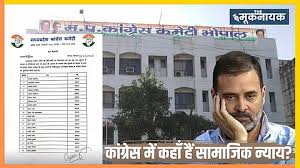
55% of 53 spokespersons get nominal representation from upper caste, backward and Dalit leaders BHOPAL. Madhya Pradesh Congress organization is continuously proving unsuccessful in following the political slogan given by Congress leader Rahul Gandhi “Jiski jitni sankta bhaari, uski utni share” (the number of people is more, the share is more). The latest example of this is the recently announced spokesperson list of the state Congress, in which the basic spirit of social justice and caste representation is not visible. On May 5, the list of 53 spokespersons was released by the head of the media department of Congress, Mukesh Nayak, on the instructions of the president Jitu Patwari. In this list, the dominance of upper castes can be clearly seen, while the backward classes (OBC), scheduled castes (SC), scheduled tribes (ST) and minority communities with large population have not got the expected representation. Dominance of general category According to the list, 18 Brahmins, 6 Thakurs, 6 other general category and 11 leaders from backward class have been appointed as spokespersons. That is, a total of 29 spokespersons belong to the upper caste, which is about 55% of the total list. On the other hand, only 9 leaders of the backward class, which is considered to have about 50% participation in the population of the state, have been given the responsibility of spokesperson. Only 7 representatives of the Scheduled Caste category are in this list and only 6 leaders from the minority category could become spokespersons. The most surprising thing is that the tribals have a participation of 21.10 percent in the state. Congress has not appointed any person from the Scheduled Tribe (ST) category as a spokesperson, while Madhya Pradesh is a tribal dominated state. Questions raised on lack of caste balance Congress has been demanding caste census for a long time and Rahul Gandhi has made it clear while advocating social justice from every platform that the party’s goal is to ensure participation in proportion to the number. But this list of Madhya Pradesh Congress has not only weakened this idea, but has also exposed the neglect of caste representation at the ground level. Opinion of political analysts Political analysts believe that when the Bahujan Samaj will not get proper representation in the organisational structure itself, then how will the public trust the policies of Congress and its slogan of social justice? In a conversation with The Mooknayak, senior journalist Ramesh Sharma said that even though the Congress party talks about giving representation under social justice, but its list does not show representation in proportion to the numbers. List of representatives according to social classes General Category (Total): 30 Thakurs: (6) Ajit Bhadoria, Avnish Bundela, Santosh Singh Parihar, Samar Singh, Himani Singh, Santosh Singh Gautam, Brahmins: (18) Aparajita Pandey, Ambika Sharma, Gunjan Shukla, Jitendra Mishra, Dharmendra Sharma, Neelabh Shukla, Pramod Dwivedi, Priyanka Sharma, Mrinal Pant, Ram Pandey, Sangeeta Sharma, Rahul Raj, Sandeep Sablok, Sunil Mishra, Swadesh Sharma, Vivek Tripathi, Vinod Sharma. Other General Categories: (6) Bhupendra Gupta, Vinay Saxena, Ravi Saxena, Anand Jain Kasiwal, Harsh Jain, Kundan Punjabi. Backward Classes: (Total 11) Abhinav Baroliya, Amit Chourasiya, Anand Jat, Jyoti Patel, Yogesh Yadav, Rajesh Chouksey, Roshni Yadav, Shailendra Patel, Sparsh Chaudhary, R.P. Singh, Samar Singh Scheduled Caste: (SC) (Total 7) Amit Tawde, Praveen Dholpure, Mithun Ahirwar, Mukesh Panthee, Ravi Verma, Vikram Chaudhary, Sitasharan Suryavanshi. Scheduled Tribe (ST): No spokesperson. Minority community: (Total 6) Abbas Hafiz, Noori Khan, Firoz Siddiqui, Shahryar Khan, Sabir Fitwal. When The Mooknayak tried to get a reaction from the newly appointed spokesperson Dr. Vikram Chaudhary on this issue, he refused to comment and was seen avoiding speaking on this subject. SC/ST did not get representation even in Youth Congress elections In this election of Youth Congress, out of a total of 59 posts, only 7 seats have been reserved for the youth of Scheduled Caste and Scheduled Tribe category. This number is very less compared to the share of these classes in the population of the state. The total population of Madhya Pradesh has reached about 3.29 crores, in which Dalit and tribal communities have a large participation, but their share in organizational representation does not seem satisfactory. It is clear that the reservation policy has become a mere formality here. Why is the reduction in representation an important issue? Giving proper representation to social groups in political organisations is not just a game of numbers, it is a matter related to the soul of democracy and constitutional values. Giving leadership opportunities to young leaders of SC/ST community is the basic condition of social justice. When Congress calls itself a supporter of social justice, it is expected that it implements that idea in its organisational structure as well! Courtesy : Ankit Pachauri, Hindi News
Rahul, Lalu… Everyone poured nationalism from their heart on Operation Sindoor, in 2019 they were defeated in front of PM Modi by questioning him
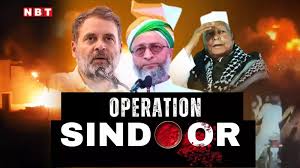
Operation Sindoor: Operation Sindoor, carried out by the Indian Army by entering Pakistan against the terrorists, has united the ruling party and the opposition. Along with the ruling party, all the opposition leaders are raising slogans of success of the Indian Army in one voice. Patna: After Operation Sindoor, a wave of nationalism ran among all the leaders of Bihar. In showing nationalism, whether the ruling party or the opposition, everyone is expressing gratitude to the Indian Army in one voice and praising the government wholeheartedly. It is worth noting that this also includes those leaders who were criticizing Prime Minister Narendra Modi for the delay in the attack and were pleading for his 56-inch chest. Anyway, Operation Sindoor has tied the voice of the ruling party and the opposition in the tune of patriotism. Let’s know who said what and when? Proud of the army: Rahul Gandhi Congress’s Yuvraj Rahul Gandhi did not delay in reacting to the military attack this time. Reacting to Operation Sindoor, he wrote, ‘I am proud of my Indian Army.’ RJD supremo’s patriotism awakened As soon as Operation Sindoor was successful, RJD supremo Lalu Yadav reacted and wrote on X handle ‘Jai Hind! Jai Hind ki Sena!’ Yuvraj Tejashwi Yadav was also not going to miss it. He also wrote – Jai Hind! Jai Bharat! Neither there should be terror, nor there should be separatism! We are proud of our brave soldiers and Indian Army.’ Attack welcomed: Owaisi AIMIM MP Asaduddin Owaisi wrote on social media platform X, ‘I welcome the targeted attacks carried out by our defense forces on terrorist bases in Pakistan. Pakistani deep state should be taught such a strict lesson that there is never another Pahalgam again. Pakistan’s terror infrastructure should be completely destroyed. Jai Hind!’ Answer of 56 inch chest: Vijay Sinha Bihar Deputy Chief Minister Vijay Kumar Sinha welcomed Operation Sindoor and said that when the Pahalgam attack took place, it was decided on the same day that now the terrorists of Pakistan will not be spared. Today, under Operation Sindoor, India has given a strong blow to the hideouts of 9 terrorists hiding in Pakistan and PoK. This is the answer of 56 inch chest! Jai Bharat! Jai Hind! Satyamev Jayate: Chirag Paswan Lok Janshakti Party (Ram Vilas) National President Chirag Paswan also expressed his feelings on Operation Sindoor in this way. Union Minister Chirag Paswan wrote in his social media post, Satyamev Jayate! Jai Hind ki Sena. Opposition did not make any mistake This time the opposition did not give any statement in haste on the military attack so that the wrong message does not go among the people of the country. In the 2019 Lok Sabha elections, the opposition leaders had shown their negative role on the air strike and demanded proof of the air strike from the military force. Then Rahul Gandhi had accused Prime Minister Narendra Modi of taking credit for the Balakot air strike and said that Modi should just pick up a rifle for five minutes or travel alone in a bus in Jammu and Kashmir. In 2019, RJD supremo Lalu Yadav took a dig at Prime Minister Narendra Modi’s statement in which he had said that during the Balakot air strike, he told the Air Force experts how we can avoid Pakistani radar due to clouds. Lalu Prasad Yadav tweeted in his familiar style, ‘Hey, you fool, where is your attention, the radar is here.’ But this time Lalu Yadav was very cautious. That is why the opposition also did not make any mistake regarding the army’s attack so that the ruling NDA does not get the benefit of their mistake in the Bihar Legislative Assembly. Edited by Abhishek Kumar | Reported by Ramakant Chandan About the author Abhishek Kumar I work at NavbharatTimes.com. My hobby and profession are both journalism. I have had the good fortune of working in prestigious organisations like DLA, Aaj Samaj, Dainik Bhaskar, Amar Ujala, Hindustan, Network18, NDTV, ZEE Media. Writing fearlessly on contemporary events and learning new techniques is my nature. Courtesy : NBT, Hindi News Note: This news is originally published on https://navbharattimeshindinews.com/ and is for use by the non-military/non-commercial community, especially those in the human rights sector.
Mahatma Phule Jayanti 2025: Apart from Buddha and Kabir, this is Dr. Ambedkar’s third guru—know what Babasaheb learned from them
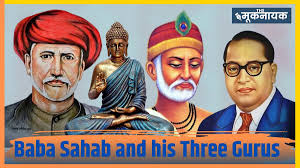
In a radio message in his last days in 1956, Babasaheb said, “Mahatma Phule was the first soldier of logic and human dignity. Without him our fight would have been incomplete.” New Delhi- On the occasion of the 198th birth anniversary of Mahatma Jyotirao Govindrao Phule on April 11, the country is once again preparing to remember his revolutionary contribution. On this occasion, the deep relationship between Phule and Dr. Bhimrao Ramji Ambedkar—fondly called Babasaheb—is in the news. Both fought against the caste system and dreamed of uplifting the oppressed sections of society. Babasaheb considered Jyotiba Phule along with Gautam Buddha and Kabir as his three gurus. In his speech at Purandare Stadium in Mumbai on 28 October 1954, Baba Saheb had said, “I have three gurus. Everyone has a guru, so do I. I am not a sadhu or a recluse, but my first and greatest guru is Buddha … I believe that only Buddhism can do the welfare of the world. The second guru is Kabir..my father was a Kabirpanthi. So Kabir’s life and principles also had a great influence on me. According to my opinion, Kabira knew the real secret of Buddha’s philosophy … Mahar, Mang, Chabar taught and Phule taught the lesson of humanity. These are my three gurus. Their teachings have made my life.” Let us know what Babasaheb said about Jyotiba Phule and what is the similarity between these two great reformers. Jyotiba Phule was born in Satara, Maharashtra in 1827. He challenged the Brahminical system and changed the society by making education a weapon. In 1848, he opened the first school for girls with his wife Savitribai. In 1873, he started a campaign to break the shackles of caste and religion by forming Satyashodhak Samaj. His book Gulamgiri shook people. On the other hand, Babasaheb, born in 1891 in Mhow, Madhya Pradesh, took forward these ideas of Phule. By becoming the architect of the Constitution, he gave legal rights to the Dalits and the oppressed. Both of them considered the Vedas and Puranas to be the weapons of the upper castes. Phule, in his public book Satya Dharma, talked about a religion that brought equality to all. Babasaheb also gave the same message by adopting Buddhism in 1956. In 1848, Jyotiba Phule and Savitribai Phule opened India’s first women’s school in Pune, which was an important step in the field of education for women at that time. On the other hand, the slogan – “Educate, Awaken, Organize” – was the basic mantra of Babasaheb’s life. After signing the Poona Pact on 27 September 1932, Babasaheb said, “I pay tribute to Mahatma Phule, whose struggle against social injustice inspired us to this fight for justice.” The pact was a major step towards political rights for Dalits, and Babasaheb remembered Phule’s inspiration in it. At a Satyashodhak Samaj event in Mumbai in 1940, Babasaheb said, “Jyotiba Phule was the first Indian to raise his voice against the slavery of Shudras and Ati-Shudras. His pen was a sword against injustice, and his life an example of courage.” He described Phule as the man who showed the path to awakening to the oppressed. In the preface of his book Who were the Shudras? (1946), Babasaheb wrote, “Mahatma Phule’s slavery opened my eyes to the fact that the caste system is a historical fraud. He taught us that Shudras were not born to serve, but were enslaved by false myths.” This idea of Phule was very important for Babasaheb. During the Mahad Satyagraha in 1927, when Dalits demanded the right to drink water from the Chavdar pond, Babasaheb said, “Mahatma Phule showed us the way to break the chains of caste. Today we are walking on that path.” In 1954, when he visited Phule’s house in Pune, he said, “It is here that the seed of our freedom was sown.” In a radio message in his last days in 1956, Babasaheb said, “Mahatma Phule was the first soldier of reason and human dignity. Without him our fight would have been incomplete.” Babasaheb appreciated Jyotiba Phule’s questioning of the dominance of Brahmins and exploitation of Shudras in ‘Gulamgiri’, and later he also expressed similar ideas in ‘Riddles in Hinduism’ and ‘Who were the Shudras?’, in which Shudras were described as the first Kshatriyas. Phule believed that Brahmins were descendants of outside Aryan invaders who oppressed the local people. Babasaheb took this further in Who Were the Shudras? and said that the Shudras were the first Kshatriyas who were pushed down by the Brahmins. Phule’s Satyashodhak Samaj became the base of Babasaheb’s organisations. Both spoke in the language of the common people—Phule wrote Powada, Babasaheb wrote books and gave speeches in simple words. In 1868 Phule opened his well to the untouchables, and in 1927 Babasaheb took the right to water in Mahad—both had the same thinking. The spark that Phule lit was turned into the torch of the Constitution by Babasaheb. Scholars say that Phule prepared the ground, and Babasaheb built a palace of rights on it Babasaheb not only considered Phule his guru, but also lived his thinking at every step. As he said, “Without Phule our fight would have been in the dark.” On this birth anniversary, this relationship reminds us that the dream of equality is the gift of these two great souls, which shows us the way even today. Courtesy: Geetha Sunil Pillai, Hindi News