
Gujarat: Dalit youth brutally beaten up for just calling him ‘son’, dies in hospital six days later; 9 arrested
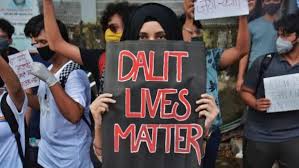
A tragic case of caste violence, Dalit youth dies after fighting for life for 6 days; family demands justice and compensation Gujarat – A Dalit youth was brutally beaten up in Amreli district for allegedly addressing a teenager from another caste as “son”. Six days after the incident, the youth died in Bhavnagar Civil Hospital on Thursday. The deceased has been identified as Nilesh Rathod (village – Jarkiya). The police have so far arrested eight accused in the case and detained a minor, while the search for two accused is on. On Friday, Congress MLA Jignesh Mevani staged a protest with the family of the deceased and demanded justice. In a statement released on Facebook, Mevani said: “Nilesh Rathore… passed away a few days ago after being brutally beaten up by casteist elements for merely calling him ‘son’. We demand that the family of the deceased and others affected in the attack be given 5 acres of agricultural land or a government job each, the case be investigated by a senior officer and the trial be held in a fast-track court to set an example.” Rathore’s family has announced that they will not accept the body until their demands are met. What happened? According to the FIR lodged by Lalji Mansukh Chauhan (28), one of the victims, on May 16, he, Rathore and their other companions were at a bhajiya (pakoda) stall on the Amreli-Sawarkundla road. Rathore had gone to buy snacks from a nearby shop. Chauhan said in the FIR that Rathore returned in a panic and said that the shop owner tried to hit him with an iron ladle because Rathore had asked his minor son, addressing him as “son”, if he needed help in reaching a packet of snacks hanging at a height. When Chauhan reached the shop to look into the matter, the shop owner Chhotha Khoda Bharwad attacked him with a stick. Later, a man named Vijay Anand Tota also attacked both Rathore and Chauhan. The FIR said that bhajiya stall owner Jaga Dudhat rescued the two. Later, Rathore’s uncle Suresh Wala reached the shop to talk, but by then Bharwad had called some more men who attacked them with sticks and sickles and hurled caste-related slurs. According to the complaint, the victims tried to flee from the spot, but the attackers followed and kept attacking them, taunting them for being from a “lower caste”. Finally, the attackers stopped after an elderly man intervened. Legal action The FIR lodged at Amreli rural police station first named four accused — Bharwad, Tota, Bhavesh Mundhwa and Jatin Mundhwa. They were booked under several sections of the Indian Penal Code (BNS), including Section 118(1) – causing grievous hurt, Section 115(2) – voluntarily causing hurt, Section 189 – unlawful assembly, Section 191 – rioting, Section 131 – assault or criminal force, Section 352 – intentional insult for breach of peace, Section 3(5) – responsibility for collective offence. A case was also registered under sections of the Scheduled Castes and Scheduled Tribes (Prevention of Atrocities) Act and the Gujarat Police Act. The police added attempt to murder (Section 109) when Rathore’s condition deteriorated, and murder (Section 103) after his death. Arrests so far The Indian Express quoted Amreli Superintendent of Police Sanjay Kharat as saying that a total of 11 people were involved in the incident, of which 9 have been arrested. Apart from the initial four, the other accused arrested are: Kathad Arjan Mundhwa, Deva Sanga Mundhwa, Duda Boga Mundhwa and Ravi Duda Mundhwa. Police teams are searching for two other absconding accused. Courtesy : Rajan Chaudhary, Hindi News
UP: 12-year-old Dalit girl raped by teenagers in Moradabad

The girl alleged the boys spiked her soft drink, raped her and made a video, which was circulated online. In a horrifying act, a 12-year-old Dalit girl was allegedly gang-raped by five boys, all aged between 12 and 15, inside the principal’s office in Uttar Pradesh’s Moradabad district. The incident took place on May 8. The girl alleged the boys spiked her soft drink, raped her and made a video, which was circulated online. It was only after one of her neighbours saw the video that the crime came out in the open. The Dalit girl’s mother immediately filed a complaint with the police and all five boys were arrested on May 20. According to the girl’s complaint, she knew the boys. They asked her to accompany them to a nearby school. Having known them, she agreed. One of the boys had the key to the school’s building and then took her to the principal’s office. “Once inside, they locked the gate and gave me a soft drink. After that, I lost consciousness. All five raped me and then made a video. When I came to my senses, they threatened to kill my parents if I mentioned the incident,” the Dalit girl said in her statement. Police said that all five have been arrested and sent to a juvenile facility. A case has been registered. Lakdikapul Gated CommunitySt JosephsGermanten Hospital Meanwhile, the girl is receiving counselling. Posted by Veena Nair Courtesy : TSD Note: This news is originally published on https://thesiasatdaily.com/ and is for use by the non-military/non-commercial community, especially those in the human rights sector.
Transgender woman wins Miss Universe Sikkim, to represent state in Miss Universe India

Girls aged between 17 and 29 with a minimum height of 5.2 feet can participate in the Miss Universe Sikkim contest Transgender woman Jackielynn Pradhan has won the Miss Universe Sikkim title and is set to represent the state in the Miss Universe India contest in a groundbreaking moment for the broader LGBTQ+ community. This is the first time a transgender person has won the title in the state. “This has been my dream for the past nine years. Miss Sikkim has turned into reality, and I am so proud of myself and my community (LGBTQ+),” Jackielynn told The Telegraph. A resident of Jorethang, Jackielynn continuously faced struggles in her life that also “affected my education”. “I used to be bullied in school a lot,” recounted Jackielynn. “But I never gave up. My parents, L.M. Pradhan and Pricella Gurung, always supported me. I also held on to a ray of hope. I would tell myself that I would become something in life,” said Jackielynn, who aspired to participate in a pageant and do modelling since 2016. Jackielynn, 21, beat 45 other contestants from the state to win the week-long contest on Sunday night. “Her participation conforms to the norms of the Miss Universe rules. She underwent a surgery two years ago and is considered a woman,” said Bijay Subba, proprietor of POSITUDE (positive attitude), an event management company that has been organising Miss Universe Sikkim since 2013. Girls aged between 17 and 29 with a minimum height of 5.2 feet can participate in the Miss Universe Sikkim contest. Transgender participation in Miss Universe contests is rare. Jackielynn joins Navya Singh, who last year became the first transgender woman to compete in the Miss Universe India pageant. At the global stage, transgender women Rikkie Kollé, Miss Netherlands, and Marina Machete, Miss Portugal, had participated in the Miss Universe contest in 2023. The first transgender participant in the Miss Universe contest was Angela Ponce, who represented Spain in 2018. Despite the change in perception from marginalisation to greater acceptance and visibility, the LGBTQ+ community is still facing major challenges. “Even after winning the title, I am still being cyberbullied. I represent not just my community but the entire women from Sikkim,” said Jackielynn. On Wednesday, a meeting was held in Namchi for the formation of a transgender protection cell in Sikkim. Sources said the meeting aimed to implement The Transgender Persons (Protection of Rights), Act, 2019, with a focus on safeguarding rights, streamlining registration processes, and ensuring prompt investigation and protection measures for the transgender community. Courtesy : Vivek Chhetri , The Telegraph Note: This news is originally published on https://thetelegraph.com/ and is for use by the non-military/non-commercial community, especially those in the human rights sector.
NHRC Urges States to Implement Supreme Court’s Directives to End Manual Scavenging
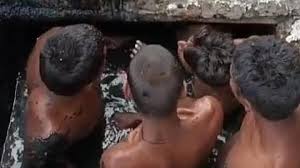
Authorities have been directed to submit action taken reports within eight weeks to demonstrate compliance with the Supreme Court’s directives. New Delhi- The National Human Rights Commission (NHRC), India, has called for the immediate implementation of 14 directives issued by the Supreme Court in its 2023 judgment (Dr. Balram Singh v/s Union of India, 2023 INSC 950) to eradicate the caste-based and inhuman practice of manual scavenging and hazardous sewer cleaning. In a letter to Chief Secretaries and Administrators of all States and Union Territories, the NHRC emphasized that the continued practice violates fundamental human rights, including the right to life with dignity and equality before the law. Despite constitutional safeguards, legal protections, and a Supreme Court ban on manual scavenging in six major cities—Delhi, Mumbai, Chennai, Kolkata, Bengaluru, and Hyderabad—announced on January 29, 2025, the NHRC noted that manual cleaning of hazardous waste persists in parts of the country. To address this, the NHRC has recommended immediate measures, including widespread dissemination of the prohibition and judicial directives among stakeholders such as local authorities, contractors, and the public. It also called for sensitisation programmes for government officials, sanitation workers, and communities to highlight the legal, social, and human rights dimensions of manual scavenging. The NHRC further stressed the need for robust monitoring systems to ensure real-time compliance and deterrence, alongside regular follow-ups and review mechanisms to track progress, identify gaps, and ensure accountability at all levels. Authorities have been directed to submit action taken reports within eight weeks to demonstrate compliance with the Supreme Court’s directives. Coutrtesy : Geetha Sunil Pillai. The Mooknayak Note: This news is originally published on https://themooknayak.com/ and is for use by the non-military/non-commercial community, especially those in the human rights sector.
Bihar Dalit Youth’s Online Complaint Spurs NCSK to Take Suo-Moto Action on Patna Manual Scavenging Case, Directs DM for Inquiry
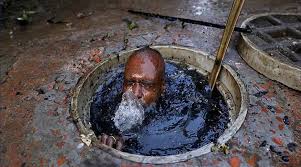
The complainant alleges that individuals, likely from the Scheduled Caste community, were coerced into manually cleaning sewage and manholes without safety gear or mechanized support. New Delhi- The National Commission for Safai Karamcharis (NCSK) has taken suo-moto cognizance of a serious complaint regarding an incident of forced manual scavenging in Patna, Bihar, highlighting ongoing violations of the Prohibition of Employment as Manual Scavengers and Their Rehabilitation Act, 2013, and the Scheduled Castes and Scheduled Tribes (Prevention of Atrocities) Act, 1989. The complaint, lodged by Shubham Kumar on May 10, via the NCSK online portal (Complaint No. 102574), pertains to an incident that occurred on April 28, at Chandmari Road, Kankarbagh, Mithapur. The complainant alleges that individuals, likely from the Scheduled Caste community, were coerced into manually cleaning sewage and manholes without safety gear or mechanized support. This act is in direct violation of the 2013 Act, which prohibits manual scavenging and mandates mechanized cleaning of sewers and septic tanks, as well as Articles 17 (abolition of untouchability) and 21 (protection of life and personal liberty) of the Constitution of India. Most municipalities in India lack modern equipment for cleaning sewage systems, forcing workers to enter underground sewer lines through manholes. (Representational Image) The complainant has demanded several reliefs, including: Immediate inquiry into the violation of the 2013 Act and caste-based discrimination under Article 17. Lodging of First Information Reports (FIRs) under the 2013 Act, the SC/ST Atrocities Act, and relevant sections of the Indian Penal Code (IPC) for endangering human life. Identification of the victims’ names, social categories, and employment status. Compensation of ₹10,00,000 to each victim, as mandated by a 2014 Supreme Court judgment in Safai Karamchari Andolan v. Union of India. Prosecution of responsible officers from the Patna Municipal Corporation (PMC) and supervisory authorities for failing to prevent the incident. A justifiable written reason if FIRs are not lodged. The complaint is supported by four timestamped, geo-tagged photographs showing individuals handling human waste and opening manholes without protective equipment. The complaint is supported by four timestamped, geo-tagged photographs showing individuals handling human waste and opening manholes without protective equipment. The complaint is supported by four timestamped, geo-tagged photographs showing individuals handling human waste and opening manholes without protective equipment, underscoring the hazardous and dehumanizing nature of the work. The complainant has warned that failure to act will lead to legal action, including filing a contempt petition against the NCSK, the State of Bihar, and the PMC, as well as approaching the Patna High Court under Articles 226 and 215 of the Constitution. The NCSK has initiated an investigation into the matter, invoking its mandate under the Rules of Procedure of the National Commission for Safai Karamcharis, 2019, and Section 31 of the 2013 Act, which empowers the Commission to monitor the Act’s implementation and inquire into complaints of non-compliance. In a letter dated 19 May 2025 (DO No. 11059/50/7/13/20-RAD), addressed to Dr. Chandrashekhar Singh, District Magistrate of Patna, the NCSK has directed an immediate inquiry into the incident. The Commission has requested a detailed Action Taken Report (ATR) within 15 days, to be submitted in a prescribed format, including details of compensation provided to the victims as per the Manual Scavengers Rehabilitation Rules, 2013, and the SC/ST (Prevention of Atrocities) Rules, 2016. A copy of the letter has also been sent to the Chief Secretary of Bihar for further action. Courtesy : Geetha Sunil Pillai, The Mooknayak Note: This news is originally published on https://themooknayak.com/ and is for use by the non-military/non-commercial community, especially those in the human rights sector.
Gobarha: When Dalit Wages Were Literally Scooped from Cattle Dung!
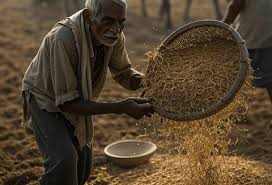
Gobarha—a practice that symbolizes the dehumanization of the “untouchables” and the cruelty of the Hindu social order, as documented by Dr. B.R. Ambedkar in his writings. It is a harsh truth that shakes the conscience and exposes the depths of oppression endured by Dalits for centuries. New Delhi – Imagine a poor laborer who has toiled all day under the scorching sun—breaking his back in the fields, harvesting crops, driving oxen to separate grain from chaff. His spine aches, his palms are blistered, yet a faint hope lingers in his eyes that perhaps today, he will receive fair compensation for his hard work. Exhausted, he approaches his employer to claim his wages, dreaming that his children might finally eat a full meal. But what does the landlord give him? Not money, not clean grain—but a sack of Gobarha: grain that has been sifted from cattle dung, the very same grain that passed through the stomachs of oxen, now dumped into the laborer’s sack so he can grind it into flour and bake bread for his family. This is the story of gobarha—a practice that symbolizes the dehumanization of the “untouchables” and the cruelty of the Hindu social order, as documented by Dr. B.R. Ambedkar in his writings. It is a harsh truth that shakes the conscience and exposes the depths of oppression endured by Dalits for centuries. In Dr. Bhimrao Ramji Ambedkar: Writings and Speeches, Vol. 5, Chapter 4, the brutal realities faced by the “untouchables” in India’s caste-ridden society are poignantly described, with gobarha emerging as a stark symbol of their subjugation. The gobarha practice highlights the systematic oppression of Dalits under Hindu social hierarchy. It exemplifies how caste humiliation was institutionalized, keeping them economically, socially, and culturally marginalized—perpetually treated as outsiders in the so-called “village republic.” The Divided Village Ambedkar described Indian villages as deeply segregated societies, split into two distinct groups: Touchables (Savarnas): Upper-caste Hindus who lived inside the village, wielding economic and social power. Untouchables (Dalits): A marginalized minority forced to live in segregated settlements outside the village, treated as “hereditary bonded laborers.” The Touchables enforced a rigid code that controlled every aspect of Dalit life, criminalizing basic dignities such as: Owning property (land or livestock). Building houses with tiled roofs. Wearing clean clothes, shoes, or gold jewelry. Giving their children respectable names or speaking refined language. Violating these rules invited punishments ranging from social ostracization to violence, ensuring Dalits remained oppressed. Gobarha: The Ultimate Humiliation In parts of Uttar Pradesh, Dalit laborers were paid in gobarha—literally, “dung grain.” During harvest season (March-April), oxen trampled crops to separate grain from chaff, inevitably consuming some of it. The next day, the partially digested grain would be extracted from their dung, sieved, and given to Dalit workers as wages. These laborers had no choice but to grind this filthy grain into flour and consume it. Ambedkarite scholars argue that gobarha was not merely a form of payment but a deliberate act of degradation. It denied Dalits the dignity of fair wages and clean food, forcing them to survive on cattle waste. Ambedkar’s documentation of this practice underscores the brutality of caste, where Dalit labor was so undervalued that even their sustenance was an insult. In an agrarian society, land ownership was key to economic stability—yet Dalits were systematically denied it: Financial Barriers: Most lacked the means to buy land. Social Resistance: Upper castes violently opposed any attempt by Dalits to acquire land, viewing it as a threat to their dominance. Legal Obstacles: In regions like Punjab, laws such as the Land Alienation Act explicitly barred Dalits from purchasing land. As a result, Dalits were trapped as landless laborers, dependent on Savarna landowners. With no bargaining power, they were forced to accept meager wages—often in humiliating forms like gobarha—or face starvation and violence. The Right to Beg: A Parallel System of Survival When agricultural work was unavailable (outside harvest season), Dalits relied on precarious livelihoods: Selling grass and firewood (gathered from forests, often requiring bribes to guards). Institutionalized Begging: Many villages enforced a system where Dalit families were “assigned” to specific upper-caste households, from whom they were expected to beg for food. This was not charity but a structured practice akin to medieval serfdom. Like gobarha, begging reinforced dependence and dehumanization, binding Dalits to a cycle of survival at the mercy of the upper castes. The Village Republic: An Empire of Exploitation Ambedkar called Indian villages a “den of caste oppression”—far from the romanticized “village republics” of nationalist imagination. They were “republics of the Touchables, by the Touchables, and for the Touchables,” where Dalits were stripped of rights and reduced to servitude. The caste system’s “iron law of karma” permanently branded Dalits as inferior, regardless of merit. A poor, uneducated Savarna would always rank above even the most accomplished Dalit. Gobarha embodied this unchangeable hierarchy—where even survival came with a reminder of their “untouchable” status. Courtesy : Geetha Sunil Pillai, The Mooknayak Note: This news is originally published on https://themooknayak.com/ and is for use by the non-military/non-commercial community, especially those in the human rights sector.
The Wall of Caste— A Study Exposing Discrimination Against Dalits in South Asian Healthcare Highlights Why India’s Caste Census is Crucial!
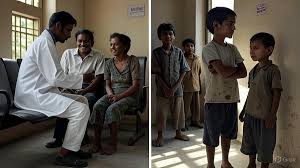
The study emphasizes that caste-based discrimination is not just a social issue but a public health crisis. Despite Nepal’s 1962 ban on caste discrimination and India’s affirmative action policies, implementation gaps and entrenched cultural attitudes sustain inequalities. New Delhi- As India prepares for its much-anticipated caste census, it would be relevant to discuss a groundbreaking study that exposes the deep-seated discrimination faced by Dalit communities in accessing healthcare across South Asia. Published on May 24, 2021, in the Asia Pacific Journal of Public Health, this research by Raksha Thapa, Edwin van Teijlingen, Pramod Raj Regmi, and Vanessa Heaslip analyzes nine studies to reveal how caste-based inequities, compounded by poverty and cultural barriers, systematically deny Dalits, historically labeled as “untouchables”—their right to healthcare. A large number of Dalits in rural areas in India are deprived from or are refused access to health services due to their social status. Typical discriminatory behaviors include refusing to enter Dalits’ houses or allowing them into your house, share food and water, seating places, transport, and generally refusing to touch. Health discrimination is likely to be seen mainly in areas where care is provided, which can be health centers or a patient’s own home. The findings highlight a harsh reality: despite legal efforts to dismantle caste hierarchies, discriminatory practices persist, severely impacting Dalit health and well-being. This study strengthens the case for India’s caste census, which could be a vital step toward understanding and addressing these inequalities. The Burden of Caste: Dalits Excluded from Healthcare The caste system, a 3,000-year-old social structure rooted in Hindu tradition, continues to fuel social, economic, and health disparities in South Asia. Despite being outlawed in India and Nepal, caste-based discrimination remains entrenched, particularly in healthcare. This study, which reviewed research conducted between 2000 and 2019 in India (seven studies) and Nepal (two studies), identifies four key themes: social stigma, poverty, cultural beliefs, and access to healthcare. These themes highlight the complex barriers Dalits, especially women, face, which undermine their health and dignity. Key Findings of the Study Socioeconomic Disparities and Poor Health Outcomes: The study found that low socioeconomic status and limited land ownership are directly linked to poor health outcomes for Dalits. With restricted access to education and well-paying jobs, Dalits often have low household incomes. Social discrimination and poverty confine them to low-status jobs, denying them equal opportunities in the labor market. In Bihar, India’s poorest state, local public medical services, often the only services affordable for Dalits, only addressed basic health needs. Despite developments in the Indian health structure including availability of subcenters, public health centers, and community health centers, poorer communities still experience a shortage of health institutions and skilled health workers. Double Discrimination Against Dalit Women: Dalit women face a dual burden due to their low caste status and the lower status of women in Hindu society. They endure increased risks of domestic violence, severe illnesses, and limited access to treatment beyond local facilities. For instance, Dalit women use antenatal care (ANC) services far less than higher-caste women, leading to worse maternal and child health outcomes. While wealthier Dalit households show slightly better ANC usage, the combination of low caste and poverty consistently results in poorer health outcomes. Cultural and Social Barriers: Cultural beliefs deepen health inequities. Many communities view Dalits as incapable of understanding health information, leading healthcare providers to withhold critical guidance. In some areas, illnesses are attributed to supernatural causes like spirit possession, causing Dalits to rely on traditional healers rather than modern medicine, further limiting their access to proper care. Discrimination in Healthcare Access: All nine studies confirm that caste directly impacts healthcare access. In Uttar Pradesh, only 19% of Dalits with chronic illnesses receive treatment due to high costs, long travel distances, and untrained providers. In Nepal, weak healthcare infrastructure disproportionately affects Dalits, who struggle with paperwork and accessing free services. Dalit healthcare workers, such as auxiliary nurse midwives, also face disrespect from colleagues and patients, undermining their ability to provide care. This study strengthens the case for India’s caste census, which could be a vital step toward understanding and addressing inequalities. Poverty and Stigma: The Dalit Dilemma Poverty is a major barrier to healthcare for Dalits. Most live below the poverty line, relying on low-paying jobs like manual labor or basket weaving. They often lack awareness of free healthcare services or government schemes, and unlicensed practitioners frequently exploit them with exorbitant fees. Taking loans to cover medical costs is common, trapping families in a cycle of debt. Social stigma further compounds their struggles—healthcare providers often refuse to touch Dalit patients, and mental health issues are misattributed to supernatural causes, limiting access to modern treatment. Dalit Women: The Most Vulnerable Dalit women are the hardest hit by this discrimination. Their low caste and gender expose them to higher risks of malnutrition, anemia, and maternal mortality. The study notes that nearly 70% of Dalit women are illiterate, limiting their health literacy and ability to navigate healthcare systems. Economic dependence on men, restricted mobility, and domestic violence further hinder their access to care. Dalit women usually do not visit hospital for treatment due to the travel distance to the hospital and they cannot afford travel expenses or high treatment fees. The study emphasizes that caste-based discrimination is not just a social issue but a public health crisis. Despite Nepal’s 1962 ban on caste discrimination and India’s affirmative action policies, implementation gaps and entrenched cultural attitudes sustain inequalities. The authors argue that improving healthcare requires addressing sociocultural factors like stigma and gender inequality. Programs like self-help groups (SHGs) and ANC have helped, but they fall short without broader societal change. The study calls for caste to be included in global policy discussions, such as the Sustainable Development Goals (SDGs), to achieve targets like poverty reduction, good health, quality education, gender equality, and reduced inequality. Courtesy : Geetha Sunil Pillai, The Mooknayak Note: This news is originally published on https://themooknayak.com/ and is for use by the non-military/non-commercial community, especially those in the human
Casteism from Punjab to Kerala: Four Incidents from the 1930s That Reveal — For Hindus, Inhumanity Was Acceptable, but an Untouchable’s Touch Was Not
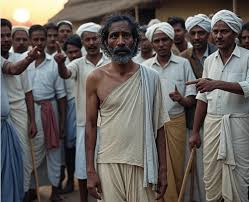
The caste system, rooted in notions of purity and pollution, created a social order where Untouchables were deemed subhuman, their touch considered a contaminant more dangerous than death itself. New Delhi- The 1930s were a tumultuous period in India, marked by the struggle against British rule, the rise of the independence movement, and the deep-rooted caste system that shaped societal norms. The practice of untouchability, grounded in centuries-old notions of “purity” and “impurity,” relegated millions to a subhuman existence. Four chilling incidents from this era, documented in publications such as Young India, Prakash, and Bombay Samachar, expose the cruel reality of a society where caste purity was valued above compassion, ethics, and humanity. Untouchables, often referred to as Harijans or Dalits, faced exclusion from temples, wells, schools, and public spaces. They were forced to live in segregated colonies, barred from touching items used by caste Hindus, and subjected to violence for minor transgressions of caste norms. Reformers like Mahatma Gandhi advocated for the upliftment of Harijans, but their efforts often met resistance from orthodox Hindus who clung to traditional hierarchies. Dr. Ambedkar, himself an Untouchable, was a fierce critic of this system, arguing that untouchability was not just a social evil but a moral and political failure. ‘Chapter 5 in the ‘Dr. Babasaheb Ambedkar: Writings and Speeches Volume No. 5’ published by Dr Ambedkar Foundation, Ministry of Social Justice and Empowerment includes some moving incidents narrated by Baba Sahab, that shows that Hindu would prefer to be inhuman rather than touch an Untouchable. How unclean and unfit for association an Untouchable is to a Hindu be evident from these incidents. Untouchables, often referred to as Harijans or Dalits, faced exclusion from temples, wells, schools, and public spaces. They were forced to live in segregated colonies, barred from touching items used by caste Hindus, and subjected to violence for minor transgressions of caste norms. A Mother and Child Lost to Caste Prejudice (Kathiawar, Gujarat 1929) In a heart-wrenching account published in Young India (a publication by Mahatma Gandhi) on December 12, 1929, an Untouchable school teacher from a village in Kathiawar shared his tragic story. On December 5, his wife gave birth to a child, but by December 7, she fell gravely ill, suffering from diarrhea, chest inflammation, and breathing difficulties. Desperate to save her, the teacher approached a local Hindu doctor, who refused to visit the Harijan colony or examine the child, citing caste impurity. After persistent pleas and intervention from local notables like the Nagarseth and Garasia Darbar, who assured the doctor a fee of two rupees, he agreed to examine the patient—but only outside the Harijan colony. The teacher carried his ailing wife and newborn out of their home for the examination. The doctor, maintaining his distance, passed a thermometer through a Muslim intermediary to avoid direct contact. At 8 p.m., under the light of a lamp, the doctor diagnosed pneumonia and sent medicine. Despite receiving his fee, he refused further visits. The teacher, left with no options, applied linseed from the market to his wife, but she passed away at 2 p.m. that day. He wrote, “The lamp of my life has died out.” This incident reveals how an educated doctor, bound by professional ethics, prioritized caste prejudice over saving lives, leading to the preventable deaths of a mother and her child. Untouchables, often referred to as Harijans or Dalits, faced exclusion from temples, wells, schools, and public spaces. They were forced to live in segregated colonies, barred from touching items used by caste Hindus, and subjected to violence for minor transgressions of caste norms. Punished for Saving a Calf (Jagwal, Punjab 1932) An incident reported in Prakash on August 23, 1932, from Jagwal village in Jafarwal tehsil highlights the perverse priorities of a caste-ridden society. On August 6, a calf fell into a well. Rammahashaya, a Dom (an Untouchable caste in UP and Bihar), who was nearby, jumped into the well without hesitation and held the calf until others arrived to help rescue it. Instead of gratitude, the Hindus of the village accused him of defiling their well and turned on him. The villagers’ outrage over the well’s supposed pollution nearly cost Rammahashaya his life. Fortunately, a barrister arrived at the scene, rebuked the mob, and saved him from further harm. This incident raises a haunting question: was saving the calf more important than preserving the well’s “purity”? For the Hindus of Jagwal, an Untouchable’s touch, even in an act of heroism, was a greater offense than the calf’s potential death. A Child’s Rescuer Attacked (Kaladi, Kerala 1936) A similar tale of ingratitude and violence unfolded in Kaladi, a village in Calicut, as reported in Bombay Samachar on December 19, 1936. When a young woman’s child fell into a well, none of the villagers dared to intervene. A passing stranger courageously jumped into the well and rescued the child. When he revealed he was an Untouchable, the villagers’ relief turned to rage. Instead of thanking him, they abused and assaulted him for “polluting” the well. This incident, much like the one in Jagwal, underscores the deep-seated prejudice against Untouchables. A hero who saved a child’s life was punished simply because his touch was deemed unacceptable by caste Hindus. Untouchables, often referred to as Harijans or Dalits, faced exclusion from temples, wells, schools, and public spaces. They were forced to live in segregated colonies, barred from touching items used by caste Hindus, and subjected to violence for minor transgressions of caste norms. Defiling a Pyre with Rice (Lucknow, UP 1937) A shocking incident reported in Adi Hindu of Lucknow in July 1937 reveals the brutal extent of caste prejudice. During the cremation of a high-caste employee of the Madras Holmes Company, friends and relatives gathered to perform the ritual of throwing rice on the pyre. Among them was an Adi-Dravida, an Untouchable from Madras, who joined in the act out of respect. However, this simple gesture was deemed a defilement of the pyre by the high-caste
CPI’s D Raja condemns ‘cold-blooded killing’ of Maoist leader and Adivasis in Chhattisgarh
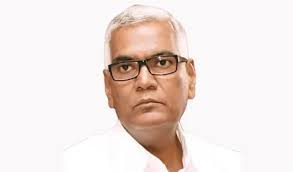
The Communist Party of India said “a democratic society cannot allow the State to become the judge, jury, and executioner.” Synopsis: The Communist Party of India has condemned the killing of senior Maoist leader Nambala Keshava Rao and over two dozen others by Indian security forces in Chhattisgarh’s Abujhmad region, calling it a “cold-blooded” and extrajudicial act. CPI General Secretary D Raja accused the State of bypassing constitutional safeguards and demanded an independent judicial inquiry into the operation. The Communist Party of India (CPI) has strongly criticised the “cold-blooded killing” of senior Maoist leader Nambala Keshava Rao and over two dozen others in Chhattisgarh’s Abujhmad region on 21 May by Indian armed forces. In a strongly worded statement released on Wednesday, CPI General Secretary D Raja accused the state of bypassing constitutional safeguards and engaging in extrajudicial actions that disproportionately affect Adivasi communities. “CPI strongly condemns the cold-blooded killing of a senior Maoist leader along with several Adivasis in Chhattisgarh. It is yet another instance of extrajudicial action carried out under the guise of counterinsurgency operations. The repeated use of lethal force instead of lawful arrest raises serious concerns about the State’s commitment to democratic norms and the rule of law,” the statement read. “If the authorities had credible intelligence about the whereabouts of the leader, why was a legal arrest not pursued? Why was due process – guaranteed by the Constitution – so blatantly ignored?” He further said Adivasi communities have often found themselves caught in military operations without access to justice or protection. “These killings not only point to a dangerous pattern of State violence but also expose the ongoing marginalisation of Adivasi communities in the region. Time and again, these communities are caught in the crossfire of a conflict they did not initiate, and are treated as collateral in operations marked by impunity.” The CPI demanded an independent judicial investigation into the killings. “CPI demands an independent judicial inquiry into this episode and the entire Operation Kagar. The people of Chhattisgarh – and India at large – deserve to know the truth. A democratic society cannot allow the State to become the judge, jury, and executioner. Justice must be served, and the dignity and rights of Adivasi lives must be upheld.” “CPI calls upon all democratic and progressive forces to raise their voices against this injustice and stand in solidarity with the people of Chhattisgarh.” Operation Kagar and the ‘neutralisation’ of over 50 Maoists The CPI’s statement followed soon after Union Home Minister Amit Shah announced the killing of at least 27 Maoist cadres, including senior leader Nambala Keshava Rao, also known as Basavaraj, in an alleged encounter in the Abujhmad forests of Narayanpur district, Chhattisgarh. Basavaraj, 71, was the General Secretary of the Communist Party of India (Maoist), the banned left-wing insurgent group that has operated across large parts of central India for over four decades. The encounter reportedly took place between the Maoists’ Company-7 unit and the District Reserve Guard (DRG), a specialised force raised by the Chhattisgarh police. The gun battle occurred in the dense forests near Maad, a known Maoist stronghold straddling the Narayanpur and Bijapur districts. Union Home Minister Amit Shah called the operation a “landmark achievement,” as part of the Centre’s commitment to eliminating “Naxalism” by 31 March 2026. Since early April, as part of Operation Kagar, a prolonged and expansive counterinsurgency campaign, the Centre has “neutralised” over 50 Maoists, including a previously reported 31 Maoists, among them 16 women, in the Karreguttalu Hills along the Chhattisgarh-Telangana border. That operation involved joint action by the Central Reserve Police Force (CRPF), Special Task Force (STF), DRG, and state police units, and was presented as a decisive shift in the National Democratic Alliance (NDA) government’s battle against left-wing extremism. Yet, activists and political parties like the CPI and the Bharat Rashtra Samithi (BRS) have consistently raised concerns about civilian deaths, lack of transparency, and the targeting of tribal populations. (Edited by Dese Gowda) Courtesy : TSF Note: This news is originally published on https://thesouthfirst.com/ and is for use by the non-military/non-commercial community, especially those in the human rights sector.
‘Forced to drink own urine’: Kidnapped Dalit student in Andhra alleges torture; Police deny caste angle
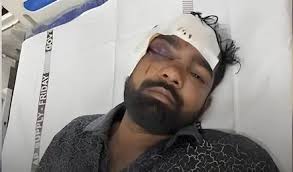
Tirupati police have confirmed that the kidnapping took place but have disputed several aspects of the survivor’s account. Synopsis: A Dalit engineering student in Tirupati, Andhra Pradesh, has alleged that he was abducted, tortured, and subjected to caste-based abuse by a group led by a former college mate. In a video with visible injuries, the student claimed he was confined, beaten with iron rods, humiliated for his caste, and forced to drink his own urine. While police have confirmed the assault, they dispute the caste angle, attributing the incident to past college group rivalries. A Dalit engineering student in Andhra Pradesh’s Tirupati has alleged that he was kidnapped, beaten, and subjected to caste-based abuse by a group led by a former college mate. He further claimed that the assailants forced him to drink his own urine during the ordeal. James, a fourth-year B.Tech student at Sri Vidyanikethan College, released a video in which he appeared with visible injuries. In it, he alleged that a group of history-sheeters tortured him for over a day and a half, led by his former college mate named Yashwanth. “I went to meet my cousin when Yashwanth, Jagga, KT Road Chotta Blade, and other rowdy-sheeters picked me up,” he said. He alleged that the group confined him in a hotel room, where he was tied up, beaten with hockey sticks, iron rods, and subjected to casteist abuse. “They kept me there for a day and a half. They tied me and used a sharp object to make cuts on my head,” he said in the video. “They humiliated me for being a Dalit and for speaking up.” James further alleged that he was stripped and forced to drink his own urine. “They threatened to kill me if I told anyone,” he added. He also accused the local police of initially refusing to file a complaint. “After I went to the police, they refused to register a case against them, asking me to leave out two names,” he alleged. “They even offered me money to drop the case.” Former Chief Minister and YSRCP chief YS Jagan Mohan Reddy condemned the incident, calling it a reflection of deteriorating law and order in the State. “The incidents show the growing attacks on Dalits and the failing law and order situation in the State, which is not protecting weaker sections and those who raise their voice against injustice,” he wrote in a post on X. Police refute James’ version of events Tirupati police have confirmed that the kidnapping took place but have disputed several aspects of the survivor’s account. “The incident occurred during the early hours of 15 May. James was kidnapped by the assailants and taken to a nearby hotel for about two hours,” Sub-Divisional Police Officer Bethapudi Prasad, who is leading the investigation, told South First. “It is true that James was kidnapped and assaulted. However, the incident did not occur because of caste. It was a case of college groupism.” Yashwanth, the main accused, is a second-year college dropout who had previous run-ins with James, according to Prasad. “They had spats during their time in college, which dragged on until now, culminating in the assault,” he said. Responding to James’ allegations, he further said: “After the investigation, James admitted to us that he made the claims because he wanted to garner attention to his assault,” Prasad said. “Furthermore, all of James’ injuries are from blunt weapons, not blades. However, it must be noted that James was tied up and held in the washroom.” A case has been registered under relevant sections, and seven persons have been named as accused. Police said no arrests have been made yet and that investigation is underway. Saicharan Sana (Edited by Dese Gowda) Courtesy : TSF Note: This news is originally published on https://thesouthfirst.com/ and is for use by the non-military/non-commercial community, especially those in the human rights sector.