
Caste Census: Harsh Rules for ‘Untouchables’ in Villages that Prompted Dr. B.R. Ambedkar to Write— “Thank God the Constituent Assembly Did Not Adopt It”
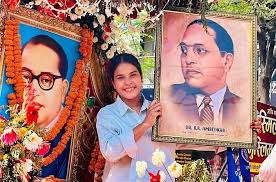
Baba Sahab described villages as “Indian ghettos” where Dalits were trapped in “corporate bondage,” with Touchables monopolizing land and resources. New Delhi- As India prepares for its upcoming caste census in 2025, the nation stands at a pivotal moment where caste identities will once again shape policy and welfare programs. While some argue that highlighting caste in modern India is divisive and that discrimination is a relic of the past, the lived experiences of those historically oppressed reveal a starkly different reality. In his seminal work The Indian Ghetto—The Centre of Untouchability—Outside the Fold, Dr. B.R. Ambedkar exposed the oppressive realities faced by Untouchables (Dalits) in Indian villages, shattering the romanticized notion of rural India as an ideal social structure. Ambedkar’s stark revelations highlight a rigid social code enforced in Hindu villages, designed to subjugate Untouchables socially, economically, and culturally. Baba Sahab writes: The average Hindu is always in ecstasy whenever he speaks of the Indian village. He regards it as an ideal form of social organization to which he believes there is no parallel anywhere in the world. It is claimed to be a special contribution to the theory of social organization for which India may well be proud of. How fanatic are the Hindus in their belief in the Indian village as an ideal piece of social organisation may be seen from the angry speeches made by the Hindu members of the Indian Constituent Assembly in support of the contention that the Indian Constitution should recognize the Indian village as its base of the constitutional pyramid of autonomous administrative units with its own legislature, executive and judiciary. His relief at the Constituent Assembly’s rejection of the village as the constitutional base—“From the point of view of the Untouchables, there could not have been a greater calamity. Thank God the Constituent Assembly did not adopt it.” The term “Untouchable” is historically accurate when referring to the social practices Ambedkar described, but its use today is sensitive due to its derogatory connotations. The Myth of the Ideal Village The glorification of Indian villages as autonomous, self-sufficient “little republics” originated not from ancient Hindu tradition but from Sir Charles Metcalfe, a 19th-century East India Company official. In his Revenue Papers, Metcalfe described villages as resilient communities that endured through invasions and political upheavals, largely self-contained and independent. This portrayal flattered Hindu sentiments, leading to its adoption as a point of national pride. During the Constituent Assembly debates, some Hindu members advocated for villages to form the base of India’s constitutional structure, viewing them as ideal units of governance. However, Ambedkar saw this as a catastrophic proposition for Untouchables. He described villages as “Indian ghettos” where Dalits were trapped in “corporate bondage,” with Touchables monopolizing land and resources. For Ambedkar, elevating villages to constitutional prominence would have entrenched caste oppression, denying Untouchables any chance at equality. The term “Untouchable” is historically accurate when referring to the social practices Ambedkar described, but its use today is sensitive due to its derogatory connotations. The Social Code: A System of Oppression Ambedkar detailed a stringent code in Hindu villages that Untouchables were forced to follow, with violations deemed offenses punishable by severe social and collective consequences. These rules were not codified in any legal penal code but were enforced with absolute authority by the Touchable castes. The key rules included: Segregation of Settlements: Untouchables were compelled to live in separate quarters outside the main village, isolated from Hindu habitations. Breaking this rule was an offense. Auspicious Direction Restriction: Their settlements had to be in the southern direction, considered the most inauspicious, reinforcing their inferior status. Pollution by Distance or Shadow: Untouchables were required to maintain a physical distance to avoid “polluting” Hindus with their shadow or breath, with violations treated as offenses. Wealth Prohibition: Acquiring wealth, such as land or cattle, was forbidden, ensuring economic dependency and subjugation. Housing Restrictions: Building houses with tiled roofs was prohibited, marking Untouchables’ dwellings as inferior. Clothing and Ornaments Ban: Wearing clean clothes, shoes, watches, or gold/silver ornaments was an offense, enforcing visible markers of inferiority. Naming Conventions: Untouchables were barred from giving their children respectable names; names had to reflect contempt to signify their low status. Social Conduct Rules: Sitting on a chair in a Hindu’s presence, riding a horse or palanquin, or organizing processions through the village were offenses. Language and Respect: Speaking a cultured language or failing to salute Hindus was punishable. Silence on Sacred Days: On fasting days, Untouchables were forbidden from speaking, as their breath was believed to pollute Hindu air and food. Mandatory Inferiority Markers: Untouchables had to maintain symbols of inferiority, such as contemptible names, unclean clothes, and non-tiled houses, with any deviation considered an offense. These rules were enforced through collective punishment, where the entire Untouchable community faced repercussions for an individual’s transgression, ensuring systemic control and fear. The term “Untouchable” is historically accurate when referring to the social practices Ambedkar described, but its use today is sensitive due to its derogatory connotations. Duties Imposed on Untouchables Beyond these rules, Untouchables were burdened with specific duties to serve the Touchables without any remuneration. These included: Messenger Role: Untouchables had to carry messages about events like deaths or marriages in Hindu households to their relatives, no matter how far the villages were. Service at Weddings: During Hindu marriages, Untouchables were required to perform menial tasks like breaking firewood or running errands. Escorting Brides: Untouchables had to accompany a Hindu bride from her parental home to her husband’s village, regardless of the distance. Festivals: During festivals like Holi or Dasara, Untouchables were tasked with performing preliminary menial tasks. Humiliation of Women: On certain festivals, Untouchable women were subjected to indecent mockery by the village community. What Sir Charles Metcalfe said about Indian villages Sir Charles Metcalfe—a civil servant of the East India Company. Metcalfe, who was a revenue officer, in one of his Revenue Papers described the Indian village in the following terms : “The village communities are little republics, having nearly
Dragged by Hair, Clothes Torn: Dalit Woman Brutalized in Bhagalpur Police Raid – No Female Officers Present
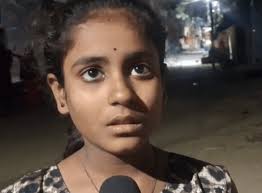
Dalit residents allege caste-based abuse, assault on women and minors, and illegal detention by male police officers during a late-night liquor raid in Nathnagar. Bhagalpur, Bihar— A police raid conducted by Lalmatiya police station in the Nathnagar Pasi Tola area of Bhagalpur district has triggered massive outrage among the local residents. Villagers allege that during the raid, which took place around 8 PM on Sunday night, police officers assaulted women, children, and men without any justification. Rajni Bharti, a resident of the locality who now lives in Delhi, told The Mooknayak, “My mother has a fractured leg, and my sister Jyoti Bharti (52) had gone to look after her. That night, the police raided our neighborhood and began beating up women and children. When my sister stepped outside and protested, the police dragged her away and assaulted her.” “All the officers—from the inspector to the sub-inspector—are from the Bhumihar caste. They hurled vulgar abuses at the women. When my sister asked them to stop, they became furious and said, ‘How dare people from a lower caste question us?’ About an hour later, they returned, grabbed her by the hair, dragged her to the police station, and kept her in custody all night. Her clothes were torn, and she was left almost naked,” Rajni further alleged. Rajni also mentioned that her house is in the same area where the police carried out the raid, although she currently resides in Delhi. “My brother informed me about the incident. The police have now filed an attempt-to-murder case against my sister. Is this how you treat an elderly woman—by humiliating her and dragging her to the police station simply because she questioned them for beating women and children? She is still in police custody. Around 15–20 people were arrested, all of them from the Dalit community,” she added. Gunjan Kumari, a minor who was present during the raid, tearfully recounted to a journalist that she saw a police officer kick her mother multiple times. Her emotional breakdown while narrating the incident reflects the trauma inflicted on the community. Notably, no female police officers were present during the raid. All actions were carried out by male officers, which has fueled further anger, particularly due to the allegations of manhandling and verbal abuse of women. Prema Devi, who was injured during the police action, stated, “They forcibly broke into our home and beat everyone. I was hit with batons two or three times. My brother-in-law was beaten so severely that his leg is broken.” Even bystanders weren’t spared. Ashok Chaudhary, who was standing at his grocery shop, said he suffered injuries to his hand due to police beating, despite having no connection to the incident. Bhagalpur City DSP-2, Rakesh Kumar, addressed the media and stated, “The raid was conducted at the residence of Ravi Chaudhary in Pasi Tola following a tip-off about liquor storage. When the police arrived, the family members allegedly pelted stones at the officers, resulting in minor injuries to three of our personnel.” When journalists asked the DSP whether public anger erupted after a girl was slapped by the police during the raid, he avoided a direct response and said, “I do not have information about that.” Courtesy : Rajan Chaudhary, The Mooknayak Note: This news is originally published on https://themooknayak.com/ and is for use by the non-military/non-commercial community, especially those in the human rights sector.
The country got its first Buddhist CJI: From an Ambedkarite family to the highest chair of the Supreme Court – know the struggle of BR Gavai!
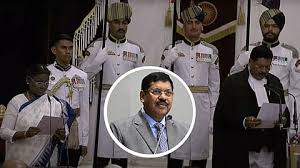
Justice BR Gavai, who comes from the Buddhist and Dalit community, became the 52nd Chief Justice of India, know the full story of his life, struggle and historical decisions. New Delhi: Justice Bhushan Ramakrishna Gavai took oath as the 52nd Chief Justice of India (CJI) at 10 am today. He replaced Justice Sanjiv Khanna, who retired on May 13. Justice Gavai is the second Dalit and the first Buddhist to become the Chief Justice of the Supreme Court of the country. Before him, Justice KG Balakrishnan became the first Dalit Chief Justice in 2007. Justice Gavai’s tenure will be of six months and he will retire in November 2025. Since the establishment of the Supreme Court in 1950, only seven judges have come from the Scheduled Caste or Scheduled Tribe community. Wanted to be an architect, became a judge Justice Gavai was born on 24 November 1960 in Amravati, Maharashtra. After taking a B.Com degree, he studied law from Amravati University. Not many know that Justice Gavai once wanted to become an architect, but chose the path of advocacy due to his father’s wish. His father Ramakrishna Suryabhan Gavai was a famous Ambedkarite leader and founder of the Republican Party of India. Ramakrishna Gavai was a Lok Sabha MP from Amravati and served as the Governor of Bihar, Sikkim and Kerala between 2006 and 2011. He passed away in 2015, four years before his son B.R. Gavai was made a Supreme Court judge. From advocacy to the Supreme Court Justice Gavai registered with the Bar Council on March 16, 1985 and practiced independently in the Bombay High Court from 1987 to 1990. Later, he started practising in the Nagpur Bench. On 12 November 2005, he was appointed as a permanent judge of the Bombay High Court. On 24 May 2019, he became a judge of the Supreme Court. He was part of nearly 700 benches in the Supreme Court and wrote nearly 300 important judgments. Key judgments: From Article 370 to electoral bonds Justice Gavai played a key role in several sensitive and landmark cases: In November 2024, he delivered a judgment that said demolition of properties without due process was against the rule of law. He was part of the Constitution Bench that upheld the removal of Article 370, which gave special status to Jammu and Kashmir. In February 2024, he was part of the bench that struck down the electoral bond scheme, terming it unconstitutional. He established procedural safeguards against arbitrary arrests under stringent laws like the UAPA and the PMLA. He established procedural safeguards against arbitrary arrests under stringent laws like the UAPA and the PMLA. • In a significant judgment, he upheld sub-categorisation in SC reservation and compared opposition to it to “historic discrimination faced by upper castes”. He was also part of the bench hearing the contempt case against senior advocate Prashant Bhushan. Apart from this, he also wrote the majority opinion validating the 2016 demonetisation. Transparency in Rahul Gandhi case While hearing the ongoing criminal defamation case against Congress leader Rahul Gandhi in July 2023, Justice Gavai showed transparency by referring to his family political connections and offered to recuse himself from the case. He said, “Though my father was not a member of the Congress, he was associated with the party for nearly 40 years. My brother is still associated with the Congress.” The government did not accept his offer to recuse and the bench stayed Rahul Gandhi’s sentence, allowing his Lok Sabha membership to be restored. The next six months: Challenges and priorities As Chief Justice, Justice Gavai will face several key challenges. Currently, two high court judges — Justice Shekhar Yadav (Allahabad High Court) and former Justice Yashwant Verma (Delhi High Court) — are facing impeachment proceedings. At the very beginning of Justice Gavai’s tenure, a crucial hearing is scheduled on May 15, challenging the amendments made in the Wakf Act. Justice Gavai’s elevation to the Chief Justice is a turning point in the history of the Indian judiciary, not only in terms of representation but also for strengthening justice, equality and constitutional values. Courtesy : Rajan Chaudhary, Hindu News
Not ‘protocol’, it is a matter of honour— Justice Gavai, who arrived on his first visit to Maharashtra as CJI, expressed displeasure over the absence of top officers, then…
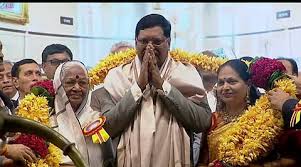
After these comments of the CJI, Maharashtra Chief Secretary Sujata Savnik, DGP Rashmi Shukla and Mumbai Police Commissioner Deven Bharti were seen with him at Dr. BR Ambedkar’s Samadhi Sthal Chaityabhoomi. Mumbai. Chief Justice of India (CJI) Justice BR Gavai on Sunday expressed displeasure over the absence of Maharashtra Chief Secretary, Director General of Police (DGP) and Mumbai Police Commissioner. CJI Gavai has recently become the 52nd Chief Justice of the country and this was his first official visit to Maharashtra. His felicitation ceremony was organized by the Bar Council of Maharashtra and Goa. He said in Marathi, “I am not talking about protocol, but all three pillars of democracy (executive, legislature and judiciary) should respect each other. When the head of a major part of the Constitution (CJI) comes to his own state for the first time and does not get this respect, then it is a matter of their thinking.” However, after these comments of the CJI, Maharashtra Chief Secretary Sujata Savnik, DGP Rashmi Shukla and Mumbai Police Commissioner Deven Bharti were seen with him at Dr. BR Ambedkar’s Samadhi Sthal Chaityabhoomi. Earlier, at the felicitation ceremony organized by the Bar Council of Maharashtra and Goa, CJI Gavai said, “I do not want to get into small things, but this is a matter of respect. People should know.” Speaking about his post-retirement plans, CJI Gavai said: “I am glad that this event is being held in the presence of Justice Abhay Oka. Both I and my brother Justice Oka have already announced that we will not take up any post-retirement assignment. So Justice Oka will be fully available to you (legal fraternity) after May 24 and I will be six months after that.” The CJI also said that he has decided that he will not accept felicitations anywhere else except Mumbai, Nagpur, Aurangabad and Goa as his association with the association has been either working together or as a member in all the four above mentioned places. The event was attended by several dignitaries including Bombay High Court Chief Justice Alok Aradhe, Supreme Court Justices Surya Kant, Justice Abhay S Oka, Justice Dipankar Dutta and Justice Prasanna B Varale. Courtesy : Geetha Sunil Pillai, Hindi News
Dalit student held hostage for 4 days, made to drink urine, brutally beaten – horrifying incident from Tirupati!
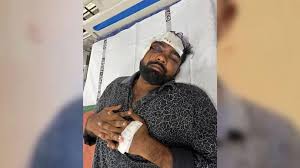
A case of kidnapping and inhuman torture of a Dalit engineering student in Tirupati, caste-related abuses, forced to drink urine and death threats has come to light. Tirupati, Andhra Pradesh – The alleged kidnapping and physical and mental harassment of a Dalit engineering student for several days in Tirupati district has sparked outrage across the state. Tiruchanur police have registered a case under serious sections like kidnapping, causing grievous hurt, caste-related attack, illegal confinement for more than three days and death threats under the Indian Justice Code. Victim student alleges caste harassment The case was registered on May 16, in which the victim has been identified as A. James (22 years). He is a final year B.Tech student of Sri Vidya Niketan College and a resident of Reddypalem village in Nellore district. James and his friend Guru Sai Reddy were abducted from outside the hostel. The accused were led by prime accused Yashwant. The other named accused include Kiran, Jagga, Lalit, Sai Gowda, Vanshi, Roopessh and some unidentified persons. “I was going to meet my cousin when a group of people like KT Road Katti, Nani, Jagga stopped me and locked me in a room. They brutally beat me for three-four days,” James said in a video statement. The victim alleged that he was abused with casteist slurs and forced to drink urine. “They said – ‘How can you, being from SC caste, dare to do this?’ I was beaten badly. I want justice,” he said. Held hostage in hotel room, threatened with death According to the police, the accused locked James and his friend in room number 209 of Elite Park Hotel, Srinivasapuram, threatening to kill them on a bike. The victims were beaten with hands, kicks, belts and iron rods. James suffered serious injuries near his eye, while his friend also sustained injuries at multiple places. The two somehow managed to escape while returning to Tirupati. Police said investigations are on and strict action will be taken against the culprits. Efforts are being made to identify the other accused. YS Jagan Mohan Reddy condemns the incident Former chief minister and YSR Congress Party president YS Jagan Mohan Reddy strongly condemned the incident, calling it an example of increasing atrocities on Dalits and deteriorating law and order in the state. He wrote on social media platform X (formerly Twitter), “There is no security left for Dalits in the state. This incident shows how law and order is failing to provide security to the weaker sections.” He also alleged that the police did not take appropriate action in time due to political interference in the case. “Now it has become a common thing that when a victim goes to the police station, a case is registered against him. This incident in Tirupati is a proof of the inaction of the police and the pressure of the ruling party.” YS Jagan Mohan Reddy, former Chief Minister He demanded that a case be registered immediately against the culprits and the Dalit student should get justice. Courtesy : Rajan Chaudhary, Hindi News
‘Denied water, threatened with arrest’: Dalit woman alleges harassment by Kerala police

The case centres on Bindu, a domestic worker from Chullimanoor, who was detained for nearly 20 hours on 23 April after her landlord accused her of stealing a gold necklace Synopsis: A Dalit domestic worker’s claim of police harassment at Peroorkada station has sparked public outrage in Kerala. Opposition leader V D Satheesan demanded a departmental probe and legal action, blaming government inaction and political interference for enabling such abuse. Civil society groups and political parties have also rallied behind the victim, condemning the alleged mistreatment and police excess A Dalit domestic worker’s allegation of police harassment at the Peroorkada police station has triggered widespread outrage in Kerala, drawing sharp criticism from Opposition parties and civil society groups. The incident has prompted Leader of the Opposition V D Satheesan to demand a departmental inquiry and strict legal action against the officers involved. Satheesan lambasted the state government and the Home Department for their silence on the matter, stating that unchecked politicisation of the police force has led to such gross misuse of power. “This is not an isolated incident. Who gave these officers the right to illegally detain and mentally torture an innocent woman?” he asked. Dalit worker detained over theft claim The controversy revolves around Bindu, a domestic worker from Chullimanoor, who was taken into custody on 23 April based on an allegation by her landlord that she had stolen a gold necklace weighing two and a half sovereigns. Bindu, who was returning home from work in Ambalamukku, was summoned to the Peroorkada station, where she claims she was held for nearly 20 hours. During her detention, she alleges, she was denied water, not allowed to contact her family, and was threatened with the arrest of her daughters unless she confessed. Her family was unaware of her detention until the police brought her home later that night. The next morning, the landlord reportedly acknowledged that the necklace had been found. However, Bindu claims the sub-inspector warned her not to disclose the incident. (Edited by Ananya Rao with inputs from Dileep V Kumar) Stampede-like situation at rapper Vedan’s programme injures at least 15; police resort to lathi-charge As Vedan took the stage and began his first song, the crowd broke past the barricades, leading to a stampede-like situation. Synopsis: At least 15 people were injured in a stampede-like situation during a music programme conducted by Malayalam rapper Vedan in Palakkad. The police resorted to a lathi-charge multiple times to bring the situation under control. At least 15 people were injured in a stampede-like situation during a music programme conducted by Malayalam rapper Vedan at Kotta Maithanam (fort ground) in the Palakkad district of Kerala on Sunday, 18 May. The incident occurred on Sunday evening as an uncontrollable crowd surged forward, forcing police to resort to a lathi-charge multiple times to bring the situation under control. The event, jointly organised by the Scheduled Castes and Scheduled Tribes Development Department and the Culture Department, had drawn a crowd of over 2,000 people. The programme, which was scheduled to start at 6 pm, began two hours behind schedule, further agitating the waiting audience. Scuffle and stampede-like situation As Vedan took the stage around 8 pm and began his first song, the crowd broke past the barricades set up for security, leading to a scuffle and a stampede-like situation. Several people suffered minor injuries, and some in the audience reportedly fainted due to the chaos. Police initially attempted to control the crowd but were soon overwhelmed by it. A team led by Additional Superintendent of Police (ASP) Rajesh Kumar arrived at the spot and temporarily halted the programme to clear pregnant women, the elderly, and children from the venue. Despite attempts to restore order, the unrest persisted. The police were forced to lathi-charge the crowd four times during the event. Unable to manage the law and order situation, Vedan exited the stage by 9 pm after performing just three songs. The injured were admitted to Palakkad District Hospital for treatment. Tensions flared further as a scuffle reportedly broke out between the police and organisers during the commotion. Several people complained of breathlessness and dizziness near the stage but no major injuries were reported. Local authorities are yet to issue an official statement regarding the lapses in security arrangements and crowd management at the venue. (Edited by Muhammed Fazil with inputs from Dileep V Kumar.) Courtesy : TSF Note: This news is originally published on https://thesouthfirst.com/ and is for use by the non-military/non-commercial community, especially those in the human rights sector.
Jagan condemns attack on Dalit student at Tirupati
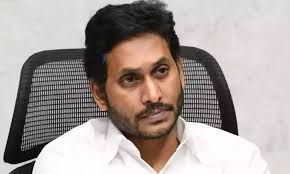
The YSRCP President demands that a police case be registered on the incident and action taken against the assailants Condemning the attack on a Dalit engineering student, James, at Tirupati, the YSR Congress Party (YSRCP) President and former Chief Minister Y.S. Jagan Mohan Reddy said there is no safety for Dalits in the State as the ‘law and order situation has been deteriorating‘. In a post on X on Sunday, Mr. Jagan said, “The incidents show the growing attacks on Dalits and the failing Law and Order (L&O) situation in the State, which is not protecting weaker sections and those who raise their voice against injustice. Such incidents are taking place as the police machinery is biased towards the ruling party, and such incidents are happening at some place or the other in the State. It has become a practice that when a victim approaches a police station to report, a case is registered against the complainant,’‘ he said. In the Tirupati incident, it was not just the failure of the Police Department to register a case, but also political interference which prevented the police from registering a case, he said, adding, “I demand that a case be registered and action taken against those who attacked the Dait youth.” Courtesy : G V R Subba Rao G.V.R. Subba Rao, The Hindu Note: This news is originally published on https://thehindu.com/ and is for use by the non-military/non-commercial community, especially those in the human rights sector.
A crime that revealed the ugly reality of caste
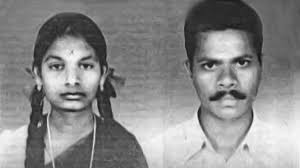
Murugesan and Kannagi, of Pudukkoorapettai near Virudhachalam, were poisoned to death. The reason: Kannagi, of the Vanniyar community, married Murugesan, a Dalit of the same village Nearly 22 years ago, S. Murugesan, 25, a Dalit youth, and Kannagi, 24, a Vanniyar girl, fell in love with each other. Murugesan was an engineering graduate from Annamalai University, Chidambaram, and Kannagi studied B. Com at the university. They got acquainted during their college days. Both hailed from Pudukkoorapettai, near Virudhachalam, in Cuddalore district. He was working in Bengaluru. Kannagi’s father Duraisamy was the president of the village panchayat and Murugesan’s father Samikannu was a farm worker, who lived on the outskirts of the village, far removed from where the Vanniyars and other caste Hindus lived. Apprehending stiff opposition to their marriage, Murugesan and Kannagi had their marriage solemnised at a temple at Manjakuppam in Cuddalore, on May 5, 2003. They also registered it. After marriage, they went home. On July 3, 2003, Duraiswamy learnt that his daughter was taken away by Murugesan while going to Chidambaram to attend the monthly seminars at the university. ‘Disrepute to family’ Duraisamy sent his son Marudhupandiyan to find out the whereabouts of his daughter. It was their idea to eliminate the couple for causing disrepute to their family and caste. Marudhupandiyan visited the house of Samikannu and asked Samikannu and his brother Ayyasamy to bring Murugesan to the village. Ayyasamy innocuously brought Murugesan from a neighbouring village. He was dragged to the village and beaten up by Duraisamy and his men in front of a temple, where about 100 people had gathered. Velmurugan, younger brother of Murugesan, recalled, “My brother was beaten up severely. They tortured him: tying up his legs with a rope, they lowered him, upside down, into a deep bore-well near the temple, asking him to disclose the whereabouts of Kannagi.” Murugesan begged for his life and said Kannagi was in the custody of his relative Saroja at Moongilthuraipattu. Then, Duraisamy’s men brought Kannagi to the village in the early hours of July 8 from Saroja’s house. She was taken to a burial ground. Murugesan was also taken there by Duraisamy and his relatives. Duraisamy went over to Kannagi and spat on her face. Then, he handed pesticide in a tumbler to his son Maruthupandian, and they made Kannagi consume it. Thereafter, Maruthupandian handed over poison to a relative of Murugesan and asked him to pour it into the mouth of Murugesan. As Murugesan resisted, they opened his mouth with a knife and poured the poison in. While Murugesan’s body was burnt near a stream, Kannagi’s body was taken to a crematorium meant for the caste Hindus. Sent away by the police On the day of occurrence, Chinnapillai, stepmother of Murugesan, went to the Virudhachalam police station, along with a few relatives. They were sent away by the police. The death of the couple was hushed up by the influential persons, but it spread by word of mouth. A Tamil weekly carried a report and Viduthalai Chiruthaigal Katchi leader Thol. Thirumavalavan raised the issue at a press conference. Initially, Duraisamy and his group claimed that the couple committed suicide because of irreconcilable differences. However, Samikannu and other Dalits alleged that the Vanniyars had brought Murugesan and Kannagi, by deceit and force, to Pudukkooraipettai and murdered them. It took nine days for the Virudhachalam police to register a case, on the basis of voluntary confession by Duraisamy. Inspector Sellamuthu implicated three Dalits, including Samikannu, and arrested eight men: four Vanniyars and four Dalits, including Duraisamy, Maruthupandiyan, Samikannu, and Ayyasamy. The police claimed that Duraisamy admitted that he felt ashamed of the love affair and asked Samikannu and Ayyasamy to bring the couple to the village. He gave poison to his daughter and Samikannu gave the left-over to his son. Both of them cremated the bodies. The arrest of Samikannu and the three other Dalits caused a controversy since the Dalits believed that they were, in no way, involved in the murder. Thereafter, the Dalits approached advocate P. Rathnam who, though not a Dalit by birth, championed their causes. Mr. Rathnam and a team of lawyers visited the village and prepared a report. They fought for justice until the Supreme Court delivered its verdict last month. Within 23 days of the occurrence, the Principal Sessions Judge, Cuddalore, granted bail to the arrested persons, reasoning that Duraisamy would be disqualified from the post of panchayat president if he was to be in judicial custody for more than 30 days. After being released on bail, Samikannu and the other Dalits approached the Madras High Court for a CBI investigation. Meanwhile, inspector Sellamuthu completed his probe and filed a charge sheet before the Judicial Magistrate, arraigning the four Vanniyars and four Dalits, who were arrested earlier, as the accused. Subsequently, the High Court ordered the CBI to conduct a fresh investigation. The CBI filed a charge sheet on October 14, 2005, before the Chief Judicial Magistrate, Chengalpattu, against 15 accused, including Tamilmaran, sub-inspector, and Sellamuthu, inspector, of the Vriddhachalam police station. Though the final report was filed by the CBI in 2005, the case was committed to the Court of Session only after more than four years. The trial court framed the charges and questioned the accused persons more than seven years after the crime. The reason for this inordinate delay was the filing of petitions for discharge of the accused persons, and for cancellation of the bail of some of the accused persons for intimidating the witnesses. Death sentence awarded On September 24, 2021, the Special Court for Exclusive Trial of the Scheduled Castes and Scheduled Tribes (Prevention of Atrocities) Act Cases, Cuddalore, acquitted Ayyasamy and Gunasekaran of all the charges. It awarded the death sentence to Marudhupandian and life imprisonment to Duraiswami and 11 others. Following appeals, a Division Bench of the High Court delivered a common judgment on April 13, 2022, and commuted the death sentence imposed on Marudhipandian. However, it confirmed the life
Kerala Police initiates inquiry into alleged custodial harassment of Dalit woman at Peroorkada police station
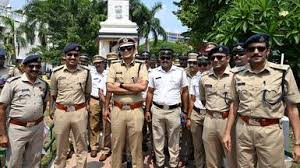
While the woman was booked under Section 306 (theft by a clerk or servant) of the BNS, it is now deemed that the accusation was false The Kerala Police have instituted an inquiry into the alleged custodial harassment of a Dalit woman at the Peroorkada police station after being falsely accused of theft. Bindu R., a domestic worker and mother of two children, was taken into custody on April 23 after a complaint was filed by her employer, alleging that she had stolen 2.5 sovereigns of gold. While she took up the job at the house in Ambalamukku on April 14, she worked only for three days until April 19 before discontinuing. She was purportedly called to the police station around 3.30 p.m. and “detained” for nearly 20 hours. During her time at the station, Ms. Bindu alleges she was subjected to inhumane treatment, including being told to drink water from the washroom when she asked for water. She claims the officers coerced her into confessing to the theft by threatening to implicate her two minor daughters, and her husband in the case. Despite a search of her residence yielding nothing, she was booked under Section 306 (theft by a clerk or servant) of the Bharatiya Nyaya Sanhita (BNS). She also alleged that she spent the night at the police station and was denied food until the following afternoon. The accusations eventually unravelled when the complainant informed the police that the missing gold necklace had been found at their own residence. Ms. Bindu has since filed formal complaints with the Chief Minister, State Police Complaint Authority and the State SC/ST Commission. The Commission has initiated an inquiry and has instructed the Thiruvananthapuram City Police to submit a report in this regard. Seeks action against cop Leader of Opposition V.D. Satheesan called for strict legal action against the officers involved in the issue. He also criticised the perceived inaction of the Home department in redressing the complainant’s grievance. He further alleged that the absence of accountability in the department and the political patronage of law enforcement enables such abuse of power. He said that the conduct of the police officers amounts to gross violation of human rights and the law. Courtesy : The Hindu Bureau, The Hindu Note: This news is originally published on https://thehindu.com/ and is for use by the non-military/non-commercial community, especially those in the human rights sector.
The funds are not reaching the Dalits in Bihar… Why did Rahul Gandhi make this allegation? Nitish is upset!
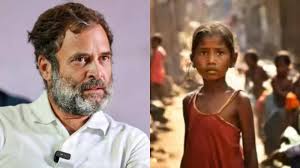
Bihar politics: Rahul Gandhi, who reached Darbhanga before the Bihar assembly elections, raised many big political questions in his address. Now brainstorming is going on in Bihar regarding these questions. Rahul Gandhi’s questions are about the facilities and funds given to the Dalits. According to a report, the Bihar government transfers the funds allocated to the Dalits to general schemes. Patna: During a recent interaction with students at the government-run Ambedkar Kalyan hostel in Darbhanga, Bihar, Leader of Opposition in Lok Sabha Rahul Gandhi alleged that Scheduled Castes are not getting benefits from the Scheduled Caste Sub-Plan (SCSP) fund, which is a set of resources set aside for their development. The Congress MP raised this question at the inaugural meeting of the Congress’ “Shiksha Nyay Samvad” campaign on Thursday. In this meeting, Rahul Gandhi put forth his point on many issues. Let us know, what is the whole truth? Especially why is Rahul Gandhi saying this? What is Scheduled Caste Sub-Plan? SCSP is a strategy of the central government aimed at ensuring proportionate flow of resources for the development of Scheduled Castes through implementation of infrastructure, education, health and other welfare schemes in areas with substantial Dalit population. SCSP was launched in 1980 by then Prime Minister Indira Gandhi to reach out to Dalits. SCSP funds are channelled through the Union Ministry of Social Justice and Empowerment, which provides special central assistance. There are three categories of SCSP schemes: fully centrally funded, fully state-funded, and hybrid schemes that are divided in the ratio of 60:40 between the Centre and the state. How much does Bihar spend? According to a recent report by the Comptroller and Auditor General (CAG), the Bihar government allocated Rs 16,777 crore for its SCSP schemes in 2021-22, but allegedly diverted Rs 10,799 crore to general schemes. Similarly, out of Rs 19,688 crore allocated for SCSP schemes in 2022-23, Rs 18,450 crore was allegedly diverted to non-SC schemes. In 2023-24, the state government allegedly spent Rs 11,796 crore on general schemes out of the total SCSP funds of Rs 16,939 crore. Where was the money spent? Some of the major SCSP schemes include income-generating initiatives, financial assistance for construction or upgradation of houses, providing free land for housing, education and skill development schemes such as free distribution of books and school uniforms. After the latest CAG report on the performance of the Bihar government highlighted problems in the SCSP funds, nine Bihar MLAs, including CPI(ML)(L) MLA Satyadev Ram, had questioned the JDU-led state government in the Assembly in March over the alleged diversion of funds. Though the state government did not reject the CAG’s findings, it said the auditor had not used the word “diversion” but only described the department-wise allocation of SCSP funds. Understand the matter For instance, the CAG report said that out of Rs 16,939 crore of SCPS funds in 2023-24, Rs 1,447 crore was allocated for Chief Minister Local Area Development Scheme and flood control, Rs 3,465 crore for construction of medical colleges, Rs 394 crore for construction of government buildings and Rs 212 crore for other projects like construction of state hospitals and healthcare buildings. Debt of Rs 460 crore of state power companies was also repaid using SCSP funds. SCSP fund utilisation rules The Parliamentary Committee on Welfare of Scheduled Castes and Scheduled Tribes presented a report on social justice in both the Houses of Parliament in August 2018, in which it expressed concern about the utilisation of funds earmarked for the Scheduled Castes. The report said that under the allocation for the welfare of Scheduled Castes, diversion of funds is not acceptable and the funds are earmarked for Scheduled Castes only, but due to the general nature of the schemes of some ministries/departments, the funds are not fully utilised. The committee has also recommended that the Niti Aayog monitor the funds allocated for the welfare of Scheduled Castes to ensure that they are not under-utilised or diverted. Letter written to the Centre According to a report in the ‘Indian Express’, social activist Rajeev Kumar, who has written several letters to the Centre on the matter, said that neither the Centre nor the state government is ready to admit that the funds have been misused, while the money was “blatantly used by other departments”. How does this fit with the Congress’ electoral agenda? Rahul Gandhi is likely to make it a political issue ahead of the assembly elections later this year, as Dalits constitute 19.65% of the state’s population. Rahul Gandhi is making the issue Gandhi told the students in Darbhanga that there is no place for you in this country; there is no place for 90% of the people of the country. From senior bureaucracy to the top management of the Government of India, High Court and educational and medical (institutions), 90% of the population has no representation. But MNREGA is full of your people. The SCSP fund set for the Scheduled Castes is not reaching them. All the wealth is with 5-10% people. Although the Congress has raised the issue of alleged misuse of SCSP funds at the national level from time to time, but this is the first time that the party is raising this issue in Bihar. In the 2020 assembly elections, the Congress won 19 seats. Four of its MLAs are Dalits. About the author Ashutosh Kumar Pandey Active in print, digital and electronic journalism for more than 16 years. Degree in Political Science and Journalism. Started writing in Jansatta, Hindustan and Dainik Jagran in 2003. Worked for ETV, Maurya TV, Focus TV, Union Information and Broadcasting Ministry, Prabhat Khabar.com and Network 18. Reported in four Lok Sabha elections and many assembly elections. Courtesy: Hindi News