
India’s Net Foreign Direct Investment Plummets by 96.5% to Reach Record Low

Net FDI stood at $353 million in fiscal year 2025, down sharply from $10 billion the previous year. New Delhi: India’s net foreign direct investment (FDI) plummeted 96.5% to a record low of $353 million in fiscal year 2025, down sharply from $10 billion the previous year. The Reserve Bank of India (RBI), in its latest monthly bulletin released on Wednesday (May 21), attributed the drop to large fund repatriations as investors exited through profitable initial public offerings (IPOs) and as Indian firms increased their investments overseas. A hot IPO market, featuring companies like Hyundai Motor and Swiggy, allowed long-term investors to realise significant gains. Simultaneously, Indian companies stepped up investments abroad to capitalise on shifts in global supply chains. The RBI stated that “Net FDI moderated…reflecting the rise in net outward FDI and repatriation FDI.” This decline in net FDI – the difference between gross FDI inflows and both outward investments by Indian companies and funds taken out by foreign entities – occurred despite a strong rise in gross FDI. Investors withdrew $49 billion from India in FY25, an increase from $41 billion the year before. High-profile exits included those by Alpha Wave Global and Partners Group from major share sales like Swiggy and Vishal Mega Mart. A report by the Indian Venture Capital and Alternate Capital Association (IVCA) and EY highlighted that private equity and venture capital exits totaled $26.7 billion, a 7% year-on-year increase. Open market exits were dominant, though IPOs backed by private equity gained momentum. For example, Hyundai’s promoters took home proceeds from its Rs 27,870 crore listing as it reduced its stake. A key Swiggy investor reportedly made over $2 billion post-IPO. Telecom firm Singtel’s sale of its Airtel stake and tobacco company BAT’s divestment from ITC in March 2024 also likely contributed to the FY25 repatriation figures. These large IPOs often coincided with India’s stock market indices hitting record highs, such as the surge in late September of last year. Despite the drop in net figures, some see these trends positively. The IVCA/EY report suggested this activity signals a “mature market,” where foreign investors can smoothly enter and exit, which “reflects positively on the Indian economy.” Furthermore, gross inward FDI showed robust growth, rising 13.7% to $81 billion in 2024-25, according to RBI data. The central bank noted this investment remains concentrated, with over 60% flowing into manufacturing, financial services, electricity and energy, and communication services. Net inflows of ‘stable’ FDI were 86% lower than the $2.67 billion in ‘volatile’ portfolio flows for the year. Courtesy : The Wire Staff, The Wire Note: This news is originally published on https://thewire.com/ and is for use by the non-military/non-commercial community, especially those in the human rights sector.
MP Khandwa gangrape-murder case: Limits of brutality crossed with tribal woman, questions raised on women’s safety system in the state

The Congress delegation met the family members of the deceased. The delegation included Shobha Ojha, Vijayalakshmi Sadho and MLA Jhuma Solanki. They demanded a compensation of Rs 25 lakh from the government and a government job for a family member. Bhopal. The incident of gangrape and murder of a tribal woman in Khalwa police station area of Khandwa district of Madhya Pradesh has shaken the entire state. This incident, which shames humanity, not only raises questions on law and order, but also exposes the government’s insensitivity towards the safety of the tribal society. The deceased woman was 45 years old and she was the victim of brutality by two youths of her own village – Sunil and Hari. The brutality was done by catching her on the way while returning from the field On Friday night, after a wedding ceremony in the village, the woman had gone to drop her relatives to the field. The farm was just half a kilometer away, but she did not return home overnight. The next morning, when the family went out to search for her, a woman told them that the victim was in the shed behind her house. On reaching there, she was found unconscious. On regaining consciousness, she told her son and daughter-in-law, “Something wrong has happened to me, now I will not survive… Sunil and Hari did it forcefully.” She died shortly after. Statement given before death, intestines and uterus were out According to the son and daughter-in-law of the deceased, the condition of the woman was very critical. There was excessive bleeding from the private part and the uterus was out. The postmortem report also confirmed that the intestines were out, the uterus was torn and the body was soaked in blood. According to the doctors, a hand or some object was inserted in the private part, which damaged the internal organs and caused death due to excessive bleeding. Police sent the accused to jail The police had taken both the accused into custody on Saturday itself and on Sunday night they were taken to the crime scene to confirm the crime scene. Both the accused were produced in the court on Monday and taken on two-day police remand. Khandwa SP Manoj Kumar Rai said that the clothes of the accused and the deceased and other evidence found from the crime scene have been sent for FSL investigation. It has also been said that this case will be registered in the category of marked crime and taken to the fast track court. According to Congress leaders, the victim could not even get first aid. The government ambulance did not come, and the family had to take the body to the district hospital in a private vehicle. This incident exposes the poor health system of the state. Congress team met the victim’s family The Congress delegation met the family of the deceased. The team included Shobha Ojha, Vijayalakshmi Sadho and MLA Jhuma Solanki. They demanded a compensation of Rs 25 lakh from the government and a government job for one member of the family. Shobha Ojha alleged that “the administration is trying to convert the rape case into murder. Looking at the condition of the crime scene, it is doubtful how the incident could have happened there.” Vikrant Bhuria targeted the government National President of Adivasi Congress and MLA Dr. Vikrant Bhuria said in a press conference in Delhi, “MP is becoming the rape and liquor capital. A 45-year-old tribal woman was gang-raped and her uterus and intestines were removed with an iron rod. This is not just murder, but a blot on the face of civilization.” Bhuria further said that “Prime Minister Modi should ensure before coming to Bhopal Mahila Sammelan on May 31 that how will the sisters be protected in Madhya Pradesh?” Courtesy : Ankit Pachauri, Hindi News
Andhra Pradesh: 3-year-old Dalit innocent raped, angry villagers demolish accused’s house

Three-year-old Dalit girl raped and murdered in Kadapa, villagers furious, accused arrested. Kadapa, Andhra Pradesh – A man named D. Rahmatullah has been arrested for allegedly raping and murdering a three-year-old Dalit girl in YSR Kadapa district. The horrific incident took place during a relative’s wedding in Kambaldinne village, where the girl was attending with her parents. According to police reports, Rahmatullah lured the girl to a secluded spot behind the Kalyan Mandapam, where he allegedly raped and strangulated her to death. Angry villagers caught hold of Rahmatullah and handed him over to the police. This did not calm the anger of the villagers, so on May 24, villagers demolished his house in his native village Moragudi, declaring that he had no right to live in the community. The incident triggered a massive protest outside the Jammalamadugu Government Hospital, where villagers demanded hanging for the accused. Kadapa District Collector Dr Sridhar Cherukuri and Superintendent of Police EG Ashok Kumar met the victim’s family to express condolences and assured all possible help. The administration announced financial assistance of Rs 5 lakh, a residential plot and a government job for the family. Additional Superintendent of Police Prakash Babu confirmed the arrest and said the case was registered under the Scheduled Castes/Tribes (Prevention of Atrocities) Act and the Protection of Children from Sexual Offences (POCSO) Act. Investigation is underway. Courtesy : Rajan Chaudhary, Hindi News
‘Not Found Suitable’ is now the new Manuvaad: Rahul Gandhi’s sharp question in DU – Why is Dalit, tribal, OBC history missing in books?
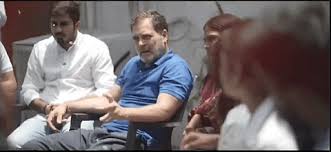
Leader of Opposition in Lok Sabha Rahul Gandhi, in a discussion with Delhi University Students Union (DUSU), launched a scathing attack on the anti-reservation policies of the Central Government, terming the “Not Found Suitable” (NFS) category as “new Manuvaad”. He alleged that through this category, deserving candidates of SC, ST and OBC are being deliberately disqualified and kept away from education and leadership. New Delhi: Leader of Opposition in Lok Sabha Rahul Gandhi on Tuesday met students of Delhi University Students Union (DUSU) and launched a scathing attack on the “anti-reservation” policies in central universities and IITs. He particularly questioned the misuse of the “Not Found Suitable” (NFS) category, through which deserving candidates of SC, ST and OBC are allegedly being disqualified. Rahul Gandhi shared a video on Twitter and wrote, “‘Not Found Suitable’ is the new Manuvaad now. Eligible candidates from SC/ST/OBC are being deliberately declared ‘not fit’ – so that they stay away from education and leadership.” He said that Babasaheb Ambedkar had described education as the biggest weapon of equality, but the Modi government is engaged in weakening this weapon. He gave the example of Delhi University and said that more than 60% of the reserved posts of professor and more than 30% of associate professor have been kept vacant on the pretext of NFS. “This is no exception. IITs, central universities, the same conspiracy is going on everywhere. NFS is an attack on the Constitution. NFS is a betrayal of social justice,” Rahul said. Addressing DUSU students, Rahul also questioned the Indian education system. He said, “I too have come out of the Indian education system. Have you ever read Dalit, Adivasi or Bahujan history in our books? Why is there only 10% of our history? Why is 90% of history missing?” He asked, “Why is it not written that for 3000 years Dalits were treated like dirt, they were not given any place, they were not respected?” He further said that why is it not written in the books that people called Shudras and Ati Shudras were deprived of the right to property for thousands of years? Gandhi further said that if any 5 percent community or people living in the country are not getting facilities, then I can understand but why 90 percent people are not getting it, I cannot understand this. Students told him that recently DU removed a lesson on Kancha Ilaya. Rahul told the students that this is not just a fight for education and jobs, but a fight for rights, respect and share. He told that food communities do not have a share in corporate India, in Telangana we saw who all the contracts go to – not a single Dalit, tribal or backward is getting it. He called for a reply with the power of the Constitution against the anti-reservation policies of BJP/RSS. “We will all together respond to this conspiracy,” he asserted. Rahul Gandhi’s visit and his sharp questions are being seen as an attempt to start a new debate on issues of education and social justice. Courtesy : Geetha Sunil Pillai, Hindi News
When Babasaheb asked Maisaheb: “In what form did you accept me—as a scholar or as a handsome man?”
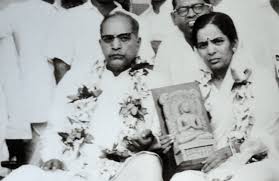
May 29 is Dr Savita Ambedkar’s death anniversary. In a letter to Savita, Babasaheb explained that marriage should not be based on superficial qualities like beauty, greatness or scholarship, but on deep emotional attachment. Mumbai – May 29 is the 22nd death anniversary of Dr Savita Ambedkar, who passed away in 2003 at the age of 94. Savita, known as Maisaheb, was not only Dr Bhimrao Ambedkar’s second wife, but also his companion, whom Babasaheb credited for extending his life by 8-10 years in the preface of his book The Buddha and His Dhamma. Their marriage in 1948 became a topic of discussion at that time, as Savita, whose original name was Sharda Kabir, belonged to a Saraswat Brahmin family, while Babasaheb belonged to the Mahar caste. Savita was 39 at the time and Babasaheb was 57, an age difference of 18 years. Yet, their relationship was based on love, respect and intellectual partnership that transcended social barriers. Independent researcher and practicing dentist Dr. S.P.V.A. Sairam in his article An Unexplored Side of Dr. Ambedkar: His Quiet Relationship with Cinema, Theatre, and Music, published in The Culture Cafe on 14 April 2025, highlights Babasaheb’s lesser-known fondness for cinema, theatre and music. The article mentions the films Babasaheb watched – one of them is the 1937 Marathi film Kunku, released in Hindi as Duniya Na Maane. According to Dr. Sairam’s article, Babasaheb’s inclination towards cinema is a lesser-known aspect of his personality. He watched films like Uncle Tom’s Cabin in 1927 with his first wife Ramabai and also enjoyed Kunku. He was a Marathi film director. He was also associated with prominent theatre personalities like P.K. Atre and Master Krishnarao Fulambrikar. Basis of marriage In his article, Dr. Sairam has highlighted Babasaheb’s inclination towards cinema, theatre and music. He particularly mentioned a letter written to Savita, in which Babasaheb expressed deep thoughts on the basis of their marriage. In the letter, he wrote: If words have any meaning and there is any basis for marriage, then what is the meaning of saying ‘I accept you’ in your letter? In what form did you accept me? As a great person, as a scholar, or as a charming man? What is the source of your inspiration? As a poet has said, ‘Love based on beauty ends with the fading of beauty.’ The same is true for love based on greatness or scholarship. These things start weakening after some time. They cannot be the basis of marriage. Marriage can only be based on love, which can only be described as an intense desire to be with each other. Are you inspired by this feeling? Anything other than this is neither sufficient nor acceptable. I do not know if you have seen the film Kunku or read Hall Caine’s novel The Woman Thou Gavest Me. In both, marriage was only a formality. How sad and tragic they were. The reason for this was that they lacked the desire to be with each other.” This letter reflects Baba Saheb’s thinking that the basis of marriage should not be based on superficial qualities like beauty, greatness or scholarship, but on deep emotional attachment. By referring to Kunku and The Woman Thou Gavest Me, he emphasized that without love, marriage remains only an empty formality. Kunku (1937): An attack on social stereotypes Kunku (Duniya Na Maane in Hindi), a Marathi film directed by V. Shantaram, is the story of a young woman Neera who is forcibly married to an elderly widower. In the absence of love and understanding, this marriage leads to misery and social pressure for Neera. The film strongly criticises the conservative practices of the time, such as child marriage and ill-matched marriages. Baba Saheb mentioned this film in his letter to Savita because it reinforces his belief that marriage without love is tragic. According to Dr. Sairam, Baba Saheb saw Kunku in the context of his relationship with Savita, raising the question of whether their relationship was based on true love and the desire to be with each other. The Woman Thou Gavest Me (1913): The Tragedy of a Loveless Marriage Hall Caine’s novel The Woman Thou Gavest Me is the story of Mary O’Neil, who is married to a wealthy but morally weak man for social and economic reasons. The marriage lacks emotional connection, which leads Mary to seek love elsewhere, but she faces social condemnation and personal misery. The novel takes a dig at the social structures of the time and the formality of marriage. Baba Saheb mentioned this novel because it reinforces his belief that marriage without love and mutual attachment leads to tragedy. Relationship between Baba Saheb and Savita Dr. Savita Ambedkar, born on 27 January 1909 in a Saraswat Brahmin family in Dorle village of Ratnagiri district, was a skilled physician. She earned her MBBS degree from Grant Medical College, Mumbai in 1937 and worked as the chief medical officer at a hospital in Gujarat. She met Babasaheb in 1947 when he came to Mumbai for treatment of serious ailments like diabetes, hypertension and joint pain. Savita not only took care of him medically but also shared a deep emotional and intellectual bond with him in the last years of his life. They were married in a civil ceremony on 15 April 1948 in Delhi. Savita was accepted as “Mai” (mother) by Babasaheb’s followers, and she played this role with full dedication. In her autobiography Babasaheb: My Life with Dr. Ambedkar, Savita outlined memorable moments spent with Babasaheb, including her assistance in the framing of the Indian Constitution, drafting of the Hindu Code Bill, and writings like The Buddha and His Dhamma. On 14 October 1956, when Babasaheb embraced Buddhism along with lakhs of followers at Deekshabhoomi in Nagpur, Savita was with him and she too embraced Buddhism. After Babasaheb’s demise, on 6 December 1956, Savita was wrongly targeted by some followers. She was accused of being responsible for Babasaheb’s death and a controversy was raised over her Brahmin
Kerala: Dalit woman was made to sit in police station for 20 hours, given toilet water to drink, theft allegation turned out to be false – now delay in recording statement!
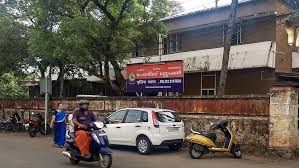
The voice of domestic help Bindu R, who was a victim of illegal detention and caste harassment at Perurkada police station, is now echoing across Kerala, the Chief Minister called the case unacceptable. Thiruvananthapuram: The process of recording the statement of Dalit woman Bindu R, who was a victim of illegal detention and mental harassment at Perurkada police station, is getting delayed. The reason for this is that the State Human Rights Commission (SHRC) has directed that the presence of a woman lawyer appointed by the District Legal Services Authority (DLSA) will be mandatory while recording the statement. After this direction, Crime Branch DYSP K.A. Vidyadharan has written a letter to the Secretary of Thiruvananthapuram DLSA demanding the appointment of a woman lawyer as soon as possible. The investigation of the case has been assigned to the Crime Branch DySP of Pathanamthitta as the SHRC had made it clear that since the case involved policemen serving in Thiruvananthapuram district, the investigation should be assigned to an officer from outside the district. According to sources, the SHRC has given directions to ensure that all legal procedures are followed and the rights and dignity of the victim are protected. Once Bindu’s statement is recorded, the investigating officer will begin examining documents from the Peroorkada police station. This will include examining the sentry report and other certified copies to find out if more policemen were involved in the case. These documents are expected to reveal the extent to which the police station staff abused their powers and intimidated Bindu. Bindu, who worked as a domestic help, was illegally detained and mentally tortured for about 20 hours on April 23 by her employer Omana Davis on false charges of theft. Following the incident, SI S.G. Prasad and ASI Prasanna Kumar of the Peroorkada police station have been suspended for their actions. Prasanna, who was handling the station’s General Diary (GD), is accused of aiding the illegal detention, making casteist remarks, and even making Bindu drink toilet water when she demanded drinking water. Prasad was suspended based on a report by the Assistant Commissioner of Special Branch. Though an FIR was lodged against Bindu, she was later released after the complainant admitted that the jewellery was found at home. Bindu approached the Chief Minister’s Office over the matter, but there, Chief Minister’s political secretary P. Sasi allegedly ignored her complaint. However, when the matter led to public outrage, Chief Minister Pinarayi Vijayan strongly condemned it, calling it “unacceptable”. This was the whole case Bindu, who is a domestic worker and hails from Chullimanoor, was accused by her employer of stealing a gold chain on April 23. Based on this complaint, the Perurkada police called her and called her to the police station. On reaching the police station, the victim repeatedly said that she was innocent, but the police did not listen to her. According to Bindu, a woman police officer took her to a room, made her remove her clothes and searched her. Then the police took her to her house and searched it too. During this time, she was not allowed to talk to the family, nor was she given food and water. Bindu told the media, “When I asked for water, a policeman said – ‘Go to the toilet and drink from there’.” Detained overnight, threatened to implicate daughters Bindu said that she was kept in the police station all night and the interrogation continued till the next morning. An FIR was registered and the police threatened her that if she did not admit to the theft, her minor daughters would also be implicated in the case. Later, when the house owner and her daughter visited the police station again, they said they had been ‘forgiven’. Some time later, the stolen gold chain was found in the house, and the complainant herself admitted that the allegation was false. Complaint ignored in CMO When Bindu, with the help of a lawyer, submitted a written complaint to the Chief Minister’s political secretary P. Sasi, she claims that Sasi neither read the complaint nor gave any assurance. “He said that such things happen and advised me to approach the court,” Bindu had said. However, later the CMO clarified that the police were directed to take action after receiving the complaint. But according to Bindu, she had also urged the CMO to register a case against the woman who had falsely accused her, which was rejected. Courtesy : Rajan Chaudhary, Hindi News
When Ambedkar said – Now even if God forbids, I will not remain a Hindu! Know the shocking truth behind conversion
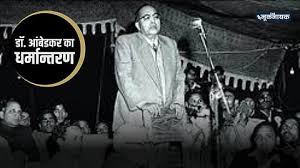
Dr. Bhimrao Ambedkar’s conversion: When and how did this historic journey begin? Know the inspiring events and ideology behind his decision. ‘A Part Apart the Life and Thought of B.R. Ambedkar’ gives information about when Dr. Bhimrao Ambedkar’s direct inclination towards conversion began. It reveals many interesting facts about the role of his conversion. By combining facts from many such works, the book ‘Dharma Conversion: Ambedkar Ki Dhamma Yatra’ compiled by Dr. Ratan Lal, published by Rajkamal Prakashan, brings many untold stories to the reader. In the middle of 1935, a rumour spread that Baba Saheb Dr. Ambedkar was retiring from public life. Whatever thoughts Ambedkar had about retiring from public life, they were soon negated by an important decision. In August 1935, he wrote to Henry Knight, the Home Secretary of Bombay Province, that he would formally end the Kalaram Mandir Satyagraha by announcing his renunciation of Hinduism. 2 months later, Knight reminded Ambedkar of the letter. Then in a letter written on 11 October 1935, Ambedkar told Knight that he had not forgotten it. Meanwhile, preparations were underway for the historic mass meeting of followers at Yeola. Letters written by Ambedkar to Bhaurao Gaekwad show that plans to hold the Yeola conference were underway since 1932. Finally, the historic day arrived on 13 October 1935 when Ambedkar made his historic announcement at Yeola. While describing in detail the unbearable suffering of the untouchable society, Ambedkar announced his decision to renounce Hinduism in these words: “Unfortunately, I was born with the stigma of being an untouchable Hindu. Although this was not in my control. But it is in my power to shake off this inferior status and improve the situation, and no one should have any doubt about this that I will do it. Today I am clearly telling you that I will not die calling myself a Hindu. Which religion the untouchables will adopt after renouncing Hinduism will depend entirely on their own will. They will only have to ensure that they accept only that religion in which they have the right to equality.” Ambedkar’s announcement of conversion led to an explosive reaction among various forums, organizations and individuals. There was also a detailed discussion in the media. Newspapers like The People, Indian Witness, Janmabhoomi, Prajamitra, Jam-e-Jamshed, Navakal, The Congress Socialist, Sanghshakti, Satyashodhak Ratnagiri, Loksatta, Kesari, Subodh Patrika criticized the conversion in their own way. On the other hand, articles were written in support of conversion in newspapers like Lokmanya, Gyanprakash, Vihar, Sevak, Rashtraveer, Deen Mitra, Vividh Vrit. The magazine ‘Nirbhid’ edited by Anant Hari Gadre, a Brahmin playwright with reformist ideas, also supported Ambedkar. When the announcement of conversion spread all over the world, then the big representatives of Christianity, Islam and Sikhism started coming to meet Ambedkar and tried to include him in their respective religions. Arya Samaj leader Pandit Shrutbandhu Shastri was ready to give his daughter for Ambedkar’s son, but he never brought his daughter to Rajgriha to show her. Sardar Dilip Singh Thobia, Vice President of Golden Temple, Amritsar, sent a telegram to Baba Saheb from Amritsar requesting him that Sikhism believes in monotheism based on equality, so he should accept this religion. Dharmanand Kosambi went to his residence Rajgriha and met him. There was a deep discussion between the two on Buddhism. Dharmanand Kosambi felt that Ambedkar was not yet bound to any religion, but he was inclined towards Buddhism. Aga Khan also told his followers in one of his meetings that untouchables want to leave Hinduism and accept another religion. Therefore, it is our duty to bring them to our religion and develop them all-round. The youth of our sect should work for this task. By doing this, they will be called servants of Islam. But the followers of Aga Khan did not make any such effort. According to chapter 6 of ‘Babasaheb Dr. Ambedkar: Life and Thoughts’, published by Samyak Prakashan in 2017 by Khairmode, the general secretary of the Mahabodhi Society, Banaras, sent a telegram to Ambedkar requesting him, “If you have decided to convert, please accept Buddhism. There are Buddhists all over the Asian continent, there is no caste discrimination among them and if you adopt this religion, our Dhamma preachers will be sent to help you.” Khalid Gauba, who was earlier a Hindu Arya Samaji, sent a telegram to Ambedkar requesting him to accept Islam. He wrote, “In this religion, you and your community will be given full rights.” On the other hand, the Sanatani Hindus of Nashik were happy with Ambedkar’s announcement because now the untouchables would not create obstacles in their Rath Yatra, due to which the Rath Yatra ceremony would be completed without any hindrance. On the other hand, some Hindu leaders passed the proposal of Paanv Poojan, Janeu Pehnaao program and inter-caste marriage and community meals to please the untouchables. But Ambedkar did not show any interest in these programs. Caste system exists in all religions in India. Ambedkar had a clear ideology that by becoming a Muslim, we are not going to become Nawab in a day or two, even after accepting Sikhism, we are not going to become Sardar immediately, and by becoming a Christian, we will not become a sinner. That is, no matter which religion we adopt, we will have to struggle for our self-respect and bright future. Ambedkar was determined, he said: “Now even if Hindus make their God stand with me, I will not remain in Hinduism. Whether the touchable Hindus do anything for the untouchables or not, one thing is certain that now I will renounce Hinduism.” Courtesy : Rajan Chaudhary, Hindi News
The story of appointment, dismissal and return of Rajasthan tribal judge Pinky Meena: Supreme Court said—Participation of women in judiciary will break gender stereotypes
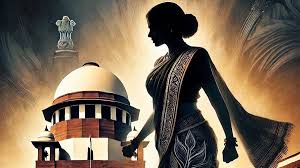
The court said, “Pinky Meena has proved her merit in the Rajasthan Judicial Service Examination while fighting social stigma and completing her education under difficult circumstances. Her dismissal is akin to a ‘death sentence’ given for a minor irregularity (omission to hide information).” New Delhi- The Supreme Court, while giving a historic verdict in an important case of Rajasthan High Court, has provided great relief to Pinky Meena, belonging to the tribal community, against her dismissal from the services of a civil judge. In its judgment given on 22 May 2025, the Supreme Court quashed the order of 24 August 2023 passed by the Rajasthan High Court, in which Pinky Meena’s writ petition was dismissed. Along with this, the Supreme Court also quashed the show cause notice issued on 17 February 2020 and the dismissal order of 29 May 2020. In this decision, Pinky Meena has been directed to be reinstated in service with immediate effect and to provide all consequential benefits such as seniority fixation and pay fixation (excluding the previous salary). Background of the case Pinky Meena had got selected for the post of Civil Judge and Judicial Magistrate in Rajasthan Judicial Service (RJS) on the basis of her educational qualification and hard work. She has a degree of Bachelor of Arts (BA), Bachelor of Education (B.Ed), Bachelor of Laws (LLB) and Master of Laws (LLM). She started serving as a second class teacher in the Education Department of Rajasthan Government from 30 December 2014. On 18 November 2017, an advertisement was issued by the Rajasthan High Court for the post of Civil Judge, in which Pinky applied and cleared the preliminary examination, main examination and interview. On 11 February 2019, she was issued an appointment letter as Civil Judge, and she started training from 6 March 2019, which she completed with excellent performance on 7 March 2020. However, after her appointment, complaints were filed against her by persons named Abhishek Verma and Ram Niwas Meena, based on which the Rajasthan High Court issued a show cause notice against her and later terminated her services. High Court’s decision and appeal in the Supreme Court The Rajasthan High Court on 24 August 2023 dismissed the writ petition of Pinky Meena, upholding the show cause notice and dismissal order. The High Court in its judgment held that Pinky had concealed information regarding her previous government job and educational qualifications as a teacher, which amounted to irregularity under Rule 14 of the Rajasthan Judicial Service Rules, 2010. Against this, Pinky filed a Special Leave Petition (SLP) in the Supreme Court, which was heard by a bench of Justice Satish Chandra Sharma and Justice B.V. Nagarathna. Allegations against Pinky Meena and her reply The Rajasthan High Court had levelled five main allegations against Pinky: Pursuing LLB and B.Ed simultaneously: The High Court alleged that Pinky obtained LLB and B.Ed degrees in the same year, which is not permissible under Rajasthan University Ordinance 168-A. Pinky responded by saying that the LLB first year examination is not considered the main examination of the degree. Fraud in attendance during LLM: The High Court claimed that Pinky obtained the LLM degree as a regular student while serving as a teacher, which is improper. Pinky clarified that regular classes for LLM are not usually held. Concealing information about previous job: The High Court said that Pinky concealed information about her government job at the time of interview. Pinky replied that at the time of interview (November 2, 2018) she had already resigned, and there was no column in the checklist to provide such information. Absence of NOC: The High Court alleged that Pinky did not obtain a No Objection Certificate (NOC) from the Education Department for the RJS exam. Pinky said that there is no such condition in the RJS rules. Concealment of appointment information: The High Court claimed that Pinky concealed information about her RJS appointment from both the Education Department and the High Court. Pinky responded that she was not in government service at the time of appointment, so there was no need to provide any information. The Supreme Court examined these allegations and found that all these allegations relate to the time when Pinky was not in judicial service but was working in the Education Department. The Court held that no action was taken by the Education Department in these matters, and it is not appropriate to make them the basis for her dismissal in judicial service. What the Supreme Court said The Supreme Court, in its 21-page judgment, not only ordered the reinstatement of Pinky Meena in service, but also made it clear that her dismissal violates the principles of natural justice and Articles 14 and 16 of the Constitution. The court made several important observations in its judgment, which underline the gravity and social context of the case. The court said, “Pinky Meena has proved her worth in the Rajasthan Judicial Service Examination while fighting social stigma and completing her education under difficult circumstances. Her dismissal is akin to a ‘death sentence’ for a minor irregularity (omission to conceal information).” The court also held that Pinky did not disclose information about her previous government job, but it is not a serious misconduct, as she had resigned from her job on 25 October 2018, and at the time of the interview (2 November 2018) she was not in government service. The court stressed on the violation of the principles of natural justice and said, “Pinky was not given an opportunity of a fair hearing during the investigation. The inquiry officer conducted the investigation behind her back, and the investigation report was not provided to her. This is a clear violation of the principles of natural justice.” Citing the case of Shamsher Singh vs State of Punjab (1974), the Court clarified that if the termination of service of a probationer is done on the ground of misconduct, it is mandatory to give him an opportunity for proper inquiry and hearing, otherwise it would
Punishment for raising questions on Rafale deal! Case registered against Dalit student leader — Know the whole matter
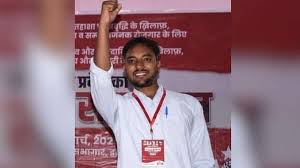
Police registered case against Dalit PhD student leader who demanded answers from the Central Government on Rafale deal, student organizations protest across the country Prayagraj (Allahabad), Uttar Pradesh — Uttar Pradesh Police has registered a case against Manish Kumar, a Dalit PhD scholar and student leader of Allahabad University, for raising questions on the Central Government on the Rafale fighter aircraft deal on social media. Manish Kumar, who is the Uttar Pradesh state president of the All India Students Association (AISA), posted on Facebook and raised questions about the Rafale deal and the alleged losses in the India-Pakistan conflict after the Pahalgam terror attack. 26 people were killed in this terrorist attack. In his post, Manish wrote, “Why has the Modi government not yet denied the reports claiming that India lost several Rafale jets during the conflict? Why has no transparency or clarity been given on this till now?” On May 14, the police filed an FIR against Manish under Section 353(2) of the Indian Penal Code (BNS) and Section 67 of the Information Technology (IT) Act, which deal with statements and online content that are deemed inflammatory, offensive or misleading. The police have not clearly stated the reason for filing the case under these sections, but activists and student organisations say such action threatens the right to debate and dissent in academic institutions. At present, Manish has not been arrested, but the legal process is ongoing. According to a report by Clarion India, several Hindutva groups are preparing to challenge the FIR in court, saying it violates the freedom of expression guaranteed by the Constitution. The AISA issued a statement condemning the FIR, saying, “The FIR against Comrade Manish is no exception. It is part of the ongoing crackdown on dissent across the country after the Pahalgam attack and Operation Sindoor. There have been over 3,000 arrests in Jammu and Kashmir alone.” The statement further said that 42 people were jailed for ‘pro-Pakistan’ posts in Assam, while 30 arrests and 40 FIRs have been registered in Uttar Pradesh so far. AISA said in its statement, “Students, artists and citizens are being targeted across the country. This is not democracy, but the rule of fear.” Courtesy : Rajan Chaudhary, Hindi Newsw
Caste-related abuses, dragged by hair, attempt to tear clothes — tragedy for Dalit couple in Bhadohi! Police register case against 6
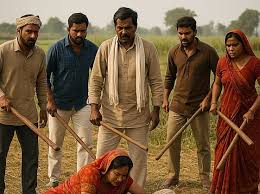
Brave attack on Dalit farmer and his wife in Anaich village of Bhadohi in dispute over cattle grazing, caste-related abuses and assault, police register case against 6 accused. Bhadohi (Uttar Pradesh): A Dalit farmer and his wife were brutally assaulted and caste-related abuses were hurled at them on Friday morning in Anaich village under Unjh police station area of Bhadohi district. Police gave this information on Sunday. The incident took place after a dispute over cattle entering the field and grazing the crop. Police have registered a case against six people in this matter. According to the police, the complainant Deepak Kumar Pasi is a landless Dalit farmer who cultivates urad (black lentil) on sharecropping basis on the land of a village landlord. Superintendent of Police (SP) Abhimanyu Mangalik said, “When Deepak complained about Rajaram Yadav’s cows and buffaloes entering his crop, Rajaram got angry. He abused Deepak using caste-related language and along with his associates beat him with sticks and iron rods.” According to the complaint, the attackers dragged Deepak’s wife Sumitra by her hair around the field, beat her and tried to tear her clothes. Deepak, Sumitra and other members of their family were injured in the attack. Deepak and Sumitra were admitted to the hospital due to serious injuries, while the other four members of the family were discharged after first aid. Based on Deepak’s complaint, the police have registered a case against Rajaram Yadav, Diljeet Yadav, Arvind Yadav, Rajendra Yadav, Parvati Devi and Tara Devi. The police is investigating the matter. Courtesy: Rajan Chaudhary, Hindi News