
Caste tension in Bulandshahr, Yadav community put up caste board at the entry of the village, Dalits protested
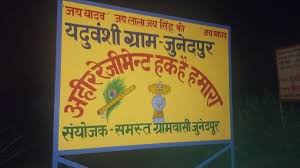
Bulandshahr News: There was a dispute in Bulandshahr over the installation of caste board in the village by Yadav community. Dalit community objected to this, after which the police administration removed the board. Bulandshahr News: A case of installation of caste board by Yadav community in village Junaidpur of Kotwali Secunderabad area in Bulandshahr, UP has come to light, after which the caste dispute increased. People of Dalit community in the village objected to the board, after which the police took action and took action against 12 people including Ahir Regiment and Samajwadi Party leaders for disturbing the peace. This action has been taken in the case of forcibly installing caste board in the village and organizing a panchayat. In fact, a caste board was forcibly installed by the people of Yadav community at the entry of Junedpur in Secunderabad Kotwali area. “Yaduvanshi village” – Junedpur Ahir Regiment is our right, Jai Yadav was written on the board. The Dalit community of the village protested against this caste board, after which the people of the Yadav community also gathered and started supporting the board by holding a panchayat. Due to which the caste dispute was increasing in the village. The police removed the board from the village After the dispute increased, the Dalits complained to the police, expressing the threat to their lives and property. After which the police administration uprooted the board and brought it to the police station. The police asked the Yadavs not to put up such a board and appealed to both the parties to maintain peace, despite this, the board was again put up by the other side and a panchayat was called, in which people of the Yadav community from the surrounding villages including the SP leader gathered. Secunderabad police station in-charge Anil Shahi was informed about this, after which he reached the spot with a heavy police force and took 12 people including the leader of the Ahir Regiment and SP leaders into custody and brought them to the police station. Action has been taken against all these for disturbing the peace. The Dalit community has expressed satisfaction over the action taken by the police. Former village head Virendra said that this was leading to casteist hatred, which could have led to a serious incident. Complaint filed on the basis of complaint He said that only 35 percent of the people in Junaidpur village are Ahirs while 65 percent are from other castes. In such a situation, other castes had raised objections to this board. SP City Shankar Prasad said that the Dalits have alleged that Kapil Yadav, Bablu Yadav, Narendra Singh Yadav and their associates were trying to spread anarchy in the village every day. They were being threatened. On the basis of the complaint received in this, a case has been registered and further legal action is being taken. Courtesy: Anubhav Sharma, Hindi News
Dalit family demolishes temple they built after embracing Christianity in Chhattisgarh; Hindutva brigade protests
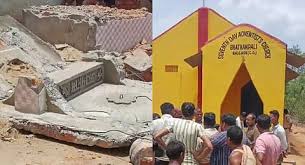
The police arrested five, including three members of the Dalit family after the incident. RAIPUR: Tension prevailed at Bhatanpali after a Dalit family that got converted into Christianity dismantled a temple built by them, leading to a protest by cadres of Bajrang Dal in the outskirts of Chhattisgarh’s Raigarh town. The police arrested five, including three members of the Dalit family after the incident. A senior police officer told TNIE that the Sarthi family had built the temple in 2020 on government land, though there was no idol placed inside and only the structure existed. The family accepted the Christian faith a year ago, and the temple was dismantled by a JCB machine. “As the news spread, a group of Bajrang Dal cadres arrived and, claiming that their religious sentiments were hurt, attempted to reach out to a nearby church to vandalise it in retaliation, but the police intervened and prevented it,” the officer said. The existing church was built on private land some 25 years ago. According to eyewitnesses, some Bajrang Dal protestors managed to enter the church, raised a saffron coloured cloth and tried to remove the cross. “There was a scuffle between the activists of Bajrang Dal and the police, who asked the protestors not to take the law into their hands. We have arrested five persons including three members of the Sarthi family and an operator of a JCB machinery that was used to demolish the temple”, the officer added. The locals close to Nirmal Sarthi claimed that the family was initially taken to a police station to safeguard them from the protestors, and later they were arrested by the police. “The demolished temple was a 6 ft x 6ft structure built by the Sarthi family close to the entrance of their residence. “The Hanuman temple didn’t have any idol installed, nor did anyone ever come to worship there. A Dalit family stands victimised in the incident. While Sarthi, his two sons and Bogilal Sarthi were arrested and sent to jail, no stern action was taken against those who created disharmony and agitation in the name of religion”, said Degree Prasad Chouhan, human rights activist based in Raigarh. Courtesy : Ejaz Kaiser, TNIE Note: This news is originally published on https:/thenewindianexpress.com/ and is for use by the non-military/non-commercial community, especially those in the human rights sector.
From the memoir: The long shadow of caste discrimination on Dalit writer Adhir Biswas as a schoolboy
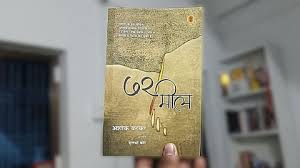
Ma had asked me to wait a bit. But that had been a long while back! How much longer? What was she looking for inside the room? What was so important now? I couldn’t understand why she had asked me to wait! Oof, why did she have to do this when I was in such a hurry! Should I leave? No, maybe she’d give me something. Did she go in to get some money? Wouldn’t be bad if I got some. After all, I was beginning school today. It was my first day of school. If not an anna, even two paise was good. But I wouldn’t wait longer for that. I could easily run all the way, but because it was the first day, I wouldn’t do that. If Ma held me up like this hereafter I would just leave. Hey, why was she going from one room to another? I knew that Ma shouldn’t move about like us. That was the toll of suffering her sickness. I saw Ma every day, but I had never seen her like I was doing today. Bustling around for so long. And through all that, it seemed to me that Ma was moving about with her sari wound around her body like thin skin. Ma had had her medicine. The decoction from the kobiraj. Some pills. A powder. Only after having those did she begin cooking for the household. Baba too lent her a hand. That meant cutting the vegetables, washing them, washing the utensils, and preparing the wheat dough. Sometimes Ma would do it; at other times Baba would say, “Leave it, I’ll do it.” He wasn’t around all the time, so he tried to do some of Ma’s work in the little time he had at home. But despite all this, why wasn’t Ma getting better? “O Ma, it’s getting late. What are you doing? Tell me what you’re looking for.” “What else! The kohl container. It was next to the candlestick. Did you move it somewhere?” “Aah,” I said impatiently. “What do you need the kohl for?” “Oh dear! What are you saying? You’re beginning school, won’t I put a dot on you?” “What’ll happen if you don’t put it? I’ve grown up now – I’m off!” “Wait.” I had never heard Ma shout so loud! She wasn’t angry, it didn’t seem like a scolding either. It was like indulgence. I was annoyed but I couldn’t move. Ma walked slowly towards me. Coming closer, and before I knew it, she held my head gently between her palms and kissed me on the forehead! “Do your studies mindfully, my dear, I’m afraid I won’t be there to see it all.” The thought of school vanished at once from my mind. Why was she choking? As she swallowed, she sniffled a little. Her eyes were brimming with tears. As if she was going to … just now. I said softly, “Are you crying, Ma?” “Where, no!” And saying so, she wiped her eyes. “Go now!” What if I went after a few days instead? Or never went at all so I could stay home with Ma? Could I not learn a trade like Baba’s instead of going to school? After all, I had gone all the way to Poyatibari after a bereavement there and cut the nails of the people in the household. The womenfolk there had held out their hands so gently. One finger at a time. In return, a clay bowl full of rice. My mind wandered to that day. Aush paddy was planted in summer and harvested in autumn. Its rice was browncoloured. Also round potatoes, and sometimes clinking coins. So what if I was small, after all I belonged to that caste. I filled the bag with fistfuls of rice. The vegetables would be placed on one side. But that was for later. As soon as the bag was full, I would hear someone from the household say, “Don’t keep sitting there, come back to the house, come and have lunch when you are done.” I could see it all, as if Thakur Moshai, the priest, was sitting far away from me. A banana leaf was full of rice, dal and vegetable curry. After mixing them with my hand, I licked the starch off my hand and fingers. Time and again I would think, no one was watching me eating, were they? Oh, how long it had been since I had eaten so well! In front of Thakur Moshai were Kakima and others of the household. I was served a lot of rice and vegetable curry. It took a while to eat that. Someone shouted out from the veranda, “Just ask if you want more rice.” I wondered, isn’t there anything else? Some fish? Maybe not the choicest one but perhaps a tail-piece? But then I thought, where’s the need for that! With what I had been served I wouldn’t have to eat till noon the next day. I continued eating. As I ate, I began to feel drowsy. So, what was wrong with that – if I went around from village to village with a nail-cutting chisel? I could start earning right away. I just wanted to stay close to Ma. I wouldn’t go to school. What if she kept on crying after I went to school? Ma understood. There were tears in my eyes. She wiped my tears and said, “Go, my dear, it’s getting late.” I didn’t say “no”. Once again the urge to go to school awakened. “So, I’m going!” Ma nodded. I had come quite a distance. But Ma was still standing on the road in front of the house. I turned back every now and then to look. Ma waved her hand. Chhor-da had left already for the day. Ma had said to him, “Drop your brother at school tomorrow.” “He’ll go on his own. Why are you worrying? He wanders around everywhere all day long; won’t he be able
Shirt-pants, pen and chocolate… Why did Rahul Gandhi send a gift to a high school student of Barabanki?
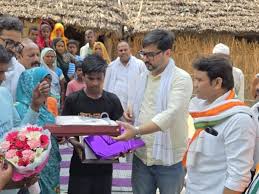
Congress MP from Rae Bareli Rahul Gandhi has also sent his signed congratulatory message. In the letter, Rahul Gandhi has written that your determination to pass the exam despite struggles is an inspiration for all students. Jitendra Kumar Maurya, Barabanki: Congress MP Rahul Gandhi has sent a gift along with a congratulatory letter to Ram Kewal, who passed the high school exam for the first time from Nizampur village of Barabanki after 78 years of independence. On Wednesday, MP Tanuj Punia reached the village with Congress leaders and felicitated the student and also promised to give full support for further studies. Ram Kewal, son of Jagdish Prasad, a resident of Nizampur village connected to Ahmedpur town of Banikodar block, has set a new benchmark by passing the high school exam. Leader of Opposition in Lok Sabha and MP from Rae Bareli Rahul Gandhi has sent congratulations to Ram Kewal and family on the successful penance of hard work. In the 78 years since the Dalit village of Nizampur in Ahmedpur village, no one has studied up to high school. Teachers believe that education has brought a ray of hope to the family living a life of poverty. Congratulatory message from Rahul Gandhi MP Tanuj Punia said that Rahul Gandhi has sent a congratulatory message to the family of Ramkewal, the student who passed the high school examination for the first time in the village after independence. In this, he has been given a shirt-pant, pen, chocolate and a congratulatory message letter signed by Rahul Gandhi. Rahul Gandhi wrote in the congratulatory message- ‘Dear Shri Ramkewal, I heartily congratulate you on your success in the 10th class examination for the first time in your entire village. This is not only a personal achievement but a historic occasion for the entire Nizampur village. Your determination to pass the examination despite struggles is an inspiration for all the students. You have proved that if the intention is strong, then no obstacle can become an obstacle in the way.’ Rahul Gandhi further writes- ‘Baba Saheb Ambedkar also stressed upon the need for education and with the hard work and dedication with which you have achieved this position, I hope that many avenues of progress will open for you in the times to come. Once again many congratulations to you and your parents for this achievement, whose blessings and hard work have always been with you. Best wishes for your future dreams too.’ Desire to study in private school, Congress took responsibility Tanuj Punia said that student Ramkewal has expressed his desire to study further in a private school in the city. Congress has taken the responsibility of fulfilling his wish. About the author Vaibhav Pandey Assistant News Editor in Navbharat Times Digital. Science student till graduation. After this did post graduation in media. Started the journey of journalism from Lucknow which reached the city of Nawabs via Agra, Delhi-NCR. Worked in Dainik Jagran print for a long time. Courtesy : Hindi News
Decision Paralysis Caused By Fund Freeze: How Suspension Of USAID Affects Transgender Healthcare In India
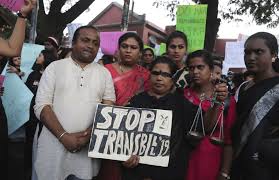
USAID has granted a waiver for certain life-saving treatments like administering the antiretroviral treatment for HIV but this pulling of funds may prevent several from seeking preventive care for HIV-AIDS. The suspension of funds from the US Agency for International Development (USAID) has resulted in a series of significant consequences. USAID, since its inception in the 1960s, has provided humanitarian foreign aid across countries, funding myriad development programmes. USAID funds were suspended for 90 days for review, followed by a stop-work directive that paused several of its aided programmes. One of these programmes was the Mitr Clinic Project for transgender people (established in 2003), run by health workers, doctors and mental health professionals. It was possible through a collaborative effort by Johns Hopkins University, the Indian government and USAID, especially seeing that other state-established legislations did not reach transgender individuals as much. The first Mitr Clinic was established in Hyderabad and later set up in Pune and Thane as well, reporting over 6000 transgender individuals accessing their facilities (of the nearly 4.87 lakh transgender individuals in India as per the Census 2011). These clinics served as more than just medical centres, as they became a comfortable and inclusive space for transgender individuals seeking legal aid, hormone therapy guidance and mental health support. USAID has granted a waiver for certain life-saving treatments like administering the antiretroviral treatment for HIV (reports of over 6-10 percent of Mitr Clinic patients were HIV positive), but this pulling of funds may prevent several from seeking preventive care for HIV-AIDS. Although it is true that public hospitals and private healthcare sectors can provide the same services, transgender individuals have reported to feel socially safer in Mitr clinics due to prevalent stigma, harsh treatment and discriminatory behaviour from healthcare professionals in other spaces. With the potential closure of these clinics due to fewer funds, transgender individuals face the threat of losing a socially accessible space for basic healthcare needs. US’s gender-deaf policies: What freezing USAID means for the future Perhaps the most controversial executive order by US President Donald Trump has been his mandate about recognising only two sexes (male and female). This completely erases the legal recognition of transgender, intersex and non-binary individuals in the USA. The suspension of USAID funds has come about due to President Trump’s bout of ‘America-First,’ policies, including the termination of diversity, equity and inclusion programmes across the federal government. His announcement of eliminating more than 90 percent of USAID foreign aid contracts implies that the funding from several projects is going to be cut. Source: BBC Long-time supporter of the USA’s executive Elon Musk commented on USAID’s funding of Mitr Clinics, “That’s what American tax dollars were funding.” It has sparked debate and demands about why foreign aid is supporting inclusivity policies in other countries when it should be the state’s own mechanism doing the same. The USA has been pivotal in influencing development projects across the world in terms of its funding, trade contracts and diplomatic relations. These collaborative efforts are important in ensuring the best qualitative service reaches those who are most in need of them, i.e., the marginalised. The gendered manner in which policies are being revised, funding is being cut and inclusivity is being compromised spells danger for how the future of the marginalised is being imagined. Bureaucratic paralysis: India’s responses to transgender voices Contrary to the USA’s turn in recognition, India legally recognises transgender individuals under the third gender category (due to the landmark judgement by the Supreme Court in 2014). The Indian state has since followed with other acts, such as the Transgender Persons (Protection of Rights) Act in 2019 (which encouraged them to apply for an identity certificate as a legal document) and financial relief packages during the COVID pandemic. Source: The Wire However, these initiatives were not without difficulties, since around 23 percent of Identity Certificate applications were pending, and several individuals did not have the financial means to access the relief packages. The Mitr Clinic establishment was one among the most successful initiatives in this regard, which shockingly faces an uncertain future in the wake of recent international events. The Indian State’s navigation of such hurdles and revision of policies faces a paralytic difficulty. Its implementation of inclusive and recognition acts seems to function in a staccato manner, the act being passed but not really addressing the lived needs and experiences of transgender individuals. For instance, while the state takes pride in announcing its inclusive nature in recognising transgender individuals and improving accessibility into political, economic and healthcare spaces, on the ground level they do not implement policies to improve how these individuals are viewed socially. Transgender individuals still face social barriers in accessing these spaces due to how they are viewed by the general public with difference, prejudice and insensitivity. Although legally recognised on paper, they are socially mocked while navigating bureaucratic hurdles, the emotional tax and fear due to which they avoid availing beneficial schemes. The Indian state thus needs to implement a better framework to address these policies on a large scale and all-round manner. A call for action to improve status quo Several NGOs, members of the LGBTQIA+ community and Mitr Clinic healthcare professionals have called upon the Union government and their respective state governments to provide funds for its functioning. The clinics in Pune and Thane have been forced to shut down, resulting in displaced health care professionals, large-scale unemployment and a barrier for transgender individuals in accessing a socially inclusive space for health care facilities. They call upon both state and non-state actors for a collaborative effort in instituting funds for Mitr Clinics again, due to its key role in improving social accessibility. Source: Maktoob Media The potential closure of Mitr Clinics reveals the precariousness of trans-specific services in the absence of consistent state-backed support. The situation shows how marginalised groups, especially those in the Global South, often become collateral damage in the ideological and financial reorientations of powerful nations. Current policies under the
California changed rules for a track-and-field meet after a trans athlete’s success. What to know

California is opening up its track-and-field championship to more girls after a transgender athlete drew controversy for qualifying for the meet SACRAMENTO, Calif. — California is opening up its track-and-field championship to more girls after a transgender athlete drew controversy for qualifying for the meet. The California Interscholastic Federation announced the temporary rule change Tuesday after high school junior AB Hernandez’s success drew backlash, including from President Donald Trump. He criticized the athlete’s participation in a social media post Tuesday, though the group said it decided on the rule change before that. Here’s what to know: Former California Gov. Jerry Brown signed a law in 2013 allowing students to participate in sex-segregated school programs, including on sports teams, and use bathrooms and other facilities that align with their gender identity. A Republican-led effort to block that law failed recently in the Democratic-dominated Legislature. Another proposal that also failed would have required the federation to ban students whose sex was assigned male at birth from participating on a girls school sports team. The federation said it was launching a “pilot entry process” to allow more girls participate in the championship track-and-field meet. Under the change, “any biological female student-athlete who would have earned the next qualifying mark for one of their Section’s automatic qualifying entries in the CIF State meet, and did not achieve the CIF State at-large mark in the finals at their Section meet” could compete, the group said. If a transgender athlete medals, their ranking would not displace a “biological female” student from medaling, the federation confirmed. In high jump, triple jump and long jump — all of the state championship events Hernandez qualified to compete in — a “biological female” who would have earned podium placement will get the medal for that place and will be reflected in the records, the federal said. The federation did not specify how they define “biological female” or how they would verify whether a competitor meets that definition. Experts from organizations including the American Medical Association, American Psychiatric Association and American Psychological Association say gender is a spectrum, not a binary structure consisting of only males and females. Hernandez, a trans athlete in Southern California, is at the center of the debate. She won the long jump and triple jump during the division finals and is expected to perform well this weekend. She also set a triple jump meet record at the Ontario Relays earlier this year. Critics have accused her of having an unfair advantage over other athletes. Hernandez told the publication Capital & Main earlier this month that she couldn’t worry about the actions of critics, who have called out her participation and heckled her at postseason meets. “I’m still a child, you’re an adult, and for you to act like a child shows how you are as a person,” she said. She noted that she has lost some of her events, saying that disproved arguments that she can’t be beat. The rule change may discriminate against transgender athletes, said Elana Redfield, a policy director at the UCLA School of Law Williams Institute, which researches sexual orientation and gender identity policies. “The CIF policy creates two sets of rules — one for transgender girls, who must earn a place through traditional measures of competition, and another for ‘biological females,’ some of whom are allowed an extra chance to earn a spot,” Redfield said in an email. The change seems to “thread a fine needle” by trying to ensure cisgender girls aren’t denied a competition slot while still allowing trans athletes to participate, Redfield said. Doriane Lambelet Coleman, a professor at Duke Law School, said the change would help ensure that “no female athlete loses a place on a team or in a competition when a trans girl is included.” “Unlike inclusion policies that ignore sex differences, doing it this way doesn’t gaslight the other girls about their biology,” said Coleman, who has researches subjects including children, sports and law and wrote recently on the evolving definition of sex. Izzy Gardon, a spokesperson for California Gov. Gavin Newsom, called the rule change “a reasonable, respectful way to navigate a complex issue without compromising competitive fairness” and said the governor thought it was a thoughtful approach. Newsom angered some liberal allies earlier this year when he questioned the fairness of transgender girls participation in girls sports. Courtesy : SOPHIE AUSTIN, ABC News Note: This news is originally published on https://abcnews.com/ and is for use by the non-military/non-commercial community, especially those in the human rights sector.
AIISCA’s warning on Amreli Dalit youth murder case: ‘Caste’ cannot be the norm in a democratic society, supporters held accountable
The organisation called it shameful that the country’s Prime Minister hails from Gujarat, yet he and his party have not taken any concrete steps to abolish the caste system in his home state. His silence on this atrocity is not neutrality, but complicity. New Delhi- The All India Independent Scheduled Castes Association (AIISCA) has strongly condemned the brutal murder of Dalit youth Nilesh Rathod in Jarakhia village of Amreli district of Gujarat. AIISCA said that Nilesh’s only “crime” was to call a minor boy, who belonged to a so-called “upper” caste, “son”. Caste mentality took a violent turn in response to this simple human affection. The incident reflects everyday caste violence against Dalits in Gujarat, which violently enforces caste supremacy despite claims of a development model. The organisation criticised the silence and normalising role of the ruling caste-class nexus, which includes business elites, upper caste landlords and the political class, in the violence. AIISCA President Dr Rahul Sompimpale issued a statement. The organisation termed the silence of Dalit MPs and MLAs of the ruling party as complicity in standing with upper caste bosses rather than their own community. The failure of Gujarat’s state machinery—police, administration and politicians—to protect Dalits was also questioned. The police’s lethargic response exposes institutional casteism. The organisation called it shameful that the country’s Prime Minister hails from Gujarat, yet he and his party have not taken any concrete steps to end the caste system in his home state. His silence on this atrocity is not neutrality but complicity. AIISCA expressed solidarity with the grieving family of Nilesh Rathod, who have announced that they will not accept his body until their demands are met. Their demand is not just compensation, but respect, recognition and an end to the violent caste system. Demands: Immediate and full compensation to all victim families, including: o Five acres of agricultural land or government jobs for all affected families. The investigation be handed over to an independent, high-ranking officer with a clean record, and a time-bound trial in a special fast-track court under the SC/ST Atrocities Act. FIR and arrest of all remaining accused, who incited and aided the mob. Statewide public inquiry into caste-based violence in Gujarat, with particular focus on rural areas. Public apology and assurance of reform from the Chief Minister of Gujarat, as well as a statement from the Prime Minister acknowledging structural caste violence in Gujarat. Initiation of a comprehensive anti-caste violence policy in Gujarat, including: o Dedicated SC/ST protection task force. o Educational and cultural programs to eradicate caste bias. o Accountability mechanism for caste-based negligence by police and civil servants. AIISCA warned that if the Rathore family did not get justice, the organisation would launch nationwide protests. The organisation said they would not allow this violence to be buried under bureaucratic silence and electoral games. Dalit lives matter, and the right to dignity is inviolable. Sompimple said the statement is not a petition but a warning: caste cannot be normalised in any democratic society. And those who support it directly or indirectly will be held accountable. Courtey; Geetha Sunil Pillai, Hindi News
Dalit Elderly Man Allegedly Burned Alive in Gujarat’s Patan Village; MLA Mevani Says—Gujarat Becoming Hell for Dalits!
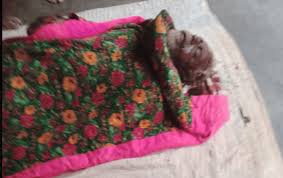
According to the Patan police, a preliminary investigation has been initiated. Patan- A heart-wrenching incident has come to light in Pipala village, Santalpur taluka of Patan district, Gujarat, where 70-year-old Dalit elderly man Harji Bhai Deva Bhai Solanki was allegedly burned alive in the neighboring Jakhota village. Dalit leader and Vadgam MLA Jignesh Mevani stated that he spoke with the Patan District Superintendent of Police, who confirmed the incident. However, the police have not yet disclosed the reasons behind the killing, and the investigation is ongoing. The victim’s body was found wearing women’s clothing and anklets, making the incident even more suspicious. This incident is being seen as another link in the chain of increasing violence against the Dalit community in Gujarat. MLA Jignesh Mevani expressed deep sorrow over the incident and tweeted, “Despite all its claims of development, Gujarat is becoming a hell for Dalits.” He has appealed to all activists and citizens to gather at the Civil Hospital in Dharpur, Patan, to demand justice for the victim’s family. Mevani has demanded that the government provide adequate compensation to the victim’s family and allocate 2 acres of agricultural land to them. He described the incident as yet another example of atrocities against the Dalit community and called for immediate action. According to the Patan police, a preliminary investigation has been initiated. The police stated that Harji Bhai’s murder took place in Jakhota village, and his body was sent to the Civil Hospital in Dharpur for a postmortem. The motive behind the killing is still unclear. The police have started questioning local residents and have increased security arrangements in the area due to the prevailing tension. This incident has sparked significant outrage within the local Dalit community. Several social organizations and activists have come forward in support of the victim’s family. Tension is prevailing in Jakhota and Pipala villages, and locals are demanding strict action against those responsible for this brutal incident. MLA Jignesh Mevani said, “I just spoke with the District Superintendent of Police, who confirmed the incident, but the reasons behind it are still unknown! It is with great sorrow that I must say, despite all its claims of development, Gujarat is becoming a hell for Dalits! The government must provide adequate compensation to the victim’s family and 2 acres of agricultural land!” Mevani appealed to the Dalit community, stating that they must strongly protest against the atrocities, assaults, murders, and horrific incidents like being burned alive that are happening to Dalits under the BJP regime. Courtesy : Geetha Sunil Pillai, The Mooknayak Note: This news is originally published on https://themooknayak.com/ and is for use by the non-military/non-commercial community, especially those in the human rights sector.
AIISCA’s Warning on Amreli Dalit Youth Murder: “Caste Cannot Be the Norm in a Democratic Society, Supporters Will Be Held Accountable”
AIISCA expressed solidarity with Nilesh Rathod’s grieving family, who have refused to accept his body until their demands are met. Their demand is not just for compensation but for dignity, recognition, and an end to the violent caste order. New Delhi- The All India Independent Scheduled Castes Association (AIISCA) has strongly condemned the brutal murder of Nilesh Rathod, a Dalit youth from Jarakhiya village in Gujarat’s Amreli district. In a statement issued by Dr Rahul Sonpimple, President AIISCA said, “His only “crime” was addressing a minor boy from a so-called “upper” caste as “beta” — a simple act of human affection that provoked violent retaliation rooted in casteist mentality.” This incident reflects the daily caste-based violence faced by Dalits in Gujarat, a state that claims to be a model of development but enforces caste supremacy through violence in its towns, villages, and streets. The organization criticized the ruling caste-class nexus, comprising business elites, upper-caste landlords, and the political class, for their silence or active role in normalizing this violence. The organization called out the silence of Dalit MPs and MLAs from the ruling party, labeling it as complicity. Instead of standing with their oppressed communities, they have aligned with upper-caste leaders, betraying those they claim to represent. AIISCA also highlighted the failure of Gujarat’s state machinery—police, administration, and political leaders—in protecting Dalit lives. The police’s sluggish and selective response reveals deep-rooted institutional casteism. The organization termed it shameful that the Prime Minister, hailing from Gujarat, and his party have taken no concrete steps to dismantle the caste system in the state. Their silence on this atrocity was described as complicity. AIISCA expressed solidarity with Nilesh Rathod’s grieving family, who have refused to accept his body until their demands are met. Their demand is not just for compensation but for dignity, recognition, and an end to the violent caste order. Immediate and full compensation to all affected families, including five acres of agricultural land or government jobs. Investigation by an independent, high-ranking officer with a clean record and time-bound trial in a special fast-track court under the SC/ST Atrocities Act. FIRs and arrests of all remaining accused, including those who incited or abetted the mob. A state-wide public inquiry into caste-based violence in Gujarat, focusing on rural areas. A public apology and assurance of reform from the Gujarat Chief Minister, and a statement from the Prime Minister acknowledging structural caste violence in Gujarat. A comprehensive anti-caste violence policy in Gujarat, including an SC/ST Protection Task Force, educational and cultural programs to eradicate caste bias, and accountability mechanisms for caste-based negligence by police and civil servants. AIISCA warns that if justice is denied to the Rathod family, it will mobilize nationwide protests. The organization stated, “Caste cannot be the norm in any democratic society. Those who uphold it, through action or silence, will be held accountable.” Courtesy : Geetha Sunil Pillai, The Mooknayak Note: This news is originally published on https://themooknayak.com/ and is for use by the non-military/non-commercial community, especially those in the human rights sector.
Made an elderly Dalit wear Ghaghra-Choli, then burnt him alive… Married woman did this to run away with her lover
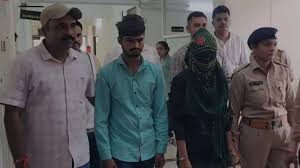
A shocking incident came to light in Jakhotra village of Patan district of Gujarat, where Suresh Ahir found the half-burnt body of his wife Geeta. Investigation revealed that Geeta and her lover Bharat had conspired to kill a Dalit man named Harji and burn him as Geeta. Patan: A heart-wrenching case came to light in Patan district of Gujarat, which surprised even the police. The case is of village Jakhotra. Where, a man named Suresh Genga Bhima Ahir woke up in the morning on hearing the crying of his three-year-old child, but he did not find his wife Geeta nearby. When he reached the back of the house while searching for his wife, he found a half-burnt body there, seeing which he was shocked. This body was wearing orange and purple Ghaghra-Choli, there was also a silver anklet on the feet. These were the same clothes that belonged to his 22-year-old wife Geeta. Refusing chicken in the temple proved costly for a Dalit monk, a bully bleeds him with a trident, case registered under SC-ST Act After three decades, the marks of ‘red terror’ are removed from Bastar and Kondagaon: What does this new beginning in Chhattisgarh mean? Suresh thought his wife had committed suicide and he informed the police. But within a few hours of investigation, the case took a complete turn. The post-mortem report revealed that the body was of a 56-year-old Dalit man Harji Debha Solanki, who was a resident of Vauwa village (7 km from Jakhotra). Initially, it was considered a case of caste violence and Congress MLA Jignesh Mevani also raised it on social media, because a week before this, a Dalit was also killed in Amreli. Conspiracy of lovers blinded by love The investigation revealed that Geeta had hatched a conspiracy with her lover Bharat Lubha Ahir. Both of them together planned to kill Harji and make him look like Geeta, so that both of them could start a new life by showing Geeta as dead. Bharat saw Harji, a weak man, walking alone in Vauwa village. He tried to kill him by dragging him into the bushes and strangulating him and then brought him to Jakhotra in an unconscious state on a bike. At night, along with Geeta, they dressed Harji in his clothes and burnt him alive by pouring petrol on him. Tried to escape, but got arrested Both of them fled via Santalpur, Radhanpur and reached Palanpur railway station in Banaskantha, from where they were trying to escape to Jodhpur. But with the help of mobile location and CCTV footage, the police caught them at 4 am on Wednesday. The post-mortem revealed that Harji had died of burning, that is, he was alive when he was set on fire. Petrol pump workers also stated that Geeta had taken petrol from there in a can. Patan SP VK Nai said that if Harji had not been identified, Geeta and Bharat had not been caught on time, then this case could have been closed as a suicide. About the author Rahul Mahajan After studying journalism from Himachal Pradesh University, he has been active in digital and electronic media for more than 9 years. He started his journey from ETV and Network 18 to Times Internet. He has keen interest in politics, crime and positive news. Courtesy : Hindi News