
‘How can Dalits hold wedding here?’: UP family attacked with rods
No arrests have been made so far. Ballia: A group of men allegedly attacked a Dalit family with sticks and rods for holding a wedding ceremony in a hall in Rasra, Uttar Pradesh, police said on Sunday, June 1. Two persons were seriously injured in the incident that occurred on Friday. “Being from a Dalit community, how can you hold a wedding in a hall?” the attackers allegedly said, as per the FIR lodged in the matter. An FIR was lodged based on a complaint by one of the victim’s brother, Raghvendra Gautam. He stated that a group of around 20 armed with sticks and rods stormed the Swayamvar Marriage Hall around 10:30 pm and attacked those who were holding a wedding there. The group was led by Aman Sahni, Deepak Sahni, Rahul, and Akhilesh, he said. There were 15-20 other unidentified people from the Mallah Toli locality, the complainant said. According to the FIR, the accused allegedly hurled caste-based slurs and objected to the wedding being held at a marriage hall before launching an “assault”. Lakdikapul Gated CommunitySt JosephsGermanten Hospital Gautam’s relatives, Ajay Kumar and Manan Kant, sustained serious injuries in the attack. Based on the complaint, a case has been registered under relevant sections of the BNS along with provisions of the Scheduled Castes and Scheduled Tribes (Prevention of Atrocities) Act. Rasra Police Station in-charge Vipin Singh said an investigation is underway. No arrests have been made so far. Posted by Veena Nair Courtesy : TSD Note: This news is originally published on https://thesiasatdaily.com/ and is for use by the non-military/non-commercial community, especially those in the human rights sector.
Bihar Dalit rape victim dies after being made to wait for hours in ambulance
The victim’s family alleged that the minor girl had to wait in an ambulance for several hours before getting a bed. PATNA: A nine-year-old Dalit girl from Bihar’s Muzaffarpur, who was raped and brutally attacked on May 26, died at Patna Medical College and Hospital (PMCH) on Sunday morning, amid allegations that she was left waiting in an ambulance for several hours before getting a bed. She was brought to PMCH from Muzaffarpur-based SKMCH in a critical condition on Saturday. Former Congress MP Ranjeet Ranjan said the party would ensure justice for the victim’s family. She also lashed out at state health minister Mangal Pandey over the deteriorating condition of premier hospitals like PMCH. “I demand Mangal Pandey’s resignation. He has no moral right to remain in office when the poor are being denied healthcare despite the state government’s tall claims of improving infrastructure in government-run hospitals,” she said. Rajesh Rathod, media in-charge of Congress, said that the rape victim had to wait in ambulance for several hours in the premises of the PMCH. “Her family members reached the PMCH at 11 am on Saturday. It took the hospital administration more than four hours to arrange a bed for her,” he added. Bihar Congress president Rajesh Ram slammed the state government for its insensitivity towards women, citing the rising incidents of sexual assault. “The law-and-order machinery has completely collapsed in the state,” he said. Sushil Kumar, senior superintendent of police (SSP) of Muzaffarpur district, said that the accused, identified as Rohit Sahni has already been arrested. Muzaffarpur residents alleged that the accused Rohit Sahani had earlier committed the same offence with another 12-year-old girl at the village and attempted to kill her. However, she had survived in the incident. Meanwhile, the Muzaffarpur unit of the Congress staged a protest at Saraiyaganj Tower Chowk, condemning the incident and threatening to intensify their agitation. Party members alleged that three cases of rape have been reported in the district in recent days. Courtesy : Ramashankar, TNIE Note: This news is originally published on https://thenewindianexpress.com/ and is for use by the non-military/non-commercial community, especially those in the human rights sector.
When ‘Beta’ Becomes A Death Sentence: Unmasking The Caste Discrimination In India
The death of Nilesh Rathod will always serve as a stern reminder of the still persistent legacy of caste-based discrimination in India. A 20-year-old Dalit man named Nilesh Rathod died from injuries he got after being brutally attacked in Gujarat’s Amreli district for calling a shopkeeper’s son “beta” (son). This conveys the persistence of caste-based discrimination in India. In addition to highlighting the widespread impact of caste hierarchies, this incident raises concerns about the continuation of these stereotypes in future generations. About the incident Nilesh Rathod went to buy snacks at a neighbourhood store in Jarakhiya village on May 16, 2025. He called the shopkeeper’s son “beta” in a gesture of familiarity or perhaps just courtesy. This seemingly harmless and everyday term was met with violent outrage. Source: TNM Rathod allegedly suffered a stick attack from the shopkeeper, Chotha Khoda Bharwad, and the attack intensified as more people joined in, using sickles and sticks and hurling casteist slurs. Before an old man stepped in, Rathod and his friends were constantly chased and beaten. Rathod died from his injuries six days later, on May 22, 2025, even after being treated by doctors. Youth and caste: A disturbing continuity This incident screams that the idea that discrimination based on caste was a thing of the past and was only passed down by older generations. The active participation of younger generations in such violent acts hints that caste prejudices are still being promoted across generations. It demonstrates the fragile nature of caste dynamics and the deeply rooted insecurity people have about social hierarchies that a harmless word like “beta,” which is used as a word of affection by people of all ages and backgrounds, could be the source of such a violent reaction. When words become weapons Language, in India, is strongly entangled with social and caste hierarchies. Some languages to be spoken are considered to be superior to what other castes are speaking, which commonly reflects and reinforces social hierarchies. Here, a Dalit man using “beta” to address a person of higher caste was seen as a violation, a desecration of the existing social order. This incident clearly sheds light on how language, if passed through the prism of caste, can be the source of violence even where it’s not required, showing us the universal nature of caste hierarchy in everyday conversations. The role of silence: Political and social apathy After the incident, there was a deafening silence from political leaders and the mainstream media. The case only gained close attention after constant protests by activists like Congress MLA Jignesh Mevani, who demanded justice and compensation for the victim’s family. Such a delayed response, which is definitely not the first time, reflects broader societal apathy and ignorance towards caste-based violence, especially when the victims come from marginalised communities. The spotlight towards caste-based violence is determined according to each caste’s convenience. Justice delayed is justice denied Police responded to the incident by arresting eight people and detaining a minor. Source: India Today The accused were charged under the SC and ST (Prevention of Atrocities) Act and several sections of the Bharatiya Nyaya Sanhita, including those relating to murder, rioting, unlawful assembly, and distressing hurt. While these legal measures are in the right direction, the efficacy of such actions is often downplayed by systemic delays and societal pressures that can strongly influence the process of justice. Not an isolated incident: Persistence of caste discrimination This tragic incident is not isolated in itself but a part of an even larger disturbing pattern of caste-based violence in India. From incidents like the Una flogging in 2016 to the lynching of Jagmael Singh in 2019, there have been numerous incidents where Dalits have faced brutal assaults for everyday harmless tasks due to the norms of caste. Such events present the stubborn and systemic nature of caste-based violence and discrimination in India. Caste-based discrimination remains deeply rooted in Indian society, surpassing age and generational boundaries. While the thought goes that younger generations today are protected from such evils and prejudices, recent incidents suggest something else. Several recent events highlight the involvement of young individuals in caste-based discrimination and violence. In Moradabad, Uttar Pradesh, in May 2025, five schoolboys allegedly gang-raped a 12-year-old Dalit girl inside a school’s principal office. The boys reportedly gave her a spiked drink, filmed the assault, and threatened her to keep silent. All five were arrested following the incident. In Mathura, Uttar Pradesh, a Dalit groom’s wedding procession was attacked by upper-caste people who were enraged just by the use of a DJ and a chariot. The groom was allegedly pulled and pushed out of the chariot and the guests were assaulted and threatened to stop the procession before any more harm. In Mahoba, Uttar Pradesh, a newlywed Dalit couple was reportedly attacked by upper-caste people who forced the groom and the family to pass them by removing their slippers. When they refused to do so, they were assaulted. This incident did draw criticism from political leaders, highlighting the ongoing caste tensions but did not make any difference. While extensive, up-to-date statistics specifically focusing on youth involvement in caste-based discrimination are limited, broader data indicates the persistence of such biases. It was found by a Pew Research Centre survey in 2021 that a significantly large portion of the Indian population still admits the existence of caste-based discrimination and violence. And to note, members of the SC and ST were more prone to such discrimination against themselves. Reports from many human rights organisations and NGOs also consistently highlight that caste-based violence and discrimination still prevail largely across India, affecting all ages. These reports also highlight the need for systemic changes and the need to take measures to remove the presence of such deep-rooted beliefs and prejudices. The way forward: Education and empathy Addressing such strong, deep-rooted beliefs of caste-based prejudice, we need effective and multifaceted approaches. Source: ABC Firstly, education systems should incorporate detailed modules on caste history and social justice to promote empathy
A long way from deliverance
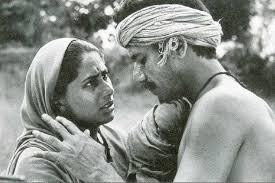
Neeraj Ghaywan’s Homebound — a film about the marginalised — might have received a standing ovation at Cannes this year, but films around Dalit themes remain an unformed genre, argues author Sadgati, adapted from a short story by Munshi Premchand, was Satyajit Ray’s first and only black-and-white telefilm for Doordarshan. Sadgati means deliverance. The film depicts the persisting caste system and its varying manifestations in post-Independence India. Premchand wrote the story in 1931; Ray adapted it in 1981, much after the Government of India officially outlawed the discriminatory practice of untouchability. The 50-minute film features Om Puri as the Dalit farmhand Dukhi, Smita Patil as his wife Jhuria, Mohan Agashe as the Brahmin priest and Geeta Kak as the priest’s wife. The black-and-white form enhances the edginess of the tragedy. Puri’s skeletal frame, bent body and almost complete silence when asked to do heavy chores, the action of his blunt axe on the unrelenting block of wood under the blazing sun, all of it makes the telling only too real. Sadgati is neither the first film on Dalit oppression nor will it be the last. Even if one argues that with films such as Achhut Kanya, Sujata, Ankur, Aakrosh and Sairat, the Dalit found a robust platform within the narrative and cinematographic space of Indian cinema, the Dalit perspective has been largely absent. The points of view are mainly of a third person, often an upper-caste filmmaker. And while it is true that some significant films have conveyed compellingly the dehumanisation of this class through stories of individual oppressions, it is also true that these individual stories were not representative of the larger Dalit condition. Bimal Roy’s Sujata is an example and so is Govind Nihalani’s Aakrosh. There have been exceptions wherein classical literature on celluloid has brought the Dalit struggle to the forefront. Among these are — Ray’s Sadgati, Mrinal Sen’s Oka Oorie Katha and Trilok Jetley’s Godaan, all based on Premchand’s works. These films convey the raw reality of being born Dalit. Ray focused on the irony of the priest who was forced to pull Dukhi’s dead body with a rope tied to his feet. Dukhi was not the priest’s servant. He had only sought a meeting with the priest to fix a time and date for his daughter’s wedding. But the priest made him do very tough work on an empty stomach under the blazing sun and Dukhi, who was already running a high fever, collapsed and died. His wife’s angry lament — she keeps knocking on the closed door of the priest’s house — is all in vain. Sen’s Oka Oorie Katha suggests just the opposite. It shows how some Dalits can bring about their own ruin and remain immune to the tragedy of the women in the family. Sen was criticised by Premchand scholars for not showing the famous drunken scene wherein the father and son spend the alms collected for the young bride’s kafan or shroud on drinks. And who can forget Gautam Ghose’s Paar (1984)? It is a screen adaptation of Samaresh Bose’s Bengali story Paari. Instead of simply turning the novel into a film, Ghose used the original story as his base but made the narrative sharper and more hard-hitting. “To the untouchable, Hinduism is a veritable chamber of horrors,” Ambedkar had once said. Not a single film exploring the Dalit identity has been able to establish that brutal truth. Prakash Jha’s Aarakshan led to protests by some pro-Dalit groups in Kanpur. They were against the casting of Saif Ali Khan as a Dalit. They objected to the actor’s royal background and regarded this casting as an insult to the community. These films get rave reviews but do little to change the mindset of the upper castes. In contrast, Nagraj Manjule’s Fandry is convincing because Manjule is himself a Dalit. There is an aspect to Fandry that merits specific comment. It has to do with the portrayal of the family’s vocation which is pig-catching or breeding. Family members are shown unable to go about it effectively. For instance, when their task is to capture a pig, they throw stones at it, which only drives it away. They hate the occupation thrust on them by birth. They despise it so much that they are not bothered about gaining expertise. They know that this source of livelihood is the reason why they are ostracised by society. The domestic help in Shyam Benegal’s Ankur is shown to be Dalit and also mute. He cannot express his anger even when he understands that his wife is being sexually exploited because she is a servant and the wife of another servant. Talking about the commercialisation of the Dalit identity, one has to mention Aamir Khan’s box office hit Lagaan. Bhuvan accidentally discovers that Kachra with his limp hand can spin the ball brilliantly. And that is how his disability becomes an asset. Bhuvan includes him in the team. This angers other members who refuse to play with an untouchable but Bhuvan persuades and then at some point Kachra’s talent makes them shed their prejudices. There are many lesser-known, small-budget films that present a more serious, socio-political image but since the directors were not famous and their films, if released, had a meagre run at the theatres, they remain almost invisible. Some such films are Masaan, Manhole, Chauranga, Kosa, Life of an Outcast, Kastoori, Guthlee Laddu and Swaha. Films focused on the Dalit identity, unlike Dalit literature, cannot and do not count as a movement towards positive changes in the Dalit condition. It has been nearly half a century since Ray made Sadgati. Courtesy : Shoma A. Chatterji, The Telegraph Note: This news is originally published on https://thetelegraph.com/ and is for use by the non-military/non-commercial community, especially those in the human rights sector.
Attack on Dalit girl’s wedding in marriage hall, case filed against 24 people
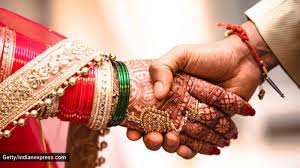
Ballia (UP), (Language) In Rasra area of Ballia district, people present there were attacked in protest against organizing the wedding ceremony of a Dalit girl in a baraat ghar. Two people were seriously injured in this incident and a case has been filed against 24 people in this connection. Police sources told on Sunday, citing the report filed, that Raghavendra Gautam, a resident of Mission Road, Rasra town of Rasra Kotwali area, has told in the filed case that on May 30, his sister’s wedding was taking place in a marriage hall in the town. According to the complaint, after the baraat arrived, at around 10:30 pm, people named Aman Sahni, Deepak Sahni, Rahul and Akhilesh of Mallah Toli came with sticks, rods and pipes along with 15-20 unknown people and started abusing, and also said that how are you getting married in a marriage hall despite being from Dalit caste. Sources said that according to Gautam, after this the attackers attacked the people present in the wedding ceremony. Ajay Kumar and Manan Kant were seriously injured in this incident. Sources said that in this connection, on the complaint of Raghvendra Gautam, a case has been registered on Saturday against 24 people including Aman Sahni, Deepak Sahni, Rahul and Akhilesh and 20 unidentified people under relevant sections of the Indian Penal Code and Scheduled Castes and Scheduled Tribes Atrocities Prevention Act. Courtesy in-charge Vipin Singh said that the police is investigating the matter. No arrest has been made so far. Bhasha Editor Salim Netrapal Vaibhav This news has been taken by ‘auto-feed’ from ‘Bhasha’ news agency. ThePrint is not responsible for its content. Courtesy : Hindi News
Suraj Milind Yengde’s new book covers Dalit history of 15 countries

New Delhi, (language) Author Suraj Milind Yengde in his new book presents a comparative exploration of caste and race from ancient times to the present, based on 10 years of historical, ethnographic and archival research in 15 countries. Published by Penguin Random House India, ‘Caste: A Global Story’ explores the experience of Dalits across different continents and traces the powerful relationships from the indentured labourers of the nineteenth-century Caribbean region to the migrant workers of the Middle East today. The book highlights the role of colonialism, religion and nationalism in maintaining caste hierarchies across the world and explores lessons that can be learned from anti-caste movements in India and elsewhere. In the preface of the book, Nobel laureate Amartya Sen has said, “‘Caste: A Global Story’ is a remarkable contribution to understanding and confronting the challenges of harsh inequalities prevailing across the world. We should be grateful to Suraj Milind Yengde for this distinguished work.” The book is priced at Rs 899 and will hit the market on June 30. Language: Shubham Naresh This news has been taken by ‘auto-feed’ from ‘Bhasha’ news agency. ThePrint is not responsible for its content. Courtesy: The Print, Hindi News
Behind Apna Dal (S) naming a Dalit UP chief, a bid to cut into BSP’s voter base
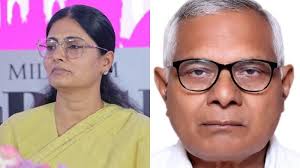
After Raj Kumar Pal, an OBC leader, resigned earlier this month, Anupriya Patel’s party has now picked old loyalist Jatav R.P. Gautam as the state president. Lucknow: Union Minister Anupriya Patel’s Apna Dal (Sonelal) appointed Jatav R.P. Gautam as the president of its Uttar Pradesh unit Thursday, in a move which is being viewed as the party’s attempt to woo the Dalit community. Earlier this month, the former state president, Raj Kumar Pal, had resigned from the position after accusing Anupriya and her husband Ashish Patel—a minister in Uttar Pradesh cabinet—of neglecting him and mistreating party workers. Gautam, an old loyalist and the party’s co-operative wing chief, has now taken up the responsibility. The 60-year-old hails from the Sitapur district, and has also been a Dalit rights activist and social worker for the past two decades. The position of state president was previously held by an OBC leader (Pal), but now the party has picked a Jatav (segment of Dalit community) leader for the role for the first time in a bid to increase its outreach, according to party functionaries. “This is the first time we have appointed a Jatav state chief, in line with our social engineering plan. We are hoping for positive results,” Ashish Patel told ThePrint. A senior functionary said, on the condition of anonymity, that the party wants to step out of the image of an OBC party. “This move comes at a time when the support base of BSP (Bahujan Samaj Party), which is considered the first choice of Jatavs, has been shrinking for the last few years. Jatavs are looking for an alternative. So, our leadership has decided to focus on increasing its base. The population of Jatavs is above 12 percent in the state, which is significant in creating an impact in electoral politics,” the leader told ThePrint. Now, as the party focuses on the preparation for the upcoming local body elections this year and the 2027 assembly elections, Gautam has been given this big responsibility, he added. However, Apna Dal (S) is not the only party eyeing BSP’s core vote bank. The Samajwadi Party’s “Pichda, Dalit, Alpasankhyak (backward-Dalit-minority)” plank got a big boost in April this year, following the induction of former minister and BSP founding member Daddu Prasad, along with a few other local BSP leaders. Before this, SP had inducted several BSP leaders last year, too. Additionally, SP’s district units had also held a week-long “Swambhiman Samman Samaroh” to mark the birth anniversary of B.R. Ambedkar this year. The aim was to reach out to prominent members of the Dalit community at grassroot level and felicitate them. Similarly, Nagina MP Chandrashekhar Azad-led Azad Samaj Party (Kanshi Ram) is also planning to expand their base, having completed the process of appointing local units in all 75 districts of the state. UP-based political analyst Shilp Shikha Singh explained that BSP’s “downfall” has opened up space for other parties in terms of the Dalit voter base. “Every party has realised after Lok Sabha results in UP that there is scope to gain this ‘loyal’ vote bank of the BSP, as the old party is not able to perform well in polls. The grand celebration announcements on Ambedkar Jayanti last month have also given a hint that every party is eyeing Dalit votes. As of now, it seems like a smart move by a BJP ally (Apna Dal).” Prashant Srivastava (Edited by Mannat Chugh) Courtesy : The Print Note: This news is originally published on https:/theprint.com/ and is for use by the non-military/non-commercial community, especially those in the human rights sector.
MP Khandwa gangrape-murder case: Limits of brutality crossed with tribal woman, questions raised on women’s safety system in the state
The Congress delegation met the family members of the deceased. The delegation included Shobha Ojha, Vijayalakshmi Sadho and MLA Jhuma Solanki. They demanded a compensation of Rs 25 lakh from the government and a government job for a family member. Bhopal. The incident of gangrape and murder of a tribal woman in Khalwa police station area of Khandwa district of Madhya Pradesh has shaken the entire state. This incident, which shames humanity, not only raises questions on law and order, but also exposes the government’s insensitivity towards the safety of the tribal society. The deceased woman was 45 years old and she was the victim of brutality by two youths of her own village – Sunil and Hari. The brutality was done by catching her on the way while returning from the field On Friday night, after a wedding ceremony in the village, the woman had gone to drop her relatives to the field. The farm was just half a kilometer away, but she did not return home overnight. The next morning, when the family went out to search for her, a woman told them that the victim was in the shed behind her house. On reaching there, she was found unconscious. On regaining consciousness, she told her son and daughter-in-law, “Something wrong has happened to me, now I will not survive… Sunil and Hari did it forcefully.” She died shortly after. Statement given before death, intestines and uterus were out According to the son and daughter-in-law of the deceased, the condition of the woman was very critical. There was excessive bleeding from the private part and the uterus was out. The postmortem report also confirmed that the intestines were out, the uterus was torn and the body was soaked in blood. According to the doctors, a hand or some object was inserted in the private part, which damaged the internal organs and caused death due to excessive bleeding. Police sent the accused to jail The police had taken both the accused into custody on Saturday itself and on Sunday night they were taken to the crime scene to confirm the crime scene. Both the accused were produced in the court on Monday and taken on two-day police remand. Khandwa SP Manoj Kumar Rai said that the clothes of the accused and the deceased and other evidence found from the crime scene have been sent for FSL investigation. It has also been said that this case will be registered in the category of marked crime and taken to the fast track court. According to Congress leaders, the victim could not even get first aid. The government ambulance did not come, and the family had to take the body to the district hospital in a private vehicle. This incident exposes the poor health system of the state. Congress team met the victim’s family The Congress delegation met the family of the deceased. The team included Shobha Ojha, Vijayalakshmi Sadho and MLA Jhuma Solanki. They demanded a compensation of Rs 25 lakh from the government and a government job for one member of the family. Shobha Ojha alleged that “the administration is trying to convert the rape case into murder. Looking at the condition of the crime scene, it is doubtful how the incident could have happened there.” Vikrant Bhuria targeted the government National President of Adivasi Congress and MLA Dr. Vikrant Bhuria said in a press conference in Delhi, “MP is becoming the rape and liquor capital. A 45-year-old tribal woman was gang-raped and her uterus and intestines were removed with an iron rod. This is not just murder, but a blot on the face of civilization.” Bhuria further said that “Prime Minister Modi should ensure before coming to Bhopal Mahila Sammelan on May 31 that how will the sisters be protected in Madhya Pradesh?” Courtesy : Ankit Pachauri, Hindi News
Brutal attack on Dalit monk in Chhatarpur, MP: Beaten to death with trident, case registered under SC/ST Act
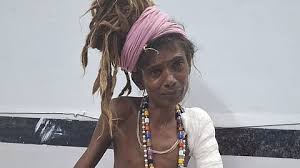
There is an atmosphere of tension in the village since the incident. Dalit organizations have called this attack extremely shameful and have demanded the immediate arrest of the accused. It is not yet clear whether the accused has been taken into custody by the police or not. Bhopal. A case of a deadly attack on a Dalit monk with a trident has come to light in the Sarabai police station area of Chhatarpur district of Madhya Pradesh. The victim monk Indra Bahadur Ahirwar has been admitted to the hospital in critical condition. It is being told that the accused hit the monk with his own trident until he fainted. There is an atmosphere of anger in the village regarding the incident. What is the whole matter? The incident is from Mahoi Khurd village of Sarabai police station area. The victim Naga monk Indra Bahadur Ahirwar lives in an ashram located near the Andi pond of the village and performs bhajan-pujan. In the complaint lodged with the police, he said, “Chhuttan Patel, a resident of the same village, came to me asking for utensils to cook chicken. I refused saying that this place is for worship. The next day when I came out of the ashram, Chhuttan Patel stopped me on the way and attacked me with my own trident.” Beaten to death Sadhu Indra Bahadur says that the accused attacked him till he fainted. In the attack, his arm from the shoulder has been broken and he has suffered serious injuries in the waist, leg and hip. There are deep wounds at many places on the body. The victim also alleged that, “Chhuttan Patel is the man of the village’s strongman Krishna. He is addicted to alcohol and meat. I am a sadhu, so when I opposed him, he attacked me.” Police registered the case On getting information about the incident, Sarabai police reached the spot and started investigation. A case has been registered against the accused Chhuttan Patel under the Indian Penal Code (BNS) and Scheduled Castes and Tribes (Prevention of Atrocities) Act. The police have registered a case under BNS Section 296 – attempt to hurt religious sentiments, Section 115(2) – intentional grievous hurt, Section 315(2) – attempt to murder, Section 3(1)(d), 3(1)(dh), 3(2)(v) of SC/ST Act – brutal attack and insult to a Dalit. An atmosphere of tension in the village There is an atmosphere of tension in the village since the incident. Dalit organizations have called this attack extremely shameful and have demanded the immediate arrest of the accused. It is not yet clear whether the accused has been detained by the police or not. The Bhim Army State President surrounded the government In a conversation with The Muknayak, Bhim Army Madhya Pradesh State President Sunil Bairasia said that this incident is extremely condemnable and a symbol of increasing violence against the Dalit community. The attack on a sadhu, who belongs to the Dalit community, with a trident shows how caste hatred is still alive in the society. This attack is not just on one person, but on our entire society and its faith. Targeting the government, he said that there is no guarantee of safety of Dalits in Madhya Pradesh. Atrocities are happening every day and the administration is a mute spectator. He demanded that the accused be arrested as soon as possible and given severe punishment and the victim sadhu be given compensation and security, otherwise Bhim Army will protest in Chhatarpur. Courtesy : Ankit Pachauri, Hindi News
UP: What is the Panwari incident of Agra in 1990? Due to which Dalit politics rose…and Babulal shone
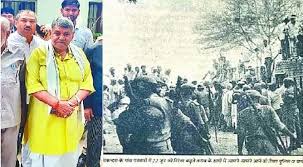
After the caste conflict in Panwari, Agra in 1990, on one hand Dalit politics rose, while on the other hand Choudhary Babulal shone as a new face. Choudhary Babulal’s politics started from here. From 22 to 25 June 1990, Agra was in discussions all over the country due to the incidents of Panwari and Akola. After this, politics changed completely. At the local level, the people removed the bigwigs of Jat politics from their hearts, while at the state level Dalit politics rose due to Dalit unity. When BSP and BAMCEF established their roots in the name of Dalit respect, the resentment of both the parties towards Congress and Janata Dal remained. Even after the activism of former Prime Minister Rajiv Gandhi, Congress could not make a place in the hearts of Dalits. Before the Panwari incident, the then Union Minister Choudhary. Faces like Ajay Singh, Badan Singh, Vijay Singh Rana were at the centre of Jat politics, but after the Panwari incident, Choudhary Babulal emerged like a comet as a strong leader of the Jats. As a result of this, he won as an independent from Fatehpur Sikri. He became a minister, MP and then MLA. The old faces of the Jats were rejected by Jatland and they were never at the centre of politics again. In these 35 years, firebrand Babulal and Jat faces doing politics like him made a place for themselves. BSP, BAMCEF won the hearts of Dalits After the Panwari incident, the Dalit community showed unity and in the name of the fight to maintain respect, BAMCEF and BSP kept making a place in the hearts of Dalits. According to political analyst Rajiv Dixit, Kanshiram and Mayawati, leaders of the newly-formed BSP, kept the Panwari incident alive in the entire state and mentioned it in every meeting for their self-respect. The result of this was that BSP registered its strong presence in every assembly election after this. Congress suffered the most due to Dalits joining BSP. After this incident, Janata Dal implemented the Mandal Commission’s recommendations to reduce the distance from Dalits, but could not win their hearts. Janta Dal and Congress suffered losses The Panwari incident not only changed the politics of Uttar Pradesh, but also the politics of Janata Dal in power at the center and Congress in the opposition. Janata Dal became a victim of Jats’ anger after this incident, and even the visit of Congress leader and former Prime Minister Rajiv Gandhi could not connect them with Dalits. Senior journalist Rajiv Saxena tells that former PM Rajiv Gandhi had reached Panwari village with his wife Sonia Gandhi by Taj Express. Panwari and Agra remained at the center of politics across the country for a month. The spark of the Panwari incident was felt in many districts of Rajasthan including Bharatpur. Courtesy: Dheerendra Singh, Hindi News