
Ujla Andhera — This Heartbreaking Novel Exposes the Brutal Reality of Dalit Life in India
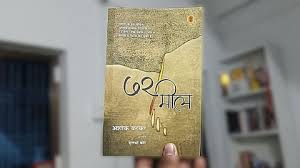
A gripping tale of caste, courage, and survival — Kailash Wankhede’s Ujla Andhera reveals the everyday struggles of Dalit communities in modern India through the eyes of a young boy. “Ujla Andhera” (The Bright Darkness), authored by renowned Hindi writer Kailash Wankhede, is a poignant and deeply moving novel that brings to light the lived realities of Dalit settlements in modern India. Published by Rajkamal Prakashan, this novel powerfully captures the essence of daily struggles, aspirations, and systemic neglect faced by marginalized communities, all through the innocent yet insightful lens of a young Dalit boy named Milind. Kailash Wankhede, recipient of the prestigious Hans Katha Samman and Madhukar Singh Smriti Samman, uses his signature realism to transport the reader into the heart of a Dalit locality that lies geographically close but socially distant from the urban elite. His narrative breaks down complex caste hierarchies, political indifference, and deeply ingrained social prejudices in a simple, accessible, and emotionally resonant manner. A Child’s View of a Fractured Society At the center of the story is young Milind, who presents a first-hand account of life in his Dalit neighborhood. His father, a principled Ambedkarite, repairs punctured tires for a living. Despite extreme poverty, he remains committed to constitutional values and celebrates Ambedkar Jayanti with pride and dignity — distributing sweets to children even when there’s not enough food at home. Through Milind’s eyes, we see a detailed and touching portrayal of his family: a hardworking mother, a supportive elder brother, and a loving grandmother. The mother, in particular, emerges as a symbol of invisible labor and silent suffering. Wankhede, via Milind’s narration, observes: “Evening is mother’s best friend. When it arrives, she stops speaking and becomes a machine. Her hands begin to move faster, picking up the mess of the house. Is it only a mother’s duty to keep the house in order?” Rain, Rage, and Repression The novel doesn’t just document daily life — it critiques it. The monsoon season becomes a metaphor for the state’s indifference, as homes in the Dalit colony leak, stink, and flood. Women drink less water to avoid defecating in the open due to the lack of toilets. The narrative raises a sharp but subtle question: Why do Dalit women die younger? The central tension of the novel builds around a disturbing incident during a Dalit wedding. When the groom, a relative of Milind, mounts a horse — a symbol of pride and honor — the upper-caste neighbors attack the wedding procession. “Dalits don’t have the right to ride horses,” they say, as they beat up the entire baraat (wedding party). The family is forced to seek police protection, but even the police, steeped in caste bias, refuse to help. “The authorities believed that over time, enthusiasm dies down… the crowd will lose interest, and the demand will fade. Life, caught between daily survival and social humiliation, forgets its dreams.” This episode becomes the crux of the novel’s critique — of the continued caste-based humiliation that exists even after 75 years of independence. Language, Power, and Erasure In a powerful meta-commentary, Wankhede criticizes how language itself becomes a tool of exclusion: “The dictionary is a conspiracy against life… It excluded the language of our homes, our lanes, and our lives. Language was used not just to communicate, but to suppress.” The book argues that dominant castes shaped language, religion, and literature to project themselves as superior and to erase the existence of marginalized voices. Dalits were excluded not just from land and temples, but from the very vocabulary that defines human dignity. This deeply philosophical commentary draws a chilling parallel — tools that once built life are now used to destroy it. Words have become weapons. Education, Humiliation, and the Police State The novel also explores how lack of education and healthcare continues to haunt Dalit colonies. When a teacher calls Milind’s community “dirty people,” he is left confused and hurt, questioning his family about why others think that way. The narrative also highlights how young Dalit boys are falsely accused of thefts in nearby areas and are sent to jail without evidence. This pattern of criminalizing the oppressed is shown not as an exception but as a rule — part of a systemic cycle of caste-based injustice. Death, Loss, and Unanswered Questions Tragedy strikes when Milind’s elder brother dies due to poor medical access. His father, too, is left on the brink of death. Yet, despite the personal losses and social attacks, Milind’s observations remain tender, intelligent, and quietly radical. Even as the novel concludes, the reader is left with an aching sense of incompleteness — not due to a lack of closure, but because the questions it raises remain unanswered in real life as well. Why is justice still denied? Why is equality still aspirational? Final Thoughts “Ujla Andhera” is not just a novel; it is a necessary document of our times. It serves as both a mirror and a warning — reflecting the ongoing marginalization of Dalits while challenging readers to confront uncomfortable truths. With poetic language, powerful metaphors, and a child’s perspective full of clarity, Kailash Wankhede has created a masterpiece that deserves to be widely read, debated, and remembered. Courtesy : Rajan Chaudhary, The Mooknayak Note: This news is originally published on https://themooknayak.com/ and is for use by the non-military/non-commercial community, especially those in the human rights sector.
India’s Net Foreign Direct Investment Plummets by 96.5% to Reach Record Low

Net FDI stood at $353 million in fiscal year 2025, down sharply from $10 billion the previous year. New Delhi: India’s net foreign direct investment (FDI) plummeted 96.5% to a record low of $353 million in fiscal year 2025, down sharply from $10 billion the previous year. The Reserve Bank of India (RBI), in its latest monthly bulletin released on Wednesday (May 21), attributed the drop to large fund repatriations as investors exited through profitable initial public offerings (IPOs) and as Indian firms increased their investments overseas. A hot IPO market, featuring companies like Hyundai Motor and Swiggy, allowed long-term investors to realise significant gains. Simultaneously, Indian companies stepped up investments abroad to capitalise on shifts in global supply chains. The RBI stated that “Net FDI moderated…reflecting the rise in net outward FDI and repatriation FDI.” This decline in net FDI – the difference between gross FDI inflows and both outward investments by Indian companies and funds taken out by foreign entities – occurred despite a strong rise in gross FDI. Made with Flourish Investors withdrew $49 billion from India in FY25, an increase from $41 billion the year before. High-profile exits included those by Alpha Wave Global and Partners Group from major share sales like Swiggy and Vishal Mega Mart. A report by the Indian Venture Capital and Alternate Capital Association (IVCA) and EY highlighted that private equity and venture capital exits totaled $26.7 billion, a 7% year-on-year increase. Open market exits were dominant, though IPOs backed by private equity gained momentum. For example, Hyundai’s promoters took home proceeds from its Rs 27,870 crore listing as it reduced its stake. A key Swiggy investor reportedly made over $2 billion post-IPO. Telecom firm Singtel’s sale of its Airtel stake and tobacco company BAT’s divestment from ITC in March 2024 also likely contributed to the FY25 repatriation figures. These large IPOs often coincided with India’s stock market indices hitting record highs, such as the surge in late September of last year. Despite the drop in net figures, some see these trends positively. The IVCA/EY report suggested this activity signals a “mature market,” where foreign investors can smoothly enter and exit, which “reflects positively on the Indian economy.” Furthermore, gross inward FDI showed robust growth, rising 13.7% to $81 billion in 2024-25, according to RBI data. The central bank noted this investment remains concentrated, with over 60% flowing into manufacturing, financial services, electricity and energy, and communication services. Net inflows of ‘stable’ FDI were 86% lower than the $2.67 billion in ‘volatile’ portfolio flows for the year. Courtesy : The Wire Staff, The Wire Note: This news is originally published on https://thewire.com/ and is for use by the non-military/non-commercial community, especially those in the human rights sector.
Telangana IAS Officer to Principals: Make Students Clean Toilets — “They’re Not From Posh Families Where Food Appears at a Snap!”

The remarks have been widely criticized for their insensitivity and perceived reinforcement of caste-based stereotypes, particularly as they target students from Scheduled Castes (SC) attending TGSWREIS institutions, which were established to provide quality education and uplift marginalized communities. Hyderabad – A major controversy has engulfed Telangana’s social welfare education system following the viral spread of an audio clip on May 28, 2025, purportedly featuring Dr. V.S. Alugu Varshini, a 2012-batch IAS officer and Secretary of the Telangana Social Welfare Residential Educational Institutions Society (TGSWREIS). In the clip, Dr. Varshini is allegedly heard instructing school principals to assign students cleaning duties, including washing toilets and maintaining hostel rooms, as part of their daily routine. The remarks, which have drawn widespread condemnation, have ignited a fierce debate about caste discrimination, child rights, and the role of the Gurukul system in uplifting marginalized communities. The Controversial Audio Clip The audio, which surfaced on social media platforms, reportedly captures Dr. Varshini speaking at a recent review meeting with school principals. She is heard defending the assignment of cleaning tasks—such as sweeping floors, cleaning blackboards, washing toilets, and even cooking meals—as part of the state government’s “holistic education” model. “If any parent objects, tell them it is my order,” she allegedly said, criticizing principals for hesitating to implement these tasks due to fear of parental backlash. Dr. Varshini is said to have justified the directive by arguing that students, primarily from underprivileged and marginalized communities, do not come from “posh families where food appears at the snap of a finger.” She emphasized that such tasks teach essential life skills, claiming students would spend no more than 20 hours over six months on these activities, which she described as “not hard labour.” In the clip, Dr. Varshini reportedly cited her own experience as a student performing similar duties, referring to it as Shram Daan (voluntary service), and encouraged principals to share images of students performing such tasks in their groups as an example. She also addressed a specific instance where a student was asked to make rotis, questioning, “What’s wrong with that?” and suggesting it was a valuable learning experience. Furthermore, she allegedly warned that parents who threaten school staff over these tasks could face consequences, including show-cause notices and the potential expulsion of their children. The remarks have been widely criticized for their insensitivity and perceived reinforcement of caste-based stereotypes, particularly as they target students from Scheduled Castes (SC) attending TGSWREIS institutions, which were established to provide quality education and uplift marginalized communities. The viral audio clip sparked an immediate and intense reaction on social media, particularly on X, where users condemned Dr. Varshini’s remarks as exploitative and reflective of a “Manuvadi mindset” within the bureaucracy. The opposition Bharat Rashtra Samithi (BRS) swiftly condemned Dr. Varshini’s remarks, with MLC K. Kavitha labeling them “anti-poor” and exploitative. Kavitha highlighted that under the previous BRS government, each welfare school received ₹40,000 monthly to hire four temporary workers for cleaning tasks, a funding allocation she claimed was withdrawn by the Congress government since August 2024. She also noted that assistant caretakers were removed from 240 schools, forcing students to take on kitchen and cleaning duties. Kavitha demanded Dr. Varshini’s immediate removal from her post and strict action to address the issue. Dr. R.S. Praveen Kumar, a former IPS officer and ex-Secretary of TGSWREIS, who is credited with transforming social welfare schools into centers of excellence, also strongly criticized the remarks. Praveen Kumar, in a sharp post on x addressed to CM Revanth Reddy, questioned whether such directives were given without the minister’s approval, pointing out the hypocrisy of imposing such measures only on underprivileged students while elite corporate schools remain unaffected. He demanded that Reddy, along with his ministers and officials, lead by example by cleaning their own toilets daily and sharing proof with the public. Additionally, he urged sanitation workers to boycott the CM’s residence in protest. The letter, dedicated to SC/ST communities, accuses the Congress government of eroding the dignity of marginalized groups while they remain subjugated. “Jai Bhim. Jai Telangana,” he concluded, calling for an end to this discriminatory practice. Courtesy : Geetha Sunil Pillai, The Mooknayak Note: This news is originally published on https://themooknayak.com/ and is for use by the non-military/non-commercial community, especially those in the human rights sector.
Chittorgarh Cops Under Scrutiny After Failing to Apply POCSO & SC/ST Act in Dalit Minor’s Abduction Case
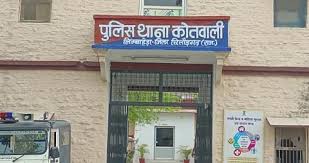
Following media exposure of the case, the SC/ST Act provisions were hurriedly added on May 29. Chittorgarh- In a shocking display of negligence, the Nimbahera Kotwali Police in Chittorgarh, Rajasthan, have come under scrutiny for their handling of a kidnapping case involving a 15-year-old Dalit minor girl. Despite the gravity of the crime, the police failed to invoke the Scheduled Castes and Scheduled Tribes (Prevention of Atrocities) Act (SC/ST Act) and the Protection of Children from Sexual Offences Act (POCSO Act), registering the case solely under Section 137(2) of the Bharatiya Nyaya Sanhita (BNS), 2023. Following media exposure of the case, the SC/ST Act provisions were hurriedly added on May 29. However, in this entire matter, while the investigation and action should have been handled by an officer at the Deputy Superintendent of Police (DySP) rank as per departmental rules, Nimbahera DySP Badrilal Rao was not even informed about the case. Child rights experts state that in cases involving minors, after recovery, the victim must be presented before the Child Welfare Committee to ensure a thorough investigation and appropriate action. On May 24, a Dalit woman residing in Bapu Basti filed a complaint at the Kotwali police station, stating that on May 23 around 3 PM, an accused from Bada Kasai Mohalla, Nimbhaheda, unlawfully entered her home and forcibly took away her 15-year-old minor daughter on a motorcycle. According to the woman, she was away for work in the neighborhood at the time, leaving her daughter and younger son alone at home. The son reported that the accused had forcefully abducted his sister. When the family went to the accused’s house to inquire about their daughter, the accused’s family responded by saying, “The girl will return, our son has taken her with him,” and threatened them against filing a police complaint. They also warned that if a complaint was lodged, something severe could happen to the minor. The Mooknayak spoke to the family, who revealed that the minor had previously known the accused but was no longer in contact. She had been living at her maternal grandparents’ home, while the accused’s residence was just eight to ten lanes away. The family suspects that multiple individuals may have been involved in the abduction. Despite several days passing since the complaint was filed, the Nimbhaheda Kotwali police have neither recovered the minor girl nor arrested the accused. Shockingly, in a serious case involving the abduction of a Dalit minor, the police failed to immediately invoke relevant sections of the SC/ST Act and the POCSO Act, indicating an attempt to downplay the gravity of the incident. Sources suggest that while the accused and the victim were previously acquainted, this does not diminish the severity of the crime. As per regulations, cases related to atrocities against Dalits must be investigated by an officer of Deputy Superintendent of Police (DySP) rank. However, Kotwali Station House Officer (SHO) Ram Sumer Meena assigned the case to a sub-inspector-level officer and deliberately avoided adding SC/ST Act provisions to prevent the matter from reaching higher authorities. This reflects the police’s arbitrary and negligent approach. The minor’s mother expressed her anguish, saying, “My daughter’s entire life is at stake. The accused has full support from his family, and we fear he may commit a serious crime against her.” The victim’s family has pleaded for immediate action and the safe return of their daughter. While the Rajasthan government has repeatedly affirmed its commitment to delivering justice for Dalits and marginalized communities, the local police’s conduct in this case raises questions about these claims. The SHO’s handling of the matter not only casts doubt on police functioning but also exposes a biased and irresponsible attitude in sensitive cases Courtesy : Geetha Sunil Pillai, The Mooknayak Note: This news is originally published on https://themooknayak.com/ and is for use by the non-military/non-commercial community, especially those in the human rights sector.
25 Years Ago, This Student Changed His University — But No One Gave Him Credit
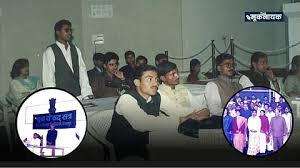
In the year 2000, Deen Dayal Upadhyay (DDU) Gorakhpur University held its annual Youth Parliament competition. Among the participants was Vikram Harijan, then a final-year BA student and a Dalit, who was selected to play the role of the Leader of the Ruling Party. The topic assigned to him was the Women’s Reservation Bill. .Today, Dr. Vikram Harijan is an Assistant Professor in the Department of Medieval and Modern History at Allahabad University. But back then, during the heated Youth Parliament session, Vikram raised a sharp, forward-thinking point: while the university debated women’s rights and representation, its own application forms and ID cards carried only the father’s name, leaving no space for the mother’s name. This issue sparked attention, and soon after, the university administration implemented changes to include mothers’ names on all forms and identity cards — a significant reform for the time. However, years later, as national debates around women’s issues resurfaced, Vikram claims the credit for this change was quietly shifted. According to him, then-Vice Chancellor Prof. Radhe Mohan Mishra began publicly taking sole credit for the reform, erasing the role played by Vikram and his original intervention. Vikram has shared with The Mooknayak several newspaper clippings from that time where his name was omitted, despite being the catalyst for the reform. In the Hindustan newspaper, many years later, the discussion on the women’s reservation bill that day was mentioned. But Vikram Harijan’s name was missing.Photo courtesy – by special arrangement Recalling the event from 25 years ago, Vikram says, “During my speech, I held up the university’s ID card and showed it to everyone. I said, ‘Today we’re discussing the Women’s Reservation Bill, but right here in our university, we don’t even have the option to include a mother’s name on official documents.’” The point resonated deeply among those present. Vikram remembers that after the session, Vice Chancellor Mishra acknowledged the issue, saying, “Women’s caste changes after marriage — there’s nothing I can do about that. But from today, the mother’s name will be included on all university forms and ID cards.” In the years that followed, however, Vikram noticed his name fading from the media coverage. Instead, the Vice Chancellor was credited as the sole reformer. Today, Vikram still expresses disappointment over this erasure, calling it “discrimination.” Reflecting on his student days, Dr. Vikram says, “I was naturally inclined towards debates, speeches, and writing competitions. I learned about the Youth Parliament and wanted to participate, but it wasn’t easy for me. After several attempts, and with the help of Prof. Ankur Gupta and Prof. Harsh Sinha, I finally made it in. I was chosen to lead the discussion on the Women’s Reservation Bill.” He vividly remembers quoting the legendary poet Sahir Ludhianvi during his speech: “Mardon ne banai jo rasmen, usko haq ka farman kaha, aurat ke jinda jalne ko, kurbani aur balidan kaha.” He spoke passionately about women’s rights and highlighted the university’s own shortcomings. “The next day, on February 11, all the newspapers covered the issue,” Vikram recalls. Fast forward to the present, Vikram says he felt overlooked again when Prime Minister Modi’s government passed the Women’s Reservation Bill in Parliament. “On that occasion, Hindustan newspaper ran a feature story. They quoted Ankur Sir and Harsh Sinha Sir, but there was no mention of the point I had raised in the Youth Parliament. The article simply quoted the Vice Chancellor saying that mothers’ names would now be included in university records. Photos of several people were published, but I was mentioned only in passing — just that I’m now an Assistant Professor at Allahabad University.” Courtesy : Rajan Chaudhary, The Mooknayak Note: This news is originally published on https://themooknayak.com/ and is for use by the non-military/non-commercial community, especially those in the human rights sector.
Congress raps Nitish government over rape and murder of nine-year-old Dalit girl in Bihar’s Muzaffarpur
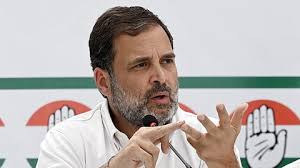
On Monday, Congress workers took out a protest march from the party headquarters with posters and banners, demanding justice for the girl who died on Sunday morning. PATNA: The Opposition Congress has vowed to continue its agitation over the rape and murder of a nine-year-old Dalit girl in Bihar’s Muzaffarpur until justice is delivered to her family. On Monday, Congress workers took out a protest march from the party headquarters at Sadaquat Ashram with posters and banners, demanding justice for ‘Bihar’s Dalit girl’ who died on Sunday morning. However, they were stopped by police from marching towards CM Nitish Kumar’s residence. A minor scuffle ensued between police and protesters. Some leaders were also taken into custody and detained for a while. However, the protesters reiterated their resolve to fight for justice for the victim’s family. They got support from Congress MP Rahul Gandhi who wrote on X, “The brutality against a minor Dalit girl in Muzaffarpur and subsequent negligence in her treatment is extremely shameful. If she had received timely treatment, her life could have been saved. But the ‘double-engine’ government was negligent not only in providing security but in saving her life.” Demanding justice for the victim, Rahul further wrote, “We will not sit quietly until the victim’s family gets justice. Strict action should be taken against the culprit and negligent officers.” He called the death of the rape victim a case of systematic apathy and medical negligence. The Congress women’s cell is also busy chalking out a strategy to corner the NDA government over women’s safety. Women cell leaders attacked Bihar CM Nitish Kumar for his failure to ensure safety and security to women, who they said were being subjected to sexual assault at frequent intervals across the state. Meanwhile, a group of people torched the house of the accused and demanded stern action against him for his heinous act. They described the accused identified as Rohit Sahni, a resident of the same village the victim belonged to, as a ‘a psycho rapist’ who had committed such an offence for the second time. Vidyasagar, superintendent of police (SP), Muzaffarpur (Rural), said the chargesheet against the accused would be submitted in the court within 15 days and the case listed for speedy trial. SSP Sushil Kumar said that the victim was known to the accused. “He was immediately arrested and produced in the court, which remanded him in judicial custody,” he added. The incident occurred on May 26. The accused lured her by providing her chocolates, took her to a nearby maize field and sexually assaulted her. He also attempted to kill her on the spot by stabbing her with a knife around her chest and neck 20 times, causing multiple injuries. The rape victim was rushed to Sri Krishna Medical College and Hospital in Muzaffarpur from where she was referred to Patna Medical College and Hospital (PMCH) on Saturday. In the PMCH premises, she had to wait for more than four hours in an ambulance before finally getting a bed. The victim’s family alleged that the girl was admitted to PMCH after the intervention of some Congress leaders who reached the hospital and talked to senior officials. The deceased’s uncle alleged that they were made to wait for two hours with the minor, but the hospital administration didn’t admit her. Her uncle said that if the girl had been admitted to PMCH on time, her life could have been saved. According to police, there were slash wounds on the girl’s throat and chest. The accused tried to kill her by slitting her throat. “Her vocal cords were damaged, and she was unable to speak,” an investigating officer Aditi Kumari said. Courtesy : Ramashankar, TNIE Note: This news is originally published on https://thenewindianexpress.com/ and is for use by the non-military/non-commercial community, especially those in the human rights sector.
Family matters in Bihar’s Dalit politics—Manjhis to Paswans, how kin are rising up the ladder
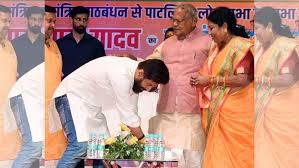
Months before polls, Nitish govt appointed Chirag Paswan’s brother-in-law Mrinal Paswan as chairperson of Scheduled Caste Commission, and Jitan Ram Manjhi’s son-in-law as chairperson. New Delhi: The Nitish Kumar government’s decision to appoint the relatives of Union ministers Chirag Paswan and Jitan Ram Manjhi to top posts in the Bihar Scheduled Caste Commission months before elections has fuelled debate around “dynastic politics” in parties led by Dalit leaders in the state. Chirag Paswan’s brother-in-law Mrinal Paswan has been appointed chairperson of the commission, while Jitan Ram Manjhi’s son-in-law Devendra Manjhi has been made its vice chairperson. Opposition RJD criticised the appointments, saying these were made with an eye on the assembly elections due later this year. Former chief minister Jitan Ram Manjhi’s family now has seven members in politics, competing with the Lalu Prasad Yadav family’s dominance in the state. Manjhi, who comes from the Mahadalit musahar community, contested the Lok Sabha polls from the Gaya seat in 1991, 2014, 2019 and 2024. He won only the 2024 polls. He is currently the oldest minister in the Modi cabinet, holding charge of the Micro, Small and Medium Enterprises Ministry. The Manjhi family Manjhi’s son Santosh Kumar Suman is the national president of their party Hindustani Awam Morcha (HAM). He is a minister in the Nitish cabinet, holding the Minor Water Resources portfolio. He was a minister in Nitish Kumar’s 2020 cabinet too when he held the Minor Irrigation and SC/ST Welfare portfolios. Suman’s wife Deepa Manjhi won the byelection from Imamganj assembly constituency in November 2024 as Jitan Ram Manjhi vacated the seat after his election to Lok Sabha. Deepa Manjhi’s mother Jyoti Devi is also an MLA from the party. She represents the Barachatti assembly constituency. Devendra Manjhi, who has been made the vice-chairperson of the SC Commission, has been HAM general secretary and unsuccessfully contested the assembly election in 2020 from Makhdumpur. Jitan Ram Manjhi has two sons and five daughters. His younger son Pravin Suman is also in politics. Manjhi’s elder daughter Sunaina has contested a deputy mayoral election in 2022. Devendra Manjhi first came in news in 2014 when Jitan Ram Manjhi, as the chief minister of Bihar, appointed him as his personal assistant, and another relative, Satendra Kumar, a clerk. The BJP, then in the opposition, criticised Manjhi, citing a general administration department’s order of 23 May 2000 that no minister can appoint a relative as PA. Manji defended the appointment, saying Devendra has been his PA since 2006. But as the controversy erupted, Devendra resigned. When ThePrint spoke to him after his appointment at the SC Commission, Devendra Manjhi said, “When a doctor’s son becomes a doctor, nobody asks questions.” He said he is an engineer and has been working among people for the last 25 years, despite being the son-in-law of an MP and former chief minister. “Today, after spending so much time among people, I have been appointed as vice-chairperson to work among Dalits. What is wrong with it?” He said the HAM fought the 2015 elections in alliance with the RJD and the JD(U), and the party was given 21 seats to contest. “But I did not get the ticket then and contested as an Independent. Nobody asked why Manjhi’s son-in-law did not get a ticket. My appointment is not dynastic politics.” Courtesy : Shanker Arnimesh, The Print Note: This news is originally published on https://theprint.com/ and is for use by the non-military/non-commercial community, especially those in the human rights sector.
Chirag Paswan’s electoral entry in Bihar is a threat to the grand alliance! Rahul Gandhi’s ‘dream’ may be dashed
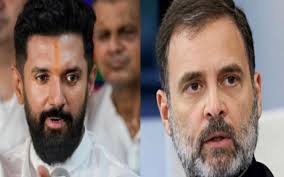
Chirag Paswan News: If Chirag Paswan enters Bihar politics, the polarization of Dalit votes may be in his favor. The way LJP-R leaders and supporters are seeing the image of CM in Chirag, if he really enters the fray, Dalit votes can be mobilized in his favor. Patna: The national president of LJP-R and the Union Minister has created a stir in Bihar politics for some time now. Chirag Paswan has said many times that his wish is to do politics by staying in Bihar. If the party wants, he will contest the assembly elections. Now all the cells of his party have given him the green signal to contest the elections. Chirag himself has also said that he will contest the elections only by staying in the NDA. He will not claim the post of Chief Minister. Nitish Kumar will remain the Chief Minister. The party is conducting a survey to see how much the party and the NDA will benefit from his contesting the elections. However, if Chirag contests the elections, it will definitely benefit the NDA. Of course, the difficulties of the Grand Alliance may increase. Congress leader Rahul Gandhi, who is part of the Grand Alliance, is eyeing the Dalit voters. Congress’s eyes on Dalit-EBC votes Rahul Gandhi’s attraction towards Bihar has increased. He is coming to Bihar again on the 6th of this month. This will be his fourth visit in the first six months of the year 2025. This time Rahul Gandhi will participate in the conference of Extremely Backward Castes (EBC) in Nitish Kumar’s home district Nalanda. Rahul will try to instill enthusiasm to unite Dalit, Muslim and EBC voters in the Constitution Protection Conference to be held in Rajgir, Nalanda. He has already been eyeing the Dalit section on the pretext of saving the Constitution. The population of Dalit castes in Bihar is about 17 percent. Rahul does not need to work hard for Muslim votes. Due to opposition to BJP and Narendra Modi, Muslims prefer Congress or ‘India’ block parties. Muslim population in Bihar is also around 18 percent. EBC population in Bihar is 36 percent. Now trying to bring back lost vote base Congress has dominated the country’s politics since independence. Among the upper castes, Brahmins remained close to Congress because they considered Pandit Jawaharlal Nehru a leader of their own caste. Congress also did not hesitate in promoting Brahmin leaders then. Among Dalits also, Congress had prepared its strong base by promoting its leaders. But, with time, Dalits left Congress. Regional parties formed on caste basis tore apart the social fabric of Congress. Kanshiram in UP and Ram Vilas Paswan in Bihar separated Dalit voters from Congress by forming their own parties. The remaining gap was filled by BJP’s Hindutva campaign. In the name of protecting the Constitution, Rahul Gandhi has made Constitution maker Ambedkar his ideal. Wherever he goes, he carries the Constitution book with him. Now he is trying to woo the large population of EBC Rahul Gandhi also knows that without wooing the large population of EBC, it is difficult to transform the Congress. The EBC population in Bihar is about 36 percent. EBC votes are now divided among many parties as per convenience. Congress has also started trying to take advantage of them. Rahul has been coming to Bihar so far to show Congress’s love for Dalits. This will be the first time when he will come to Bihar to participate in the EBC conference. However, Congress is not as anxious for OBCs as it is for Dalits and EBCs. Chirag Paswan surprised everyone with his decision If Chirag Paswan enters Bihar politics, then polarization of Dalit votes can be in his favor. The way LJP-R leaders and supporters are seeing the image of CM in Chirag, if he really enters the fray, Dalit votes can be mobilized in his favor one-sidedly. Posters of Chirag Paswan’s coronation were also put up recently. Chirag’s brother-in-law and LJP-R MP Arun Bharti also sees Chirag’s potential to become CM. The kind of results Chirag showed in the Lok Sabha elections, his hold on the public can be gauged from. Despite the division of LJP and being the only MP of his party, Chirag has presented a better example of his ability. About the author Sudhendra Pratap Singh Senior Digital Content Producer at Navbharat Times Digital. Started the journey in journalism with local newspaper Agrabharat. From here the caravan grew and reached NBT.com via Kalpataru Express, Hindustan News Paper, News18. Edited by: Sudhendra Pratap Singh•Written by: Omprakash Ashk| Courtesy : Hindi News
Denied entry into govt schools, Dalits in 1910 Kerala threatened to cut off grain supply
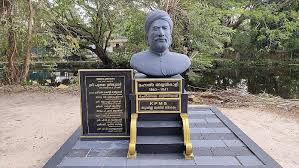
‘Identity, Conflict, and Counter-Narratives’, edited by Yagati Chinna Rao and Raj Sekhar Basu, explores the diverse facets of Dalit history and cultural experiences. At the beginning of the twentieth century, 927 out of every 1,000 Ezhavas in Travancore were illiterate; despite the removal of legal hindrances, Ezhava students were excluded from schools. Even if they were educated, employment opportunities were hard to come by, as they were not recruited into government service.A powerful political awakening had been spurred in Travancore by the 1891 G. P. Pillai-led agitation against the autocratic administration of the state and the denial to native communities of their due share in government jobs. The agitation, which adopted ‘Travancore for Travancoreans’ as its slogan, finally led to the drawing up of the Travancore Memorial (Malayali Memorial), a petition to the Maharaja signed by Nairs, Ezhavas, and Christians. However, the primary interest underlying the petition was that of the Nair community, and its major grievance was that the native upper castes were not being given adequate representation in the bureaucracy; the discrimination suffered by Ezhavas was only superficially touched on. The reply from the sirkar pointed out that ‘Ezhavas were a [contented] lot and if the government was to adopt a deliberate policy to give them a share in education and administration it would be unproductive and would create tension and strain communal harmony. Realising that the Malayali Memorial was a failure from their point of view, the Ezhava community, under the leadership of Dr Palpu, submitted in 1895 a lengthy petition, composed in English, to Sankara Subaiyer, the Dewan of Travancore, enlisting the disabilities suffered by them. Another memorandum was submitted to the Maharaja in 1896. Both of these, known as the Ezhava Memorials, demanded entry into government schools and government employment. In response, the Dewan assured the Ezhavas that they would be granted special schools, but this assurance proved insubstantial; only two primary schools were opened for them. Dr Palpu’s disappointment with the Dewan’s response gave birth to the Ezhava Mahajana Sabha in 1896, but the organisation was unable to gather any significant momentum. It was only with the formation of SNDP in 1903 under the spiritual leadership of Sri Narayana Guru that the Ezhava struggles and demands received a meaningful boost. The first objective of SNDP was to remove the obstacles in the way of Ezhava admission to government and government-aided schools. Later, the Yogam shifted its focus to establishing its own schools and colleges. Narayan Guru’s motto was ‘Strengthen through organisation, liberate by education,’ and this inspired the Ezhava community; under his guidance, SNDP attracted Ezhavas not only in Travancore but also in Cochin and Malabar. This does not mean that other communities were not seeking similar possibilities. They, too, organised themselves and began attempting to climb the social ladder, but their role was marginal in this game of power. English education, control over land, and access to government offices were the three variables that affected the status and power of every community at the time. By the 1930s, education had become a majorly contested political issue; while the lower castes that demanded education were often seeking escape from various forms of elite oppression, upper-caste interest in modern schooling was clearly linked to new opportunities for employment in the rapidly modernising states, the expanding bureaucracy and welfare network, and the economic opportunities emerging in the wake of Kerala’s economic integration with the world-system. The access enjoyed by different communities across the social spectrum to education, land, and employment was neither even nor characterised by the same calculations of advantage, but education was perceived by everyone as the door to economic upward mobility and the emerging political field. Inevitably, the powerful communities—those with economic clout and/or caste clout—triumphed. Apart from Protestant missionaries, Syrian Christians also invested a lot in education. By the end of the nineteenth century, we see the Syrian Orthodox Church registering a society to manage and coordinate its educational activities. From the 1880s, Indian Catholics started establishing schools, and they quickly made outstanding progress in this field: between 1882 and 1887, the number of schools under Catholic management increased from around 10 to over 1,000. A famous Syrian Christian leader of this time period, Father Immanuel Nidhiry, is reported to have said in a speech that an English school would be ‘a more prized asset than the golden crosses of churches’, which could be stolen. Clearly, the church accorded great importance to the matter of investing in education. It is important to note in this regard that Syrian Christians also received assistance in their efforts from the government in the form of liberal grants-in-aid. The experience of the less powerful communities, however, appears to have been different. The coastal Arayas also initiated efforts at modernisation between the late nineteenth and early twentieth centuries but did not succeed significantly. Despite its early efforts, the Araya reform movement failed to establish an adequate and sustainable network of secular community institutions to promote education and other skills needed for modern political and economic life. A large number of institutions sprang up, but they were short-lived, mainly due to financial constraints. Meanwhile, Southern Travancore was seized by a different kind of politics. Under the leadership of Ayyankali (1863–1941), Dalits started laying claim to public spaces, including schools. In 1898, Ayyankali, who later became the first Dalit nominated member in Sri Mulam Praja Sabha, broke caste rules by riding his villuvandi (ox cart) from Venganoor to Aralamudu market in Balaramapuram, heralding in a sense a more forceful era of Dalit assertion. In 1907, Ayyankali established the Sadhujana Paripalana Sangham, a movement that targeted the retrograde practice of keeping the Pulaya away from public roads and marketplaces. Several other Dalit organisations sprang up around the same time: Prathyaksha Raksha Sabha (under Poykayil Yohannan, later known as Kumara Guru Devan), Thiruvathamkoor Paraya Maha Sabha, Sidhanar Service Society, Sambavar Mahasabha, Cheramar Sangathana, and Sathya Vilasini Sangham. In 1904, the Pulayas under the leadership of Ayyankali set up a school
Ambedkarnagar: Minor Dalit girl kidnapped and then raped, case filed against 2 youths
A case of kidnapping and rape of a 15-year-old Dalit girl has come to light in Ambedkarnagar. On the complaint of the victim’s uncle, a case has been filed against Vikas Rajbhar and Dhoni under serious sections. Anurag Chaudhary, Ambedkarnagar: A case of kidnapping and rape of a minor Dalit girl has come to light in Ambedkarnagar, Uttar Pradesh. On the complaint of the victim’s uncle, the police have filed a case against two youths under several serious sections. A minor Dalit girl of Jalalpur police station area, whose age is said to be 15 years, had gone to her aunt’s house for a wedding. The victim’s aunt lives in Katka police station area. Two youths of the same village, Vikas Rajbhar and Dhoni, reached there after making a plan. On the midnight of May 30, when she went out for the bathroom, these two kidnapped her. After kidnapping the girl, both of them took her to a village. It is alleged that Vikas Rajbhar raped her there in the presence of Dhoni. Vikas also threatened the minor Dalit girl. Investigation underway The victim’s uncle has filed a case against accused Vikas and Dhoni under serious sections in the police station. In this regard, CO Jalalpur is investigating the entire matter. Jalalpur police station in-charge Santosh Kumar Singh said that a case has been registered on the complaint of the victim’s uncle. The matter is being investigated. About the author Vishal Chaubey I have studied journalism from Lucknow Public College of Professional Studies, Lucknow. I am working in Navbharat Times Digital. I am working on political and many other news related to UP and Uttarakhand. Earlier, I got a chance to report in Madhya Pradesh Assembly Election and UP Municipal Corporation Election. Courtesy: Hindi News