
Dalits, OBCs, Tribals, Intellectuals, and Religious Minorities Seek to Forge Unity
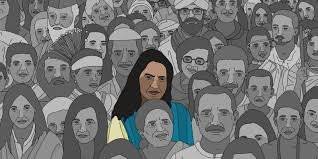
Growing concerns over the consolidation of political power and resources in the hands of a select few and the systematic exclusion of historically oppressed groups from public discourse, development, and democracy NEW DELHI – In a significant move to forge solidarity among the country’s marginalised communities, a diverse group of intellectuals, civil society activists, and representatives of Dalit, OBC, tribal, and religious minority communities met here on Friday and launched a new civil society initiative aimed at resisting the growing tide of communalism, authoritarianism, and economic marginalisation under the current BJP regime. The meeting was convened amid growing concerns over the consolidation of political power and resources in the hands of a select few and the systematic exclusion of historically oppressed groups from public discourse, development, and democracy. Speakers at the event emphasised the urgent need for unity among the 85% of India’s population—comprising Dalits, Other Backward Classes (OBCs), Adivasis, Muslims, Christians, and other marginalised groups—against what they termed “communal, Manuwadi, and fascist forces” attempting to divide the country along religious and caste lines. “This is not just a political call, but a social and moral responsibility,” said Dr Udit Raj, a prominent Dalit leader and former parliamentarian. “We have seen how the upper caste-dominated leadership has aligned itself with communal forces. We must now create our own leadership and solidarity among the marginalised to save democracy and the Constitution.” “The current regime and its ideological affiliates are not just attacking individuals—they are attacking the very idea of India as a diverse, secular, and democratic republic,” said Dr Raj. “Our Constitution guarantees equality, dignity, and justice to all. But today, only a few privileged sections are controlling resources, dictating narratives, and deciding who belongs and who doesn’t,” he added. “It is no longer just a matter of politics. It is a matter of survival for the majority of India’s population,” emphasised the former lawmaker. Challenging Economic and Institutional Capture Participants decried the increasing corporatisation of national wealth, arguing that public resources, jobs, education, and business opportunities are being systematically handed over to a small group of crony capitalists aligned with those in power. “The rampant privatisation of government assets is not just economic policy—it is social exclusion,” said Dr Syed Zafar Mahmood, former civil servant and president Zakat Foundation of India. “We must view this economic dispossession as a continuation of the social injustice we have historically faced.” “This is not merely a political crisis—it’s a moral and civilisational crisis,” said Dr Mahmood. “The socio-political contract of this country is being rewritten without the consent of its marginalised communities. The silence of the state and complicity of the media have normalised atrocities.” He warned that the privatisation of national wealth, destruction of public institutions, and unbridled media propaganda have pushed millions into joblessness and despair. “The bulldozer politics and criminalisation of dissent are all designed to silence the voices of the poor, the backward, and the minorities,” said Dr. Mahmood, who was also associated with the famed Sachar committee. The speakers argued that media, political institutions, and government bodies are now controlled by the same nexus of power, leaving no space for the marginalised to voice their concerns or participate meaningfully in the democratic process. Civil Society Must Lead Participants underlined that institutions of democracy—from Parliament to the judiciary to the media—are now largely captured by a Brahminical-capitalist nexus, which promotes majoritarianism while excluding the aspirations of the Bahujan masses. Historically, social and cultural movements in India have been led by upper caste individuals and groups, speakers noted. However, they pointed out that in the current political climate, these groups have largely aligned themselves with Hindutva ideologies, making it imperative for civil society from among the oppressed communities to assume leadership. “Dalits, minorities, backward and tribal people must take charge of their future,” said Sardar Ajmer Singh, a veteran activist. “We cannot depend on those who have always benefited from our exclusion to lead us out of oppression.” New Campaign for Social, Cultural Solidarity One of the key resolutions of the meeting was to promote inter-community bonding through practical and symbolic means, such as shared meals, joint celebrations, and collaboration in business ventures, to build trust and solidarity among diverse marginalised communities. “Social trust is our biggest weapon,” said Qayamuddin, another activist. “Only when we stand together can we resist hate and build a society based on justice and equality.” The campaign aims to become a nationwide movement, culminating in a large national gathering scheduled for June 15 at the NDMC Auditorium, Jantar Mantar in the national capital, where representatives from across the country are expected to participate and endorse the collective agenda. Questioning the EVM System Another point of concern raised at the meeting was the continued use of Electronic Voting Machines (EVMs) in elections. Several participants noted that even developed countries have phased out EVMs due to transparency issues and potential manipulation. “In a democracy, trust in the electoral system is paramount. When doubts persist, the system must be reviewed,” said Advocate Shahid Ali. “We demand a return to ballot papers to restore public faith in democratic processes.” A Moral Responsibility Speakers called upon all non-political citizens’ groups, students, professionals, and cultural collectives to come forward to defend the Constitution and democracy. “When democracy is under threat, neutrality is not an option,” declared Bhante Sumit Ratan. “History will not forgive those who stood silent while tyranny thrived.” Strong Representation, Broader Message The message was clear that India’s oppressed and marginalised communities will no longer wait for justice. They will organise, mobilise, and lead a new civil society movement to reclaim their rightful place in the democratic and constitutional framework of the country. Despite short notice, the event saw significant participation from activists, legal professionals, educators, and religious leaders. Among the prominent attendees were Syed Mahmood Akhtar, Sardar Ajmer Singh, Dr Anthony, AP Khan, Adv Shahid Ali, Bhante Sumit Ratan, Adv Satish Sansi, Irfan Baig, SM Shakeel, Naved Khan, Faiz O Hashmi, Usman Khan, Hakeem Jamaluddin, Rev Prakash
An Anti-Caste Counterculture Is Gradually Taking Root in UK Universities
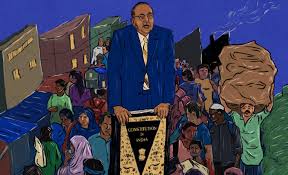
In a darkened lecture theatre in the School of Oriental and African Studies (SOAS) in London, about 50 people gathered on a Sunday morning for a special screening of Court by Chaitanya Tamhane, a movie that critiques casteism in the Indian legal system. Meanwhile, 400 kms away in northwest England, a book stand in the library of Lancaster University showcased a special collection on caste and Ambedkar. And in another part of the UK, at the University of Leeds, students gathered to commemorate Ambedkar’s birth anniversary and discuss plans for the newly formed Dr Ambedkar Society. These scenes from Dalit History Month celebrations in April this year in different parts of the UK represent a quiet but growing assertion taking root in many English university campuses. With more Dalit, Bahujan and Adivasi students going to the UK for higher education in recent years, they are creating a counterculture on campus, challenging how ‘India’ and ‘South Asia’ are understood among British and international students and faculty. Through organising lectures, workshops and film screenings, and by forming anti-caste and Ambedkarite student societies on campus, marginalised students in the UK are amplifying voices from within their communities on an international platform and contributing to the global understanding of caste and resistance to it. Some are taking the effort further by trying to push for their universities to recognise caste in their policies, to help address the familiar patterns of discrimination and structural inequality marginalised students experience in the UK. Creating a new cultural presence on campus With tens of thousands of Indian students enrolling in UK universities every year, it is commonplace to find ‘India Societies’ and ‘Hindu Societies’ among the many student-run clubs on campuses across the country. In fact, societies that promote Hindu religion and culture on campus have been around in the UK since at least 1991. Through these groups, students organise a variety of events including Bollywood nights, aartis, Diwali and Garba celebrations, and discussions on Indian politics and society Dalit students who came to the UK to study did not feel represented by any of these existing societies, said Abhishek Bhosale, PhD scholar and current President of the SOAS Ambedkar Society. When the society was formed in 2018, the idea was to create a safe space where Dalit students could get together, as well as to democratise and diversify the campus by putting forward their stories and perspectives, he said. In the past year, during Abhishek’s tenure as president, the society has organised several public events including a discussion with The Wire’s Sukanya Shantha and her lawyer Disha Wadekar on their petition in the Supreme Court about caste-based discrimination in Indian prisons. The society also organised discussions on Shahu Patole’s book Dalit Kitchens of Marathwada and Anand Teltumbde’s book Iconoclast. What impact do students hope to have through these events? Abhishek explained that by telling the story of caste in a university like SOAS with an international, politically engaged student body, sensitisation about caste inequalities can reach the wider world through these students when they return to their home countries. “We want to internationalise the authentic stories of people from Dalit backgrounds. For example, if not for the SOAS Ambedkar Society, there wouldn’t be a discussion in London on Patole’s book about Dalit food,” Abhishek said. They also try to bring the academic discussions to life through cultural events such as the Anti-Caste Film Festival they organised in April this year, where the Court was screened. With support from the filmmakers who obliged without a screening fee, the students also showed Jai Bhim Comrade, Fandry, Kaala, and Dr B R Ambedkar to a diverse audience of 60-70 members in London. Poster of the Anti-caste film festival organised by the SOAS Ambedkar Society (Left). A scene from the screening (Right). Photo: Abhishek Bhosale/ SOAS Ambedkar Society. SOAS is also home to the first known Adivasi student society in the UK, the Maki Munda Indigenous Studies Society. In the 2023-24 academic year, a few students from Jharkhand who were at SOAS on various government scholarships created this society to engage with Adivasi issues on an international platform. In their public events, they make it a point to invite Adivasi scholars and grassroots activists as panelists, often joining virtually from India, to share their indigenous knowledge and first-hand experiences. During a student fair in January 2024, the society also organised an Adivasi dance from the Chotanagpur region. “People write about the poverty among Adivasis, their trauma and rights abuse but rarely do they embrace Adivasi culture. As Adivasis, we constantly battle damnation and shame in being who we are. Through the dance, we wanted to showcase our rich heritage and give it due regard in an international space,” said Madhuri Xalxo, a PhD scholar and founding member of the society. A handful of universities in the UK now have Ambedkarite or anti-caste societies formed by students. The Ambedkarite Society of Edinburgh at the University of Edinburgh was formed in January 2024 as a response to various incidents of casteism that marginalised students experienced from fellow Indian students of privileged caste backgrounds. “I was very taken aback by the lack of sensitivity among many Indians. So we formed the society to promote an anti-caste consciousness among students from India, among diaspora and among international students,” said Aniruddha Mahajan, PhD scholar and founding president of the society. At the prestigious London School of Economics and Political Science (LSE), a few Dalit students started an LSE Ambedkar Society in January 2024 to give the iconic social reformer’s ideas due regard in his alma mater. Ambedkar enrolled as a student in LSE in 1916 and completed a master’s degree and a PhD from the university. Ritu Kochar, PhD student and founding president of the society, said, “I was very proud to join the same university where Babasaheb once studied. But when I came here, I realised that even though Ambedkar is featured prominently as a notable alumni of LSE, there is hardly any engagement
Train bullies target nun in Odisha: 18-hour cop ordeal after false charges by Bajrang Dal hecklers
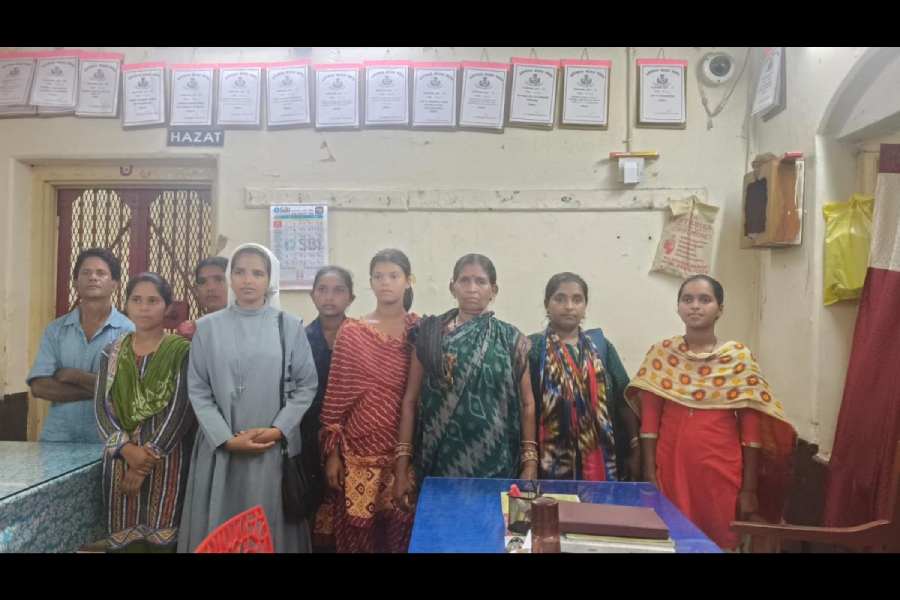
Nun Rachana Nayak was released after she proved that her six young companions — two men and four women — were all Christians by birth and were travelling for enrolment in training courses A 29-year-old nun was forced off a train by suspected Bajrang Dal activists and detained for 18 hours at a police station in Odisha on charges of trafficking in women and illegal conversions that an investigation later proved false. Nun Rachana Nayak was released after she proved that her six young companions — two men and four women — were all Christians by birth and were travelling for enrolment in training courses. In an indication of the insecurity among minorities, Catholic Church authorities advised members travelling with girls from the community to carry written consent from their parents and village pradhans, as well as baptism certificates proving they are Christian. The incident comes a year after the BJP assumed power in Odisha, and weeks after it released one of the killers of missionary Graham Staines and his two young sons, who were burnt alive in 1999 by a mob led by a Bajrang Dal activist. Nayak, a nun with the Holy Family Convent in Bhopal, and her companions were surrounded, threatened and forced off the train by a group of 30 at Khurda Junction, about 20km from Bhubaneswar. They were detained by the Government Railway Police (GRP) and allowed to leave only on Sunday evening following the intervention of three women human rights lawyers. “They had boarded the Rajya Rani Express from Berhampur on Saturday evening. One of the young men happened to be the nun’s younger brother,” Sujata Jena, one of the women lawyers, told The Telegraph. “They were headed for Jharsuguda, from where they planned to travel to Chhattisgarh where the girls would have received training in various skills and in spoken English.” Jena said the four young women had been selected through a rigorous process of career counselling, and all of them were Catholics. “Some people began heckling them on the train and accused the nun of involvement in religious conversions,” she said. Religious conversions, unless conducted through inducement, fraud or force, are not illegal. “As soon as the train reached Khurda Junction around 11pm on Saturday, around 30 people gathered and began abusing the nun and the four girls. They forced the entire group off the train,” Jena said. “Apart from religious conversions, they accused the nun of trafficking in women. The Railway Protection Force intervened and took all of them to the police station.” Jena added: “They pleaded they were all Christians and that the nun had nothing to do with religious conversions, but no one listened to them.” She said the women lawyers got to know about the matter on Sunday morning and rushed to Khurda. “During the investigation, it came out that all those detained were aged above 18 except for one girl, who was 17. All of them are literate,” she said. “All of them have now been released with full security and without any charges. The police treated them with dignity.” Jena said the women’s parents arrived at the police station and took them back to their villages, unwilling after the ordeal to let them go on to Chhattisgarh. The two young men too left for home. A GRP team escorted Nayak up to Bhubaneswar. Shankar Rao, inspector-in-charge, GRP Khurda, said: “The nun and the four girls know each other. All of them are Christians. The nun hails from Berhampur. She was involved neither in religious conversions nor trafficking. No FIR has been registered by the nun (against the hecklers).” Sources said the nun belongs to the Holy Family order, a local congregation founded in Kerala. Catholic Church sources in Delhi said that apart from written parental consent and baptism certificates, members travelling with girls had been advised to carry “a letter of admission to a senior secondary school to prove they are travelling for higher education”. Courtesy : Subhashish Mohanty, The Telegraph Note: This news is originally published on https://thetelegraph.com/ and is for use by the non-military/non-commercial community, especially those in the human rights sector.
How the road to conversion to Buddhism for 80 Dalit families in Surat was made difficult
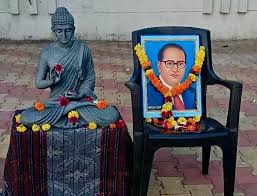
On May 14, Jahnvi Solanki, got ready for the most special day of her life. For 29-year-old Solanki, it was the day when her dream was coming true after a twoyear-long wait. Jahnvi along with her family of four converted to Buddhism along with 79 other families in Surat on the day. On the day, the 80 Dalit families from various areas of Surat gathered at Anand Buddha Vihar, a Buddhist temple in Amroli area of Surat to renounce Hinduism and embrace Buddhism. “It was an emotional ceremony for all of us. I was in tears as I chanted the Buddha Vandana and repeated the 22 vows of Baba Saheb (Baba Saheb Bhimrao Ambedkar). I felt liberated denouncing Hinduism, a religion that gave us nothing but humiliation. Now, I don’t belong to any caste or social hierarchy. We are all equals here,” says Jahnvi, who works as a teacher in a primary school in Surat. In the ceremony to convert from Hinduism to Buddhism, people are required to chant Bhudha Vandana and then denounce bais barbaadi (22 evils) and take vows devised by Baba Saheb Ambedkar when he converted to Buddhism – Possess the ability to engage in diverse social endeavours, Have the capacity to thwart all forms of antisocial inclinations, Be empowered to disseminate the compassionate and wise teachings of Buddha Be capable of affirming the principles of education, organisation and activism, Foster a cultured ethos within society Eliminate superstition from societal norms Steer society towards a humanistic ethos Safeguard any individuals self-respect Reject anti-Bahujan leadership Ensure the protection rights and interests of all Realise that where there is unity, there is power Promote a sense of brotherhood transcending caste distinctions Foster a sense of a unified and extended family, Understand that only truthful and humane communication will remove derogatory labels from Bahujans Strengthen morale through unity and foster a sense of societal resilience Achieve and implement genuine democracy Finance the construction of educational, medical and residential facilities Establish an orderly and disciplined societal framework Provide a platform for social thinkers to serve as guides Uproot injustice, inequality and oppression Eradicate Manuwad from indigenous communities Understand and practice that all humans are equal “My family and I have faced discrimination all our lives. My father moved to Surat in search of a job and has worked in the diamond industry for over 20 years. I was a child when I moved to Surat with my mother and my brother was born here. Back in our village, our home was at one end of the village in an area referred to as Valmikivaas (home for Valmiki). We were constantly subjected to discrimination and untouchability. When we moved to Surat, we thought things would change as it is a city and people are more educated. But we have faced discrimination in this city too,” she says. “I remember, when I was in class nine, the teacher gave me average grades in all subjects without checking my papers of half yearly examination. She said she can’t touch something that has been touched by a Dalit. I had to live with that as nothing much was done by school authorities despite complaints,” she adds. Fifty-seven-year-old Maheshbhai Maheriya’s family of four also embraced Buddhism on the day. “I had mentally turned a Buddhist and renounced Hinduism two years back but the formal conversion happened now,” says Maheriya who converted to Buddhism with his wife, son and daughter-in-law. “There is peace in Buddhism because everyone is alike. Buddhism teaches only peace and compassion. But most importantly it gave us a sense of joy. We are no longer looked down upon by those who think they are superior to us just because they were born to a certain caste considered higher in social hierarchy in Hinduism,” says Maheriya, who works in the Surat Municipal Corporation (SMC). Red tapism Noticeably, the journey to embrace a religion of their choice was not easy for the families. The journey began in the year 2023 when the families submitted applications to the district collector to formally adopt Buddhism as per the Gujarat Freedom of Religion Act, 2003. “Under Gujarat’s Freedom of Religion Act, conversion applications require an applicant to fill three forms – A, B and C. Form A, that has the details of the applicant with the his/her current religion and the religion he/she wants to adopt with reason. The Form A is required to be verified and approved by the district collector within one month. Then the applicant file Form B which is a testimony of certain witnesses who vouch that the conversion is not forced on the applicant. Form B is to be verified and approved within two months unless any irregularity is found. Then the applicant can finally file the Form C, the last form in the process that contains when and where he/she is going to convert and name of the person(s) or organisation who is going to oversee the ceremony. The last form is to be approved within a week to ten days,” said Dinesh Baudh, a member of Swayam Sainik Dal (SSD), a Ambedkerite organisation that helped the families with the process. “However, the process took more than two years with applications caught between red tapism and bureaucratic delays. For the first six months, we were running between offices to ensure that Form A is accepted by the office of the district collector. After almost a year, they approved the first form. Then we spent another six months running between offices to ensure that the testimony of the witnesses are not rejected. Then, after about three weeks of verifying Form B of each applicant, the issuance of approval letters was stalled as the district collector was transferred. It took another three months for the next official to resume the process,” said Baudh, who embraced Buddhism in 2019 in Nagpur. Noticeably, around 40,000 applications filed by the SSD and other Dalit rights organisations are pending in various districts. “The delay did not deter
Dalit rights and political tensions: Why is Mevani at odds with Congress leadership?
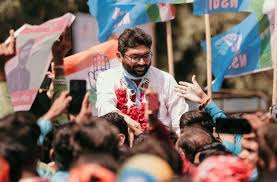
While I have known Jignesh Mevani, one of the dozen-odd Congress MLAs from Gujarat, ever since my Gandhinagar days—when he was a young activist aligned with well-known human rights lawyer Mukul Sinha’s organisation, Jan Sangharsh Manch—he became famous following the July 2016 Una Dalit atrocity, in which seven members of a family were brutally assaulted by self-proclaimed cow vigilantes while skinning a dead cow, a traditional occupation among Dalits. Also a lawyer, Mevani emerged as a prominent leader in the aftermath of the Una incident. He organized the Dalit Asmita Yatra, a protest march from Ahmedabad to Una, mobilizing thousands to demand justice and land rights for Dalits. The powerful movement, which made him famous across the country, prompted Rahul Gandhi to ensure that Mevani, unwilling to join the Congress at the time, contested as an independent MLA from Vadgam in the 2017 assembly elections. Let me recall, during my Gandhinagar stint (1997-2012), Mevani used to visit me at the *Times of India* office with detailed facts and figures on how dominant caste groups had deprived Gujarat Dalits of cultivating the land allocated to them during the heydays of land reforms. Ever since, I found that Dalit land rights were close to his heart. At that time, Mevani didn’t seem eager to enter politics—he joined the Congress only in 2021. After my retirement, I wrote a detailed article in my blog, Counterview, highlighting a book published by the Gujarat chapter of the People’s Union for Civil Liberties (PUCL) in 2014 on the organisation’s history. It controversially mentioned that RSS’ Gujarat mouthpiece, Sadhana, was a “fearless” journal, yet ironically omitted the contributions of human rights leaders Achyut Yagnik, Martin Macwan, and Gagan Sethi. On reading my blog, someone from the national PUCL called me, asking who could revive a “defunct Gujarat PUCL,” and I promptly named Jignesh Mevani. Too outspoken, a perpetual rebel, Mevani’s name wasn’t accepted, with the reason given that he was “too young” and “unpredictable.” Even after joining the Congress, Mevani, I find, hasn’t changed a bit. Despite being an MLA, his public stance suggests he remains a perpetual rebel. As before, he still believes in advocating for what he considers Gujarat’s most vulnerable populations—Muslims and Dalits—insisting that not only has the BJP failed to provide them relief, but atrocities against them have dramatically increased. Indeed, one of his passions remains standing up against atrocities, at a time when opposition parties—be it Congress or the Aam Aadmi Party—remain silent for fear of losing non-Dalit, non-Muslim votes. He not only tweets when such incidents occur but also visits affected locations and organizes demonstrations. He once told me, “Unless the Congress stands by the oppressed and fights for their rights, it won’t revive in Gujarat.” A recent incident (December 2014) involving Payal Goti, a Patel community girl from Amreli district, demonstrated how political leaders, including Congress’ Paresh Dhanani, stood by her and even organized protests when she was allegedly mistreated by police investigating a fake letter issued in the name of local MLA Kaushik Vekariya. However, when a much worse incident occurred in the same district—when a 20-year-old Dalit youth, Nilesh, was murdered simply for calling a non-Dalit boy “my son” this May—none, including Paresh Dhanani, are known to have spoken up. To quote a Dalit leader from Amreli: “There is a reason for Jignesh Mevani to feel suffocated. Congress leader Shaktisinh Gohil lent his support (both when the incident occurred and later in Parliament) to Payal Goti, which is commendable. But why has none, including Gohil, spoken out on the Dalit boy’s murder?” The frustration seemed to reach a peak when, without directly naming Congress leaders, Mevani tweeted a few days ago: “Now even the leader of the other party has said that you’re filled with dud (exploded) cartridges. Remove them—what are you waiting for? B-Team, dud cartridges, those who are making deals with the opposing camp, wedding horses—why hesitate to remove all these? If not for me, at least listen to Rahul ji!!” This led to outrage within the Congress, with a social media post by Hemant Parmar protesting how even respected alternative media outlets were suggesting Mevani might join the BJP. According to Parmar, it all started when “Mevani alleged that certain Congress leaders—those selectively chosen and those acting in favor of the BJP—as well as MLAs and MPs who won from reserved seats, have remained silent on Dalit atrocities.” Parmar laments that media outlets have twisted the narrative, implying he is “strategically benefiting the BJP.” He argues these outlets are “discussing the possibility of Mevani joining the BJP” and asks, “Who are they trying to benefit? After Mevani’s allegations against Congress leaders aiding the BJP from within, why is the effort now to turn the accusations back on him?” While sources in the BJP have told me there is “absolutely no possibility of Mevani joining us,” a Congress insider claimed that some within Shaktisinh Gohil’s circle have been planting stories suggesting he may be drifting toward the BJP. “It is the same people who secretly intend to join the BJP when the time is right,” I was told. Given ongoing speculation about who from Congress might join the BJP—especially since figures considered deeply committed to Congress ideology, like Arjun Modhwadia, have switched sides—Parmar insists: “In today’s Congress: the loudest voice against the BJP is Mevani; the strongest voice for the marginalized is Mevani; the boldest leader is Mevani; the only leader in Gujarat Congress who can directly take on the BJP is Mevani.” Courtesy : Rajiv Shah, Counterview Note: This news is originally published on https://counterview.com/ and is for use by the non-military/non-commercial community, especially those in the human rights sector.
Bihar News: Chirag Paswan Slams CM Nitish Kumar Over Law & Order In Muzaffarpur Dalit Girl Gangrape-Murder Case
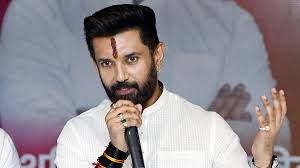
The relationship between Nitish and Chirag had soured after LJP leader, son of late Ram Vilas Paswan, fielded candidates on a number of seats against JD (U) candidates in the last assembly election, hitting latter`s chances in 36-40 seats. Patna: Union Minister Chirag Paswan has written to Bihar chief minister Nitish Kumar, raising questions on the state`s law and order situation and public health infrastructure even as LJP (RV) chief attacked the state government at a time when assembly polls are only months away. Chirag has lashed out at the Nitish government against the backdrop of a 9-year old Dalit girl losing her life following a brutal rape. The Dalit girl who was raped and brutally assaulted by the accused in Bihar`s Muzaffarpur district had succumbed to her injuries at the state-run Patna Medical College and Hospital (PMCH) on Sunday. She was allegedly being made to wait in an ambulance for hours before she was finally admitted to the state`s premier public hospital on Saturday. The hospital administration has rejected these allegations. The relationship between Nitish and Chirag had soured after LJP leader, son of late Ram Vilas Paswan, fielded candidates on a number of seats against JD (U) candidates in the last assembly election, hitting latter`s chances in 36-40 seats. However, both leaders buried the hatchet as their recent ‘bonhomie’ in public suggested. Earlier, senior leaders of RJD and Congress had lashed out at Chirag and Hindustani Awam Morcha (HAM) chief and former chief minister Jitan Ram Manjhi (both Dalit leaders) for keeping mum on the rape-murder incident. Both parties also demanded resignation of state health minister and senior BJP leader Mangal Pandey. While the accused has been arrested, a probe has been ordered into what happened at PMCH. The heart-rending incident of Dalit girl`s rape and murder exposes the failure of Bihar’s law and order, social awareness and public health, Chirag remarked, who is likely to make a formal announcement about contesting assembly election at a public rally, to be held in Ara on Sunday. He is also expected to contest assembly election from the state`s Shahabad region. Chirag in his letter pointed out that the victim had to wait for six hours before she was admitted to the hospital. He said that doctors, and administrative staff of the hospital were as guilty as the accused in the heinous crime. “They did not provide prompt treatment and lost precious time. This is not just negligence, but a crime against humanity,” he wrote. Chirag said his party’s leaders have met the victim’s family and assured them justice. “But justice will be incomplete and unacceptable unless strict and transparent action is taken against the accused at the administrative level.” He said that an inquiry should be conducted into the alleged negligence of the medical staff. “It is not simply a matter of death as it has become a symbol of the failure of our social system and a failure of our constitutional responsibility. If the administration stays silent, this silence will become the biggest crime,” he asserted Courtesy : Dheeraj Kumar, TFPJ Note: This news is originally published on https://thefreepressjournal.com/ and is for use by the non-military/non-commercial community, especially those in the human rights sector.
3 injured in attack on Dalit wedding procession in U.P.’s Amroha; caste abuse alleged
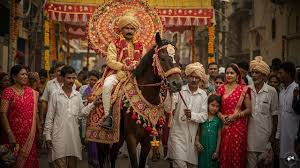
Police said they had to resort to mild force to disperse the crowd and restore order; in view of the heightened tensions, a police force has been deployed to maintain law and order At least three people were injured on Tuesday (June 3, 2025) after a wedding procession by members of a Dalit community was pelted with stones and hit with rods and sticks in Rahdra village in Amroha, Uttar Pradesh. Two daughters of Rampal, a local belonging to the Jatav (Dalit) community, were getting married. Of the two wedding processions on Monday, the first was from Hasanpur, and the other, from Moradabad, arrived later. The baraat (wedding procession) of Sonam Kumari, the older daughter, arrived from Moradabad. The incident took place during the second procession. “On June 2, a wedding procession was being carried out around 5.30 p.m. Around 15-20 people from the same village, belonging to the Yadav community, forcefully entered the wedding procession and stopped us from dancing. When we opposed it, all the above people used casteist words and attacked us with sticks, rods, knives, and sharp-edged weapons to kill us. I, too, received an open injury on my head and many other small injuries,” Kanhaiya, the complainant, and a resident of Rahdra, said. He said many in the procession received knife injuries. “The Yadavs said, ‘how can people from our [Dalit] community take out wedding processions’?” Mr. Kanhaiya, who belongs to the Jatav community, alleged. Charges have been filed under Sections 191(2) (rioting), 115(2) (voluntarily causing hurt), 109 (attempt to murder), 351(2) (criminal intimidation) of the Bharatiya Nyaya Sanhita (BNS). Police have also invoked the Scheduled Castes and Scheduled Tribes (Prevention of Atrocities) Act, 1989 (Amendment 2015). The case was registered at the Gajrala police station. A video purported to be of the chaotic scene has surfaced on social media. Police said they had to resort to mild force to disperse the crowd and restore order. In view of the heightened tensions, a police force has been deployed to maintain law and order. A senior police officer said that the incident had occurred because the road was narrow, loud music was playing in the background, and the people in the wedding procession could not provide space for the Yadav vehicles to pass. “This led to an argument, which later turned into an altercation,” the officer said. Courtesy : Samridhi Tewari, The Hindu Note: This news is originally published on https://thehindu.com/ and is for use by the non-military/non-commercial community, especially those in the human rights sector.
Dalit youth thrashed in Rajasthan for drinking water from pot, three held
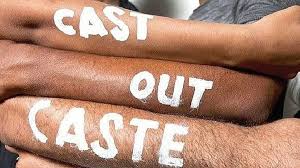
The victim’s family claimed that police initially tried to ignore the case and remained tight-lipped even as the incident began gaining traction on social media. JAIPUR: In a shocking case of caste-based discrimination, a Dalit youth was allegedly abused and beaten in Rajasthan’s Nagaur district for drinking water from a pot kept outside a grocery shop. The incident took place on Sunday evening in Kantia village under Khinvsar subdivision. The victim, Omprakash Meghwal, a resident of Aau village, had stopped near the shop with a friend while on his way to a relative’s function. He used a metal tumbler (lota) to drink water from a pot placed outside the store. Soon after, the shop owner Kaluram Jat and two others — Narsiram and another man also named Omprakash had asked him his name and caste. When they found out that he belonged to a Scheduled Caste, they allegedly shouted casteist abuses, beat him up, and threatened to kill him. Omprakash said he tried to clean the pot with sand to calm them down, but the men continued to assault and humiliate him. Scared, he ran and took shelter at a relative’s house. Later that night, around 11:30 p.m., the accused allegedly returned in a camper vehicle, circled the locality several times, and dragged the vehicle’s tyres in an apparent attempt to intimidate the residents. The act reportedly caused panic among the largely poor Dalit families in the area. Omprakash filed a police complaint the next day. A team led by Deputy Superintendent of Police Rampratap Vishnoi visited the village, but the accused had already fled. After searches, police detained all three. Nagaur SP Narayan Togas said they have been booked under the SC/ST (Prevention of Atrocities) Act and other charges. A detailed probe is on. The victim’s family claimed that police initially tried to ignore the case. Police officials remained tight-lipped even as the incident began gaining traction on social media. Even on Tuesday, local police avoided giving clear answers when asked by reporters. Action was taken only after mounting public pressure and the video went viral. The incident has triggered widespread outrage. Azad Samaj Party chief and Nagina MP Chandrashekhar Azad strongly condemned the attack, calling it a grim reminder of entrenched caste discrimination in India. “In Kantia village, Dalit youths were abused, humiliated, and forced to clean utensils just for drinking water. This isn’t a mere dispute—it’s a reflection of systemic, centuries-old hatred,” he said. “Does a Dalit still not have the right to drink water?” This incident is similar to a 2022 case in Jalore, where a Dalit student was beaten to death by a schoolteacher for drinking water from a pot meant for upper castes. Courtesy : Rajesh Asnani, TNIE Note: This news is originally published on https://thenewindianexpress.com/ and is for use by the non-military/non-commercial community, especially those in the human rights sector.
‘How Dare You Join a Brahmin Wedding?’ — The Incident That Awakened Jyotiba Phule’s Revolt Against Caste
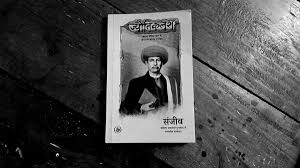
A heartbreaking childhood incident of exclusion and caste-based humiliation laid the foundation for Mahatma Jyotiba Phule’s lifelong fight against Brahminical dominance and social inequality. In the history of India, few figures stand out as courageously and selflessly committed to the cause of the oppressed as Mahatma Jyotiba Phule. One early incident from his childhood left such a deep scar on his conscience that it sparked a lifelong struggle against casteism, Brahminism, superstition, and social hypocrisy. This formative event is powerfully depicted in the book ‘Jyoti Kalash’, written by renowned Hindi author Sanjeev — editor of the iconic magazine Hans, a columnist, and recipient of the Sahitya Akademi Award. Published by Rajkamal Prakashan, the book serves as a chronological documentation of real-life events from Phule’s life. In its very first chapter, Sanjeev recounts the incident that led young Jyotiba to become fiercely committed to the cause of Dalits and backward communities. According to the book, Jyotiba receives a wedding invitation from his classmate, Paranjpe. The note ends with an affectionate threat: “If you don’t come, our friendship is over.” Excited, young Jyotiba begins to prepare himself for the grand wedding procession. Seeing his son dressed up, his father Govindrao asks, “Where are you going?” “To Paranjpe’s wedding procession,” Jyotiba replies cheerfully. Govindrao is reminded of bitter experiences of humiliation in Brahmin weddings in the past. The memories sting like thorns. Still, not wanting to dampen his son’s spirit, he says nothing. The wedding procession is in full swing, with drums, music, and fireworks. Paranjpe, the groom, is dressed regally and seated in a decorated chariot alongside his younger brother. Amidst the festive chaos, there’s a problem — the man in charge of setting off the ceremonial fireworks, Patil, is missing. People murmur anxiously, wondering who will light the fireworks now. When the boys are asked if anyone can do it, most express fear. But Jyotiba steps forward and says, “I’m not afraid.” He picks up the firework launcher and begins firing celebratory shots into the sky, leading the procession. Just then, a heavily adorned Brahmin man — wearing a tripund (sacred ash mark) on his forehead and a traditional turban — steps forward and stops Jyotiba. “You…?” the man sneers. “Aren’t you the son of Govindrao Ghonhe?” “Yes,” Jyotiba replies. With visible disdain, the Brahmin thunders, “How dare you join a Brahmin wedding procession?” “I was invited,” Jyotiba responds. “Invited, huh? What Paranjpe did was wrong, but you — how could you forget that you’re a Shudra? And this is a Brahmin wedding. Have you lost your mind? Since when did you become equal to Brahmins?” A more compassionate Brahmin steps in and tries to pacify the situation. “Let it go — he’s just a boy. He was invited by his friend. He even handled the fireworks.” “Let him stay — but only at the back,” the turbaned man declares. “With the Ramoshis and the baggage carriers.” Humiliated, Jyotiba moves to the back of the procession. A Ramoshi — a man from a lower caste — standing nearby approaches him and says, “Thrown out by the Brahmins, huh? What were you thinking? Did you forget how Brahmins treat Shudras and untouchables? Go home, child! The garlands aren’t for you. The music isn’t for you. The lights, the celebration — none of it is for you. You’re a Shudra. Thrown out, just like always.” Heartbroken, Jyotiba returns home. His father notices his downcast face. “What happened? Didn’t you go?” Jyotiba narrates the whole humiliating incident. His father listens in silence, watching his son’s darkened face. Memories of his own past humiliation come flooding back. “I wanted to stop you,” he finally says. “But I stayed quiet, fearing it would break your spirit.” After a pause, he adds, “They didn’t beat you, didn’t punish you — isn’t that mercy enough? You were wrong to go.” Tears well up in Jyotiba’s eyes. Govindrao consoles him: “No, son. We can never be equal to them. They are Brahmins, and we — we are Shudras.” A broken Jyotiba is still reeling from the incident when the Ramoshi appears again and says bitterly, “Why did you even go? I never go. It’s our fate — they were born Brahmins, you a Shudra, I a Ramoshi. What can we do?” That night passed slowly and painfully. For Jyotiba Phule, it was perhaps the first personal brush with caste-based humiliation — one that deeply shook his soul and awakened in him a resolve to challenge the unjust social order. In ‘Jyoti Kalash’, Sanjeev documents many such untold and poignant moments from Mahatma Jyotiba Phule’s life — stories he lived, witnessed, and bravely fought against. The book brings to life the emotional, social, and ideological evolution of one of India’s greatest social reformers. Courtesy Rajan Chaudhary, The Mooknayak Note: This news is originally published on https://themooknayak.com/ and is for use by the non-military/non-commercial community, especially those in the human rights sector.
Bhootgaon by Naveen Joshi: The Heartbreaking Tale of Love, Caste, and a Vanishing Village That Will Haunt You Forever
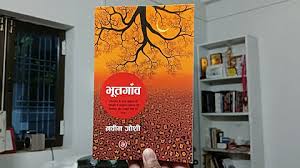
Naveen Joshi’s novel “Bhootgaon” uncovers the harsh realities of caste discrimination, emotional abandonment, and the heartbreaking fate of depopulated villages in the hills of Uttarakhand. Set against the complex backdrop of modern Uttarakhand’s history, Bhootgaon, a novel by acclaimed writer Naveen Joshi, is a deeply poignant narrative that captures the disturbing consequences of development gone wrong and the gradual desertion of hill villages. Published by Rajkamal Prakashan, this novel stands out for its heartfelt portrayal of caste-based oppression, social exclusion, and generational trauma that continues to shape the lives of rural communities. The story begins with retired army soldier Anand Singh and his loyal dog Sheru, who roam through an almost abandoned village nestled in the scenic hills of Uttarakhand. But beneath the picturesque setting lies the bitter truth of families forced to migrate to cities in search of livelihood, leaving behind hollow homes and haunted memories. The novel’s main protagonists, Virendra Singh Negi (aka V.S. Negi) and Heera (formerly Hiruli), are introduced gradually as the narrative alternates between Anand Singh’s quiet reflections and Virendra’s tumultuous life. As the chapters progress, it is revealed that Anand Singh is actually the younger brother of Virendra, adding a surprising twist that binds the multiple storylines together. Joshi masterfully uses the lens of Anand Singh’s conversations with his dog to reflect on the deserted village’s past, narrating the stories of families long gone. Eventually, he delves into his own family’s saga, drawing the reader into a powerful tale of love, caste discrimination, and social alienation. Heera, originally Hiruli, is the daughter of Charanram, a landless laborer of a lower caste. She falls in love with Virendra, the son of a Rajput (Thakur) family. Their elopement sparks a social upheaval that leads to the near destruction of both families. The couple eventually finds shelter in the home of a senior bureaucrat in Lucknow. They marry in an Arya Samaj temple, and start a new life. Virendra becomes V.S. Negi, and Hiruli becomes Heera. Living in a respectable urban household, the couple tries to adapt to city life. They become beloved to the childless bureaucrat couple they serve and are treated almost like their own children. Virendra and Heera have two children—Vinayak and Meera. For a while, life seems peaceful. However, the bureaucrats eventually renounce the world and retreat into spiritual life. Virendra secures a permanent government job, but the caste guilt begins to fester. He starts to view his marriage to Heera—a woman from a lower caste—as a mistake. His internalized caste superiority and societal pressures begin to erode the love and dignity in their relationship. Heera, trapped in an intercaste marriage, silently suffers daily indignities and emotional neglect. Her anguish becomes a central theme of the novel, portraying how deeply rooted caste prejudices can destroy personal happiness even in the modern world. In the village of Sataur, where Heera was born, the repercussions of their elopement are brutal. Her father, Charanram, is beaten half to death by upper-caste men. The villagers hurl blame and abuse at him, accusing him of failing to control his daughter. He is given an ultimatum—either bring Hiruli back by dawn or leave the village forever. Even Virendra’s own family, despite being Rajputs, faces social ostracism. No one is willing to arrange a marriage for his sister, who eventually dies by suicide due to the shame and isolation. Throughout the novel, Joshi sensitively lays bare the deep-seated caste divisions that persist despite social progress. The narrative reaches its emotional climax when Heera, emotionally wrecked by years of mental torment and social rejection, dies. Virendra dies a few years later, consumed by guilt and remorse. In the final chapters, Virendra and Heera’s children—Vinayak and Meera—return to their ancestral village, only to find it transformed into a ghost town—Bhootgaon. They meet their uncle Anand Singh, now mentally unstable after the death of his dog Sheru, who was taken by a tiger. The once-vibrant village now echoes with silence, grief, and memories. Bhootgaon is not just a story of two individuals; it is the story of a community, a region, and a social system where development, migration, and caste continue to intersect in painful and poignant ways. Naveen Joshi delivers a deeply human story that forces the reader to confront uncomfortable truths about love, identity, and belonging. Courtesy : Rajan Chaudhary, The Mooknayak Note: This news is originally published on https://themooknayak.com/ and is for use by the non-military/non-commercial community, especially those in the human rights sector.