
“When has there been no heat?” Dalit lives in climate crisis
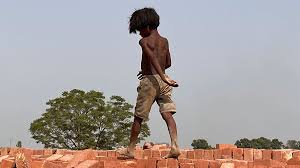
India has been grappling with intense heat waves in recent years and is witnessing a burgeoning literature dealing with heat stress. Out of 28 states in India, 23 have made their Heat Action Plans to manage heat stress in their respective jurisdiction. From media reports to academic studies, one aspect that is always at the centre is the vulnerable groups who are at risk of heat waves and are divided mainly based on two conditions- gender and poverty. These are the two overriding categories under which the identity of caste is subsumed in the discourse of heat stress vulnerability. I find the ongoing discourse to be caste blind: on one side, there is a reluctant acknowledgement in some places that people from the marginalised castes are at risk, while on the other side, questions such as who these marginalised caste people are, what are their experiences of suffering, and how their vulnerability is exacerbated by heat stress and climate change remain largely unexplored. “When has there been no heat? When have there not been high temperatures? High temperatures have always been there. There might be a difference of a degree or two. This year the high temperature is 46, last time it might have been 45. High temperature is a fact every year and bring immense pain every time. Only someone who has worked at the brick kilns or is currently working can really understand what this pain feels like.” This is how Ram Kumar, a Dalit brick kiln worker from Rajasthan, described his plight of facing the brunt of extreme heat stress. In the Hindu caste order, Dalits have historically been relegated to ritually polluted occupations, which not only are considered polluted by others but are also insidious to the well-being and health of Dalits. One such example is that of the Brick kiln industry, which employs more than 10 million migrant labourers who are predominantly from Dalit and Adivasi communities. Various estimates suggest that more than 50% of labourers at Brick Kilns come from Dalit communities. Working at Brick Kiln requires working under the heat stress at every stage of the work, from the procurement of the clay, its tempering and moulding, drying of the constructed bricks, firing (which exposes the worker to even more heat), to loading and unloading of the bricks. Under these circumstances, what Ram said about heat becomes more relevant to reflect on. The Dalit labourers at Brick Kilns have always suffered the afflictions of heat waves and are the worst affected by them; however, a discussion on occupational heat exposure of informal labourers has only started recently under the name of climate change. In another conversation, a Dalit migrant worker from Bihar shared, “We have no option but to suffer; the dwelling stays very hot inside throughout the day and night- we are forced to sleep outside.” This quote highlights the poor infrastructure of his dwelling and the lack of adequate cooling mechanisms. For people like him, the shade of a tree is the only respite during heat waves. During frequent visits to brick kilns in western Uttar Pradesh, I always encounter labourers taking shelter under the trees during the afternoon, while their small children play around them in the nearby fields. Generally, moulders at the brick kilns are provided with solar panels to meet their electricity consumption; however, these panels can only help them to charge their phones and light one bulb at night to work. From March to June, when there are frequent heat waves, moulders shift their timings to early morning and late night and live in a continuous sleep deficit. Shifting work timing is one of the few aspects under their control, as the production of bricks is based on the piece rate wage system, which, despite being exploitative, offers them some freedom to choose the timing of work. However, the substandard living conditions of kiln workers, marked by a lack of sufficient potable water, basic sanitation, and adequate shelter, remain entirely beyond their control. For instance, the roof of their 5-feet-high dwelling is made up of tin, which is considered a heat-trapping material, and therefore, in times of heat waves, the tin roof leads to an increased temperature inside the hut day and night, forcing them to take shelter under the open sky. Many other factors, including child labour, characterise the brick kiln industry. On my routine visits to brick kilns, I also encounter numerous small children, aged between 5 and 14, playing with mud bricks. They do a variety of labour owing to the piece wage rate system, which incentivises child labour, ranging from moulding to loading and unloading bricks. Except for very rare kids, most children’s fate at the brick kilns is the same. With their birth, their fate is predestined to work at the kilns- inheriting a life of toil not by choice, but by caste. All the children I interviewed had been helping their parents with moulding since their early years. Many of them bore visible injuries and rashes — mosquito bites from sleeping outside their hutments. As Ramesh explained, “the dwelling releases hot gas at night, making it difficult to sleep indoors.” In addition to this, several children had sustained injuries from heavy bricks falling on their hands and feet while working. Most of the time, Kilns are situated at rural-urban peripheries, which are far from the local schools, and because of the absence of transport and money, the children assist their parents to finish their targets. Because of their Dalit identity, many times they are subjected to caste slurs that are normalised in the guise of jokes by the local employees. French sociologist Edgar Morin brought the concept of polycrisis, which refers to a set of interwoven and overlapping crises involving complex inter-solidarity of problems, antagonisms, crises, uncontrollable processes, and the general crisis of the planet. The life of Brick Kiln workers is an example of this polycrisis, which is exacerbated by anthropogenic climate change and where debt bondage, piece rate
Beyond Binaries: The Kerala High Court Judgement On Transgender Parenthood
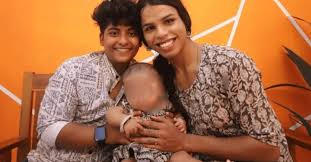
The Kerala High Court recently ruled in favour of a writ petition filed by a transgender couple seeking the issuance of a birth certificate for their child which mentioned them as “parent” rather than “mother” and “father”. n a recent historic and landmark judgement, one that could ripple beyond Kerala and can have a resounding impact on the institutional visibility of the queer community, the Kerala High Court recently ruled in favour of a writ petition filed by a transgender couple seeking the issuance of a birth certificate for their child which mentioned them as “parent” rather than “mother” and “father”. Stating the concerns raised as valid, the single Judge Bench of Ziyad Rahman A.A., J., held that the issuance of a certificate in the format as prescribed under the provisions contained in the Registration of Births and Deaths Act, 1969 (RBD Act) and Kerala Registration of Births and Deaths Rules, 1999, can cause severe difficulties to the child in life ahead. The Court also asserted that the laws that are not in line with societal changes need to evolve, and the Court must intervene to address the concerns of the concerned parties. Birth certificates being foundational documents determine access to a host of rights. Thus allowing the use of gender-neutral terminology, this ruling holds significant importance as it challenges one of the many structural ways the state invisiblises the queer community. The case in detail: challenging the binary institutional framework The couple, Ziya Paval (transgender woman) and Zahad (transgender man), had made waves back in 2023 when they became the first known transgender couple in India to have a biological child. Upon birth the Kozhikode Corporation issued a birth certificate that listed Zahad as the “mother (transgender)” and Ziya as the “father (transgender)”, ignoring and contradicting their self-identified genders. The couple felt distressed, stating that such a discrepancy could create serious problems in the life of the child—with regards to identification documents and school admission— since the biological mother of the child identified herself as a male under the Transgender Persons (Protection of Rights) Act, 2019, and was living as a male member of the society. Source: YourStory They approached the Kozhikode Corporation to issue a new birth certificate describing them simply as “parent” rather than mother and father or mentioning their gender. The Corporation dismissed their request, stating that the certificate was prescribed in accordance with the format contained in the RBD Act 1969 and the Kerala Registration of Births and Deaths Rules, 1999, which only accommodates the traditional binary nomenclature. The couple’s request was not entertained, as the corporation held that there were no other statutory provisions under which they could issue an alternative gender-neutral birth certificate. This decision led the couple to file the writ petition seeking a legal route to reinstate their fundamental rights of equality and the right to self-perceived gender identity as stated under the Transgender Persons (Protection of Rights) Act, 2019. This decision led the couple to file the writ petition seeking a legal route to reinstate their fundamental rights of equality and the right to self-perceived gender identity as stated under the Transgender Persons (Protection of Rights) Act, 2019. ‘Since scientifically there’s some contradiction in the fact that males give birth to a child, the petitioners requested the authorities to avoid the names of the father and mother but simply write ‘Parent’ to avoid further embarrassment which the third petitioner (child) would have to face during her lifetime, viz., school admission, Adhar Card, PAN Card, Passport and various other documents including job and connected matters,’ the transgender couple had explained in their petition. The apprehension of discrimination based on lived realities of transgender individuals The Kerala Court evoked the National Legal Services Authority v. Union of India (2014) judgement where the Supreme Court legally recognised the “third gender”/transgender persons and ruled that they are entitled to the fundamental rights and protection under the Constitution. Represented by Padma Lakshmi, Kerala’s first transgender lawyer argued that the rejection of their request violated their fundamental right to equality under Article 14 of the constitution. The Court maintained that the grievance raised by the couple can not be sidelined since the parental status of the couple was totally in contradiction to the life pursued by them presently. Thus, the confusions and prejudices, as perceived by the couple, in prospect were genuine and very likely to occur. Source: Rediff The Court also adjudicated that even though the child—the recipient of the birth certificate— was not a transgender person, his identity was linked and inseparable from that of the parents, who are a transgender couple, thus providing him equal protection under the Transgender Persons Act 2019. Legal precedent and the evolving nature of society Further, the court stated that the law cannot remain static, and the laws need to evolve in accordance with the changes in the society and lifestyle of people. This was consolidated by referencing the Supreme Court verdict in the Badshah v. Urmila Badshah Godse (2014) judgement, where the Supreme Court had addressed the importance of adopting different approaches in “social justice adjudication” and “social context adjudication” when interpreting laws. This meant that courts need to interpret the legal meaning reflecting the lived realities rather than being congested by the rigid and outdated categories. This statement signified the importance of purposive interpretation of existing laws to accommodate arrangements that usually expunge the queer community, thus allowing one to look beyond cis-heteronormativity. The Court also pointed out that the RBD Act was framed considering the binary concept of gender, and there was no concept of legal recognition of the third gender. The Court also pointed out that the RBD Act was framed considering the binary concept of gender, and there was no concept of legal recognition of the third gender. It held that necessary modifications could be made in appropriate cases where the interests of the transgender persons were involved. It also held that when statutory language does not account for the societal transformation,
Religious Leaders Fought Fiercely to Win Dr. Ambedkar’s Conversion — Who Almost Succeeded?
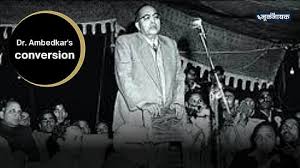
Discover the historic moment when Dr. B.R. Ambedkar declared his decision to renounce Hinduism and explore the untold stories behind his spiritual journey and social reform. The book A Part Apart: The Life and Thought of B.R. Ambedkar gives us insight into when Dr. B.R. Ambedkar’s direct inclination toward religious conversion began. By weaving together facts from various such works, the book Dharmaantaran: Ambedkar Ki Dhamma Yatra — compiled by Dr. Ratan Lal and published by Rajkamal Prakashan — brings forth many untold stories about Ambedkar’s path toward Buddhism. By mid-1935, rumors had spread that Babasaheb Dr. Ambedkar was preparing to retire from public life. However, any thoughts he had about withdrawing were soon swept aside by a major decision. In August 1935, Ambedkar wrote to Bombay Province’s Home Secretary Henry Knight, saying he would formally end the Kalaram Temple Satyagraha by publicly announcing his renunciation of Hinduism. Two months later, Knight reminded Ambedkar of this letter. On October 11, 1935, Ambedkar confirmed in a reply that he had not forgotten. Meanwhile, preparations were underway for a historic mass gathering of his followers at Yeola. Letters written by Ambedkar to Bhaurao Gaikwad reveal that the plan to organize the Yeola Conference had been in motion since 1932. Finally, on October 13, 1935, that historic day arrived when Ambedkar made his monumental announcement at Yeola. Describing the unbearable suffering of the untouchable community, Ambedkar declared his intention to leave Hinduism in these powerful words: “Unfortunately, I was born with the stigma of an untouchable Hindu. This was beyond my control. But to shake off this degrading status and improve my condition — that is within my power, and I will certainly do it. No one should have any doubts about this. Today, I declare to you that I will not die as a Hindu. After renouncing Hinduism, which religion the untouchables choose will be entirely up to them. They only need to ensure that they accept a religion that grants them equality.” Ambedkar’s announcement set off an explosive reaction across political platforms, organizations, and among individuals. The media covered the development extensively. Newspapers like The People, Indian Witness, Janmabhoomi, Prajamittra, Jam-e-Jamshed, Navakal, The Congress Socialist, Sanghashakti, Satyashodhak Ratnagiri, Loksatta, Kesari, and Subodh Patrika criticized the move in their own ways. On the other hand, publications like Lokmanya, Gyanprakash, Vihar, Sevak, Rashtraveer, Deen Mitra, and Vividh Vrutta published articles in support of the conversion. The reformist Brahmin playwright Anant Hari Gadre, editor of the magazine Nirbhid, also extended his support to Ambedkar. As news of the conversion announcement spread worldwide, leaders and representatives of Christianity, Islam, and Sikhism began approaching Ambedkar, eager to invite him into their respective faiths. Pandit Shrutbandhu Shastri of the Arya Samaj even offered his daughter’s hand in marriage to Ambedkar’s son — although he never brought his daughter to Rajgriha to formalize the proposal. Sardar Dilip Singh Thobia, vice-president of the Golden Temple in Amritsar, sent a telegram to Babasaheb, urging him to accept Sikhism, which was rooted in equality and monotheism. Dharamananda Kosambi visited Ambedkar at his residence in Rajgriha, where they engaged in deep discussions about Buddhism. Kosambi sensed that although Ambedkar was not yet bound to any one faith, his inclinations leaned toward Buddhism. Aga Khan, speaking to his followers, emphasized that if untouchable Hindus wanted to leave their religion, it was their duty to welcome them into Islam and aid their holistic development. However, Aga Khan’s followers did not actively pursue this initiative. According to volume 6 of Babasaheb Dr. Ambedkar: Jeevan Aur Chintan by Khairemude (published by Samyak Prakashan in 2017), the general secretary of the Mahabodhi Society, Banaras, sent Ambedkar a telegram stating, “If you have indeed decided to convert, please consider adopting Buddhism. Across the entire Asian continent, Buddhists stand united without caste divisions. If you choose this path, our dhamma missionaries will be sent to assist you.” Khalid Gauba, a former Hindu Arya Samaji, also sent Ambedkar a telegram, urging him to accept Islam, promising that “you and your community will be granted full rights.” Meanwhile, orthodox Hindus in Nashik were relieved at Ambedkar’s announcement, believing that untouchables would no longer disrupt their chariot festivals, which could now proceed smoothly. Some Hindu leaders even proposed initiatives like feet-washing ceremonies, thread ceremonies (janeu), inter-caste marriages, and community feasts to reconcile with untouchables. But Ambedkar showed no interest in these gestures. It is also notable that at the time, prominent Hindu leader Madan Mohan Malaviya strongly opposed inter-caste marriages and community feasts. Ambedkar clearly understood that caste existed across all religions in India. His thinking was firm: “By converting to Islam, we will not become nawabs overnight; by adopting Sikhism, we will not immediately become sardars; and by becoming Christians, we will not escape the stigma of sin. No matter which religion we adopt, we will have to struggle for our self-respect and a bright future.” Ambedkar was resolute. He said, “Even if the Hindus were to place their god himself beside me, I would still not remain in Hinduism. Whether or not touchable Hindus do anything for the untouchables, one thing is certain: I will renounce Hinduism.” Courtesy : Rajan Chaudhary, The Mooknayak Note: This news is originally published on https:/themooknayak.com/ and is for use by the non-military/non-commercial community, especially those in the human rights sector.
Why Dr. B.R. Ambedkar Rejected Islam and Christianity Before Embracing Buddhism
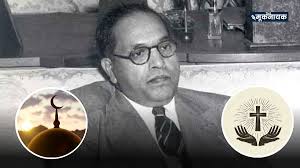
After announcing his decision to leave Hinduism, Dr. B.R. Ambedkar was courted by leaders of all major religions. But his deep study and experience led him to reject both Islam and Christianity before ultimately embracing Buddhism. Following Dr. B.R. Ambedkar’s historic declaration to renounce Hinduism, religious leaders from across India eagerly approached him, each hoping that Ambedkar would embrace their faith. However, Babasaheb listened patiently to each of them, critically examining their arguments. He also undertook extensive research—reading books, letters, and studying the social dynamics of the time—to decide which religion he would adopt after leaving Hinduism. While Ambedkar’s dissatisfaction with Hinduism’s caste system and its social injustices is widely known, the reasons he rejected Islam and Christianity are equally compelling and deserve closer examination. Why Ambedkar Rejected Islam In the early 1920s, Ambedkar had a relatively positive view of Islam. He believed the religion had the potential to embrace all, irrespective of caste or background. But by 1929, his perspective began to shift. The turning point came with the opposition Muslim leaders showed to the Sarda Bill—introduced by Arya Samaj member Har Bilas Sarda—which sought to fix the minimum age for marriage at 14 for girls and 18 for boys. Muslim members of the Central Legislative Assembly strongly opposed the bill, arguing it was against Islamic tenets. Despite the bill becoming law as the Child Marriage Restraint Act of 1929, Muslim leaders launched a protest movement inspired by the broader Civil Disobedience Movement. In a letter published in Janata on December 24, 1932, Ambedkar, writing from London, expressed how this incident was his first major shock regarding Muslim leaders’ attitude toward social reform. Later, during the Third Round Table Conference, he further observed their regressive stance. Hindu conservatives had also approached Muslim leaders for support in opposing temple entry bills, and to Ambedkar’s dismay, many Muslim representatives responded positively. This, he noted, aligned them more with reactionary Hindu elements than with reformers like Turkey’s Kemal Pasha. As a result, Ambedkar advised Dalits to be extremely cautious about converting to Islam. Ambedkar also experienced caste prejudice among Muslims firsthand. In his essay Waiting for a Visa, he recalled an incident that revealed, “A person who is an untouchable for a Hindu is also an untouchable for a Muslim.” Why Ambedkar Rejected Christianity Ambedkar acknowledged the contributions of Christian missionaries in the fields of education and healthcare and initially had a favorable view of Christianity. However, he ultimately refrained from recommending it to the Dalits for conversion. His primary concern was that conversion to Christianity did not significantly change the social status of Dalits. “Though one may become a Christian, in the eyes of the average Hindu, he remains an untouchable,” he wrote. Caste-based discrimination remained entrenched among Indian Christians as well. Those from the “touchable” castes were usually the better-educated and occupied higher social positions, while Dalit Christians continued to face exclusion and marginalization—even within the Church. There was little sense of solidarity between upper-caste and Dalit Christians, and regional Christians often identified more closely with local Hindus than with Christians from other regions. Moreover, Ambedkar noted that Indian Christians, being relatively small in number and dependent on missions for their basic needs, had limited influence in public life. This lack of political clout also made Christianity a less practical choice for social transformation. A Thoughtful and Strategic Decision By the early 1940s, Ambedkar was unwavering in his resolve to leave Hinduism. But none of the alternative religions appeared to meet all his criteria. His reasons for rejecting Hinduism were rooted in deeply felt experiences of oppression, but his choice of a new religion was guided by strategic and practical considerations. He was committed to separating the Dalits from the Hindu fold, but not at the cost of losing political representation, such as legislative reservations. In a country becoming increasingly communalized, Ambedkar also worried about the societal consequences if a large section of Dalits converted to Islam. His determination to convert was firm, but he was also deliberate, choosing to take time before making a final decision. Dalit Marathi writers such as Shankarrao Kharat and Vasant Moon later wrote in their autobiographies about how Ambedkar’s awareness campaigns had left a deep imprint on the Dalit psyche. This long-term impact culminated two decades later, when nearly 500,000 people embraced Buddhism alongside Ambedkar in Nagpur in 1956. Courtesy : Rajan Chaudhary, The Mooknayak Note: This news is originally published on https:/themooknayak.com/ and is for use by the non-military/non-commercial community, especially those in the human rights sector.
INTERVIEW | Congress can’t claim credit for caste census: BJP spokesperson Dr Guru Prakash Paswan
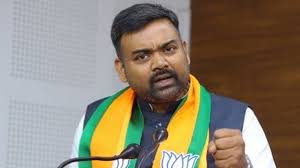
Speaking to Rajesh Kumar Thakur, Dr Paswan stated, “The caste census is a natural extension of the empowerment agenda pursued by the NDA government under Prime Minister Modi.” Dr Guru Prakash Paswan, a prominent Dalit leader from Bihar, national spokesperson of the BJP, and one of the party’s most articulate young voices, strongly criticised the Congress for attempting to take undue credit for caste enumerations. “The Congress has neither the moral nor political right to claim credit for the caste census. Neither the Congress nor its allies in Bihar, such as the RJD, have ever genuinely prioritised proportional representation for Dalits, OBCs, or other marginalised communities in their political frameworks. These are parties that engage in politics purely for the sake of politics,” he remarked. Speaking to Rajesh Kumar Thakur, Dr Paswan stated, “The caste census is a natural extension of the empowerment agenda pursued by the NDA government under Prime Minister Modi. It is disingenuous of the Congress to now attempt to claim credit for this initiative, made by Prime Minister Narendra Modi—Bharat’s real champion of Dalits, poor people, and OBCs.” How do you view the Opposition’s claims regarding the caste census, particularly as they now appear to be taking full credit for it following the Centre’s announcement? The Congress party’s history of disrespecting Dalits is etched in bold letters in Indian political history. Their mistreatment of iconic figures like Babasaheb Ambedkar and Babu Jagjivan Ram is well documented. Their duplicity is plain for all to see. In contrast, Prime Minister Narendra Modi, who himself hails from a backwards community, has consistently championed the cause of the marginalised. Under his leadership, India has seen the rise of the first woman tribal President, increased representation of Dalits, tribals, and OBCs in the cabinet, and numerous policies for their upliftment. The caste census is a natural extension of the empowerment agenda pursued by the NDA government under Prime Minister Modi. It is disingenuous of the Congress to now attempt to claim credit for this initiative, made by Prime Minister Narendra Modi—Bharat’s real champion of Dalits, poor people, and OBCs. The Congress party has mobilised all its wings nationwide to inform the public of its efforts in pursuing the caste census, claiming it compelled the Modi government to act. How do you respond to this narrative? The public knows how to distinguish between the real and the fake. Congress thrives on propaganda, while the BJP under PM Modi focuses on real empowerment of backward communities. Our track record speaks for itself—every resolution made by the Modi government is followed through. Congress, on the other hand, has a history of saying one thing and doing another. We will take PM Modi’s message directly to the people and let them see the truth. Do you believe the Opposition will gain electoral mileage from the caste enumeration decision in the upcoming assembly elections in Bihar and other states? The NDA government, led by PM Modi at the Centre and CM Nitish Kumar in Bihar, stands on strong ground. We are confident of a comprehensive victory in Bihar with the support and blessings of all communities. Our governance model in the state has delivered development, peace, and empowerment for everyone. The people of Bihar clearly see that the Opposition’s stance on caste enumeration is purely politically motivated. Parties like Congress and RJD, which have failed to provide proportional representation to Dalits even within their own organisations, are in no position to talk about justice or empowerment. Their agenda is political, not developmental. Why did your government delay the decision on caste enumeration? Was it driven by concerns over losing support from OBC and Dalit communities, or were there other considerations? There was no delay, at least none that I can recall. We fully back and support the policy decision made by the NDA government. It reflects our commitment to inclusive governance and data-driven policymaking. Is the decision to include caste enumeration in the national decadal census linked to preparations for a future delimitation exercise? This is a subject best left to the wisdom and discretion of the NDA government led by PM Modi. Any such linkage, if there is one, would be guided by constitutional principles and national interest. Do you believe the findings of the caste enumeration will lead to positive and transformative impacts on policy formulation for development? Absolutely. The data will be a valuable tool in designing and implementing targeted developmental policies. It will help reduce caste-based disparities, promote social cohesion, and ensure that the benefits of government initiatives reach every segment of society more effectively. The BJP had previously opposed caste enumeration, citing concerns about exacerbating social divisions. However, the decision was made shortly after a meeting between the RSS Chief and Prime Minister Modi. Do you think the RSS played any role in this change of stance? I am not privy to internal deliberations or private meetings, so I cannot comment on that. However, I can say with full confidence that both the RSS and BJP are firmly committed to the ideals of social harmony and national unity. Every step we take is aligned with these values. Courtesy : Rajesh Kumar Thakur, TNIE Note: This news is originally published on https:/thenewindianexpress.com/ and is for use by the non-military/non-commercial community, especially those in the human rights sector.
An Anti-Caste Counterculture Is Gradually Taking Root in UK Universities
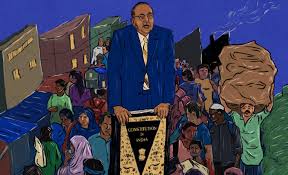
With more Dalit, Bahujan and Adivasi students going to the UK for higher education in recent years, they are creating a counterculture on campus, challenging how ‘India’ and ‘South Asia’ are understood among British and international students and faculty. In a darkened lecture theatre in the School of Oriental and African Studies (SOAS) in London, about 50 people gathered on a Sunday morning for a special screening of Court by Chaitanya Tamhane, a movie that critiques casteism in the Indian legal system. Meanwhile, 400 kms away in northwest England, a book stand in the library of Lancaster University showcased a special collection on caste and Ambedkar. And in another part of the UK, at the University of Leeds, students gathered to commemorate Ambedkar’s birth anniversary and discuss plans for the newly formed Dr Ambedkar Society. These scenes from Dalit History Month celebrations in April this year in different parts of the UK represent a quiet but growing assertion taking root in many English university campuses. With more Dalit, Bahujan and Adivasi students going to the UK for higher education in recent years, they are creating a counterculture on campus, challenging how ‘India’ and ‘South Asia’ are understood among British and international students and faculty. Through organising lectures, workshops and film screenings, and by forming anti-caste and Ambedkarite student societies on campus, marginalised students in the UK are amplifying voices from within their communities on an international platform and contributing to the global understanding of caste and resistance to it. Some are taking the effort further by trying to push for their universities to recognise caste in their policies, to help address the familiar patterns of discrimination and structural inequality marginalised students experience in the UK. Creating a new cultural presence on campus With tens of thousands of Indian students enrolling in UK universities every year, it is commonplace to find ‘India Societies’ and ‘Hindu Societies’ among the many student-run clubs on campuses across the country. In fact, societies that promote Hindu religion and culture on campus have been around in the UK since at least 1991. Through these groups, students organise a variety of events including Bollywood nights, aartis, Diwali and Garba celebrations, and discussions on Indian politics and society Dalit students who came to the UK to study did not feel represented by any of these existing societies, said Abhishek Bhosale, PhD scholar and current President of the SOAS Ambedkar Society. When the society was formed in 2018, the idea was to create a safe space where Dalit students could get together, as well as to democratise and diversify the campus by putting forward their stories and perspectives, he said. In the past year, during Abhishek’s tenure as president, the society has organised several public events including a discussion with The Wire’s Sukanya Shantha and her lawyer Disha Wadekar on their petition in the Supreme Court about caste-based discrimination in Indian prisons. The society also organised discussions on Shahu Patole’s book Dalit Kitchens of Marathwada and Anand Teltumbde’s book Iconoclast. What impact do students hope to have through these events? Abhishek explained that by telling the story of caste in a university like SOAS with an international, politically engaged student body, sensitisation about caste inequalities can reach the wider world through these students when they return to their home countries. “We want to internationalise the authentic stories of people from Dalit backgrounds. For example, if not for the SOAS Ambedkar Society, there wouldn’t be a discussion in London on Patole’s book about Dalit food,” Abhishek said. They also try to bring the academic discussions to life through cultural events such as the Anti-Caste Film Festival they organised in April this year, where the Court was screened. With support from the filmmakers who obliged without a screening fee, the students also showed Jai Bhim Comrade, Fandry, Kaala, and Dr B R Ambedkar to a diverse audience of 60-70 members in London. Poster of the Anti-caste film festival organised by the SOAS Ambedkar Society (Left). A scene from the screening (Right). Photo: Abhishek Bhosale/ SOAS Ambedkar Society. SOAS is also home to the first known Adivasi student society in the UK, the Maki Munda Indigenous Studies Society. In the 2023-24 academic year, a few students from Jharkhand who were at SOAS on various government scholarships created this society to engage with Adivasi issues on an international platform. In their public events, they make it a point to invite Adivasi scholars and grassroots activists as panelists, often joining virtually from India, to share their indigenous knowledge and first-hand experiences. During a student fair in January 2024, the society also organised an Adivasi dance from the Chotanagpur region. “People write about the poverty among Adivasis, their trauma and rights abuse but rarely do they embrace Adivasi culture. As Adivasis, we constantly battle damnation and shame in being who we are. Through the dance, we wanted to showcase our rich heritage and give it due regard in an international space,” said Madhuri Xalxo, a PhD scholar and founding member of the society. A handful of universities in the UK now have Ambedkarite or anti-caste societies formed by students. The Ambedkarite Society of Edinburgh at the University of Edinburgh was formed in January 2024 as a response to various incidents of casteism that marginalised students experienced from fellow Indian students of privileged caste backgrounds. “I was very taken aback by the lack of sensitivity among many Indians. So we formed the society to promote an anti-caste consciousness among students from India, among diaspora and among international students,” said Aniruddha Mahajan, PhD scholar and founding president of the society. At the prestigious London School of Economics and Political Science (LSE), a few Dalit students started an LSE Ambedkar Society in January 2024 to give the iconic social reformer’s ideas due regard in his alma mater. Ambedkar enrolled as a student in LSE in 1916 and completed a master’s degree and a PhD from the university. Ritu Kochar, PhD student and founding president of the society,
Bihar sanctions compensation, pension for family of Dalit minor rape victim
11-year-old girl succumbed to injuries after being denied timely treatment; political outrage intensifies The Bihar government on Thursday (June 5, 2025) sanctioned compensation of ₹8.25 lakh under the Scheduled Castes and the Scheduled Tribes (Prevention of Atrocities) Act, 1989, to the family members of the 11-year-old Dalit girl who was raped and brutally assaulted with a knife, and later succumbed to her injuries at the Patna Medical College and Hospital (PMCH) on June 1. The State also announced a monthly pension of ₹7,700 for the victim’s family, in addition to the allotment of a house under the Mukhyamantri Awas Yojana. According to officials, the girl, who was transferred from Muzaffarpur, had to wait in an ambulance for nearly five hours before being admitted to PMCH, as a bed was not allotted promptly. Muzaffarpur District Magistrate Subrat Kumar Sen made the announcement at a press briefing at the Muzaffarpur Collectorate. “There is a provision under the SC/ST Atrocities Act that if any murder of an SC/ST person takes place, then a compensation of ₹8.25 lakh is given. Based on the FIR and post-mortem report, we have given the first instalment of ₹4,12,500 to the mother of the girl,” Mr. Sen said. The opposition, including the Rashtriya Janata Dal (RJD), Congress, Left parties, and the Vikasheel Insaan Party (VIP), has been consistently attacking the State government over the incident. On Tuesday (June 3, 2025), the RJD’s women’s wing held a protest march against Chief Minister Nitish Kumar and Health Minister Mangal Pandey in Patna, while Congress leaders staged a demonstration outside Mr. Pandey’s official residence. Congress MP Rahul Gandhi lent support to the protests, writing on X: “The brutality against a minor Dalit girl in Muzaffarpur and subsequent negligence in her treatment is extremely shameful. If she had received timely treatment, her life could have been saved. But the ‘double-engine’ government was negligent not only in providing security but in saving her life.” Mr. Sen also announced additional welfare measures. “Apart from the pension, a house under Mukhyamantri Awas Yojana has been sanctioned for the family. I have instructed the Block Development Officer to ensure the house is built. In 2011-12, the family received a house under the Indira Awas Yojana but could not construct it. In this special case, we have taken the decision to provide ₹1.20 lakh for house construction and ₹12,000 for a toilet,” he said. He added that the second instalment of ₹4,12,500 would be disbursed once the chargesheet is filed by the police. According to the police, the minor was raped and found with around 20 knife wounds on and around her neck in a pit at a brick kiln in Muzaffarpur on May 26. The accused was arrested the same evening. Union Minister and ruling party leader Chirag Paswan wrote to Chief Minister Nitish Kumar on Wednesday, calling the incident “a failure of the state’s law and order and public health infrastructure”, and demanded strict action against those responsible. Former Uttar Pradesh Chief Minister and Bahujan Samaj Party president Mayawati also criticised the State government, describing the incident as evidence of Bihar’s poor law and health systems. Amid mounting outrage, the State Health Department, on June 3, took disciplinary action against two senior medical officials of PMCH and Sri Krishna Medical College and Hospital (SKMCH), Muzaffarpur, for dereliction of duty. Courtesy : Amit Bhelari, The Hindu Note: This news is originally published on https://thehindu.com/ and is for use by the non-military/non-commercial community, especially those in the human rights sector.
Reflection of inclusivity: Delhi Chief Minister sets up transgender welfare board
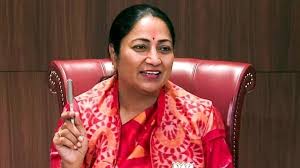
BJP leader Rekha Gupta-led Delhi government has set up a Transgender Welfare and Empowerment Board to frame policies, recommend welfare schemes and address the grievances of the transgender community. The Delhi government has set up a Transgender Welfare and Empowerment Board in a landmark initiative aimed at upholding the dignity and rights of the transgender community. Chief Minister Rekha Gupta described the move as a “reflection of inclusive governance”. She stressed that the decision goes beyond administrative action to reflect the government’s deep commitment to equity and social justice. The newly formed board will be tasked with framing policies, recommending welfare schemes, coordinating with departments, and addressing grievances related to the transgender community. A key provision under the new framework will be the simplified process for transgender individuals to obtain identity certificates and ID cards by self-declaring their gender at the District Magistrate’s office. To further support the community, the government has announced a series of targeted initiatives, including the construction of third-gender toilets in government buildings, dedicated hospital wards and healthcare services, and a transparent online ID card issuance system. Additional plans include sensitisation campaigns in schools and workplaces, temporary shelters, employment training programmes, and tailored social security schemes. Chief Minister Rekha Gupta reiterated that these initiatives aim to make Delhi a model of equality and inclusion. “This is not just a legal step but a reflection of our resolve to empower the transgender community and uphold the constitutional values of justice and dignity for all,” she said. Sharing the details, Rekha Gupta added, “This is a practical and powerful step towards building an empowered viksit (developed) Delhi. Our government is committed to ensuring equal rights for all.” Anmol Nath Bali, Sushant Mehra Edited & Published By:Atul Mishra Courtesy : India Today Note: This news is originally published on https://indiatoday.com/ and is for use by the non-military/non-commercial community, especially those in the human rights sector.
Allahabad High Court order: Inter-caste marriage couple should get security, SSP will be responsible if any harm is caused
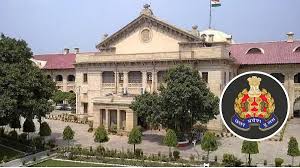
The court gave security instructions to Bulandshahr SSP, the couple had petitioned the High Court after receiving threats from the girl’s family. Uttar Pradesh— Allahabad High Court has given clear instructions to the Senior Superintendent of Police (SSP) of Bulandshahr while ordering to provide security to a newly married couple who have married inter-caste. The court said that if any kind of obstruction or harm is caused by the girl’s family, then the SSP will be held personally responsible for it. This order was given by Justice J.J. Munir while hearing the petition in which the 24-year-old girl and her 26-year-old husband had demanded cancellation of FIR and protection. The girl had also expressed apprehension in the court that her family may plot their ‘honor killing’. The case was registered in May at Khurja police station in Bulandshahr, in which the girl’s father alleged that the upper caste youth kidnapped his daughter and forcibly married her in an Arya Samaj temple. The complaint was registered under Section 87 (kidnapping) of the Indian Penal Code (BNS). However, the High Court made it clear during the hearing that an adult woman has the full right to choose her life partner. The court stayed the arrest of the youth and ordered the SSP to ensure that there is no interference in the married life of the newlywed couple in any way. Courtesy : Rajan Chaudhary, Hindi News
Slogans of Pakistan Zindabad raised in Bahraich, video viral, 5 arrested and 2 absconding
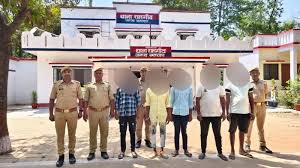
UP News: A shocking incident has come to light in Bahraich. A video of seven youths of Dalit community raising slogans of Pakistan Zindabad and Bhim Army Zindabad has gone viral. Azim Mirza, Bahraich: A video of 7 youths of Dalit community has gone viral in Bahraich, Uttar Pradesh. In which they are seen raising slogans of Pakistan Zindabad and Bhim Army Zindabad. In this case, the police have arrested 5 youths and sent them to jail and the search for two is on. Mahsi CO DK Srivastava said that on June 3, a video of raising slogans of Pakistan Zindabad was being circulated on social media. Taking cognizance of the video, a case has been registered against the accused. When the video was investigated, all the seven youths raising slogans in the video have been identified. They are residents of village Ambedkarnagar police station Ramgaon. Out of those seven, five Avinash, Ajit Kumar, Vijay Pratap, Ankul and Satpal were detained and interrogated and further action was taken. The voice in the viral video is not clear. For its clear investigation, the mobile is being recovered and sent to the forensic lab. Dalit youths raised slogans In most of the cases, it has been seen that only some crazy Muslim youths have been found raising slogans of Pakistan Zindabad. But this time Dalit youths raised slogans of Pakistan Zindabad. After all, is there some kind of change happening among the Dalits or has someone tampered with their video? All these things will be revealed only when the investigation report of the video comes. BSP District President said In this regard, District President of Bahujan Samaj Party Ajay Gautam said that the Dalit community raised the slogan of Pakistan Zindabad. This is wrong but in the same village, someone had broken a statue of the temple. In that case, the police had detained about 15 people. In which these seven people were called to the police station and harassed. It is possible that those people must have been dissatisfied due to that reason. About the author Edited by: Vishal Chaubey I have studied journalism from Lucknow Public College of Professional Studies, Lucknow. I am working in Navbharat Times Digital. I am working on political and many other news related to UP and Uttarakhand. Earlier, I got a chance to report on Madhya Pradesh Assembly Election and UP Municipal Corporation Election. I have worked in many other institutions before Times Group. Courtesy: Hindi News