
Refusal to cut hair of Dalit students: Big action by police on centuries-old untouchability in Karnataka village!
Caste-based discrimination in Kinni Sultan village of Aland taluk, Dalit students denied service in salon. Karnataka: Police have registered a case under SC/ST Atrocities Prevention Act in the case of a salon owner refusing to cut hair of students of Dalit community in Kinni Sultan village of Aland taluk in Kalaburagi district. According to the police, some students of Dalit community had gone to the salon to get a haircut on Friday. It is alleged that the salon owner refused to serve them saying that they are following the traditions of their ancestors. It is worth noting that recently incidents of refusal to cut hair of Dalits had come to light in this area. Despite having three salons in the village, Dalits have to go to Aland town 14 km away or Tadkal village 5 km away to get a haircut. Only after the police warned of strict action, the barbers of the village agreed to serve Dalit customers. Based on a complaint by a Dalit man, the police have registered a case against salon owner Premnath Shinde under the SC/ST (Prevention of Atrocities) Act. Aland taluk social welfare department assistant director Vijayalakshmi Holkar visited the village to gather information about the incident. Courtesy : Rajan Chaudhary, Hindi News
Dalit woman brutally beaten in Hisar police station? Police accused of third degree torture!
Commotion due to allegations of serious atrocities on woman in Siwan police station area, family alleges- Police is trying to suppress the matter Kaithal (Haryana). A case of alleged brutal assault and third degree torture of a Dalit woman in police custody has come to light in the Siwan police station area of the district. The woman was admitted to the government hospital in Kaithal by her family in critical condition. She has deep injury marks on her body and bleeding from her internal organs. The family alleges that the woman was detained by the police on Saturday for questioning in the case of a missing girl. She was later released, but during this time she was brutally treated. The victim’s side said in a complaint to the Superintendent of Police (SP) that during the interrogation, a female policeman and four male policemen brutally beat her in a closed room. The family says that the woman is innocent and was treated inhumanly. Seeing her condition, there is great anger among the family and local people. As soon as the information of the incident was received, the citizens of Siwan and the family of the woman reached the DC and SP office and demanded strict action against the guilty policemen. The woman’s husband Rohtash and nephew Sachin alleged that the police are pressurizing the family to suppress the matter and withdraw the complaint. Municipal Council President Representative Sandeep Saini, BJP leader Shaili Munjal and former District Councilor Master Ratiram have also demanded a fair investigation and legal action against the culprits. Haryana Scheduled Caste Commission has also taken cognizance of the matter. Commission member Ravi Taranwali said that the matter of atrocities against the Dalit woman has come to his notice. He has asked the Kaithal SP to submit a report in two days. The commission will take action after receiving the report. On the other hand, Deputy Commissioner Preeti has also sought a report from the police and has given instructions to provide free legal aid to the woman. A delegation of residents of Siwan village alleged in a complaint to the DC that the woman was beaten up in the police station premises, due to which she suffered serious injuries. The DC has assured appropriate action. Statements of police officials According to Amar Ujala’s report, DSP, Sushil Kumar said on the incident, “The woman is an accused in a case. If she has been mistreated, it will be investigated.” While station in-charge Om Prakash said in his statement, “The allegations are baseless and false. The woman was called for questioning on Saturday, but she was not beaten up.” Courtesy : Rajan Chaudhary, Hindi News
Case of illegal occupation of Dalit’s land: Despite the court order in Barabanki, the bullies are doing construction, the victim complained on the CM portal
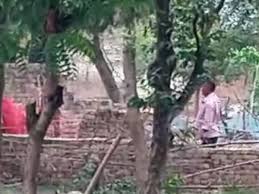
A case of illegal occupation of a Dalit’s land has come to light in Niyamatpur village of Barabanki. The dispute of the land of the victim Ram Raj is pending in the Barabanki Civil Court. The neighbor of the same village and his wife are forcibly occupying this land and doing construction work. On Sunday morning, when the neighbor was doing the construction work, he threatened to beat up the victim when he protested. The Tehsildar had ordered the Patranga Kotwali police to maintain the status quo. There were instructions not to do any construction till the decision of the court. Despite this, the neighbors are doing construction work by disregarding all the rules. The live video of the incident is going viral on social media. The victim has lodged a complaint with the Chief Minister Helpline and Patranga Kotwali Police for justice. Courtesy: Dilip Kumar, Hindi News
Trouble in Karnataka Congress: As Siddaramaiah government nears 2.5-year mark, Dalit CM talk resurfaces
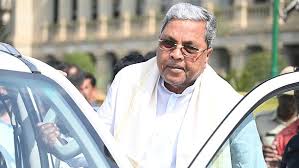
Siddaramaiah may back Parameshwara as his successor to retain influence if he can’t continue as CM, a senior Congress leader told TNIE. BENGALURU: Amid talks of a change in guard in Karnataka, even as Chief Minister Siddaramaiah inches towards completing two-and-a-half years of his present term, the issue of a dalit CM is likely to come to the fore. Home Minister Dr G Parameshwara’s recent meetings with Siddaramaiah and Deputy CM DK Shivakumar in quick succession have fuelled speculation. “Siddaramaiah will try his best to continue as CM, but if such a situation does arise, he may name Parameshwara as his successor so that he can still hold the reins in government,” a senior Congress leader who visited New delhi recently told TNIE. According to sources, Siddaramaiah, who held talks with the Congress high command in the national capital, might have shared certain details with Parameshwara, who also met industries Minister MB Patil, giving rise to speculation that Siddaramaiah’s coterie is preparing for the eventuality. Replying to Leader of the opposition in the assembly R Ashoka’s statement that there will be a new CM by october, Patil said, “Let Ashoka safeguard his post. There are no developments in the Congress, since the High Command and CWC take a call. The statements of individual leaders [including those from the Congress] are insignificant.” Meanwhile, Food and Civil Supplies Minister KH Muniyappa downplayed the Dalit CM issue, calling it stale. He said it was being talked about since AICC president Mallikarjun Kharge was in the race. Muniyappa had reportedly proposed Kharge’s name when the party came to power in 2023. “But now the chances of Kharge returning to state politics are remote. It is to be seen if a change in guard is inevitable, and whether he proposes a Dalit leader’s name or not,” remarked a Congress leader. Separately, Shivakumar loyalist and Ramanagara MLA Iqbal Hussain on Sunday predicted that the former will become CM in three months, while Social Welfare Minister Dr HC Mahadevappa asserted that Siddaramaiah will continue as CM. Parameshwara, while meeting Shivakumar might have discussed several other issues, including the nomination of four MLCs, for which the high command’s approval is awaited, a source said. He has been trying to push the candidature of his loyalist and former MLC MC Venugopal, a backward caste leader, for a Council seat. Devaraj B Hirehalli Courtesy : TNIE Note: This news is originally published on https:/thenewindianexpress.com/ and is for use by the non-military/non-commercial community, especially those in the human rights sector.
Witness to the Unheard: Remembering K.M. Salimkumar
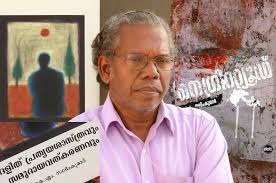
Salimkumar was part of a generation of leaders who re-evaluated their ideological roots, transitioning from strict Marxist lines to a framework informed by Ambedkarite thought. It feels as though it happened just yesterday – the long, winding bus ride to Thodupuzha, a serene town in Kerala’s Idukki district. It was 2008. We were en route to release ഭൂമിയുടെ ജാതിയും രാഷ്ട്രീയവും (Caste and the Politics of the Land), a powerful book by K.M. Salimkumar. Sitting beside me was the man himself – a relentless voice for Dalit and Adivasi rights, an activist, thinker, and writer who had spent decades challenging the status quo. He passed away on June 29, after a lifetime of confronting dominant narratives with a clarity that few dared to match. During that trip, Salimkumar spoke with thoughtful determination about his political path – from early activism with the Communist Party of India (Marxist–Leninist) Liberation to his eventual estrangement from a Left movement that, in his view, skirted around the issue of caste. His words weren’t bitter or sentimental, they were sharp. He argued that caste, as a deeply entrenched system of oppression in Indian society, often vanished beneath class-based rhetoric. For him, the revolutionary struggle had failed to acknowledge the lived experiences of those most marginalised. That journey wasn’t just about a book, it offered a glimpse into the principled world he inhabited. Born in 1949, in a tribal family in Velliammattom panchayat in Idukki, Salimkumar rose to become a formidable voice for social justice in Kerala. His early years were shaped by Marxist liberation politics, and he was incarcerated for 17 months during the Emergency. But unlike others who moderated their stance afterward, Salimkumar intensified his critique, especially of the movements he once served. He questioned why caste was so often left out of revolutionary discourse and why land struggles didn’t prioritise those without land, Dalits and Adivasis. His involvement in building political and grassroots networks was extensive. As a founder of the Dalit Unity Committee in 1999 and editor of publications like Raktapataka and Dalit Aikyashabdam, he gave platform to marginalised voices. His activism focused not on charity, but on dignity, autonomy, and rightful assertion. Salimkumar was part of a generation of leaders who re-evaluated their ideological roots, transitioning from strict Marxist lines to a framework informed by Ambedkarite thought. While many Left parties in Kerala treated caste as a secondary issue to class, Salimkumar argued it was a primary axis of oppression. He frequently reminded people that caste is not a relic of the past but a system that defines everything – from land rights to social boundaries. He openly criticised symbolic gestures like renaming Dalit colonies with sanitised, Sanskrit-inspired names. For him, such acts were attempts to cover up deeper inequalities. “Changing names doesn’t change realities,” he wrote. “The trauma, the exclusion, the inherited shame – they all remain.” ‘Negritude’, K.M. Salimkumar. His collection of columns under the title Negritude reflected this radical clarity. In them, he explored themes such as Ambedkar’s democratic philosophy, the erasure of tribal identity, and the contradictions in Kerala’s progressive self-image. By drawing connections between caste-based and racial oppression, he built a body of work that was more than literature – it was a political statement. Salimkumar also centred B.R. Ambedkar in his vision of India’s democratic future. He didn’t see Ambedkar merely as a constitutional architect, but as a radical critic of social inequality and a prophet of structural reform. He cited Ambedkar’s assertion that while Hindu privilege maintained Brahminical rule, true democracy meant Dalits must have full participation. He was especially vocal about the contradictions in Kerala’s development model. Though the state is praised for its human development indicators, he pointed out how Dalits and Adivasis continued to face displacement and marginalisation in the name of progress. During protests like the Muthanga agitation, albeit his reservations about the struggle itself, he challenged the hypocrisy of governments that claimed to be for the people while undermining the very communities they displaced. His published works – including Dalit Ideology and Communalisation (2008), Dalit Democratic Thought (2018), Reservation in a Dalit Perspective (2018), and The Subtleties of Casteism (2021) – offer critical insights into how casteism adapts to survive even in secular and progressive settings. His critique extended beyond the obvious culprits. He held the liberal elite and even self-proclaimed progressives accountable for sustaining caste structures. In his later years, Salimkumar emphasised the importance of cultural memory and literature in political struggle. He believed that writing was an act of reclaiming identity, that memory could resist erasure, and that telling one’s story was itself revolutionary. He didn’t aspire to lead in the conventional sense. He wanted to bear witness—to name what others avoided, to stay rooted in difficult truths, and to never allow silence to replace justice. In an age when even dissent is being curated and softened, KM Salimkumar’s legacy stands as a reminder that the fight for equality requires more than slogans—it demands unflinching truth. K.M. Seethi is Director, Inter University Centre for Social Science Research and Extension (IUCSSRE), Mahatma Gandhi University (MGU), Kerala, India. Seethi also served as Senior Professor of International Relations, Dean of Social Sciences at MGU and ICSSR Senior Fellow. K.M. Seethian Courtesy : The Wire Note: This news is originally published on https:/thewire.com/ and is for use by the non-military/non-commercial community, especially those in the human rights sector.
Dalit Minor Girl Abducted From UP; Forced To Convert, Join Terror Activities In Kerala
A minor girl in UP’s Prayagraj was allegedly subjected to religious coercion and abuse after she was abducted and taken to Kerala. Two people have been detained in the case. Two people were detained on charges of abducting a minor girl and forcing her to convert to Islam. The incident was reported from Prayagraj in Uttar Pradesh. According to the details, the girl, belonging to the Dalit community, was abducted and taken to Kerala, where she was being trained for terror activities. One of the members of the gang, belonging to the Muslim community, was also accused of molesting the girl. The police were interrogating more people in connection with the case, and further investigations were ongoing. On May 17, a minor girl was allegedly gangraped in broad daylight in UP’s Sultanpur by three men, including a minor. The incident happened when the Dali girl was on her way to school. The police arrested two accused and detained the third. The arrested accused were sent to judicial custody for 14 days, and the minor was sent to a juvenile home. Later, the National Commission for Women (NCW) took suo motu cognisance of the case, seeking a fair and time-bound investigation of the crime. In January this year, the Kerala Police arrested two people in connection with the sexual assault of an 18-year-old Dalit girl in Pathanamthitta district. It was alleged that when the teen was 13 years old, one of the accused had sent obscene messages and pictures to her through his mobile phone. He was also accused of procuring obscene pictures and videos of the teen. Furthermore, allegedly when the girl was 16 years old, the accused took her on a bike to Achankottumali near her house and raped her in a rubber farm in an uninhabited area. Later, during the investigation, it was revealed that the accused showed it to the other accused, who were his friends. Curated By : Vani Mehrotra About the Author Vani Mehrotra is the Deputy News Editor at News18.com. She has nearly 10 years of experience in both national and international news and has previously worked on multiple desks. Courtesy : News18 Note: This news is originally published on https:/news18.com/ and is for use by the non-military/non-commercial community, especially those in the human rights sector.
Saree-Bindi and Surgery: Five Bangladeshis living as transgenders in Delhi caught, used app for this work

Police campaign against illegal immigrants continues in Delhi. On Saturday, more than 100 slums in Ashok Vihar were searched. From where 18 were caught including five Bangladeshis living in the guise of transgenders. The Foreign Cell of North-West District has caught 18 Bangladeshis living illegally, out of which five were living as transgenders. Police have recovered seven phones from their possession, in which the banned IMO app was downloaded. With the help of the app, they used to talk to their relatives living in Bangladesh. Additional Deputy Commissioner of Police of the district, Sikandar Singh, said that under the campaign, the police team conducted a thorough search of 100 slums and 150 lanes in Ashok Vihar these days. During this, a suspicious person was caught and interrogated. At first he told that he was a citizen of West Bengal, but on strict interrogation, he confessed to being a Bangladeshi citizen. On his information, the police caught a total of 13 members of his family. It included 10 adults and 3 children. They were living in India without any documents. At the same time, the police have arrested five Bangladeshi citizens from the same area who were asking for money at traffic signals in the guise of transgenders. All of them used to wear heavy makeup, saree, salwar suit, fake hair, bangles, bindi to look like women. During interrogation, they told that they had also undergone hormonal treatment and minor surgery to hide their identity. Some had also changed their voice and gestures. The police officer said that all those arrested are residents of Dhaka, Bangladesh. The police presented all of them in the Foreign Registration Office for deportation. From where they have been sent to the detention center. Published by: Anuj Kumar Courtesy: Hindi News
If mother is SC and father is from general category, will the child get reservation? Know what this latest order of Bombay High Court says
The bench said, “In case the parents belong to different castes, it is necessary to prove that the child has experienced social backwardness as a member of the Scheduled Caste. Only innate relationship is not enough.” Mumbai- Bombay High Court has rejected the claim of a student to be of ‘Chambhar’ (Scheduled Caste) caste. The court said that the student did not prove that he has faced any discrimination or deprivation due to his mother’s caste. The bench gave this decision on the petition of Sujal Mangala Birwadkar (original name: Sujal Santosh Mokal), who challenged the order of Raigad District Caste Certificate Verification Committee dated April 15, 2024. Sujal claimed that he belongs to the ‘Chamar’ (Scheduled Caste) community because of his mother, although his father is from the ‘Hindu farmer’ (general caste). What was the controversy? According to the background of the case, Sujal’s father Santosh Mahadev Mokal belongs to the ‘Hindu farmer’ (general caste) and mother Mangala belongs to the ‘Chamar’ (Scheduled Caste) community. Both are employed in the Central Armed Police Force, who got married in 2004, but in 2016 a court in Alibag approved their divorce. Sujal’s custody was given to his mother. During his primary education, Sujal’s caste certificate was registered as father’s caste, but after divorce his mother changed his name to ‘Sujal Mangala Birwadkar’ and at the time of admission in Kendriya Vidyalaya, Nashik, his caste was registered as ‘Chamar’. In 2023, while studying at Navneet Junior College, Sujal’s mother got a ‘Chamar’ caste certificate made for him, following which the college administration sent it to the Raigarh District Verification Committee for verification. The committee, based on three investigations conducted by the vigilance cell, found that Sujal never faced any discrimination or social deprivation due to his mother’s caste. The committee particularly noted the fact that Sujal’s mother was in a government job and did not ask for any alimony from her husband after the divorce, which shows their financial stability. Hearing the case, a bench of Justice Revati Mohite Dere and Justice Dr. Neela Gokhale said, “Unless it is proved that the child has suffered social or economic discrimination due to the caste of the mother, he cannot be given Scheduled Caste status. The court said in its decision, “The petitioner has failed to prove that he has faced any kind of inferiority complex, social exclusion or deprivation of educational opportunities due to the caste of his mother. He has been educated in prestigious institutions like Kendriya Vidyalaya and it is clear from his standard of living that he did not have to face any special difficulty.” The bench further said, “In the case of parents belonging to different castes, it is necessary to prove that the child has experienced social backwardness as a member of the Scheduled Caste. Mere inborn connection is not enough.” With this decision, the court dismissed Sujal’s petition and upheld the order of the verification committee. This case is another example of many cases where courts demand concrete evidence of social backwardness before issuing caste certificates. According to legal experts, this decision sets an important precedent for future cases where disputes arise over the caste determination of a child due to different castes of the parents. Geetha Sunil Pillai Courtesy : Hindi News
‘It’s not just a chair, it’s a question of justice’—Know about a Dalit professor’s 20-year struggle for the right to ‘equal pay for equal work’ at Andhra’s Veterinary University!
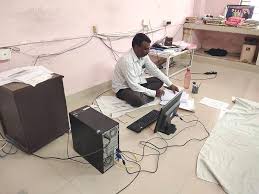
Distressed by the university’s evasive attitude and non-compliance of the court’s order, Dr. Ravi has also written a letter to President Draupadi Murmu on 23 May 2025, in which he gave details of his 20-year struggle. He told how the university controller had recommended paying the arrears from 2014 as per the court’s order in 2020, but no action was taken. Tirupati- On June 20, a picture emerged from the Dairy Technology College of Sri Venkateswara Veterinary University (SVVU), which once again exposed the caste discrimination deeply rooted in Indian educational institutions. In the picture, Dalit Assistant Professor Dr Ravi Varma was seen sitting on the floor of his office, working on his computer as his chair was removed by Associate Dean Ravindra Reddy. This incident is just another humiliation for Dr Ravi, who has been fighting for respect, equal pay and justice in the institution for the last 20 years. He has been denied his rights despite court orders, UGC regulations and even the intervention of the President of India. Two decades of discrimination The period of institutional harassment and struggle for Dr Ravi began in 2005, when he was appointed as a contractual Assistant Professor in the Department of Dairy Technology. Despite doing the same work as permanent professors, he received a fraction of their salary, and his contract was renewed every six months with a break of 2-3 days—a strategy adopted to avoid giving job security to contractual employees. In 2010, the University Grants Commission (UGC) made a rule that contractual teachers should get “equal pay for equal work”. When SVVU ignored this, Dr Ravi moved the Andhra Pradesh High Court. The university, in its response to the Andhra Pradesh High Court directions, said that Verma is not entitled to the salary suggested by the UGC, as he was not selected by a selection committee and also does not have the NET qualification required by the UGC. This statement is contrary to the university’s actions in 2012 and 2013, when selections were made by waiving the NET qualification and regular pay scales suggested by the UGC were given. Even today, there are 5 assistant professors who do not have the minimum required qualification of NET, but are getting the benefit of regular pay scales with full allowances. RTI documents reveal that between 2012-2013, SVVU appointed more than 150 faculty members without NET qualification, all of whom received full pay and promotions. In contrast, Dr Ravi remained stuck in a contractually restricted position – despite the Supreme Court’s 2016 “equal pay for equal work” judgment and repeated orders of the AP SC/ST Commission. Despite the court order, the university did not comply following which Dr Verma also filed a contempt of court petition which is still being heard. In October 2024, Dr Ravi met the Vice Chancellor and apprised him of his problems. The VC assured justice, but no action has been taken till date. The incident of Dr Ravi working on the floor was a reminder of historical caste discrimination where Dalits were denied even basic respect. He took this step in protest against the policies of the institution. According to university sources, the HoD had received a supply of new chairs and Dr Ravi was given a chair, but on June 19, when he was on a day off, Associate Dean Dr Reddy removed the chair, saying it was for another department. The next day the HoD placed a visitor chair in Dr Ravi’s office, but when he returned, he started working sitting on the floor in protest of the insult. The matter escalated until the VC and principal intervened and mediated. Sources say Dr Reddy apologised, but this is not confirmed. Some faculty members believe that the removal of Dr Ravi’s chair was a deliberate act, especially in view of his 20-year struggle for equal pay and pending contempt proceedings against the university for disobeying judicial orders. When the pictures went viral on social media, Bahujan organisations protested vehemently. The YSR Congress Party questioned Chief Minister Chandrababu Naidu, asking, “Why is a Dalit professor being treated like this in your government?” Dismayed by the university’s evasive attitude and non-compliance of the court order, Dr. Ravi has also written a letter to President Draupadi Murmu on May 23, 2025, in which he gave details of his 20-year struggle. He told how the university controller had recommended in 2020 to give arrears from 2014 as per the court order, but no action was taken. He wrote “I am not financially capable enough to keep fighting” and explained how this system exhausts the resources of academics from marginalized and deprived communities by engaging them in legal battles. The Mooknayak has sought a response from the VC and Registrar on the university’s disregard of court orders. The report will be updated on receiving their response. Geetha Sunil Pillai Courtesy : Hindi News
Harassment of Dalit woman: Kerala SC/ST Commission directs case against complainant
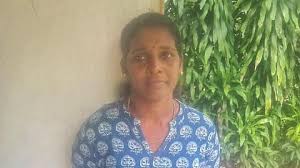
Bindu, a domestic worker was wrongfully charged over a missing gold chain complaint and faced harassment by officers in Peroorkkada police station. The Kerala State SC/ST Commission has directed the Thiruvananthapuram police to register a case against complainant Omana Daniel after a Dalit woman, wrongfully accused of theft, was subjected to custodial harassment and sexual abuse. Bindu, a 39-year-old Dalit woman who had worked as a domestic help for four years, was taken into custody by Peroorkkada police on April 23 for questioning in connection with a missing two-and-a-half sovereign gold chain, reportedly belonging to the household where she had been employed. The chain was later recovered from the complainant’s residence, revealing serious misuse of the law and negligence of human rights provisions by the police. According to Bindu, she received a call from the Peroorkada police station around 3:30 pm, informing her about a complaint filed against her. She was held in custody and interrogated until 3 am the next morning. “They used very harsh and bad language. They never asked whether I committed the crime or not. They asked where the gold was,” Bindu told TNM earlier, when the issue came into light. Despite no evidence being found at her residence during a police search, Bindu was booked under Section 305 (theft) of the Bharatiya Nyaya Sanhita (BNS). She alleged that she was denied food during custody, threatened with the arrest of her husband and two daughters if she did not surrender, and humiliated in front of her family. Peroorkada police have denied the allegations of harassment but are yet to issue an apology to her. On May 6, the Thiruvananthapuram Cantonment Assistant Commissioner was directed by the State SC/ST Commission to file an enquiry report within 20 days. The incident adds to the growing list of custodial abuse cases in the state, raising concerns over the systemic violation of human rights, particularly against marginalized communities. Written by:TNM Staff Courtesy : TNM Note: This news is originally published on https:/thenewsminute.com/ and is for use by the non-military/non-commercial community, especially those in the human rights sector.