
Madhya Pradesh: Upper caste men beat up Dalit family cultivating field, snatch seeds
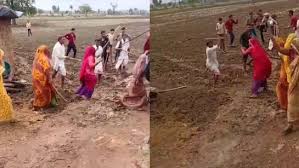
Four of the victims, who suffered serious injuries, have been admitted to the Lateri Government Hospital. A video of the incident has gone viral on social media. It triggered massive outrage and led to calls for strict action against the accused. The opposition also attacked the ruling BJP government in the state. Bhopal: In a shocking incident, which is a stark reminder of the prevailing caste system in India, some upper caste men beat up a Dalit family sowing seeds in a field. The incident was reported from Narayanpura village of Lateri tehsil in Madhya Pradesh. Land belongs to us: Dalit family Meanwhile, the Dalit family which was beaten up allegedly by some men from the Gurjar community, claim that the land on which they were sowing seeds belongs to them. The family said that the men not only beat them and the women sowing seeds, but also snatched the soyabean seeds from them and sowed them in their own field. The victims alleged that the upper caste men did so only to assert their dominance and supremacy. Four of the victims, who suffered serious injuries, have been admitted to the Lateri Government Hospital. The incident triggered massive outrage and led to calls for strict action against the accused. The opposition also attacked the ruling BJP government in the state. The victims belonged to the Ahirwar community. They claimed that the attack was unprovoked. One of the victims was quoted by NDTV as saying, “We were sowing seeds on our own land when Murari, Hansraj, Gudda, Parvat, and Bunty came and started beating us. They hit the women too. They took away our seeds and later sowed them in their field as if to assert their dominance.” Portion of land is government owned, says administration Meanwhile the local administration said that a portion of the land on which the family was sowing the seeds belongs to the government. They said that this might have led to the dispute. The Dalit family however claims that the land legally belongs to them. Those beaten up belong to the Ahirwar community. The family also claims that they were being repeatedly pressurised by the accused to not cultivate the land. The Vidisha Police said that they are investigating the matter. According to a senior official, there was a dispute between the 2 parties and this led to the incident. He said that police are also looking at the medical report of those injured and strict action will be taken against the accused. The opposition Congress party has slammed the BJP government. They said that the incident was yet another example of the growing incidents of atrocities against Dalits in Madhya Pradesh. The party also expressed solidarity for the victims and demanded immediate arrest of the accused. Mani Raj Courtesy : News Nine Note: This news is originally published on https:/newsnine.com/ and is for use by the non-military/non-commercial community, especially those in the human rights sector.
Crimes against women, Dalits dampen Majhi govt.’s one-year celebrations in Odisha

Since the so-called ‘double-engine’ government came to power, law and order in Odisha has collapsed, says Congress Legislature Party leader Rama Chandra Kadam Prime Minister Narendra Modi, along with CM Mohan Majhi, arrives to address a public meeting to mark the first anniversary of the BJP government in Odisha, in Bhubaneswar on June 20. Prime Minister Narendra Modi, along with CM Mohan Majhi, arrives to address a public meeting to mark the first anniversary of the BJP government in Odisha, in Bhubaneswar on June 20. | Photo Credit: File Photo A spate of brutal crimes against women and a growing challenge to the rule of law by emboldened criminals have cast a long shadow over the Mohan Majhi government’s celebrations marking its first year in office in Odisha. Both the Congress and the Biju Janata Dal (BJD) have intensified their attack on the Bharatiya Janata Party (BJP) government, alleging a breakdown of law and order in Odisha. Even as preparations peaked for Prime Minister Narendra Modi’s scheduled visit on June 20, a gang rape incident on June 15 sparked massive outrage in the State. A college student visiting Gopalpur beach in Ganjam district was allegedly gang-raped, filmed, and threatened by her attackers. Condemning the incident, Congress leader Priyanka Gandhi Vadra accused the Majhi government of failing to ensure the safety of women. Although Berhampur police arrested 10 suspects, public anger did not subside. The All India Congress Committee (AICC) constituted a fact-finding team led by senior party leader Deepa Dasmunsi to assess the situation on the ground. BJD only did politics for 24 years, our Government has ushered in new era in Odisha: CM Majhi Soon after, reports emerged of the alleged gang rape and murder of a 17-year-old tribal girl under Pandapada police station in Keonjhar district. In another incident, a woman from New Delhi was molested in Jajpur district. As the government machinery focused on milestone celebrations, reports of heinous crimes dampened the mood and raised serious questions about governance. The disturbing pattern continued when a woman in Mayurbhanj district was allegedly abducted by three motorcycle-borne assailants and gang-raped near Karanjia on Wednesday. In a separate case, a Berhampur health centre operator — reportedly linked to the BJP — was arrested for raping a minor. Photographs of the accused with senior BJP leaders, including the Chief Minister, further embarrassed the ruling party. The student and youth wings of the BJD staged protests across educational institutions on Wednesday, denouncing the rising cases of atrocities against women, particularly the Gopalpur case. Citing information published by the Home Department and presented in the State Assembly, the BJD said, “Over 3,054 rape cases were reported in the last year alone, marking a steep rise in serious crimes like rape, abduction, and murder. This points to a severely deteriorating security environment for women and children in Odisha.” ‘Poor law and order’ The party also criticised the weakening of support mechanisms. “Under the Naveen Patnaik government, more than 600 police stations had functional women and child desks. Those are now barely operational, leaving victims helpless. The government’s inefficiency has emboldened criminals,” it said. In yet another shocking incident this week, two Dalit men in Ganjam district — accused of cattle smuggling — were tonsured, forced to eat grass, and made to drink dirty water. The victims claimed they were only transporting three cows to sell in order to arrange items for a family wedding. “Since the so-called ‘double-engine’ government came to power, law and order in Odisha has collapsed,” said Congress Legislature Party leader Rama Chandra Kadam, who led a fact-finding team to Ganjam. “Criminals act with impunity, and the Home Department is a mute spectator. Attacks on Dalits, tribals, and minorities are increasing by the day,” he said, addressing a press conference on Thursday. Satyasundar Barik Courtesy : The Hindu Note: This news is originally published on https:/thehindu.com/ and is for use by the non-military/non-commercial community, especially those in the human rights sector.
Case of occupation of Dalit family’s land: Woman pleads for justice in Alapur, accuses opposition of forceful occupation
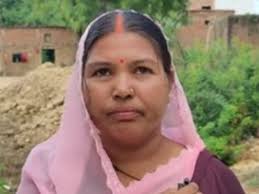
A Dalit woman is struggling to save her leased land in Durgupur village of Jahangirganj police station area of Ambedkar Nagar. Bhanmati wife Suresh Kumar told in the complaint letter that Sheshnath Pandey of the village is trying to forcibly occupy her land. According to the victim, the disputed land is her old garhauni. Her old house has collapsed. She has the papers of the garhauni. Sheshnath Pandey is trying to forcibly occupy the land by putting soil. On protesting, the accused threatens with sticks. The situation of dispute persists every day. The victim has lodged a complaint in the police station in this matter. Along with this, a complaint letter has also been submitted to the SDM and Tehsildar. The officials have ordered the measurement of the land. But till now the victim has not got justice. She is constantly facing troubles. Vishwanath Yadav Courtesy: Hindi News
Dalits, Backward Castes, and Adivasis in the RSS’s Hindu Rashtra Agenda and the Etawah Incident
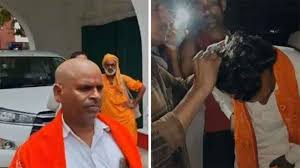
The incident in Etawah has shaken the entire society and has especially drawn attention to the deep-seated caste discrimination within the Hindu community. In Etawah’s Dandarpur village, two Yadav (The Yadav community is a traditionally pastoral and agricultural community, Hindus connected to the shudra varna and classified as other backward caste) “katha vachaks” (A kathavachak is a spiritual storyteller who narrates Hindu scriptures like the Ramayana or Bhagavad Gita in religious gatherings) —Mukut Mani Singh Yadav and Sant Singh Yadav—were forcibly tonsured by a group of upper-caste men after their caste was revealed during a Bhagavad Gita recitation. Also, a woman belonging to the attackers’ community sprinkled her urine on the victims. The attack, captured on video and widely shared, sparked outrage. The police acted swiftly, arresting four individuals—Ashish Tiwari, Uttam Kumar Awasthi, Nikki Awasthi, and Manu Dubey. All belong to the upper caste community. According to NCRB data, in 2022, crimes against Dalits increased by 13.1%, and crimes against Adivasis increased by 14.3% compared to 2021. Despite numerous movements against untouchability and caste hierarchy, and a whole stream of Dalit literature bringing suppressed histories to the forefront—like Omprakash Valmiki’s Joothan, Prof. Tulsiram’s Murdahiya and Manikarnika, Adam Gondvi’s Aao Le Chale Tumhe Chamaron Ki Gali Mein, and Premchand’s Thakur Ka Kuan—caste-based oppression persists. Even in cinema, this issue has been addressed in films like Damul and Mrityudand. Mrityudand also highlights the aspect of gender. These evils have existed for thousands of years. The mentality that refuses to see a human as a human is still alive. Villages are still segregated by caste. The oppression of the poor and the weak continues—only the form has changed. The social structure in which a person lives often leaves them no option. Many have even renounced religion in protest against this discrimination. We must understand that even today, in universities, many students from marginalized backgrounds remain isolated. This detachment stems from their social roots. Others in the university must take responsibility to make them feel equal, not use ancient caste systems to further isolate them. If someone is born into a so-called Shudra family, how is that their fault? Why should they alone bear the burden of a social framework imposed upon them? Which law says this is fair? I recently saw the Etawah incident, and no amount of condemnation is enough. You cannot humiliate anyone based on caste—we have a Constitution and the rule of law. This is not a Taliban-run government. As the case gained attention, people started reacting. A large section of society stood with the storyteller, and this included people from all communities. As the caste discrimination aspect began gaining traction (which has always been the reality for these communities within Hinduism—sometimes visible, sometimes hidden), a narrative shift toward a molestation claim was introduced for damage control. The idea was to divert the issue away from caste discrimination and claim a moral victory in the name of women’s dignity. The Etawah incident did not only shake the people of Uttar Pradesh but sent ripples straight to the RSS headquarters in Nagpur. It clashed with their fake agenda of creating a “Hindu Rashtra,” prompting damage control tactics. That’s when, two days later, a molestation allegation surfaced. This “Hindu Rashtra” agenda by the RSS is fake. The real question is—what will be the status of Dalits, Adivasis, and Backwards in such a nation? We will discuss that another time. On social media, self-proclaimed leaders of the Sanghi ideology resorted to verbal abuse while claiming to defend women’s honor—ironically hurling obscene abuses toward women of other communities. This abusive behavior continues today at the hands of these so-called leaders (Note: Sanghi leaders can be found in any political party). We must learn to call out what’s wrong. Gautam Buddha, Rahul Sankrityayan, and Pandit Nehru set examples of this. Today, Rahul Gandhi is leading a major national campaign against caste discrimination in the form of caste census. Learn about the backgrounds and communities these people come from. The truth is, caste is a bitter reality in India—one that was exposed yet again in Etawah. I repeat, the RSS agenda of a Hindu Rashtra was deeply hurt by the Etawah incident, which tore the veil off the facade they had created. After the incident, the Sanghi narrative claimed it was “molestation,” which exposed their casteist agenda. Society still functions on caste lines at every level. In the caste hierarchy of the Hindu community, there are Brahmins, Kshatriyas, Vaishyas, and Shudras. If such things can happen to someone from the Ahir community—a backward caste—even in 2025, imagine the suffering of those even lower in this constructed social order. Don’t fall into the Sanghi trap. What’s wrong is wrong, and must not be repeated. Let there be no hatred or bitterness among us, but compassion. The pain of those pushed to the margins for centuries won’t go away overnight. Hence, all communities must condemn the Etawah incident and fight to prevent its recurrence. This is my personal perspective on the incident. As the great philosopher Nietzsche said, There are no eternal facts, as there are no absolute truths.” By Akhilesh Yadav Akhilesh Yadav is a research scholar at the Centre for Historical Studies, JNU, and former Vice President of the Allahabad University Student Union Courtesy : Counter Currents Note: This news is originally published on https:/countercurrents.org/ and is for use by the non-military/non-commercial community, especially those in the human rights sector.
NDA engaged in garnering Dalit votes, Ramnagar minister Janak Ram on a two-day visit
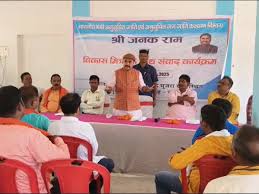
Bihar Politics: West Champaran in-charge minister Janak Ram reached Ramnagar on a two-day visit, where he held a meeting with 47 Vikas Mitras under the Baba Saheb Ambedkar Vikas Yudh Abhiyan. Bagaha: Bihar government minister and West Champaran district in-charge Janak Ram reached Ramnagar today on a two-day visit. During this, he held a meeting with all 47 Vikas Mitras of Ramnagar assembly constituency under the Baba Saheb Ambedkar Vikas Yudh Abhiyan and reviewed the implementation of government schemes. The minister directed to work fast towards implementing the schemes running in Dalit and Mahadalit settlements. Edited By: Nishant Bharti | Reported By: Zee Bihar-Jharkhand Web Team Courtesy : Hindi News
Justice Sought in Odisha: Dalit Men Assaulted on False Cattle Smuggling Accusation
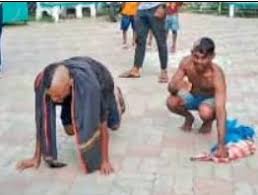
Odisha Police have arrested 12 suspects, including the main accused, in the assault on two Dalit men in Ganjam district for alleged cattle smuggling. The incident sparked national outrage, leading to political intervention and a fact-finding mission. Victims claim they were transporting cattle for a wedding gift. In a significant development, Odisha Police announced the arrest of the main accused in the egregious attack on two Dalit men in Ganjam district. The accused, Rajesh Samal, 20, was apprehended alongside 11 others, including a juvenile, escalating the investigation into the physical assault and humiliation case. The victims, Babula Nayak, 54, and Bulu Nayak, were detained while transporting cattle for a wedding gift. Misconstrued as smugglers, they were subjected to severe torture by Rajesh Samal’s group, who went as far as forcing them to drink drain water. The incident incited national uproar, demanding swift justice. Political figures like Rahul Gandhi and Priyanka Gandhi Vadra have called for strict action, while the district administration offered some financial aid to the victims amid ongoing police investigations. (With inputs from agencies.) Devdiscourse News Desk Courtesy : Devdiscourse Note: This news is originally published on https:/devdiscourse.com/ and is for use by the non-military/non-commercial community, especially those in the human rights sector.
Indian court rules a transgender woman is a woman

The Andhra Pradesh High Court on June 16 issued a landmark ruling that says Indian law cannot deny transgender women recognition as women solely because they cannot bear children. Justice Venkata Jyothirmai Pratapa, who presided over the case, rejected arguments that tie womanhood exclusively to reproductive capacity, declaring such views “legally unsustainable” and contrary to the Indian constitution’s guarantees of dignity, equality, and identity. The decision, rooted in the Supreme Court’s 2014 National Legal Services Authority v. Union of India ruling that recognized individuals as a “third gender” with equal fundamental rights, marks a significant step toward gender justice in India. “A trans woman, born male and later transitioning to female, is legally entitled to recognition as a woman,” Pratapa declared. The court emphasized this recognition is enshrined in Articles 14, 15, and 21 of the constitution; which guarantee equality before the law, prohibit discrimination based on sex, and protect the right to life and personal liberty respectively. Pratapa further clarified that trans women are entitled to the same protections as cisgender women under Section 498A of the Indian penal code, which addresses cruelty by a husband or his relatives. “Denying such protection by questioning their womanhood amounts to discrimination,” said the High Court in its ruling. The ruling came in response to a petition filed by Viswanathan Krishnamurthy and his parents, who sought to dismiss a dowry harassment case brought by Pokala Sabhana, a trans woman. Shabana alleged that Krishnamurthy and his family subjected her to cruelty and demanded dowry, charges that prompted her to seek protection under Section 498A. The court’s decision to uphold her legal standing as a woman ensures that trans women can access critical protections against domestic abuse, setting a precedent for future cases. Section 498A’s applicability to trans women, as the court affirmed, extends critical protections against domestic cruelty to marginalized groups. Trans women can now seek legal recourse under this provision for physical, emotional, or economic abuse, including dowry-related harassment, by their husbands or in-laws. This recognition ensures access to police intervention, potential arrest of perpetrators, and penalties under the Indian penal code, aligning trans women’s marital protections with those afforded to cisgender women. By including trans women under Section 498A, the ruling strengthens their ability to combat domestic violence and assert their rights within familial structures. Shabana and Krishnamurthy lived together in Ongole, a city in Andhra Pradesh, for a short time before Krishnamurthy relocated to Chennai and ceased communication, according to the court document the Washington Blade obtained. Shabana filed a complaint at the Ongole Women’s Police Station, alleging her in-laws threatened her life and that Krishnamurthy abused her. Based on her accusations, the police registered a case against Krishnamurthy and his parents under Section 498A. Krishnamurthy and his parents in 2022 petitioned the Andhra Pradesh High Court to dismiss the case, arguing that Shabana, as a trans woman, could not invoke Section 498A, a provision typically applied to cisgender women. The petitioners’ counsel argued that trans women, due to their inability to conceive, do not meet the legal definition of a woman and thus cannot invoke Section 498A. They also contended Shabana’s cruelty and dowry harassment allegations were baseless and lacked evidentiary support. The Andhra Pradesh High Court rejected the petitioners’ arguments, ruling that gender identity does not hinge on the ability to bear children and other biological factors. The court affirmed that trans women, like Shabana, have the right to file complaints under Section 498A and are entitled to all constitutional protections afforded to women under the constitution. While affirming that trans women are legally recognized as women, the Andhra Pradesh High Court dismissed the case against Krishnamurthy and his family, citing insufficient evidence rather than gender-based arguments. The court noted Shabana’s claims of dowry demands and cruelty lacked supporting material. It ruled that proceeding with the trial without prima facie evidence would constitute a misuse of the judicial process. “I am relieved, the delighted and thank the Andhra Pradesh High Court and the judge for upholding our basic human right to be identified as what we want. What better reason could that be for celebrating this Pride Month,” said Kalki Subramaniam, a prominent trans activist and artist. “For transgender community, especially trans women this verdict means a lot.” Subramaniam told the Blade that the verdict is a momentous achievement. She described it as a significant stride toward justice, dignity, and equality for trans people throughout India. “By affirming their legal status as women, the court has shattered discriminatory barriers and reinforced the fundamental principle that identity is valid and deserving of full legal protection,” said Subramaniam. “This ruling marks a significant moment of progress, sending a clear message that our legal frameworks are evolving to be more inclusive and reflective of the diverse realities of our society. It is a victory of human rights and a beacon of hope for a more equitable future.” Meera Parida, a prominent trans activist in Odisha, told the Blade the ruling is a significant triumph. “Only because a trans woman cannot bear a child, she is not a woman — that’s not good,” she said. “This is a respectful judgement for all of us,” added Parida. “This is restoring equality and somewhere because of this verdict the stigmatization wall will fall and people will respect us. I respect this verdict.” “This verdict is very progressive and a crucial step forward to the transgender community and gender equality,” Rani Patel, president and founder of Aarohan, an organization that works to address educational disparities among underprivileged communities and advocates for LGBTQ rights, told the Blade. “People said that we should give them separate toilets and classrooms, but that totally excludes them from the community. Many women also cannot give birth to a child, so that is totally different.” “If someone is carrying themselves as female, they should be honored with their status,” added Patel. “Since the purpose of the verdict is to recognize trans women as women, they will get all the status
Karnataka: Parents boycott School over Dalit cook
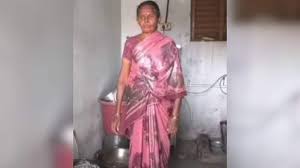
Chamarajanagar: A concerning incident has come to light from Chamarajanagar district in Karnataka, where parents have allegedly withdrawn their children from a government school following the appointment of a Dalit woman as the head cook. The incident has been reported from the Government Higher Primary School in Homma village in Chamarajanagar district. Of the 22 students enrolled, parents of 21 students have withdrawn their children, leaving only one student currently attending the school. According to the head cook and the kitchen staff, only seven out of the 22 students used to eat the Mid-Day Meals prepared at the school. Sources indicated that the appointment of a Dalit woman as the head cook had triggered dissatisfaction among some parents. Reportedly, several parents unhappy with the appointment collected Transfer Certificates (TCs) for their children and admitted them to other schools. As a result, the school is now on the verge of closure, sources added. Local residents allege that caste-based bias is the sole reason for withdrawing the children, pointing to the cook’s Dalit identity. In the academic year 2024–25, the school initially had 22 students. Of these, 12 have already taken TCs, and withdrawal applications have been submitted for the remaining students. With no students left, the school now faces imminent closure, sources said. Currently, the school has just one student attending the classes and two teachers. The parents of the remaining student have also requested a TC to transfer their child elsewhere, according to sources. After the development went viral on social media, the district administration rushed to the school on Wednesday and held a series of meetings with teachers and parents. Officials from the Education Department and the Department of Social Welfare also visited the Homma village school. Chamarajanagar SP, B.T. Kavitha, Zilla Panchayat CEO Mona Roat, and DDPI Ramachandra Raje Urs personally spoke to parents and teachers regarding the development. Parents told CEO Roat that they had withdrawn their children due to the poor quality of teaching at the school. However, the team of officials managed to convince the parents of eight children to re-enroll them in the school. SP Kavitha stated that a comprehensive investigation will be undertaken to determine why the children were not consuming meals at the school. “If it is found that untouchability was practiced and a complaint is lodged, strict action will be taken against those responsible,” she said. Roat noted that the preliminary report suggested the students were withdrawn due to poor education quality, but new claims have emerged. “We are receiving conflicting reports regarding the students’ transfer. We have assured the parents that qualified teachers will be posted at the school and action will be taken wherever necessary,” she said. Posted by Marziya Sharif Courtesy : Siasat Note: This news is originally published on https:/siasat.com/ and is for use by the non-military/non-commercial community, especially those in the human rights sector.
VP Singh’s birth anniversary: Discussion on Ambedkar’s Dalit struggles, student leader said – former PM made the power of Indian society
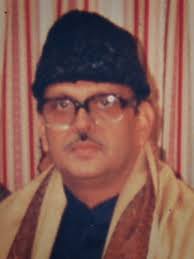
Vishwanath Pratap Singh: On the occasion of former Prime Minister VP Singh’s birth anniversary, seminars were organized at various places in Varanasi. Student leaders and teachers also organized programs together in BHU. Special discussion was held on VP Singh’s leadership and work. Varanasi News: A seminar was held in BHU student union building on the birth anniversary of former Prime Minister VP Singh. On Wednesday, a discussion was held on his work among former student leaders and professors. Ancient History Department Chairman Prof. MP Ahirwar said that the battles fought by Dr. Ambedkar for Dalits were established by VP Singh as the power of the society. After VP Singh, the living leader of Buddha’s tradition, Arjun Singh gave true representation to the backward castes in the field of education. Kashiram also made a major contribution. VP Singh was born on 25 June 1931. Former president of the students’ union Shiv Kumar said that after Gandhi, Ambedkar and Lohia, the heroes of the struggle on democratic issues, George Fernandes, Madhu Limaye, Madhu Dandavate and VP Singh took it to the last point legally. At that time, leadership in politics was decided on the basis of ideology and struggle. Former General Secretary of the students’ union Dr. Subedar Singh said that VP Singh took hundreds of people like Mulayam Singh Yadav, Lalu Prasad Yadav, Nitish Kumar and Ram Vilas to the top of power in politics, who perhaps became victims of elite politics in his absence. Did not forget student politics throughout his life Former minister Dr. Bahadur Singh Yadav said that after Gandhi, Lohia, the backward people united in the freedom struggle under the leadership of VP Singh. Even though the newly created socialists have forgotten him. Former president Harshvardhan Singh said that he was the president of UP College Students’ Union and kept alive the affection for student politics and student leaders throughout his life. During this, Manoj Singh Kaka, Kundan Rai Prof. Anand Deepayan, farmer leader Rajendra Chaudhary, director Dr. Shammi Kumar etc. were present. Published by: Aman Vishwakarma Courtesy: Hindi News
Blood Donation Barriers: Santa Khurai’s Long SC Fight for Trans Rights

Blood donation bans in India unfairly target transgender people. Santa Khurai’s 2021 Supreme Court fight, dragging on, challenges the 2017 guidelines for trans equality. Blood donation remains a deeply contested issue for transgender individuals in India, where discriminatory policies perpetuate exclusion and stigma. The Guidelines for Blood Donor Selection & Blood Donor Referral, 2017, issued by the National Blood Transfusion Council (NBTC) and the National AIDS Control Organisation (NACO), permanently bar transgender people, along with men who have sex with men and female sex workers, from donating blood, citing them as “at risk” for HIV and other infections. This blanket ban, rooted in outdated assumptions rather than individual risk assessment, dehumanises entire communities, denying them the fundamental right to contribute to life-saving efforts. Santa Khurai, a transgender activist and Nupi Maanbi (transgender woman) from Manipur, decided to challenge this injustice. Through her 2021 Public Interest Litigation (PIL) in the Supreme Court, Khurai is fighting to dismantle these discriminatory guidelines, advocating for equality and dignity for transgender persons in India’s healthcare system. Confronting Transgender Discrimination in Blood Donation We Have a Request for You: Keep Our Journalism Alive We are a small, dedicated team at The Probe, committed to in-depth, slow journalism that dives deeper than daily headlines. We can’t sustain our vital work without your support. Please consider contributing to our social impact projects: Support Us or Become a Member of The Probe. Even your smallest support will help us keep our journalism alive. Her resolve to challenge India’s discriminatory blood donation guidelines was sparked by the lived experiences of her community. In her words, “Initially, I wasn’t aware of the existence of these guidelines. But after listening to numerous community experiences, I realised how unjust they were. Through my work with trans communities, it became clear that the guideline is rooted in deep-seated prejudice—especially against trans women, who are often hyper-visible and marginalised. These biases are reflected in laws, policies, societal attitudes, and even within families. The ban on blood donation is just one glaring example of this discrimination. I felt it was essential to challenge this unfair guideline, not just for the trans community but for all people pushed to the margins—sex workers, for instance, who also face targeted exclusion.” Khurai speaks about a distressing incident in 2013 at Jawaharlal Nehru Institute of Medical Sciences (JNIMS), a prominent medical college and hospital in Imphal, Manipur. Three transgender women approached Khurai with a harrowing account. They had gone to JNIMS’s blood bank to donate blood, one of them for her own aunt, a patient in need. “They had gone to donate blood but they were publicly humiliated by the staff at the blood bank.” Nearly a decade later, in 2021, a similar incident unfolded at Shija Hospitals and Research Institute, a private healthcare facility in Langol, Imphal West. Two transgender women were denied the opportunity to donate blood, facing rejection rooted in the same discriminatory 2017 NBTC/NACO guidelines. Khurai shared the gravity of this moment: “This incident was particularly poignant because Dr. Beoncy Laishram, a trailblazing transgender doctor and Resident Medical Officer at Shija Hospitals, intervened to support them. As Manipur’s first and only transgender doctor, a post-operative trans woman who underwent sex reassignment surgery in Puducherry, Dr. Laishram is a symbol of hope for Nupi Maanbi. Yet, her efforts to advocate for the blood donation rights for these women were met with disdain”. Stay informed with The Probe. Get original stories, exclusive insights, and thoughtful, in-depth analysis delivered straight to your phone. Join our WhatsApp channel now! Click the link to join: https://whatsapp.com/channel/0029VaXEzAk90x2otXl7Lo0L The 2021 incident at Shija Hospitals took a particularly insulting turn when blood bank officials mocked Dr. Laishram’s credentials, questioning if she was merely an Ayurvedic doctor, despite her role as a qualified Resident Medical Officer. Khurai recalled this indignity: “This was so humiliating. The doctor told me exactly what she went through and later shared a copy of the 2017 guidelines, which was my first direct encounter with the policy.” Trans Women’s Greater Exclusion The discrimination embedded in India’s blood donation policies disproportionately targets transgender women due to their hyper-visibility and societal marginalisation. Khurai highlighted this stark disparity: “I then spoke to several gay men and trans men who told me they had donated blood multiple times without facing any hostility. That contrast made it clear that the discrimination was specifically targeted at trans women, who face higher visibility and marginalisation.” The 2017 guidelines blatantly violate Articles 14, 15, and 21 of the Indian Constitution. Article 14 guarantees equality before the law, Article 15 prohibits discrimination based on sex—interpreted to include gender identity in landmark rulings like NALSA v. Union of India (2014)—and Article 21 ensures the right to life and personal liberty, encompassing dignity. Santa Khurai argues that the 2017 guidelines undermine these constitutional protections by singling out transgender women, among others, without scientific justification, thus perpetuating stigma. “It discriminates against individuals based on gender identity and sexual orientation—specifically targeting trans women—and therefore contradicts the constitutional promise of equality and dignity,” she stated. The discriminatory impact of the 2017 guidelines is particularly severe for transgender women, who face heightened scrutiny due to their visibility, unlike trans men or closeted gay men who may evade such barriers. This stigma is deeply ingrained in public consciousness.” This targeted stigmatisation, coupled with the guidelines’ restrictions, denies trans women the basic act of altruism—saving lives—while cisgender and heterosexual individuals face no such barriers. The 2014 NALSA judgment, which recognised transgender rights to self-determination under Articles 14, 15, and 21, should have paved the way for inclusive policies. However, Khurai notes, “Despite this judgment, its implementation remains inconsistent across the country. The executive has failed to enforce it effectively.” Khurai urges India to emulate inclusive blood donation models like the UK’s, which has eliminated bans on gay, bisexual, and transgender individuals, adopting a gender-neutral, behaviour-based screening process through the FAIR approach, ensuring safety without stigmatising entire communities. “The UK model is something India can replicate. They’ve lifted