
India’s first transgender clinic reopens in Hyderabad with aid from Tata Trusts
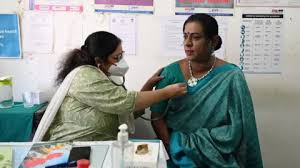
Mitra Clinic, now Sabrang, was not only a dedicated healthcare facility for transgender people, but also as the first in India to be entirely staffed and managed by members of trans community India’s first transgender clinic in Hyderabad, which had shut down in January following a USAID funding freeze, reopened under a new name, Sabrang, in Hyderabad. India’s first transgender clinic in Hyderabad, which had shut down in January following a USAID funding freeze, reopened under a new name, Sabrang, in Hyderabad. | Photo Credit: SIDDHANT THAKUR Months after India’s first transgender-led health clinic — Mitr Clinic — was shut down following a funding freeze by USAID, the landmark facility has made a comeback with a new name and renewed financial backing. Now reopened as Sabrang Clinic, the community-run healthcare centre resumed services in May 2025 with support from the Tata Trusts, project lead Subash Ghosh said. “Once the USAID issue happened in January, we had to shut down operations. But we reached out to several philanthropic organisations and individuals. And now, Tata Trusts is supporting us,” Mr. Ghosh told The Hindu in an exclusive conversation. How will freeze on USAID affect the world? Launched in 2021 in Hyderabad’s Narayanguda, Mitr Clinic broke new ground not only as a dedicated healthcare facility for transgender people, but also as the first in India to be entirely staffed and managed by members of the trans community. “From doctors to clinic managers, everyone is from the community. Over 3,000 patients have been served since the clinic started,” he said. Services offered General health services Counselling and clinical consultation on Hormone Replacement Therapy, Breast Augmentation, Gender Affirmation Procedures and Mental Health Treatment for Human Immunodeficiency Virus (HIV)/Sexually Transmitted Infection (STI) Psychological support The staff at the clinic includes one medical officer, one nurse, one counsellor, and two outreach workers. The clinic runs from Monday to Saturday, 10 a.m. to 6 p.m. A lifeline after USAID The shutdown in January 2025 left many transgender people and members of LGBTQIA+ community without access to trusted, stigma-free healthcare. During the interim, the clinic team continued providing online consultations and medicine delivery support until new funding could be secured. That lifeline arrived in April, when the Tata Trusts committed to supporting the clinic for three years. “We got the confirmation in April, and operations resumed from May. They have committed ₹1,500 per person per year,” said Mr. Ghosh. Under the earlier USAID programme, funding stood at ₹1,900 per person per year. While the Tata Trusts now fully funds the clinic’s core clinical team, senior staff positions are jointly supported by Tata and YRG Care, an NGO that was also associated with Mitr Clinic. “We had to phase out some roles due to financial constraints, but we are actively reaching out to other donors to help us scale up again,” Mr. Ghosh added. A government-inspired model took shape before closure While Mitr Clinic was still operational, the Telangana government launched its own trans-inclusive health facilities in all the 33 districts. The Maitri Clinic drew on learnings from the Mitr model. “We were already working with the Social Welfare Department and the Health Department. They took our approach forward,” said Mr. Ghosh. Both clinics coexisted briefly, each serving as a critical lifeline for the transgender and other members of LGBTQIA+ community. Although the Sabrang team considered State support, they chose to independently restart operations to avoid further delays. “Our clinic had more than just a physical space. We had online support systems, strong community outreach, and a trust network built over years. It was important to get that back quickly,” he said. Why ‘Sabrang’? The name Sabrang, meaning ‘all colours’, signals a more expansive vision for inclusive healthcare. “Earlier, we focused solely on transgender communities. But now we recognise that others, especially people from different marginalised groups, including queer and gender-diverse individuals, face similar barriers to healthcare,” said Mr. Ghosh. As India’s first transgender-led clinic returns in a renewed form, its commitment remains unchanged: healthcare that is dignified, accessible, and community-driven. “We have come back stronger, more inclusive, and more determined. It is still a space created by the community, only now, we are reaching more people who need it,” Mr. Ghosh said. Courtesy : Siddharth Kumar Singh, The Hindu Note: This news is originally published on https:/thehindu.com/ and is for use by the non-military/non-commercial community, especially those in the human rights sector.
Serious allegations of corruption on Jal Jeevan Mission in MP, claim of 1 thousand crore bribe against tribal PHE minister!
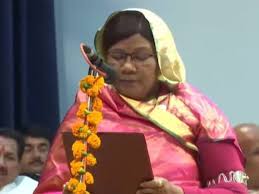
The serious allegations leveled by the former MLA have brought the Jal Jeevan Mission under question. Bhopal. Allegations of a big scam in the name of Jal Jeevan Mission have surfaced in Madhya Pradesh. Former MLA Kishore Samarite has written a letter to the Prime Minister’s Office (PMO) claiming that there has been a huge irregularity of about Rs 30 thousand crore in this scheme. The special thing is that the order to investigate this scam was issued by Sanjay Andhavan, Engineer-in-Chief (ENC) of Public Health Engineering Department (PHE), in which direct allegations were made against the departmental minister Sampatiya Uikey himself. Controversy arose from the complaint sent to the PMO The whole matter started on April 12, when former MLA Kishore Samarite sent a complaint to the PMO about the corruption taking place in the Jal Jeevan Mission. According to the complaint, huge bribes were being taken in the tender process and the minister himself was involved in it. After this, on 24 April, this complaint was sent to the state government, and under the departmental process, on 21 June, this file reached Engineer-in-Chief Sanjay Andhavan. Minister’s name in the investigation order, instructions for property investigation The names of Minister Sampatiya Uike, Mandla’s Executive Engineer Manoj Bhaskar and former ENC BK Sonagariya were included in the investigation order issued on 21 June. It was clearly written in the order that, investigate the funding of Jal Jeevan Mission, the role of the minister, the property of the executive engineer and submit the report in seven days. The responsibility of investigation was handed over to the Project Director and Area Chief Engineer of Jal Nigam. However, this order went viral on social media on Monday, causing a stir. Big allegation of former MLA Former MLA Samrite has written in the letter that, a commission of Rs 1 thousand crore was taken by Minister Sampatiya Uike. This amount was collected through Mandla’s Executive Engineer Manoj Bhaskar and former ENC BK Sonagaria collected Rs 2000 crore through his accountant Mahendra Khare. Bribes of Rs 1000 crore each were also taken in PIU and Jal Nigam. He has demanded a CBI inquiry from the central government and alleged that an engineer in Betul withdrew Rs 150 crore without doing any work. Similar fake payments were made in Chhindwara and Balaghat. CE Mechanical passed tenders worth Rs 2200 crore and grabbed the amount without doing any work. After the investigation order went viral on social media, ENC Sanjay Andhavan clarified that the complaint was investigated, but no concrete documents were found in it. Referring to the report of the Chief Engineer of Balaghat, he said, “The complaint is factless and fabricated. There was no original document in the complaint, only departmental letters obtained through RTI were made the basis.” He also said that the implementation and payment of Jal Jeevan Mission is done at the local level, so the ENC and the minister are not directly responsible. Now the questions Will there be a high-level inquiry against the minister and officials? Was the departmental order withdrawn or suppressed? What stand will the government take on the authenticity of the viral order on social media? The serious allegations leveled by the former MLA have brought the Jal Jeevan Mission under question. If the investigation is fair and transparent, it can reveal layers of corruption in the administrative structure of Madhya Pradesh. What is Jal Jeevan Mission? Jal Jeevan Mission is an ambitious scheme of the Central Government, which aims to provide drinking water through pipes to every household in the country. Crores of rupees are allocated to the states under this scheme. Courtesy : Ankit Pachauri, Hindi News
MP: Accused sentenced to 20 years in prison for raping a 10-year-old girl, court orders to pay Rs 3 lakh compensation to victim

The court has ordered the state government to pay Rs 3 lakh as compensation to the girl, keeping in mind her education and rehabilitation, so that she can move forward on her future path. Bhopal. The court of Special Judge Kumudini Patel of the capital Bhopal on Monday convicted the accused Mohammad Farhan alias Chuju in the case of raping a minor and sentenced him to 20 years of rigorous imprisonment and a fine of Rs 4,000. Special Public Prosecutors Divya Shukla and Jyoti Kujur pleaded on behalf of the government in this case. What is the whole matter? On June 8, 2019, a 10-year-old girl lodged an FIR in Gandhi Nagar police station with the help of Child Help Care Taker. The girl told that she was living at her female relative’s house. Since they did not have children, the family had sent her to them for upbringing. The girl considered that woman and her husband as her parents. When the woman went to work, her husband Mohammad Farhan used to do obscene acts with the girl, show her dirty videos and rape her. He used to beat her up when she refused. Tolerating all this, the girl finally told her ordeal to an old lady, after which the matter reached the police. The girl said in the court – “I want to become a doctor” During the hearing of the case, the victim told the court that she is currently living in SOS Balgram and is studying in 10th standard. Her real mother has passed away and she dreams of becoming a doctor in future. The girl’s words made the court emotional. The victim will get compensation of three lakh rupees The court has ordered the state government to give her a compensation amount of Rs 3 lakh keeping in mind the education and rehabilitation of the girl so that she can move forward on the path of her future. Provision of punishment Under Section 376AB of the POCSO Act, if the age of the victim is less than 12 years, then the accused is given a minimum sentence of 20 years, life imprisonment or death penalty. NCRB figures The 2022 report of the National Crime Records Bureau (NCRB) also shows the gravity of the situation. According to the report, a total of 20,415 crimes against children were registered in Madhya Pradesh in the year 2022, which is the second highest figure after Maharashtra in the country. Of these, 6,654 cases have been registered only under the POCSO Act. The highest number of cases are related to kidnapping and luring, which stood at 10,125. 109 cases of murder of children and 90 cases of abetment to suicide are also part of this report. The NCRB report also revealed that the rate of crime against children in the state is 71 per one lakh children, which is much higher than the national average. After Delhi, Madhya Pradesh is in second place in this case. The most worrying thing is that in 96.8% of sexual crimes, the accused are acquaintances of the victim. This makes it clear that the most unsafe place for the victims is their own social circle. Courtesy: Ankit Pachauri, Hindi News
Casteism in UP: Dalit youth beaten up for refusing to do electrical work, accused said, “Ch#%r, ni%$$! You won’t do our work? You have so much…”
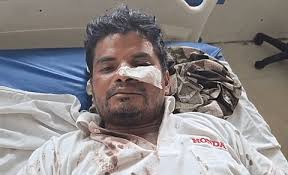
Even after 4 days, the police have not arrested the accused. Gautam Buddha Nagar – There are continuous complaints about casteist incidents in Uttar Pradesh, in this episode, a Dalit youth was beaten up with casteist abuses in village Roshanpur of Dankaur police station area for refusing to do his work. Victim Rajesh Jatav, an electrical mechanic by profession, has alleged that Sagar Nagar, Anil Bidhuri (alias Balua) and Subodh Nagar of village Junedpur attacked him with kicks, punches and bricks for refusing to do electrical work. When Jatav complained about this to the police, his report was not taken and on the contrary, the police tried to hush up the matter, SC/ST Act has not been implemented in the case and allegations of police negligence are being made. According to Rajesh, on 27 June, Sagar and Anil came to his house and asked him to do some electrical work. When he refused due to lack of time, both of them attacked him using casteist abuses. They used words like “Chamar, Dhed, Neech! You won’t do our work? You have such a status?” and beat Rajesh till he fainted. Sagar’s uncle Subodh Nagar is also said to be involved in the attack. The victim’s wife Suman gave a complaint, but IO Upendra Kumar filed an FIR without recording the statement. Even after 4 days, the police did not arrest the accused. Suman told the media that Rajesh is in a critical condition in the hospital, but the police did not take any action for medical examination or help. The victim’s family alleges that the police is trying to suppress the case and settle the matter in collusion with the accused. Talking to The Mooknayak, Dalit rights activist Nidhi Singh said, “UP is turning into a torture chamber for Dalits. Just because a Dalit refused to work for free, an attempt was made to kill him. The role of the police is suspicious.” Nidhi further said, “SC/ST Act should be implemented immediately. Police inaction promotes anti-Dalit mentality.” Social activists have demanded immediate registration of cases against the accused under SC/ST Act, compensation and government job to the victim and action against negligent police officials. Courtesy: Geetha Sunil Pillai, Hindi News
Tamil Nadu: Body of Dalit labourer found hanging from tree, hands tied — still suicide? Questions raised on police theory!
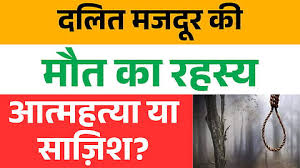
Uproar over Dalit labourer’s suspicious death being called a suicide, questions raised on hanging with hands tied, Dalit organisations demand fair probe Tiruppur (Tamil Nadu): The Tamil Nadu police have been accused of covering up the suspicious death of a Dalit youth in Tiruppur district by calling it a suicide. The police have called the death of 42-year-old K. Murugan, a daily wage labourer, a suicide, but Dalit activists and political parties have raised questions — especially about how a person with his hands tied could commit suicide by hanging from a tree? Activists also allege that the police have made the case more suspicious by cremating the body quickly. According to a report by The News Minute, Murugan, who was a resident of Senakkalpalayam village, was found hanging from a neem tree on the morning of June 26 (Thursday). The land is reportedly owned by Palaniswami Gounder, for whom Murugan worked as a daily wage labourer. The police have registered a case of suicide under Section 194 of the Indian Civil Security Code (BNSS) and based the statement of Murugan’s wife Manimegalai, who reportedly denied any foul play. According to the FIR, Manimegalai told the police that Murugan was ill for a long time and was mentally disturbed due to his alcohol addiction. He was undergoing treatment for tuberculosis at the Christian Fellowship Hospital in Oddanchatram, but did not quit drinking despite doctors’ advice, which worsened his condition. The FIR states that on the night of June 25, Murugan suffered severe stomach pain and was rushed to the Dharapuram Government Hospital twice. The couple stayed at a relative’s house for the night, and the next morning Murugan said he was fine now and was going to work. A few hours later, Manimegalai received information that her husband was found hanging from a tree near the military colony. The Alangiyam police recovered the body, sent it for post-mortem and handed it over to the family for cremation the next day. However, Dalit organisations and activists have questioned the police claim. Mugilarasan, state principal secretary of Tamil Puligal Katchi, submitted a memorandum to the DSP, accusing Manimegalai of being pressured to change her statement. He claimed that both Murugan and his wife worked for the Gounder family and some locals and relatives were spreading false rumours about Murugan’s debt and illness to suppress the truth under caste pressure. The memorandum said, “There is clearly a mystery in this death. A man with his hands tied cannot climb a 20-feet high tree and commit suicide by tying a rope. If he had done so, the branch would have broken. We believe he was murdered and made to look like a suicide.” Siruthai Valluvan, zonal secretary of Viduthalai Chiruthaigal Katchi (VCK), also questioned the police’s hurried cremation and concealment of evidence. “Even children will not believe that Murugan hanged himself with his hands tied. How can the police make such a claim? The Tamil Nadu government should compensate the victim’s family and ensure the safety of Dalits in the region,” Valluvan said. When contacted, the Alangiyam police denied any foul play. “When we recovered the body, the hands were not tied but the rope was just wrapped around the hands. The post-mortem report did not reveal any internal injuries or marks of strangulation,” a police officer said over the phone. The police have confirmed that the land where Murugan’s body was found belongs to Palaniswami Gounder–further fuelling suspicion. Courtesy : Rajan Chaudhary, Hindi News
Impact of the news: Case of discrimination against Dalit woman and girl in Pratibha Sthali Vidyalaya, Jabalpur, State Scheduled Caste Commission sought report
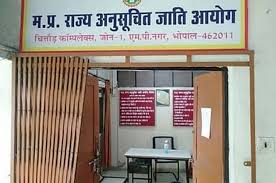
The Commission took cognizance after the news of ‘The Mooknayak’, sought report in 15 days. Bhopal. The case of caste discrimination against a single mother and her daughter of Scheduled Caste category in Pratibha Sthali Gyanodya Vidyalaya, Jabalpur, Madhya Pradesh has forced the Madhya Pradesh State Scheduled Caste Commission to take strict action. Taking cognizance of this serious matter, the Commission has sought an investigation report from the Assistant Commissioner, Tribal Affairs Department, Jabalpur within 15 days. It has also been directed that if the Right to Education Act 2009 or Article 21 (A) of the Constitution has been violated by the school, then necessary legal action should be taken against the culprits. This matter came to light when last year ‘The Mooknayak’ published a detailed report on this subject. The report said that Sunita Arya, a Scheduled Caste community resident of Jabalpur, had applied to Pratibha Sthali Vidyalaya to get her daughter admitted in Class 4. But the school administration not only refused to admit her, but also treated her in an insulting manner using casteist words. She was discriminated against only because she is a Dalit and her daughter was born in a live-in relationship and is biologically Jain (general). Sunita Arya alleges that the school administration looked at her negatively on the basis of her caste identity and used words like ‘Ahirwar’, ‘Chamar’ during the conversation. Apart from this, the school administration also raised the question about the family status of the girl, as Sunita Arya is a single mother. Sunita had also attached a DNA test report with her application, which proves that the girl is the biological child of her and her partner Manish Jain and there should be no doubt about any kind of identity. Despite this, the school did not admit the girl. Talking to The Muknayak representative, Sunita Arya says that she had applied for admission of her daughter in class 4 in Pratibha Sthali Vidyalaya, Jabalpur. But the school administration rejected her application saying that the family status of the girl is not clear. Sunita says that she even got a DNA report, which proves that the girl is the child of her and Manish Jain, who belongs to the Jain community. Still she was insulted on the basis of caste. The school people called her by derogatory words like ‘Ahirwar’ and ‘Chamar’. Sunita alleges that the school administration treated her in a discriminatory manner and mentally harassed her. She also told that casteist language was also used in the conversation on WhatsApp by the school management, copies of which she has submitted to the Scheduled Caste Commission. Sunita says that being a mother, she wanted her daughter to study in a good school, but she was treated unfairly due to caste and daughter being born during living. Allegation of mental harassment, evidence submitted to the commission Sunita has claimed in the application submitted to the commission that she was mentally harassed and treated in a discriminatory manner by the school management. She has also submitted screenshots of WhatsApp conversations with the school and other documents to the commission, which mention caste-based behavior and insensitive comments made by the school. Apart from this, Sunita Arya has also rejected the preliminary investigation report of this case and in the counter-claim sent to the commission, she has said that facts have been hidden in the investigation and conclusions have been drawn in a fabricated manner. Commission’s strictness: Looking at the seriousness of the matter, the commission has clarified in this case that if the reply is not received within the stipulated time limit (15 days), then it will take suo motu cognizance and take action using the powers conferred on it like a civil court. Secretary of the State Scheduled Caste Commission, Seema Soni, said that the commission is looking into the matter as a violation of the fundamental rights of the Constitution and if the faults are proved, action can be taken against the school management under the Scheduled Castes and Scheduled Tribes (Prevention of Atrocities) Act, 1989. What is the legal provision? Right to Education Act, 2009 Gives the right to free and compulsory education to all children between 6 and 14 years. Article 21 (A) of the Indian Constitution Provides the fundamental right to primary education to every child. Scheduled Castes and Scheduled Tribes (Prevention of Atrocities) Act, 1989 Provides strict punishment for discriminating or insulting any Scheduled Caste or Scheduled Tribe person on the basis of caste. Courtesy: Ankit Pachauri, Hindi News
Mayawati Picks Nephew Akash Anand To Lead BSP Troops In Bihar Ballot Battle, Win Dalit Votes
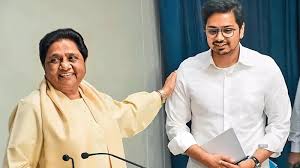
The Bihar assignment is also being seen by political observers as Mayawati’s bid to give Akash a base to prove his worth and regain stature within the party Akash Anand, who is the BSP’s chief national coordinator, has been tasked with not only winning over the Dalit voters but also other backward castes through ‘Bhaichara Committees’ (brotherhood committees) and strengthening the party in Bihar. File pic Another Dalit outfit has thrown its hat into the ring for the battle of Bihar votes. Bahujan Samaj Party supremo Mayawati, considered a Dalit messiah and a four-time chief minister of neighbouring Uttar Pradesh, has made her intentions clear to contest all 243 seats in the upcoming Bihar assembly polls. She has entrusted her nephew, Akash Anand, with the task, once considered her successor but later fell from grace, only to be brought back into the party fold. Akash Anand, who is the BSP’s chief national coordinator, has been tasked with not only winning over the Dalit voters but also other backward castes through “Bhaichara Committees” (brotherhood committees) and strengthening the party in Bihar. Party veteran and Mayawati’s trusted aide Ramji Gautam, a Rajya Sabha lawmaker, has also been deputed to assist Akash. Both held a party cadre meeting in Patna on June 26, and since then, the formation of Bhaichara Committees has begun. BSP has made it clear that it will not ally with any party in the Bihar polls and will contest all 243 seats. Akash Anand has the onerous task of picking the right candidates for all 243 seats and putting up an impressive fight to regain his stature within the party. The BSP, which formed the government four times in UP with Mayawati as the chief minister, has had a continuous downfall since 2012. The BSP has only one MLA in UP right now. The party peaked by winning five assembly seats in the 2000 Bihar assembly polls, and since then has managed to pick up a few odd seats in subsequent elections, failing to win any in the 2020 edition. Akash Anand, once considered Mayawati’s successor, was suddenly expelled from the party by her aunt earlier this year in March. Just before that, Akash’s father-in-law and senior BSP leader Ashok Sidharth was also expelled. Mayawati had accused Ashok Sidharth of factionalism and anti-party activities. But it was her expulsion of nephew Akash Anand that shocked the political class. Mayawati said that Akash was under the undue influence of his father-in-law and running a parallel structure within the BSP. As shocking as the expulsion was, within weeks, Akash Anand publicly apologised and was swiftly reinstated by Mayawati, who appointed him as the chief national coordinator, albeit with a warning to keep away from party affairs in UP and his father-in-law. Akash had then stated that he would devote his life to the party and that Mayawati was the supreme leader. Since then, he has been keeping a low profile and maintaining a distance from his father-in-law. On June 26, he was sent by Mayawati to the Bihar party workers’ meeting, and this would be his first big assignment since the comeback. The Bihar assignment is also being seen by political observers as Mayawati’s bid to give Akash a base to prove his worth and regain stature within the party. With union minister Chirag Paswan of the Lok Janshakti Party (Ram Vilas) and Jitan Ram Manjhi of HAM also vying to consolidate Dalits behind them in Bihar, it would be a challenging task for Akash Anand. Reported By : Manmohan Rai Edited By : Pathikrit Sen Gupta Courtesy : News18 Note: This news is originally published on https:/news18.com/ and is for use by the non-military/non-commercial community, especially those in the human rights sector.
MP: Arson in tribal hut in Ashoknagar, bloody conflict between two sides over occupation of forest land!
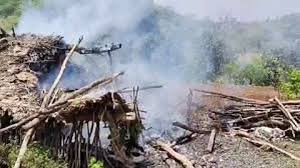
As soon as the information about the incident was received, Chanderi police reached the spot and handled the situation. Later, Collector Aditya Singh and SP Vineet Kumar Jain also reached the village and inspected the spot. Bhopal. In Sirsaud village of Chanderi police station area of Ashoknagar district of Madhya Pradesh, a dispute between tribal and Yadav community over occupation of forest land on Sunday turned into a bloody conflict. During the dispute, a hut of tribal women was set on fire, due to which tension spread in the village. A tribal woman was injured in the incident, while a person from the other side has been seriously injured by an axe. Women of the tribal community alleged that former village sarpanch Suryabhan Yadav arrived with several people and a tractor to occupy the forest land. When the tribals told them to stop and not remove their hut, the Yadav side abused and assaulted them. The women say that the hut was set on fire and they were threatened to vacate the house. The tribal woman injured in the incident has been admitted to Chanderi Civil Hospital. On the other hand, information has come to light that Suryabhan Yadav of the Yadav side was hit by an axe in the stomach. He was referred to the district hospital after first aid. The Yadav side alleges that the tribal youths suddenly attacked them when they went to sow. The Yadav side also claims that the tribal women themselves set fire to the hut so that false cases could be made. A video has also surfaced regarding this claim, in which a man is telling the women that “You are setting fire yourself, I am making a video.” However, after the video, the women are seen moving away from the hut. As soon as the information about the incident was received, the Chanderi police reached the spot and handled the situation. Later, Collector Aditya Singh and SP Vineet Kumar Jain also reached the village and inspected the spot. Police force has been deployed in view of the seriousness of the dispute. On the complaint of the complainant Ajay son of Palla Adivasi (23 years), a case has been registered against 15 named and some unknown people of Yadav community under section 115(2), 296, 351(2), 191(3), 326(g) of BNS and section 3(1)(R), 3(1)(S), 3(2)(v-a) of SC/ST Act. On the other hand, on the complaint of Suryabhan Yadav, a case has been registered against 9 named and 4-5 unknown people of tribal community under section 115(2), 118(1), 296, 351(2), 3(5), 191(2), 191(3) of BNS. At present, the situation in the village is under control under police surveillance, but this incident of burning of huts and violence is raising many serious questions about the safety of the tribal community and forest land rights. Courtesy : Ankit Pachauri, Hindi News
Wife of tribal professor who wrote a letter to PM seeking ‘justice’ appeals to media: ‘Please support us in our fight against caste discrimination in MNNIT’
In her letter, Vanaja has urged the media to play the role of the “fourth pillar of democracy” and highlight the matter. Hyderabad- Media is called the fourth pillar of democracy and at a time when the hope of justice from the executive and judiciary is lost, many people consider media as their last hope and appeal for help. Nimmakayala Vanaja, wife of Assistant Professor Dr. M. Venkatesh Nayak, who wrote a letter to Prime Minister Narendra Modi complaining about caste discrimination in MNNIT Allahabad (Prayagraj), has also taken such a step. She has written an open letter to media organizations and appealed to highlight her husband’s struggle that has been going on for 8 years. Dr. Nayak belongs to the Scheduled Tribe (ST) community and has alleged caste discrimination, ban on promotion and administrative harassment in the institute since 2017. Dr Nayak had detailed the attempts at the institute to “deliberately ruin” her career. According to Vanaja, no action was taken despite “all evidence and documents” provided to all concerned authorities, including the National Commission for Scheduled Tribes (NCST). In her emotional letter to the media, Vanaja lamented the neglect of teachers from the underprivileged community: “When honest, hardworking ST teachers are subjected to injustice, no one listens to their voice. Despite repeated attempts by my husband to approach the media, no one came forward to highlight their struggle. If honest, dedicated and hardworking teachers like him are not given a platform to express the injustice they are facing, how can they expect justice?” She referred to earlier cases such as that of Dr Subrahmanyam Saderla of IIT Kanpur and Dr Vipin Veetil of IIT Madras, where reports of caste discrimination made national headlines. In the letter, she wrote, “This is not the first time such discrimination has taken place in premier institutes. We have seen similar cases before – Dr Subrahmanyam Saderla at IIT Kanpur, Dr Vipin Veetil at IIT Madras and many others whose painful experiences made headlines. Today my husband is facing a similar situation. Despite giving his best in education and research, he is harassed only because of his caste identity.” Institutional neglect a trend? Dr Nayak says her promotion to the post of associate professor in 2025 was deliberately withheld. Complaints to MNNIT’s SC/ST cell and the education ministry were met with no action. Allegations of “misrepresentation” were levelled by her lawyer in the Allahabad High Court. Vanaja, in her letter, has urged the media to play the role of the “fourth pillar of democracy” and highlight the matter. “After every avenue is closed, we have come to you,” she wrote, seeking media coverage to pressurise the authorities. Courtesy : Geetha Sunil Pillai, Hindi News
Prayagraj: Dalit minor girl recovered from Kerala, accused of forced conversion and terror recruitment; two arrested
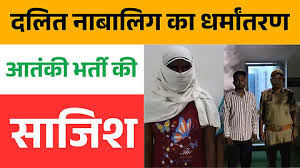
15-year-old girl from Phulpur lured to Kerala, where she was forced to convert and engage in terror activities; two accused arrested Prayagraj (Uttar Pradesh). A case has come to light in which a 15-year-old Dalit girl from Prayagraj district was lured to Kerala and forced to convert and engage in terror activities. Giving information about this on Monday, the police claimed to have busted an alleged radical network. According to the police, the conspiracy came to light when the teenager escaped from their clutches in Kerala and contacted her mother with the help of local police. Two accused have been arrested in the case. According to the report published in HT, Deputy Commissioner of Police (DCP) Kuldeep Singh Gunawat said that on May 8, this girl was allegedly lured from a village in Phulpur area. Somehow she reached Thrissur railway station and called her mother from there. The DCP said, “The teenager was being forced to join jihadi activities. After contacting Kerala, she was brought back to Prayagraj and is currently kept in a one stop center for security reasons.” The police have arrested 19-year-old Daraksha Bano and Mohammad Kaif. Apart from them, a case has also been registered against an unknown person who had threatened the victim’s family over the phone. In the preliminary interrogation, the teenager told that the same gang was trying to recruit other minor girls by targeting them. On June 26, the victim’s mother had lodged a written complaint at the Phulpur police station that her daughter was lured and taken away. After approaching the police, she also received threatening calls from an unknown number. According to DCP Gunawat, the girl was first lured with money and introduced to some suspicious people, then forcibly converted and later pressured to join terrorist activities. According to the victim’s statement, Kaif drove her to Prayagraj Junction railway station on a motorcycle and molested her during this time. Daraksha Bano then took her to Delhi by train and then to Kerala, where she was introduced to unknown people associated with the radical network. The DCP said that the accused were working as an organised gang who were conspiring to mislead the girls and push them into anti-national and terrorist activities. The police have formed three special teams to investigate the case thoroughly, which are engaged in exposing the entire network. Courtesy : Rajan Chaudhary, Hindi News